'%3E%3Cpath%20fill='%231B2A47'%20d='M1.605%2016.263c.03-1.139.059-2.482.088-3.971.03-1.49.03-2.832.03-4.03%200-.758%200-1.576-.03-2.51%200-.905-.03-1.84-.03-2.803%200-.496-.028-.964-.028-1.43%200-.468%200-.906-.03-1.315h6.858q2.188%200%203.589.35c.963.234%201.663.643%202.13%201.198.496.555.73%201.372.73%202.394%200%20.788-.176%201.46-.497%201.985-.32.526-.846.935-1.575%201.197-.73.292-1.693.468-2.918.526v.263c1.313.087%202.334.263%203.122.525.758.263%201.342.672%201.692%201.197.35.526.525%201.197.525%202.044%200%201.08-.233%201.927-.67%202.57-.468.642-1.139%201.08-2.102%201.343-.933.262-2.159.408-3.705.408H1.605zm6.537-9.197q1.882%200%202.713-.526c.555-.35.817-.934.817-1.752%200-.905-.292-1.547-.846-1.927s-1.459-.554-2.655-.554H4.757v4.759zm.204%206.92c.934%200%201.663-.088%202.217-.263.555-.176.934-.438%201.197-.818s.38-.876.38-1.518c0-.876-.322-1.49-.934-1.84-.643-.35-1.635-.525-3.035-.525H4.757v4.963zM21.038%2016.555c-1.576%200-2.801-.292-3.618-.905-.817-.614-1.284-1.519-1.372-2.745-.087-1.226.205-2.774.847-4.613s1.43-3.358%202.392-4.584c.963-1.226%202.043-2.131%203.298-2.744C23.839.292%2025.24%200%2026.786%200c1.576%200%202.772.321%203.59.934.816.613%201.283%201.548%201.37%202.774s-.203%202.774-.845%204.613c-.642%201.81-1.43%203.358-2.393%204.584s-2.072%202.132-3.297%202.745a9.8%209.8%200%200%201-4.173.905m.788-2.278c.642%200%201.138-.058%201.371-.116.205-.059.496-.117.847-.322.262-.146.437-.292.554-.408.204-.175.32-.292.438-.41.204-.203.35-.408.496-.583.35-.438.642-.876.963-1.402.233-.408.466-.817.67-1.284.205-.438.38-.905.555-1.372.438-1.198.671-2.278.671-3.183s-.204-1.606-.612-2.131c-.409-.497-1.051-.76-1.897-.76-.467%200-.934.059-1.43.205h-.03c-1.02.292-1.925%201.226-2.042%201.372-.116.117-.467.526-.963%201.343a15.5%2015.5%200%200%200-1.342%202.92c-.408%201.197-.642%202.277-.671%203.182-.03.906.175%201.636.584%202.161q.611.788%201.838.788M14.853%2038.54c-1.576%200-2.802-.292-3.619-.905s-1.284-1.518-1.371-2.744c-.088-1.227.204-2.774.846-4.614s1.43-3.357%202.393-4.584%202.042-2.13%203.297-2.744c1.255-.613%202.655-.905%204.173-.905%201.575%200%202.772.321%203.589.934s1.284%201.548%201.371%202.774c.088%201.226-.204%202.774-.846%204.613-.642%201.81-1.43%203.358-2.393%204.584s-2.072%202.131-3.297%202.745c-1.226.613-2.626.846-4.143.846m.787-2.277c.642%200%201.138-.059%201.372-.117.204-.058.496-.117.846-.321.263-.146.438-.292.554-.409.205-.175.321-.292.438-.409.204-.204.35-.408.496-.584a13%2013%200%200%200%201.634-2.686c.204-.438.38-.905.555-1.372.437-1.197.67-2.277.67-3.182%200-.906-.203-1.606-.612-2.132-.409-.496-1.05-.759-1.897-.759-.467%200-.934.058-1.43.204h-.029c-1.021.292-1.925%201.227-2.042%201.373-.117.116-.467.525-.963%201.343a15.5%2015.5%200%200%200-1.342%202.92c-.409%201.196-.642%202.277-.671%203.182s.175%201.635.583%202.16q.613.789%201.838.789'/%3E%3Cpath%20fill='%23FF515E'%20d='M55.966%2038.57c-1.576%200-2.801-.293-3.618-.906s-1.284-1.518-1.372-2.744c-.087-1.227.204-2.774.846-4.613s1.43-3.358%202.393-4.584c.963-1.227%202.043-2.132%203.297-2.745s2.656-.905%204.173-.905c1.576%200%202.772.321%203.589.934s1.284%201.548%201.371%202.774c.088%201.226-.204%202.774-.846%204.613-.642%201.81-1.43%203.358-2.393%204.584s-2.071%202.131-3.297%202.745c-1.225.613-2.626.846-4.143.846m.788-2.249c.642%200%201.138-.058%201.371-.117.204-.058.496-.116.846-.32.263-.147.438-.293.555-.41a7%207%200%200%200%20.437-.408c.205-.205.35-.41.496-.584a13%2013%200%200%200%201.634-2.686c.205-.438.38-.905.555-1.373.438-1.197.671-2.277.671-3.182s-.204-1.606-.613-2.131c-.408-.497-1.05-.76-1.896-.76-.467%200-.934.059-1.43.205h-.03c-1.02.292-1.925%201.226-2.042%201.372-.117.117-.467.526-.963%201.343a15.5%2015.5%200%200%200-1.342%202.92c-.409%201.197-.642%202.277-.671%203.182s.175%201.635.583%202.16q.614.79%201.839.79'/%3E%3Cpath%20fill='%231B2A47'%20d='M33.06%2016.263c0-.35%200-.935.03-1.81.029-1.051.058-2.103.058-3.154s.03-2.073.03-3.007c0-1.606-.03-3.27-.06-4.993%200-.554-.028-1.08-.028-1.606%200-.525-.03-1.021-.03-1.46h6.828c1.46%200%202.685.117%203.59.38q1.4.394%202.1%201.314.7.963.7%202.628c0%20.992-.174%201.81-.554%202.452-.35.643-.904%201.11-1.604%201.431s-1.576.467-2.627.496v.263q2.058.087%203.064.876c.671.525%201.138%201.372%201.43%202.51.087.41.233%201.023.467%201.84.233.818.408%201.431.554%201.84h-3.414a11%2011%200%200%200-.262-1.022c-.321-1.314-.526-2.19-.584-2.628a5%205%200%200%200-.642-1.46%202.13%202.13%200%200%200-.963-.73c-.408-.146-.934-.233-1.605-.233h-3.326v6.0440000000000005H33.06zm6.332-8.292c1.343%200%202.276-.205%202.86-.613.554-.41.846-1.11.846-2.073%200-.73-.146-1.314-.408-1.723-.263-.409-.671-.7-1.197-.876q-.788-.263-2.1-.263h-3.181v5.519h3.18zM49.4%2016.263l.03-2.745c.029-2.452.029-4.905.029-7.416q0-2.101-.088-5.868h4.085l5.924%2010.335c.087.234.204.438.291.643.117.204.205.408.321.613.38.788.613%201.255.672%201.372h.262c0-.058-.03-.146-.03-.204%200-.059-.028-.117-.028-.175a75%2075%200%200%201-.175-1.314%2010%2010%200%200%201-.088-1.285c0-1.547%200-3.737-.029-6.57V1.84c0-.584-.03-1.11-.03-1.576h2.977c-.03%202.482-.058%205.08-.058%207.766%200%201.694%200%204.438.029%208.292h-4.027l-5.573-9.43c-.875-1.81-1.226-2.511-1.05-2.132-.263-.613-.467-1.08-.613-1.46h-.263c.058.35.117.876.175%201.548.059.7.117%201.168.117%201.46%200%202.978%200%206.306.029%209.985H49.4zM4.698%2038.277c.029-2.627.058-5.255.058-7.883%200-1.576%200-3.503-.029-5.752-1.109%200-2.684%200-4.727.03v-2.453h12.664v2.453c-1.955-.03-3.53-.03-4.756-.03%200%20.584-.03%201.227-.03%201.957s0%201.46-.029%202.218v1.84c0%202.57.03%205.11.059%207.62z'/%3E%3Cpath%20fill='%23FF515E'%20d='M29.441%2038.277c.409-1.05.788-2.102%201.168-3.182s.787-2.16%201.167-3.241c.613-1.693%201.05-2.949%201.342-3.766l1.255-3.65c.116-.38.262-.788.379-1.139.117-.38.263-.73.38-1.05h4.61l-.671%2012.904h.262l8.316-12.905h4.669l-.7%201.869c-.876%202.452-1.343%203.766-1.43%204a501%20501%200%200%200-3.385%2010.16h-2.947c.292-.846.788-2.219%201.459-4.087.175-.526.35-1.08.554-1.606.175-.526.38-1.08.555-1.577.642-1.81%201.342-3.825%202.072-6.014h-.234l-8.724%2013.314h-2.86l.554-13.314h-.175c-.175.496-.38.992-.554%201.489-.175.496-.38%201.022-.555%201.547a163%20163%200%200%200-1.08%203.008c-.145.38-.262.759-.408%201.138-.117.38-.262.73-.408%201.11-.7%201.898-1.284%203.59-1.751%205.05h-2.86zM68.047%2038.277c.175-2.19.32-4.525.467-7.007.058-.905.204-3.912.467-9.051h3.151c-.03.438-.058.934-.088%201.46s-.058%201.08-.087%201.693a264%20264%200%200%201-.409%206.657c-.145%201.986-.35%203.591-.583%204.788h.175Q72.147%2034.892%2073.94%2032a562%20562%200%200%201%204.465-7.066c.32-.496.641-.992.933-1.46s.555-.875.817-1.255h3.268q-.568.832-1.138%201.752c-.408.613-.787%201.255-1.196%201.927-3.88%206.014-6.478%2010.131-7.85%2012.35h-5.193zM79.106%2038.277c.32-.788.758-2.014%201.37-3.65a287%20287%200%200%200%201.577-4.32c.437-1.256.904-2.628%201.4-4.088s.934-2.774%201.313-3.97h11.322l-.846%202.364H87.1l-1.664%204.847%207.645-.088-.612%201.694-7.587-.088-1.75%204.934h8.286l-.846%202.365z'/%3E%3C/g%3E%3Cdefs%3E%3CclipPath%20id='a'%3E%3Cpath%20fill='%23fff'%20d='M0%200h96v40H0z'/%3E%3C/clipPath%3E%3C/defs%3E%3C/svg%3E)
Boston moving companies generally fall into five types: full-service, local, long-distance, labor-only, and specialty movers. They differ in how much of the move the crew handles and how the job is priced. Local moves are usually hourly, and interstate moves are usually quoted from a written, inventory-based estimate. Match the type to your move, then verify credentials and get a written estimate.
Each type covers a different scope of work and charges on its own terms. If you pick the wrong type, you either pay for help you do not need or come up short on moving day. This guide breaks down each type of Boston moving service, explains how pricing typically works, and covers the local details worth planning around: curb space, building rules, walk-ups, and busy dates.

Key Takeaways
| Point | Details |
|---|---|
| Five main types | Boston movers split into full-service, local, long-distance, labor-only, and specialty crews. Each suits a different kind of job. |
| Distance changes the paperwork | Local jobs are usually billed by the hour. For interstate moves, research the carrier using FMCSA's Protect Your Move resources. |
| Labor-only keeps costs down | Load-and-unload help suits small apartments on a budget, but you supply and drive the truck. |
| Boston adds friction | Walk-ups, tight streets, limited curb space, and building move-in rules shape crew size and timing. |
| Verify before booking | Confirm licensing and insurance, and get a written estimate based on your actual inventory. |
Types of Boston Moving Companies Explained
There are five main types of movers, and knowing them turns a confusing search into a short list. Each type is defined by scope: how much of the move the crew actually performs. Understanding the difference is one of the fastest ways to control cost.
Here are the core types of movers you will encounter across moving companies in Boston:
- Full-service movers: pack, load, transport, unload, and unpack.
- Local movers: short-distance moves inside Greater Boston, usually billed hourly.
- Long-distance movers: interstate or cross-state jobs, usually quoted from an inventory and the route.
- Labor-only movers: loading and unloading help, while you rent the truck.
- Specialty movers: pianos, safes, antiques, and other heavy or fragile items.
When you build a shortlist, group candidates by the service type you actually need. Many companies offer several of these services under one roof, and a mover's service pages tell you which kinds of jobs they actually run.
Q: How many types of moving companies are there in Boston?
A: There are five practical types: full-service, local, long-distance, labor-only, and specialty movers. Many companies offer more than one.
Full-Service Movers: What They Handle
Full-service movers handle the whole move. The crew arrives with tools and packing materials, then packs your home, loads the truck, drives, unloads, and reassembles furniture at the destination. This is the hands-off option for people who value time over money.

A typical full service moving Boston job includes furniture disassembly, floor and doorway protection, wrapping, and loading with dollies, straps, and moving blankets. Packing and unpacking are common add-ons. Packing supplies such as boxes, tape, shrink wrap, and mattress bags are usually billed on top of labor, so ask how materials are charged. To see the full checklist of tasks, review what full-service movers include before you request a quote.
The trade-off is price. A full-service moving company generally costs more than other types because you are paying for labor at every stage. For families, senior moves, and anyone short on time, that premium buys back days of work and a lot of sore backs.
Pro Tip: Ask a full-service crew to pack only the fragile and awkward items, such as kitchens, artwork, and electronics, while you box the clothes and books yourself. This hybrid approach reduces packing labor without risking your breakables.
Local vs. Long-Distance Boston Movers
The difference between local and long-distance moves is not just miles. It also changes how the job is priced and what paperwork you should expect. Local movers Boston crews usually bill by the hour with a set crew size. Long distance movers Boston jobs are typically quoted from a confirmed inventory, access conditions, and the route.
Most searches for movers near Boston surface local operators handling moves inside Route 128 and the inner suburbs. These are hourly jobs, so efficiency drives the final bill more than mileage does. Stairs, elevator access, and the distance from truck to door all add time.
Cross-state moves come with federal consumer guidance. Ask any interstate mover for its USDOT number. Also ask whether its estimate is binding, non-binding, or binding-not-to-exceed. For moves within the state, the Massachusetts Department of Public Utilities regulates the safety of moving companies.
Q: What is the difference between local and long-distance movers?
A: Local Boston movers usually bill hourly for moves inside the metro area. Long-distance movers typically quote from your inventory and the route. For interstate moves, ask for the mover's USDOT number and read FMCSA's consumer guidance.
Labor-Only and Loading Help
Labor only movers Boston services are the leanest option. Trained workers load, unload, or rearrange, but they do not bring a truck. You provide the vehicle, whether that is a rental box truck or a portable container, and the crew supplies the muscle.
This is usually the most budget-friendly category. Labor-only help works well for studio and one-bedroom moves, dorm cleanouts, and container loading, where a full crew would be more than you need.
The catch is coordination. You are responsible for the truck, fuel, mileage, and the drive itself, since the crew never gets behind the wheel. Ask in advance how the crew's responsibility for damage is defined while they load and unload a vehicle you rented.
Pro Tip: Ask about any minimum booking time, and stage everything by the door before the crew arrives. Every box already downstairs is a box you are not paying movers to find.
Specialty Movers: Pianos, Antiques, and Heavy Items
Specialty movers Boston teams handle objects many standard crews will not: upright and grand pianos, gun safes, marble tables, pool tables, and fragile antiques. These jobs require dollies, straps, ramps, and technique, not just strength.

Boston piano movers are the classic example. Getting a heavy upright down the stairs of a Somerville triple-decker is a physics problem, not a lifting contest. Specialists use piano boards, skid straps, and controlled pivots to protect both the instrument and the walls. The step-by-step tips for moving a piano explain why this job rarely belongs on a DIY list.
Specialty work is often quoted separately or as an add-on because it carries higher risk and requires dedicated equipment. Before booking, confirm the crew has moved your specific item type.
Q: Which Boston movers handle pianos and heavy items?
A: Specialty movers, including dedicated piano movers, handle pianos, safes, and antiques. They use piano boards, dollies, and straps that standard crews may not carry.
Boston Mover Types Compared: Scope and Use Case
The table below compares the types by what the crew does and what you still handle yourself. Real quotes depend on home size, stairs, access, and date. For a deeper breakdown of pricing mechanics, see how much movers cost.
| Mover Type | Good Fit For | What You Still Handle | Boston Note |
|---|---|---|---|
| Full-service | Busy families, senior moves | Very little; confirm the scope in writing | Covers packing, loading, and unpacking from start to finish |
| Local | Moves inside Greater Boston | Usually packing, unless you add it | Hourly billing, so stairs and parking distance matter |
| Long-distance | Interstate relocations | Accurate inventory and access details | Ask for a USDOT number and the estimate type |
| Labor-only | Small apartments, container loading | Truck rental, driving, fuel | You arrange truck parking yourself |
| Specialty | Pianos, safes, antiques | Measurements and access info | Often quoted separately with dedicated equipment |
The right type for one household is the wrong fit for another. A studio and a four-bedroom family need very different crews. Some companies run several of these services, so one call can cover a hybrid job, such as labor for the load plus a specialty add-on for the piano.
How Boston Moving Companies Set Their Prices
Understanding how Boston movers charge removes most of the sticker shock. Local jobs are usually billed hourly for a set crew and truck. Long-distance moves are usually quoted from an inventory and the route instead of the clock.
These factors push the number up or down:
- Crew size: More movers finish faster but raise the hourly rate.
- Stairs and elevators: Walk-ups and buildings without elevators add labor time.
- Access and parking: A long carry from truck to door extends the clock.
- Packing services and materials: Packing labor is a major optional add-on, and supplies are typically charged separately.
- Date and demand: Busy periods can raise rates and fill crew calendars early.
Before you compare quotes, ask each company the same questions. Is travel time billed? Is there a minimum number of hours? Do card payments carry a processing fee? What is included in the hourly rate? Comparable answers make quotes comparable.
Pro Tip: If your dates are flexible, ask each mover which days are least in demand. Mid-week and mid-month dates often leave more choice of crews and arrival windows.
Licensing, Insurance, and Boston Parking
Licensing separates a legitimate mover from a risk. For interstate moves, use the guidance on FMCSA's Protect Your Move page to research the carrier before you sign. For in-state moves, ask which Massachusetts authority the mover operates under. The Department of Public Utilities is the state agency that regulates moving company safety.
Insurance matters just as much. Confirm the company carries liability and cargo insurance. Also understand that valuation is different from insurance. Higher levels of protection are optional and cost extra. The walkthrough on how to verify a licensed Boston mover covers which credentials to request.
Many Boston apartment and condo buildings ask movers for a certificate of insurance (COI) before move day. Some also require a reserved service elevator or set move-in hours. Ask your building management early, and confirm the mover can issue a COI in the building's name.
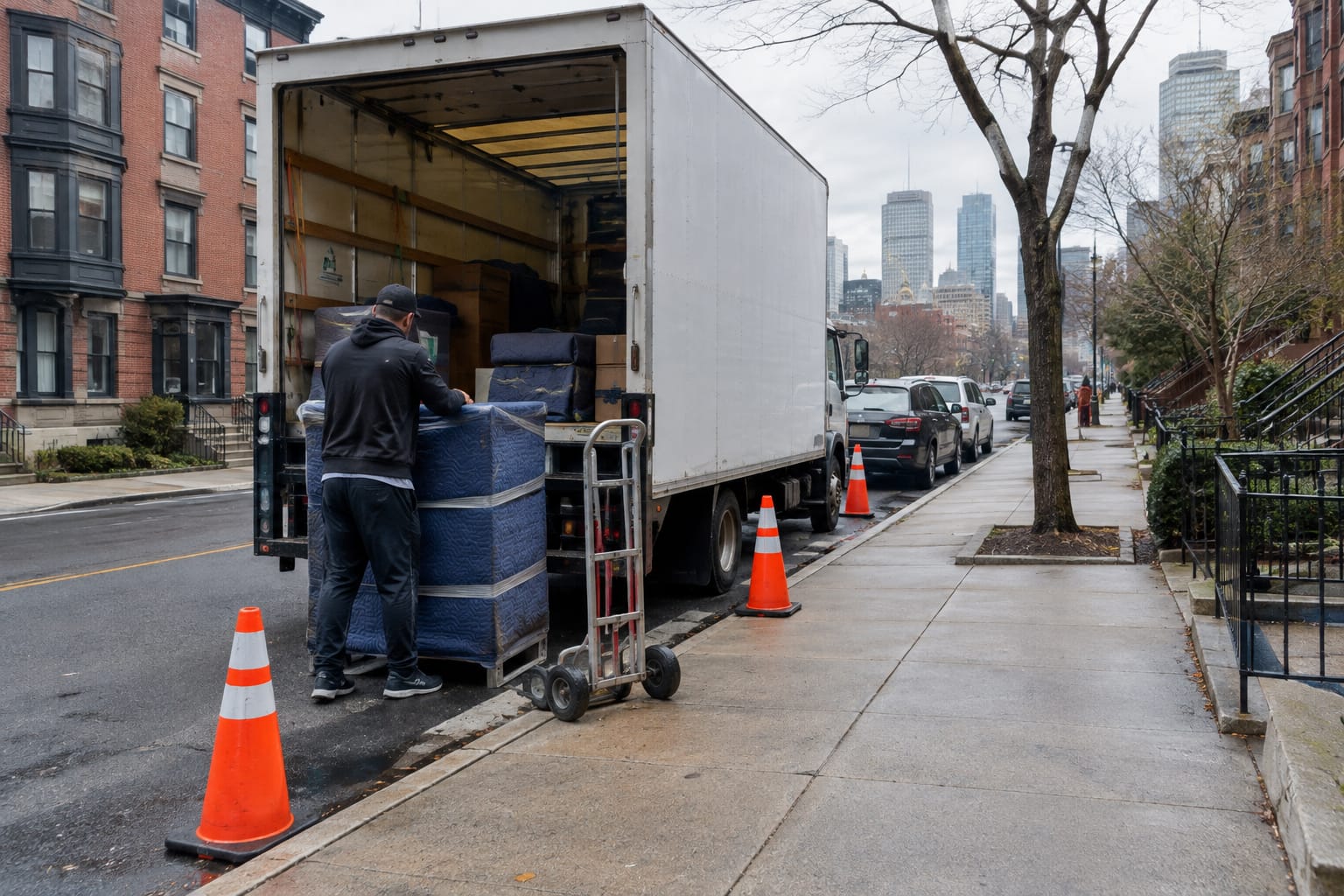
Then there is parking. Curb space is tight in many Boston neighborhoods. If the truck has to park far from your door, paid carry time goes up. Check with the City of Boston about whether your street needs a moving-truck permit, and agree in writing who arranges it. The rundown on where to park a moving truck in Boston explains the options. Also ask how the crew plans the truck route.
Questions to Ask and Red Flags to Watch
A few direct questions tell you more than any advertisement:
- Will you see my belongings, by video walk-through or on-site, before you quote?
- Is the estimate written, and for interstate moves, is it binding, non-binding, or binding-not-to-exceed?
- What does the hourly rate or flat quote include, and what is billed separately?
- What valuation protection is included, and what does extra coverage cost?
- Can you provide a COI for my building?
- What is the arrival window and, for long-distance moves, the delivery window, and will you put it in writing?
Watch for these red flags:
-
A firm price given over the phone without any inventory.
-
No written estimate, or pressure to sign incomplete paperwork.
-
No verifiable business address.
-
Vague answers about how damage claims are handled.
Shortlisting and Booking the Right Crew
Start by matching the mover type to your move, then compare several written quotes. Quotes based on the same property size, distance, access details, and extra services are the clearest way to judge pricing.

Work through this short checklist before you sign:
- Confirm the company handles your specific type of move.
- Verify licensing and insurance in writing.
- Get a written, itemized estimate, not a phone guess.
- Check recent reviews on independent review sites, and read more than the highlights.
- Ask about the parking and building access plan.
Local experience matters too. Movers who work in Greater Boston regularly know which streets are tight, which buildings require elevator reservations, and how to plan a Beacon Hill or South End job. That knowledge can matter more than a small difference in rate.
The final step is to compare your shortlist on price and fit. The right moving service is the one whose scope matches your move: no more crew than you need, and enough capability for the job.
Recommended Reading
- Licensed Moving Company Boston: How to Verify Movers
- Where Can I Park My Moving Truck in Boston?
- How Much Do Movers Cost?
- Full-Service Movers
Published by Born to Move, a licensed and insured moving company headquartered in Newton, MA, serving Greater Boston and New England.
Need help with this? Get a quote · Call (617) 903-2609
Frequently Asked Questions