'%3E%3Cpath%20fill='%231B2A47'%20d='M1.605%2016.263c.03-1.139.059-2.482.088-3.971.03-1.49.03-2.832.03-4.03%200-.758%200-1.576-.03-2.51%200-.905-.03-1.84-.03-2.803%200-.496-.028-.964-.028-1.43%200-.468%200-.906-.03-1.315h6.858q2.188%200%203.589.35c.963.234%201.663.643%202.13%201.198.496.555.73%201.372.73%202.394%200%20.788-.176%201.46-.497%201.985-.32.526-.846.935-1.575%201.197-.73.292-1.693.468-2.918.526v.263c1.313.087%202.334.263%203.122.525.758.263%201.342.672%201.692%201.197.35.526.525%201.197.525%202.044%200%201.08-.233%201.927-.67%202.57-.468.642-1.139%201.08-2.102%201.343-.933.262-2.159.408-3.705.408H1.605zm6.537-9.197q1.882%200%202.713-.526c.555-.35.817-.934.817-1.752%200-.905-.292-1.547-.846-1.927s-1.459-.554-2.655-.554H4.757v4.759zm.204%206.92c.934%200%201.663-.088%202.217-.263.555-.176.934-.438%201.197-.818s.38-.876.38-1.518c0-.876-.322-1.49-.934-1.84-.643-.35-1.635-.525-3.035-.525H4.757v4.963zM21.038%2016.555c-1.576%200-2.801-.292-3.618-.905-.817-.614-1.284-1.519-1.372-2.745-.087-1.226.205-2.774.847-4.613s1.43-3.358%202.392-4.584c.963-1.226%202.043-2.131%203.298-2.744C23.839.292%2025.24%200%2026.786%200c1.576%200%202.772.321%203.59.934.816.613%201.283%201.548%201.37%202.774s-.203%202.774-.845%204.613c-.642%201.81-1.43%203.358-2.393%204.584s-2.072%202.132-3.297%202.745a9.8%209.8%200%200%201-4.173.905m.788-2.278c.642%200%201.138-.058%201.371-.116.205-.059.496-.117.847-.322.262-.146.437-.292.554-.408.204-.175.32-.292.438-.41.204-.203.35-.408.496-.583.35-.438.642-.876.963-1.402.233-.408.466-.817.67-1.284.205-.438.38-.905.555-1.372.438-1.198.671-2.278.671-3.183s-.204-1.606-.612-2.131c-.409-.497-1.051-.76-1.897-.76-.467%200-.934.059-1.43.205h-.03c-1.02.292-1.925%201.226-2.042%201.372-.116.117-.467.526-.963%201.343a15.5%2015.5%200%200%200-1.342%202.92c-.408%201.197-.642%202.277-.671%203.182-.03.906.175%201.636.584%202.161q.611.788%201.838.788M14.853%2038.54c-1.576%200-2.802-.292-3.619-.905s-1.284-1.518-1.371-2.744c-.088-1.227.204-2.774.846-4.614s1.43-3.357%202.393-4.584%202.042-2.13%203.297-2.744c1.255-.613%202.655-.905%204.173-.905%201.575%200%202.772.321%203.589.934s1.284%201.548%201.371%202.774c.088%201.226-.204%202.774-.846%204.613-.642%201.81-1.43%203.358-2.393%204.584s-2.072%202.131-3.297%202.745c-1.226.613-2.626.846-4.143.846m.787-2.277c.642%200%201.138-.059%201.372-.117.204-.058.496-.117.846-.321.263-.146.438-.292.554-.409.205-.175.321-.292.438-.409.204-.204.35-.408.496-.584a13%2013%200%200%200%201.634-2.686c.204-.438.38-.905.555-1.372.437-1.197.67-2.277.67-3.182%200-.906-.203-1.606-.612-2.132-.409-.496-1.05-.759-1.897-.759-.467%200-.934.058-1.43.204h-.029c-1.021.292-1.925%201.227-2.042%201.373-.117.116-.467.525-.963%201.343a15.5%2015.5%200%200%200-1.342%202.92c-.409%201.196-.642%202.277-.671%203.182s.175%201.635.583%202.16q.613.789%201.838.789'/%3E%3Cpath%20fill='%23FF515E'%20d='M55.966%2038.57c-1.576%200-2.801-.293-3.618-.906s-1.284-1.518-1.372-2.744c-.087-1.227.204-2.774.846-4.613s1.43-3.358%202.393-4.584c.963-1.227%202.043-2.132%203.297-2.745s2.656-.905%204.173-.905c1.576%200%202.772.321%203.589.934s1.284%201.548%201.371%202.774c.088%201.226-.204%202.774-.846%204.613-.642%201.81-1.43%203.358-2.393%204.584s-2.071%202.131-3.297%202.745c-1.225.613-2.626.846-4.143.846m.788-2.249c.642%200%201.138-.058%201.371-.117.204-.058.496-.116.846-.32.263-.147.438-.293.555-.41a7%207%200%200%200%20.437-.408c.205-.205.35-.41.496-.584a13%2013%200%200%200%201.634-2.686c.205-.438.38-.905.555-1.373.438-1.197.671-2.277.671-3.182s-.204-1.606-.613-2.131c-.408-.497-1.05-.76-1.896-.76-.467%200-.934.059-1.43.205h-.03c-1.02.292-1.925%201.226-2.042%201.372-.117.117-.467.526-.963%201.343a15.5%2015.5%200%200%200-1.342%202.92c-.409%201.197-.642%202.277-.671%203.182s.175%201.635.583%202.16q.614.79%201.839.79'/%3E%3Cpath%20fill='%231B2A47'%20d='M33.06%2016.263c0-.35%200-.935.03-1.81.029-1.051.058-2.103.058-3.154s.03-2.073.03-3.007c0-1.606-.03-3.27-.06-4.993%200-.554-.028-1.08-.028-1.606%200-.525-.03-1.021-.03-1.46h6.828c1.46%200%202.685.117%203.59.38q1.4.394%202.1%201.314.7.963.7%202.628c0%20.992-.174%201.81-.554%202.452-.35.643-.904%201.11-1.604%201.431s-1.576.467-2.627.496v.263q2.058.087%203.064.876c.671.525%201.138%201.372%201.43%202.51.087.41.233%201.023.467%201.84.233.818.408%201.431.554%201.84h-3.414a11%2011%200%200%200-.262-1.022c-.321-1.314-.526-2.19-.584-2.628a5%205%200%200%200-.642-1.46%202.13%202.13%200%200%200-.963-.73c-.408-.146-.934-.233-1.605-.233h-3.326v6.0440000000000005H33.06zm6.332-8.292c1.343%200%202.276-.205%202.86-.613.554-.41.846-1.11.846-2.073%200-.73-.146-1.314-.408-1.723-.263-.409-.671-.7-1.197-.876q-.788-.263-2.1-.263h-3.181v5.519h3.18zM49.4%2016.263l.03-2.745c.029-2.452.029-4.905.029-7.416q0-2.101-.088-5.868h4.085l5.924%2010.335c.087.234.204.438.291.643.117.204.205.408.321.613.38.788.613%201.255.672%201.372h.262c0-.058-.03-.146-.03-.204%200-.059-.028-.117-.028-.175a75%2075%200%200%201-.175-1.314%2010%2010%200%200%201-.088-1.285c0-1.547%200-3.737-.029-6.57V1.84c0-.584-.03-1.11-.03-1.576h2.977c-.03%202.482-.058%205.08-.058%207.766%200%201.694%200%204.438.029%208.292h-4.027l-5.573-9.43c-.875-1.81-1.226-2.511-1.05-2.132-.263-.613-.467-1.08-.613-1.46h-.263c.058.35.117.876.175%201.548.059.7.117%201.168.117%201.46%200%202.978%200%206.306.029%209.985H49.4zM4.698%2038.277c.029-2.627.058-5.255.058-7.883%200-1.576%200-3.503-.029-5.752-1.109%200-2.684%200-4.727.03v-2.453h12.664v2.453c-1.955-.03-3.53-.03-4.756-.03%200%20.584-.03%201.227-.03%201.957s0%201.46-.029%202.218v1.84c0%202.57.03%205.11.059%207.62z'/%3E%3Cpath%20fill='%23FF515E'%20d='M29.441%2038.277c.409-1.05.788-2.102%201.168-3.182s.787-2.16%201.167-3.241c.613-1.693%201.05-2.949%201.342-3.766l1.255-3.65c.116-.38.262-.788.379-1.139.117-.38.263-.73.38-1.05h4.61l-.671%2012.904h.262l8.316-12.905h4.669l-.7%201.869c-.876%202.452-1.343%203.766-1.43%204a501%20501%200%200%200-3.385%2010.16h-2.947c.292-.846.788-2.219%201.459-4.087.175-.526.35-1.08.554-1.606.175-.526.38-1.08.555-1.577.642-1.81%201.342-3.825%202.072-6.014h-.234l-8.724%2013.314h-2.86l.554-13.314h-.175c-.175.496-.38.992-.554%201.489-.175.496-.38%201.022-.555%201.547a163%20163%200%200%200-1.08%203.008c-.145.38-.262.759-.408%201.138-.117.38-.262.73-.408%201.11-.7%201.898-1.284%203.59-1.751%205.05h-2.86zM68.047%2038.277c.175-2.19.32-4.525.467-7.007.058-.905.204-3.912.467-9.051h3.151c-.03.438-.058.934-.088%201.46s-.058%201.08-.087%201.693a264%20264%200%200%201-.409%206.657c-.145%201.986-.35%203.591-.583%204.788h.175Q72.147%2034.892%2073.94%2032a562%20562%200%200%201%204.465-7.066c.32-.496.641-.992.933-1.46s.555-.875.817-1.255h3.268q-.568.832-1.138%201.752c-.408.613-.787%201.255-1.196%201.927-3.88%206.014-6.478%2010.131-7.85%2012.35h-5.193zM79.106%2038.277c.32-.788.758-2.014%201.37-3.65a287%20287%200%200%200%201.577-4.32c.437-1.256.904-2.628%201.4-4.088s.934-2.774%201.313-3.97h11.322l-.846%202.364H87.1l-1.664%204.847%207.645-.088-.612%201.694-7.587-.088-1.75%204.934h8.286l-.846%202.365z'/%3E%3C/g%3E%3Cdefs%3E%3CclipPath%20id='a'%3E%3Cpath%20fill='%23fff'%20d='M0%200h96v40H0z'/%3E%3C/clipPath%3E%3C/defs%3E%3C/svg%3E)
Hiring a moving company is one of the highest-stakes logistical decisions in any relocation — and one of the most under-researched. With over 7,000 registered interstate carriers operating across the United States and thousands more local operators functioning without federal oversight, the quality gap between the best and worst providers is enormous. The Federal Motor Carrier Safety Administration (FMCSA) receives tens of thousands of consumer complaints annually, covering everything from damaged furniture to outright hostage-load fraud. This guide identifies the six qualities that define a reputable moving company, the specific verification steps that most consumers skip, and the red flags that expose operators who should never be hired.

Key Takeaways
| Point | Details |
|---|---|
| Licensing is the baseline requirement | Interstate movers must hold a valid USDOT number issued by the FMCSA. Verify any mover at protectyourmove.gov before signing any contract. |
| Reviews reveal operational patterns | Analyze 50+ reviews across Google, Yelp, and the BBB. A pattern of complaints about hidden fees or damaged items disqualifies a mover regardless of average star rating. |
| Written estimates have legal categories | Non-binding estimates can legally increase by up to 10% on moving day. Always request a binding or not-to-exceed estimate in writing for full cost certainty. |
| Experience must match the move type | Movers with 5+ years handling specialty items — pianos, antiques, fine art — carry measurably lower damage rates than generalist crews with no documented specialty training. |
| Red flags appear before moving day | Cash-only payment demands, no physical address, and quotes more than 30% below competitors are the three leading warning signs of fraudulent operators. Source: FMCSA |
Why Choosing the Right Moving Company Matters More Than You Think
The moving services industry generates over $86 billion annually in the United States, a market large enough to attract both highly professional operators and predatory ones. The visual markers of a professional mover — a logo on a truck, a polished website — are easily replicated by fraudulent operators, making surface-level vetting dangerously insufficient.
The financial exposure is larger than most consumers anticipate. Standard homeowner’s and renter’s insurance policies typically exclude damage caused by moving companies during transit. Unless the mover carries verified cargo liability coverage — confirmed before the move — the consumer absorbs the full replacement cost of any loss. For a typical household with $40,000–$80,000 in furnishings and electronics, that exposure is material.
Timeline risk compounds the financial stakes. Delays caused by inexperienced crews, undersized trucks, or poor logistics coordination create downstream costs: extended hotel stays, missed lease start dates, and lost workdays. Understanding what makes a good mover — and verifying it before signing — eliminates these risks at the source.
1. Proper Licensing and Insurance Coverage
Licensing is the non-negotiable starting point for any reliable movers shortlist. For interstate moves crossing state lines, the FMCSA requires every moving company to hold an active USDOT number and a Motor Carrier (MC) number. Verification takes under two minutes at the FMCSA’s carrier search tool — enter the company name or USDOT number to confirm active registration, insurance status, and any safety violations on record.
For intrastate moves entirely within one state, licensing requirements are state-specific. California regulates movers through the California Public Utilities Commission (CPUC); New York through the NYSDOT. Most states maintain searchable registries accessible by company name. Confirming a mover’s state license costs minutes and eliminates an entire category of fraud risk.
Insurance coverage operates on two distinct layers that must be verified separately:
- Cargo liability: Covers loss or damage to household goods in transit. The federal minimum is $0.60 per pound per article — a figure that covers almost nothing of real value for electronics, artwork, or specialty furniture.
- General liability: Covers property damage at the origin or destination — scratched hardwood floors, damaged walls, broken banisters during the move.
Full-value protection (full-replacement value coverage) is available as an upgrade from most licensed and insured movers. Under this structure, the mover must repair, replace, or pay current market value for any damaged item. For households with high-value possessions, this upgrade is worth the additional premium. Moving company qualifications in this area should be confirmed in writing before any contract is signed.
Pro Tip: Request a certificate of insurance directly from the mover’s insurance carrier — not from the mover themselves. This confirms the policy is active, identifies coverage limits, and provides the insurer’s direct contact details if a claim needs to be filed.
2. Verified Reputation and Customer Reviews
A moving company’s review record is its operational history made public. According to BrightLocal’s Consumer Review Survey, 98% of consumers read online reviews for local businesses before making a purchase decision. Moving company reviews carry particularly high signal because they describe time-sensitive, high-stakes experiences with little room for ambiguity.

Evaluate reviews across three platforms simultaneously: Google Business Profile, Yelp, and the Better Business Bureau (BBB). The BBB’s complaint history reveals disputes that never surface in Google reviews — billing disagreements, unresolved damage claims, and pattern violations. A company with a 4.8-star Google rating but an F rating on the BBB is a high-risk hire that single-platform review checking would completely miss.
When analyzing reviews, filter for operational specifics: crew punctuality, how furniture was wrapped and protected, whether the final bill matched the written estimate, and how the company responded when something went wrong. These details predict actual experience quality far more accurately than aggregate star scores. Reading verified customer reviews that include specific dates, move types, and company responses provides the most reliable pre-hire signal.
| Review Platform | What It Reveals | Key Reliability Signal |
|---|---|---|
| Google Business Profile | Overall sentiment and review volume | 50+ reviews increases statistical reliability significantly |
| Yelp | Detailed narratives and move photos | Elite reviewer contributions carry additional credibility weight |
| BBB | Complaint history and resolution patterns | Accreditation status indicates dispute resolution commitment |
| FMCSA Licensing Portal | Safety record and insurance status | Official regulatory data — the most authoritative source available |
| Moving-specific review sites | Industry-specific complaint patterns | Specialist context for moving-related billing and damage disputes |
3. Transparent Pricing and Detailed Written Estimates
Moving estimates fall into three legally distinct categories under FMCSA regulation. Understanding the difference between them is essential before signing any contract. The FMCSA’s consumer rights guide defines these precisely:
- Non-binding estimate: An approximation only. The final bill can legally exceed this figure by up to 10% under the federal “110% rule.” Common but the weakest available consumer protection.
- Binding estimate: A fixed, locked price regardless of actual weight or time consumed. The mover cannot charge more, even if the move takes longer than anticipated.
- Not-to-exceed estimate: The price cannot exceed the estimate but can come in lower if the move requires less time or resources. The strongest consumer protection structure available.

Any estimate delivered without an in-home walkthrough or structured virtual assessment is inherently unreliable. The variables that drive cost — total volume, specialty items, access conditions, packing services required — demand direct assessment. A best moving company candidate will not provide a binding moving estimate based solely on a phone conversation.
Pro Tip: Obtain a minimum of three written estimates before committing to any mover. Compare them line by line — not just total price. Fuel surcharges, long-carry fees, elevator fees, and packing material charges are common additions that inflate final bills significantly when not disclosed in the initial written estimate.
Affordable moving company pricing and premium pricing both require transparent line-item justification. Any mover who cannot explain every charge in the estimate before the move is the most likely to add unexplained charges once items are loaded.
4. Industry Experience and Specialized Expertise
Years in operation provides useful context but is an incomplete quality indicator. A moving company with a decade of experience in standard studio apartment moves may lack the equipment, training, and crew expertise to handle a grand piano, a wine collection, or a multi-floor office relocation. Relevant experience — specific to the move type being executed — is the precise criterion that matters.
The American Moving & Storage Association (AMSA) administers professional certification programs, including the ProMover designation. ProMover status signals that a company has met AMSA’s standards for ethical business practices, licensing compliance, and professional conduct. Prioritizing AMSA-certified operators adds a meaningful quality filter to the vetting process.

For specialty moves, ask directly: How many piano relocations has the crew completed? What custom crating does the company provide for fine art or antiques? Are specialty items covered under a separate liability provision? A full service moving company equipped for specialty handling answers these questions immediately and in writing. One that overpromises without specifics, or deflects with generalities, is demonstrating a gap in actual capability.
Crew stability is an underrated quality signal. Moving companies with high employee turnover — which typically reflects poor management and below-market compensation — deliver inconsistent service quality move to move. Ask how long the average crew member has been employed by the company. Tenured crews handle high-pressure situations with measurably more reliability than rotating contract labor.
5. Professional Equipment, Vehicles, and Resources
The physical infrastructure of a moving company determines its operational ceiling. Trucks that are undersized require multiple trips and extend move duration; trucks without adequate padding systems increase damage risk on every load. Before hiring, verify three specific equipment factors:
- Fleet ownership: Movers who own their trucks demonstrate operational scale and business stability. Those using rented consumer vehicles from retail truck rental companies typically have limited capacity and no specialized moving equipment on board.
- Packing materials: Professional-grade moving blankets, stretch wrap, custom crating, and specialty cartons for mirrors and artwork are standard for top rated movers. Confirm which materials are included in the base price versus charged as line-item extras.
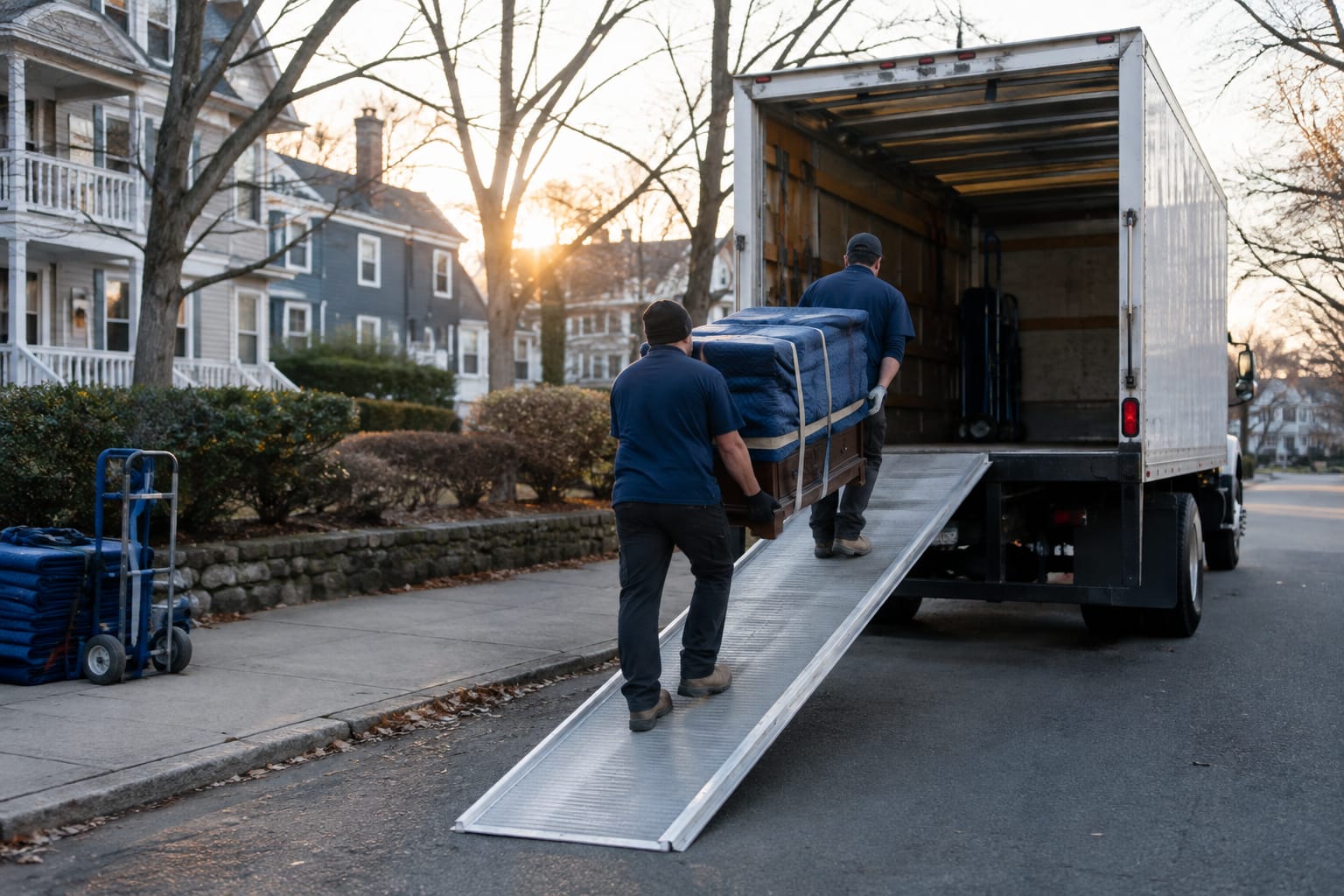
- Crew-to-volume ratio: A three-bedroom household typically requires three to four movers for efficient, damage-free loading and unloading. Understaffed crews compensate by rushing — the most common single cause of move-day damage incidents.
GPS-tracked fleets represent an operational differentiator for long-distance moves. Real-time tracking eliminates the information asymmetry between the customer and the carrier during transit — a transparency standard that professional movers maintain and lower-quality operators cannot offer.

Storage capability is worth evaluating even for moves without anticipated storage needs. A mover with integrated short- and long-term storage facilities can absorb closing date mismatches, lease gaps, and delivery timing conflicts without requiring the consumer to engage a separate vendor. This vertical integration is a reliability indicator as much as a convenience feature.
6. Responsive Communication and Customer Service
Communication quality during the sales and booking process is a reliable predictor of moving day performance. A moving company that takes more than 24 hours to return an estimate request, provides vague answers to direct questions, or cannot name a dedicated point of contact is demonstrating organizational disorganization that will replicate on moving day without fail.
Evaluate responsiveness at three defined stages: initial inquiry response time, estimate follow-up cadence, and pre-move logistics confirmation. A professional, reliable movers operation confirms all logistics details — crew arrival time, truck specifications, crew lead contact number — 48 to 72 hours before the scheduled move date. This confirmation step is universal practice among high-quality operators and conspicuously absent from problematic ones.
For interstate moves, logistics complexity increases substantially. Coordination between origin and destination crews, transit timing windows, and storage contingency management all require active, proactive communication. The FMCSA mandates that interstate movers provide specific written documentation — an order for service, a bill of lading, and a written arbitration program disclosure — at defined points in the process. These documents are both legal requirements and measurable communication checkpoints.
Red Flags to Watch for When Vetting Movers
Moving fraud is a documented, recurring industry problem. The FMCSA’s rogue mover advisory details the most prevalent fraud pattern: a low-ball estimate secures the booking, household goods are loaded onto the truck, and the mover then demands inflated payment before releasing items. This hostage-load scheme affects thousands of consumers each year and is almost entirely preventable through pre-hire vetting.
| Red Flag | What It Signals | Recommended Response |
|---|---|---|
| No physical address or PO Box only | Shell operation with no accountability | Verify on Google Street View; decline if no physical location confirmed |
| Cash-only payment requirement | No paper trail, almost certainly unlicensed | Decline and source an alternative immediately |
| Estimate provided without any home assessment | Final bill will be materially higher than the estimate | Require an in-home or structured virtual walkthrough |
| No written contract or bill of lading offered | Illegal for interstate moves; extremely high risk for any move | Do not sign without complete written documentation in hand |
| Quote more than 30% below all competing estimates | Classic bait-and-switch pricing pattern | Cross-reference with at least two additional written estimates |
| Unmarked trucks or generic unverifiable company name | Potential shell operation or unvetted subcontractor | Request USDOT number and verify independently at FMCSA |
| Upfront deposit exceeding 20% of estimated total | Payment fraud risk — goods used as leverage | Standard industry practice is payment upon completed delivery |
Moving company red flags consistently appear before moving day — in the sales process, the estimate delivery, and the contract review stage. A company that pressures for an immediate commitment before providing full written documentation has failed the most basic professional standard and should be removed from consideration.
Pro Tip: Search the mover’s exact business name plus the word “complaints” on Google, then cross-reference with the FMCSA’s complaint database. A clean regulatory record with documented complaint resolution is one of the strongest positive signals available to consumers during the vetting process.
Your Moving Company Hiring Checklist
A structured checklist converts the six quality criteria above into concrete verification actions that take under two hours to complete before any contract is signed:
- Verify USDOT and MC numbers at the FMCSA carrier search tool
- Request a certificate of insurance directly from the mover’s insurance carrier — not the mover
- Confirm state licensing for intrastate moves through the relevant state regulatory authority
- Read reviews across Google, Yelp, and the BBB — analyze patterns across 50+ reviews, not just averages
- Obtain three written estimates with complete line-item breakdowns
- Request a binding or not-to-exceed estimate in writing for full cost certainty
- Confirm AMSA ProMover status or equivalent professional certification
- Verify truck fleet ownership and packing material specifications before booking
- Assign a single dedicated point of contact and confirm all logistics 48–72 hours before move day
- Review the bill of lading carefully before signing — it is a legally binding contract
- Pay by credit card where possible for chargeback protection in the event of disputes
For households with additional pre-move questions on timing, specialty items, or insurance, a comprehensive moving company FAQ addresses the most common concerns. Those ready to begin the estimate process can get a free moving quote to establish a verified pricing baseline from a licensed, insured operator.
What is a reasonable price for a local move?
Local move pricing depends on crew size, hourly rate, distance, and total move duration. According to HomeAdvisor’s moving cost research, the national average for a local move is approximately $1,250, with a typical range of $800–$2,500 depending on home size and complexity. A one-bedroom apartment typically runs $300–$700; a three-bedroom home $900–$2,500 or more. Most local movers charge $80–$150 per hour for a two-person crew, with larger crews priced proportionally. Additional charges — packing materials, long-carry fees, stair fees, elevator fees — vary by company and must be disclosed in the written estimate before the move begins. Requesting in-home estimates from at least three companies and comparing line items, not just totals, is the most reliable method for establishing what a reasonable price looks like for a specific move.
How much should I tip movers on a $500 move?
Industry convention is 10–20% of the total bill, distributed among individual crew members. On a $500 move, that translates to $50–$100 total, or approximately $15–$25 per mover for a standard two- to three-person crew. The American Moving & Storage Association notes that tipping is discretionary — not mandatory — and should reflect actual service quality: punctuality, care with belongings, and professionalism under physical stress. Cash tips distributed directly to each crew member at move completion are the standard approach. If the crew navigates particularly difficult conditions — multiple flights of stairs, heavy specialty items, challenging access — tipping at or above the 20% level is appropriate recognition of exceptional effort and should not be withheld on a low-cost move simply because the total dollar amount is small.
What is the most inexpensive way to move?
The lowest-cost option for most people is a fully DIY move using a rented truck. Retail truck rental rates begin at approximately $19–$29 per day for local moves, with one-way interstate rentals ranging from $300–$2,000+ depending on distance and vehicle size. The trade-off is full physical labor responsibility and personal liability for any transit damage. A hybrid approach — hiring professional loading and unloading labor while self-driving a rented truck — reduces total cost by 40–60% compared to full-service professional movers while offloading the most physically demanding portion of the move. Portable storage containers offer a third option for flexible-timeline relocations: the container is delivered to the origin, loaded on the consumer’s schedule, and transported by the company to the destination. The most inexpensive approach depends on timeline flexibility, physical capacity, and the value placed on professional item handling and liability coverage.
How do I verify a moving company’s license and insurance?
For interstate movers, the process is direct: visit the FMCSA’s Protect Your Move portal and search by company name or USDOT number. The federal database displays active registration status, current insurance coverage status, safety rating, and documented complaint history. For intrastate movers, locate the relevant state regulatory authority — the CPUC in California, the NYSDOT in New York — and search the state’s licensed mover registry. For insurance verification specifically, request a certificate of insurance from the mover, then call the listed insurance carrier directly to confirm the policy is active and that coverage limits are adequate for the household’s value. This two-step process — FMCSA or state registry verification plus direct insurer confirmation — takes under 20 minutes and eliminates the most common form of moving company fraud before any contract is signed.
What questions should I ask a moving company before hiring them?
Seven questions that reliably separate professional movers from problematic operators:
- What is your USDOT number, and can you provide it for FMCSA verification?
- Do you own your trucks, or do you subcontract loads to other carriers?
- What type of estimate will you provide — non-binding, binding, or not-to-exceed?
- What liability coverage is included in the base price, and what are the options for full-value protection?
- Who will be the dedicated point of contact from booking through delivery completion?
- Have your crews handled [specific specialty items — piano, fine art, antiques] before, and are references available?
- What is your claims process if items are damaged — how are claims filed and what is the resolution timeline?
A mover who answers questions 1, 3, and 7 clearly, completely, and in writing meets the baseline standard for a reputable moving company. One who deflects, provides vague responses, or cannot produce a USDOT number on request should be removed from consideration immediately.
Recommended
- Get a Free Moving Quote — Start the vetting process with a written estimate from a licensed, insured carrier.
- Moving Pricing Guide — Understand how local and long-distance move costs are structured before comparing estimates from multiple companies.
- Customer Reviews — Read verified accounts from completed moves to assess operational service quality firsthand.
Frequently Asked Questions