'%3E%3Cpath%20fill='%231B2A47'%20d='M1.605%2016.263c.03-1.139.059-2.482.088-3.971.03-1.49.03-2.832.03-4.03%200-.758%200-1.576-.03-2.51%200-.905-.03-1.84-.03-2.803%200-.496-.028-.964-.028-1.43%200-.468%200-.906-.03-1.315h6.858q2.188%200%203.589.35c.963.234%201.663.643%202.13%201.198.496.555.73%201.372.73%202.394%200%20.788-.176%201.46-.497%201.985-.32.526-.846.935-1.575%201.197-.73.292-1.693.468-2.918.526v.263c1.313.087%202.334.263%203.122.525.758.263%201.342.672%201.692%201.197.35.526.525%201.197.525%202.044%200%201.08-.233%201.927-.67%202.57-.468.642-1.139%201.08-2.102%201.343-.933.262-2.159.408-3.705.408H1.605zm6.537-9.197q1.882%200%202.713-.526c.555-.35.817-.934.817-1.752%200-.905-.292-1.547-.846-1.927s-1.459-.554-2.655-.554H4.757v4.759zm.204%206.92c.934%200%201.663-.088%202.217-.263.555-.176.934-.438%201.197-.818s.38-.876.38-1.518c0-.876-.322-1.49-.934-1.84-.643-.35-1.635-.525-3.035-.525H4.757v4.963zM21.038%2016.555c-1.576%200-2.801-.292-3.618-.905-.817-.614-1.284-1.519-1.372-2.745-.087-1.226.205-2.774.847-4.613s1.43-3.358%202.392-4.584c.963-1.226%202.043-2.131%203.298-2.744C23.839.292%2025.24%200%2026.786%200c1.576%200%202.772.321%203.59.934.816.613%201.283%201.548%201.37%202.774s-.203%202.774-.845%204.613c-.642%201.81-1.43%203.358-2.393%204.584s-2.072%202.132-3.297%202.745a9.8%209.8%200%200%201-4.173.905m.788-2.278c.642%200%201.138-.058%201.371-.116.205-.059.496-.117.847-.322.262-.146.437-.292.554-.408.204-.175.32-.292.438-.41.204-.203.35-.408.496-.583.35-.438.642-.876.963-1.402.233-.408.466-.817.67-1.284.205-.438.38-.905.555-1.372.438-1.198.671-2.278.671-3.183s-.204-1.606-.612-2.131c-.409-.497-1.051-.76-1.897-.76-.467%200-.934.059-1.43.205h-.03c-1.02.292-1.925%201.226-2.042%201.372-.116.117-.467.526-.963%201.343a15.5%2015.5%200%200%200-1.342%202.92c-.408%201.197-.642%202.277-.671%203.182-.03.906.175%201.636.584%202.161q.611.788%201.838.788M14.853%2038.54c-1.576%200-2.802-.292-3.619-.905s-1.284-1.518-1.371-2.744c-.088-1.227.204-2.774.846-4.614s1.43-3.357%202.393-4.584%202.042-2.13%203.297-2.744c1.255-.613%202.655-.905%204.173-.905%201.575%200%202.772.321%203.589.934s1.284%201.548%201.371%202.774c.088%201.226-.204%202.774-.846%204.613-.642%201.81-1.43%203.358-2.393%204.584s-2.072%202.131-3.297%202.745c-1.226.613-2.626.846-4.143.846m.787-2.277c.642%200%201.138-.059%201.372-.117.204-.058.496-.117.846-.321.263-.146.438-.292.554-.409.205-.175.321-.292.438-.409.204-.204.35-.408.496-.584a13%2013%200%200%200%201.634-2.686c.204-.438.38-.905.555-1.372.437-1.197.67-2.277.67-3.182%200-.906-.203-1.606-.612-2.132-.409-.496-1.05-.759-1.897-.759-.467%200-.934.058-1.43.204h-.029c-1.021.292-1.925%201.227-2.042%201.373-.117.116-.467.525-.963%201.343a15.5%2015.5%200%200%200-1.342%202.92c-.409%201.196-.642%202.277-.671%203.182s.175%201.635.583%202.16q.613.789%201.838.789'/%3E%3Cpath%20fill='%23FF515E'%20d='M55.966%2038.57c-1.576%200-2.801-.293-3.618-.906s-1.284-1.518-1.372-2.744c-.087-1.227.204-2.774.846-4.613s1.43-3.358%202.393-4.584c.963-1.227%202.043-2.132%203.297-2.745s2.656-.905%204.173-.905c1.576%200%202.772.321%203.589.934s1.284%201.548%201.371%202.774c.088%201.226-.204%202.774-.846%204.613-.642%201.81-1.43%203.358-2.393%204.584s-2.071%202.131-3.297%202.745c-1.225.613-2.626.846-4.143.846m.788-2.249c.642%200%201.138-.058%201.371-.117.204-.058.496-.116.846-.32.263-.147.438-.293.555-.41a7%207%200%200%200%20.437-.408c.205-.205.35-.41.496-.584a13%2013%200%200%200%201.634-2.686c.205-.438.38-.905.555-1.373.438-1.197.671-2.277.671-3.182s-.204-1.606-.613-2.131c-.408-.497-1.05-.76-1.896-.76-.467%200-.934.059-1.43.205h-.03c-1.02.292-1.925%201.226-2.042%201.372-.117.117-.467.526-.963%201.343a15.5%2015.5%200%200%200-1.342%202.92c-.409%201.197-.642%202.277-.671%203.182s.175%201.635.583%202.16q.614.79%201.839.79'/%3E%3Cpath%20fill='%231B2A47'%20d='M33.06%2016.263c0-.35%200-.935.03-1.81.029-1.051.058-2.103.058-3.154s.03-2.073.03-3.007c0-1.606-.03-3.27-.06-4.993%200-.554-.028-1.08-.028-1.606%200-.525-.03-1.021-.03-1.46h6.828c1.46%200%202.685.117%203.59.38q1.4.394%202.1%201.314.7.963.7%202.628c0%20.992-.174%201.81-.554%202.452-.35.643-.904%201.11-1.604%201.431s-1.576.467-2.627.496v.263q2.058.087%203.064.876c.671.525%201.138%201.372%201.43%202.51.087.41.233%201.023.467%201.84.233.818.408%201.431.554%201.84h-3.414a11%2011%200%200%200-.262-1.022c-.321-1.314-.526-2.19-.584-2.628a5%205%200%200%200-.642-1.46%202.13%202.13%200%200%200-.963-.73c-.408-.146-.934-.233-1.605-.233h-3.326v6.0440000000000005H33.06zm6.332-8.292c1.343%200%202.276-.205%202.86-.613.554-.41.846-1.11.846-2.073%200-.73-.146-1.314-.408-1.723-.263-.409-.671-.7-1.197-.876q-.788-.263-2.1-.263h-3.181v5.519h3.18zM49.4%2016.263l.03-2.745c.029-2.452.029-4.905.029-7.416q0-2.101-.088-5.868h4.085l5.924%2010.335c.087.234.204.438.291.643.117.204.205.408.321.613.38.788.613%201.255.672%201.372h.262c0-.058-.03-.146-.03-.204%200-.059-.028-.117-.028-.175a75%2075%200%200%201-.175-1.314%2010%2010%200%200%201-.088-1.285c0-1.547%200-3.737-.029-6.57V1.84c0-.584-.03-1.11-.03-1.576h2.977c-.03%202.482-.058%205.08-.058%207.766%200%201.694%200%204.438.029%208.292h-4.027l-5.573-9.43c-.875-1.81-1.226-2.511-1.05-2.132-.263-.613-.467-1.08-.613-1.46h-.263c.058.35.117.876.175%201.548.059.7.117%201.168.117%201.46%200%202.978%200%206.306.029%209.985H49.4zM4.698%2038.277c.029-2.627.058-5.255.058-7.883%200-1.576%200-3.503-.029-5.752-1.109%200-2.684%200-4.727.03v-2.453h12.664v2.453c-1.955-.03-3.53-.03-4.756-.03%200%20.584-.03%201.227-.03%201.957s0%201.46-.029%202.218v1.84c0%202.57.03%205.11.059%207.62z'/%3E%3Cpath%20fill='%23FF515E'%20d='M29.441%2038.277c.409-1.05.788-2.102%201.168-3.182s.787-2.16%201.167-3.241c.613-1.693%201.05-2.949%201.342-3.766l1.255-3.65c.116-.38.262-.788.379-1.139.117-.38.263-.73.38-1.05h4.61l-.671%2012.904h.262l8.316-12.905h4.669l-.7%201.869c-.876%202.452-1.343%203.766-1.43%204a501%20501%200%200%200-3.385%2010.16h-2.947c.292-.846.788-2.219%201.459-4.087.175-.526.35-1.08.554-1.606.175-.526.38-1.08.555-1.577.642-1.81%201.342-3.825%202.072-6.014h-.234l-8.724%2013.314h-2.86l.554-13.314h-.175c-.175.496-.38.992-.554%201.489-.175.496-.38%201.022-.555%201.547a163%20163%200%200%200-1.08%203.008c-.145.38-.262.759-.408%201.138-.117.38-.262.73-.408%201.11-.7%201.898-1.284%203.59-1.751%205.05h-2.86zM68.047%2038.277c.175-2.19.32-4.525.467-7.007.058-.905.204-3.912.467-9.051h3.151c-.03.438-.058.934-.088%201.46s-.058%201.08-.087%201.693a264%20264%200%200%201-.409%206.657c-.145%201.986-.35%203.591-.583%204.788h.175Q72.147%2034.892%2073.94%2032a562%20562%200%200%201%204.465-7.066c.32-.496.641-.992.933-1.46s.555-.875.817-1.255h3.268q-.568.832-1.138%201.752c-.408.613-.787%201.255-1.196%201.927-3.88%206.014-6.478%2010.131-7.85%2012.35h-5.193zM79.106%2038.277c.32-.788.758-2.014%201.37-3.65a287%20287%200%200%200%201.577-4.32c.437-1.256.904-2.628%201.4-4.088s.934-2.774%201.313-3.97h11.322l-.846%202.364H87.1l-1.664%204.847%207.645-.088-.612%201.694-7.587-.088-1.75%204.934h8.286l-.846%202.365z'/%3E%3C/g%3E%3Cdefs%3E%3CclipPath%20id='a'%3E%3Cpath%20fill='%23fff'%20d='M0%200h96v40H0z'/%3E%3C/clipPath%3E%3C/defs%3E%3C/svg%3E)
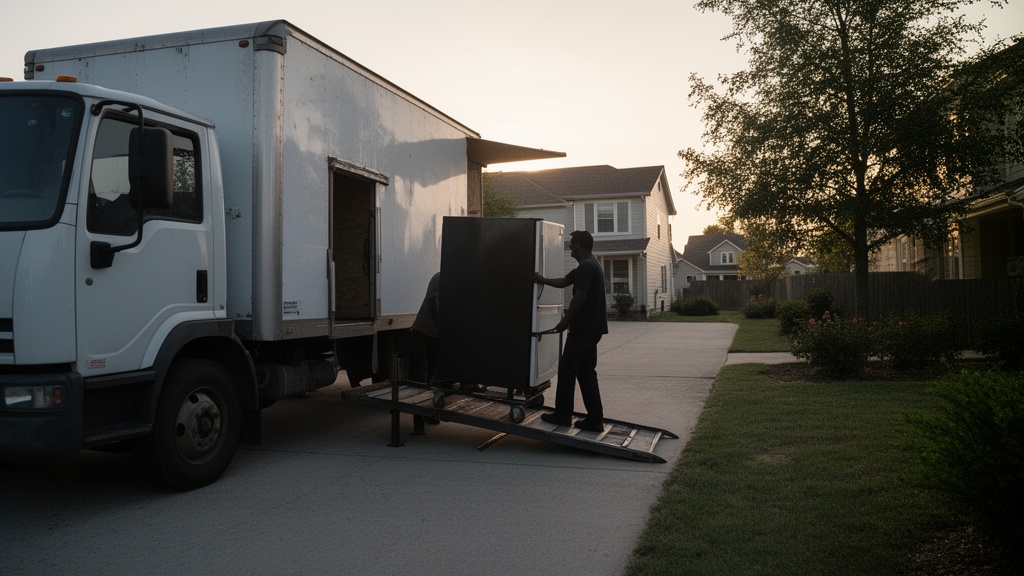
Moving large appliances isn't simply a heavy-lifting problem — it's a technical one. A refrigerator weighing over 300 pounds, a gas range with an active gas connection, or a front-loading washer with a free-spinning drum each present distinct risks that go beyond back strain. An appliance moving company is a professional mover equipped with specialized equipment, trained personnel, and insurance coverage to transport large household appliances without damage to the unit, the building, or the people involved. This guide covers which appliances require professional handling, what the protection process looks like, what it costs, and how to evaluate your options before move day.
Key Takeaways
| Point | Details |
|---|---|
| Appliances requiring professionals | Refrigerators (200–350 lbs), washers, dryers, ranges, and dishwashers all need specialized equipment and preparation for safe transport |
| Equipment standard | Professional crews carry 4-wheel appliance dollies, powered stair climbers, ratchet straps, and floor protection — not available on standard rental trucks |
| Verify licensing | Check any mover's US DOT number via FMCSA's Safer Web before booking — the lookup takes under 2 minutes |
| Preparation window | Refrigerators need 24 hours of defrost time; washing machines need drum transit braces installed before the crew arrives |
| Born to Move network | Born to Move operates from 11+ city hubs across the US, with guaranteed on-time arrival and full cargo insurance on every job |
What Is an Appliance Moving Company?
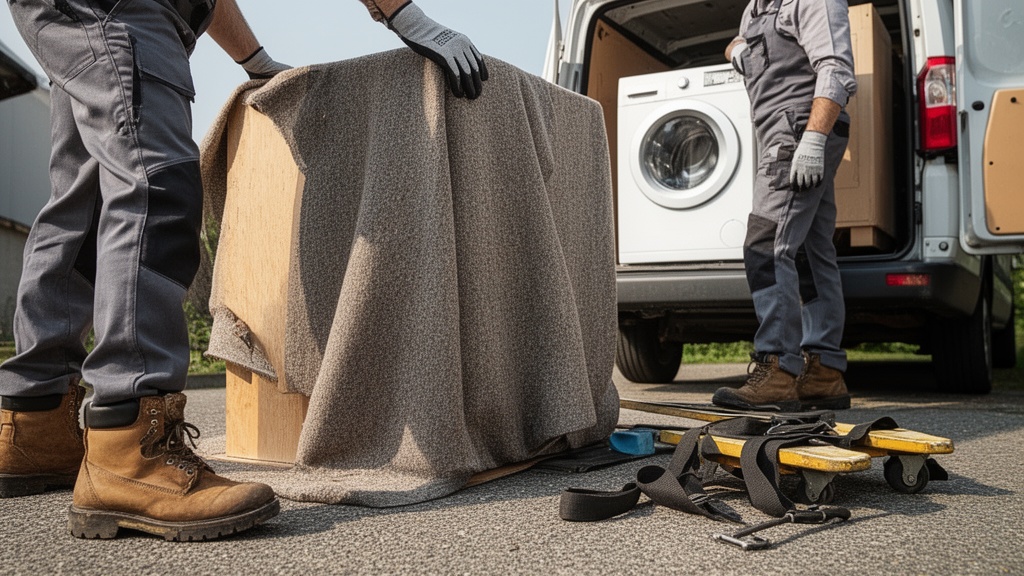
An appliance moving company is a licensed and insured moving provider that transports large household or commercial appliances using equipment and training specific to heavy, mechanically sensitive items. This distinguishes it from a general furniture mover, which carries standard dollies and furniture pads — tools adequate for dressers and sofas but not for moving heavy appliances like a 300-pound French-door refrigerator navigating a flight of stairs.
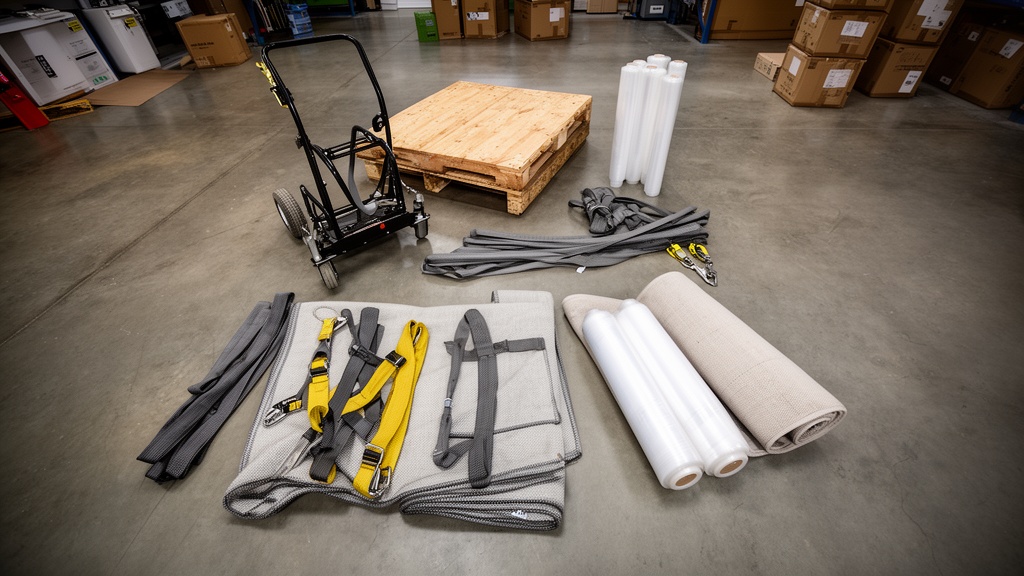
The core difference is equipment and expertise. A qualified appliance moving service arrives with four-wheel appliance dollies, powered stair climbers, heavy-duty ratchet straps, rubberized floor protection, and the operational training to recognize when a gas line disconnection requires a licensed technician. These aren't optional add-ons — they're the baseline for moving appliances without incident.
Working with a full-service moving company that includes appliance capabilities means one provider manages the entire job. That integration eliminates the scheduling complexity of booking a separate appliance specialist alongside your regular movers.
Born to Move, headquartered in Newton, MA, holds US DOT number, MC interstate authority, Massachusetts MDPU, and Illinois ILCC registrations. Every crew arrives fully equipped for residential and commercial appliance moves — from single-unit transport to full building relocations.
Which Appliances Require a Professional Moving Company?
Most homeowners underestimate what's involved in moving even standard appliances. Each item below presents a distinct safety or logistical challenge — and a specific reason professional appliance movers are the appropriate choice.
- Refrigerators — Weigh 200–350 lbs and contain compressor oil that permanently floods the cooling system if the unit tips during transit. Requires water line and ice maker disconnection before loading. See the detailed guide on how to move a refrigerator safely for step-by-step preparation.
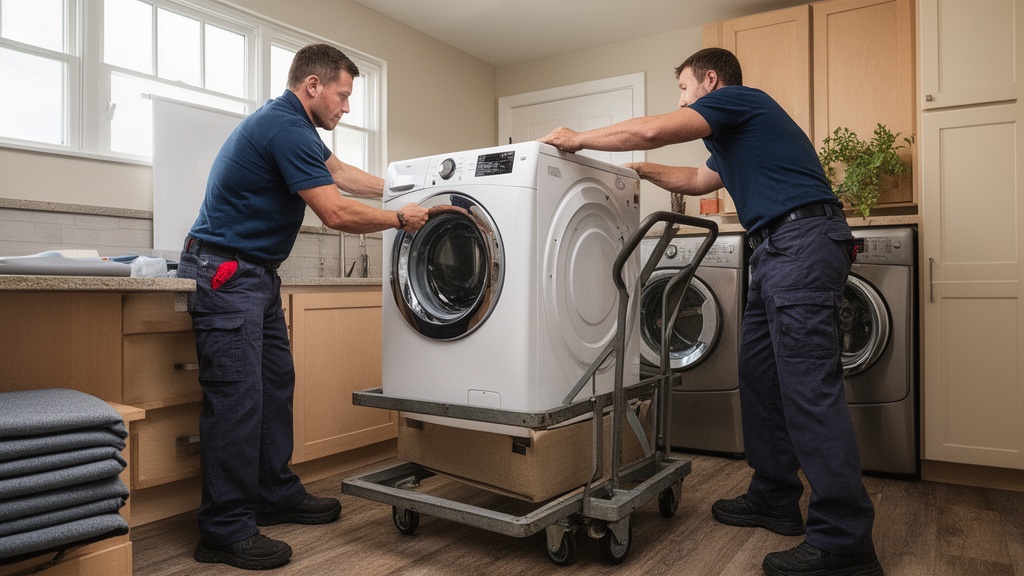
- Washing machines — Front-loaders are top-heavy and sustain irreversible bearing damage if the drum is not braced during transport. A washer and dryer moving service handles drum bracing, hose disconnection, and reinstallation.
- Dryers — Gas dryers require proper shutoff and final line capping by a licensed technician before the crew can disconnect the appliance.
- Gas ranges — Every stove moving company treats gas connections as the primary safety concern, coordinating with the homeowner's utility provider on shutoff and line capping before the unit moves.
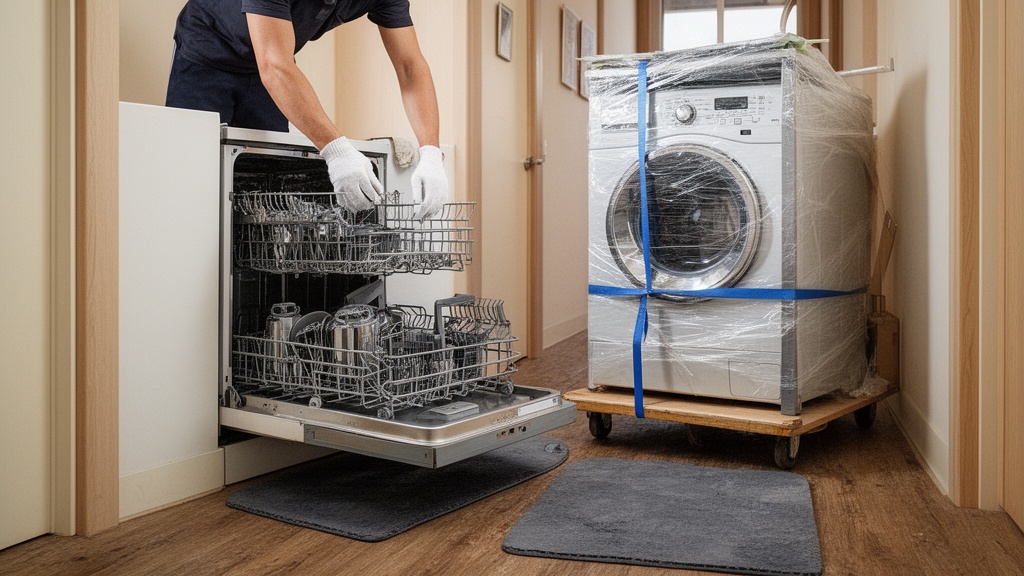
- Dishwashers — Built into cabinetry and connected to water and power; dishwasher movers handle full uninstallation from the cabinet frame, transport, and reinstallation at the destination.
- Double ovens and wall units — Integrated appliances requiring careful extraction from surrounding cabinetry and framing before large appliance transport begins.
Pro Tip: When moving a front-loading washing machine, locate the drum transit bolt kit that shipped with the unit — typically stored behind the rear access panel. If the kit is missing, purchase a replacement set before move day. Running the move without transit bolts risks a destroyed drum bearing, a repair that costs significantly more than the move itself.
| Appliance | Typical Weight | Key Preparation Requirement | Primary Risk Without Professionals |
|---|---|---|---|
| Refrigerator | 200–350 lbs | Defrost 24 hrs; disconnect water line | Compressor oil damage; floor damage |
| Front-load Washer | 150–200 lbs | Install drum transit braces | Bearing failure during transport |
| Gas Dryer | 100–150 lbs | Gas shutoff and line capping by licensed tech | Fire or gas leak hazard |
| Gas Range | 100–200 lbs | Utility shutoff; line capped by technician | Gas leak risk |
| Dishwasher | 50–80 lbs | Cabinet uninstall; water disconnect | Water damage; stripped mounting |
| Chest Freezer | 100–200 lbs | Defrost 24 hrs prior; dry interior | Water leakage during transit |
How Appliance Moving Companies Protect Your Items
Moving large appliances safely requires a systematic protection protocol — not improvisation. Here's what that looks like in practice.
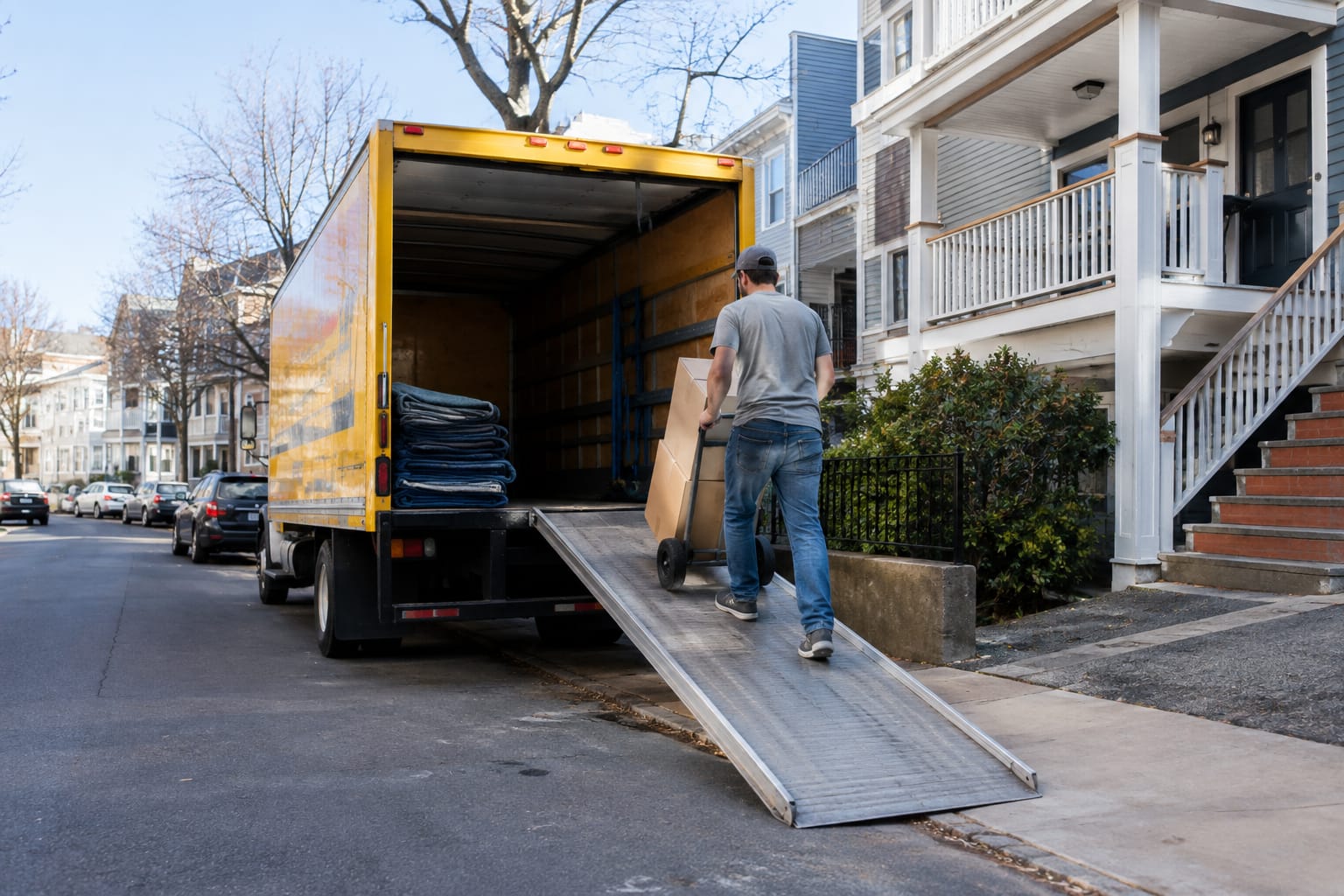
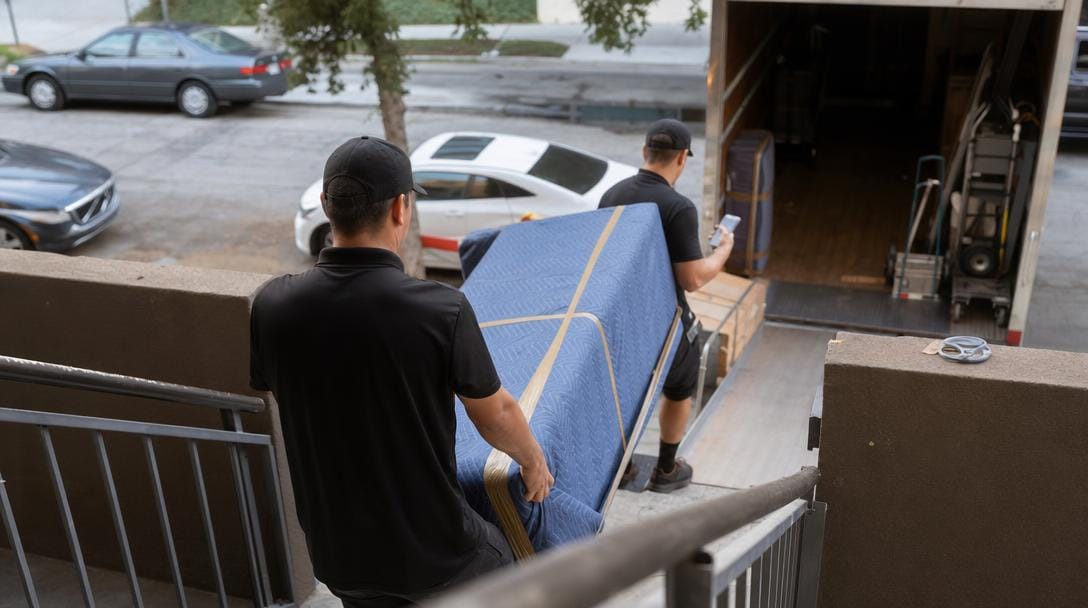
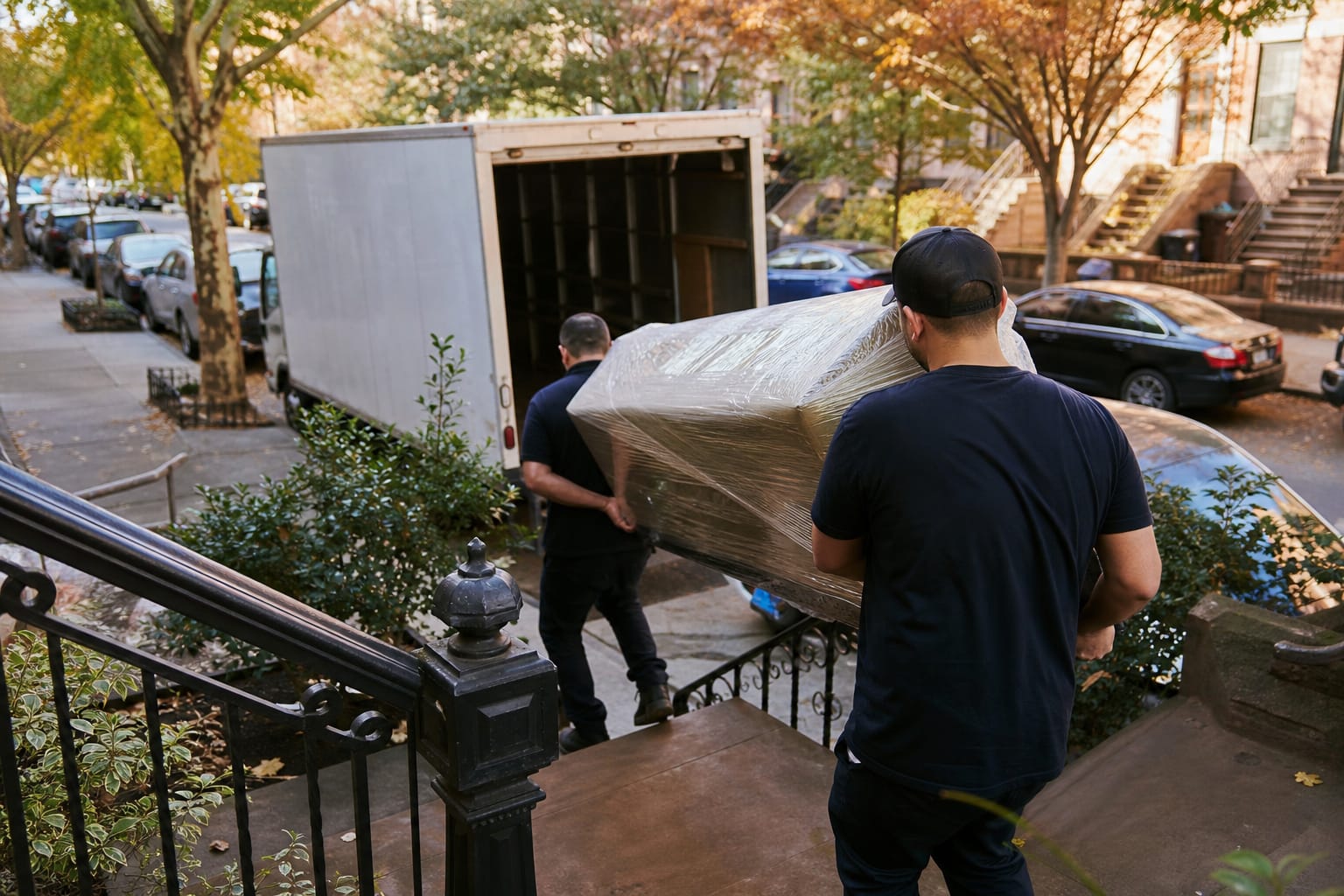
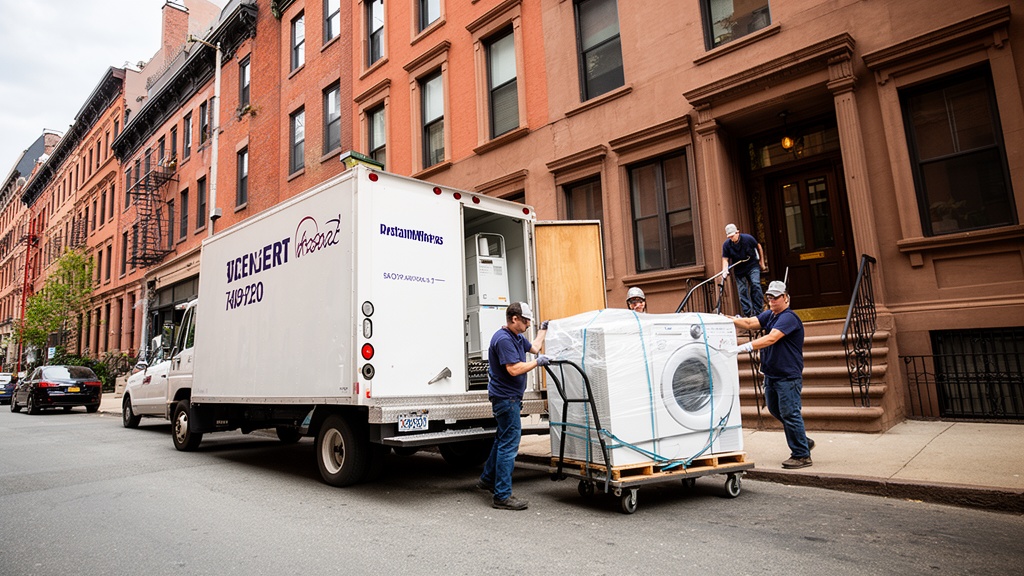
Equipment: A professional crew carries four-wheel appliance hand trucks, powered stair-climbing equipment, and heavy-duty ratchet straps. Floor protection — rubber runners, Masonite boards, or heavy-duty felt sheeting — goes down before any appliance moves from its position. This prevents the hardwood and tile damage that makes DIY appliance moves far more expensive than they appeared.
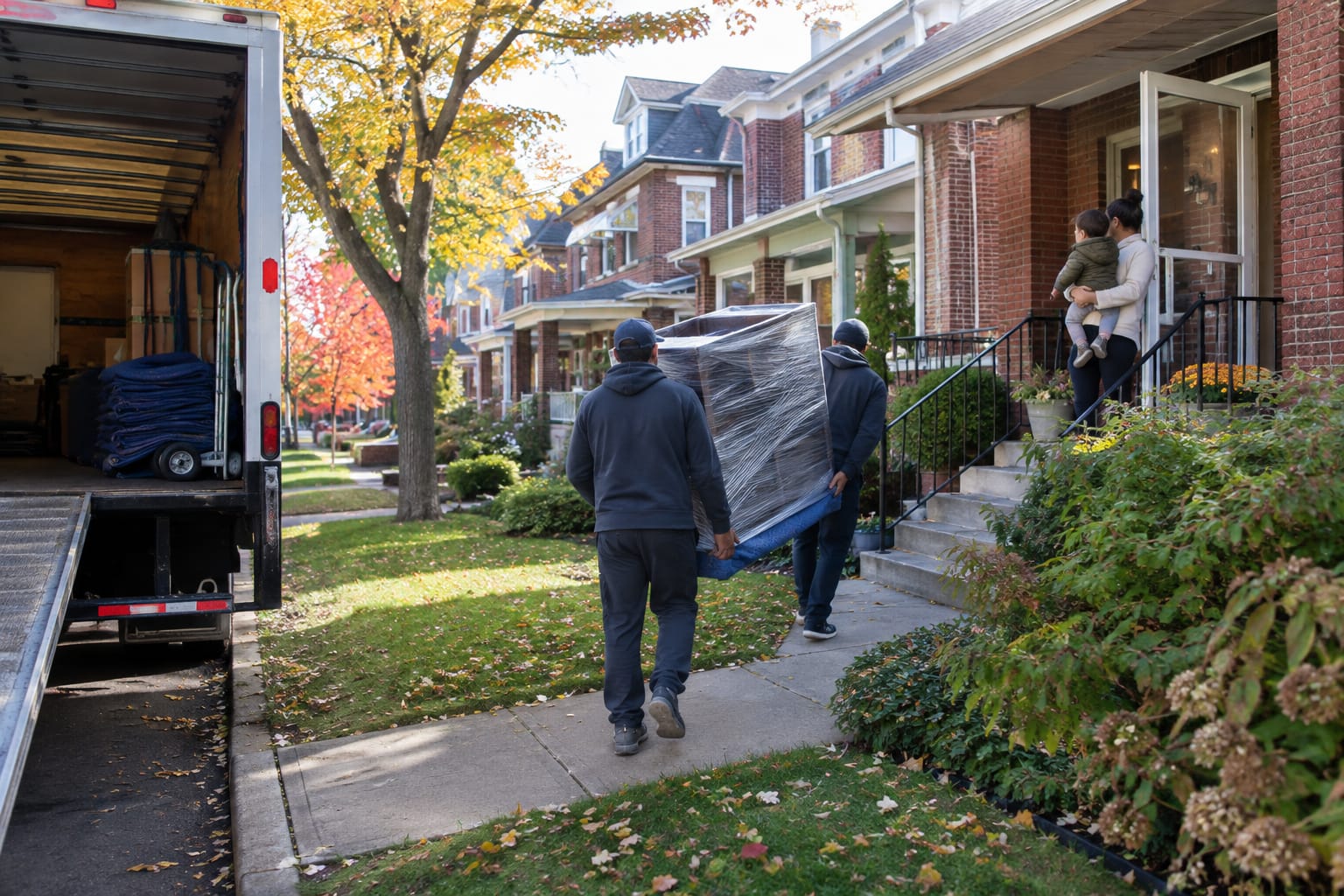
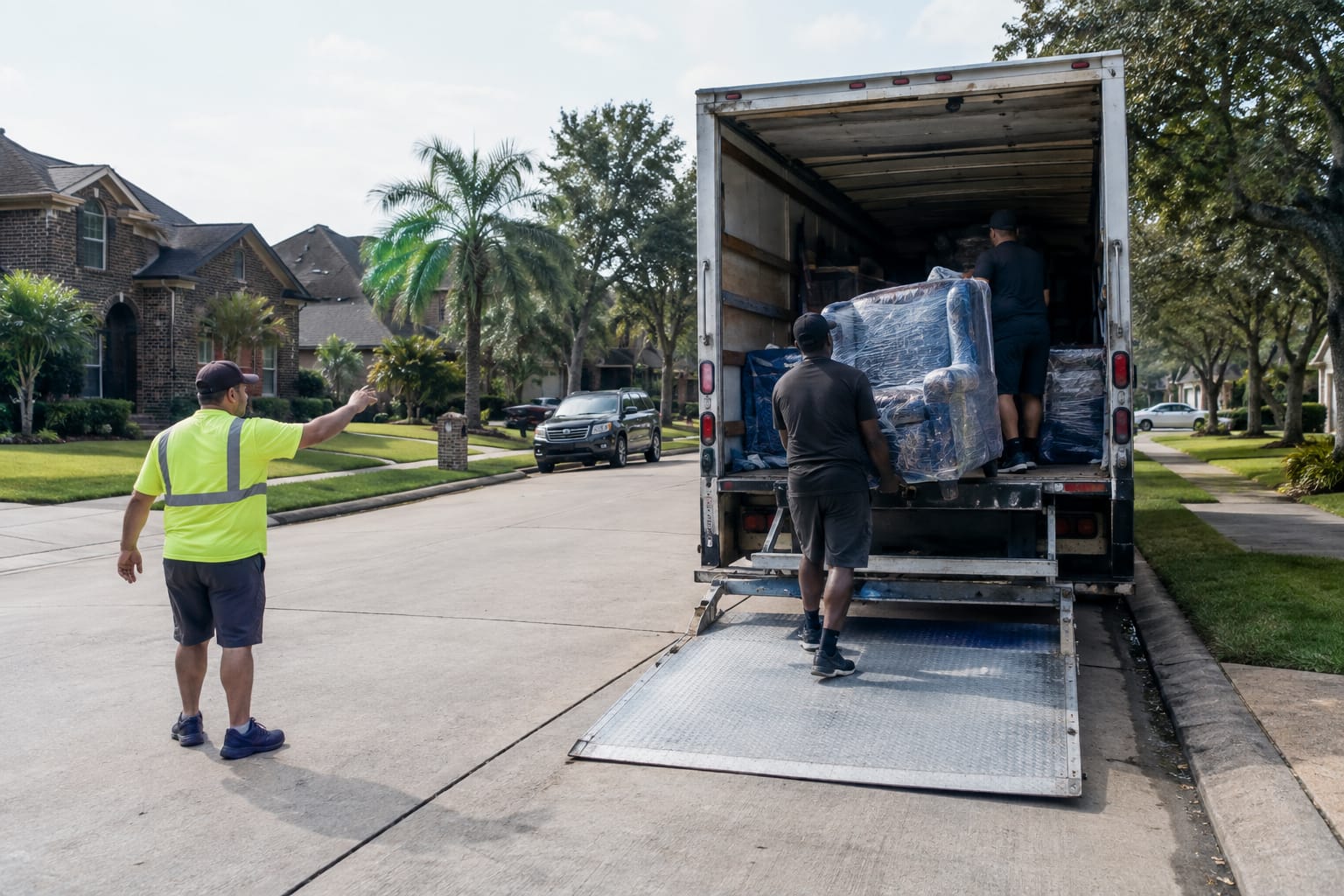
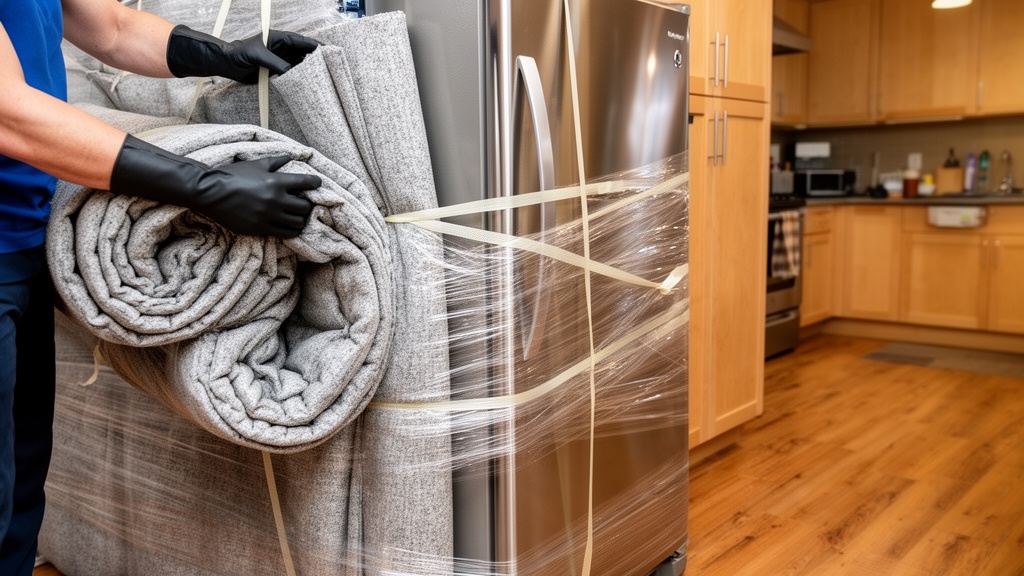
Wrapping and padding: Every appliance gets wrapped in moving blankets and secured with stretch wrap before loading. Control panels, glass cooktops, and stainless-steel finishes receive individual padding. This is the same systematic approach that antique moving companies apply to irreplaceable heirlooms — applied here to every appliance, regardless of value.
Transit positioning: A refrigerator transported on its side — even briefly — allows compressor oil to migrate into the cooling lines. The unit may run normally for days before failing. Professional appliance movers know this and transport every refrigerator upright for the entire move. The same discipline applies to any appliance requiring a specific transit orientation.
For items that cannot navigate standard doorway or stairwell dimensions, Born to Move offers professional hoisting and crane services — the same capability required for moving oversized household items like hot tubs that must enter through windows or balconies.
GoBorn can help: Born to Move is a fully licensed and insured appliance moving company with hubs in Boston, New York, Chicago, and 8 other cities. With 11 years of operational experience and guaranteed on-time arrival on every job, your refrigerator, washer, and range arrive safely at the destination. Learn more →
Cost of Hiring an Appliance Moving Company
Appliance moving cost is determined by four primary variables: the type and quantity of appliances, the distance between locations, the accessibility of both properties, and whether disconnection and reinstallation are included in the scope.
Single-appliance moves are typically priced at a flat per-item rate. Multi-appliance jobs added to a full residential move are usually included in the overall hourly rate — making it more cost-efficient to bundle appliances with a full move rather than booking a separate appliance moving service trip. The most accurate estimate requires a pre-move walkthrough where the crew assesses stairwells, floor types, and specialty equipment needs before the truck rolls.
| Cost Factor | Impact on Total Price |
|---|---|
| Appliance type and weight | Larger, heavier units cost more than compact appliances to move |
| Stair access | Each flight adds labor time; stair-climbing equipment may add to the rate |
| Distance | Local moves billed hourly; long-distance by weight and mileage |
| Disconnection scope | Appliance installation movers who handle reconnection charge more than transport-only providers |
| Volume | Moving 3+ appliances in one job often reduces the per-unit cost |
| Specialty equipment | Hoisting, crane service, or custom rigging adds to the total |
Pro Tip: Request itemized quotes from at least two appliance moving service providers before booking. The breakdown reveals whether disconnection, floor protection, and fuel charges are included in the base rate or billed as additions — a common source of invoice surprises on move day.
Appliance Moving vs. White Glove Moving Services
These two service tiers appear together in moving company marketing but represent meaningfully different scopes of work.
Professional appliance moving covers the essentials: disconnection within the crew's licensed scope, wrapping and padding, loading, transit, and unloading. It is specialized, efficient, and appropriate for most residential appliance moves.
White glove moving services go further. A white glove move includes custom crating or packaging, room-specific placement, reinstallation and operational testing, and guaranteed damage remediation. White glove providers apply the same standards to a refrigerator that antique moving companies reserve for irreplaceable heirlooms — meticulous, documented, and priced accordingly.
For most standard residential jobs, professional appliance moving delivers the necessary protection at a practical cost. White glove becomes the right choice when appliances are high-value (professional-grade ranges, built-in column refrigerators, commercial dishwashers), when access is unusually complex, or when appliance installation movers are needed to complete full hookup and commissioning at the destination.
Born to Move covers both tiers. Standard appliance jobs are handled by the professional crew with full equipment. Jobs requiring hoisting, crane service, or installation coordination can be escalated to full-service moving options — see the complete guide to understand what that expanded scope includes.
Try Born to Move's full-service appliance moving: When the job requires installation, hoisting, or specialty handling beyond basic transport, Born to Move provides end-to-end appliance moving — from disconnection through final hookup at the destination. Get started →
Preparing Appliances Before the Moving Crew Arrives
Preparation completed before the crew arrives directly reduces move time and prevents avoidable complications. Knowing how to move appliances efficiently starts with these steps — completed the day before the move.
For a broader checklist covering furniture and household items, the guide on how to prepare furniture when relocating covers complementary preparation steps in detail.
Refrigerators and Freezers
- Defrost completely at least 24 hours before the move. Residual ice melts during transit and causes water damage to the truck and surrounding items.
- Disconnect the ice maker water line at the wall-mounted shutoff valve. Drain any remaining water from the line before coiling it.
- Tape doors closed with painter's tape — duct tape leaves adhesive residue on stainless-steel finishes.
- Remove all shelves, drawers, and food items before the crew arrives to reduce weight and prevent interior damage.
Washing Machines
- Run an empty spin cycle the night before to drain residual water from the drum and supply hoses.
- Install drum transit bolts before the crew arrives. These ship with the machine and are stored in a labeled bag or behind the rear access panel.
- Disconnect and drain water supply hoses. Store all hardware in a labeled zip-lock bag.
Gas Ranges and Dryers
- Contact your gas utility in advance to confirm the appliance valve shutoff procedure. In many jurisdictions, final line capping requires a licensed plumber — not the moving crew.
- For electric dryers, moving crews handle standard cord disconnection. Hardwired units require a licensed electrician before move day.
- Remove burner grates and control knobs from ranges and pack them separately to prevent scratches.
Dishwashers
- Run a short hot-water cycle to sanitize the interior before uninstallation.
- The water supply line and power or drain connection must be disconnected before the unit can be extracted from the cabinet frame. Confirm with your provider whether this falls within their crew's scope.
Questions to Ask an Appliance Mover Before Booking
When searching for appliance moving near me, not all results represent equally qualified providers. These questions separate professional operators from risky alternatives.
Are you licensed and insured? Ask for the US DOT number and verify it at the FMCSA Safer Web before booking. Any legitimate mover provides this number immediately. Born to Move holds US DOT, MC interstate authority, Massachusetts MDPU, and Illinois ILCC registrations, with cargo and liability insurance standard on every job.
What appliance-specific equipment does your crew carry? A qualified crew answers with: four-wheel appliance dollies, stair-climbing equipment, ratchet straps, furniture pads, and floor protection. Vague answers indicate a general mover without appliance specialization.
Do you handle disconnection and reconnection? Many providers offer transport-only service. Appliance installation movers who manage both ends of the job are worth the premium for most households. Confirm the scope in writing before booking.
What is your policy on gas line work? A responsible refrigerator moving company or stove moving company states clearly that its crew handles shutoffs up to the appliance valve but that final line capping requires a licensed technician. Any mover claiming to cap gas lines without licensing should be disqualified immediately.
What does your claims process look like? Confirm the mover carries cargo insurance and ask for the specific claims procedure. Born to Move provides a Certificate of Insurance on request — a requirement for most building managements in Boston and New York City.
The guide on how to find a reputable moving company provides a complete framework for vetting providers before committing to a booking.
DIY vs. Professional Appliance Moving: Risks and Real Costs
The DIY appliance move appears cost-effective on the surface. The full accounting tells a different story.
Injury risk is the primary concern. The Bureau of Labor Statistics identifies overexertion and bodily reaction as among the most common causes of nonfatal work injuries requiring days away from work. Moving heavy appliances without proper equipment and training creates the same physical hazards — but without the safety training professional crews receive.
Property damage is the second major cost. Without rubber floor runners, doorframe padding, and corner guards, hardwood floors sustain permanent gouges, tile cracks under concentrated weight, and doorframes get damaged on tight turns. These repairs frequently exceed the cost of professional appliance movers.
Appliance damage is the least obvious but most expensive factor. A refrigerator transported on its side — the typical outcome with a basic two-wheel dolly — allows compressor oil to migrate into the cooling lines. The unit runs normally initially but fails within days or weeks. Repair or replacement costs typically dwarf whatever was saved on the move.
When you hire someone to move heavy furniture and appliances, you transfer the risk to a licensed, insured provider. If something goes wrong, the cargo insurance covers it — that liability transfer is part of what the service fee pays for.
| Risk Factor | DIY Appliance Move | Professional Appliance Move |
|---|---|---|
| Physical injury | High — no proper equipment or safety training | Low — trained crew with correct tools |
| Floor and wall damage | Common — no protective materials used | Rare — rubber runners and padding standard |
| Appliance damage | Significant — incorrect positioning common | Low — standardized transport protocols |
| Insurance coverage | None — losses come from your pocket | Covered by cargo insurance |
| True total cost | Truck rental + dolly rental + blankets + fuel + time | Included in one service quote |
Pro Tip: Before committing to a DIY appliance move, calculate the realistic total: truck rental, appliance dolly rental, moving blanket purchase or rental, fuel, and the value of your time. In most urban markets, that total approaches — or exceeds — the cost of a professional appliance moving service for one or two appliances.
Born to Move: Appliance Movers Serving 11+ Cities
Born to Move has operated as a full-service mover since 2016, starting in Greater Boston and expanding to hubs in Nashua NH, Providence RI, New York City, Chicago, Los Angeles, Houston, San Francisco, Connecticut, Miami, and Washington DC.
Every appliance move receives the full equipment package: four-wheel appliance dollies, powered stair climbers, heavy-duty ratchet straps, furniture blankets, and floor protection. Crews train on appliance-specific transport protocols — refrigerator upright positioning, drum bracing for front-load washers, gas line coordination, and floor protection across all surface types. Professional hoisting and crane services are available for items that cannot navigate standard entryways.
Born to Move holds US DOT, MC interstate authority, Massachusetts MDPU, and Illinois ILCC registrations. Liability and cargo insurance are standard on every job, and a Certificate of Insurance is provided on request for building management, HOAs, and commercial properties. For insight into avoiding complications on move day, the guide on common moving issues and how to prevent them covers the full range of risks.
Customer Rosie, who moved from Reading, MA to Goffstown, NH, described her experience: "The guys are very professional and respectful. They handled all my things carefully and wrapped everything in blankets and plastic wrap. I also have a large aquarium that was moved without any problems."
Whether you need a single appliance moved across town or a full household relocation with refrigerator, washer, dryer, and range, Born to Move provides the professional appliance moving service the job demands.
Get a Free Appliance Moving Quote →
Frequently Asked Questions
What appliances can a moving company move?
A professional appliance moving company can transport refrigerators, washing machines, dryers, gas and electric ranges, wall ovens, dishwashers, chest freezers, and standalone commercial appliances. Items connected to gas lines require shutoff coordination with a licensed technician before the crew handles them. Appliances with water connections — refrigerators with ice makers, dishwashers, and washing machines — require supply line disconnection before loading. Born to Move handles all major household appliances for both residential and commercial clients, including oversized items that require hoisting or crane services to navigate non-standard entryways. Confirm specific item coverage with your provider before the scheduled move date.
How much does it cost to move appliances professionally?
Appliance moving cost varies based on the type of appliance, number of items, distance between locations, staircase access, and whether disconnection and reinstallation are included in the service scope. Single-appliance flat rates and hourly rates for multi-appliance jobs are the most common pricing models. Bundling appliances into an existing full residential move is typically the most cost-efficient approach. For accurate pricing, request a pre-move walkthrough — in person or via video call — so the crew can assess accessibility, floor type, and equipment requirements before the move date. Always confirm in writing whether disconnection, floor protection, and fuel charges are included in the quoted price.
Do I need to disconnect appliances before movers arrive?
In most cases, disconnection is a shared responsibility. The homeowner is responsible for defrosting refrigerators at least 24 hours in advance, draining washing machines, and ensuring gas line shutoffs are completed by a licensed technician or utility company representative. The moving crew handles water supply line disconnection, appliance cord management, and dryer vent removal within their licensed scope. Gas line final capping requires a licensed plumber or gas technician in virtually all jurisdictions — no qualified appliance mover performs this task. Confirm the full division of responsibilities with your provider before the scheduled move date to avoid delays on the day.
Can movers install appliances at the new home?
Yes, appliance installation movers — providers offering full-service moving including reconnection — can handle water line reattachment for refrigerators, dryer vent reconnection, and standard appliance positioning and leveling at the destination. Gas line reconnection always requires a licensed plumber or gas technician, and hardwired electrical appliances — some dryers and built-in ovens — require a licensed electrician. Before booking, confirm whether your provider's scope includes reconnection at the destination and what work falls outside their licensed capabilities. Born to Move's full-service crews handle standard reconnection tasks and can coordinate with licensed trade partners for gas and electrical work where required.
What's the difference between an appliance mover and a regular mover?
A regular moving crew is equipped for standard household furniture — sofas, dressers, bed frames — with basic hand trucks and furniture pads. A dedicated appliance mover carries equipment designed specifically for heavy, mechanically sensitive items: four-wheel appliance dollies, powered stair climbers, heavy-duty ratchet straps, and floor protection materials. Appliance movers also receive training in appliance-specific transport protocols — refrigerator upright positioning, drum bracing for washing machines, and gas line coordination procedures. While some general movers can handle basic appliances, a dedicated appliance moving company arrives with the full equipment package and the operational expertise to handle every item without risk to the appliance, the floors, or the building.
Related Articles
- Antique Moving Companies: How to Choose the Right One — Learn how to vet specialty movers for valuable and irreplaceable items and what credentials to verify before booking.
- Moving Companies That Move Long Distance: A Full Guide — Understand how interstate moving companies price and execute relocations across state lines.
- Local Moving Companies Near Me: How to Choose the Best — A practical framework for comparing local moving providers by licensing, equipment, and verified customer reviews.
- Best Cheap Moving Companies — How to find cost-effective movers without sacrificing licensing, insurance coverage, or service quality.
- Best Moving Companies Boston — Top-rated movers serving the Greater Boston area, evaluated by licensing, reviews, and service range.
Recommended
- Effortlessly Move Your Fridge: DIY Tips and Professional Help
- How to Safely Move a Hot Tub: Tips and Equipment Needed
- Full Service Moving Company Details and Features
- Can I Hire Someone to Move Furniture?
- How to Professionally Crate Things