'%3E%3Cpath%20fill='%231B2A47'%20d='M1.605%2016.263c.03-1.139.059-2.482.088-3.971.03-1.49.03-2.832.03-4.03%200-.758%200-1.576-.03-2.51%200-.905-.03-1.84-.03-2.803%200-.496-.028-.964-.028-1.43%200-.468%200-.906-.03-1.315h6.858q2.188%200%203.589.35c.963.234%201.663.643%202.13%201.198.496.555.73%201.372.73%202.394%200%20.788-.176%201.46-.497%201.985-.32.526-.846.935-1.575%201.197-.73.292-1.693.468-2.918.526v.263c1.313.087%202.334.263%203.122.525.758.263%201.342.672%201.692%201.197.35.526.525%201.197.525%202.044%200%201.08-.233%201.927-.67%202.57-.468.642-1.139%201.08-2.102%201.343-.933.262-2.159.408-3.705.408H1.605zm6.537-9.197q1.882%200%202.713-.526c.555-.35.817-.934.817-1.752%200-.905-.292-1.547-.846-1.927s-1.459-.554-2.655-.554H4.757v4.759zm.204%206.92c.934%200%201.663-.088%202.217-.263.555-.176.934-.438%201.197-.818s.38-.876.38-1.518c0-.876-.322-1.49-.934-1.84-.643-.35-1.635-.525-3.035-.525H4.757v4.963zM21.038%2016.555c-1.576%200-2.801-.292-3.618-.905-.817-.614-1.284-1.519-1.372-2.745-.087-1.226.205-2.774.847-4.613s1.43-3.358%202.392-4.584c.963-1.226%202.043-2.131%203.298-2.744C23.839.292%2025.24%200%2026.786%200c1.576%200%202.772.321%203.59.934.816.613%201.283%201.548%201.37%202.774s-.203%202.774-.845%204.613c-.642%201.81-1.43%203.358-2.393%204.584s-2.072%202.132-3.297%202.745a9.8%209.8%200%200%201-4.173.905m.788-2.278c.642%200%201.138-.058%201.371-.116.205-.059.496-.117.847-.322.262-.146.437-.292.554-.408.204-.175.32-.292.438-.41.204-.203.35-.408.496-.583.35-.438.642-.876.963-1.402.233-.408.466-.817.67-1.284.205-.438.38-.905.555-1.372.438-1.198.671-2.278.671-3.183s-.204-1.606-.612-2.131c-.409-.497-1.051-.76-1.897-.76-.467%200-.934.059-1.43.205h-.03c-1.02.292-1.925%201.226-2.042%201.372-.116.117-.467.526-.963%201.343a15.5%2015.5%200%200%200-1.342%202.92c-.408%201.197-.642%202.277-.671%203.182-.03.906.175%201.636.584%202.161q.611.788%201.838.788M14.853%2038.54c-1.576%200-2.802-.292-3.619-.905s-1.284-1.518-1.371-2.744c-.088-1.227.204-2.774.846-4.614s1.43-3.357%202.393-4.584%202.042-2.13%203.297-2.744c1.255-.613%202.655-.905%204.173-.905%201.575%200%202.772.321%203.589.934s1.284%201.548%201.371%202.774c.088%201.226-.204%202.774-.846%204.613-.642%201.81-1.43%203.358-2.393%204.584s-2.072%202.131-3.297%202.745c-1.226.613-2.626.846-4.143.846m.787-2.277c.642%200%201.138-.059%201.372-.117.204-.058.496-.117.846-.321.263-.146.438-.292.554-.409.205-.175.321-.292.438-.409.204-.204.35-.408.496-.584a13%2013%200%200%200%201.634-2.686c.204-.438.38-.905.555-1.372.437-1.197.67-2.277.67-3.182%200-.906-.203-1.606-.612-2.132-.409-.496-1.05-.759-1.897-.759-.467%200-.934.058-1.43.204h-.029c-1.021.292-1.925%201.227-2.042%201.373-.117.116-.467.525-.963%201.343a15.5%2015.5%200%200%200-1.342%202.92c-.409%201.196-.642%202.277-.671%203.182s.175%201.635.583%202.16q.613.789%201.838.789'/%3E%3Cpath%20fill='%23FF515E'%20d='M55.966%2038.57c-1.576%200-2.801-.293-3.618-.906s-1.284-1.518-1.372-2.744c-.087-1.227.204-2.774.846-4.613s1.43-3.358%202.393-4.584c.963-1.227%202.043-2.132%203.297-2.745s2.656-.905%204.173-.905c1.576%200%202.772.321%203.589.934s1.284%201.548%201.371%202.774c.088%201.226-.204%202.774-.846%204.613-.642%201.81-1.43%203.358-2.393%204.584s-2.071%202.131-3.297%202.745c-1.225.613-2.626.846-4.143.846m.788-2.249c.642%200%201.138-.058%201.371-.117.204-.058.496-.116.846-.32.263-.147.438-.293.555-.41a7%207%200%200%200%20.437-.408c.205-.205.35-.41.496-.584a13%2013%200%200%200%201.634-2.686c.205-.438.38-.905.555-1.373.438-1.197.671-2.277.671-3.182s-.204-1.606-.613-2.131c-.408-.497-1.05-.76-1.896-.76-.467%200-.934.059-1.43.205h-.03c-1.02.292-1.925%201.226-2.042%201.372-.117.117-.467.526-.963%201.343a15.5%2015.5%200%200%200-1.342%202.92c-.409%201.197-.642%202.277-.671%203.182s.175%201.635.583%202.16q.614.79%201.839.79'/%3E%3Cpath%20fill='%231B2A47'%20d='M33.06%2016.263c0-.35%200-.935.03-1.81.029-1.051.058-2.103.058-3.154s.03-2.073.03-3.007c0-1.606-.03-3.27-.06-4.993%200-.554-.028-1.08-.028-1.606%200-.525-.03-1.021-.03-1.46h6.828c1.46%200%202.685.117%203.59.38q1.4.394%202.1%201.314.7.963.7%202.628c0%20.992-.174%201.81-.554%202.452-.35.643-.904%201.11-1.604%201.431s-1.576.467-2.627.496v.263q2.058.087%203.064.876c.671.525%201.138%201.372%201.43%202.51.087.41.233%201.023.467%201.84.233.818.408%201.431.554%201.84h-3.414a11%2011%200%200%200-.262-1.022c-.321-1.314-.526-2.19-.584-2.628a5%205%200%200%200-.642-1.46%202.13%202.13%200%200%200-.963-.73c-.408-.146-.934-.233-1.605-.233h-3.326v6.0440000000000005H33.06zm6.332-8.292c1.343%200%202.276-.205%202.86-.613.554-.41.846-1.11.846-2.073%200-.73-.146-1.314-.408-1.723-.263-.409-.671-.7-1.197-.876q-.788-.263-2.1-.263h-3.181v5.519h3.18zM49.4%2016.263l.03-2.745c.029-2.452.029-4.905.029-7.416q0-2.101-.088-5.868h4.085l5.924%2010.335c.087.234.204.438.291.643.117.204.205.408.321.613.38.788.613%201.255.672%201.372h.262c0-.058-.03-.146-.03-.204%200-.059-.028-.117-.028-.175a75%2075%200%200%201-.175-1.314%2010%2010%200%200%201-.088-1.285c0-1.547%200-3.737-.029-6.57V1.84c0-.584-.03-1.11-.03-1.576h2.977c-.03%202.482-.058%205.08-.058%207.766%200%201.694%200%204.438.029%208.292h-4.027l-5.573-9.43c-.875-1.81-1.226-2.511-1.05-2.132-.263-.613-.467-1.08-.613-1.46h-.263c.058.35.117.876.175%201.548.059.7.117%201.168.117%201.46%200%202.978%200%206.306.029%209.985H49.4zM4.698%2038.277c.029-2.627.058-5.255.058-7.883%200-1.576%200-3.503-.029-5.752-1.109%200-2.684%200-4.727.03v-2.453h12.664v2.453c-1.955-.03-3.53-.03-4.756-.03%200%20.584-.03%201.227-.03%201.957s0%201.46-.029%202.218v1.84c0%202.57.03%205.11.059%207.62z'/%3E%3Cpath%20fill='%23FF515E'%20d='M29.441%2038.277c.409-1.05.788-2.102%201.168-3.182s.787-2.16%201.167-3.241c.613-1.693%201.05-2.949%201.342-3.766l1.255-3.65c.116-.38.262-.788.379-1.139.117-.38.263-.73.38-1.05h4.61l-.671%2012.904h.262l8.316-12.905h4.669l-.7%201.869c-.876%202.452-1.343%203.766-1.43%204a501%20501%200%200%200-3.385%2010.16h-2.947c.292-.846.788-2.219%201.459-4.087.175-.526.35-1.08.554-1.606.175-.526.38-1.08.555-1.577.642-1.81%201.342-3.825%202.072-6.014h-.234l-8.724%2013.314h-2.86l.554-13.314h-.175c-.175.496-.38.992-.554%201.489-.175.496-.38%201.022-.555%201.547a163%20163%200%200%200-1.08%203.008c-.145.38-.262.759-.408%201.138-.117.38-.262.73-.408%201.11-.7%201.898-1.284%203.59-1.751%205.05h-2.86zM68.047%2038.277c.175-2.19.32-4.525.467-7.007.058-.905.204-3.912.467-9.051h3.151c-.03.438-.058.934-.088%201.46s-.058%201.08-.087%201.693a264%20264%200%200%201-.409%206.657c-.145%201.986-.35%203.591-.583%204.788h.175Q72.147%2034.892%2073.94%2032a562%20562%200%200%201%204.465-7.066c.32-.496.641-.992.933-1.46s.555-.875.817-1.255h3.268q-.568.832-1.138%201.752c-.408.613-.787%201.255-1.196%201.927-3.88%206.014-6.478%2010.131-7.85%2012.35h-5.193zM79.106%2038.277c.32-.788.758-2.014%201.37-3.65a287%20287%200%200%200%201.577-4.32c.437-1.256.904-2.628%201.4-4.088s.934-2.774%201.313-3.97h11.322l-.846%202.364H87.1l-1.664%204.847%207.645-.088-.612%201.694-7.587-.088-1.75%204.934h8.286l-.846%202.365z'/%3E%3C/g%3E%3Cdefs%3E%3CclipPath%20id='a'%3E%3Cpath%20fill='%23fff'%20d='M0%200h96v40H0z'/%3E%3C/clipPath%3E%3C/defs%3E%3C/svg%3E)
Finding reliable moving companies in Boston requires more than a quick Google search. Boston's dense urban layout, strict parking enforcement, 19th-century brownstones with steep staircases, and a lease-cycle calendar that sends thousands of residents scrambling on a single day each September create logistics challenges that out-of-state operators routinely underestimate. This guide covers what credentials to verify, how Boston pricing works, neighborhood-specific challenges, and the questions every renter and homeowner should ask before signing a moving contract.

Key Takeaways
| Point | Details |
|---|---|
| September 1 surge | Boston's mass lease-turnover day is the city's most congested moving day; book licensed movers 6–8 weeks in advance |
| State licensing required | Massachusetts movers must hold a DPU license; always verify active status before booking |
| Hourly rate structure | Local moves are priced per hour, per crew member; most companies require a 2–3 hour minimum |
| Parking permits are essential | Most Boston neighborhoods require a moving truck parking permit from the BTD to avoid fines and towing |
| Verify reviews carefully | Reading verified boston moving company reviews on independent platforms reveals patterns that aggregate star ratings miss |
What to Look for in a Boston Moving Company
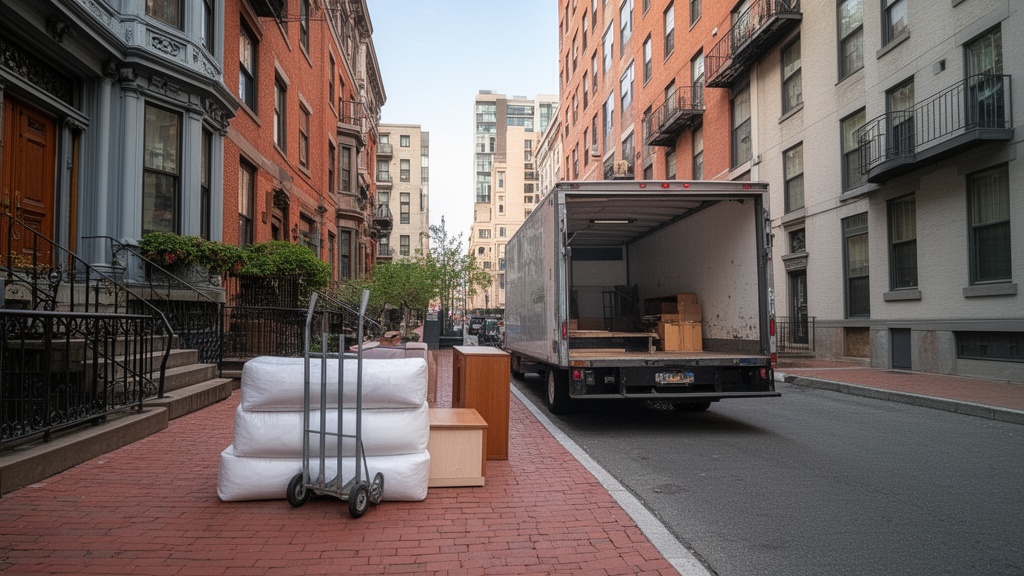
When evaluating moving companies in Boston, baseline criteria go beyond star ratings. Three factors matter most: verified licensing, documented insurance coverage, and direct experience navigating Boston's urban environment.
Massachusetts requires all intrastate household movers to hold a license from the Massachusetts Department of Public Utilities. Interstate movers additionally need a USDOT number registered with the FMCSA. Any company that cannot supply both on request should be removed from consideration immediately.
Beyond credentials, look for companies that provide written, itemized estimates rather than verbal quotes. The FMCSA's consumer protection framework distinguishes between binding and non-binding estimates — understanding the difference protects against surprise charges on move day. For a full breakdown of what separates quality providers from mediocre ones, see this guide on what to look for in a moving company.
Pro Tip: Before booking, ask the company to state their DPU license number and USDOT number out loud. A legitimate mover provides both in seconds. Hesitation or a vague answer is a disqualifying signal — not a minor inconvenience.
Key screening criteria for any boston moving company:
- Active Massachusetts DPU license (verifiable online)
- USDOT number for interstate moves
- Cargo and general liability insurance, with a COI available on request
- Written estimate — binding or non-binding — before work begins
- Documented experience with Boston-specific building types and permit requirements
Boston's Unique Moving Challenges: Traffic, Parking, and September 1
Boston is not a city where any moving company can show up and improvise. Three structural challenges separate experienced local operators from those who underestimate the market.
Traffic and narrow streets. Boston's street grid evolved from colonial-era cow paths. Beacon Hill, the North End, and parts of Back Bay feature one-way streets, no-turn zones, and lanes too narrow for standard 26-foot moving trucks. Experienced boston movers know which routes work and which require smaller shuttle vehicles or extended manual carries.
Parking permits. The Boston Transportation Department requires moving truck operators to obtain a parking permit for metered and no-parking zones. Without one, trucks face immediate ticketing and potential towing — adding hours and significant cost to the job. Permit applications typically require 48–72 hours advance notice. For full detail on this process, see where to park a moving truck in Boston.
September 1. The most infamous day on the Boston moving calendar. Because the vast majority of Boston leases expire on August 31, September 1 triggers a simultaneous citywide move-out and move-in that strains every operator in the market. Trucks double-book, crews overextend, and underprepared companies collapse under the volume. The september 1 boston movers who complete jobs on time and without damage earn that reputation through years of managing this specific logistical challenge. For a complete planning resource, read what to know about moving in Boston on September 1.
Top Qualities That Separate the Best Boston Movers
The best movers in boston share a recognizable operational profile: they arrive on time, call ahead to confirm, protect furniture with blankets and plastic wrap, and maintain a consistent work pace through the entire job.
Punctuality is non-negotiable. A crew that arrives late on a street where the parking permit expires at noon creates cascading delays. Top-rated operators confirm arrival windows in advance and come equipped for the specific job — shoulder straps for narrow stairwells, furniture dollies, and adequate padding for fragile items.
Crew professionalism shows in the details. Experienced movers assess every item before lifting: heavy furniture gets disassembled where needed, fragile items are wrapped individually, and electronics are placed in the protected sections of the truck. A company that skips wrapping to save time generates damage claims that cost far more in the long run.
The depth of experience matters most for boston apartment movers working in historic buildings. Brownstone buildings with original wood banisters, narrow landings, and 90-degree stairwell turns require crews who have navigated these conditions hundreds of times — not those improvising on the job. The best boston moving company candidates will reference specific neighborhoods and building types they regularly serve, not just list broad service areas.

How to Verify a Boston Moving Company Is Licensed and Insured
Verification is a 10-minute process that prevents expensive mistakes. Here is the standard procedure for confirming credentials before booking.
Step 1: Check the Massachusetts DPU license. All intrastate household movers in Massachusetts must hold an active license from the Department of Public Utilities. Consumers can search for licensed movers boston through the DPU's official database. A company with an expired or absent license is operating illegally and carries no state-mandated consumer protections.
Step 2: Verify the USDOT number. Any company moving goods across state lines must hold a USDOT number. The FMCSA Protect Your Move tool lets consumers look up a company's operating authority, safety record, and complaint history. This single step reveals more about a company's track record than any star rating.
Step 3: Request a Certificate of Insurance. Ask for a COI naming the customer as an interested party. Legitimate movers carry both general liability insurance and cargo insurance. For the complete verification walkthrough, see how to verify a Boston moving company's license.
Step 4: Check the BBB. The Better Business Bureau tracks complaint patterns over time. A single unresolved dispute may be noise; a pattern is a clear disqualifying signal.
| Verification Step | What to Check | Where to Check |
|---|---|---|
| State License | Active DPU license status | mass.gov DPU database |
| Federal Authority | USDOT number and operating authority | FMCSA Protect Your Move |
| Insurance | COI with cargo and liability coverage | Request directly from mover |
| Complaint History | BBB rating and dispute resolution record | bbb.org |
| Independent Reviews | Verified customer accounts with detailed narratives | Trustpilot, Google Business |
Boston Moving Costs: What to Budget for Local and Long-Distance Moves

Understanding moving services boston ma pricing prevents sticker shock on move day. Boston's pricing structure differs from flat-rate markets because most local moves are billed hourly.
Local moves are charged per hour, per mover. Total cost depends on crew size, job duration, building access conditions, and any add-on services. Most companies require a minimum booking of 2–3 hours. Factors that consistently extend job time include stair-only access, long carry distances from building entrance to truck, and large specialty items.
Long-distance moves are priced by weight and mileage. For interstate moves, the FMCSA requires movers to provide a written estimate before loading begins. Binding estimates set a firm price regardless of actual weight; non-binding estimates can legally increase by up to a significant share above the original amount. Requesting a binding estimate eliminates post-move billing disputes.
Finding affordable movers boston requires more than chasing the lowest headline number. A quote that accounts for all variables and holds firm on move day delivers more real value than one that drops at booking and inflates at delivery. Cheap moving companies boston often achieve low upfront rates by excluding key services or adding post-move charges for fuel, stair access, or long carries. For a full breakdown of how movers calculate pricing, see how much movers cost.
Pro Tip: Request quotes from at least three licensed providers, and ask each one to base the estimate on a visual inventory assessment — in-person or via video call. Phone quotes generated without seeing the items are structurally inaccurate and set up post-move disputes.
| Move Type | Pricing Model | Key Cost Drivers |
|---|---|---|
| Local Boston metro | Hourly, per mover | Crew size, hours, stair access |
| Local full-service | Hourly plus materials | Packing labor, boxes, wrapping supplies |
| Intrastate Massachusetts | Hourly or flat rate | Distance, volume, building access |
| Interstate (out of state) | Weight plus mileage | Binding vs. non-binding estimate type |
| Specialty items | Per-item surcharge | Pianos, safes, large antique furniture |
Full-Service Moving Options Across Greater Boston
Full service movers boston handle every aspect of a relocation: packing, loading, transport, unloading, and furniture placement. For moves involving elderly residents, large families, or time-constrained professionals, full-service often delivers the most efficient total value — even when the hourly rate appears higher upfront.
Residential movers boston who offer genuine full-service coverage include packing supplies (boxes, tape, bubble wrap, packing paper), professional packing labor, furniture disassembly and reassembly, and careful handling of fragile or specialty items. Moving companies near boston with true full-service capacity also manage parking permits, building elevator reservations, and COI submissions to buildings that require proof of vendor insurance.
The term local movers boston refers to companies serving moves within the Greater Boston metropolitan area — including Cambridge, Somerville, Brookline, Newton, Medford, and surrounding communities. Neighborhood familiarity directly reduces job time: a crew that knows elevator reservation procedures at Back Bay mid-rises or loading dock access rules in the Seaport works faster than one figuring it out on arrival. Explore the full guide to local movers in Boston and find the best movers in the greater Boston area by neighborhood.
Movers in boston area who provide long-distance full-service also coordinate with destination buildings, manage out-of-state COI requirements, and track shipments throughout the transit period. For a detailed overview of what full-service coverage typically includes, see what full service movers provide.

Getting Accurate Moving Quotes from Boston Companies
Most moving disputes originate with a quote that was misunderstood, incomplete, or intentionally low-balled. Knowing how to request and evaluate estimates is a foundational consumer skill.
In-home or virtual surveys. Reputable movers base estimates on a direct visual assessment of the inventory — in-person or via video walkthrough. Phone quotes generated without seeing the items are inherently imprecise. The American Moving & Storage Association's ProMover program requires certified member companies to follow transparent estimating standards.
Binding versus non-binding estimates. A binding estimate caps the final charge regardless of actual weight or hours. A non-binding estimate can legally increase — with limits set by federal regulation for interstate moves. Always ask which type you are receiving, and get the answer in writing before the job begins.
What drives final quotes above initial estimates in Boston:
- Per-flight stair surcharges (standard across most companies)
- Long carry distances from building entrance to truck parking location
- Specialty items: pianos, safes, oversized antique furniture
- Packing labor and materials, if not included in the base rate
- Storage, when move-out and move-in dates don't align
- Weekend and holiday rate premiums
- Permit acquisition fees, if not handled in-house by the mover
Understanding these variables enables accurate, apples-to-apples comparison between companies. When two quotes differ significantly, ask each provider to walk through the line items in detail. Boston apartment movers operating at a professional level can always justify their pricing transparently.
Neighborhoods to Know: Moving Across Boston's Diverse Areas
Boston's neighborhoods each carry distinct logistical profiles. Matching the right crew to the right area reduces job time and protects against avoidable damage.
Beacon Hill and Back Bay. These neighborhoods feature the challenges brownstone movers boston know best: four-story walk-ups, original wood staircases with 90-degree turns, and street-level parking constraints. Standard 26-foot trucks often cannot access the narrowest streets. Experienced crews bring smaller vehicles or plan extended manual carries.

Allston and Brighton. The epicenter of Boston's student population and the highest-volume September 1 move zone. Credential verification is most critical here, where peak-season demand attracts unlicensed operators every summer without exception.
Cambridge and Somerville. Cambridge somerville movers navigate a mix of student housing, multi-family buildings, and upscale condos. Cambridge operates its own parking permit system independent of Boston's BTD. Buildings near MIT and Harvard often impose their own moving-day scheduling rules that require advance coordination with building management.
South Boston and Seaport. High-rise buildings in the Seaport District impose strict COI requirements, elevator reservation windows, and loading dock access policies. Full-service operators who work these buildings regularly know the procedures before arriving. For truck route guidance across Greater Boston, see avoiding Storrowing with a moving truck in Boston.
Suburbs: Brookline, Newton, Medford. Moving companies near boston serving suburban communities face less permit complexity but longer drive times. Confirm whether the company bills portal-to-portal (from their warehouse) or door-to-door before agreeing to any contract terms.
Red Flags to Watch for When Hiring Movers in Boston

Rogue moving operations — sometimes called hostage movers — are a documented problem in high-demand urban markets. The FMCSA's consumer protection guidelines explicitly identify several patterns that appear with regularity in Boston's peak season.
| Red Flag | What It Signals |
|---|---|
| Cash-only payment required | No paper trail; charges impossible to dispute after the fact |
| No written estimate provided | Verbal quotes are legally unenforceable |
| Quote dramatically lower than all competitors | Missing insurance, underpowered crew, or undisclosed fees |
| No DPU license number or USDOT number on request | Possibly unlicensed, operating without consumer protections |
| Full payment demanded before delivery | Classic hostage-mover pattern: belongings held for extra fees |
| No COI or insurance documentation available | Damage liability falls entirely on the client |
Beyond obvious fraud indicators, watch for companies that change the quoted price after loading — citing additional items or extra stairs not disclosed in the original assessment. Professional operators document all potential surcharges in the written estimate before work begins.
Pro Tip: Before move day, take timestamped photos of all valuable furniture, electronics, and fragile items. If a damage dispute arises, photographic evidence from before the move is essential for filing a successful cargo insurance claim.
Reading boston moving company reviews on verified independent platforms — not just the company's own website — reveals patterns invisible in aggregate ratings. Reviews that name specific crew members, describe how disputes were handled, and confirm whether the final bill matched the estimate provide the most actionable signal.
Questions to Ask Before Hiring a Boston Moving Company
A direct conversation with a potential mover before booking reveals more than any online profile. These questions separate prepared, professional operators from those likely to create problems on move day.
Licensing and credentials:
- What is your current DPU license number, and is it active?
- Do you carry cargo insurance, and can you provide a COI before we sign a contract?
- Are the crew members assigned to my job W-2 employees or day laborers?
Experience and operations:
- How long have you operated specifically in Boston?
- Have you completed moves in this building or neighborhood before?
- What truck size will you use, and do you have a smaller backup vehicle for access-restricted streets?
Pricing and terms:
- Is this a binding or non-binding estimate?
- What additional charges might arise on move day that are not reflected in this quote?
- What is your process for handling damaged items, and what is the typical claims timeline?
Peak-season specifics:
- Are you booking multiple jobs on September 1? How many?
- Do you have backup crew capacity if a job runs long?
Professional moving services boston ma providers answer these questions without hesitation. Those who deflect or cannot provide specifics should be removed from consideration. For additional guidance, see how to find a reputable moving company and 8 moving tips for the smoothest moving experience.
The best moving company in boston for any specific situation depends on building type, distance, timeline, and budget. No single operator suits every move. The best movers in boston all share one operational standard: they show up prepared, communicate clearly, and treat every item in their care with genuine attention.
Related Articles
- Moving Companies That Move Long Distance: A Full Guide — Learn how to evaluate long-distance movers, understand interstate pricing, and avoid common pitfalls when moving across state lines.
- Local Moving Companies Near Me: How to Choose the Best — A practical framework for vetting local movers based on licensing, reviews, and operational fit for your specific move.
- Best Cheap Moving Companies — How to find genuinely affordable movers without sacrificing licensing, insurance, or service reliability.
- Best Chicago Moving Company — An in-depth look at top movers in Chicago, covering pricing, credentials, and neighborhood-specific expertise.
- Appliance Moving Company: How to Move Large Appliances — What to know before hiring specialty movers for refrigerators, washers, dryers, and other heavy appliances.
Recommended Reading
- Local Movers Boston: Complete Guide to Boston Moving Companies
- Licensed Moving Company Boston: How to Verify Movers
- Cheapest Moving Company Boston: Budget Tips and Pricing
- Best Movers in the Greater Boston Area by Neighborhood
- Moving in Boston on September 1 or August 31: What You Need to Know
Frequently Asked Questions