'%3E%3Cpath%20fill='%231B2A47'%20d='M1.605%2016.263c.03-1.139.059-2.482.088-3.971.03-1.49.03-2.832.03-4.03%200-.758%200-1.576-.03-2.51%200-.905-.03-1.84-.03-2.803%200-.496-.028-.964-.028-1.43%200-.468%200-.906-.03-1.315h6.858q2.188%200%203.589.35c.963.234%201.663.643%202.13%201.198.496.555.73%201.372.73%202.394%200%20.788-.176%201.46-.497%201.985-.32.526-.846.935-1.575%201.197-.73.292-1.693.468-2.918.526v.263c1.313.087%202.334.263%203.122.525.758.263%201.342.672%201.692%201.197.35.526.525%201.197.525%202.044%200%201.08-.233%201.927-.67%202.57-.468.642-1.139%201.08-2.102%201.343-.933.262-2.159.408-3.705.408H1.605zm6.537-9.197q1.882%200%202.713-.526c.555-.35.817-.934.817-1.752%200-.905-.292-1.547-.846-1.927s-1.459-.554-2.655-.554H4.757v4.759zm.204%206.92c.934%200%201.663-.088%202.217-.263.555-.176.934-.438%201.197-.818s.38-.876.38-1.518c0-.876-.322-1.49-.934-1.84-.643-.35-1.635-.525-3.035-.525H4.757v4.963zM21.038%2016.555c-1.576%200-2.801-.292-3.618-.905-.817-.614-1.284-1.519-1.372-2.745-.087-1.226.205-2.774.847-4.613s1.43-3.358%202.392-4.584c.963-1.226%202.043-2.131%203.298-2.744C23.839.292%2025.24%200%2026.786%200c1.576%200%202.772.321%203.59.934.816.613%201.283%201.548%201.37%202.774s-.203%202.774-.845%204.613c-.642%201.81-1.43%203.358-2.393%204.584s-2.072%202.132-3.297%202.745a9.8%209.8%200%200%201-4.173.905m.788-2.278c.642%200%201.138-.058%201.371-.116.205-.059.496-.117.847-.322.262-.146.437-.292.554-.408.204-.175.32-.292.438-.41.204-.203.35-.408.496-.583.35-.438.642-.876.963-1.402.233-.408.466-.817.67-1.284.205-.438.38-.905.555-1.372.438-1.198.671-2.278.671-3.183s-.204-1.606-.612-2.131c-.409-.497-1.051-.76-1.897-.76-.467%200-.934.059-1.43.205h-.03c-1.02.292-1.925%201.226-2.042%201.372-.116.117-.467.526-.963%201.343a15.5%2015.5%200%200%200-1.342%202.92c-.408%201.197-.642%202.277-.671%203.182-.03.906.175%201.636.584%202.161q.611.788%201.838.788M14.853%2038.54c-1.576%200-2.802-.292-3.619-.905s-1.284-1.518-1.371-2.744c-.088-1.227.204-2.774.846-4.614s1.43-3.357%202.393-4.584%202.042-2.13%203.297-2.744c1.255-.613%202.655-.905%204.173-.905%201.575%200%202.772.321%203.589.934s1.284%201.548%201.371%202.774c.088%201.226-.204%202.774-.846%204.613-.642%201.81-1.43%203.358-2.393%204.584s-2.072%202.131-3.297%202.745c-1.226.613-2.626.846-4.143.846m.787-2.277c.642%200%201.138-.059%201.372-.117.204-.058.496-.117.846-.321.263-.146.438-.292.554-.409.205-.175.321-.292.438-.409.204-.204.35-.408.496-.584a13%2013%200%200%200%201.634-2.686c.204-.438.38-.905.555-1.372.437-1.197.67-2.277.67-3.182%200-.906-.203-1.606-.612-2.132-.409-.496-1.05-.759-1.897-.759-.467%200-.934.058-1.43.204h-.029c-1.021.292-1.925%201.227-2.042%201.373-.117.116-.467.525-.963%201.343a15.5%2015.5%200%200%200-1.342%202.92c-.409%201.196-.642%202.277-.671%203.182s.175%201.635.583%202.16q.613.789%201.838.789'/%3E%3Cpath%20fill='%23FF515E'%20d='M55.966%2038.57c-1.576%200-2.801-.293-3.618-.906s-1.284-1.518-1.372-2.744c-.087-1.227.204-2.774.846-4.613s1.43-3.358%202.393-4.584c.963-1.227%202.043-2.132%203.297-2.745s2.656-.905%204.173-.905c1.576%200%202.772.321%203.589.934s1.284%201.548%201.371%202.774c.088%201.226-.204%202.774-.846%204.613-.642%201.81-1.43%203.358-2.393%204.584s-2.071%202.131-3.297%202.745c-1.225.613-2.626.846-4.143.846m.788-2.249c.642%200%201.138-.058%201.371-.117.204-.058.496-.116.846-.32.263-.147.438-.293.555-.41a7%207%200%200%200%20.437-.408c.205-.205.35-.41.496-.584a13%2013%200%200%200%201.634-2.686c.205-.438.38-.905.555-1.373.438-1.197.671-2.277.671-3.182s-.204-1.606-.613-2.131c-.408-.497-1.05-.76-1.896-.76-.467%200-.934.059-1.43.205h-.03c-1.02.292-1.925%201.226-2.042%201.372-.117.117-.467.526-.963%201.343a15.5%2015.5%200%200%200-1.342%202.92c-.409%201.197-.642%202.277-.671%203.182s.175%201.635.583%202.16q.614.79%201.839.79'/%3E%3Cpath%20fill='%231B2A47'%20d='M33.06%2016.263c0-.35%200-.935.03-1.81.029-1.051.058-2.103.058-3.154s.03-2.073.03-3.007c0-1.606-.03-3.27-.06-4.993%200-.554-.028-1.08-.028-1.606%200-.525-.03-1.021-.03-1.46h6.828c1.46%200%202.685.117%203.59.38q1.4.394%202.1%201.314.7.963.7%202.628c0%20.992-.174%201.81-.554%202.452-.35.643-.904%201.11-1.604%201.431s-1.576.467-2.627.496v.263q2.058.087%203.064.876c.671.525%201.138%201.372%201.43%202.51.087.41.233%201.023.467%201.84.233.818.408%201.431.554%201.84h-3.414a11%2011%200%200%200-.262-1.022c-.321-1.314-.526-2.19-.584-2.628a5%205%200%200%200-.642-1.46%202.13%202.13%200%200%200-.963-.73c-.408-.146-.934-.233-1.605-.233h-3.326v6.0440000000000005H33.06zm6.332-8.292c1.343%200%202.276-.205%202.86-.613.554-.41.846-1.11.846-2.073%200-.73-.146-1.314-.408-1.723-.263-.409-.671-.7-1.197-.876q-.788-.263-2.1-.263h-3.181v5.519h3.18zM49.4%2016.263l.03-2.745c.029-2.452.029-4.905.029-7.416q0-2.101-.088-5.868h4.085l5.924%2010.335c.087.234.204.438.291.643.117.204.205.408.321.613.38.788.613%201.255.672%201.372h.262c0-.058-.03-.146-.03-.204%200-.059-.028-.117-.028-.175a75%2075%200%200%201-.175-1.314%2010%2010%200%200%201-.088-1.285c0-1.547%200-3.737-.029-6.57V1.84c0-.584-.03-1.11-.03-1.576h2.977c-.03%202.482-.058%205.08-.058%207.766%200%201.694%200%204.438.029%208.292h-4.027l-5.573-9.43c-.875-1.81-1.226-2.511-1.05-2.132-.263-.613-.467-1.08-.613-1.46h-.263c.058.35.117.876.175%201.548.059.7.117%201.168.117%201.46%200%202.978%200%206.306.029%209.985H49.4zM4.698%2038.277c.029-2.627.058-5.255.058-7.883%200-1.576%200-3.503-.029-5.752-1.109%200-2.684%200-4.727.03v-2.453h12.664v2.453c-1.955-.03-3.53-.03-4.756-.03%200%20.584-.03%201.227-.03%201.957s0%201.46-.029%202.218v1.84c0%202.57.03%205.11.059%207.62z'/%3E%3Cpath%20fill='%23FF515E'%20d='M29.441%2038.277c.409-1.05.788-2.102%201.168-3.182s.787-2.16%201.167-3.241c.613-1.693%201.05-2.949%201.342-3.766l1.255-3.65c.116-.38.262-.788.379-1.139.117-.38.263-.73.38-1.05h4.61l-.671%2012.904h.262l8.316-12.905h4.669l-.7%201.869c-.876%202.452-1.343%203.766-1.43%204a501%20501%200%200%200-3.385%2010.16h-2.947c.292-.846.788-2.219%201.459-4.087.175-.526.35-1.08.554-1.606.175-.526.38-1.08.555-1.577.642-1.81%201.342-3.825%202.072-6.014h-.234l-8.724%2013.314h-2.86l.554-13.314h-.175c-.175.496-.38.992-.554%201.489-.175.496-.38%201.022-.555%201.547a163%20163%200%200%200-1.08%203.008c-.145.38-.262.759-.408%201.138-.117.38-.262.73-.408%201.11-.7%201.898-1.284%203.59-1.751%205.05h-2.86zM68.047%2038.277c.175-2.19.32-4.525.467-7.007.058-.905.204-3.912.467-9.051h3.151c-.03.438-.058.934-.088%201.46s-.058%201.08-.087%201.693a264%20264%200%200%201-.409%206.657c-.145%201.986-.35%203.591-.583%204.788h.175Q72.147%2034.892%2073.94%2032a562%20562%200%200%201%204.465-7.066c.32-.496.641-.992.933-1.46s.555-.875.817-1.255h3.268q-.568.832-1.138%201.752c-.408.613-.787%201.255-1.196%201.927-3.88%206.014-6.478%2010.131-7.85%2012.35h-5.193zM79.106%2038.277c.32-.788.758-2.014%201.37-3.65a287%20287%200%200%200%201.577-4.32c.437-1.256.904-2.628%201.4-4.088s.934-2.774%201.313-3.97h11.322l-.846%202.364H87.1l-1.664%204.847%207.645-.088-.612%201.694-7.587-.088-1.75%204.934h8.286l-.846%202.365z'/%3E%3C/g%3E%3Cdefs%3E%3CclipPath%20id='a'%3E%3Cpath%20fill='%23fff'%20d='M0%200h96v40H0z'/%3E%3C/clipPath%3E%3C/defs%3E%3C/svg%3E)
Moving Day Mistakes to Avoid (So Your Move Doesn’t Turn Into a Disaster)
Even if you’ve planned for weeks, moving day itself is where things most often go wrong. A few avoidable mistakes can turn a normal relocation into a long, expensive, stressful mess.
Below are the most common moving day mistakes and exactly how to avoid them.
1. Not Planning the Logistics of the Day
Most people focus on boxes and forget about logistics:
- No reserved parking for the truck
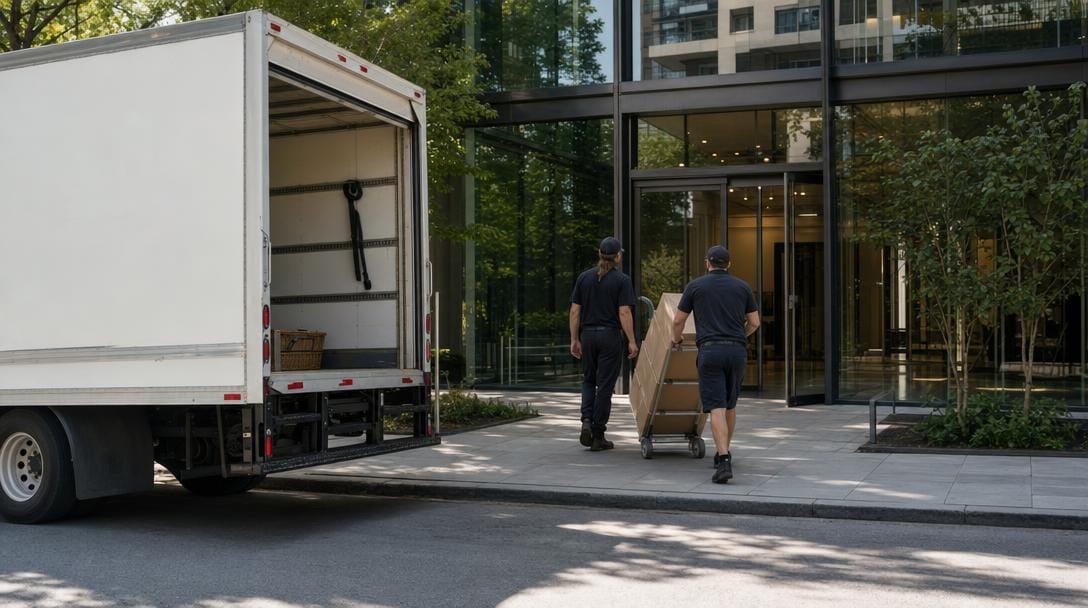
- No elevator booked
- Building didn’t approve the move-in time
- HOA or management didn’t get the required insurance certificate (COI)
Why this is a problem
Movers arrive and can’t park, can’t use the elevator, or are not allowed to start work. You pay for waiting time or even have to reschedule.
How to avoid it
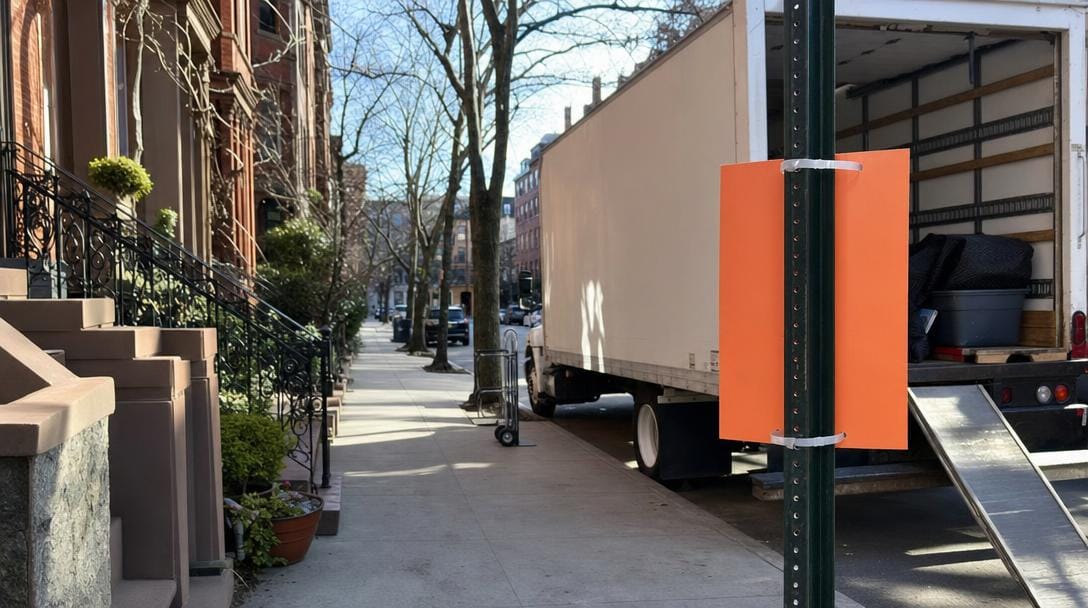
- Parking:
- Check street parking rules, loading zones, and any permits needed.
- Reserve a space with cones/cars the night before if local rules allow.
- Elevator:
- If you’re moving in/out of a building, book the service elevator and time slot in advance.
- Building rules:
- Ask management about:
- Allowed moving hours
- Required COI (certificate of insurance)
- Truck size restrictions or loading dock rules
- Ask management about:
- Access checks:
- Make sure trucks can actually reach the building (low bridges, narrow streets, one-way streets, steep driveways).
2. Underestimating How Long Moving Day Takes
People constantly underestimate:
- How long loading really takes
- How many trips the elevator will need
- How long it takes to drive through city traffic
- Time for disassembly/reassembly of beds, tables, etc.
Result: You’re still moving at midnight, paying overtime, and fighting with management because you’ve gone past allowed hours.homemoovers.com
How to avoid it
- Assume everything takes 25–50% longer than the “optimistic” estimate in your head.
- If you’re moving yourself, don’t plan other big tasks (cleaning, long drive) on the same day.
- For movers:
- Be 100% honest about how much stuff you have.
- Don’t “hide” basement/attic/garage items when getting a quote.homemoovers.com
- If possible, start early in the morning. The later you start, the more things snowball.
3. Packing at the Last Minute
One of the top reasons moves collapse is being half-packed when movers arrive: clothes still in closets, kitchen not boxed, random items scattered everywhere.Schott Removals+1
Why this is a big mistake
- Load takes way longer than estimated.
- Movers have to wait while you throw things into bags.
- You pay more, stress more, and things get lost or broken.
How to avoid it
- Be realistic: packing takes days, not hours.
- Start with non-essential rooms 1–2 weeks before moving day.
- The day before the move, your home should look like this:
- 95–100% of items in labeled boxes
- Only toothbrush, clothes for the day, and a small set of dishes not packed
- If you don’t have the time or energy, ask for professional packing ahead of moving day, not on the morning of the move.
4. Poor Packing: Heavy Boxes, No Labels, Broken Items
Even if you start early, packing badly causes problems:
- Boxes are too heavy to lift safely
- Fragile items break because there’s no padding
- Boxes have no labels, so no one knows where anything goesAccord Property+1
How to avoid it
- Weight:
- Keep heavy items (books, tools) in small boxes.
- Larger boxes = light items (clothes, bedding, pillows).
- Fragiles:
- Wrap dishes and glasses individually in paper or bubble wrap.
- Pack plates vertically like records, not stacked flat.
- Fill empty spaces with paper so nothing rattles.
- Labeling:
- Every box gets room + short description (e.g., “Kitchen – Pots & Pans”).
- Mark FRAGILE and THIS SIDE UP where needed.
- Essentials: Don’t mix essentials (meds, documents) with random décor and store them separately (see next section).
5. Forgetting an Essentials Box
Huge mistake: everything important is buried in the truck.
Typical “I can’t find it” items
- Phone chargers and laptop chargers
- Medications
- Wallet/passport/ID/lease documents
- Basic tools (screwdriver, Allen keys)
- Toilet paper, soap, shower curtain
- One set of bedding
- Clothes for 1–2 days
How to avoid it
Pack a “First Night / Essentials Box” and keep it with you in your car (or clearly separate it on the truck):
- Personal items: meds, glasses, toiletries, change of clothes
- Tech: chargers, power strip
- Documents: lease/closing docs, IDs, insurance papers, inventory list
- Home basics: box cutter, trash bags, paper towels, cleaning wipes, toilet paper, hand soap
- For kids or pets: comfort toys, food, bowls, diapers, formula, etc.
6. Not Protecting Floors, Walls, and the Property
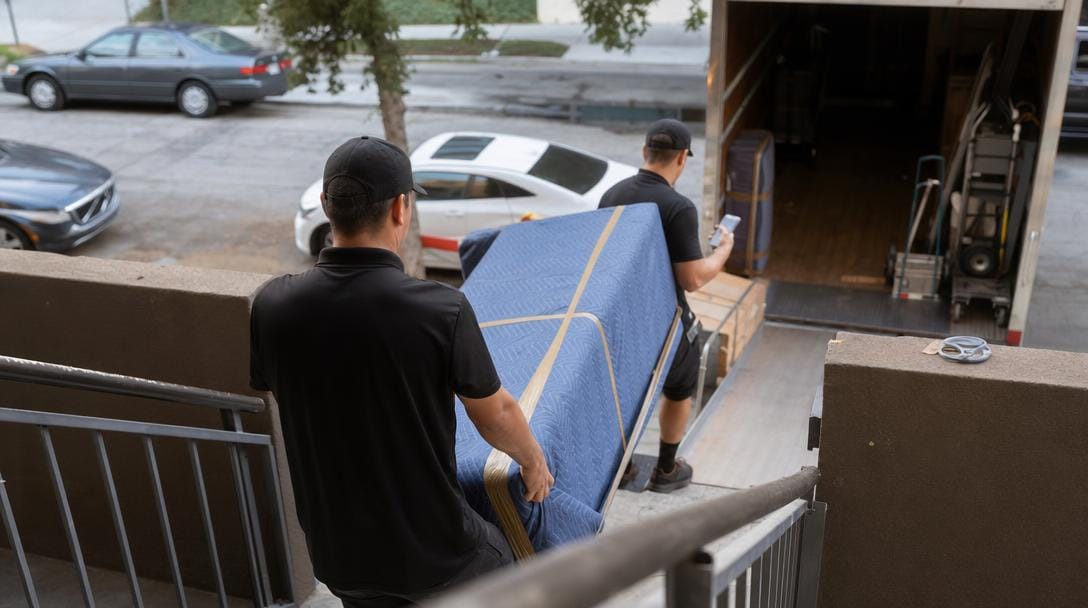
On moving day, you’re dragging furniture in and out. Unprotected floors and walls = scratches, holes, and angry landlords/building managers.
Common results
- Losing security deposit
- Paying repair fees
- Insurance disputes
How to avoid it
- Use:
- Floor runners, cardboard, or moving blankets on main traffic paths
- Corner protectors for tight hallways and door frames
- Don’t push furniture directly on hardwood or tile; use sliders.
- Walk the property at the end, take photos of any damage, and notify management immediately.
7. Skipping Measurements (and Getting Furniture Stuck)
Classic mistake: you move a huge sofa or wardrobe all the way across town… and it doesn’t fit through the door, hallway, or stairwell.HomeOwners Alliance
How to avoid it
- Measure big items: sofas, beds, wardrobes, large appliances.
- Measure access points: doors, stairwells, tight corners, elevator doors.
- Compare both. If something clearly won’t fit:
- Plan to disassemble it more.
- Ask movers if they can hoist it (through balcony/window) or if it’s not realistic at all.
- Decide in advance whether it goes to storage or gets sold instead of wasting time on moving day.
8. Not Preparing Appliances and Furniture in Advance
Many people forget that appliances and furniture need prep, not just boxing.
Common mistakes
- Fridge/freezer not defrosted → leaks water into the truck
- Washing machine not drained / not secured
- Gas appliances not disconnected by a professional
- Beds, wardrobes, or tables not disassembled before movers arrive
How to avoid it
- Fridge/freezer:
- Empty and unplug at least 24 hours before.
- Put towels inside to absorb remaining moisture.
- Washing machine/dishwasher:
- Disconnect and drain water lines.
- Use transit bolts if available.
- Furniture:
- Take apart what obviously needs disassembly (large beds, big tables).
- Keep bolts and screws in labeled bags taped to each item.
9. Ignoring Insurance, Inventory, and Documentation
Moving day is risky by nature: things can break, get scratched, or rarely even go missing. Many people have no documentation or inventory, so getting compensated becomes much harder.FMCSA+1
How to avoid it
- Inventory list:
- Write down main items and number of boxes.
- Take photos or short videos of expensive items (TVs, artwork, antiques).
- Understand coverage:
- Ask your moving company what level of liability/valuation is included.
- Know the difference between basic carrier liability and full-value protection.FMCSA+1
- On delivery:
- Walk through home with the movers.
- Check large items for visible damage before signing any final paperwork.
- Note any issues immediately on the paperwork rather than “later.”
10. Not Having a Plan for Kids and Pets
Moving day is loud, chaotic, and full of open doors. Kids and pets can easily get hurt or disappear.
Typical problems
- Cats and dogs slip through open doors
- Kids running around while heavy furniture is being carried
- Everyone is stressed and hungry with no plan
How to avoid it
- Arrange a babysitter, daycare, or family member to take kids out of the house.
- Keep pets in:
- A closed, quiet room
- Or better: with a friend/kennel for the day
- Pack separate bags with food, water, treats, and any medications for pets.
- Explain to movers where kids and pets are so they don’t accidentally open the wrong door.
11. Not Reading or Confirming Details With Your Movers
Another major mistake is treating the moving company like a black box: “They’ll handle it.” That’s how people get scammed or end up with surprise charges or no-show movers.The Washington Post+2DocShipper Moving EN+2
Red flags and mistakes
- No written estimate or contract
- Huge deposit demanded in cash
- No physical address or DOT/MC number for interstate moves
- Company name on the truck doesn’t match what you booked
- You never saw the terms for liability/valuation
How to avoid it (especially for interstate moves in the U.S.)
- Make sure you have:
- A written estimate (binding or non-binding)
- A bill of lading/contract
- The company’s USDOT number and, for interstate moves, that they are properly registered with the Federal Motor Carrier Safety Administration (FMCSA).FMCSA+2FMCSA+2
- Confirm by phone/email the day before:
- Date and arrival window
- Pickup and delivery addresses
- Services included: packing, furniture disassembly, long carry, stairs, fuel, tolls, etc.
- Avoid companies that:
- Can’t be found in any official database or major review platforms
- Only communicate via messaging apps and refuse to send formal documents
- Ask for big cash deposits or want to be paid in full before delivery
12. Leaving Cleaning and Utilities to the Last Minute
Moving out and realizing you still have to scrub the entire place and deal with utilities is a nightmare.
Common mistakes
- Forgetting to transfer/cancel utilities on time
- Leaving garbage and old furniture behind
- Not taking final meter readings or photos
How to avoid it
- A week before moving day, schedule:
- Utility transfers/cancellations (electricity, gas, water, internet).Accord Property+1
- Final meter readings (with photos).
- Pack a small cleaning kit for a basic move-out clean: trash bags, wipes, broom/vacuum if needed.
- If required by lease or sale contract, book professional cleaners before you hand over keys.
13. Trying to Do Everything Yourself
Last big mistake: pretending you’re a one-person moving crew.
What usually happens
- You and a friend think you can move a 2–3 bedroom place “in one day.”
- You underestimate how heavy, bulky, and awkward everything is.
- Someone gets hurt, damages the building, or drops a valuable item.
How to avoid it
- If you’re DIY-moving, be honest:
- Do you have enough physically strong helpers?
- Do you have the right equipment (dollies, straps, blankets)?
- Do you understand how to load a truck so items don’t shift?
- For anything beyond a small studio/1-bedroom, or if you have stairs, heavy furniture, or expensive items, strongly consider professional movers. The cost is often less than the combined risk of injury, lost time, and damage.
Final Check: Quick Moving Day “No-Mistake” Checklist
On moving day, make sure you can answer YES to these:
- Parking and elevator reserved (if needed)
- Building/HOA rules and insurance requirements confirmed
- Home 95–100% packed before movers arrive
- Boxes labeled by room; heavy items in small boxes
- Essentials box ready and staying with you
- Big furniture and appliances measured/prepped
- Inventory list and photos of valuable items done
- Kids and pets have a safe, separate plan
- All details confirmed with the moving company in writing
- Utilities and address change arranged
If you can tick these off, you’re already ahead of most people — and you’ll avoid the biggest moving day mistakes that make relocations stressful and expensive.