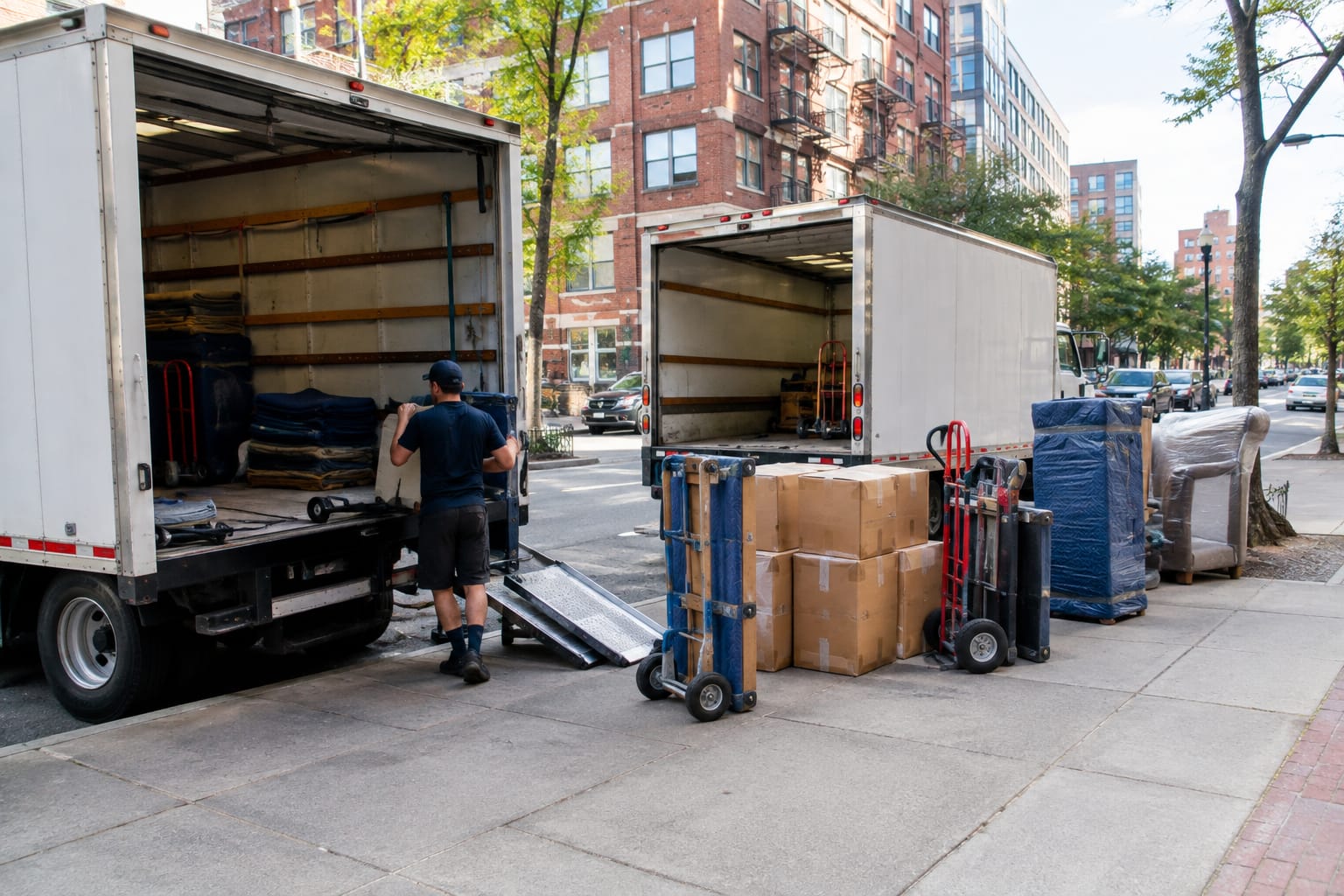
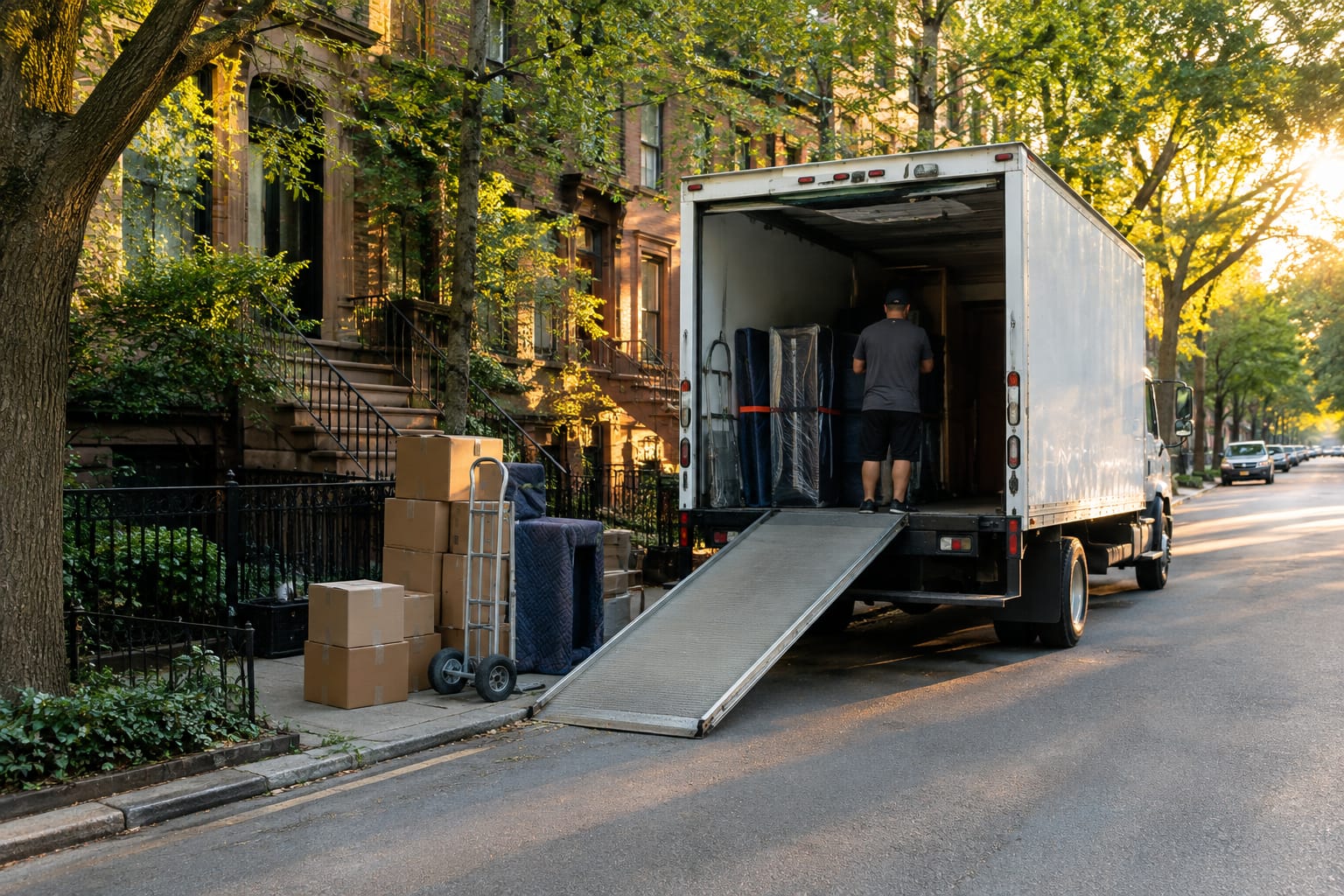
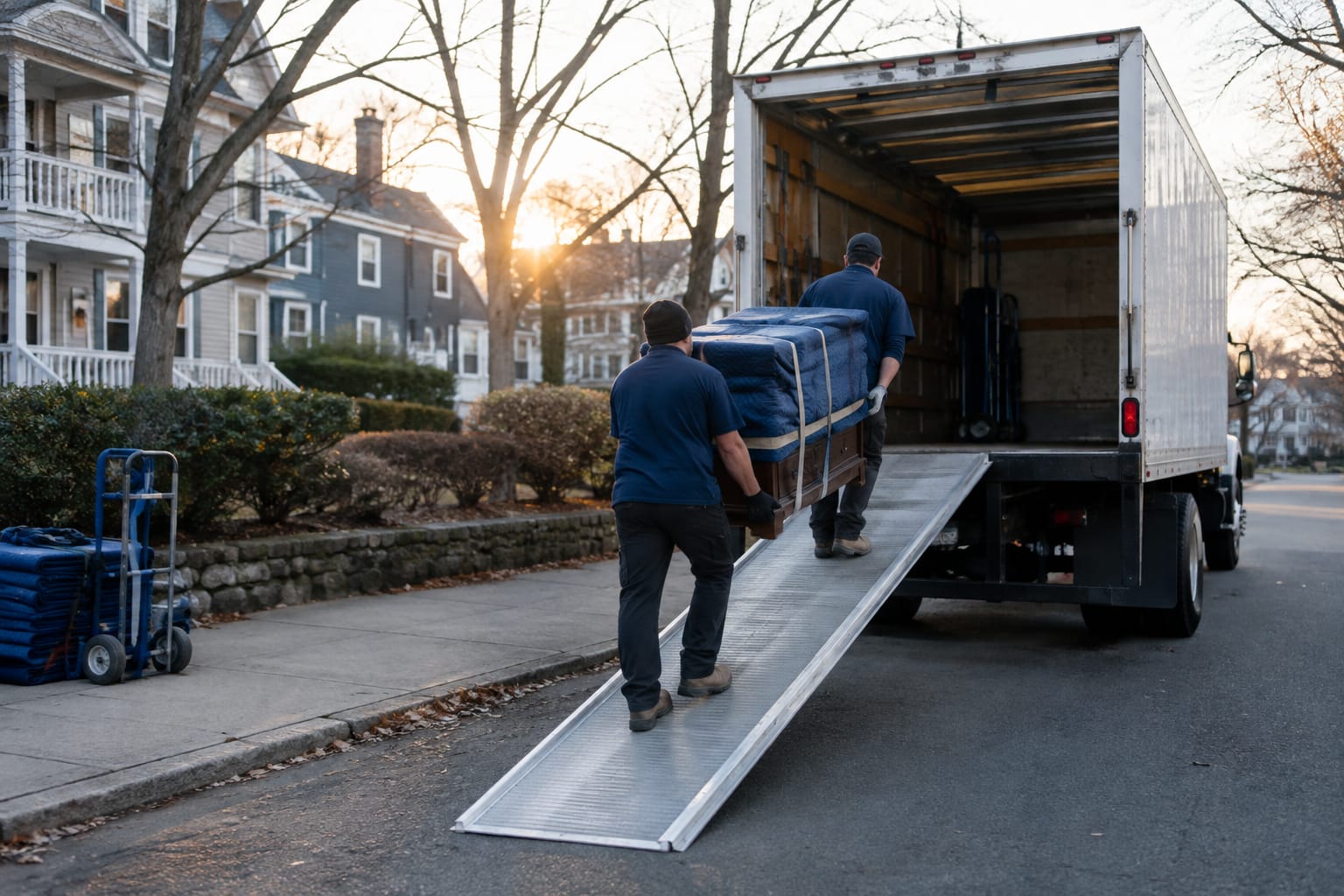
To choose an interstate moving company, confirm its USDOT and MC numbers are active in the FMCSA database, find out whether it is a carrier or a broker, get written estimates based on a full inventory, compare identical scope across quotes, and walk away from any mover that demands a large deposit or skips an in-home or video survey.
Many companies market themselves as interstate moving companies, but their licensing status, business models and service quality vary far more than their websites suggest. The wrong choice can lead to damaged goods, a final bill that doesn't match the quote, or a crew with no connection to the company whose contract you signed. Instead of ranking brands, which mostly reflects marketing spend, this guide gives you the checks you can run yourself: federal registration, carrier vs. broker, how pricing works, what to ask and which red flags to act on.

Key Takeaways
| Point | Details |
|---|
| Carrier or broker | Carriers own their trucks and employ their crews; brokers arrange the move and hand it to another company. Ask which one you are dealing with. |
| Cost follows your inventory | Shipment size, distance, season and access conditions drive interstate prices, so compare quotes only when the scope is identical. |
| Get everything in writing | A written estimate based on your actual inventory, a written delivery window and a clear list of possible extra charges make quotes comparable. |
| Use the official consumer resources | The FMCSA's Protect Your Move program explains consumer rights and warning signs, including the "Your Rights and Responsibilities When You Move" booklet. |
Understanding Interstate Moving Companies
An interstate moving company is a carrier or broker registered with federal authorities to handle household goods moves that cross state lines.
Department of Transportation. Rather than relying on any mover's summary of your rights, read the FMCSA's own consumer booklet, "Your Rights and Responsibilities When You Move," available through the Protect Your Move site.
Both are publicly searchable through the FMCSA SAFER System. The U.S. Census Bureau tracks interstate migration patterns, so knowing how to identify a legitimate mover is a practical skill.
Before your first consultation, review what to know before your interstate move, covering the paperwork to expect, how pricing works and the warning signs of unqualified operators.
What to Check Before Hiring an Interstate Mover
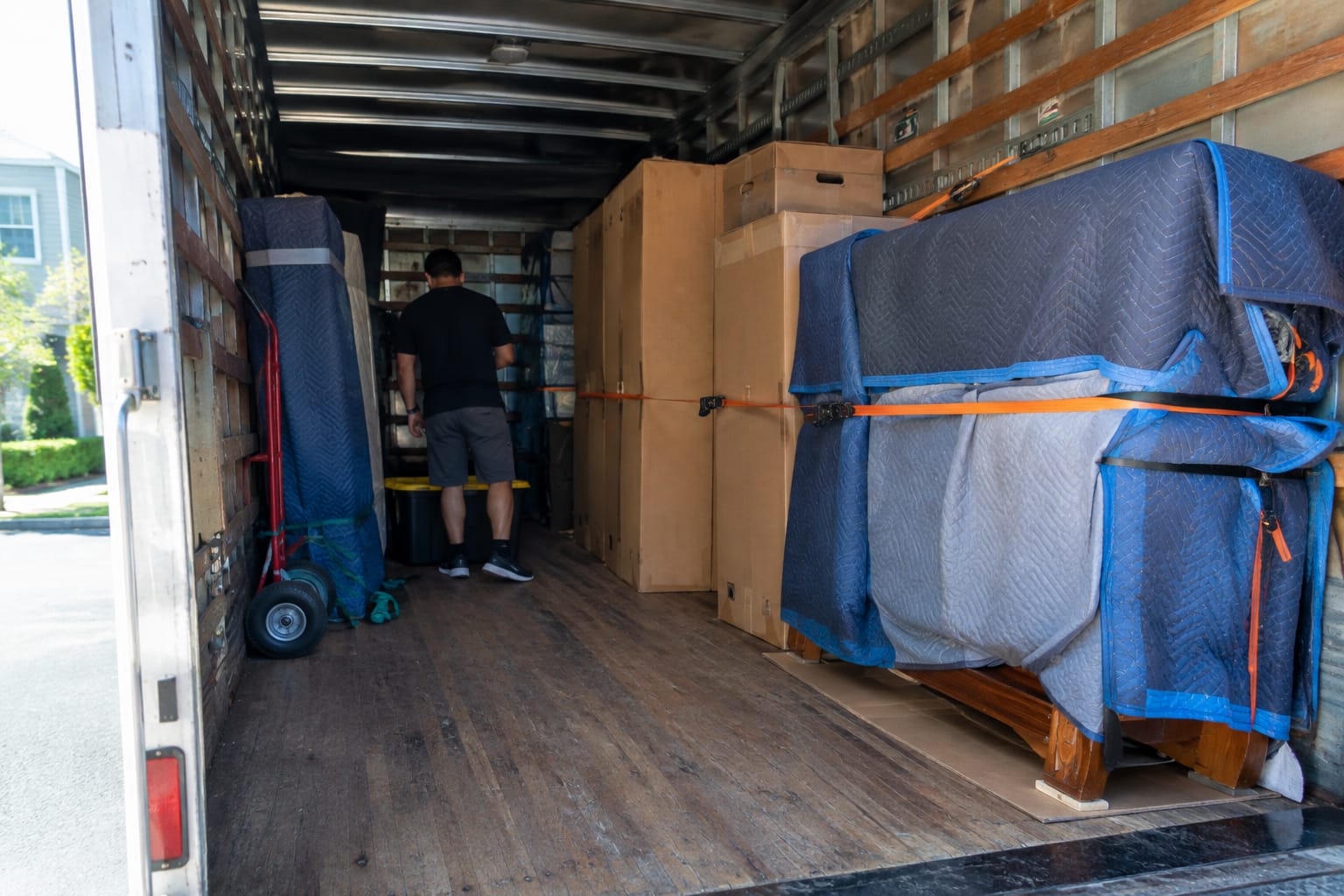
If you searched for the best interstate movers, you have probably seen lists ranked by brand recognition. Brand recognition reflects advertising, not how your move will go. These checks tell you more, and you can verify each one yourself.
Active federal registration. Look up the company's USDOT number in the FMCSA SAFER System and confirm the operating authority is active. A company shown as "not authorized" or with revoked authority should not be moving your goods across state lines, however polished its website looks.
Who actually performs the move. Find out whether the company is the carrier doing the move or a broker that will pass the job to someone else. The company name on your paperwork should match the company whose truck and crew show up.
An inventory-based written estimate. A reliable quote starts with an in-home or video survey of everything you are moving, plus access details at both ends. A quote built from a short phone call leaves room for surprises later.
A review record across several sources. Reviews on a single platform can be selectively managed. Check several places, such as Google, Yelp and the Better Business Bureau, and look for repeated patterns rather than star averages.
A real, consistent identity. The company should have a physical address, a consistent business name across its website, paperwork and registration, and staff who answer specific questions directly.
Pro Tip: Before signing anything, ask: "Will the crew that arrives on moving day be your own employees, or subcontractors?" A carrier with its own crews can answer immediately and specifically. Vague phrases like "our trusted partner network" usually mean someone else will handle your belongings.
Questions to Ask Every Interstate Mover
Ask every company on your shortlist the same questions and write down the answers. Matching answers side by side is the fastest way to see real differences.
- What are your USDOT and MC numbers? (Then check them yourself in SAFER.)
- Are you the carrier performing this move, or are you arranging it through another company?
- Will the crew be your own employees, and will the same crew and truck handle pickup and delivery?
- Will you survey my home in person or by video before giving a written estimate?
- What exactly does the quote include: labor, truck, fuel, tolls, mileage, furniture disassembly and reassembly, stair carries, long carries?
- Are packing labor and packing supplies included, or billed separately?
- Which extra charges could apply, and under what conditions?
- What delivery window can you give me, and will it be written into the paperwork?
- What protection is included for loss or damage, and what does added coverage cost?
- What happens if my move-out and move-in dates don't line up? Do you offer storage, and how is it billed?
- How much is the deposit, when is it due, and which payment methods do you accept?
For a step-by-step hiring process built around these questions, see how to hire an interstate moving company.
Red Flags to Walk Away From
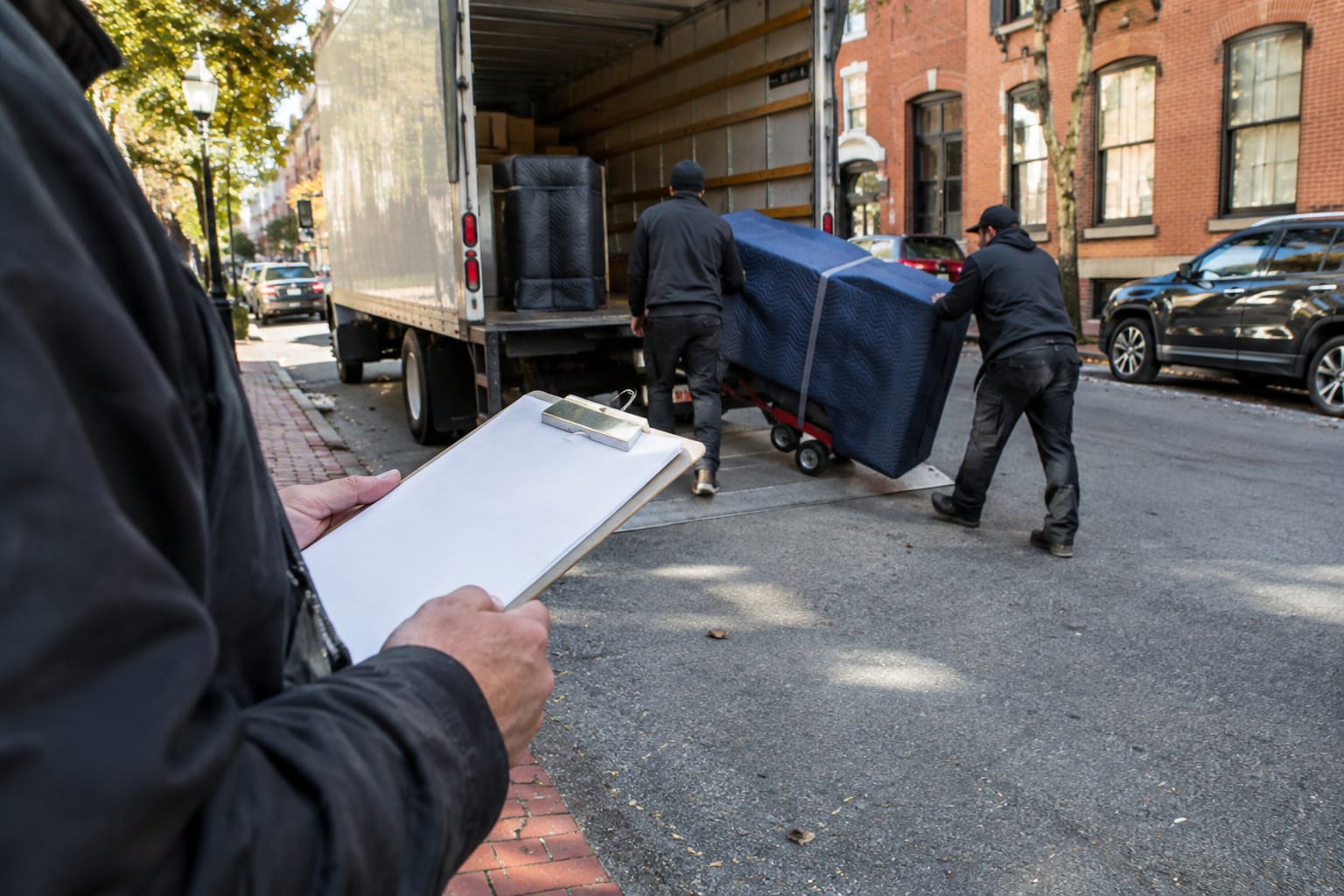
The FMCSA's Protect Your Move program publishes warning signs of moving fraud. In practice, these are the patterns worth acting on:
- No survey. The company quotes a price without seeing your belongings in person or on video.
- A large upfront deposit, especially in cash, before anything has been loaded.
- Missing or inactive registration. The mover won't share a USDOT number, or SAFER shows its authority as inactive.
- A changing identity. The name on the contract differs from the company you called, or there is no verifiable address.
- Blank or incomplete paperwork you are asked to sign before the details are filled in.
- A quote far below the others with vague scope. A much lower number often means items, access conditions or services were left out.
- Pressure to book immediately before you have compared written estimates.
Any one of these is reason to slow down. Two or more are reason to move on.
How Much Does Interstate Moving Cost?
Interstate moving cost is driven by four main variables: how much you are moving, distance, time of year and access conditions. Understanding these before requesting quotes lets you compare offers accurately instead of choosing by the lowest headline number.
Some movers price long-haul moves by the shipment's weight measured at a scale; others quote a flat rate based on a confirmed inventory. Either way, the quote is only as accurate as the inventory and access details behind it. Reviewing what interstate moving actually costs before requesting quotes sets realistic expectations for every line item.
Longer routes also bring longer delivery windows. If you need your belongings on a specific date, say so at the estimate stage and ask how the mover will put the delivery window in writing.
Pro Tip: Request itemized written estimates from at least three registered interstate movers. Make sure every quote covers identical scope: same inventory list, same access conditions (stair carries, elevator reservations, long carries), same delivery window and same protection level. A quote that looks much lower than the rest often leaves out fees the others itemize.
| Cost Variable | Budget Impact | Key Insight |
|---|---|---|
| Distance | High | Longer routes add drive time, fuel, tolls and mileage |
| Shipment size | High | Decluttering before the move directly reduces what you pay to transport |
| Peak season (summer months) | Medium–High | Higher demand tightens availability; flexible dates widen your options |
| Access difficulty | Medium | Stairs, long carries and elevator reservations add time and labor |
| Packing service and supplies | Medium | Packing labor adds cost, and boxes, tape and wrap are typically billed on top |
| Storage | Medium | Needed when move-out and move-in dates don't align; billed separately |

Local Logistics at Both Ends of the Move
An interstate move has two sets of local conditions, and both affect your quote and your moving day.
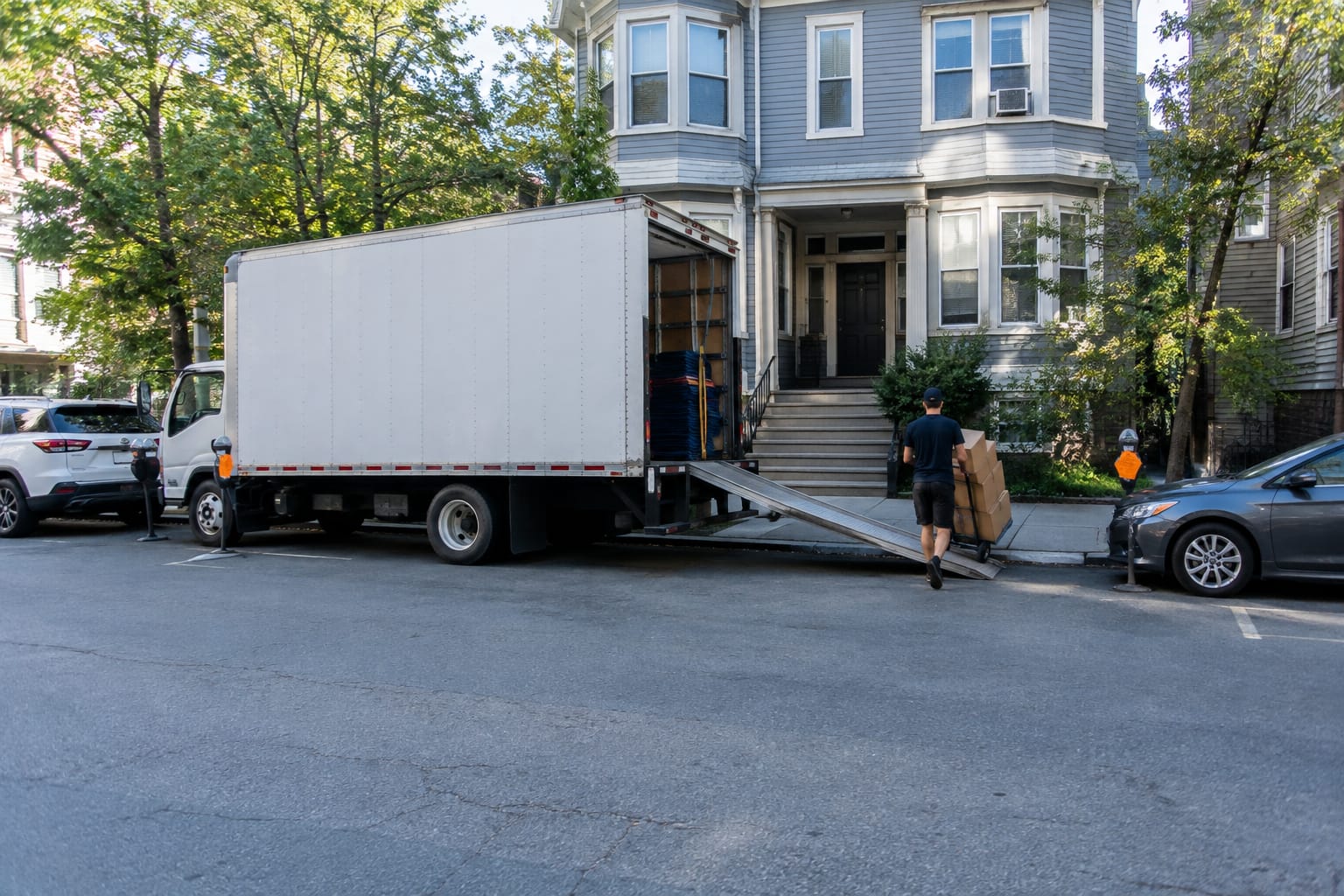
- Truck parking. A moving truck needs a legal place to park close to the door at pickup and delivery. Some cities require a parking permit for this, and rules vary by city, so check with the local city office at each end well before moving day.
- Building requirements. Apartment and condo buildings often ask movers for a certificate of insurance and require you to reserve a service elevator or a loading time slot. Ask building management at both addresses what they need.
- Long carries and stairs. Tell each mover about walk-ups, narrow stairwells and long distances from the truck to the door. Leaving these out is a common source of quote changes.
- Lease and closing dates. If you must leave one home before the next is ready, plan for storage in between and get its cost in writing.
- Season and weather. Summer is the busiest moving period, and winter routes through colder states can bring weather delays. Build some flexibility into your plans.
Need help with this? Get a quote
Getting Accurate Quotes from Interstate Movers
Accurate quotes require accurate inventories. Reliable interstate movers base their estimates on an in-home walk-through or a detailed video survey. Quotes based on a brief phone call or a short online form are far more likely to change.
When applying the framework in how to hire an interstate moving company, confirm that each quote covers the same services: packing labor and supplies if needed, furniture disassembly and reassembly, stair carries, protection level and specialty item handling. Scope omissions, not pricing differences, explain most billing surprises.
Ask each mover what type of estimate they are giving you and how the final charge could differ from it.
Pro Tip: At the estimate stage, ask for the mover's USDOT number and look it up in the FMCSA SAFER System. Check again shortly before moving day to confirm the authority is still active.
Carrier Model vs. Broker Model: A Critical Distinction
One of the most consequential differences between interstate moving companies is often invisible on their websites: whether the company is a carrier or a broker.
A carrier owns its trucks, employs its movers and is responsible for the shipment from pickup to delivery. The company name on the contract matches the company physically doing the move.
A broker is an intermediary. Brokers, including many online mover marketplaces, connect customers with carriers but do not transport goods themselves. The carrier may be chosen based on availability and cost close to the move date, and customers may not know which company is handling their belongings until pickup.
For a practical look at how each model affects your move, see choosing the right long-distance moving company for your situation. If you are still weighing your options, finding good moving companies for interstate moves walks through the same checks in more detail.
What an Inventory-Based Quote Looks Like in Practice
To see how these checks apply to a real company, consider one example. Born to Move, a licensed and insured moving company (USDOT 2887241, MC 985934), quotes interstate and long-distance moves as a flat rate based on a confirmed inventory and access conditions. The inventory is collected by video walk-through, on-site survey or an online calculator, and a written estimate is issued before booking. The quote covers labor, truck, fuel, tolls and mileage, one crew and one truck handle each job, and the delivery window is agreed in writing before booking. Packing supplies are charged separately.
Whichever companies you consider, hold every one of them to the same checks: active registration, carrier status, an inventory-based written estimate and clear answers to the questions above.
What is the difference between interstate and intrastate movers?
Interstate movers transport household goods across state lines and fall under federal oversight by the FMCSA, part of the U.S. Department of Transportation. If your move crosses a state line, confirm the company has an active USDOT number and operating authority in the FMCSA SAFER System, not just a state-level license.
How far in advance should I book an interstate moving company?
Book as early as you reasonably can, especially for summer, when demand is highest because of school-year transitions and better weather. Earlier booking gives you time to collect several written estimates, check each company's registration and compare scope carefully. Short lead times reduce your options and your flexibility on dates and delivery windows. If your dates are flexible, ask each mover which dates have the most availability.
How much do interstate movers typically charge?
There is no single price. Interstate moving cost depends on how much you are moving, the distance, the season and access conditions such as stairs, elevators and long carries. Packing labor, packing supplies, specialty items and storage add to the total. The reliable way to get a real number is to request itemized written estimates from at least three registered movers, each based on the same inventory and the same scope.
Are interstate movers regulated by the federal government?
Yes. For a plain-language explanation of your rights as a customer, read the FMCSA booklet "Your Rights and Responsibilities When You Move" on the Protect Your Move website.
Should I book through a mover marketplace or directly with a moving company?
Marketplaces and brokers arrange your move and pass it to a carrier, which may not be chosen until close to your move date. Booking directly with a carrier means the company you vet is the company that moves you. If you use a marketplace, ask which carrier will perform the move and check that carrier's USDOT number and authority in SAFER before you pay a deposit.
What should I look for when comparing interstate moving companies?
Focus on five points. First, active FMCSA registration with a valid USDOT number and operating authority. Second, whether the company is a carrier or a broker. Third, a written estimate based on an in-home or video survey of your full inventory. Fourth, a consistent review record across several sources, read for patterns rather than star averages. Fifth, clear answers about extra charges, delivery windows and how loss or damage is handled. A company that cannot answer all five clearly warrants caution.
If you'd like to talk through your own route and inventory, you can request a quote from Born to Move and compare it against the same checklist.
Related Articles
- Moving Companies That Move Long Distance: A Full Guide — Covers the factors that separate reliable long-haul movers from high-risk operators, including licensing verification.
- Local Moving Companies Near Me: How to Choose the Best — Learn the key evaluation criteria for selecting a local mover, including how to verify licensing and assess pricing transparency.
- Appliance Moving Company: How to Move Large Appliances — Explains how movers handle refrigerators, washing machines and oversized items during interstate or local relocations.
Recommended Reading
- How to Hire an Interstate Moving Company
- What to Know About Interstate Moving
- How Much Does Interstate Moving Cost?
- Long-Distance Moving Companies: How to Choose the Right Mover
- Are There Any Good Moving Companies for Interstate Moving?
Need help with this? Get a quote · Call (617) 903-2609
Frequently Asked Questions