'%3E%3Cpath%20fill='%231B2A47'%20d='M1.605%2016.263c.03-1.139.059-2.482.088-3.971.03-1.49.03-2.832.03-4.03%200-.758%200-1.576-.03-2.51%200-.905-.03-1.84-.03-2.803%200-.496-.028-.964-.028-1.43%200-.468%200-.906-.03-1.315h6.858q2.188%200%203.589.35c.963.234%201.663.643%202.13%201.198.496.555.73%201.372.73%202.394%200%20.788-.176%201.46-.497%201.985-.32.526-.846.935-1.575%201.197-.73.292-1.693.468-2.918.526v.263c1.313.087%202.334.263%203.122.525.758.263%201.342.672%201.692%201.197.35.526.525%201.197.525%202.044%200%201.08-.233%201.927-.67%202.57-.468.642-1.139%201.08-2.102%201.343-.933.262-2.159.408-3.705.408H1.605zm6.537-9.197q1.882%200%202.713-.526c.555-.35.817-.934.817-1.752%200-.905-.292-1.547-.846-1.927s-1.459-.554-2.655-.554H4.757v4.759zm.204%206.92c.934%200%201.663-.088%202.217-.263.555-.176.934-.438%201.197-.818s.38-.876.38-1.518c0-.876-.322-1.49-.934-1.84-.643-.35-1.635-.525-3.035-.525H4.757v4.963zM21.038%2016.555c-1.576%200-2.801-.292-3.618-.905-.817-.614-1.284-1.519-1.372-2.745-.087-1.226.205-2.774.847-4.613s1.43-3.358%202.392-4.584c.963-1.226%202.043-2.131%203.298-2.744C23.839.292%2025.24%200%2026.786%200c1.576%200%202.772.321%203.59.934.816.613%201.283%201.548%201.37%202.774s-.203%202.774-.845%204.613c-.642%201.81-1.43%203.358-2.393%204.584s-2.072%202.132-3.297%202.745a9.8%209.8%200%200%201-4.173.905m.788-2.278c.642%200%201.138-.058%201.371-.116.205-.059.496-.117.847-.322.262-.146.437-.292.554-.408.204-.175.32-.292.438-.41.204-.203.35-.408.496-.583.35-.438.642-.876.963-1.402.233-.408.466-.817.67-1.284.205-.438.38-.905.555-1.372.438-1.198.671-2.278.671-3.183s-.204-1.606-.612-2.131c-.409-.497-1.051-.76-1.897-.76-.467%200-.934.059-1.43.205h-.03c-1.02.292-1.925%201.226-2.042%201.372-.116.117-.467.526-.963%201.343a15.5%2015.5%200%200%200-1.342%202.92c-.408%201.197-.642%202.277-.671%203.182-.03.906.175%201.636.584%202.161q.611.788%201.838.788M14.853%2038.54c-1.576%200-2.802-.292-3.619-.905s-1.284-1.518-1.371-2.744c-.088-1.227.204-2.774.846-4.614s1.43-3.357%202.393-4.584%202.042-2.13%203.297-2.744c1.255-.613%202.655-.905%204.173-.905%201.575%200%202.772.321%203.589.934s1.284%201.548%201.371%202.774c.088%201.226-.204%202.774-.846%204.613-.642%201.81-1.43%203.358-2.393%204.584s-2.072%202.131-3.297%202.745c-1.226.613-2.626.846-4.143.846m.787-2.277c.642%200%201.138-.059%201.372-.117.204-.058.496-.117.846-.321.263-.146.438-.292.554-.409.205-.175.321-.292.438-.409.204-.204.35-.408.496-.584a13%2013%200%200%200%201.634-2.686c.204-.438.38-.905.555-1.372.437-1.197.67-2.277.67-3.182%200-.906-.203-1.606-.612-2.132-.409-.496-1.05-.759-1.897-.759-.467%200-.934.058-1.43.204h-.029c-1.021.292-1.925%201.227-2.042%201.373-.117.116-.467.525-.963%201.343a15.5%2015.5%200%200%200-1.342%202.92c-.409%201.196-.642%202.277-.671%203.182s.175%201.635.583%202.16q.613.789%201.838.789'/%3E%3Cpath%20fill='%23FF515E'%20d='M55.966%2038.57c-1.576%200-2.801-.293-3.618-.906s-1.284-1.518-1.372-2.744c-.087-1.227.204-2.774.846-4.613s1.43-3.358%202.393-4.584c.963-1.227%202.043-2.132%203.297-2.745s2.656-.905%204.173-.905c1.576%200%202.772.321%203.589.934s1.284%201.548%201.371%202.774c.088%201.226-.204%202.774-.846%204.613-.642%201.81-1.43%203.358-2.393%204.584s-2.071%202.131-3.297%202.745c-1.225.613-2.626.846-4.143.846m.788-2.249c.642%200%201.138-.058%201.371-.117.204-.058.496-.116.846-.32.263-.147.438-.293.555-.41a7%207%200%200%200%20.437-.408c.205-.205.35-.41.496-.584a13%2013%200%200%200%201.634-2.686c.205-.438.38-.905.555-1.373.438-1.197.671-2.277.671-3.182s-.204-1.606-.613-2.131c-.408-.497-1.05-.76-1.896-.76-.467%200-.934.059-1.43.205h-.03c-1.02.292-1.925%201.226-2.042%201.372-.117.117-.467.526-.963%201.343a15.5%2015.5%200%200%200-1.342%202.92c-.409%201.197-.642%202.277-.671%203.182s.175%201.635.583%202.16q.614.79%201.839.79'/%3E%3Cpath%20fill='%231B2A47'%20d='M33.06%2016.263c0-.35%200-.935.03-1.81.029-1.051.058-2.103.058-3.154s.03-2.073.03-3.007c0-1.606-.03-3.27-.06-4.993%200-.554-.028-1.08-.028-1.606%200-.525-.03-1.021-.03-1.46h6.828c1.46%200%202.685.117%203.59.38q1.4.394%202.1%201.314.7.963.7%202.628c0%20.992-.174%201.81-.554%202.452-.35.643-.904%201.11-1.604%201.431s-1.576.467-2.627.496v.263q2.058.087%203.064.876c.671.525%201.138%201.372%201.43%202.51.087.41.233%201.023.467%201.84.233.818.408%201.431.554%201.84h-3.414a11%2011%200%200%200-.262-1.022c-.321-1.314-.526-2.19-.584-2.628a5%205%200%200%200-.642-1.46%202.13%202.13%200%200%200-.963-.73c-.408-.146-.934-.233-1.605-.233h-3.326v6.0440000000000005H33.06zm6.332-8.292c1.343%200%202.276-.205%202.86-.613.554-.41.846-1.11.846-2.073%200-.73-.146-1.314-.408-1.723-.263-.409-.671-.7-1.197-.876q-.788-.263-2.1-.263h-3.181v5.519h3.18zM49.4%2016.263l.03-2.745c.029-2.452.029-4.905.029-7.416q0-2.101-.088-5.868h4.085l5.924%2010.335c.087.234.204.438.291.643.117.204.205.408.321.613.38.788.613%201.255.672%201.372h.262c0-.058-.03-.146-.03-.204%200-.059-.028-.117-.028-.175a75%2075%200%200%201-.175-1.314%2010%2010%200%200%201-.088-1.285c0-1.547%200-3.737-.029-6.57V1.84c0-.584-.03-1.11-.03-1.576h2.977c-.03%202.482-.058%205.08-.058%207.766%200%201.694%200%204.438.029%208.292h-4.027l-5.573-9.43c-.875-1.81-1.226-2.511-1.05-2.132-.263-.613-.467-1.08-.613-1.46h-.263c.058.35.117.876.175%201.548.059.7.117%201.168.117%201.46%200%202.978%200%206.306.029%209.985H49.4zM4.698%2038.277c.029-2.627.058-5.255.058-7.883%200-1.576%200-3.503-.029-5.752-1.109%200-2.684%200-4.727.03v-2.453h12.664v2.453c-1.955-.03-3.53-.03-4.756-.03%200%20.584-.03%201.227-.03%201.957s0%201.46-.029%202.218v1.84c0%202.57.03%205.11.059%207.62z'/%3E%3Cpath%20fill='%23FF515E'%20d='M29.441%2038.277c.409-1.05.788-2.102%201.168-3.182s.787-2.16%201.167-3.241c.613-1.693%201.05-2.949%201.342-3.766l1.255-3.65c.116-.38.262-.788.379-1.139.117-.38.263-.73.38-1.05h4.61l-.671%2012.904h.262l8.316-12.905h4.669l-.7%201.869c-.876%202.452-1.343%203.766-1.43%204a501%20501%200%200%200-3.385%2010.16h-2.947c.292-.846.788-2.219%201.459-4.087.175-.526.35-1.08.554-1.606.175-.526.38-1.08.555-1.577.642-1.81%201.342-3.825%202.072-6.014h-.234l-8.724%2013.314h-2.86l.554-13.314h-.175c-.175.496-.38.992-.554%201.489-.175.496-.38%201.022-.555%201.547a163%20163%200%200%200-1.08%203.008c-.145.38-.262.759-.408%201.138-.117.38-.262.73-.408%201.11-.7%201.898-1.284%203.59-1.751%205.05h-2.86zM68.047%2038.277c.175-2.19.32-4.525.467-7.007.058-.905.204-3.912.467-9.051h3.151c-.03.438-.058.934-.088%201.46s-.058%201.08-.087%201.693a264%20264%200%200%201-.409%206.657c-.145%201.986-.35%203.591-.583%204.788h.175Q72.147%2034.892%2073.94%2032a562%20562%200%200%201%204.465-7.066c.32-.496.641-.992.933-1.46s.555-.875.817-1.255h3.268q-.568.832-1.138%201.752c-.408.613-.787%201.255-1.196%201.927-3.88%206.014-6.478%2010.131-7.85%2012.35h-5.193zM79.106%2038.277c.32-.788.758-2.014%201.37-3.65a287%20287%200%200%200%201.577-4.32c.437-1.256.904-2.628%201.4-4.088s.934-2.774%201.313-3.97h11.322l-.846%202.364H87.1l-1.664%204.847%207.645-.088-.612%201.694-7.587-.088-1.75%204.934h8.286l-.846%202.365z'/%3E%3C/g%3E%3Cdefs%3E%3CclipPath%20id='a'%3E%3Cpath%20fill='%23fff'%20d='M0%200h96v40H0z'/%3E%3C/clipPath%3E%3C/defs%3E%3C/svg%3E)
To choose a moving company to another state, verify its US DOT number with the FMCSA, confirm the carrier’s insurance is active, and collect written estimates from at least three licensed interstate movers before comparing price. Licensing and estimate accuracy matter far more than the lowest quote.
Interstate moves follow federal rules that local moves do not, and those rules exist to protect you. The difference between a smooth relocation and a costly dispute usually comes down to vetting. This guide walks through verification, estimates, red flags, comparison, and budgeting so you can hire with confidence.

Key Takeaways
| Point | Details |
|---|---|
| Federal oversight applies | Any company moving your belongings across state lines must hold an active US DOT number registered with the FMCSA’s SAFER carrier database. |
| Get it in writing | Collect at least three written, in-home or video estimates so you can compare scope, not just headline price. |
| Know your estimate type | On a non-binding estimate, a mover may legally collect no more than 110% of the quoted amount at delivery, per FMCSA rules. |
| Watch for deposits | Large upfront cash deposits and quotes given sight-unseen are the two most common signs of a moving scam, per FMCSA’s Protect Your Move program. |
| Verify before you sign | Use a step-by-step process to check a moving company’s US DOT number before paying anything. |
What Makes an Out-of-State Move Different From a Local One

An interstate move is any relocation that crosses state lines, and it falls under federal jurisdiction. A local move stays within one state and is governed by state rules or none at all. That single distinction changes how you vet, hire, and pay your mover.
Federal oversight is the biggest difference. Companies handling an interstate move must register with the U.S. Department of Transportation and carry a valid US DOT number. Local-only movers often have no equivalent federal requirement, which is why out of state movers face a stricter standard.
Q: What is the difference between local and interstate movers?
A: Interstate movers cross state lines and must hold an active US DOT number regulated by the FMCSA, while local movers operate within one state under state-level rules only.
The practical consequences are real:
- Pricing model: Local moves are usually billed hourly. Long distance movers price by shipment weight and mileage.
- Liability: Interstate carriers must offer two federally defined levels of liability coverage.
- Timeline: A local move finishes in a day; a state to state move often involves a multi-day delivery window.
For a deeper breakdown of how distance changes the process, see this guide on what to know about interstate moving. Understanding the category you fall into is the first step in how to choose a moving company that fits the job.
How to Verify a Moving Company Is Licensed and Insured
Verifying a mover takes about five minutes and is the single most important step. Every legitimate interstate carrier publishes its US DOT and Motor Carrier numbers, and you can confirm them through a free federal lookup before you ever sign.
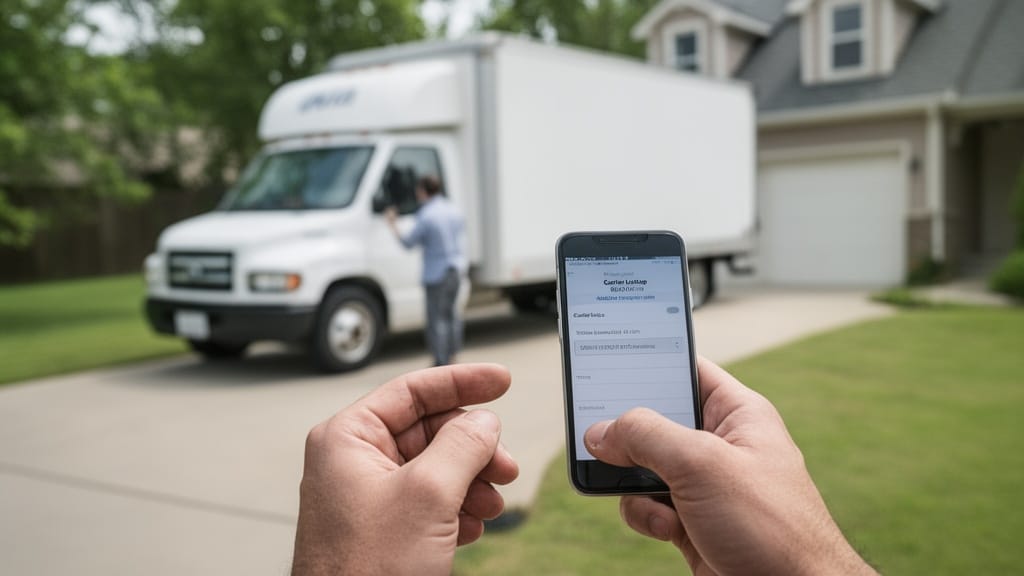
Follow these steps to confirm you are dealing with licensed interstate movers:
- Ask for the US DOT number. A reputable interstate moving company lists it on its website, estimates, and trucks.
- Search the FMCSA database. Enter the number into the FMCSA SAFER company snapshot to confirm the carrier is active and authorized for household goods.
- Check the operating status. The record should read “authorized for HHG” (household goods), not “out of service” or broker-only.
- Confirm insurance on file. The same record shows whether the carrier carries active cargo and liability coverage.
- Review complaint history. The snapshot links to safety and complaint data tied to that US DOT number moving company record.
A company registered only as a broker arranges your move but does not perform it, which adds a layer of risk. If you want the full walkthrough, this resource explains how to check a moving company’s US DOT number line by line.
Pro Tip: Cross-reference the company name on the FMCSA record against the name on your estimate. Scam operators frequently quote under one business name while holding authority under another — a mismatch is an immediate disqualifier.
Understanding Interstate Moving Quotes and Estimates
Moving company quotes come in three federally recognized formats, and knowing the difference protects you from delivery-day surprises. The estimate type determines the maximum you can be charged, so read the document header before anything else.
Q: What is the difference between a binding and non-binding estimate?
A: A binding estimate locks in the price for the listed items regardless of final weight, while a non-binding estimate can change.
| Estimate type | What it means | Risk to you |
|---|---|---|
| Binding | Fixed price for the agreed inventory | Low — price holds if inventory is unchanged |
| Non-binding | Estimate based on projected weight | Moderate — final cost can rise to a 110% delivery cap |
| Binding not-to-exceed | You pay the lower of estimate or actual | Lowest — you benefit if weight comes in under |
A “binding not-to-exceed” estimate is generally the most consumer-friendly because you never pay more than quoted but can pay less. Insist on an in-home or video survey; accurate moving company quotes are impossible without one. For more on how carriers calculate the figure, read how interstate moving service companies determine the cost of your move.
Red Flags That Signal a Moving Scam
Most moving fraud follows a predictable pattern, and the warning signs appear before the truck arrives. The clearest signal is a quote delivered without anyone inspecting your belongings.
Watch for these red flags, drawn from FMCSA’s Protect Your Move guidance:
- A quote given over the phone or online with no in-home or video survey.
- A demand for a large cash deposit before the move.
- No US DOT number or a refusal to provide one.
- A blank or incomplete bill of lading presented for signature.
- A generic website with no physical address or local business listing.
- Estimates dramatically lower than every competitor’s.
The deposit demand deserves special attention. Established carriers typically bill on or after delivery, so a request for hundreds of dollars upfront is a classic hostage-load setup, where belongings are held until inflated fees are paid. The FTC’s guidance on hiring a moving company echoes the same warning.
Pro Tip: Search the company’s exact phone number in quotation marks online. Scam brokers reuse numbers across multiple shell names, and a single search often surfaces the same digits attached to a string of complaints.
For a printable checklist, this guide on spotting common moving scams covers each tactic in detail.
Questions to Ask Before You Sign a Contract
The right questions separate a professional carrier from a broker reselling your job. Ask every candidate the same list so you can compare answers directly.
Before signing, ask:
- What is your US DOT and MC number, and are you the carrier or a broker?
- Is this estimate binding, non-binding, or binding not-to-exceed?
- What valuation coverage is included, and what does full protection cost?
- What is the delivery window, and how is it calculated?
- Are there extra charges for stairs, long carries, shuttles, or bulky items?
- Will my shipment be transferred between trucks or warehouses en route?
- How are claims for damage filed and resolved?

Disclosing unusual items upfront — a piano, a safe, oversized furniture — is essential to an accurate quote. A trustworthy estimator will ask about access, parking, and special handling without being prompted. For a fuller rundown of qualities that matter, see what to look for in a moving company.
Comparing Long-Distance Moving Companies Side by Side

The best comparison method evaluates carriers on identical criteria rather than price alone. Build a simple grid and score each company so the strongest option is obvious on paper.
| Criteria | What to confirm | Why it matters |
|---|---|---|
| Active US DOT number | Verified on FMCSA SAFER | Proves legal authority to operate |
| Estimate type | Binding or binding not-to-exceed preferred | Caps your final cost |
| Carrier vs broker | Performs the move directly | Reduces handoff and liability risk |
| Valuation options | Full value protection available | Determines reimbursement for damage |
| Reviews and rating | Recent, verified customer feedback | Signals real service quality |
| Delivery window | Clear date range in writing | Sets realistic expectations |
When you compare long distance movers, weight licensing and estimate transparency above a slightly lower number. A quote that undercuts the field by a wide margin almost always reflects a missing service or a coming upcharge.
Pro Tip: Ask each company whether your shipment rides on a dedicated truck or is consolidated with other loads. Consolidated freight is cheaper but widens the delivery window — knowing which model you’re buying prevents disappointment.
Reviews and word of mouth still carry weight. To balance ratings against verifiable credentials, this guide explains how to find a reputable moving company, and this overview covers whether there are good moving companies for interstate moving.
Moving Day and Delivery: What to Expect
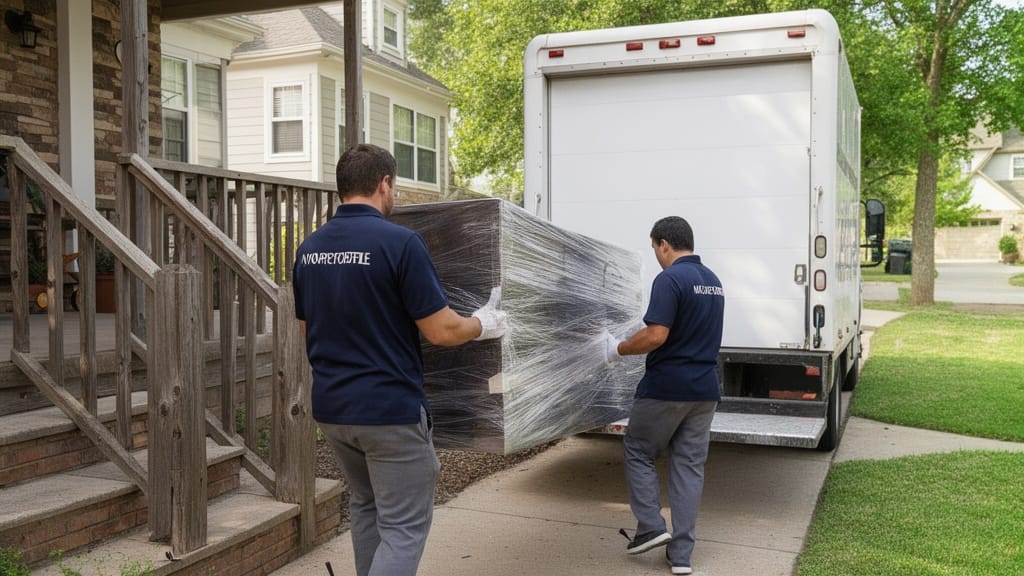
On moving day, expect a final walkthrough, an inventory of every item, and a bill of lading you must read before signing. The bill of lading is your contract and your receipt — never sign a blank or partial one.
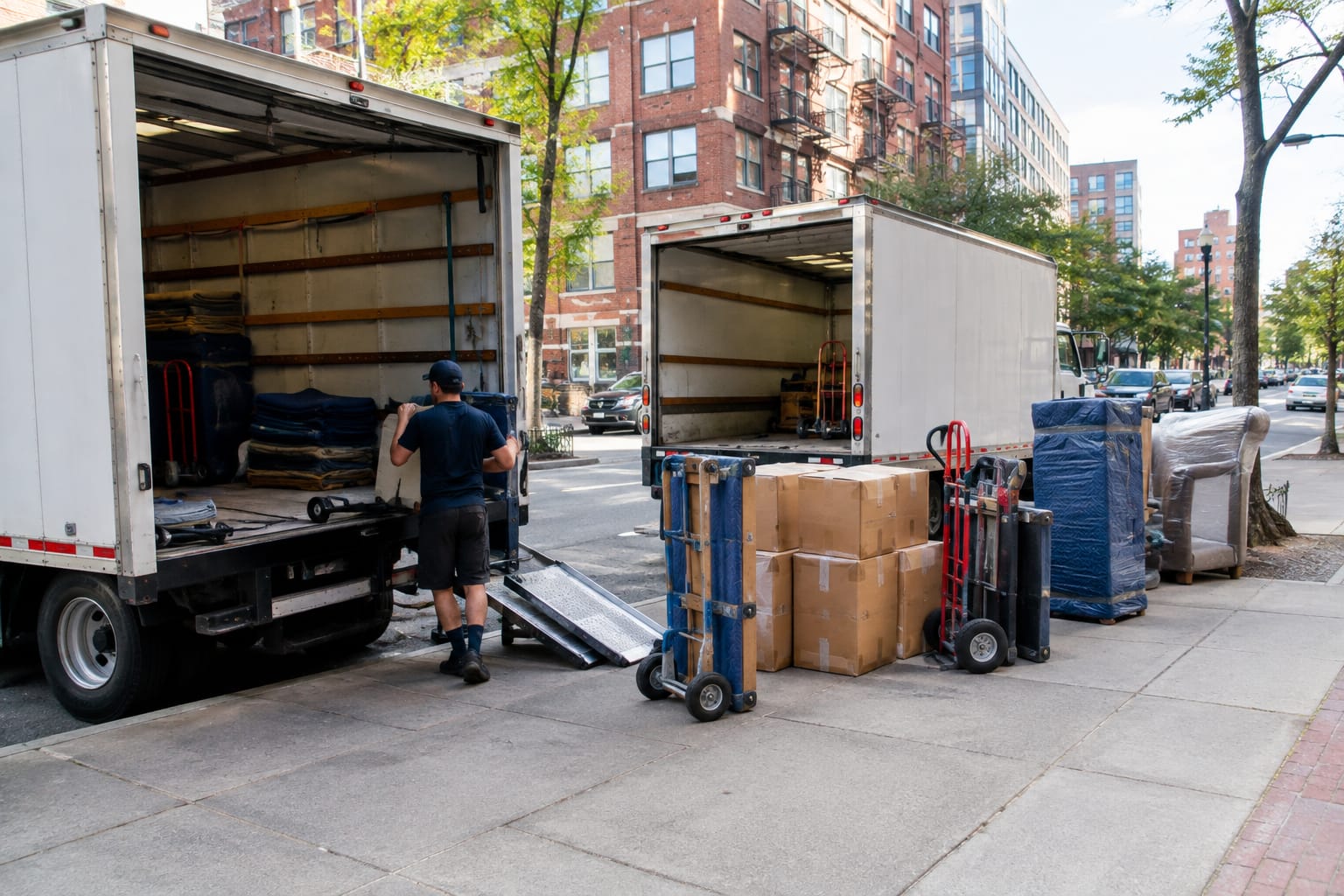
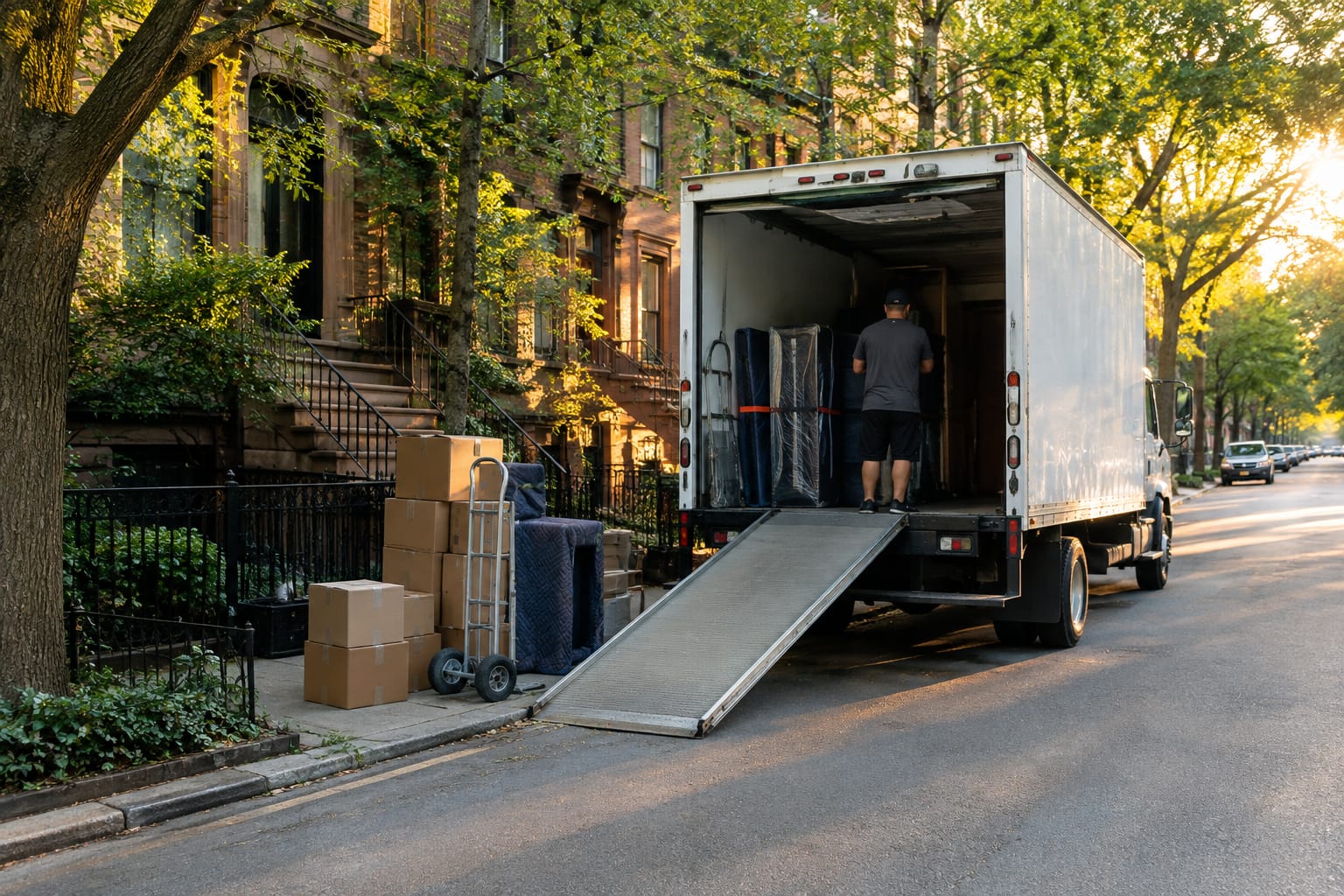
Professional crews wrap furniture in moving blankets and protect fragile electronics; a flat-screen TV, for example, is typically padded and placed in a dedicated box rather than loaded loose. Confirm the inventory list matches your belongings and note any pre-existing damage on the paperwork.
Q: How long does interstate delivery take?
A: State to state moving services usually quote a delivery window of several days to a couple of weeks, driven by distance, route, and whether your shipment is consolidated with others.
Delivery rarely happens the same day as pickup. Your contract should state a spread of dates, and the driver will call ahead before arrival. On delivery, check items against the inventory before signing off, and file any damage claim in writing promptly. For packing strategy that protects your load over long hauls, review these cross-country moving tips.
Budgeting for a Move to Another State
The cost of hiring an interstate moving company depends mostly on shipment weight, distance, and the services you add. According to Forbes Home, out-of-state moves commonly range from a few thousand dollars to well over $10,000 depending on home size and miles traveled.
The factors that move your total up or down:
| Cost factor | Effect on total |
|---|---|
| Distance | Longer hauls raise mileage-based charges |
| Shipment weight | More belongings mean a heavier, costlier load |
| Packing services | Full packing adds labor and materials |
| Valuation coverage | Full value protection costs more than basic |
| Access and timing | Stairs, shuttles, and peak season add fees |
Basic released-value protection is included at no extra charge but reimburses only 60 cents per pound per article, per FMCSA rules — often far below an item’s real value. Full value protection costs more but covers replacement. Build that choice into your budget from the start.
Get a comprehensive estimate that lists every possible fee, and disclose special requirements early to avoid surprises. For more detail on labor and service pricing, see how much movers cost and this guide on planning a move to another city.
How much do you need to move cross country?
A modest budget is often sufficient for a studio or one-bedroom moving a moderate distance, especially if you handle your own packing. For a larger household crossing the entire country, it can fall short once weight, mileage, and full value protection are added. The variables that decide it are shipment size and distance. To stretch the budget, declutter before the move, pack non-fragile items yourself, and avoid peak-season dates. Collect binding not-to-exceed estimates so the figure can only stay the same or drop — never rise unexpectedly — and confirm that valuation coverage and any access fees are included before you commit.
Related Articles
- Best Way to Move Across the Country: A Step-by-Step Guide — A complete walkthrough for planning a long-haul relocation from start to finish.
- Moving Across States: Key Things to Know Before You Go — The essential rules, documents, and prep work for any interstate move.
- Best Long Distance Moving Companies: Top Picks — How leading carriers compare on service, coverage, and reliability.
- Best Interstate Moving Companies Compared — A side-by-side look at top interstate movers and what sets them apart.
- Which Company Is Best for Moving Out of State? — A framework for matching the right mover to your specific relocation.
Recommended Reading
- How to Hire an Interstate Moving Company
- What Questions Should I Ask When Hiring a Moving Company?
- How Much Does Interstate Moving Cost?
- What to Look for in a Moving Company: Top Qualities
- Long-Distance Moving Companies: How to Choose the Right Mover
Frequently Asked Questions