'%3E%3Cpath%20fill='%231B2A47'%20d='M1.605%2016.263c.03-1.139.059-2.482.088-3.971.03-1.49.03-2.832.03-4.03%200-.758%200-1.576-.03-2.51%200-.905-.03-1.84-.03-2.803%200-.496-.028-.964-.028-1.43%200-.468%200-.906-.03-1.315h6.858q2.188%200%203.589.35c.963.234%201.663.643%202.13%201.198.496.555.73%201.372.73%202.394%200%20.788-.176%201.46-.497%201.985-.32.526-.846.935-1.575%201.197-.73.292-1.693.468-2.918.526v.263c1.313.087%202.334.263%203.122.525.758.263%201.342.672%201.692%201.197.35.526.525%201.197.525%202.044%200%201.08-.233%201.927-.67%202.57-.468.642-1.139%201.08-2.102%201.343-.933.262-2.159.408-3.705.408H1.605zm6.537-9.197q1.882%200%202.713-.526c.555-.35.817-.934.817-1.752%200-.905-.292-1.547-.846-1.927s-1.459-.554-2.655-.554H4.757v4.759zm.204%206.92c.934%200%201.663-.088%202.217-.263.555-.176.934-.438%201.197-.818s.38-.876.38-1.518c0-.876-.322-1.49-.934-1.84-.643-.35-1.635-.525-3.035-.525H4.757v4.963zM21.038%2016.555c-1.576%200-2.801-.292-3.618-.905-.817-.614-1.284-1.519-1.372-2.745-.087-1.226.205-2.774.847-4.613s1.43-3.358%202.392-4.584c.963-1.226%202.043-2.131%203.298-2.744C23.839.292%2025.24%200%2026.786%200c1.576%200%202.772.321%203.59.934.816.613%201.283%201.548%201.37%202.774s-.203%202.774-.845%204.613c-.642%201.81-1.43%203.358-2.393%204.584s-2.072%202.132-3.297%202.745a9.8%209.8%200%200%201-4.173.905m.788-2.278c.642%200%201.138-.058%201.371-.116.205-.059.496-.117.847-.322.262-.146.437-.292.554-.408.204-.175.32-.292.438-.41.204-.203.35-.408.496-.583.35-.438.642-.876.963-1.402.233-.408.466-.817.67-1.284.205-.438.38-.905.555-1.372.438-1.198.671-2.278.671-3.183s-.204-1.606-.612-2.131c-.409-.497-1.051-.76-1.897-.76-.467%200-.934.059-1.43.205h-.03c-1.02.292-1.925%201.226-2.042%201.372-.116.117-.467.526-.963%201.343a15.5%2015.5%200%200%200-1.342%202.92c-.408%201.197-.642%202.277-.671%203.182-.03.906.175%201.636.584%202.161q.611.788%201.838.788M14.853%2038.54c-1.576%200-2.802-.292-3.619-.905s-1.284-1.518-1.371-2.744c-.088-1.227.204-2.774.846-4.614s1.43-3.357%202.393-4.584%202.042-2.13%203.297-2.744c1.255-.613%202.655-.905%204.173-.905%201.575%200%202.772.321%203.589.934s1.284%201.548%201.371%202.774c.088%201.226-.204%202.774-.846%204.613-.642%201.81-1.43%203.358-2.393%204.584s-2.072%202.131-3.297%202.745c-1.226.613-2.626.846-4.143.846m.787-2.277c.642%200%201.138-.059%201.372-.117.204-.058.496-.117.846-.321.263-.146.438-.292.554-.409.205-.175.321-.292.438-.409.204-.204.35-.408.496-.584a13%2013%200%200%200%201.634-2.686c.204-.438.38-.905.555-1.372.437-1.197.67-2.277.67-3.182%200-.906-.203-1.606-.612-2.132-.409-.496-1.05-.759-1.897-.759-.467%200-.934.058-1.43.204h-.029c-1.021.292-1.925%201.227-2.042%201.373-.117.116-.467.525-.963%201.343a15.5%2015.5%200%200%200-1.342%202.92c-.409%201.196-.642%202.277-.671%203.182s.175%201.635.583%202.16q.613.789%201.838.789'/%3E%3Cpath%20fill='%23FF515E'%20d='M55.966%2038.57c-1.576%200-2.801-.293-3.618-.906s-1.284-1.518-1.372-2.744c-.087-1.227.204-2.774.846-4.613s1.43-3.358%202.393-4.584c.963-1.227%202.043-2.132%203.297-2.745s2.656-.905%204.173-.905c1.576%200%202.772.321%203.589.934s1.284%201.548%201.371%202.774c.088%201.226-.204%202.774-.846%204.613-.642%201.81-1.43%203.358-2.393%204.584s-2.071%202.131-3.297%202.745c-1.225.613-2.626.846-4.143.846m.788-2.249c.642%200%201.138-.058%201.371-.117.204-.058.496-.116.846-.32.263-.147.438-.293.555-.41a7%207%200%200%200%20.437-.408c.205-.205.35-.41.496-.584a13%2013%200%200%200%201.634-2.686c.205-.438.38-.905.555-1.373.438-1.197.671-2.277.671-3.182s-.204-1.606-.613-2.131c-.408-.497-1.05-.76-1.896-.76-.467%200-.934.059-1.43.205h-.03c-1.02.292-1.925%201.226-2.042%201.372-.117.117-.467.526-.963%201.343a15.5%2015.5%200%200%200-1.342%202.92c-.409%201.197-.642%202.277-.671%203.182s.175%201.635.583%202.16q.614.79%201.839.79'/%3E%3Cpath%20fill='%231B2A47'%20d='M33.06%2016.263c0-.35%200-.935.03-1.81.029-1.051.058-2.103.058-3.154s.03-2.073.03-3.007c0-1.606-.03-3.27-.06-4.993%200-.554-.028-1.08-.028-1.606%200-.525-.03-1.021-.03-1.46h6.828c1.46%200%202.685.117%203.59.38q1.4.394%202.1%201.314.7.963.7%202.628c0%20.992-.174%201.81-.554%202.452-.35.643-.904%201.11-1.604%201.431s-1.576.467-2.627.496v.263q2.058.087%203.064.876c.671.525%201.138%201.372%201.43%202.51.087.41.233%201.023.467%201.84.233.818.408%201.431.554%201.84h-3.414a11%2011%200%200%200-.262-1.022c-.321-1.314-.526-2.19-.584-2.628a5%205%200%200%200-.642-1.46%202.13%202.13%200%200%200-.963-.73c-.408-.146-.934-.233-1.605-.233h-3.326v6.0440000000000005H33.06zm6.332-8.292c1.343%200%202.276-.205%202.86-.613.554-.41.846-1.11.846-2.073%200-.73-.146-1.314-.408-1.723-.263-.409-.671-.7-1.197-.876q-.788-.263-2.1-.263h-3.181v5.519h3.18zM49.4%2016.263l.03-2.745c.029-2.452.029-4.905.029-7.416q0-2.101-.088-5.868h4.085l5.924%2010.335c.087.234.204.438.291.643.117.204.205.408.321.613.38.788.613%201.255.672%201.372h.262c0-.058-.03-.146-.03-.204%200-.059-.028-.117-.028-.175a75%2075%200%200%201-.175-1.314%2010%2010%200%200%201-.088-1.285c0-1.547%200-3.737-.029-6.57V1.84c0-.584-.03-1.11-.03-1.576h2.977c-.03%202.482-.058%205.08-.058%207.766%200%201.694%200%204.438.029%208.292h-4.027l-5.573-9.43c-.875-1.81-1.226-2.511-1.05-2.132-.263-.613-.467-1.08-.613-1.46h-.263c.058.35.117.876.175%201.548.059.7.117%201.168.117%201.46%200%202.978%200%206.306.029%209.985H49.4zM4.698%2038.277c.029-2.627.058-5.255.058-7.883%200-1.576%200-3.503-.029-5.752-1.109%200-2.684%200-4.727.03v-2.453h12.664v2.453c-1.955-.03-3.53-.03-4.756-.03%200%20.584-.03%201.227-.03%201.957s0%201.46-.029%202.218v1.84c0%202.57.03%205.11.059%207.62z'/%3E%3Cpath%20fill='%23FF515E'%20d='M29.441%2038.277c.409-1.05.788-2.102%201.168-3.182s.787-2.16%201.167-3.241c.613-1.693%201.05-2.949%201.342-3.766l1.255-3.65c.116-.38.262-.788.379-1.139.117-.38.263-.73.38-1.05h4.61l-.671%2012.904h.262l8.316-12.905h4.669l-.7%201.869c-.876%202.452-1.343%203.766-1.43%204a501%20501%200%200%200-3.385%2010.16h-2.947c.292-.846.788-2.219%201.459-4.087.175-.526.35-1.08.554-1.606.175-.526.38-1.08.555-1.577.642-1.81%201.342-3.825%202.072-6.014h-.234l-8.724%2013.314h-2.86l.554-13.314h-.175c-.175.496-.38.992-.554%201.489-.175.496-.38%201.022-.555%201.547a163%20163%200%200%200-1.08%203.008c-.145.38-.262.759-.408%201.138-.117.38-.262.73-.408%201.11-.7%201.898-1.284%203.59-1.751%205.05h-2.86zM68.047%2038.277c.175-2.19.32-4.525.467-7.007.058-.905.204-3.912.467-9.051h3.151c-.03.438-.058.934-.088%201.46s-.058%201.08-.087%201.693a264%20264%200%200%201-.409%206.657c-.145%201.986-.35%203.591-.583%204.788h.175Q72.147%2034.892%2073.94%2032a562%20562%200%200%201%204.465-7.066c.32-.496.641-.992.933-1.46s.555-.875.817-1.255h3.268q-.568.832-1.138%201.752c-.408.613-.787%201.255-1.196%201.927-3.88%206.014-6.478%2010.131-7.85%2012.35h-5.193zM79.106%2038.277c.32-.788.758-2.014%201.37-3.65a287%20287%200%200%200%201.577-4.32c.437-1.256.904-2.628%201.4-4.088s.934-2.774%201.313-3.97h11.322l-.846%202.364H87.1l-1.664%204.847%207.645-.088-.612%201.694-7.587-.088-1.75%204.934h8.286l-.846%202.365z'/%3E%3C/g%3E%3Cdefs%3E%3CclipPath%20id='a'%3E%3Cpath%20fill='%23fff'%20d='M0%200h96v40H0z'/%3E%3C/clipPath%3E%3C/defs%3E%3C/svg%3E)
Most people choose a moving company in a matter of hours, under deadline pressure, without a systematic process. That rushed approach is exactly how moving fraud — and costly billing surprises — happen. Learning how to hire a moving company properly means following a defined framework: researching credentials, comparing multiple estimates, identifying red flags, and reviewing the contract before committing. This guide presents that framework as a step-by-step process, from the decisions to make before contacting a single company through the final contract review on signing day.

Key Takeaways
| Point | Details |
|---|---|
| Book 4–8 weeks in advance | Peak season (May–September) fills quickly; early booking secures better availability and competitive pricing |
| Collect at least 3 written estimates | Multiple quotes reveal pricing outliers and create negotiating leverage before any commitment |
| Verify USDOT credentials | Every legitimate interstate carrier has a USDOT number — verify it free on the FMCSA's official database |
| Choose a binding estimate | Binding estimates lock your final price; non-binding estimates can end up higher than the quoted amount |
| Prepare your questions | Review questions to ask when hiring a moving company before the first estimate appointment |
What to Determine Before You Start Looking for Movers

The quality of any estimate depends entirely on the information provided before the first call. Before contacting a single company, nail down four variables: the exact move date (and any flexibility window), the full scope of items to be moved, the distance (local vs. long-distance vs. interstate), and any special requirements — oversized furniture, pianos, or items that cannot fit through standard doorways.
Understanding how much movers cost at the outset prevents sticker shock and helps calibrate whether quotes are reasonable. Local moves are typically billed by the hour, while long-distance moves are priced by weight and distance. Knowing which applies shapes how to evaluate every estimate received.
Timing has a direct impact on both price and availability. The U.S. Census Bureau reports that the majority of Americans relocate between June and September — the industry's peak season. Booking during this window, especially at month-end, means competing with high demand and limited crew availability. Moving mid-month or between October and April typically yields more flexible scheduling and more competitive pricing from carriers eager to fill their calendars.
Step 1: Research Moving Companies in Your Area
The best starting point for how to find a good moving company is not a general search engine — it's the FMCSA's official licensed carrier database, which lists all registered interstate carriers with their licensing status, insurance filings, and any recorded safety violations. This database is free, takes two minutes, and eliminates unlicensed operators immediately.
Supplement the FMCSA check with reviews from Google Business Profile and the Better Business Bureau complaint database. Look at review patterns across at least two independent platforms: how many reviews exist, how consistently they mention on-time arrival and accurate billing, and how the company responds to negative feedback. A company with 300+ reviews and consistent, specific praise tells a very different story than one with 15 reviews and a perfect score.
Top rated moving services have typically earned that designation through a combination of verified credentials, documented performance, and responsiveness to customer concerns. Community recommendations from real estate agents, property managers, and local social networks are also valuable — particularly when the recommender moved recently and can speak to current performance rather than historical reputation.
Pro Tip: Search the company's exact legal name (not just the trade name) in the FMCSA database. Some carriers operate under trade names with different legal entity names — their USDOT number may be linked to the legal entity, not the brand. This discrepancy is itself a red flag worth investigating before proceeding.
For deeper guidance on this research phase, how to find a reputable moving company provides a detailed walk-through of the full vetting process.

Step 2: Request Multiple In-Home or Virtual Estimates
How to choose a moving company becomes clear only after comparing multiple estimates intelligently. Contact a minimum of three companies and request formal estimates — either through an in-person walkthrough of the property or a video call for virtual assessment. Any company offering to quote a job by phone without reviewing the actual inventory should be removed from consideration immediately; this is a standard setup for hidden fees and price inflation on moving day.
During the estimate appointment, a professional mover conducts a thorough room-by-room review, notes access constraints (elevator availability, parking restrictions, stairwell dimensions, long-carry distances), and documents any items with special handling requirements. Having a complete inventory ready — including closets, attic, garage, and outdoor items — improves the accuracy of every estimate received.
The estimate appointment itself reveals operational culture. Companies that rush the walkthrough, give vague answers about fee structure, or pressure for an immediate booking decision are demonstrating exactly how they will perform on moving day. For a complete list of questions to ask when hiring a moving company during the estimate, prepare them in advance — the quality of answers is itself a vetting criterion.
Step 3: Verify Licenses, Insurance, and USDOT Numbers
Verifying a mover's USDOT number before booking is the single most critical step in the entire hiring process. The Federal Motor Carrier Safety Administration (FMCSA) requires all carriers operating across state lines to register and maintain a valid USDOT number — searchable free through the FMCSA's Protect Your Move portal, which returns active registration status, operating authority, current insurance filings, and any recorded violations.
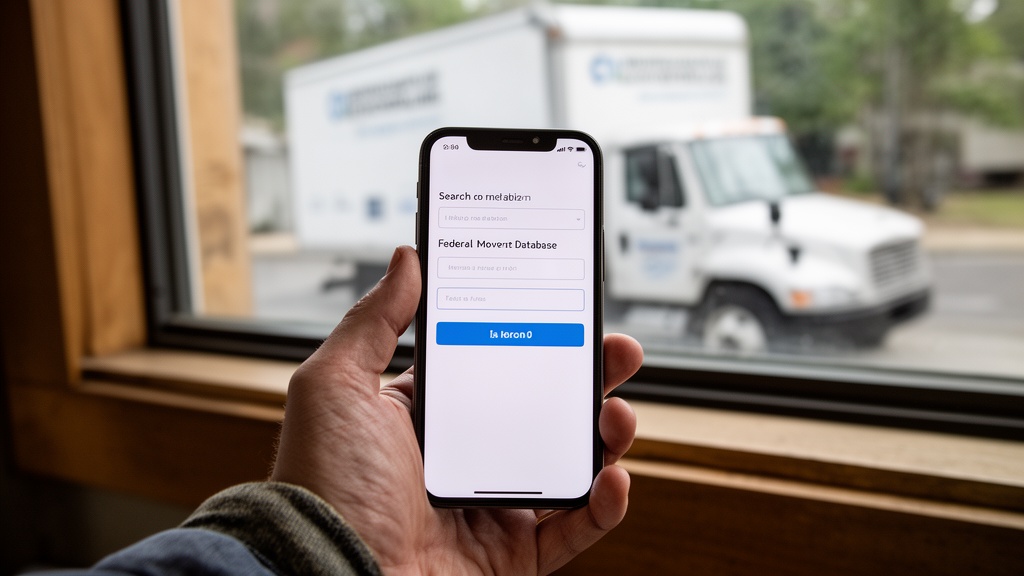
For a detailed walkthrough of the verification process, see verifying a mover's USDOT number before booking. Interstate movers are required by federal law to offer two types of liability coverage: Released Value Protection (the default, at 60 cents per pound per item) and Full Value Protection (repair or replacement at current market value). The FMCSA's Your Rights and Responsibilities When You Move guide explains these protections in full — required reading before any interstate move.
For local (intrastate) moves, state-level licensing applies. In Massachusetts, carriers must be registered with the Massachusetts Department of Public Utilities. Fully licensed and insured companies provide credentials without hesitation — including a Certificate of Insurance (COI) available on request for building management, HOAs, and commercial properties.
Step 4: Read Reviews and Identify Moving Company Red Flags

Review analysis is more nuanced than scanning star ratings. Focus on patterns across 30 or more reviews — how consistently reviewers mention on-time arrival, accurate billing, care with fragile items, and responsiveness to problems. A single bad review among 200 positive ones tells a different story than five complaints about the same billing practice in a 20-review sample.
Understanding moving company red flags before engaging any company prevents the most common and costly hiring mistakes:
- Unusually low bids — quotes significantly below all competing estimates typically signal hidden fees or bait-and-switch pricing tactics
- Large upfront cash deposits — legitimate movers collect payment after delivery, not before loading
- No verifiable physical address — a company without a local office has no accountability anchor
- Unmarked trucks or mismatched trade names — real carriers operate under registered names; mismatched branding is a warning sign
- High-pressure sales tactics — any company discouraging comparison shopping or demanding same-day decisions
- Blank or incomplete contracts — refusing to complete specifics in writing before loading begins is a definitive red flag
Knowing how to avoid moving scams is especially critical for long-distance moves. The FMCSA tracks a specific fraud pattern called "hostage load," where carriers accept low-priced jobs, load all belongings, then refuse delivery until a substantially higher payment is made.
Pro Tip: Before signing, run the company's USDOT number through the FMCSA's database and check the carrier registration date. A company registered within the past 6–12 months that claims a multi-year track record represents a direct credibility conflict — worth investigating thoroughly before proceeding.
Step 5: Compare Quotes and Understand What's Included
Comparing quotes intelligently means looking beyond the total figure. Common add-ons that inflate final bills include fuel surcharges, stair fees (per flight above the first), long-carry fees when truck parking exceeds a set distance from the entrance, packing materials, appliance disconnect/reconnect charges, and handling fees for specialty items such as pianos or pool tables.
| Estimate Type | How It Works | Consumer Implication |
|---|---|---|
| Binding Estimate | Final price agreed before the move; carrier cannot charge more | Best for budget certainty; requires accurate inventory at estimate time |
| Non-Binding Estimate | Based on projected weight; final bill may exceed the estimate | FMCSA limits the overage, but the bill can still increase |
| Binding Not-to-Exceed | Price will not exceed the estimate; may go lower if actual weight is less | Most consumer-favorable option; request this type specifically |
| Hourly Rate | Charged per crew member per hour worked | Common for local moves; advantageous for smaller or faster jobs |
| Flat Rate | Fixed price regardless of time or final weight | Less common; requires a detailed, accurate inventory to be reliable |
Request full itemized breakdowns from every company. Comparing one estimate against another is meaningless without knowing what each includes. For guidance on the key qualities in a trustworthy mover, transparency in pricing — both what is and is not included — is consistently the strongest predictor of a problem-free move.

Step 6: Review the Contract Before You Sign Anything
The moving contract — called a Bill of Lading for interstate shipments — is a legally binding document. Never sign a blank or incomplete contract. Every field must be completed before a signature is applied: the full inventory list, pickup and delivery windows, agreed price and estimate type, liability coverage selection, and terms for disputed charges.
Read the valuation and liability section with particular care. Under default released value protection, carriers cover only 60 cents per pound per article. On a 60-pound television damaged beyond repair, that alone determines the compensation regardless of replacement cost. Full value protection, available as an upgrade, covers repair, replacement at current market value, or a cash settlement for the difference.
Review the five things to verify before moving day as a pre-signature checklist. If any fees appear in the final contract that were not discussed during the estimate, request a revised document before proceeding. For long-distance moves, also confirm the contract specifies a delivery window rather than a single date — interstate deliveries regularly involve multi-day transit ranges, and knowing whether a 3-day or 7-day window applies matters considerably for destination planning. For broader moving day preparation, tips for a smooth moving experience covers the logistics that determine whether moving day stays on schedule.
Senior Moving Services: Special Considerations for Older Adults
Anyone searching for senior moving services near me is navigating a category that demands considerably more from selected companies. Older adults relocating from a long-term family home often face decades of accumulated belongings, higher emotional stakes, and logistical constraints — including specific building policies at senior living communities — that require a more patient, communicative, and thorough approach.
When evaluating movers for senior relocations, prioritize companies with explicit experience in senior transitions. The relevant markers: detailed pre-move consultations involving both the senior and family members, full packing and unpacking services, careful handling protocols for heirlooms and fragile antiques, and crew behavior that prioritizes clear communication over speed.
| Senior Moving Factor | What to Look For |
|---|---|
| Pre-move consultation | Detailed walkthrough with both the senior and family members present |
| Packing services | Full pack and unpack available as a service, not just transportation |
| Fragile item handling | Specialized wrapping and crating for antiques, china, and heirlooms |
| Crew communication | Patient, unhurried communication style with no pressure tactics |
| Storage options | Short- or long-term warehouse storage for timing gaps between residences |
| Building access experience | Familiarity with senior community policies, loading docks, and elevator scheduling |
Some full-service moving companies coordinate directly with estate liquidators, senior living communities, and family members throughout the transition. Asking about these relationships during the estimate reveals the company's experience level. A mover without any senior transition experience will typically be unable to speak to these logistics with specificity — and that lack of specificity is its own answer.
Moving Company Checklist: Everything to Confirm Before Moving Day

A hiring a moving company checklist serves two functions: ensuring the vetting process is comprehensive, and confirming all logistics are locked in before moving day. This moving company checklist covers both stages.
During Vetting and Booking:
- USDOT number verified via FMCSA database (required for interstate moves)
- State-level licensing confirmed (for intrastate moves)
- Certificate of Insurance received or available on request
- Minimum 3 written estimates obtained and compared side by side
- Estimate type confirmed in writing (binding, non-binding, or binding not-to-exceed)
- Moving company red flags reviewed — none identified
- Reviews cross-referenced on at least 2 independent platforms
- Damage claim process and resolution timeline explained satisfactorily
Before Contract Signing:
- All contract fields completed — no blank spaces
- Inventory list matches the walkthrough conducted during the estimate
- Pickup and delivery windows confirmed in writing
- Liability coverage type selected and documented
- All fees itemized (stair, long-carry, fuel, packing materials, specialty items)
- Payment terms reviewed (deposit amount, balance due timing, accepted payment methods)
- Moving day contact person (crew lead or foreman) identified
Pro Tip: Send a confirmation text or email to the company 48 hours before scheduled pickup. The message should confirm arrival time, crew size, and truck details. A legitimate company confirms these details proactively; needing to chase this information the day before the move is a yellow flag worth noting.
For additional verification steps, review five things to verify before moving day for complementary pre-move logistics guidance.
What to Ask Movers Before Hiring: Essential Questions
Knowing what to ask movers before hiring separates customers who encounter surprises from those who don't. A prepared list of questions to ask a moving company during the estimate creates a consistent standard across multiple bids and surfaces differences in professionalism that pricing alone cannot reveal.
Seven questions every customer should ask:
-
Are you a licensed carrier, or do you broker work to third-party carriers? Brokers arrange moves through other companies — accountability for service quality is diffused across the chain. Know which type of company is being hired before committing.
-
What is your USDOT number? Any legitimate carrier answers this immediately. Hesitation or redirection is a red flag.
-
What does the quoted price specifically include? Confirm whether packing materials, stair fees, long-carry distances, fuel surcharges, disassembly, and reassembly are covered or charged separately.
-
What is your process when an item is damaged or lost? Ask for the claims timeline and required documentation. Vague answers without a written policy warrant scrutiny.
-
Will the same crew handle the entire move, or could it be transferred to another carrier? For long-distance moves, consistent crew from pickup to delivery eliminates handoff risk and keeps accountability clear.
-
Do you supply packing boxes and materials? Some full-service movers include boxes and supplies in the quote; others charge separately. This distinction materially affects the total cost comparison.
-
What is your policy on delays? Understand what liability applies to late arrivals, missed delivery windows, and weather-related delays from both perspectives.
For a situation-specific set of questions to ask when hiring a moving company — including questions for commercial relocations, piano moving, and storage scenarios — review that resource before any estimate appointment.
How to Pick a Moving Company: Making the Final Decision
How to pick a moving company comes down to four criteria weighed together: verified credentials, estimate accuracy and transparency, communication quality throughout the process, and the pattern of customer experiences in reviews. The best way to hire movers is not to optimize on price alone — a quote far cheaper than the competition is more likely to produce a billing dispute than a competitive bid from a credentialed, documented carrier.
The American Moving and Storage Association advises evaluating movers on the completeness of their written estimates, the quality of their in-home inventory assessment, and their ability to answer liability and insurance questions with precision. Companies that deflect, offer verbal assurances instead of written documentation, or rush the estimate process are providing a preview of their execution quality.
A practical three-filter framework for the final decision:
- Eliminate first — remove any company with unresolved licensing questions, unexplained pricing gaps, or identified red flags
- Score what remains — evaluate responsiveness, estimate thoroughness, and review patterns across platforms
- Verify before confirming — run the final candidate's USDOT number once more before signing
How to verify movers at the confirmation stage: check the FMCSA SaferSys database for active registration and current insurance status. Call the company's listed number to confirm it connects to a real operational team — not an answering service or call center. A company that answers clearly, provides written documentation without hesitation, and holds verifiable credentials has demonstrated the most reliable predictor of a successful move.
For those planning interstate or long-haul relocations, cross-country moving tips covers additional considerations specific to multi-state moves that the standard local hiring process does not fully address. For a broader view of end-to-end service offerings, full-service moving options explains what to expect from companies offering comprehensive move management.
Related Articles
- Top Rated Moving Services — Explore what separates the highest-rated movers from average options and how to identify them in any market.
- Moving Companies That Move Long Distance: A Full Guide — Learn how interstate moving works, what to expect from long-haul carriers, and how to evaluate them effectively.
- Local Moving Companies Near Me: How to Choose the Best — A practical guide to vetting and selecting local movers based on proximity, reviews, and pricing.
- Best Cheap Moving Companies — How to find affordable movers without sacrificing reliability or creating unnecessary risk.
- Best Moving Companies Boston — A focused look at top-rated moving services operating in the Greater Boston area.
Recommended
- What Questions Should I Ask When Hiring a Moving Company?
- How to Check a Moving Company's US DOT Number
- How to Avoid Moving Scams
- What to Look for in a Moving Company: Top Qualities
- 5 Things You Need to Check Before the Move
Frequently Asked Questions