'%3E%3Cpath%20fill='%231B2A47'%20d='M1.605%2016.263c.03-1.139.059-2.482.088-3.971.03-1.49.03-2.832.03-4.03%200-.758%200-1.576-.03-2.51%200-.905-.03-1.84-.03-2.803%200-.496-.028-.964-.028-1.43%200-.468%200-.906-.03-1.315h6.858q2.188%200%203.589.35c.963.234%201.663.643%202.13%201.198.496.555.73%201.372.73%202.394%200%20.788-.176%201.46-.497%201.985-.32.526-.846.935-1.575%201.197-.73.292-1.693.468-2.918.526v.263c1.313.087%202.334.263%203.122.525.758.263%201.342.672%201.692%201.197.35.526.525%201.197.525%202.044%200%201.08-.233%201.927-.67%202.57-.468.642-1.139%201.08-2.102%201.343-.933.262-2.159.408-3.705.408H1.605zm6.537-9.197q1.882%200%202.713-.526c.555-.35.817-.934.817-1.752%200-.905-.292-1.547-.846-1.927s-1.459-.554-2.655-.554H4.757v4.759zm.204%206.92c.934%200%201.663-.088%202.217-.263.555-.176.934-.438%201.197-.818s.38-.876.38-1.518c0-.876-.322-1.49-.934-1.84-.643-.35-1.635-.525-3.035-.525H4.757v4.963zM21.038%2016.555c-1.576%200-2.801-.292-3.618-.905-.817-.614-1.284-1.519-1.372-2.745-.087-1.226.205-2.774.847-4.613s1.43-3.358%202.392-4.584c.963-1.226%202.043-2.131%203.298-2.744C23.839.292%2025.24%200%2026.786%200c1.576%200%202.772.321%203.59.934.816.613%201.283%201.548%201.37%202.774s-.203%202.774-.845%204.613c-.642%201.81-1.43%203.358-2.393%204.584s-2.072%202.132-3.297%202.745a9.8%209.8%200%200%201-4.173.905m.788-2.278c.642%200%201.138-.058%201.371-.116.205-.059.496-.117.847-.322.262-.146.437-.292.554-.408.204-.175.32-.292.438-.41.204-.203.35-.408.496-.583.35-.438.642-.876.963-1.402.233-.408.466-.817.67-1.284.205-.438.38-.905.555-1.372.438-1.198.671-2.278.671-3.183s-.204-1.606-.612-2.131c-.409-.497-1.051-.76-1.897-.76-.467%200-.934.059-1.43.205h-.03c-1.02.292-1.925%201.226-2.042%201.372-.116.117-.467.526-.963%201.343a15.5%2015.5%200%200%200-1.342%202.92c-.408%201.197-.642%202.277-.671%203.182-.03.906.175%201.636.584%202.161q.611.788%201.838.788M14.853%2038.54c-1.576%200-2.802-.292-3.619-.905s-1.284-1.518-1.371-2.744c-.088-1.227.204-2.774.846-4.614s1.43-3.357%202.393-4.584%202.042-2.13%203.297-2.744c1.255-.613%202.655-.905%204.173-.905%201.575%200%202.772.321%203.589.934s1.284%201.548%201.371%202.774c.088%201.226-.204%202.774-.846%204.613-.642%201.81-1.43%203.358-2.393%204.584s-2.072%202.131-3.297%202.745c-1.226.613-2.626.846-4.143.846m.787-2.277c.642%200%201.138-.059%201.372-.117.204-.058.496-.117.846-.321.263-.146.438-.292.554-.409.205-.175.321-.292.438-.409.204-.204.35-.408.496-.584a13%2013%200%200%200%201.634-2.686c.204-.438.38-.905.555-1.372.437-1.197.67-2.277.67-3.182%200-.906-.203-1.606-.612-2.132-.409-.496-1.05-.759-1.897-.759-.467%200-.934.058-1.43.204h-.029c-1.021.292-1.925%201.227-2.042%201.373-.117.116-.467.525-.963%201.343a15.5%2015.5%200%200%200-1.342%202.92c-.409%201.196-.642%202.277-.671%203.182s.175%201.635.583%202.16q.613.789%201.838.789'/%3E%3Cpath%20fill='%23FF515E'%20d='M55.966%2038.57c-1.576%200-2.801-.293-3.618-.906s-1.284-1.518-1.372-2.744c-.087-1.227.204-2.774.846-4.613s1.43-3.358%202.393-4.584c.963-1.227%202.043-2.132%203.297-2.745s2.656-.905%204.173-.905c1.576%200%202.772.321%203.589.934s1.284%201.548%201.371%202.774c.088%201.226-.204%202.774-.846%204.613-.642%201.81-1.43%203.358-2.393%204.584s-2.071%202.131-3.297%202.745c-1.225.613-2.626.846-4.143.846m.788-2.249c.642%200%201.138-.058%201.371-.117.204-.058.496-.116.846-.32.263-.147.438-.293.555-.41a7%207%200%200%200%20.437-.408c.205-.205.35-.41.496-.584a13%2013%200%200%200%201.634-2.686c.205-.438.38-.905.555-1.373.438-1.197.671-2.277.671-3.182s-.204-1.606-.613-2.131c-.408-.497-1.05-.76-1.896-.76-.467%200-.934.059-1.43.205h-.03c-1.02.292-1.925%201.226-2.042%201.372-.117.117-.467.526-.963%201.343a15.5%2015.5%200%200%200-1.342%202.92c-.409%201.197-.642%202.277-.671%203.182s.175%201.635.583%202.16q.614.79%201.839.79'/%3E%3Cpath%20fill='%231B2A47'%20d='M33.06%2016.263c0-.35%200-.935.03-1.81.029-1.051.058-2.103.058-3.154s.03-2.073.03-3.007c0-1.606-.03-3.27-.06-4.993%200-.554-.028-1.08-.028-1.606%200-.525-.03-1.021-.03-1.46h6.828c1.46%200%202.685.117%203.59.38q1.4.394%202.1%201.314.7.963.7%202.628c0%20.992-.174%201.81-.554%202.452-.35.643-.904%201.11-1.604%201.431s-1.576.467-2.627.496v.263q2.058.087%203.064.876c.671.525%201.138%201.372%201.43%202.51.087.41.233%201.023.467%201.84.233.818.408%201.431.554%201.84h-3.414a11%2011%200%200%200-.262-1.022c-.321-1.314-.526-2.19-.584-2.628a5%205%200%200%200-.642-1.46%202.13%202.13%200%200%200-.963-.73c-.408-.146-.934-.233-1.605-.233h-3.326v6.0440000000000005H33.06zm6.332-8.292c1.343%200%202.276-.205%202.86-.613.554-.41.846-1.11.846-2.073%200-.73-.146-1.314-.408-1.723-.263-.409-.671-.7-1.197-.876q-.788-.263-2.1-.263h-3.181v5.519h3.18zM49.4%2016.263l.03-2.745c.029-2.452.029-4.905.029-7.416q0-2.101-.088-5.868h4.085l5.924%2010.335c.087.234.204.438.291.643.117.204.205.408.321.613.38.788.613%201.255.672%201.372h.262c0-.058-.03-.146-.03-.204%200-.059-.028-.117-.028-.175a75%2075%200%200%201-.175-1.314%2010%2010%200%200%201-.088-1.285c0-1.547%200-3.737-.029-6.57V1.84c0-.584-.03-1.11-.03-1.576h2.977c-.03%202.482-.058%205.08-.058%207.766%200%201.694%200%204.438.029%208.292h-4.027l-5.573-9.43c-.875-1.81-1.226-2.511-1.05-2.132-.263-.613-.467-1.08-.613-1.46h-.263c.058.35.117.876.175%201.548.059.7.117%201.168.117%201.46%200%202.978%200%206.306.029%209.985H49.4zM4.698%2038.277c.029-2.627.058-5.255.058-7.883%200-1.576%200-3.503-.029-5.752-1.109%200-2.684%200-4.727.03v-2.453h12.664v2.453c-1.955-.03-3.53-.03-4.756-.03%200%20.584-.03%201.227-.03%201.957s0%201.46-.029%202.218v1.84c0%202.57.03%205.11.059%207.62z'/%3E%3Cpath%20fill='%23FF515E'%20d='M29.441%2038.277c.409-1.05.788-2.102%201.168-3.182s.787-2.16%201.167-3.241c.613-1.693%201.05-2.949%201.342-3.766l1.255-3.65c.116-.38.262-.788.379-1.139.117-.38.263-.73.38-1.05h4.61l-.671%2012.904h.262l8.316-12.905h4.669l-.7%201.869c-.876%202.452-1.343%203.766-1.43%204a501%20501%200%200%200-3.385%2010.16h-2.947c.292-.846.788-2.219%201.459-4.087.175-.526.35-1.08.554-1.606.175-.526.38-1.08.555-1.577.642-1.81%201.342-3.825%202.072-6.014h-.234l-8.724%2013.314h-2.86l.554-13.314h-.175c-.175.496-.38.992-.554%201.489-.175.496-.38%201.022-.555%201.547a163%20163%200%200%200-1.08%203.008c-.145.38-.262.759-.408%201.138-.117.38-.262.73-.408%201.11-.7%201.898-1.284%203.59-1.751%205.05h-2.86zM68.047%2038.277c.175-2.19.32-4.525.467-7.007.058-.905.204-3.912.467-9.051h3.151c-.03.438-.058.934-.088%201.46s-.058%201.08-.087%201.693a264%20264%200%200%201-.409%206.657c-.145%201.986-.35%203.591-.583%204.788h.175Q72.147%2034.892%2073.94%2032a562%20562%200%200%201%204.465-7.066c.32-.496.641-.992.933-1.46s.555-.875.817-1.255h3.268q-.568.832-1.138%201.752c-.408.613-.787%201.255-1.196%201.927-3.88%206.014-6.478%2010.131-7.85%2012.35h-5.193zM79.106%2038.277c.32-.788.758-2.014%201.37-3.65a287%20287%200%200%200%201.577-4.32c.437-1.256.904-2.628%201.4-4.088s.934-2.774%201.313-3.97h11.322l-.846%202.364H87.1l-1.664%204.847%207.645-.088-.612%201.694-7.587-.088-1.75%204.934h8.286l-.846%202.365z'/%3E%3C/g%3E%3Cdefs%3E%3CclipPath%20id='a'%3E%3Cpath%20fill='%23fff'%20d='M0%200h96v40H0z'/%3E%3C/clipPath%3E%3C/defs%3E%3C/svg%3E)
The phrase "Houston movers" describes two different businesses. One is a local intrastate crew registered with the state of Texas that moves you across town by the hour. The other is a federally authorized interstate carrier that hauls your household to another state and prices by weight and distance. Knowing which one you actually need is the single decision that determines who to call, how you'll be quoted, and how to verify the company is legitimate.
This guide draws that line clearly. You'll see which regulator governs each type, how their pricing models differ, a step-by-step way to verify any Houston mover, and the local realities—summer heat, hurricane season, flood-zone storage, high-rise rules—that generic national content skips.
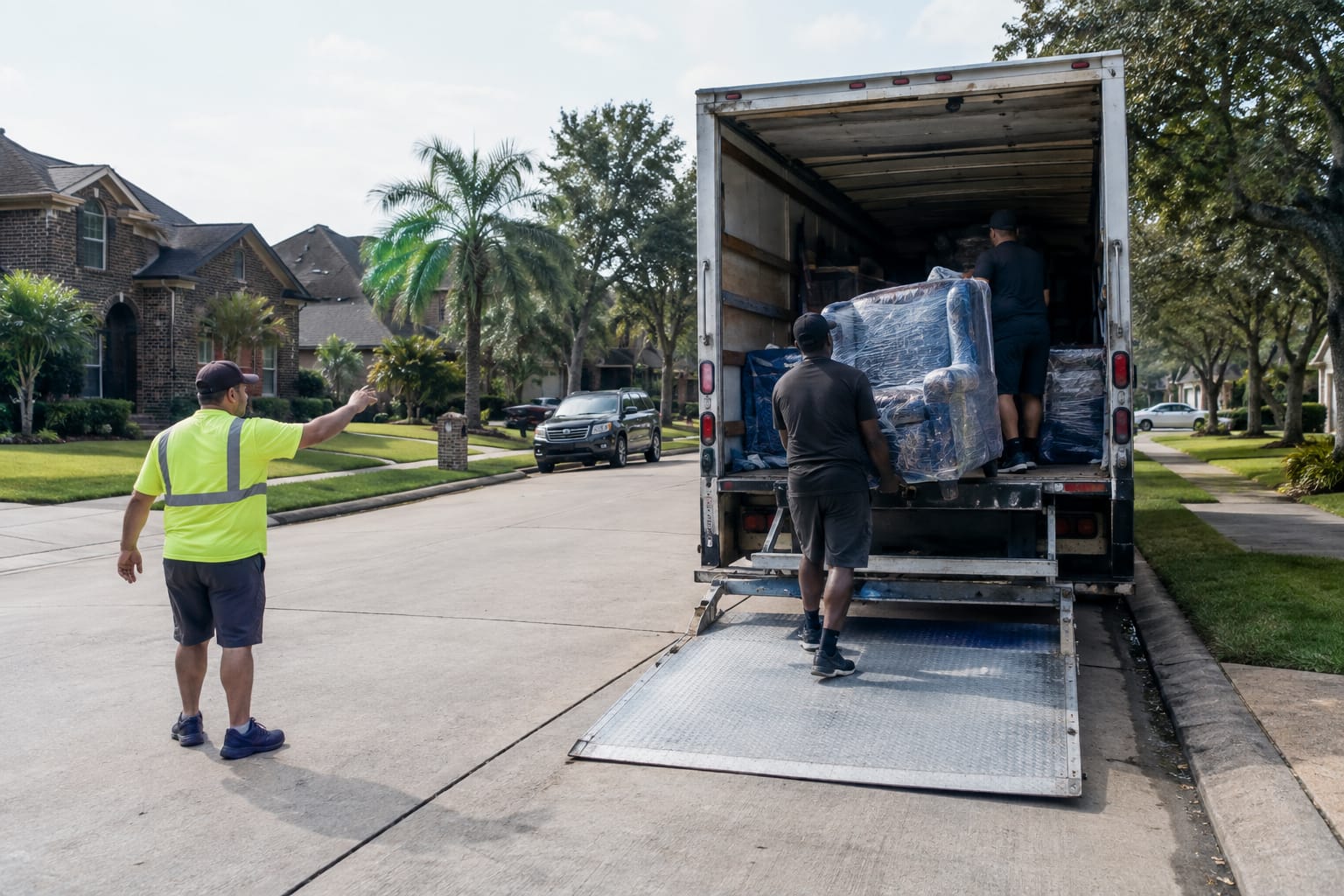
Two Different Businesses Share the Name "Houston Movers"
Here's the fastest way to sort your options: if your new address is inside Texas, you need a local intrastate crew. If it crosses a state line, you need an interstate carrier. The two are not interchangeable, and the best local crew in Houston may hold no authority to drive your belongings to Boston or Chicago.
The difference isn't marketing. It's regulatory. Intrastate household goods movers answer to the Texas Department of Motor Vehicles (TxDMV). Interstate carriers answer to the Federal Motor Carrier Safety Administration (FMCSA). Different agency, different paperwork, different pricing math.
| Attribute | Local Houston crew (intrastate) | Long-distance carrier (interstate) |
|---|---|---|
| Regulator | Texas Department of Motor Vehicles (TxDMV) | FMCSA (federal) |
| Credential to check | TxDMV mover registration number | US DOT number + MC number |
| Where to verify | TxDMV mover registration search | FMCSA SAFER System |
| Typical pricing basis | Hourly (crew + truck), with a minimum | Weight and distance, or cubic feet |
| Best for | Moves inside Texas—apartment, home, office across Greater Houston | Moves that cross a state line |
| Estimate format | Hourly rate sheet | Binding not-to-exceed estimate |
Q: Do I need a local Houston mover or an interstate carrier?
A: If both addresses are in Texas, hire a TxDMV-registered local crew billed by the hour. If your move crosses a state line, hire an FMCSA-authorized interstate carrier that quotes by weight and distance.
Local Intrastate Crews: How Texas and TxDMV Regulates Them
A move that stays inside Texas is an intrastate move, and Texas requires the company to register as a household goods mover with the Texas Department of Motor Vehicles. That registration is the baseline credential for any legitimate local Houston crew. No registration, no legal authority to move your household for hire in the state.
Texas also sets consumer-protection rules for these movers. Registered companies must provide a written estimate, follow the state's Truth in Moving standards, and give you the TxDMV consumer rights document before the job. Those requirements exist precisely because the directory listicles ranking for "Houston movers" rarely mention them.
Most local crews price the same way: an hourly rate for a set number of movers plus a truck, with an hourly minimum. Labor-only rates in the local moving market commonly run $25 to $60 per hour per mover before the truck and any add-on services. The exact Houston rate depends on crew size, season, and the building you're moving out of.
Interstate Carriers: What FMCSA Authority Actually Means
The moment your shipment crosses a state line, federal rules take over. An interstate household goods carrier must hold operating authority from the FMCSA, identified by a US DOT number and, for household goods, an MC (motor carrier) number. This is non-negotiable and easy to check.
Federal authority also changes how you're quoted. Instead of an hourly clock, reputable interstate carriers issue a binding not-to-exceed estimate—a written price that caps what you'll pay based on the weight of your goods and the distance traveled. Understanding how interstate carriers determine your cost helps you compare bids on equal terms rather than chasing the lowest teaser rate.
Before you commit to any long-haul company, read how to hire an interstate moving company and the broader guide to choosing a long-distance moving company. Both walk through authority, estimates, and inventory documentation in the order you'll actually use them.
How to Verify a Houston Mover Before You Book
Verification takes about ten minutes and separates real carriers from brokers and scammers. Follow the sequence that matches your move type.
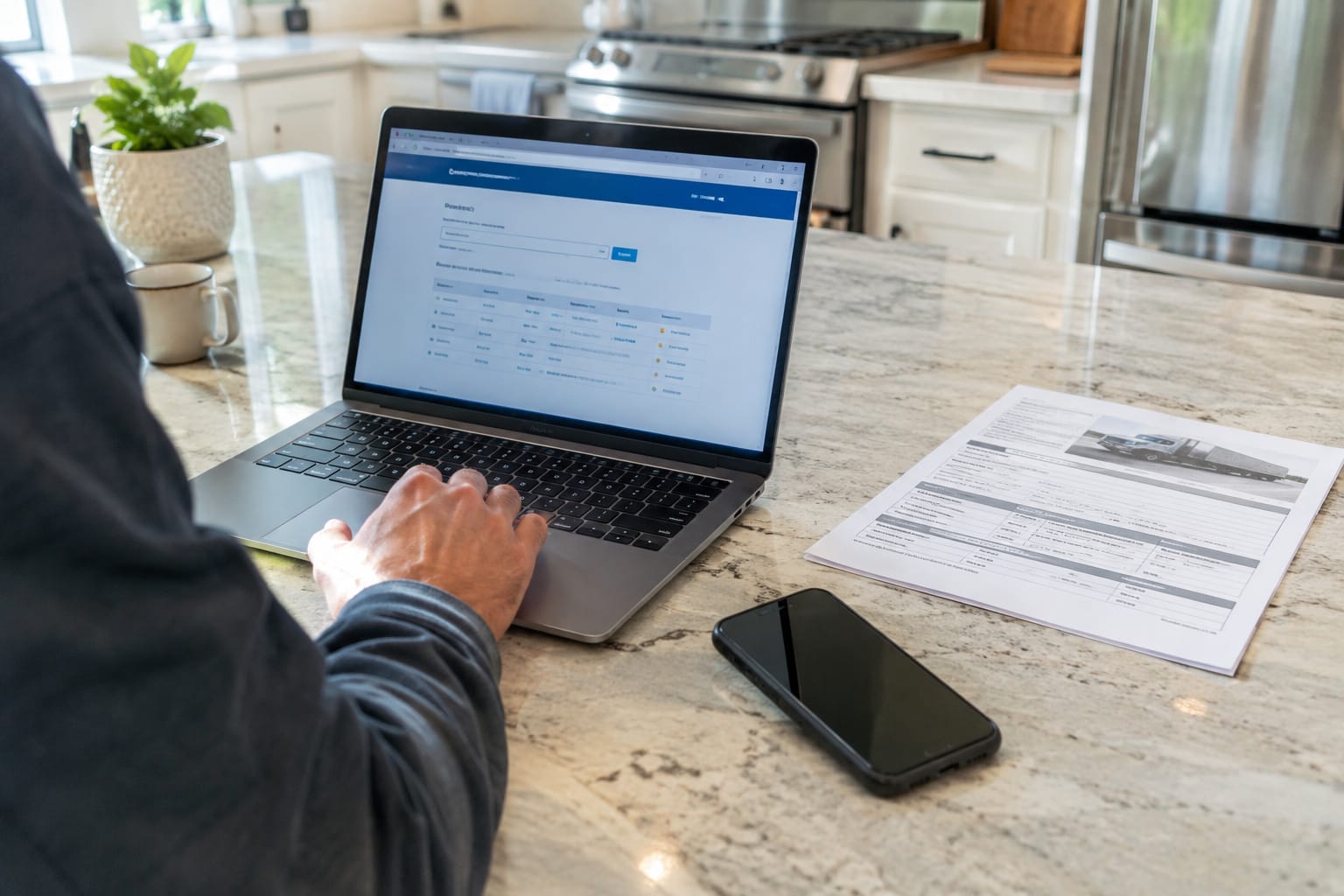
For an interstate carrier (crossing a state line):
- Ask for the company's US DOT and MC numbers before you accept an estimate.
- Enter the US DOT number in the FMCSA SAFER System company snapshot.
- Confirm the operating status is active, the entity is a carrier (not only a broker), and the authority covers household goods.
- Cross-check the legal name and address against the estimate you were given. Our step-by-step guide to check a moving company's US DOT number shows exactly what each field means.
For a local Texas crew (staying inside Texas):
- Ask for the company's TxDMV mover registration number.
- Look it up through the TxDMV motor carrier records to confirm active registration.
- Confirm the written estimate and the required consumer rights document are provided before move day.
Running these checks is also your best defense against fraud. Familiarize yourself with how to avoid moving scams so you recognize the warning signs—no physical address, cash-only deposits, refusal to provide credential numbers.
GoBorn can help: GoBorn operates a marketed long-distance lane connecting Greater Houston with the Northeast and other regional hubs, with FMCSA-verifiable authority for interstate moves. Learn more →
What Drives the Clock on a Local Houston Move
On an hourly local move, four things move the clock: crew size, access, distance between doors, and how packed you are. A larger crew costs more per hour but often finishes faster, which is why a two-mover and a four-mover quote can land closer together than they look.
Access is the quiet budget-killer in Houston. Long carries from a garden-apartment parking lot, no reserved loading zone, or a service elevator you have to share all add billable time. Packing yourself before the crew arrives is the single biggest lever most households control.
Q: How much do movers cost in Houston?
A: Local Houston crews bill by the hour—typically a set rate for a given crew size plus a truck, with an hourly minimum. Get written quotes from two or three registered companies, since labor rates in the local market vary with crew size and season.
How Long-Distance Lanes Into and Out of Houston Are Priced
Long-distance pricing runs on weight and distance, not hours. The carrier estimates the weight of your shipment, applies a mileage-based rate, then adds services—packing, bulky-item handling, stairs, and shuttle fees. This is why two households moving the same distance can pay very different amounts.
A shuttle service fee appears when the moving trailer can't reach your door. If a narrow street, low-clearance high-rise, or gated community blocks the big rig, the crew transfers your goods to a smaller vehicle for the last leg—an extra charge worth confirming in advance.
Houston is a heavy origin and destination for inbound moves, including West Coast relocations. If you're arriving from the coast, our guide to California to Texas relocation services covers that specific lane. Whatever the route, insist on a binding not-to-exceed estimate so the final bill can't drift upward on delivery day.
Houston Conditions That Change a Move Day: Heat, Storm Season, and Flood Zones
Houston's climate is a scheduling factor, not a footnote. Summer afternoons routinely push into dangerous heat, and the National Weather Service Houston/Galveston office publishes local temperature norms worth checking when you pick a date. Morning start times protect both your crew and your belongings from peak heat.
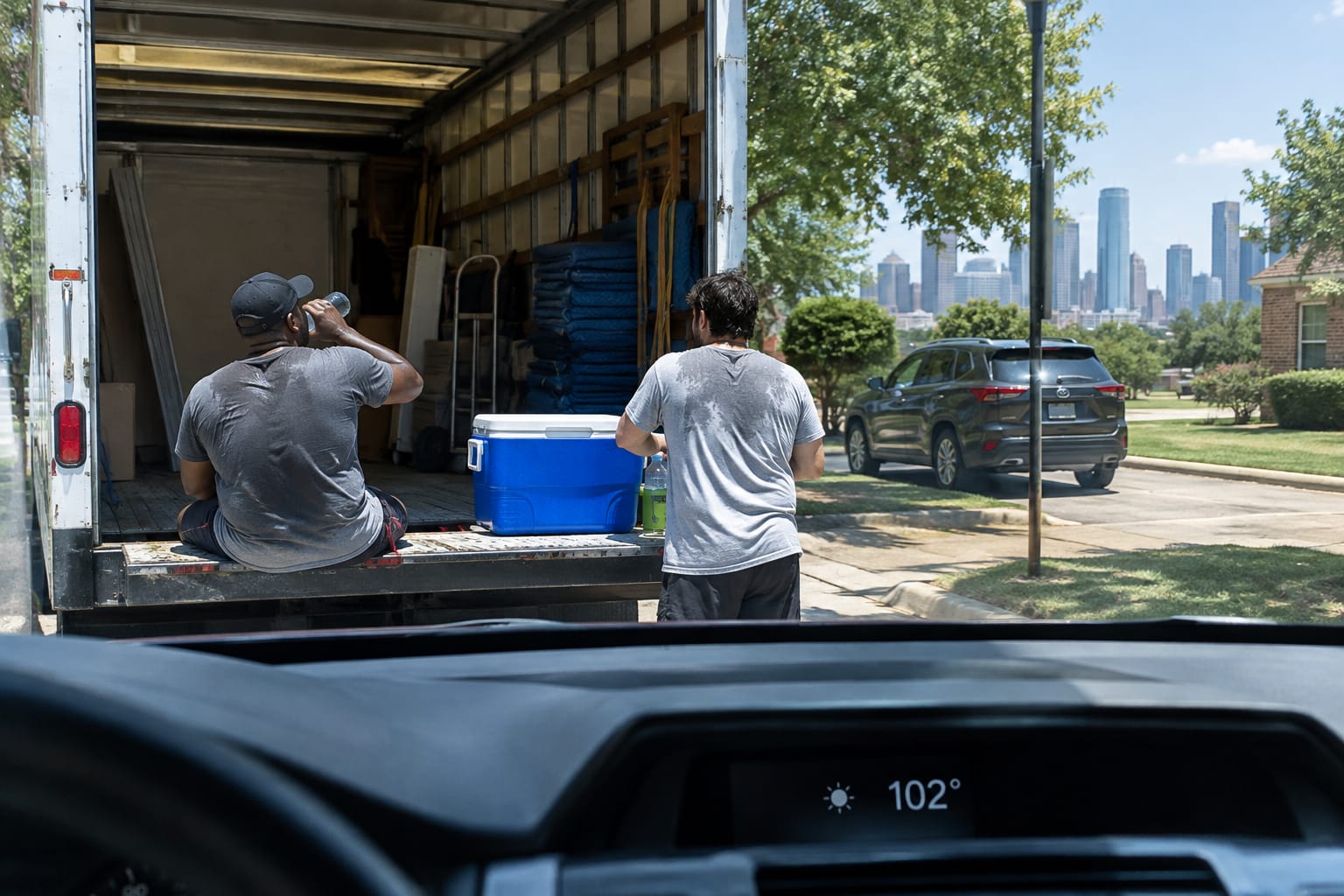
Storm season is the bigger planning window. The Atlantic hurricane season runs June 1 through November 30 per NOAA, overlapping the busiest summer moving months. A named storm can close freeways and delay long-distance trailers for days, so build slack into any June-to-November interstate move.
Flooding is Houston-specific. If your closing dates don't line up or a storm threatens, storage-in-transit lets a carrier hold your goods short-term between pickup and delivery. Confirm any warehouse used for storage-in-transit is outside a known flood-prone area before you agree to it.
High-Rise, Master-Planned Community, and HOA Rules to Clear in Advance
Many Houston buildings and neighborhoods have their own move rules, and clearing them early prevents a crew standing idle at the curb. High-rise and mid-rise buildings almost always require a certificate of insurance (COI) from your mover, naming the building as additionally insured, before they'll open the loading dock or service elevator.
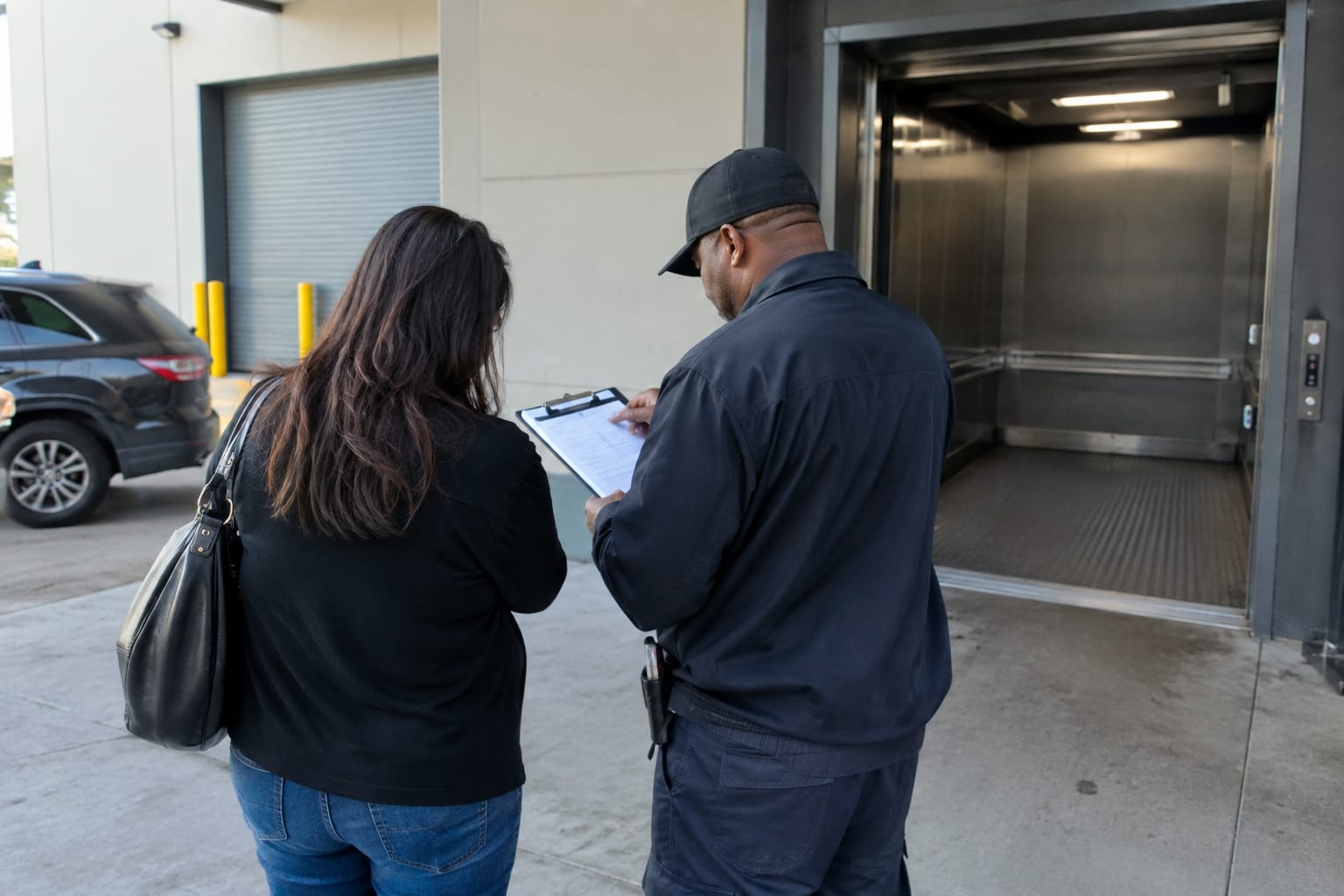
Q: Do Houston high-rise buildings require a certificate of insurance from movers?
A: Most do. Downtown, Midtown, and Galleria-area buildings typically require a mover's COI naming the property before granting dock or freight-elevator access—request it from your mover at booking, since issuance can take a day or two.
Master-planned communities and HOAs add their own layer. Some restrict move hours, require gate access codes or a truck permit, or limit where a large trailer can park. Ask your building management or HOA for the written move-in policy the week you book, then hand it to your mover.
Transit Windows on Common Houston Lanes
Transit time on a long-distance move is a spread, not a fixed day. Carriers consolidate shipments and route trucks efficiently, so your goods arrive within a delivery window rather than on a guaranteed date. Longer lanes and peak-season demand widen that window.
Houston sits on several well-traveled corridors. The Boston-to-Houston lane covers roughly 1,900 miles, and cross-country routes to and from the coasts run longer still. Ask any carrier for its estimated delivery spread in writing, and confirm whether it offers guaranteed or expedited delivery for time-sensitive moves.
Q: How long does it take to move from Houston to Boston?
A: Expect a multi-day delivery window rather than a single date; the roughly 1,900-mile lane is priced by weight and distance, and exact transit depends on the carrier's routing and the season. Request the delivery spread in writing before booking.
Local Crew or Long-Distance Carrier: Which One to Hire
Match the mover to the move. If both addresses sit inside Texas, hire a TxDMV-registered local crew billed by the hour—it's the cheaper, faster fit for across-town relocations. If you're crossing a state line, hire an FMCSA-authorized interstate carrier with a binding estimate.
A cross-country move deserves the interstate carrier even when a beloved local crew offers to "just drive it." Without federal authority and household-goods coverage, that crew may be operating outside its lane and its insurance. The regulator you can verify is the protection you actually have.
For households making a big leap—say, relocating to or from the Northeast—a carrier that runs a marketed lane between Greater Houston and your destination can offer more predictable routing. GoBorn operates such long-distance lanes; confirm its FMCSA authority the same way you'd vet any carrier.
Questions to Ask Before You Sign in Houston
A short, pointed list flushes out weak operators fast:
- What is your TxDMV registration number (local) or US DOT and MC number (interstate)?
- Is this a binding not-to-exceed estimate or an hourly rate, and what triggers extra charges?
- Do you provide the COI my building requires, and how long does issuance take?
- Are shuttle fees, stairs, long carries, or bulky-item charges possible on my move?
- What is the delivery window for my lane, and do you offer storage-in-transit if my dates slip?
- How is valuation coverage handled if something is damaged?
Get every answer in writing. A registered, transparent mover will provide these without hesitation; evasiveness is your signal to move on.
Key Takeaways
- "Houston movers" splits into two regulated businesses: TxDMV-registered local crews for moves inside Texas, and FMCSA-authorized carriers for interstate moves.
- Verify credentials before booking—FMCSA SAFER for a US DOT number on interstate moves, and TxDMV's mover registration records for local Texas crews.
- Local moves price by the hour with a minimum; interstate moves price by weight and distance under a binding not-to-exceed estimate.
- Houston-specific factors—summer heat, the June 1–November 30 hurricane season, flood-zone storage, high-rise COIs, and HOA move rules—should shape your date and your questions.
- Match the mover to the move: local crew inside Texas, interstate carrier across state lines.
About Houston Movers
Are moving companies in Texas required to be licensed?
Yes. Movers that transport household goods within Texas must register with the Texas Department of Motor Vehicles and follow its Truth in Moving rules. Interstate carriers instead need federal operating authority from FMCSA.
How do I check if a Houston moving company is legitimate?
For interstate carriers, look up the US DOT number in the FMCSA SAFER System and confirm active household-goods authority. For local Texas crews, verify the company's TxDMV mover registration and ask for its written estimate and consumer rights document.
What is the best month to move in Houston?
Cooler months outside the June 1–November 30 hurricane season reduce both heat risk and storm-related delays. Early-morning starts help in any month, and midweek dates often ease access at busy buildings.
How far in advance should I book Houston movers?
Book as early as your dates are firm—more for interstate moves and peak summer, when carrier schedules fill. Early booking also gives your mover time to issue any building-required certificate of insurance.
Can movers store my belongings in Houston between closing dates?
Many carriers offer storage-in-transit, holding your goods short-term between pickup and delivery. In Houston, confirm the storage facility sits outside a flood-prone area before agreeing.
Written by GoBorn Team, Moving Company Experts
Useful Links
- Long-Distance Moving Companies: How to Choose the Right Mover
- How to Check a Moving Company's US DOT Number
- How to Hire an Interstate Moving Company
- California to Texas Relocation Services Guide
- How Much Does Interstate Moving Cost?
Frequently Asked Questions