'%3E%3Cpath%20fill='%231B2A47'%20d='M1.605%2016.263c.03-1.139.059-2.482.088-3.971.03-1.49.03-2.832.03-4.03%200-.758%200-1.576-.03-2.51%200-.905-.03-1.84-.03-2.803%200-.496-.028-.964-.028-1.43%200-.468%200-.906-.03-1.315h6.858q2.188%200%203.589.35c.963.234%201.663.643%202.13%201.198.496.555.73%201.372.73%202.394%200%20.788-.176%201.46-.497%201.985-.32.526-.846.935-1.575%201.197-.73.292-1.693.468-2.918.526v.263c1.313.087%202.334.263%203.122.525.758.263%201.342.672%201.692%201.197.35.526.525%201.197.525%202.044%200%201.08-.233%201.927-.67%202.57-.468.642-1.139%201.08-2.102%201.343-.933.262-2.159.408-3.705.408H1.605zm6.537-9.197q1.882%200%202.713-.526c.555-.35.817-.934.817-1.752%200-.905-.292-1.547-.846-1.927s-1.459-.554-2.655-.554H4.757v4.759zm.204%206.92c.934%200%201.663-.088%202.217-.263.555-.176.934-.438%201.197-.818s.38-.876.38-1.518c0-.876-.322-1.49-.934-1.84-.643-.35-1.635-.525-3.035-.525H4.757v4.963zM21.038%2016.555c-1.576%200-2.801-.292-3.618-.905-.817-.614-1.284-1.519-1.372-2.745-.087-1.226.205-2.774.847-4.613s1.43-3.358%202.392-4.584c.963-1.226%202.043-2.131%203.298-2.744C23.839.292%2025.24%200%2026.786%200c1.576%200%202.772.321%203.59.934.816.613%201.283%201.548%201.37%202.774s-.203%202.774-.845%204.613c-.642%201.81-1.43%203.358-2.393%204.584s-2.072%202.132-3.297%202.745a9.8%209.8%200%200%201-4.173.905m.788-2.278c.642%200%201.138-.058%201.371-.116.205-.059.496-.117.847-.322.262-.146.437-.292.554-.408.204-.175.32-.292.438-.41.204-.203.35-.408.496-.583.35-.438.642-.876.963-1.402.233-.408.466-.817.67-1.284.205-.438.38-.905.555-1.372.438-1.198.671-2.278.671-3.183s-.204-1.606-.612-2.131c-.409-.497-1.051-.76-1.897-.76-.467%200-.934.059-1.43.205h-.03c-1.02.292-1.925%201.226-2.042%201.372-.116.117-.467.526-.963%201.343a15.5%2015.5%200%200%200-1.342%202.92c-.408%201.197-.642%202.277-.671%203.182-.03.906.175%201.636.584%202.161q.611.788%201.838.788M14.853%2038.54c-1.576%200-2.802-.292-3.619-.905s-1.284-1.518-1.371-2.744c-.088-1.227.204-2.774.846-4.614s1.43-3.357%202.393-4.584%202.042-2.13%203.297-2.744c1.255-.613%202.655-.905%204.173-.905%201.575%200%202.772.321%203.589.934s1.284%201.548%201.371%202.774c.088%201.226-.204%202.774-.846%204.613-.642%201.81-1.43%203.358-2.393%204.584s-2.072%202.131-3.297%202.745c-1.226.613-2.626.846-4.143.846m.787-2.277c.642%200%201.138-.059%201.372-.117.204-.058.496-.117.846-.321.263-.146.438-.292.554-.409.205-.175.321-.292.438-.409.204-.204.35-.408.496-.584a13%2013%200%200%200%201.634-2.686c.204-.438.38-.905.555-1.372.437-1.197.67-2.277.67-3.182%200-.906-.203-1.606-.612-2.132-.409-.496-1.05-.759-1.897-.759-.467%200-.934.058-1.43.204h-.029c-1.021.292-1.925%201.227-2.042%201.373-.117.116-.467.525-.963%201.343a15.5%2015.5%200%200%200-1.342%202.92c-.409%201.196-.642%202.277-.671%203.182s.175%201.635.583%202.16q.613.789%201.838.789'/%3E%3Cpath%20fill='%23FF515E'%20d='M55.966%2038.57c-1.576%200-2.801-.293-3.618-.906s-1.284-1.518-1.372-2.744c-.087-1.227.204-2.774.846-4.613s1.43-3.358%202.393-4.584c.963-1.227%202.043-2.132%203.297-2.745s2.656-.905%204.173-.905c1.576%200%202.772.321%203.589.934s1.284%201.548%201.371%202.774c.088%201.226-.204%202.774-.846%204.613-.642%201.81-1.43%203.358-2.393%204.584s-2.071%202.131-3.297%202.745c-1.225.613-2.626.846-4.143.846m.788-2.249c.642%200%201.138-.058%201.371-.117.204-.058.496-.116.846-.32.263-.147.438-.293.555-.41a7%207%200%200%200%20.437-.408c.205-.205.35-.41.496-.584a13%2013%200%200%200%201.634-2.686c.205-.438.38-.905.555-1.373.438-1.197.671-2.277.671-3.182s-.204-1.606-.613-2.131c-.408-.497-1.05-.76-1.896-.76-.467%200-.934.059-1.43.205h-.03c-1.02.292-1.925%201.226-2.042%201.372-.117.117-.467.526-.963%201.343a15.5%2015.5%200%200%200-1.342%202.92c-.409%201.197-.642%202.277-.671%203.182s.175%201.635.583%202.16q.614.79%201.839.79'/%3E%3Cpath%20fill='%231B2A47'%20d='M33.06%2016.263c0-.35%200-.935.03-1.81.029-1.051.058-2.103.058-3.154s.03-2.073.03-3.007c0-1.606-.03-3.27-.06-4.993%200-.554-.028-1.08-.028-1.606%200-.525-.03-1.021-.03-1.46h6.828c1.46%200%202.685.117%203.59.38q1.4.394%202.1%201.314.7.963.7%202.628c0%20.992-.174%201.81-.554%202.452-.35.643-.904%201.11-1.604%201.431s-1.576.467-2.627.496v.263q2.058.087%203.064.876c.671.525%201.138%201.372%201.43%202.51.087.41.233%201.023.467%201.84.233.818.408%201.431.554%201.84h-3.414a11%2011%200%200%200-.262-1.022c-.321-1.314-.526-2.19-.584-2.628a5%205%200%200%200-.642-1.46%202.13%202.13%200%200%200-.963-.73c-.408-.146-.934-.233-1.605-.233h-3.326v6.0440000000000005H33.06zm6.332-8.292c1.343%200%202.276-.205%202.86-.613.554-.41.846-1.11.846-2.073%200-.73-.146-1.314-.408-1.723-.263-.409-.671-.7-1.197-.876q-.788-.263-2.1-.263h-3.181v5.519h3.18zM49.4%2016.263l.03-2.745c.029-2.452.029-4.905.029-7.416q0-2.101-.088-5.868h4.085l5.924%2010.335c.087.234.204.438.291.643.117.204.205.408.321.613.38.788.613%201.255.672%201.372h.262c0-.058-.03-.146-.03-.204%200-.059-.028-.117-.028-.175a75%2075%200%200%201-.175-1.314%2010%2010%200%200%201-.088-1.285c0-1.547%200-3.737-.029-6.57V1.84c0-.584-.03-1.11-.03-1.576h2.977c-.03%202.482-.058%205.08-.058%207.766%200%201.694%200%204.438.029%208.292h-4.027l-5.573-9.43c-.875-1.81-1.226-2.511-1.05-2.132-.263-.613-.467-1.08-.613-1.46h-.263c.058.35.117.876.175%201.548.059.7.117%201.168.117%201.46%200%202.978%200%206.306.029%209.985H49.4zM4.698%2038.277c.029-2.627.058-5.255.058-7.883%200-1.576%200-3.503-.029-5.752-1.109%200-2.684%200-4.727.03v-2.453h12.664v2.453c-1.955-.03-3.53-.03-4.756-.03%200%20.584-.03%201.227-.03%201.957s0%201.46-.029%202.218v1.84c0%202.57.03%205.11.059%207.62z'/%3E%3Cpath%20fill='%23FF515E'%20d='M29.441%2038.277c.409-1.05.788-2.102%201.168-3.182s.787-2.16%201.167-3.241c.613-1.693%201.05-2.949%201.342-3.766l1.255-3.65c.116-.38.262-.788.379-1.139.117-.38.263-.73.38-1.05h4.61l-.671%2012.904h.262l8.316-12.905h4.669l-.7%201.869c-.876%202.452-1.343%203.766-1.43%204a501%20501%200%200%200-3.385%2010.16h-2.947c.292-.846.788-2.219%201.459-4.087.175-.526.35-1.08.554-1.606.175-.526.38-1.08.555-1.577.642-1.81%201.342-3.825%202.072-6.014h-.234l-8.724%2013.314h-2.86l.554-13.314h-.175c-.175.496-.38.992-.554%201.489-.175.496-.38%201.022-.555%201.547a163%20163%200%200%200-1.08%203.008c-.145.38-.262.759-.408%201.138-.117.38-.262.73-.408%201.11-.7%201.898-1.284%203.59-1.751%205.05h-2.86zM68.047%2038.277c.175-2.19.32-4.525.467-7.007.058-.905.204-3.912.467-9.051h3.151c-.03.438-.058.934-.088%201.46s-.058%201.08-.087%201.693a264%20264%200%200%201-.409%206.657c-.145%201.986-.35%203.591-.583%204.788h.175Q72.147%2034.892%2073.94%2032a562%20562%200%200%201%204.465-7.066c.32-.496.641-.992.933-1.46s.555-.875.817-1.255h3.268q-.568.832-1.138%201.752c-.408.613-.787%201.255-1.196%201.927-3.88%206.014-6.478%2010.131-7.85%2012.35h-5.193zM79.106%2038.277c.32-.788.758-2.014%201.37-3.65a287%20287%200%200%200%201.577-4.32c.437-1.256.904-2.628%201.4-4.088s.934-2.774%201.313-3.97h11.322l-.846%202.364H87.1l-1.664%204.847%207.645-.088-.612%201.694-7.587-.088-1.75%204.934h8.286l-.846%202.365z'/%3E%3C/g%3E%3Cdefs%3E%3CclipPath%20id='a'%3E%3Cpath%20fill='%23fff'%20d='M0%200h96v40H0z'/%3E%3C/clipPath%3E%3C/defs%3E%3C/svg%3E)
A moving company in New York City can only move as fast as your building allows. In most Manhattan, Brooklyn and Queens buildings, three things must be settled before the crew lifts a box: an approved certificate of insurance, a booked freight elevator, and a move scheduled inside the building's permitted hours. If one is missing, the super can stop the job at the door.
This NYC moving checklist covers ten building rules in the order to handle them. Each item gives you the task, the reason for it, and the exact question to ask your mover. If you are still shortlisting companies, our guide to finding a reputable moving company explains how to vet them first.
Key Takeaways
- Building first, mover second. Get the written move policy, COI requirements and elevator window from management before comparing movers, so each quote reflects your building’s real constraints.
- The COI follows the building’s sheet. The certificate must list the certificate holders, address and coverage exactly as management specifies; ask for a previously accepted COI as a template.
- The elevator window sets the schedule. Book the freight elevator in writing as soon as your date is approved, and size the crew to finish inside that window and before the building’s cutoff.
- Plan for stairs and outages. Tell your mover about walk-ups during the quote, and agree on a backup plan with your mover and the super if the elevator fails.
- Two buildings, two checklists. Moves between boroughs or out of state need separate COIs, elevator bookings and curb plans at both ends.
The One-Screen NYC Building Move Checklist
Screenshot or print this list, then work through the detailed sections below.
- Get the building's move policy in writing.
- Request the COI requirements and forward them to your mover.
- Reserve the freight elevator and confirm the exact window.
- Check weekday-only rules and permitted move hours.
- Plan for walk-ups and elevator outages.
- Confirm lobby, hallway and floor protection rules.
- Sort out truck parking and curb access.
- Measure doorways, stairwells and the elevator cab.
- Coordinate both buildings, especially across boroughs or state lines.
- Settle debris removal and the final walk-through.
1. Get Your Building's Move Policy in Writing
Do: Email the right contact and ask for the written move-in and move-out policy. In co-ops and condos, that is usually the managing agent or the condo management office. In rentals, it is the landlord, the management company or the super.
Why: Verbal answers from the lobby don't always match the rules the board enforces. A written policy gives you something to forward to your mover and something to point to on move day.
Ask your mover: “Can you review our building's policy and flag anything that affects crew size, timing or equipment?”
Ask for these items in one email so you get one complete reply:
- Permitted move days and hours, including holiday blackout dates
- The freight elevator booking process and the longest block allowed
- COI requirements, ideally with a sample certificate
- Any move fee or refundable deposit
- Protection rules for floors, walls and elevator cabs
- Which entrance or loading area movers must use
- Rules for boxes, packing debris and trash rooms
2. Request the COI Requirements Early and Send Them to Your Mover
Do: Get the building's certificate of insurance (COI) requirements as soon as you have a move date. Forward them to your mover exactly as written.
Why: No approved COI usually means no elevator and no access. Management reviews certificates before move day, and a wrong name or address can send the paperwork back for correction.
Ask your mover: “Can you issue a COI that matches our building's requirements exactly, and when will management receive it?”
Q: What is a COI for movers in NYC?
A: It is the insurance certificate your building's managing agent asks the moving company to send before move day, listing the certificate holders and coverage set out on the building's own requirements sheet. Many Manhattan and Brooklyn buildings hold off on confirming the freight elevator until management approves it.
A building's COI request typically spells out:
- Certificate holders: the exact names management wants listed, such as the building owner, the managing agent and sometimes the co-op or condo board
- Building address: printed the way management specifies
- Coverage types and minimums: the policies and amounts the building requires
- Specific wording: any language management asks to appear on the certificate
The building's requirements sheet, not a general definition, decides what counts. A COI also answers the building's question, not yours: it doesn't tell you how your own belongings are protected. Ask your mover to explain in writing what basic protection covers and what optional extra coverage costs.
For instance, Born to Move, a licensed and insured company, prepares COIs in advance for buildings that require them. Whatever mover you choose, confirm who sends the certificate, to which email address, and by what date.
Pro Tip: Ask management for a copy of a COI they accepted for a previous move. It shows the exact certificate-holder wording and saves a correction round.
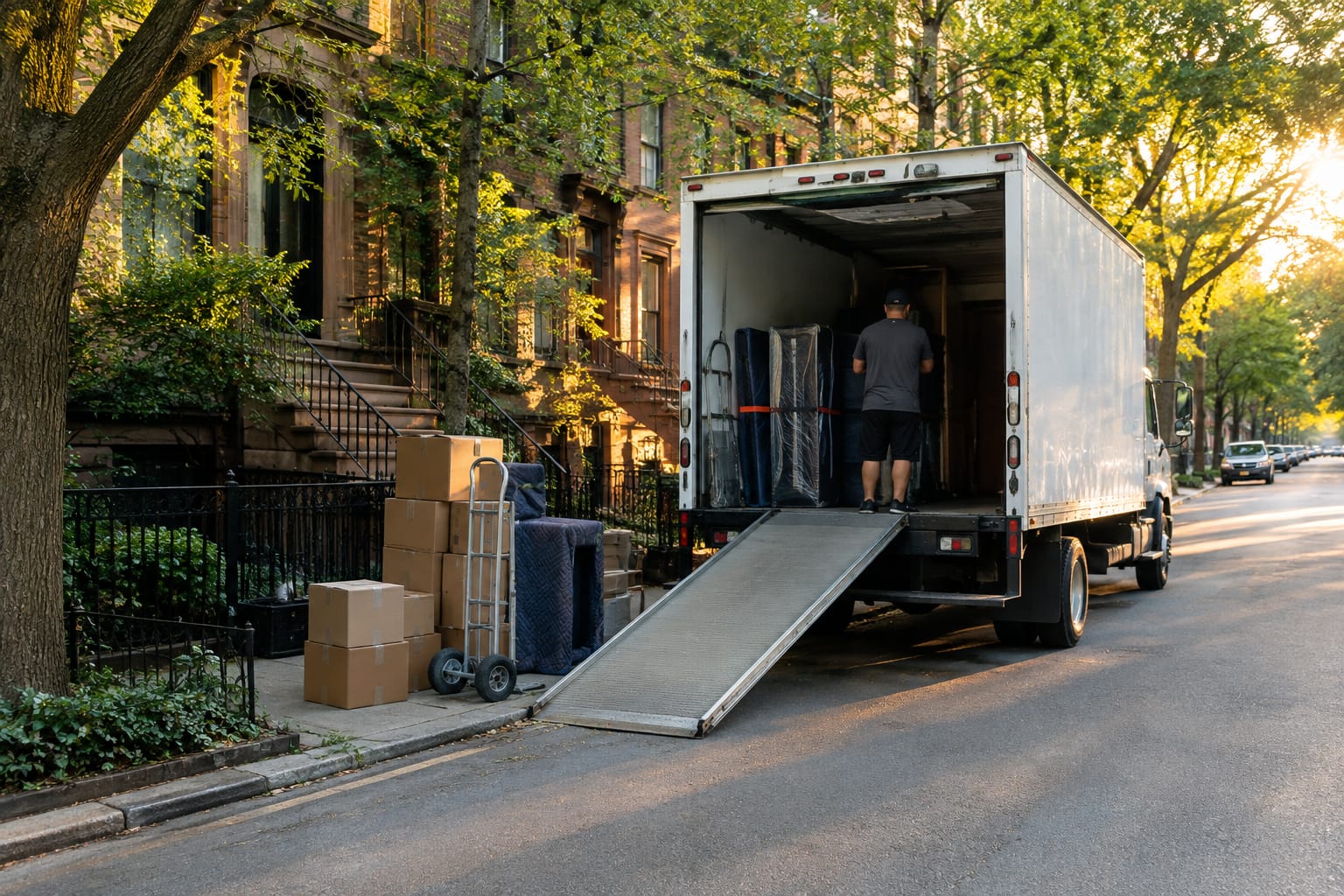
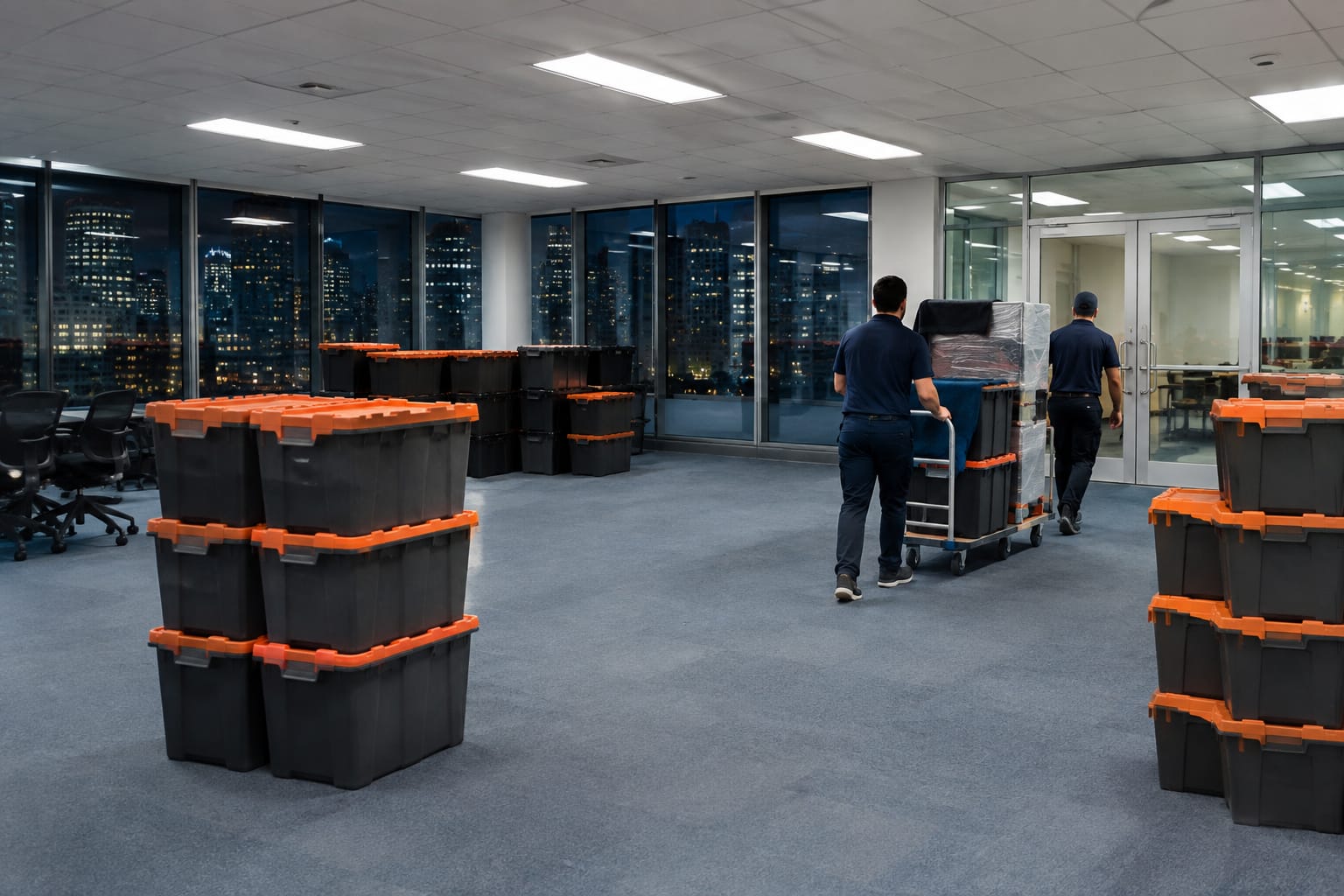
3. Book the Freight Elevator and Confirm the Time Window
Do: Reserve the freight (service) elevator as soon as management approves your date. Get the confirmed window in writing.
Why: Buildings often allow one move per elevator block, and popular slots go quickly around the end of the month. The elevator window sets the real schedule for your day, not the mover's arrival time.
Ask your mover: “Will your crew arrive at the start of our elevator window, and how many movers do you need to finish inside it?”
Confirm the details your mover needs: start and end time, whether the cab needs pads hung, whether an operator or key is required, and which entrance the crew should use. Our guide on how to reserve a freight elevator for your move walks through the booking conversation with management. If you are moving between two elevator buildings, book both windows before you lock in the mover's arrival time.
4. Know Weekday-Only and Hour Restrictions for Co-ops and Condos
Do: Check the co-op move rules or condo rules for allowed days, start times and hard cutoffs.
Why: Many co-ops and condos limit moves to weekdays during set daytime hours. Some charge an extra fee or hold back part of the deposit when a move runs past the cutoff.
Ask your mover: “If we fall behind, how will your crew finish before the building's cutoff?”
Work backward from the cutoff. Start with the time your mover estimates for loading, then add a buffer for elevator waits and lobby paperwork. A tight window favors a larger crew over a long day with a small one.
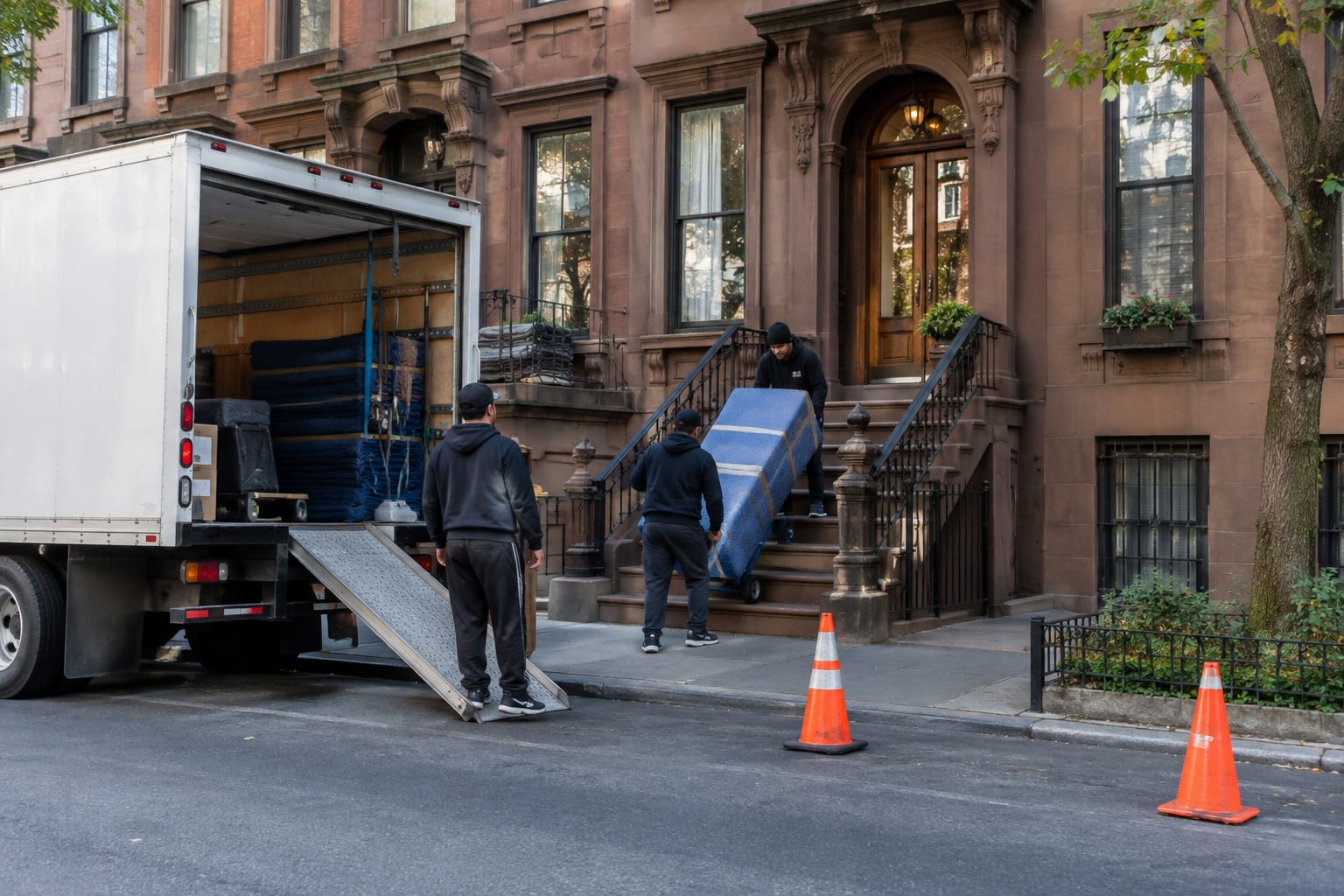
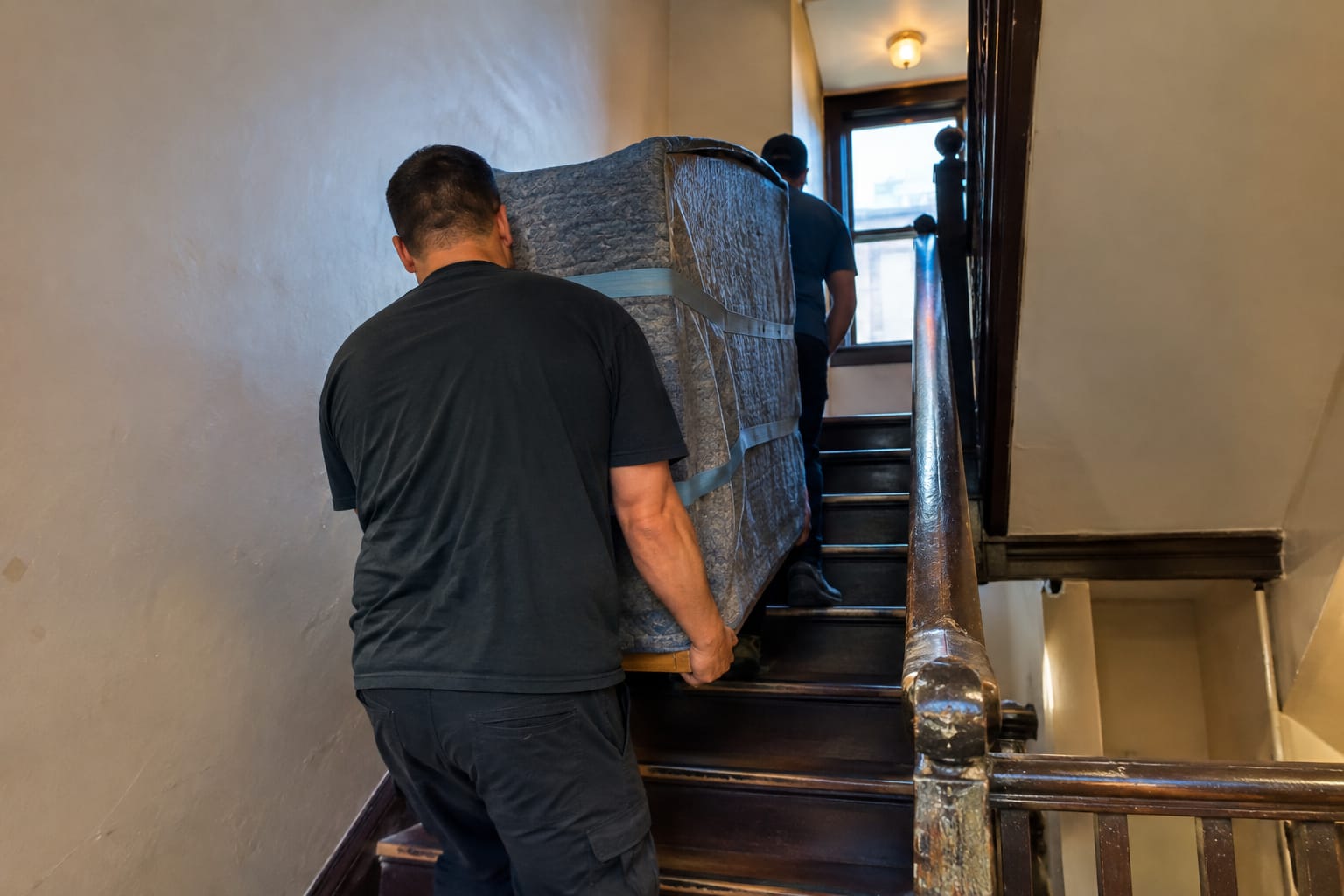
5. Plan for Walk-Ups and Broken Elevators
Do: If you live in a walk-up, tell your mover the floor number and stair layout during the quote. In an elevator building, make a backup plan in case the elevator goes down.
Why: Stair carries take longer and need more hands. On an hourly move, an unplanned walk-up or a dead elevator changes both the crew you need and the time you pay for.
Ask your mover: “How do you quote walk-ups, and is there a stair or flight charge?”
Walk-up apartment movers plan around narrow, turning staircases, which usually means more disassembly before anything reaches the stairs. Send photos of the stairwell and landings so the crew is sized correctly from the start.
Q: What should I do if the freight elevator is out of service on move day?
A: Call your mover and the building super right away, ask whether management will approve a padded passenger elevator, and agree in writing on any change to crew size or timing before the crew starts carrying by stairs. If the move is rescheduled, rebook the elevator and ask management whether the COI needs to be updated.
The same steps apply if management warns you about elevator maintenance the day before. Calling early gives your mover time to add hands or shift the start time instead of improvising on site.
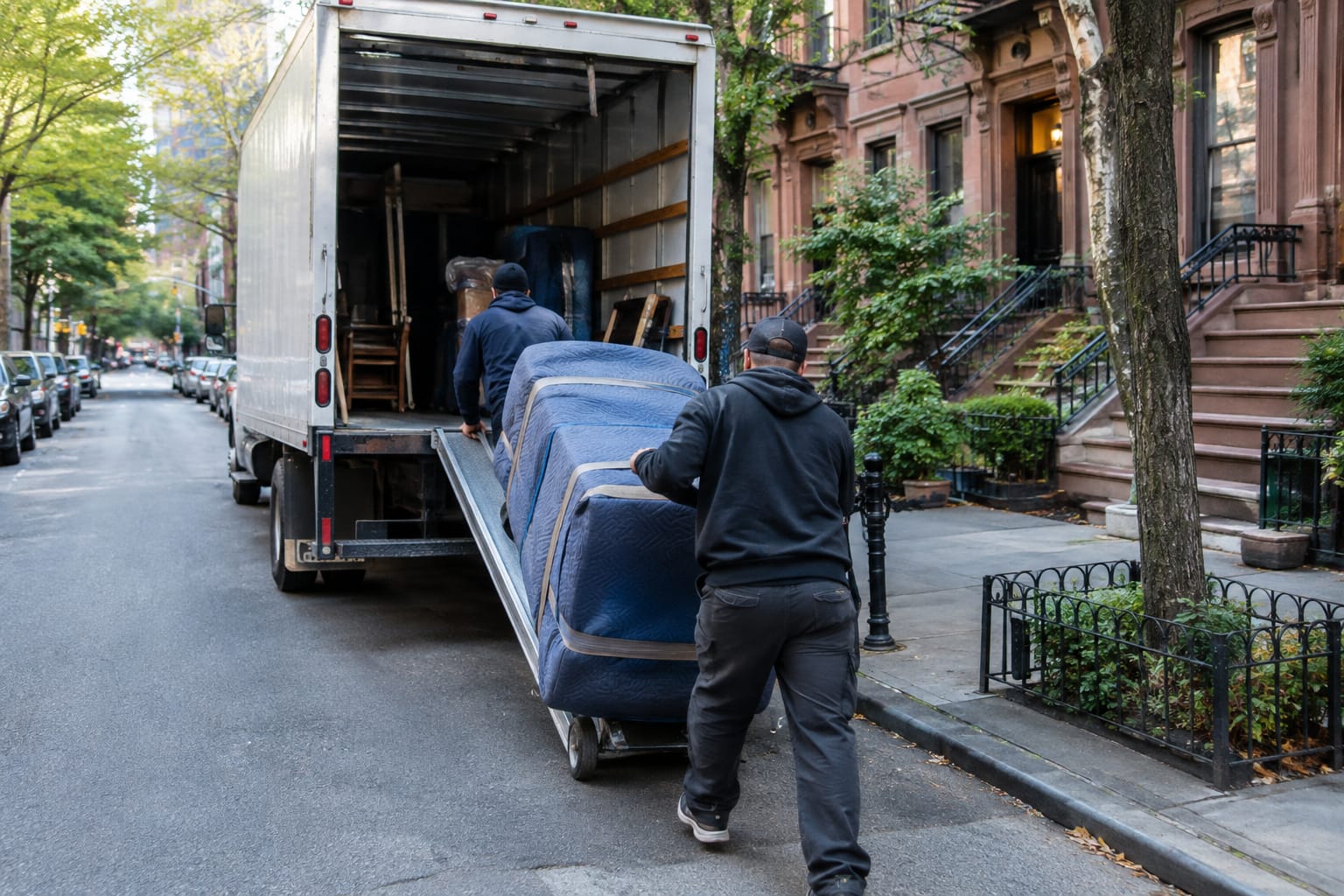
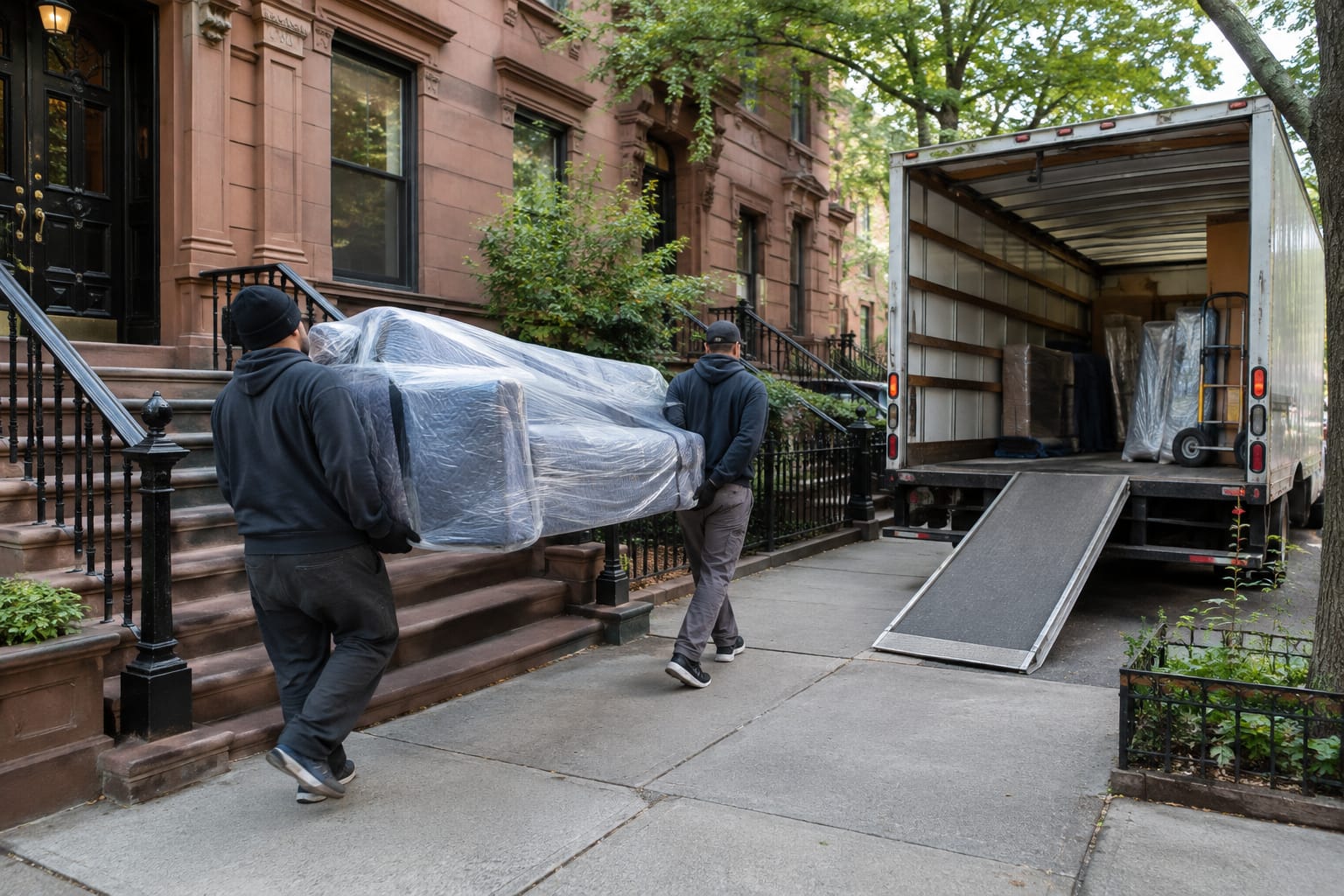
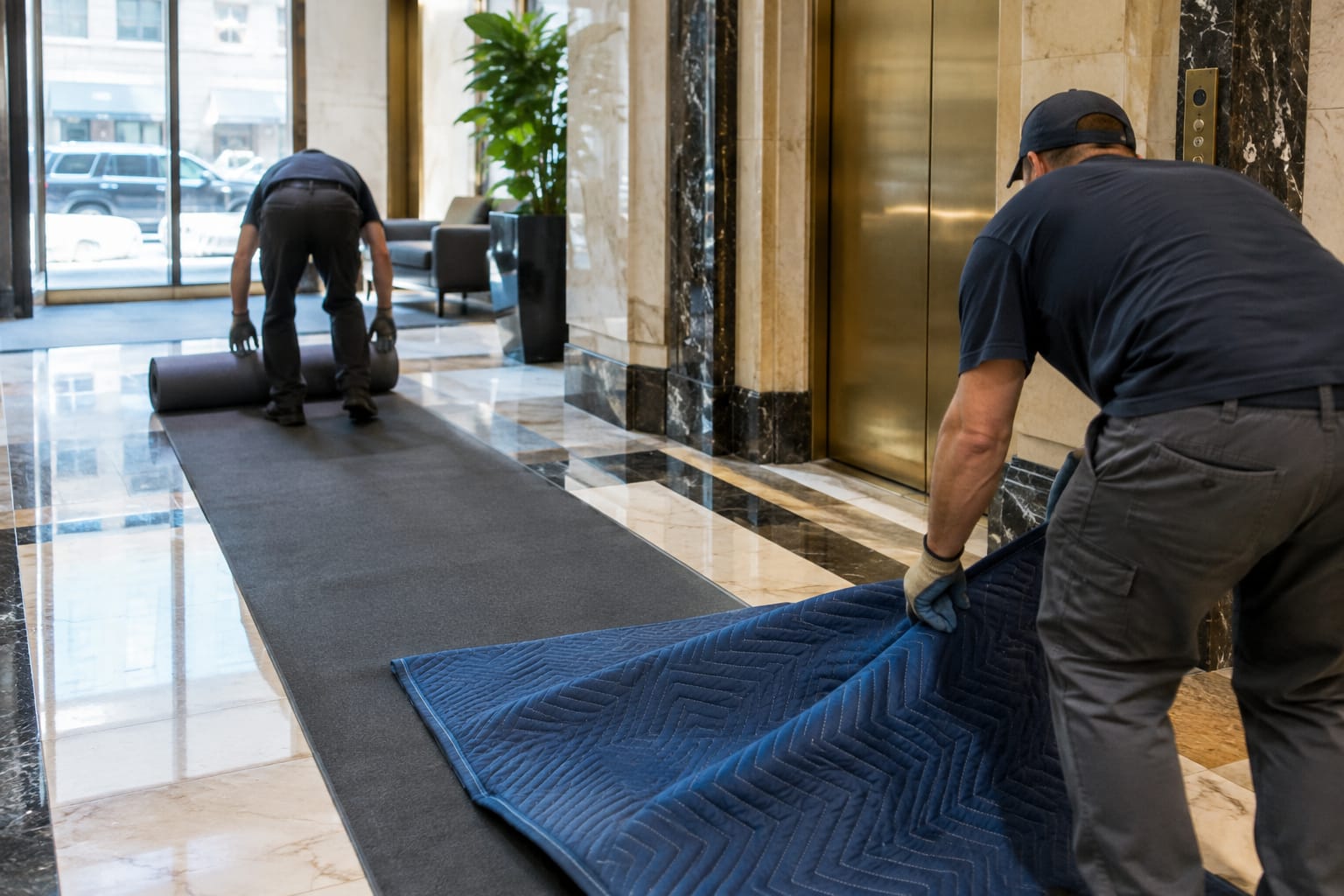
6. Protect Lobbies, Hallways, and Floors
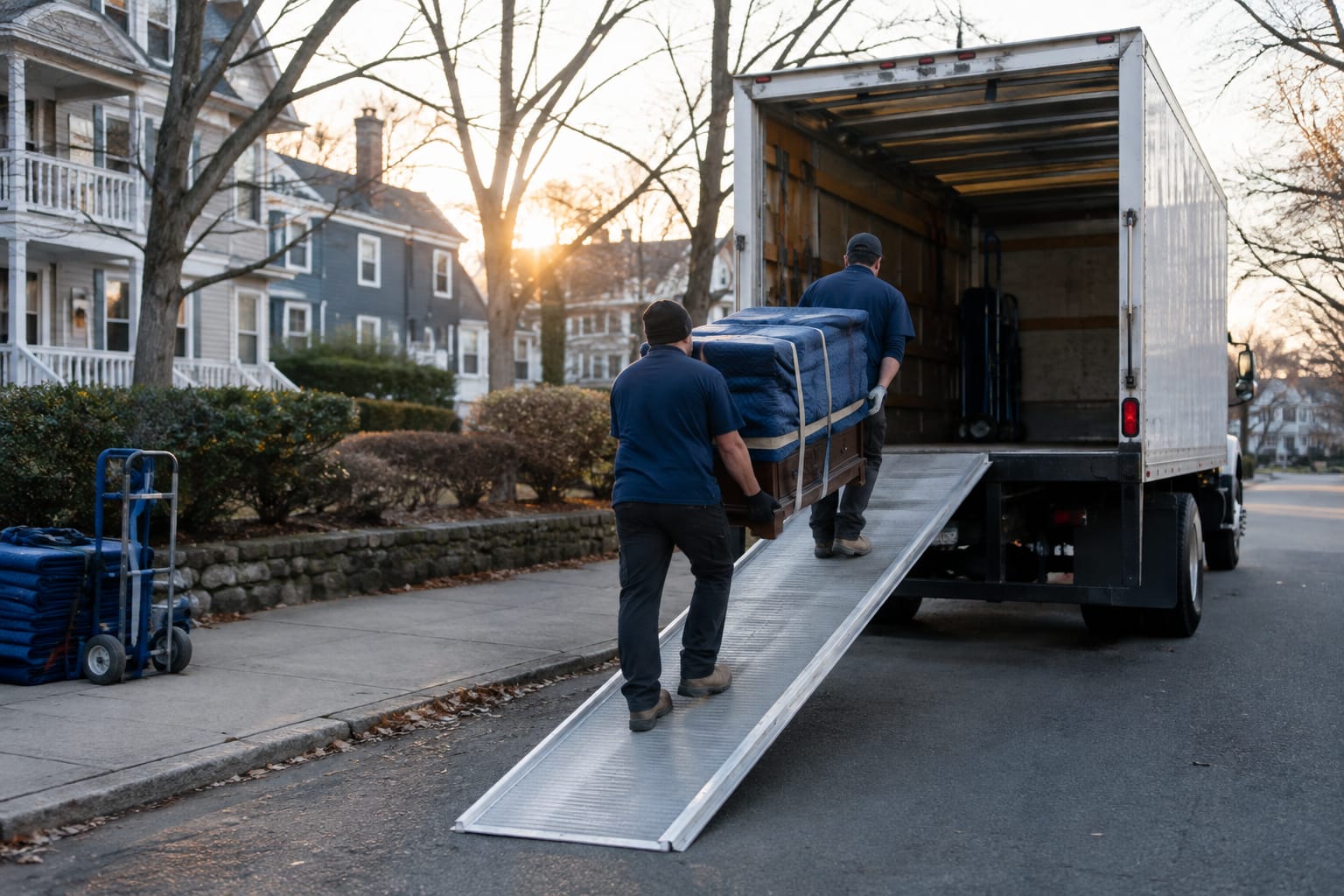
Do: Find out what protection your building requires, such as padded elevator cabs, floor runners or corner guards. Confirm your mover provides it.
Why: Damage to common areas is what move deposits are usually meant to cover. Management often inspects the lobby and hallways before and after the move.
Ask your mover: “Is floor and wall protection included in your rate, or billed separately?”
Inside the apartment, ask how the crew protects furniture: moving blankets, shrink wrap and disassembly of bulky pieces are standard questions. Packing supplies such as boxes, tape and mattress bags are often a separate charge, so ask for them as their own line in the estimate.
More about the service: Accomplished Washington, WA to New York City Movers
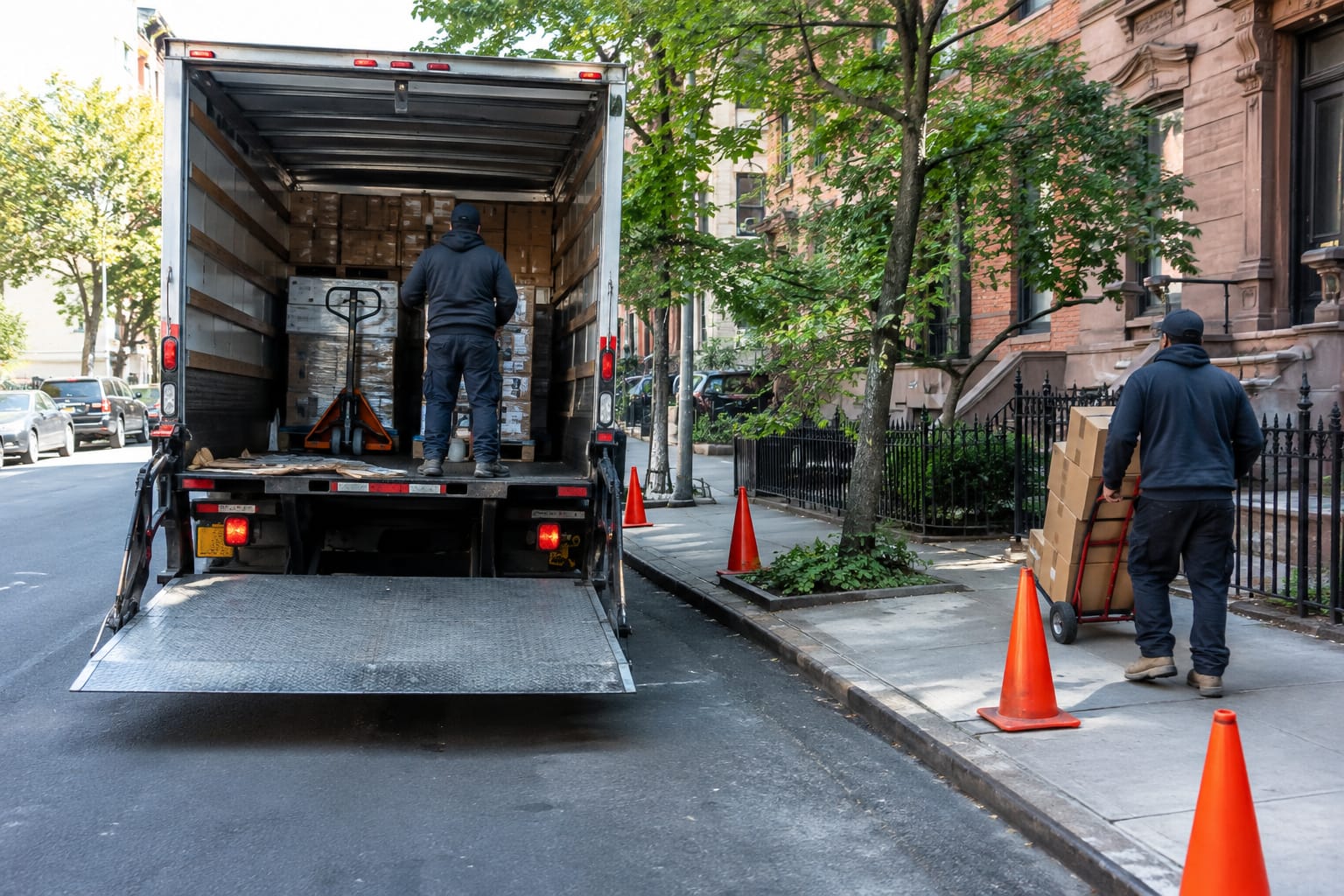
7. Sort Out Truck Parking and Curb Access
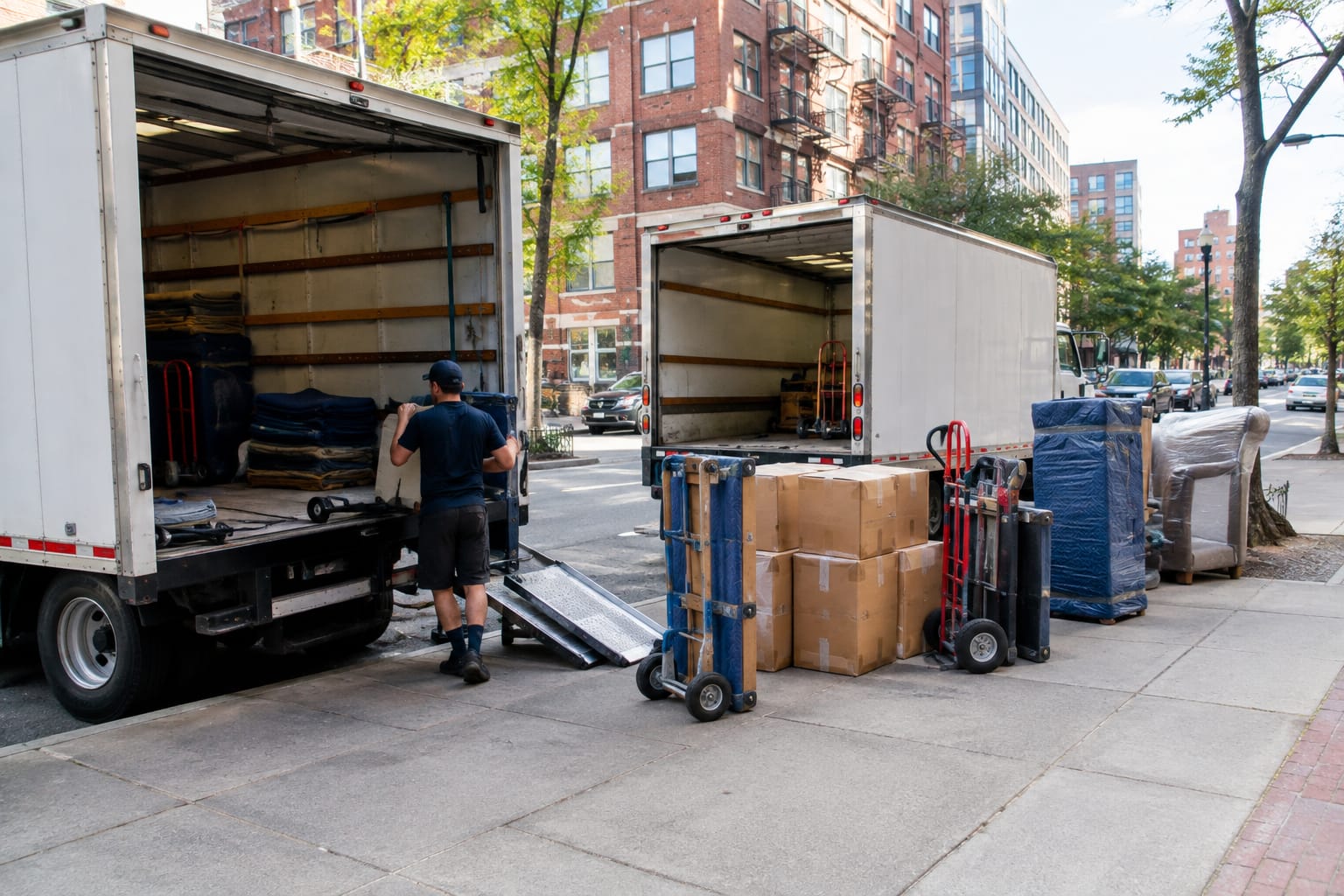
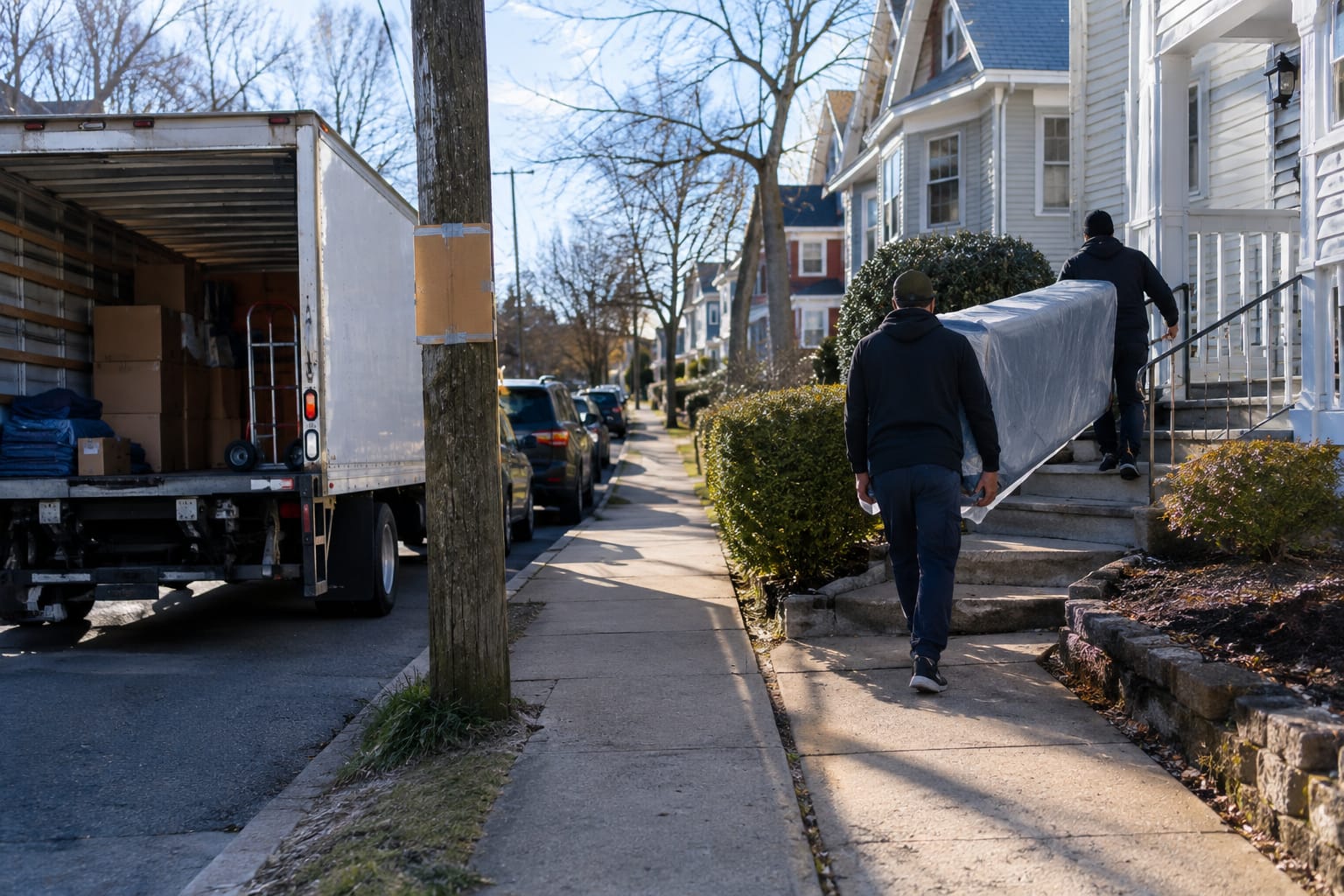
Do: Decide who is responsible for curb space, you or the mover. Check the posted signs on both blocks before move day.
Why: A truck that can't park close adds carrying distance, and carrying distance adds hours. Many movers on hourly local moves leave parking and permits to the customer.
Ask your mover: “What size truck are you sending, and how much curb space does it need?”
Q: Do I need a permit to park a moving truck in New York City?
A: Confirm the current requirements with NYC DOT, then confirm in writing whether you or your mover will secure curb space.
Also ask your building whether it has a loading dock or a preferred loading entrance. Our article on finding NYC parking for a moving truck covers practical strategies for moving truck parking in NYC.
8. Measure Doorways and Stairwells for Large Furniture
Do: Measure every pinch point: entry doors, hallway turns, stairwell width and headroom, and the interior of the freight elevator cab.
Why: A sofa that fit the old apartment may not make the turn into the new one. Finding out on the landing burns crew time on an hourly move.
Ask your mover: “Which pieces will you disassemble, and what will you reassemble at the new place?”
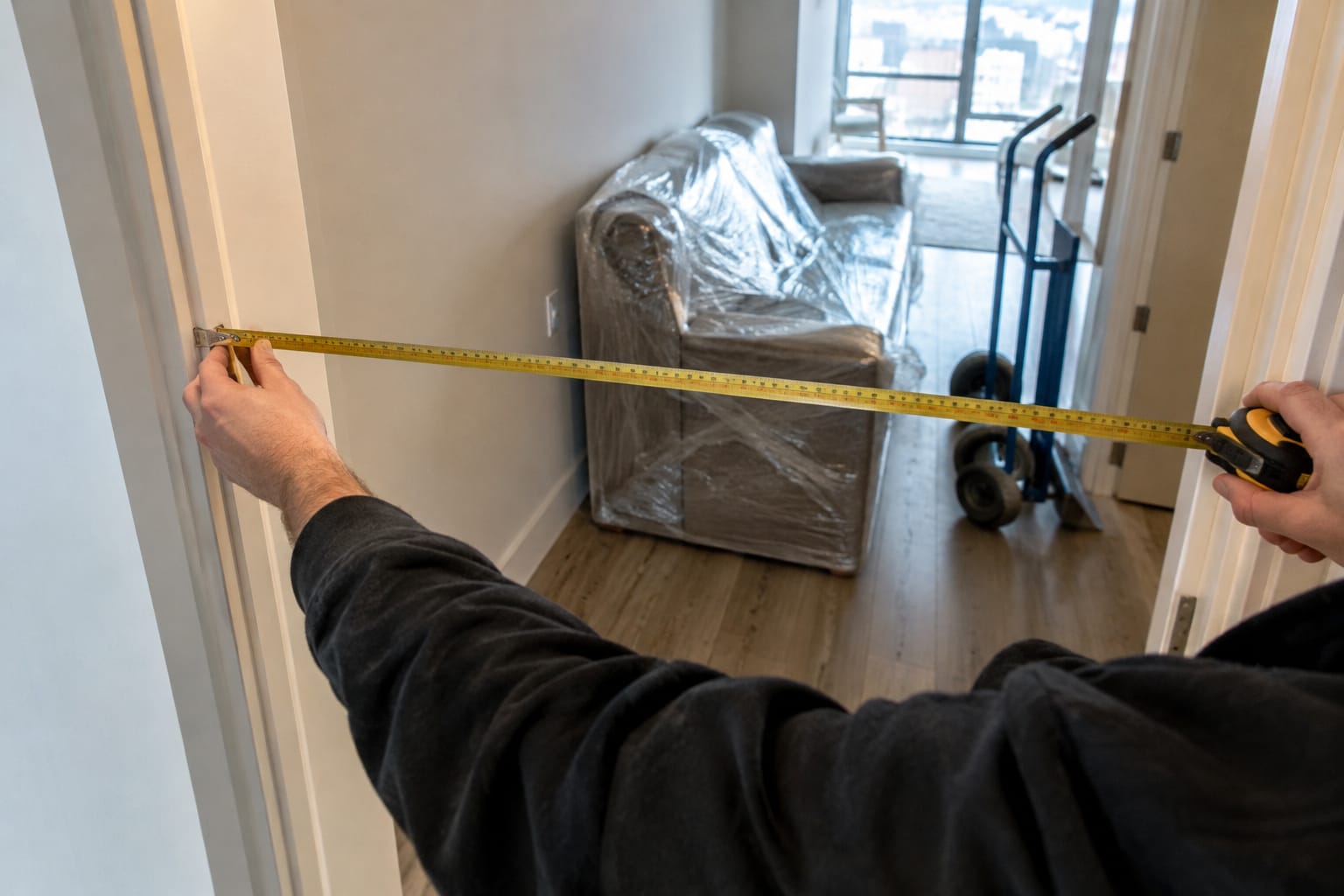
Measure the furniture too: height, width, depth and the diagonal depth of sofas. Send both sets of measurements to your mover with photos. Manhattan apartment movers also look at whether an interior door can come off its hinges for extra clearance. For the prep work on your side, see how to prepare furniture for relocation.
9. Coordinate Both Buildings When Moving Between Boroughs or Out of State
Do: Run this whole checklist twice: once for the building you're leaving and once for the one you're moving into.
Why: Two buildings mean two policies, two COI requests, two elevator windows and two curb plans. A Brooklyn-to-Manhattan move can stall because the new building's paperwork never arrived.
Ask your mover: “Can you send COIs to both buildings, and how will you schedule around two elevator windows?”
On an interstate move, delivery may happen on a different day than loading. Book the destination elevator for the delivery window your mover agrees to in writing.
If you are moving from Boston to New York, the same two-building logic applies: line up the Boston elevator and parking alongside the NYC COI and elevator booking.
10. Confirm Debris Removal and a Final Walk-Through
Do: Agree in advance on what happens to packing debris. Schedule a walk-through of the common areas with the super after the last load.
Why: Many buildings ban leaving boxes in hallways or trash rooms. A walk-through with the super is the simplest way to support your deposit refund.
Ask your mover: “Do you take blankets and wrapping with you, and which packing materials stay with us?”
Before the crew leaves, walk each room at the new place to confirm everything landed where you wanted it. Then photograph the elevator cab, hallway and lobby, and ask management to confirm the deposit release by email.
What to Do Next
Start with the building, not the mover. Once you have the written policy, the COI requirements and the elevator window, you can compare each NYC moving company on how it handles those specifics, not only on its hourly rate.
When you request a quote with your building's requirements attached, a mover can size the crew and plan timing around your actual constraints. If you are comparing New York City movers who prepare building COIs, Born to Move's Brooklyn branch handles local moves in Manhattan, Brooklyn, Queens and nearby New Jersey suburbs, plus the Boston–New York route. Its hourly local rate includes the truck, moving blankets, floor protection and basic disassembly and reassembly; packing supplies are billed separately, customers arrange truck parking or permits, and moves are scheduled on weekdays only.
Written by Born to Move Team
Useful Links
- Movers in New York City
- How to Reserve an Elevator for Your Move
- Things to Know When Moving to New York City
- How to Find NYC Parking the Easy Way
- Get a Moving Quote
Need help with this? Accomplished Washington, WA to New York City Movers · Get a quote · Call (617) 903-2609