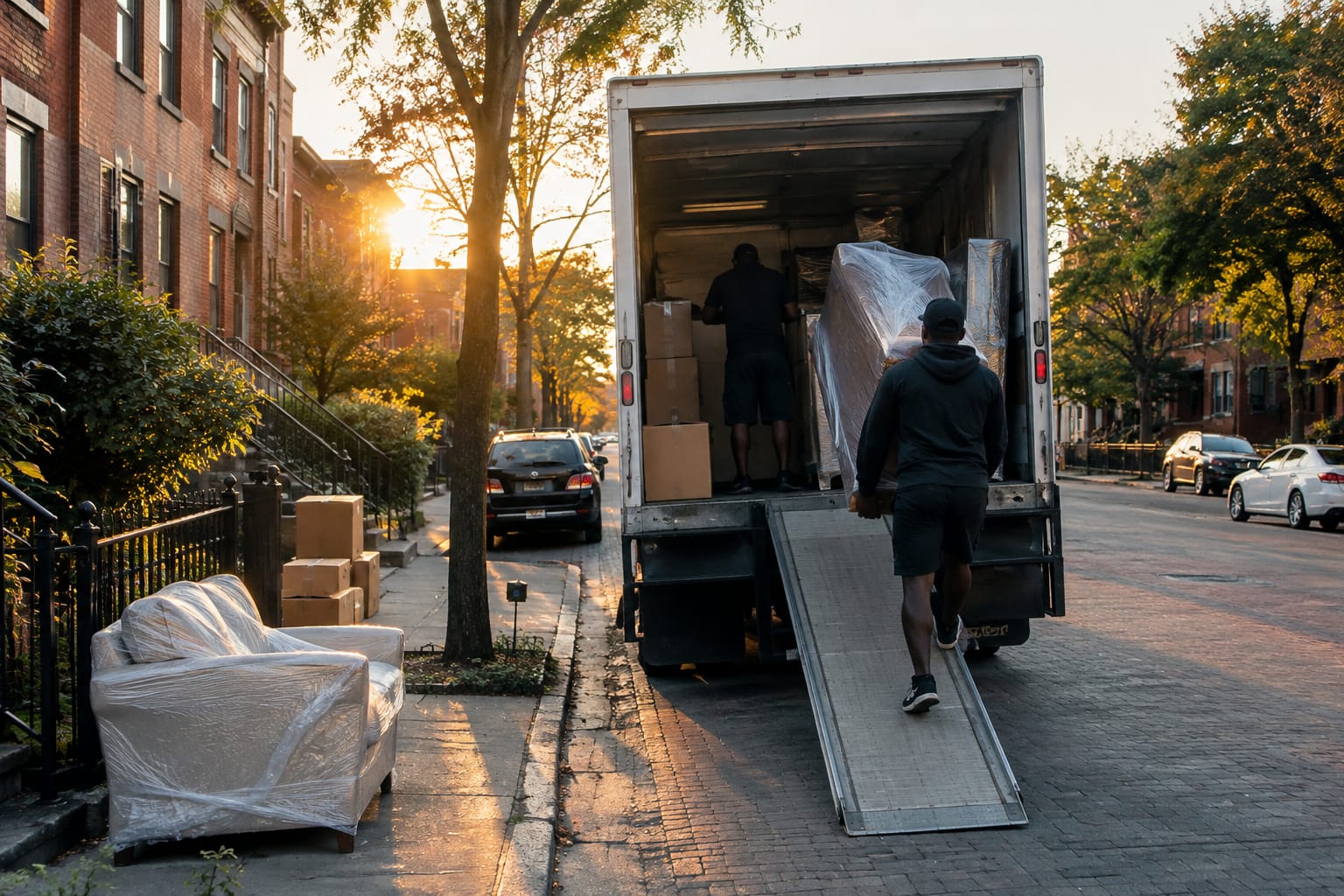
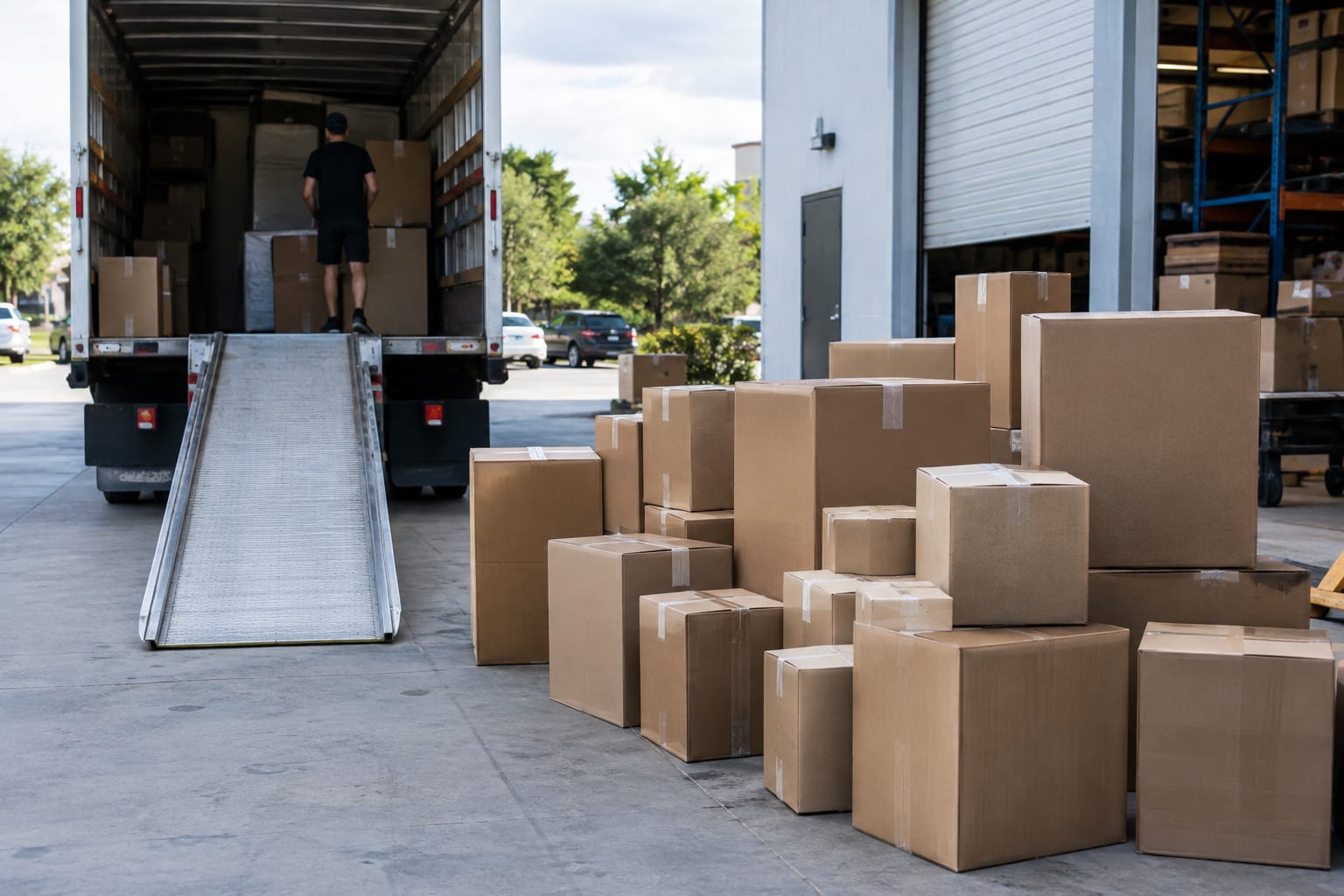
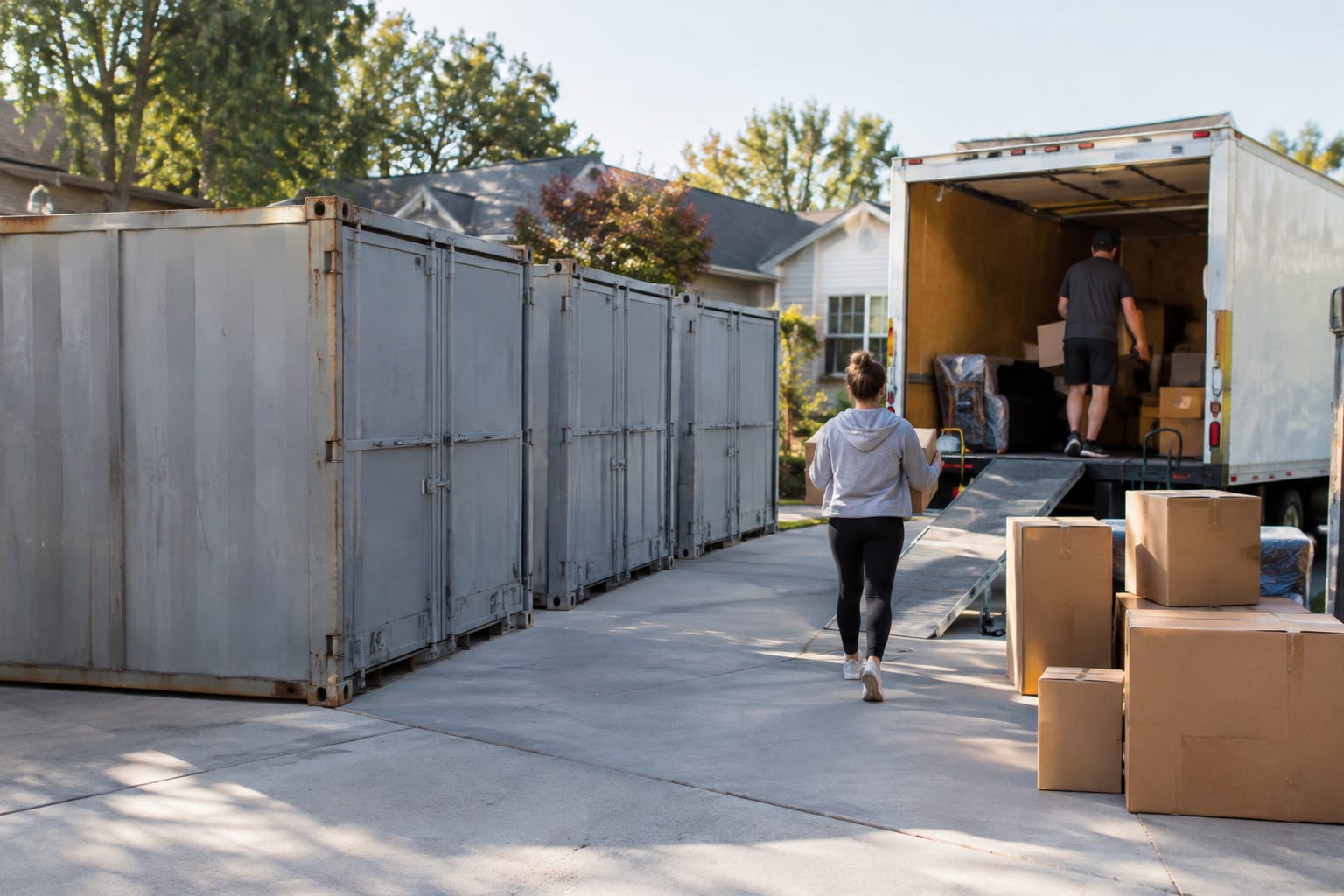
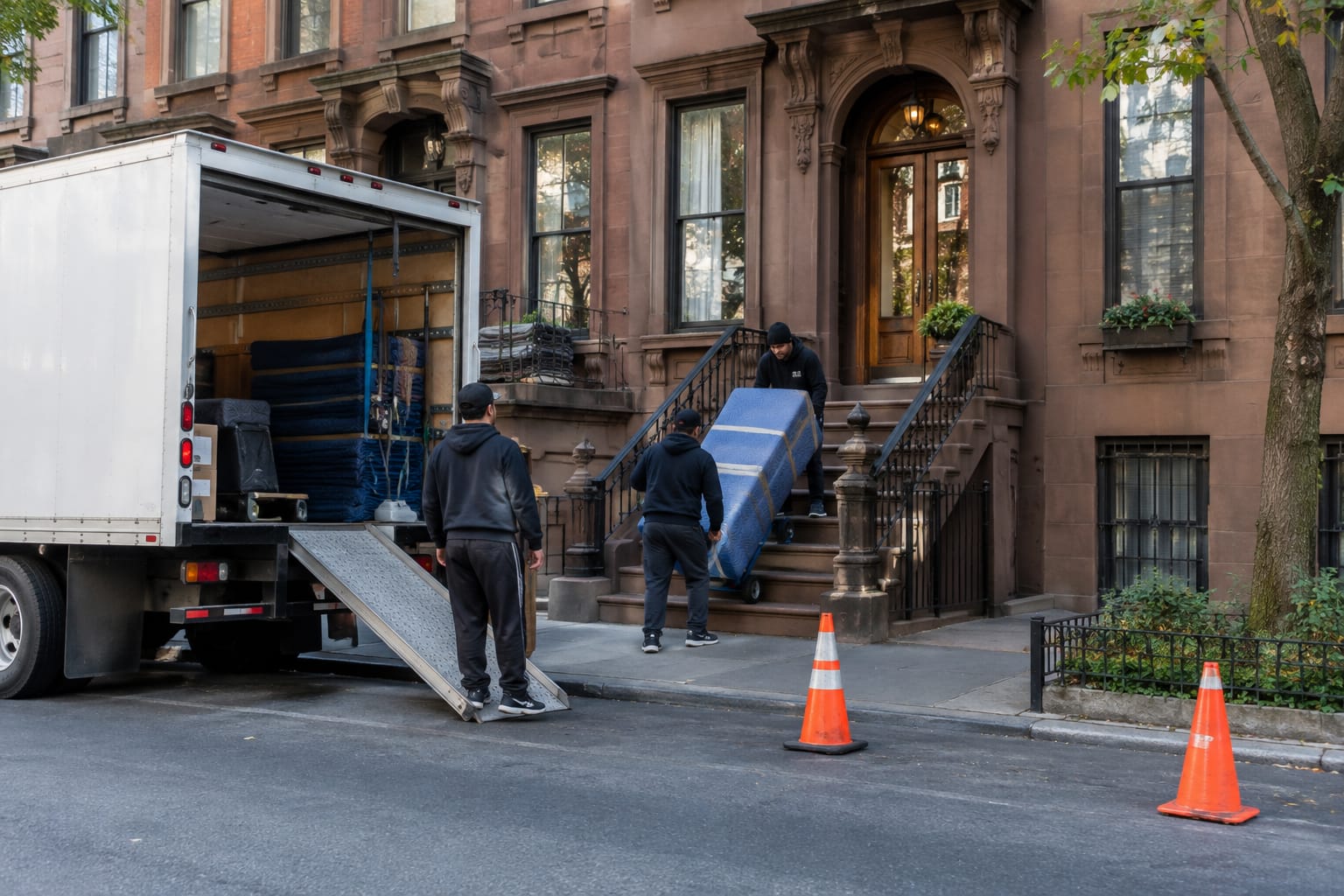
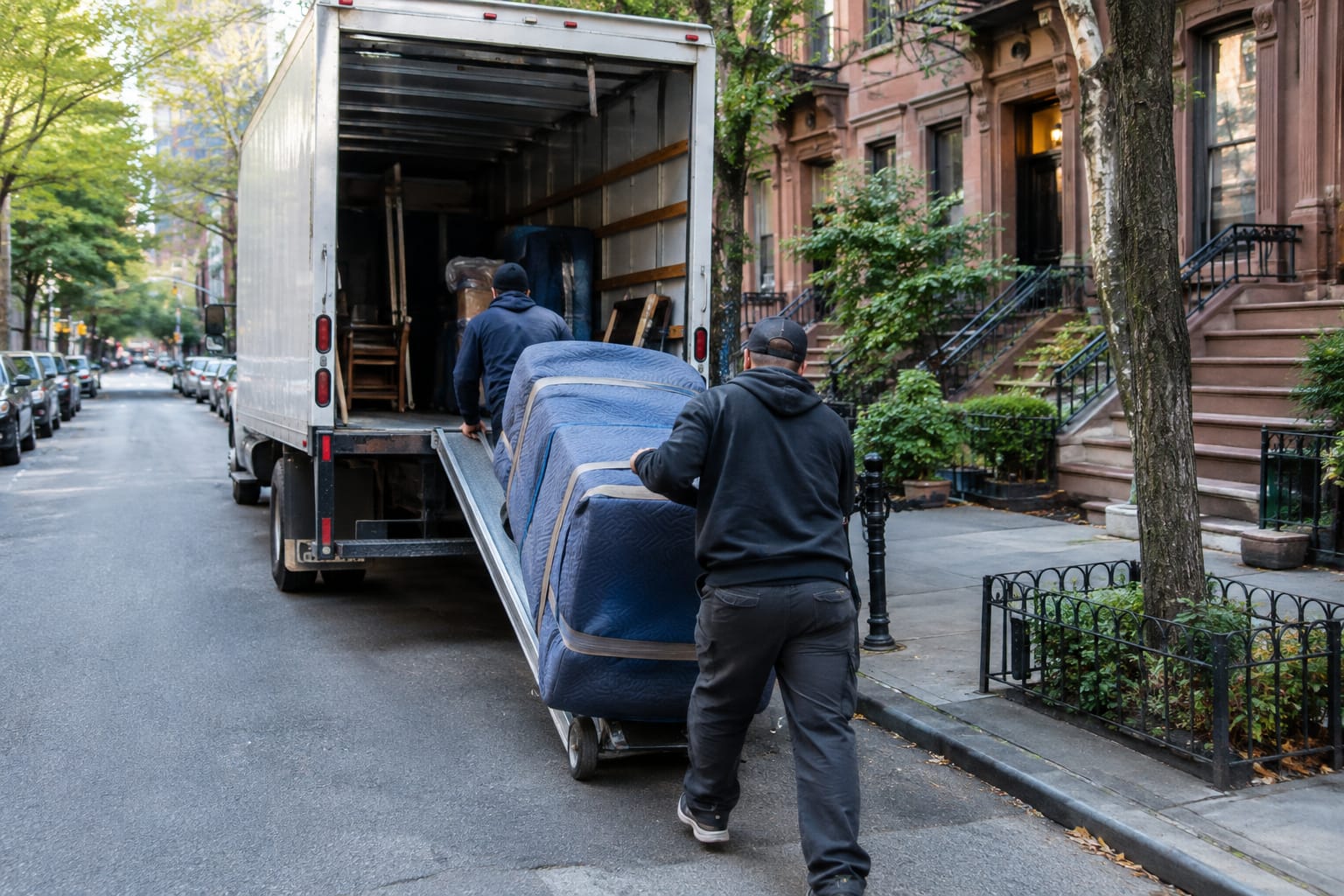
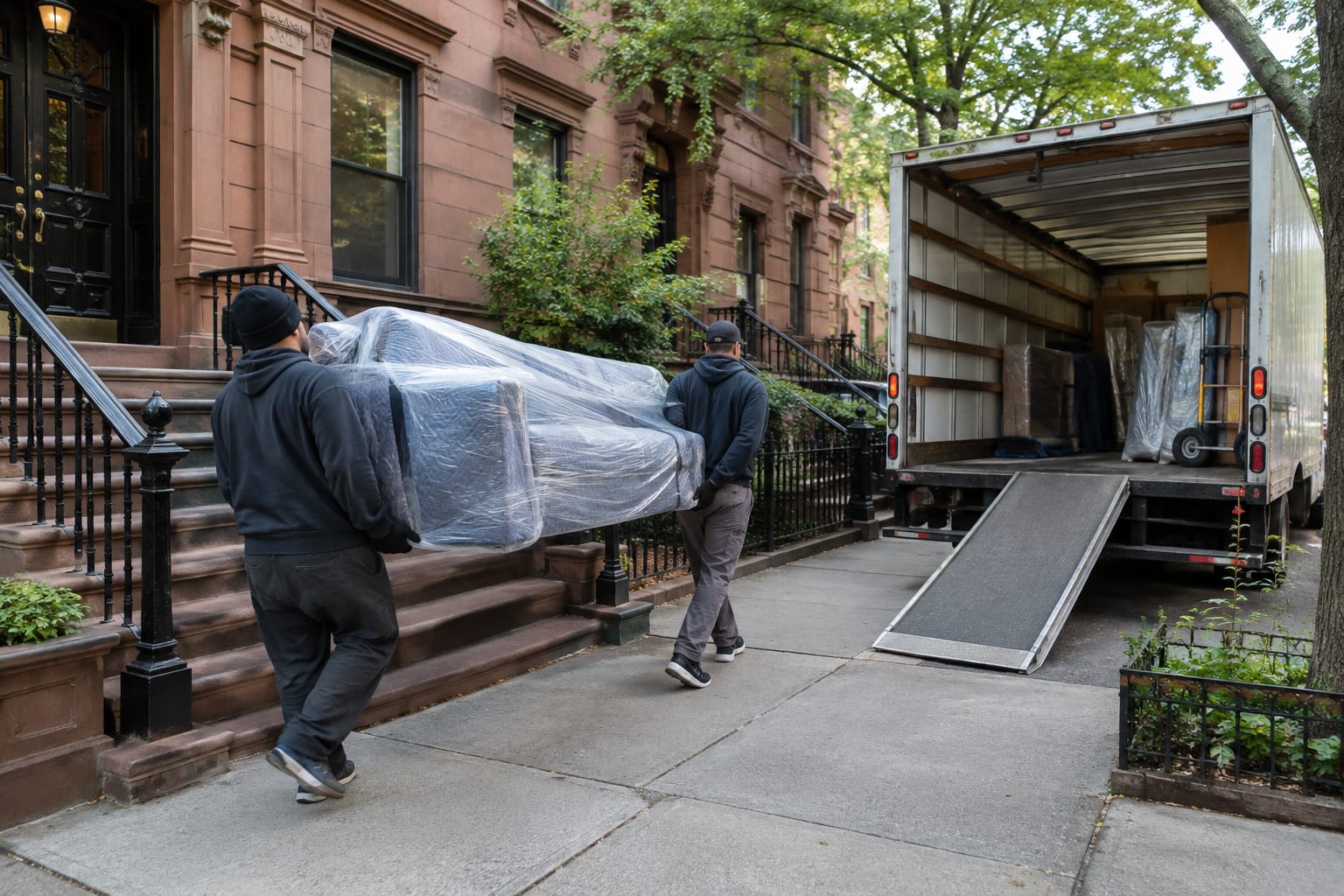
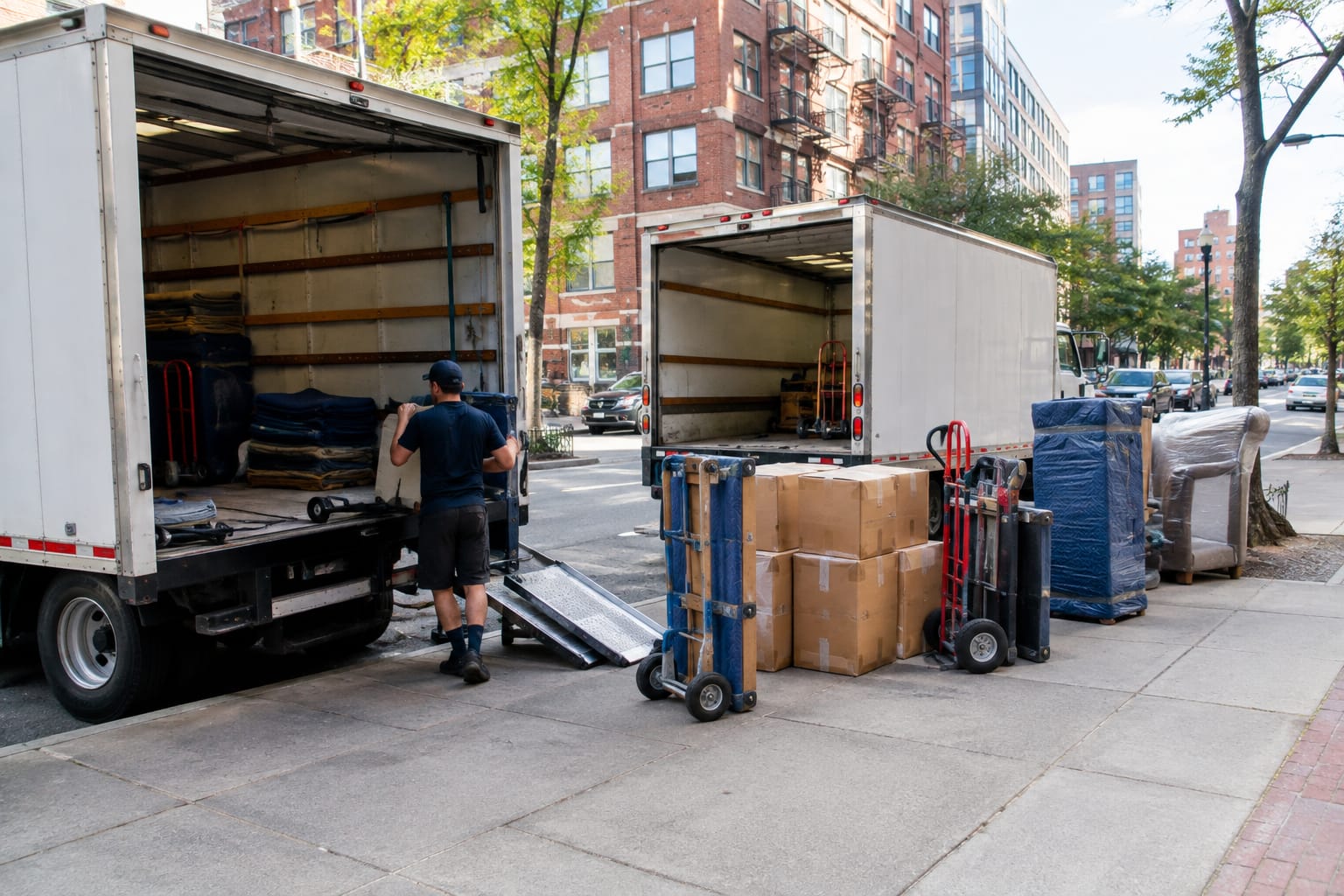
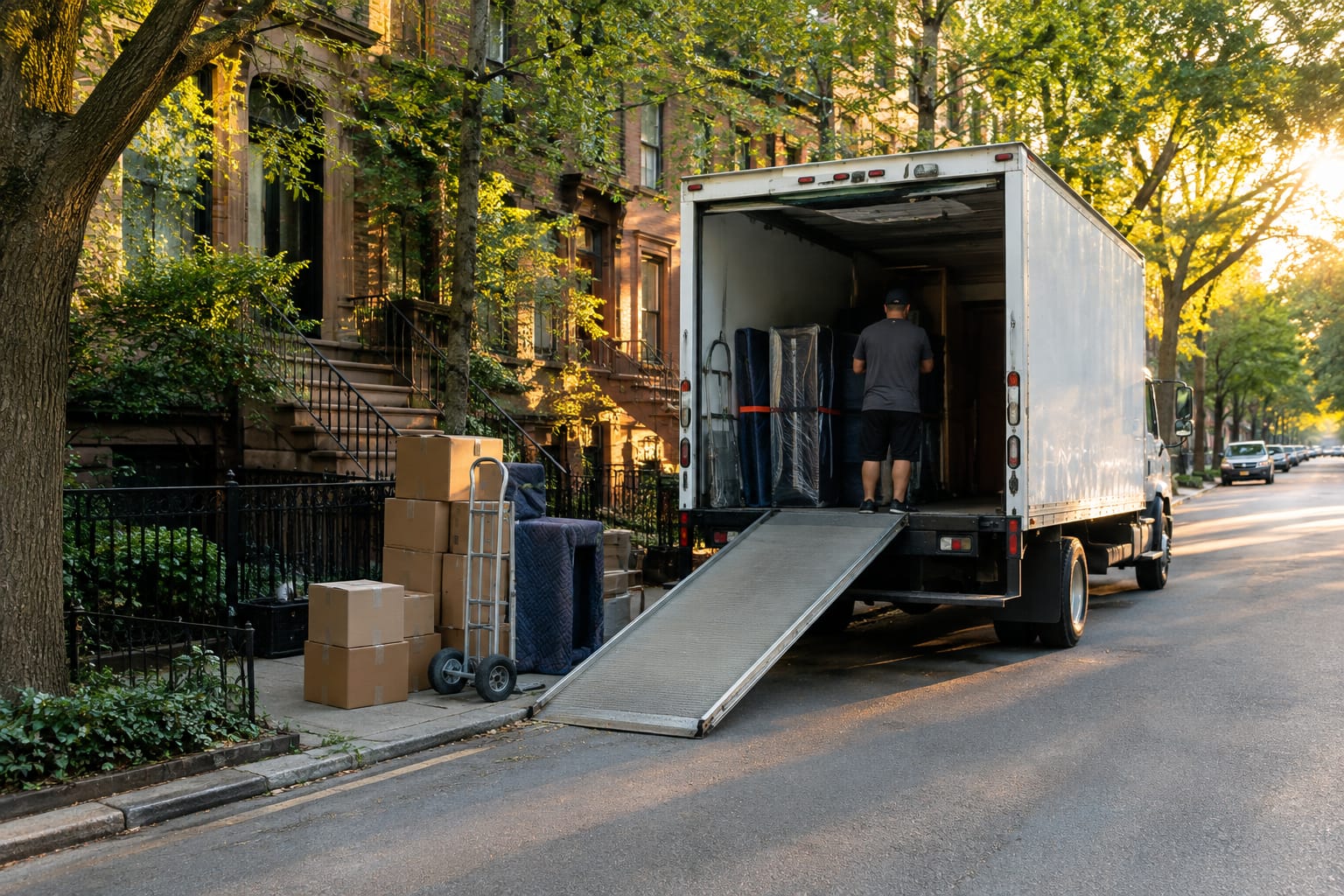
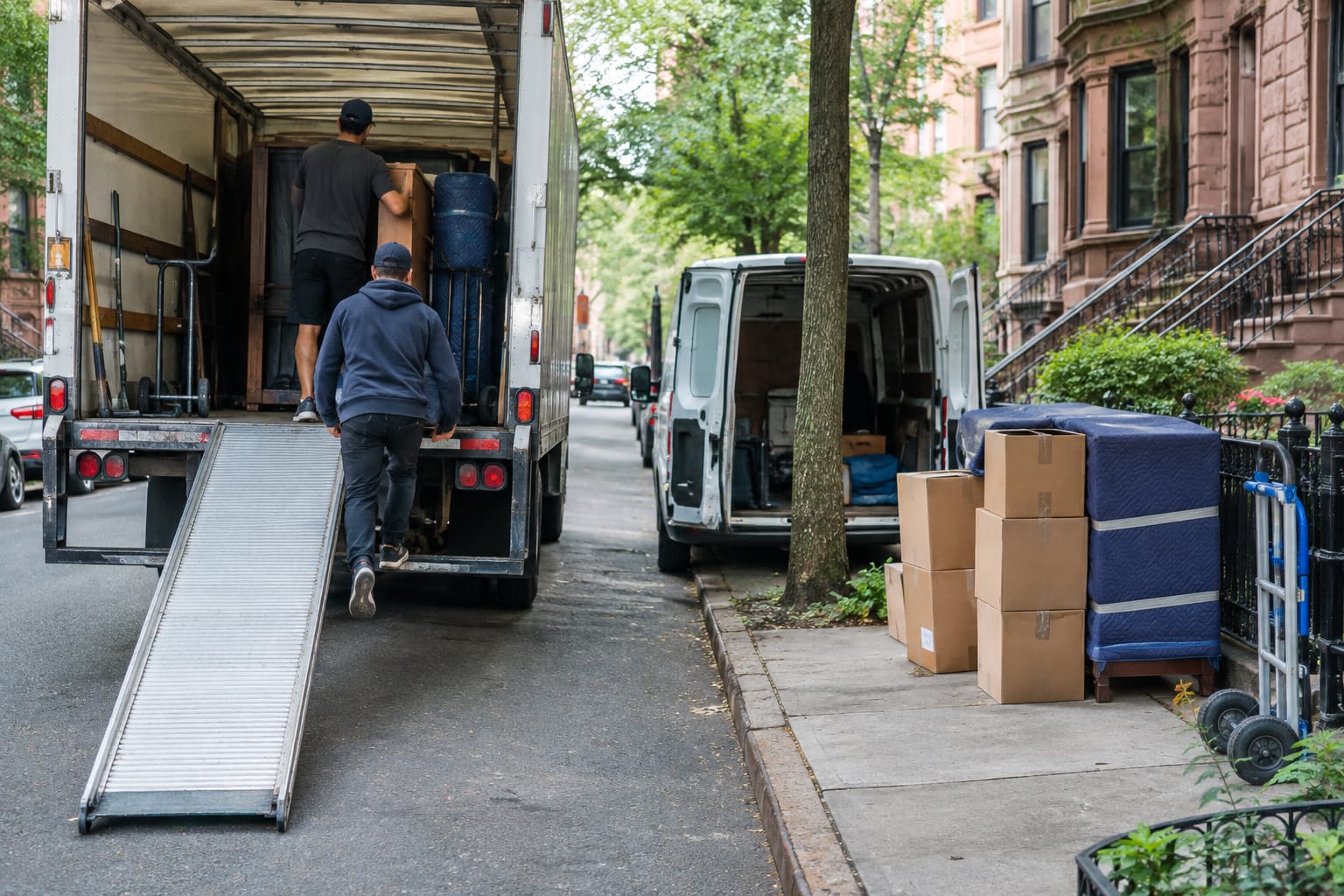
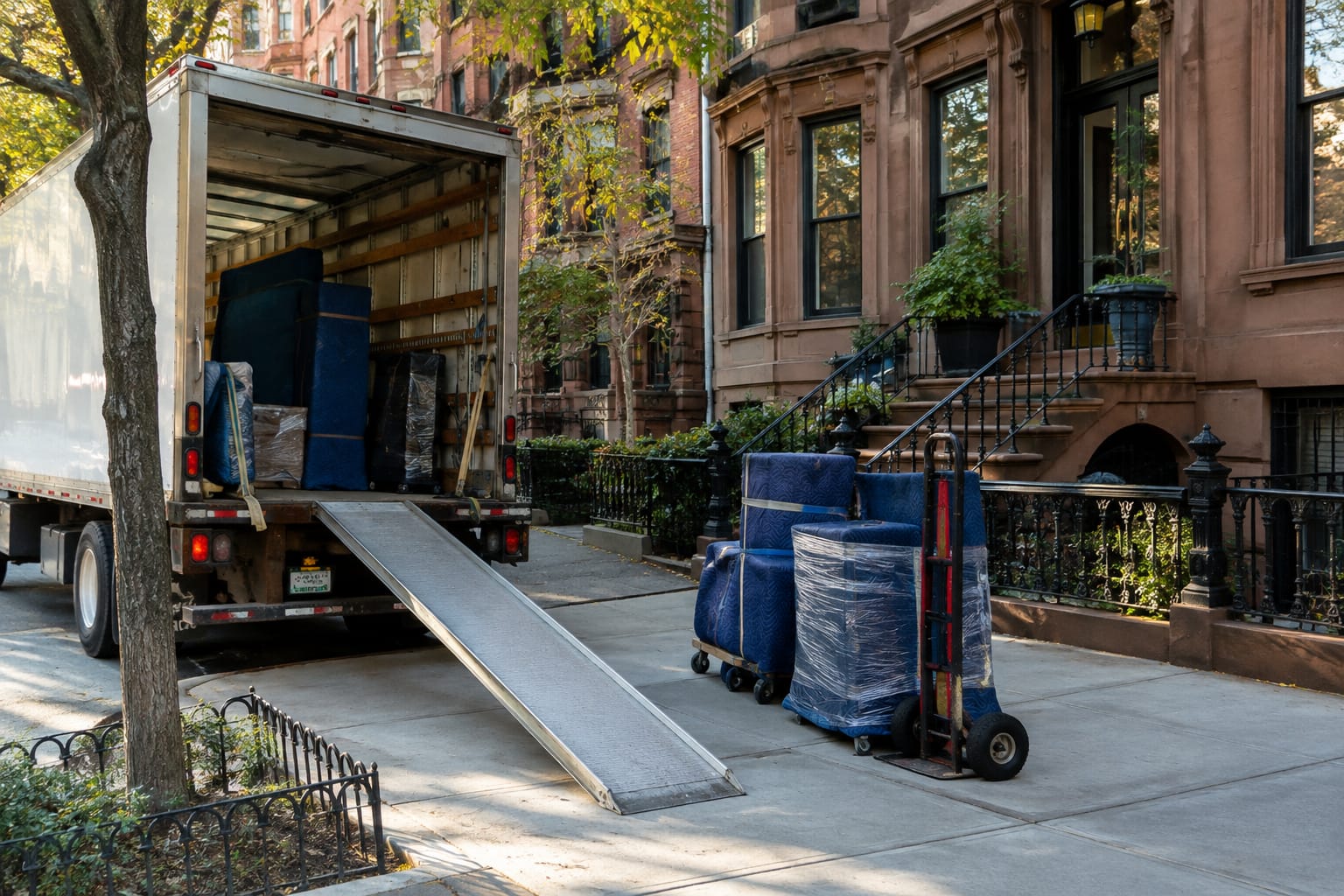
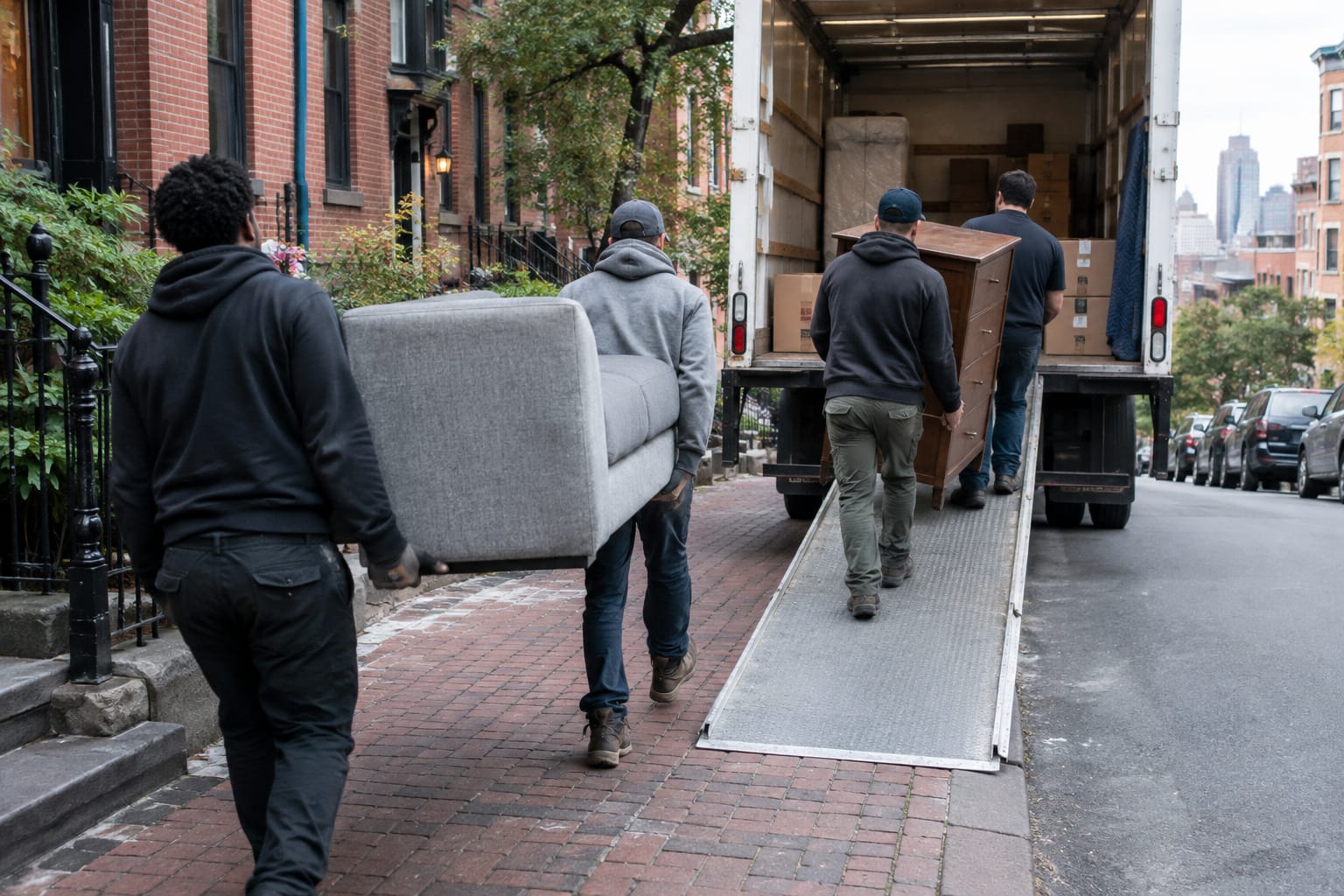
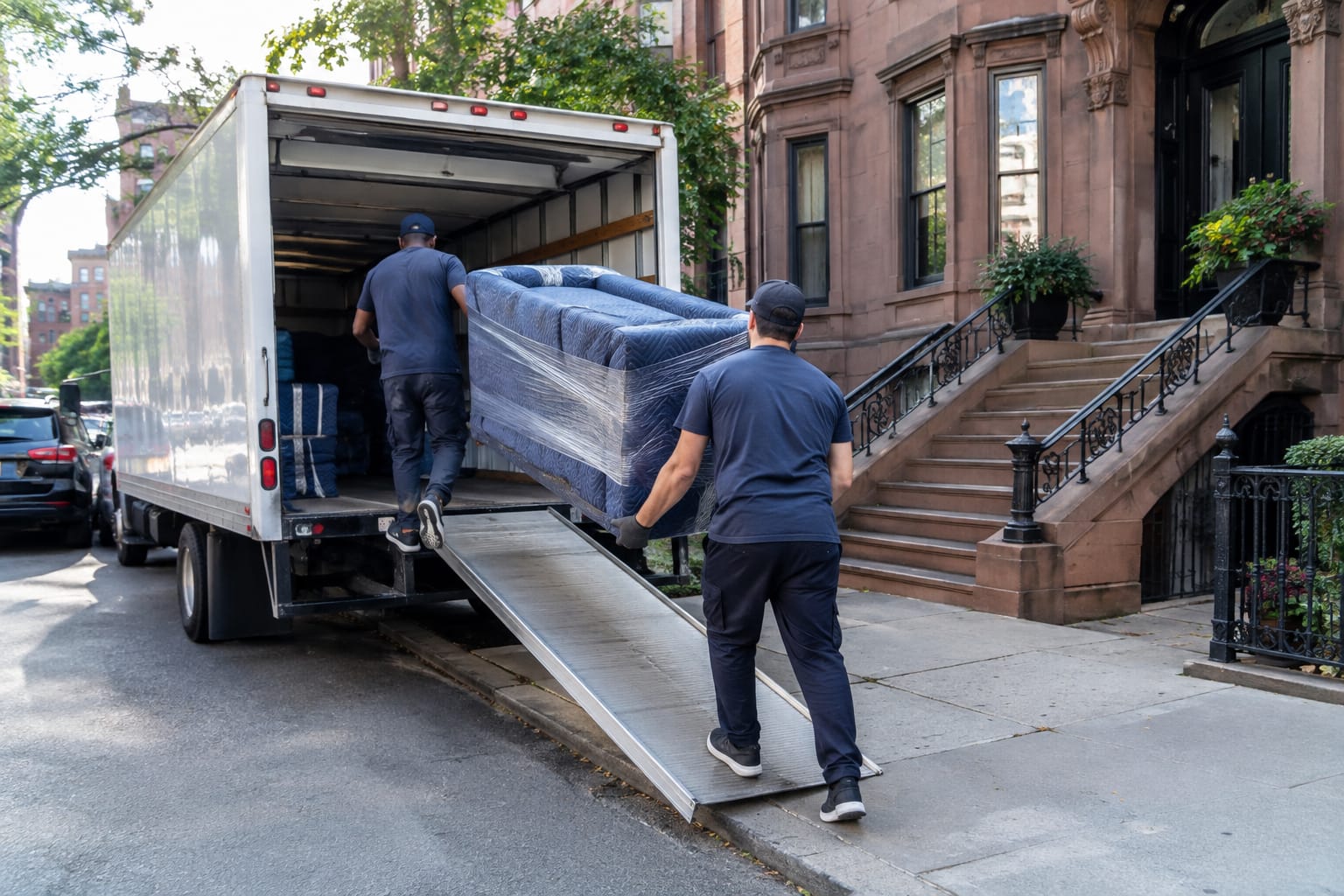
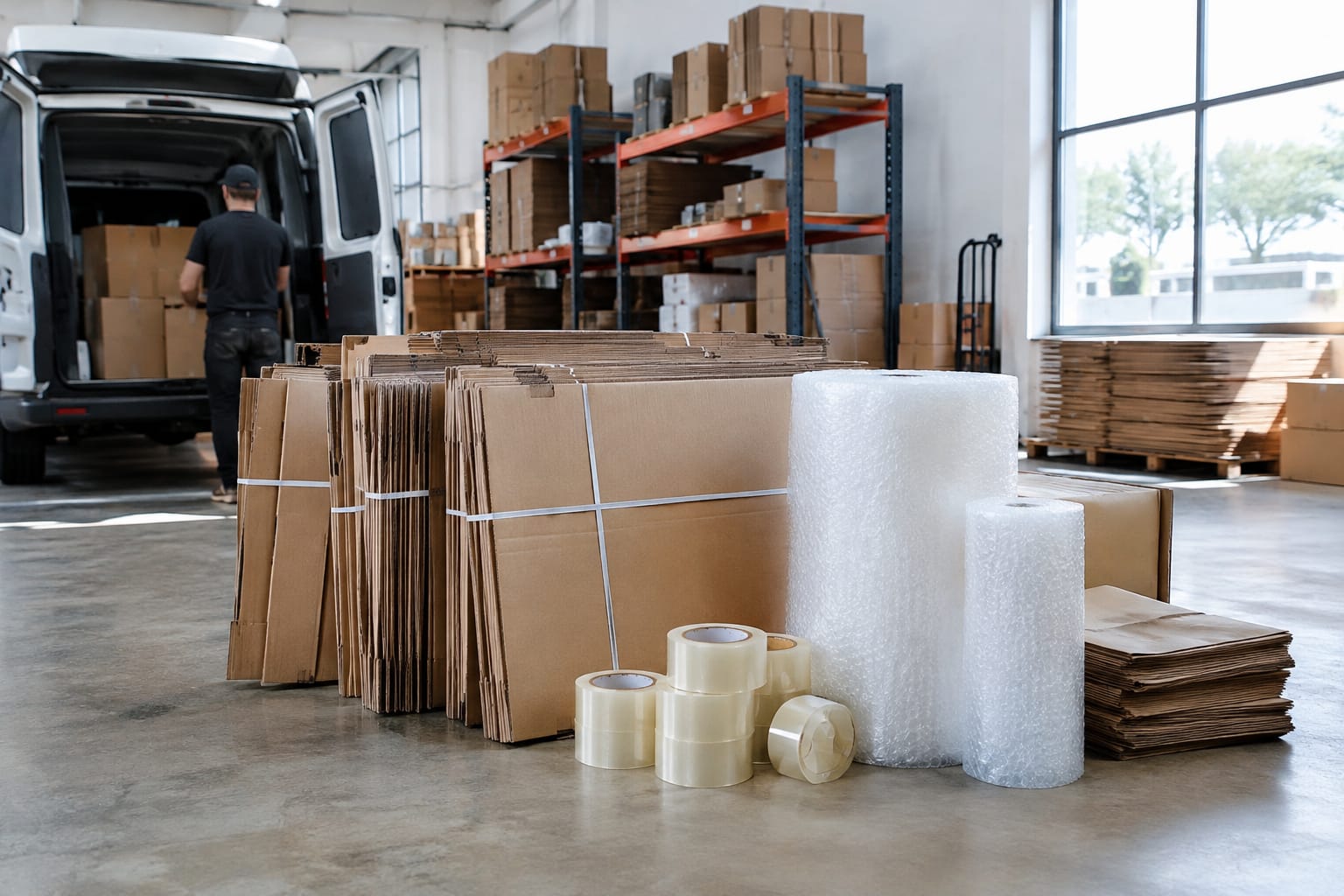
A moving boxes package is a pre-sized bundle of corrugated boxes in mixed sizes. It usually comes with packing tape and packing paper, and sometimes with bubble wrap, specialty cartons and a mattress bag. Sellers label kits by home size, such as studio or two-bedroom. Compare packages on contents, box strength and delivery timing, not on the headline box count.
That last point is where most moving-day problems start. A bundle can look generous on a product page and still arrive with no dish pack, one roll of tape, and boxes too large to carry once they are full of books. This guide compares the main package types, shows how to check value and quality, and explains when buying moving and packing materials yourself makes sense and when a crew should bring them. For a room-by-room checklist, start with which packing supplies you actually need.
Key Takeaways
- Compare volume, not box count. Multiply each box’s inches (L × W × H) and divide by 1,728 for cubic feet. A 24 × 18 × 18 box holds 4.5 cubic feet, about as much as ten 16 × 12 × 12 boxes.
- Kits leave out key items. Most packages skip dish packs, mattress bags, enough tape and furniture protection. Add these before moving day.
- Use double-wall boxes where it counts. Double-wall boxes have two layers of fluting and resist crushing. Use them for kitchens, books and the bottom of long-distance stacks.
- Keep heavy boxes small. Books belong in small boxes.
- Mover supplies are usually extra. Movers commonly bill boxes, tape, shrink wrap and mattress bags separately from hourly labor. Confirm the invoice items before moving day.
What a Moving Boxes Package Includes (and What It Usually Leaves Out)
A typical moving kit covers packing, not moving. Expect a mix of small, medium and large boxes, a few rolls of tape and a bundle of packing paper. Larger kits often add a wardrobe box or two, and some sellers include bubble wrap, markers or labels.
What a kit leaves out matters more. Crews see the same gaps on moving day:
- Specialty cartons. Dish packs, picture boxes and wardrobe boxes often appear only in the largest bundles, or not at all.
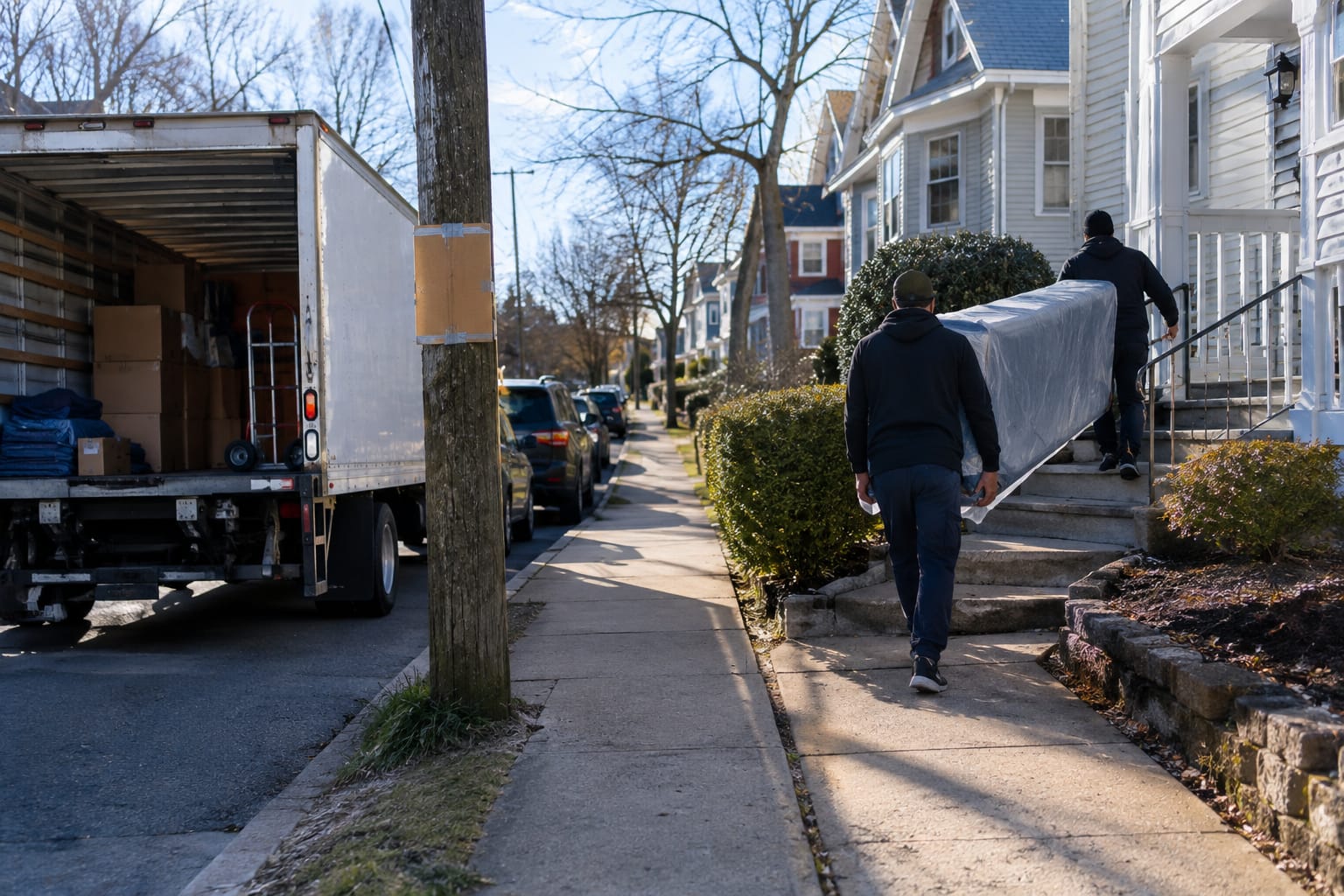
- Mattress bags. Many kits skip them, and an unprotected mattress picks up dirt from stairwells and truck floors.
- Enough tape. Every box needs its bottom seams sealed and its top closed. Kits often run out before the last room is packed.
- Enough paper. Kitchens use far more cushioning than any other room. For details, see how packing paper is used when moving house and the types of bubble wrap and where each one fits.
- Moving equipment. Box packages rarely include furniture blankets, stretch wrap, dollies or straps.
The fix is simple. Treat any package as a starting point, then add what your inventory actually needs. The list of essential packing materials for moving a house or flat works as a cross-check before you order.
Package Types Compared: Cardboard Bundles, Rented Plastic Crates, Used Boxes and Mover-Supplied Materials
There are four realistic ways to get moving boxes and supplies. Each one solves a different problem.
New cardboard bundles. Any moving supplies store sells them, from home improvement chains and shipping counters to truck-rental locations and online box sellers. You get uniform sizes, clean boxes and predictable stacking. You also own the boxes afterward, so you have to flatten, store or recycle them.
Rented plastic crates. Plastic moving crate rental services drop off lidded, stackable bins and collect them after the move. You skip assembly and tape, and crates handle rain and stacking better than cardboard. The trade-offs are a fixed rental window, possible late fees and no option for odd-shaped items such as lamps, mirrors or mattresses.

Used boxes. Neighbors who just moved, local liquor and grocery stores, and neighborhood marketplace groups are the usual answers to where to get moving boxes on a tight budget. For sourcing ideas, see where to find deals on cardboard moving boxes. Inspect every box. Soft corners, crushed edges, water stains or signs of pests mean it goes straight to recycling.
Mover-supplied materials. Full-service and packing crews bring cartons, tape, paper and wrap matched to the job. You skip the shopping, but movers usually bill supplies on top of labor, as covered below.
Delivered vs. Picked Up: Lead Times, Delivery Fees and Timing Your Order
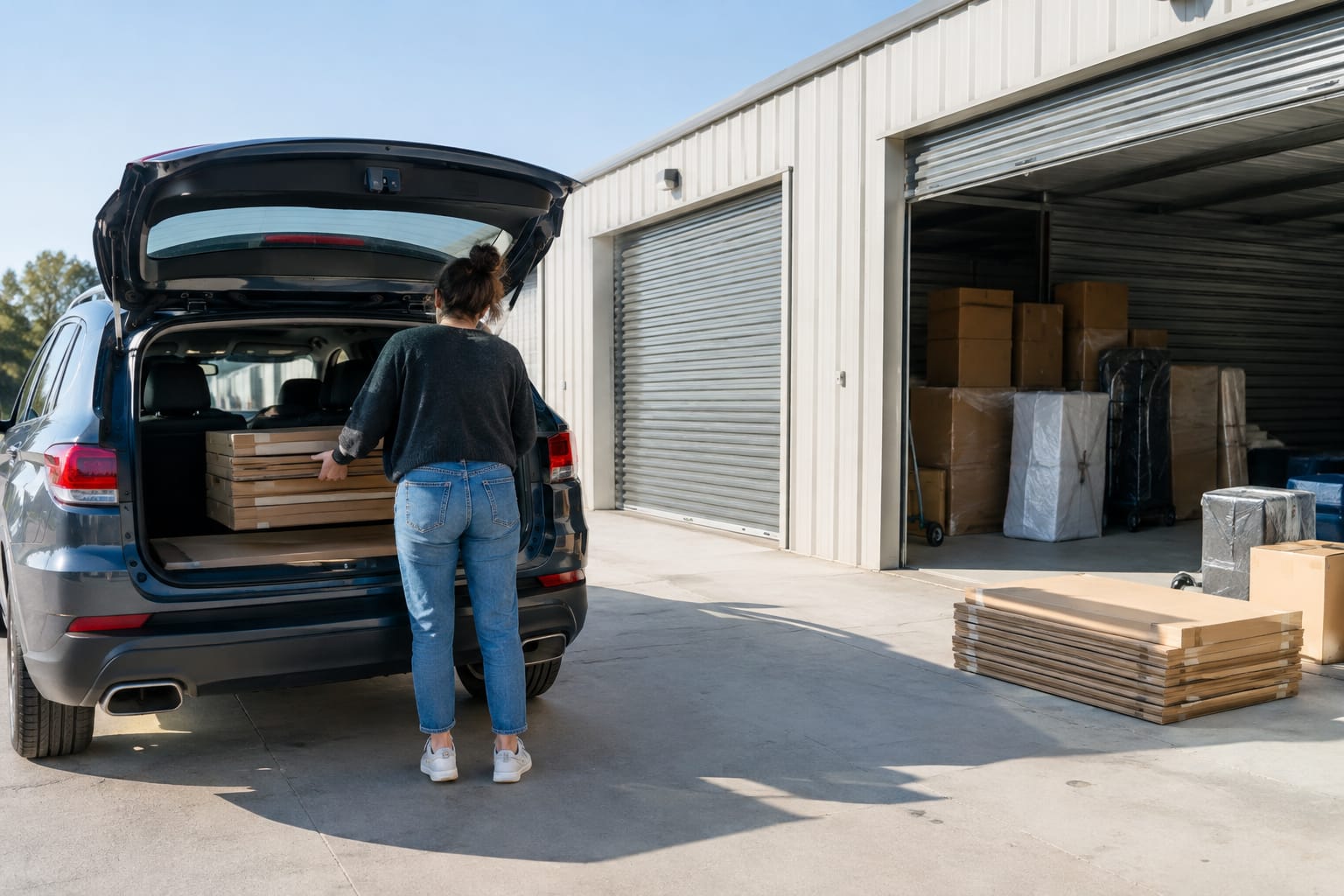
Delivery saves a trip. Pickup gives you control. Moving boxes delivery makes sense if your car is too small for flat bundles or parking near the store is difficult. In-store pickup makes sense when you need supplies the same day or want to check box quality before you pay.
Confirm these points before checkout:
- Delivery fees and minimums. Some sellers drop the delivery charge above an order threshold, while others charge by distance or weight. Compare delivered totals, not sticker prices.
- Delivery window. Bulky flat boxes can ship slower than small parcels. Plan around the stated window, not a best-case estimate.
- Drop-off conditions. Moving boxes delivered to an open stoop can soak through in one rainstorm. If no one will be home, request a sheltered drop spot.
- Crate rental dates. Crate services schedule a drop-off date and a pickup date. Book both around your real packing and unpacking timeline.
Q: How far in advance should I order moving boxes for delivery?
A: Have boxes arrive one to two weeks before you plan to start packing. In Greater Boston, add extra lead time before the September 1 lease turnover, when demand for boxes, trucks and crews peaks in the same few days.
That same peak affects truck parking and building access. Guides on moving in Boston on September 1 and where you can park a moving truck in Boston help you line up the rest of the schedule.
How to Compare Package Prices Without Getting Misled by Box Counts
Box count is the wrong unit. A kit with many small cartons can hold less than a kit with fewer, larger boxes. Compare total volume first, then add up the value of everything that is not a box.
Here is the method. For each box, multiply length × width × height in inches and divide by 1,728 to get cubic feet. Then add up the cubic feet across the whole kit.
| Example box dimensions (inches) | Calculation | Volume |
|---|---|---|
| 16 × 12 × 12 | 2,304 ÷ 1,728 | about 1.3 cu ft |
| 18 × 18 × 16 | 5,184 ÷ 1,728 | 3.0 cu ft |
| 24 × 18 × 18 | 7,776 ÷ 1,728 | 4.5 cu ft |
Sellers do not use standard meanings for labels like small, medium and large. Always work from the printed dimensions.
Q: What is the fairest way to compare two moving box packages on price?
A: Divide each kit's delivered total by its combined cubic feet to get a price per cubic foot. A 24 × 18 × 18 box holds 4.5 cubic feet, so three of them hold about as much as ten 16 × 12 × 12 boxes.
Next, account for the extras. Tape, paper, a dish pack and mattress bags add up quickly when you buy them separately. A kit with a higher price that already includes them can be the better deal.
Pro Tip: Price every kit twice: once as listed, and once with the tape, paper and specialty boxes your inventory needs. Compare kits on the second number.
Box Quality Criteria: Wall Strength, Size Mix and Specialty Boxes
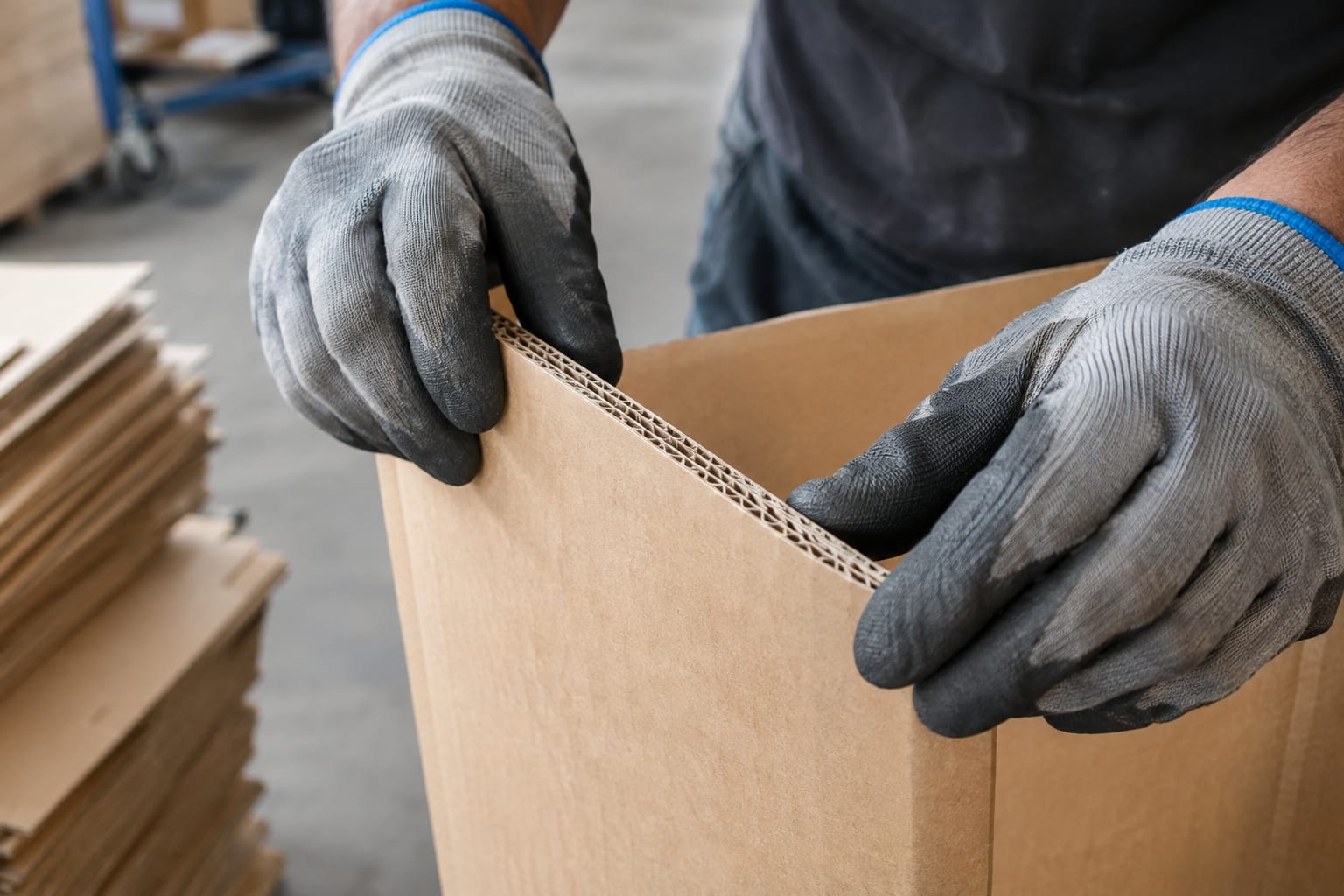
Wall strength decides whether a box survives a truck stack. Many corrugated boxes carry a box maker's certificate, a printed stamp on the bottom flap. The stamp lists either an Edge Crush Test (ECT) rating, which measures stacking strength, or a burst rating, which measures resistance to punctures and rough handling. Higher numbers mean a stronger box.
Double-wall moving boxes have two layers of fluting, the wavy middle layer of corrugated board, where single-wall boxes have one. Double-wall boxes resist crushing at the bottom of a stack and handle dense loads better. Single-wall boxes are fine for linens, clothing and light decor. Use double-wall for kitchens, books and anything loaded low in a long-distance truck.
Size mix matters as much as strength. For heavy items, weight sets the limit before volume does. Stairs and narrow hallways are far from ideal. Books and records belong in small boxes, and large boxes suit pillows, lampshades and bedding.
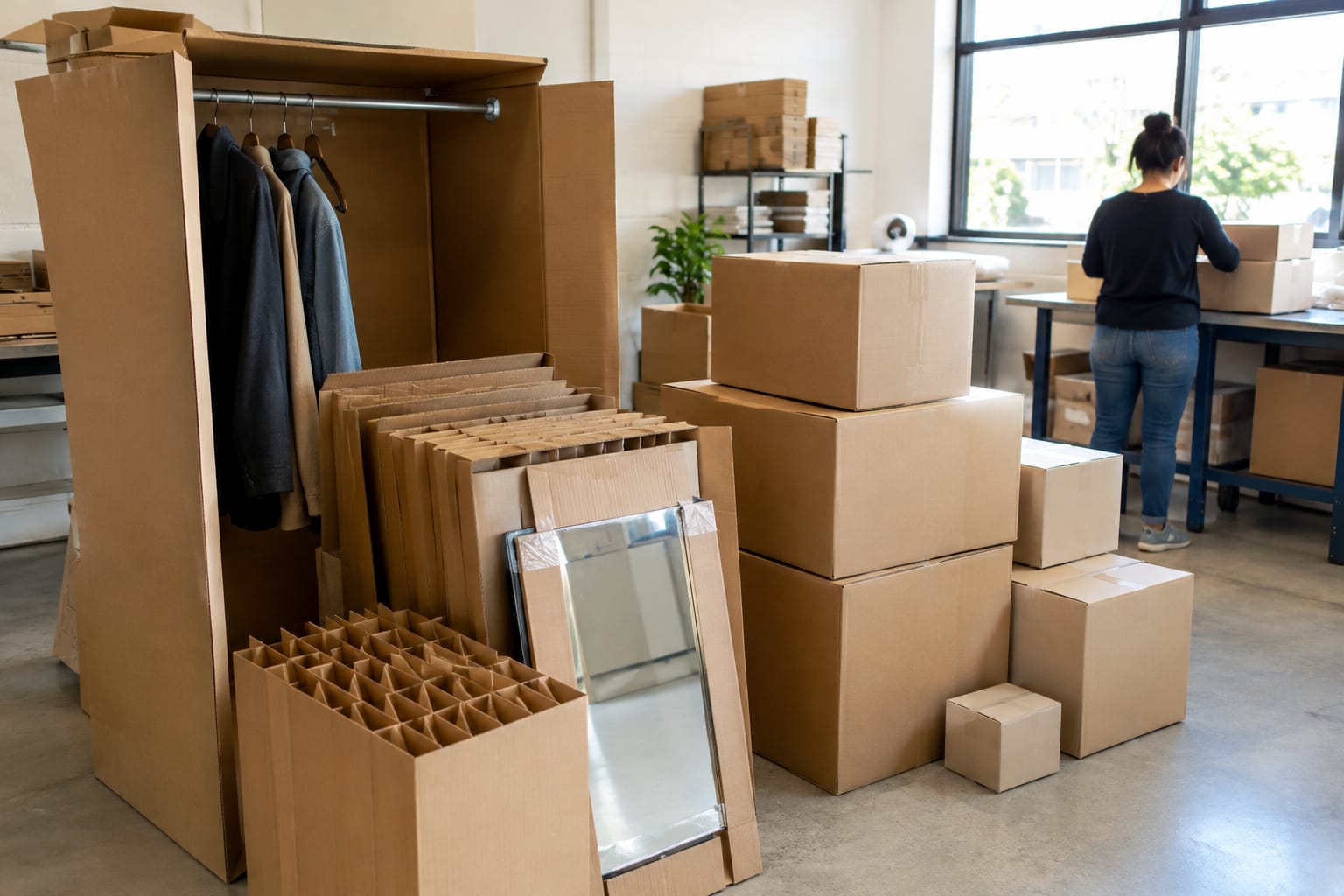
Specialty boxes are worth paying for:
- Dish pack box. A heavy-duty, usually double-wall carton built for plates, glasses and stemware, often sold with cell dividers. For technique, see the guide to packing dishes and glassware.
- Wardrobe box. A tall carton with a hanging bar. Clothes go in on hangers and come out ready to hang.
- Picture and mirror boxes. Telescoping or adjustable cartons sized for flat, framed items.
- Mattress bag. A plastic sleeve sized to the mattress, from twin to king. It keeps the mattress clean and dry in stairwells, trucks and storage. Check the listed thickness, because thin bags tear on door frames.
Tape is the last weak point. Tape made for sealing cartons holds better than general-purpose tape, especially in humid summer moves. For a full breakdown, read about choosing the right packing tape.
Buying Your Own Package vs. Having Your Movers Bring Supplies
Buying your own package gives you price control. Having movers bring supplies saves time and matches materials to the job. People who research whether moving companies provide boxes usually find that many movers do, but rarely at no charge.
Q: Do moving companies charge extra for boxes and packing supplies?
A: In most cases, yes. For example, the hourly crew rates and what they cover for local moves out of Newton, MA list boxes, tape, shrink wrap and mattress bags as separate charges that are not part of the hourly rate.
The difference is between equipment and consumables. Crews typically arrive with reusable equipment such as moving blankets, padding, dollies and straps. Consumables like cartons and wrap are used up on your move, so ask which items will appear on the invoice before moving day.
Packing also affects protection. This basic liability is not insurance, and Full Value Protection is an optional upgrade that costs more.
Before you sign the order for service and the bill of lading, confirm the current valuation requirements with the relevant authority. Also ask the mover how it handles claims on boxes its crew did not pack. Good boxes and careful packing protect value that basic liability does not cover.
If time is the constraint rather than money and you are moving in Greater Boston, professional packing and unpacking hands the work to a crew that packs room by room with the right cartons. A common middle path is to pack bedrooms and closets yourself and hire packing for the kitchen only.
Side-by-Side Comparison Table: Which Option Fits Which Move
| Option | What's included | Delivery | Returnability | Best for |
|---|---|---|---|---|
| New cardboard bundle | Mixed box sizes, tape, paper; specialty cartons on larger kits | Store pickup or delivery; fees and minimums vary by seller | Varies by seller; check the policy for unused, unassembled boxes | DIY truck or container moves; owner-packed hybrid moves |
| Individual boxes and supplies | Only the sizes and materials you choose | Store pickup or delivery | Varies by seller | Small moves; topping up a kit |
| Rented plastic crates | Lidded, stackable crates; extras vary by provider | Dropped off and collected on scheduled dates | Returned by design; late or damage fees may apply | Apartment and office moves with short packing windows |
| Used cardboard | Whatever you can collect | Self-collected | None; recycle or pass on | Tight budgets; light, non-fragile items |
| Mover-supplied materials | Cartons, tape, paper and wrap matched to the inventory, billed separately | Arrive with the crew | Ask the mover before the move | Full-service and packing-service moves |
Start with the Best for column, then check returnability. If you are unsure how many boxes you need, a returnable kit or a crate rental limits the cost of overbuying.
Verdict by Move Type: DIY Truck, Hybrid Loading Help or Full-Service
DIY truck or container move. Buy a package sized for your home, then upgrade kitchen and book boxes to double-wall. Add one mattress bag per mattress and more tape than the kit includes. Before loading, review how to pack a truck for a long-distance move and how rental truck services operate.
Hybrid move with loading help. You pack, and a hired crew loads the rented truck or container. Uniform box sizes matter most here, because consistent cartons let a crew build tight, stable walls that do not shift in transit. Read about hiring someone to move furniture, and confirm whether the crew brings blankets and wrap for furniture.
Full-service move. Let the mover's materials match the inventory, and budget for supplies as a separate line item. The overview of what full-service movers handle and the breakdown of how much movers cost help you set that budget. In high-rise buildings, reserving the elevator early matters as much as the boxes.
Whatever you choose, plan for the boxes after the move. Sturdy boxes are also worth passing on, and these ideas show how to reuse or recycle boxes after the move.
Written by Born to Move Team
Useful Links
- Packing and Unpacking Services — For Greater Boston moves: how full and partial packing works, including loading rental trucks and containers.
- Local Moving Rates and What They Include — Hourly crew rates, minimums, and which supplies are billed separately.
- Essential Packing Materials for Moving a House or Flat — A checklist to compare against any box kit.
- How to Pack a Truck for a Long-Distance Move — Loading order and stacking methods that keep boxes intact.
- Full-Service Movers Explained — What a full-service crew handles, from packing to unloading.
Need help with this? Movers from Boston to New York · Get a quote · Call (617) 903-2609