Before you book a moving company in the Chicago area, check seven things: Illinois registration, how the hourly rate and minimum work, what the rate includes in writing, who handles building requirements, the deposit and cancellation terms, how long-distance quotes are built, and reviews across more than one platform. Most search results for Chicago movers are directories and company home pages. They list names but don't explain how to vet them.
This checklist fills that gap. Each item gives you the question to ask, a good sign, and a red flag. For neighborhood logistics and timing, pair it with our guide to moving in Chicago.

Key Takeaways
- Verify Illinois registration. For moves within Illinois, ask for the mover’s ILCC number and confirm it with the Illinois Commerce Commission.
- Understand the hourly math. Crew size, the hourly minimum, and how travel time is billed shape the real cost of a local move more than the headline rate.
- Get inclusions in writing. Ask for a written list covering truck, fuel, tolls, blankets, and floor protection; packing supplies are often billed separately.
- Plan building access early. Confirm who prepares the certificate of insurance and how the crew will fit your building’s elevator and loading dock windows.
- Read booking terms first. Get deposit, cancellation, and rescheduling terms in writing; a large cash deposit before any inventory review is a warning sign.
1. Confirm Illinois Registration for Moves Within the State
For a move that starts and ends in Illinois, ask the mover for its Illinois Commerce Commission registration number and confirm it with the agency directly. The Illinois Commerce Commission (ICC) is the state body that oversees household movers working inside Illinois. Movers often shorten the registration to ILCC.
A real number is easy to share. For example, Born to Move's Chicago branch runs intrastate Illinois moves under ILCC registration 244189. Any mover should give you its number just as plainly, and you can confirm it through the Illinois Commerce Commission website.

Q: How do I verify a mover in Illinois?
A: Ask for the mover's ILCC registration number, then confirm it with the Illinois Commerce Commission instead of trusting a logo or badge on the company's website.
Our walkthrough on how to check a USDOT number shows where to find it and what the record tells you.
- Good sign: The registration number appears on the website, the estimate, and the paperwork, and it matches the company name you're booking.
- Red flag: The company dodges the question, offers only a phone number, or the name on the record differs from the name on your estimate.
2. Ask How the Hourly Rate, Crew Size, and Minimum Work Together
Local movers in Chicago usually bill by the hour, so the real cost depends on crew size, the hourly minimum, and how travel time is counted. A bigger crew costs more per hour but often finishes faster. A two-flat in a Chicago suburb and a walk-up studio in Lakeview need very different crews.
Here's what transparent pricing looks like in practice. Born to Move's published hourly crew rates start from $160 per hour for 2 movers and a truck, from $240 per hour for 3 movers, and from $320 per hour for 4 movers, as listed in September 2026. Every local hourly move has a 3-hour minimum that includes travel time, seasonal rates apply, and card payments carry a 3% processing fee. Treat this as an example of the detail to expect, not a market benchmark.
Q: Do Chicago movers charge for travel time?
A: Many do. In the example above, travel time is billed at the same hourly rate and counts toward the 3-hour minimum, so ask any mover how they count it before you compare quotes.
- Good sign: The mover tells you the crew size it recommends, why, and how the minimum and travel time are calculated.
- Red flag: A low hourly number with no mention of minimums, travel time, or payment fees.
3. Get a Written List of What the Rate Includes
Ask for the inclusions in writing, because two quotes with the same hourly rate can cover very different things. The key line items are truck, fuel, tolls, moving blankets, floor protection, and furniture disassembly and reassembly.
The rate page linked above is a useful model: it states that the hourly rate covers truck, fuel, tolls, blankets, and floor protection. It also states that packing supplies, such as boxes, tape, and mattress bags, are charged separately. That split matters. Supplies are a real cost, and you want to see it before moving day.
Ask what you're expected to do before the crew arrives. Many hourly quotes assume drawers are emptied and boxes are packed. If they're not, the clock runs while the crew packs.
- Good sign: A written list of inclusions and a separate line for supplies and packing labor.
- Red flag: Vague phrases like everything included, with no written list behind them.
4. Ask Who Handles Building Requirements and Truck Access
In Chicago high-rises and managed buildings, ask the mover who prepares the certificate of insurance (COI) and how they plan around elevator and loading dock windows. A COI is a document showing the mover's liability insurance, and many buildings won't let a crew in without one on file. Some movers prepare the COI in advance for buildings that require it, which saves you a last-minute scramble with management.
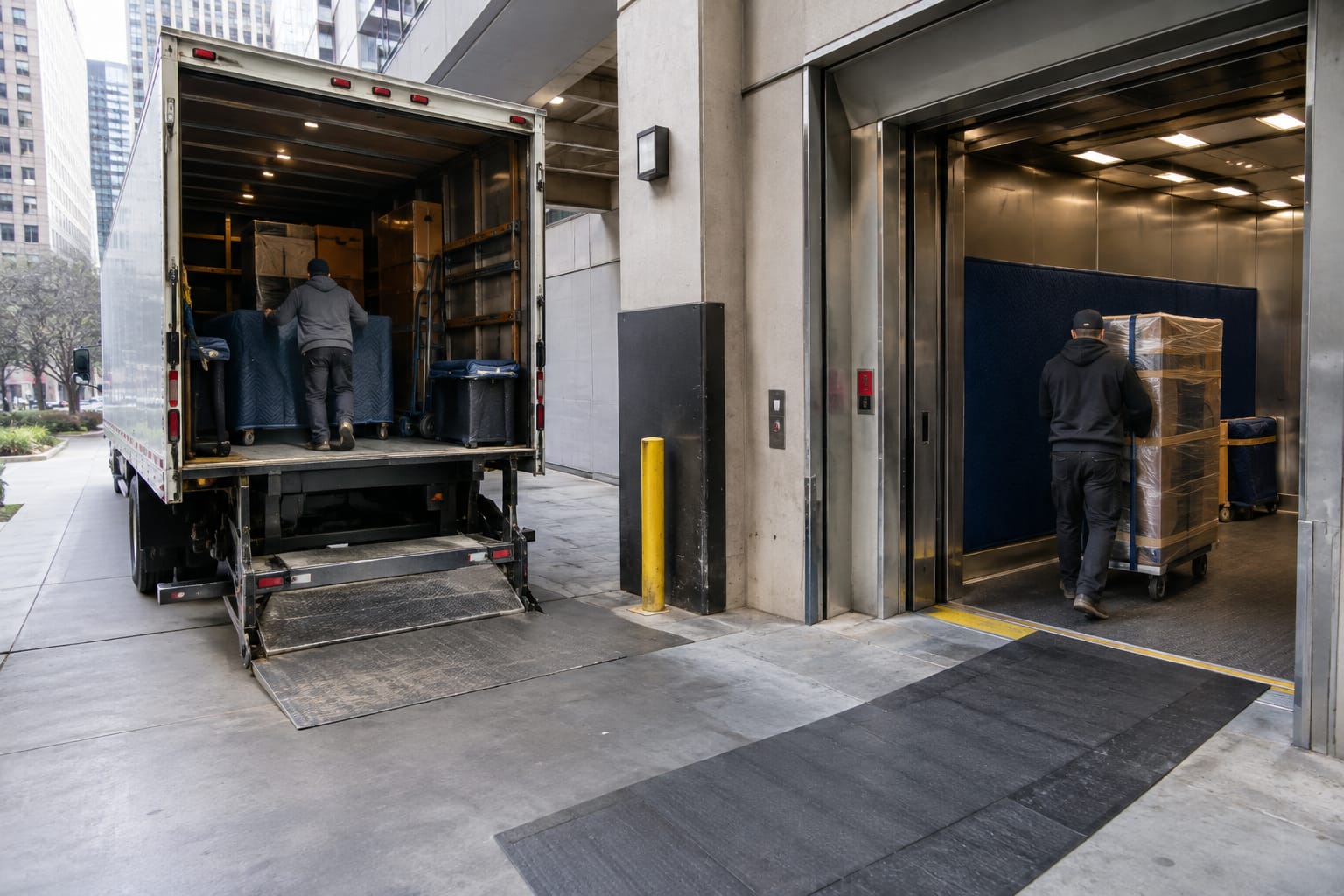
Elevator time is the other bottleneck. Downtown towers often book service elevators and loading docks in fixed blocks, and a crew that runs late can lose its slot. Our walkthrough on reserving a service elevator covers what to ask your building and when.
Confirm who arranges truck parking at both addresses. With many hourly movers, that falls to the customer. Find out early so you're not discovering it the morning of the move.
- Good sign: The mover asks about your building's COI, elevator, and dock requirements before quoting.
- Red flag: No questions about access at all, which usually means surprises on the day.
5. Review Deposit, Cancellation, and Rescheduling Terms
Get the deposit, cancellation, and rescheduling terms in writing before you pay anything. Plans change. Closing dates slip, leases shift, and a building can deny your elevator slot.
Ask three things: how much is due to reserve the date, what happens if you cancel, and how much notice you need to reschedule. Terms vary by company and sometimes by location, so don't assume one branch's policy applies everywhere.
Large upfront cash demands are one of the common moving scam warning signs. A legitimate mover explains its booking terms before you commit.
- Good sign: Clear written terms, fees explained before booking, and payment methods that leave a record.
- Red flag: A large cash deposit requested before anyone has seen your inventory.
More about the service: Movers From Chicago To Grand Rapids
6. For Long-Distance Moves, Ask How the Quote Is Built
For long-distance moves from Chicago, ask whether the price comes from a confirmed inventory and whether the delivery window is agreed in writing. Hourly billing rarely fits a multi-day move. A quote based on what you're actually moving gives you something concrete to compare.
Ask how the mover collects your inventory: a video walk-through, an on-site survey, or an online calculator. Then ask what happens if your inventory changes before moving day.
- Good sign: A written estimate issued before booking, tied to a listed inventory and a stated delivery window.
- Red flag: A firm price over the phone with no inventory and no questions about stairs, elevators, or distance to the truck.
7. Read Reviews Across More Than One Platform
Check reviews on at least two or three platforms, such as Google, Yelp, and the Better Business Bureau, and focus on recent ones. A strong profile on one site and silence everywhere else deserves a closer look.
Read past the star rating. Look for patterns: does the final bill match the estimate, does the crew arrive within the agreed window, and how does the company respond to complaints? A calm, specific reply to a bad review tells you more than a stack of five-star posts.
For a fuller list of what to raise on the phone, see these questions to ask before hiring movers.
- Good sign: Consistent feedback across platforms and specific, professional responses to problems.
- Red flag: Very recent bursts of generic praise, or a company name that doesn't match its registration.
Chicago Mover Checklist: What to Ask, Good Signs, Red Flags
Use this table when you have two or three quotes side by side.
| Item | What to ask | Good sign | Red flag |
|---|---|---|---|
| Illinois registration | What is your ILCC number? | Number shared and matches the company name | Evasive answer or mismatched name |
| Rate structure | What crew size, minimum, and travel billing apply? | Clear explanation tied to your inventory | Low rate with no minimum or travel details |
| Inclusions | What does the rate cover in writing? | Written list; supplies itemized separately | Everything included with nothing written |
| Building access | Who prepares the COI and plans elevator time? | Mover asks about building rules before quoting | No questions about access |
| Booking terms | What are the deposit, cancellation, and reschedule rules? | Written terms, fees explained before booking | Large cash deposit up front |
| Long-distance quote | Is the price based on a confirmed inventory? | Written estimate and delivery window | Firm phone price with no inventory |
| Reviews | What do recent reviews say across platforms? | Consistent feedback, professional replies | Bursts of generic praise |
Making the Final Call
The right Chicago movers are the ones who answer these questions in writing without being pushed. Registration, pricing detail, and building logistics are where good and bad moves are usually decided, long before the truck arrives.
If you're comparing options for a local or out-of-state move, Born to Move's Chicago moving services page lays out how the branch handles local and interstate moves, so you can hold it to the same checklist.
Written by Born to Move Team
Useful Links
- Chicago Movers | Born to Move
- Chicago Movers: Your Comprehensive Guide
- Moving Companies Chicago to Indianapolis
- How to Check a Moving Company's US DOT Number
- Get a Moving Quote
Need help with this? Movers From Chicago To Grand Rapids · Get a quote · Call (617) 903-2609