Packing a kitchen for a move comes down to three decisions: the right box, the right orientation, and no empty space. Plates travel on edge in a double-wall dish pack box. Glasses ride upright in cell dividers. Heavy cookware goes in small boxes so it never crushes what sits beneath it.
The kitchen is usually the slowest room to pack and the one most likely to produce broken pieces. This guide covers what supplies to buy and how many boxes to plan for. It gives a short step-by-step method for each type of item, explains what household movers won't load from a pantry, and helps you decide whether to pack the kitchen yourself or hand it to a crew.
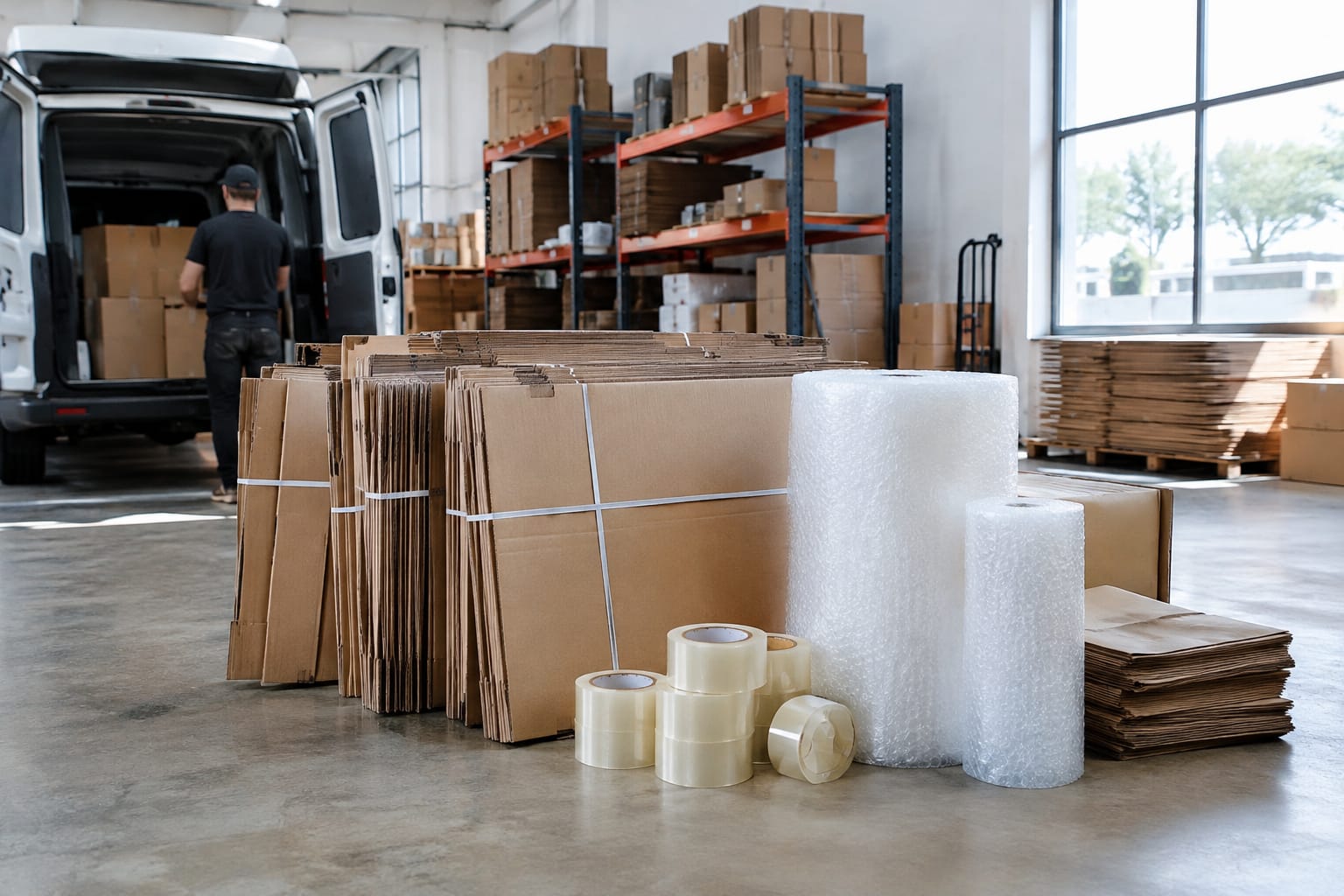
Supplies to Gather Before You Open a Single Cabinet
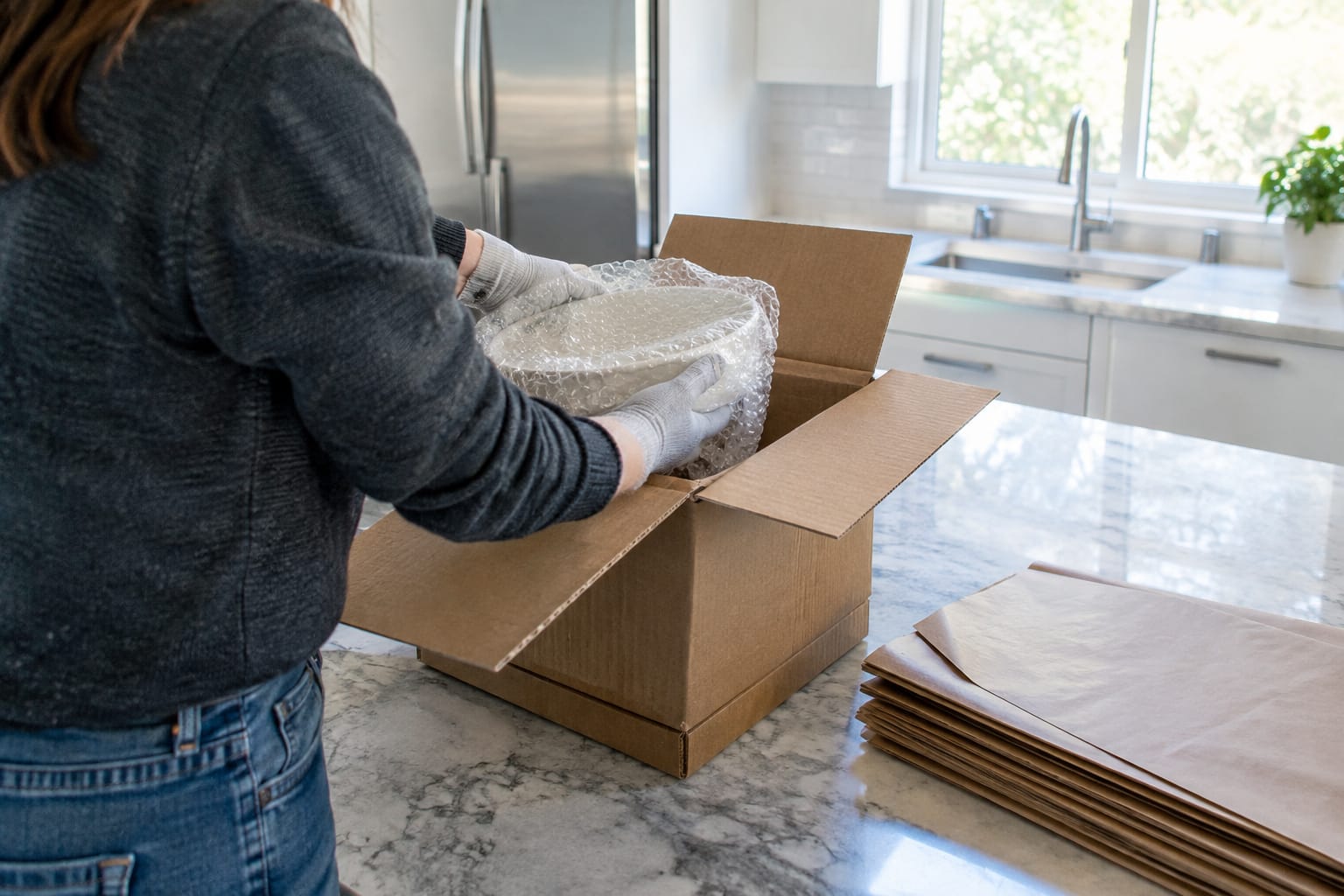
Buy every supply before you empty the first cabinet. If you run out of paper halfway through, boxes end up taped shut with gaps inside, and gaps are what let dishes shift and crack.
| Supply | What it's for in the kitchen | Buying note |
|---|---|---|
| Dish pack box (double-wall carton) | Plates, bowls, platters, glassware | Confirm double-wall construction in the product listing |
| Cell divider kit | Glasses, mugs, stemware | Sized to sit inside a dish pack; check fit before buying |
| Small book box (1.5 cu ft) | Pots, cast iron, canned goods, knives | Small size keeps heavy loads liftable |
| Medium box (3.0 cu ft) | Small appliances, plastic containers, linens | Keep contents light enough for one person to lift |
| Unprinted packing paper | Wrapping and void fill | Plan on several sheets per plate |
| Bubble wrap | Fine china, crystal, appliance glass parts | Use it as an extra layer on top of paper, not instead of paper |
| Packing tape and dispenser | Sealing seams | Tape the bottom center seam and both edges |
| Thick marker | Labels on two sides and the top | Use bold marker for FRAGILE and SHARP |
A dish pack box is a double-wall carton, meaning it has two layers of corrugated fluting glued together instead of one. The second wall makes the sides much stiffer. The box keeps its shape when other cartons are stacked on it, and a stray corner is less likely to punch through it. Tape seals the seams, but the wall is what protects the dishes.
For a full checklist beyond the kitchen, see the packing supplies you need. Paper does most of the work in a kitchen, so it pays to read up on using packing paper correctly and which bubble wrap to use where. If you're weighing whether to buy cartons or get them from a mover, this guide covers whether moving companies provide boxes.
Pro Tip: Choose plain newsprint-style packing paper over old newspaper. Newspaper ink rubs off onto dishes and hands, so everything needs washing on arrival.
How Many Boxes a Kitchen Actually Takes
Most people under-buy for the kitchen because cabinets hide how much they hold. Use the ranges below as a starting estimate, then adjust after counting your own cabinets, drawers, and pantry shelves.
| Kitchen size | Dish packs | Small boxes (1.5 cu ft) | Medium boxes (3.0 cu ft) |
|---|---|---|---|
| Studio or galley kitchen | 1–2 | 3–5 | 3–5 |
| Typical family kitchen | 3–4 | 6–10 | 6–10 |
| Large kitchen with walk-in pantry | 5 or more | 10 or more | 10 or more |
These ranges are rough planning estimates, not an industry standard. A kitchen with a large serveware collection, a stocked pantry, or several countertop appliances will land above them.
Q: How many boxes do I need to pack a kitchen?
A: Start with at least one dish pack box for plates, bowls, and glasses, then add small (1.5 cu ft) boxes for heavy items and medium (3.0 cu ft) boxes for light, bulky ones. A studio kitchen may need only a handful of each, while a large kitchen can need several dish packs and ten or more of each other size.
Here is a quick way to check your own count. Open each upper cabinet and decide whether its contents fill one small box, one medium box, or part of a dish pack, then keep a running tally.
Start With a Purge: Pantry, Fridge, and Freezer
Every item you give away, eat, or recycle is one less thing to wrap. Start the purge two to three weeks before moving day, so you have time to cook down the pantry instead of throwing food out.
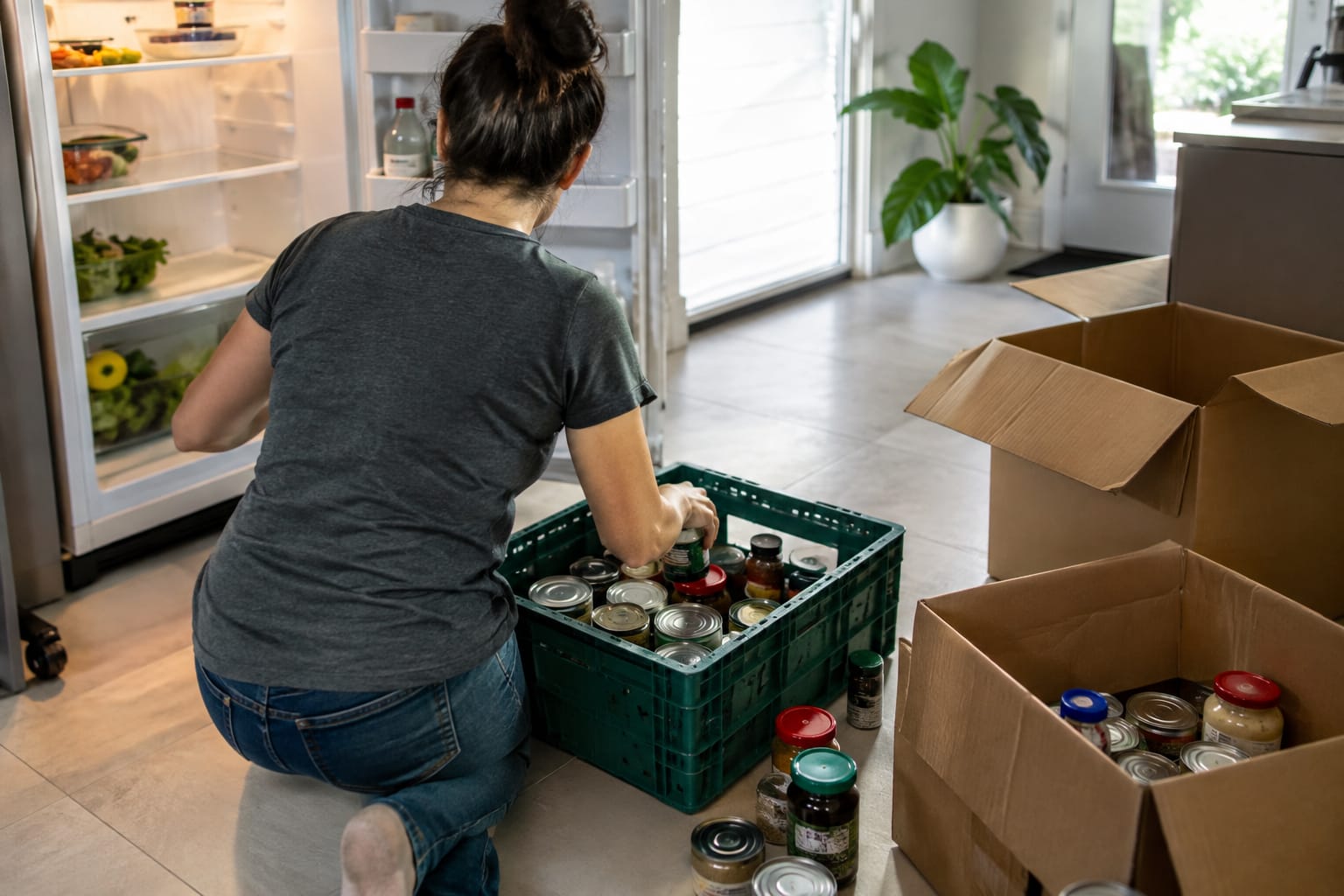
- Plan meals around what's already in the pantry and freezer, and stop bulk grocery runs.
- Donate unopened, unexpired canned and dry goods to a local food pantry.
- Get rid of duplicate utensils, chipped dishes, and storage containers that have lost their lids.
- Empty the refrigerator and freezer in the final days, and defrost the freezer so meltwater doesn't soak boxes or the truck floor.
Timing matters for anything cold. FoodSafety.gov's power-outage guidance says a closed refrigerator keeps food safe for up to 4 hours and a full freezer holds its temperature for about 48 hours (24 if half full). An unplugged fridge on moving day works the same way. Anything you keep should ride in a cooler with ice packs and go into the new fridge first. For the appliance itself, see the guide on moving a refrigerator.
The Order to Pack a Kitchen In
Pack from least-used to most-used. That keeps the kitchen working until the last day, and you won't be hunting for a pan in a sealed box.
- Purge and buy supplies. Clear out the pantry and gather every box, roll of tape, and bundle of paper.
- Pack rarely used items. Start with holiday platters, serveware, specialty bakeware, extra glassware, and cookbooks.
- Pack most dishes, glasses, and small appliances a few days out. Keep one plate, bowl, mug, and utensil set per person.
- Pack pots, pans, and knives. Keep back one pan, one pot, and one knife.
- Empty and defrost the fridge and freezer the day before. Move anything you're keeping into coolers.
- Pack the open-first box on moving day. It holds the last everyday items.
Plates and Bowls: Why They Travel on Edge, Never Flat
Plates travel on edge because a plate is strongest along its rim and weakest across its face. Stack plates flat and every jolt pushes straight down through the stack. The bottom plates carry the full load, and the whole stack bends when the box bottom sags. Stand them on edge, like records in a crate, and the force runs along the rims instead.
The other failure point is empty space. In a half-full dish pack, bundles slide and knock together, and a box without a firm top layer caves in when another carton lands on it.
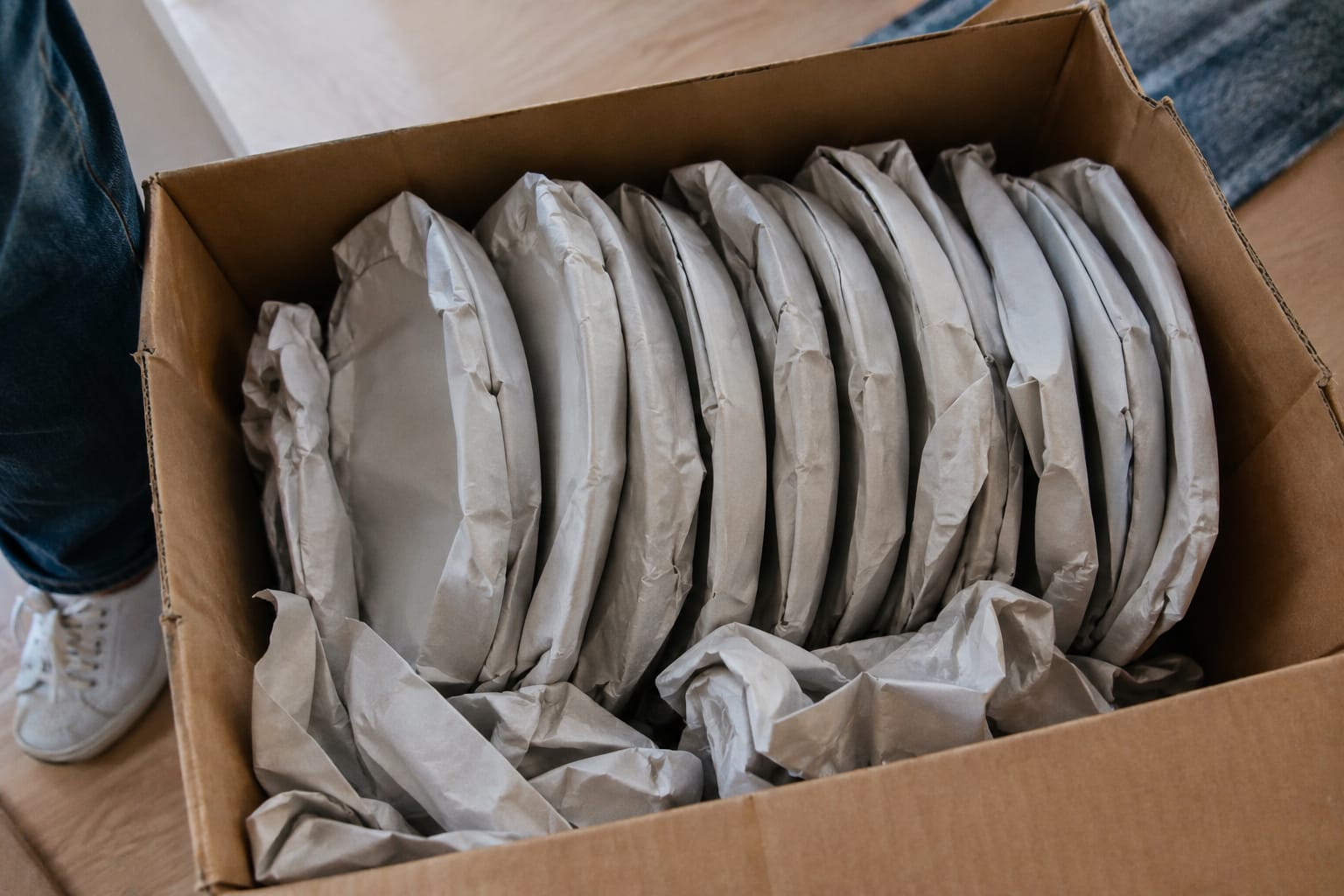
How to pack dishes for moving:
- Line the bottom of a dish pack with a thick layer of crumpled packing paper.
- Set a plate in the center of a stack of paper, fold the corners over it, and wrap each plate individually.
- Bundle three or four wrapped plates together in another sheet or two.
- Stand each bundle on edge, with the largest plates in the bottom tier.
- Wrap bowls the same way and pack them on edge or in small nested bundles with paper between them.
- Fill every gap with crumpled paper, and add a paper layer before starting the next tier. The lid should close flat, with no bulge and no sag.
Q: Is packing paper or bubble wrap better for dishes?
A: Unprinted packing paper works best for everyday plates and bowls, because it wraps tightly and also fills gaps. Add bubble wrap as a second layer for fine china, crystal, and odd-shaped pieces going into a dish pack box.
The same principles in how to pack fragile items apply to gravy boats, teapots, and platters. Stuff hollow spaces, pad handles and spouts, and cushion each piece on all sides.
Glasses and Stemware: Dish Packs and Cell Dividers
Glasses break at their thinnest points: the rim and, on stemware, the joint where the stem meets the bowl. Cell dividers solve most of the problem. These cardboard inserts split a dish pack into individual cells, so each glass stands upright and never touches the one next to it.
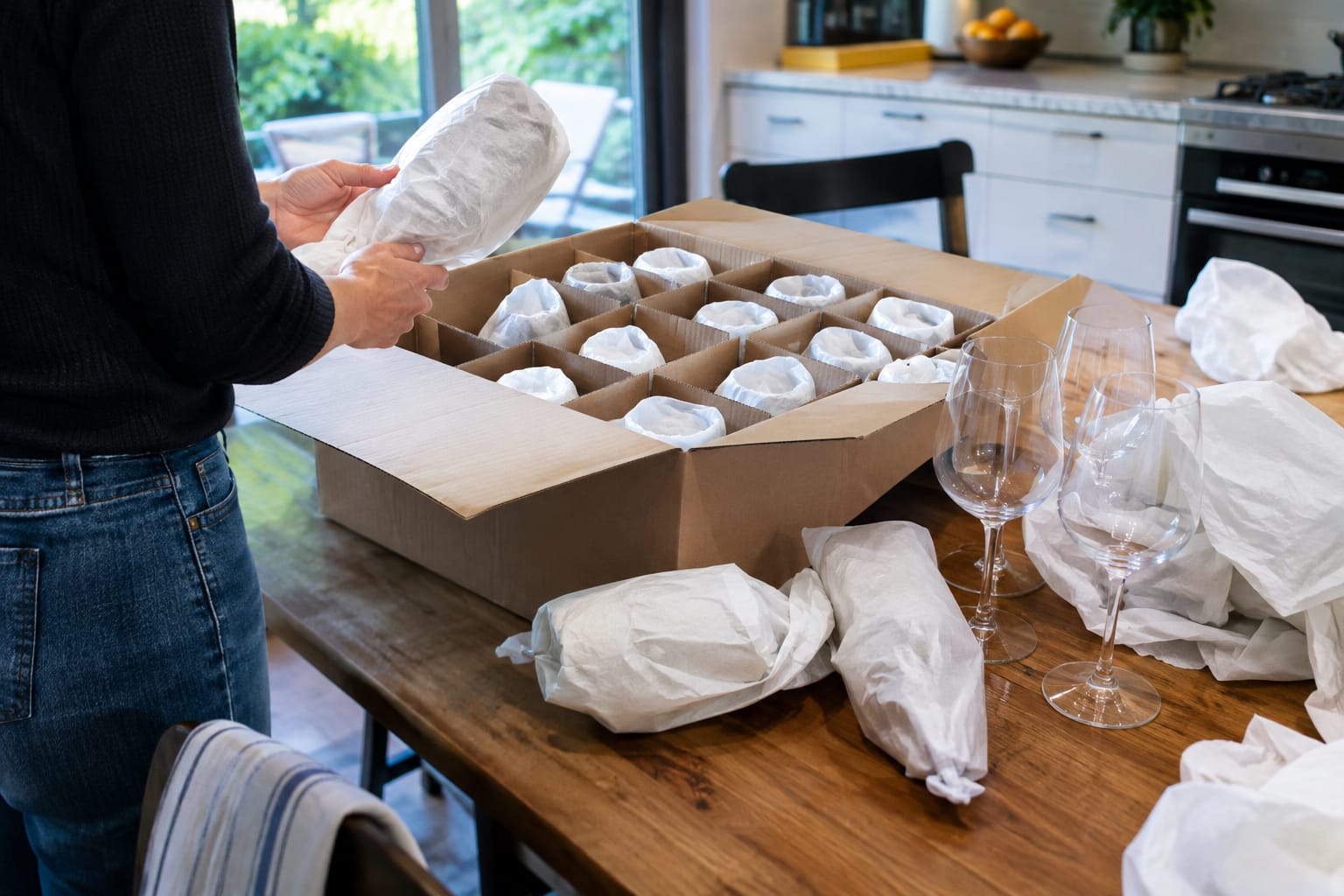
How to pack glasses for moving:
- Set a cell divider kit in a dish pack on top of a padded paper layer.
- Loosely stuff each glass with crumpled paper so the rim is supported from inside.
- For stemware, wrap a strip of paper around the stem first, then wrap the whole glass.
- Place each glass upright, base down, in its own cell. Put heavier tumblers low and stemware in the top layer.
- Top the box with crumpled paper so glasses can't lift and rattle in their cells.
Never lay stemware sideways under other items. A stem under sideways pressure snaps at the joint, even when the bowl survives.
Pots, Pans, Lids, and Bakeware
Pots and pans rarely break, but they can break everything around them. The problem is weight: a cast iron skillet dropped into a large box with glass lids is how lids crack. Pack cookware in small or medium boxes so each carton stays liftable.
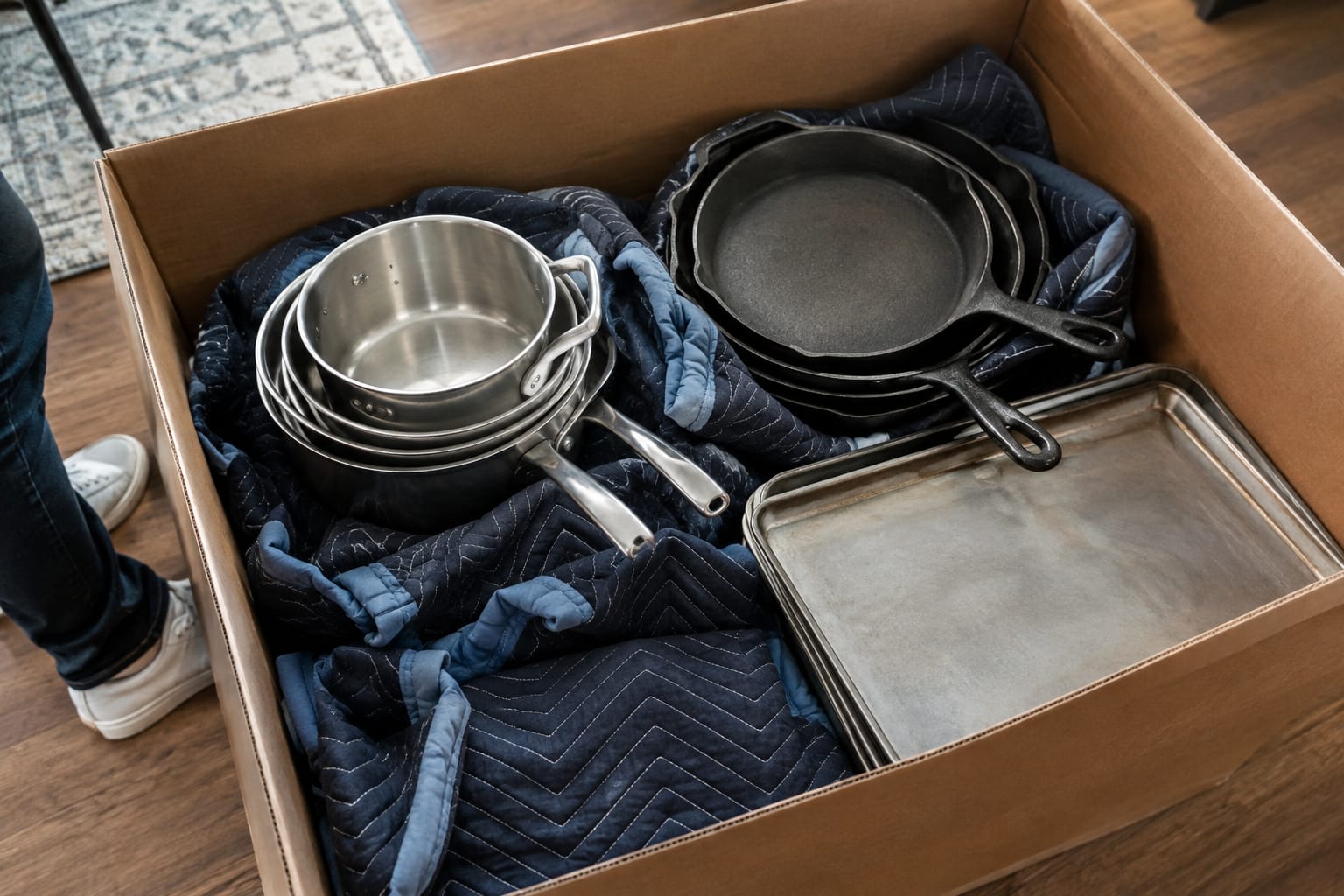
How to pack pots and pans:
- Put a layer of crumpled paper in the bottom of a small or medium box.
- Place the heaviest piece, such as a cast iron skillet or Dutch oven, at the bottom.
- Nest smaller pots inside larger ones, with a sheet of paper between each to protect nonstick surfaces.
- Wrap glass lids separately and stand them on edge along the box wall.
- Fill gaps with paper, dish towels, or pot holders so nothing shifts.
Bakeware follows the same rule. Nest sheet pans and cake pans with paper between them, and treat glass or ceramic baking dishes like plates.
Knives, Graters, and Anything Sharp
Packing knives for a move is mostly about protecting whoever opens the box. A loose blade can cut through paper and into a hand reaching inside.
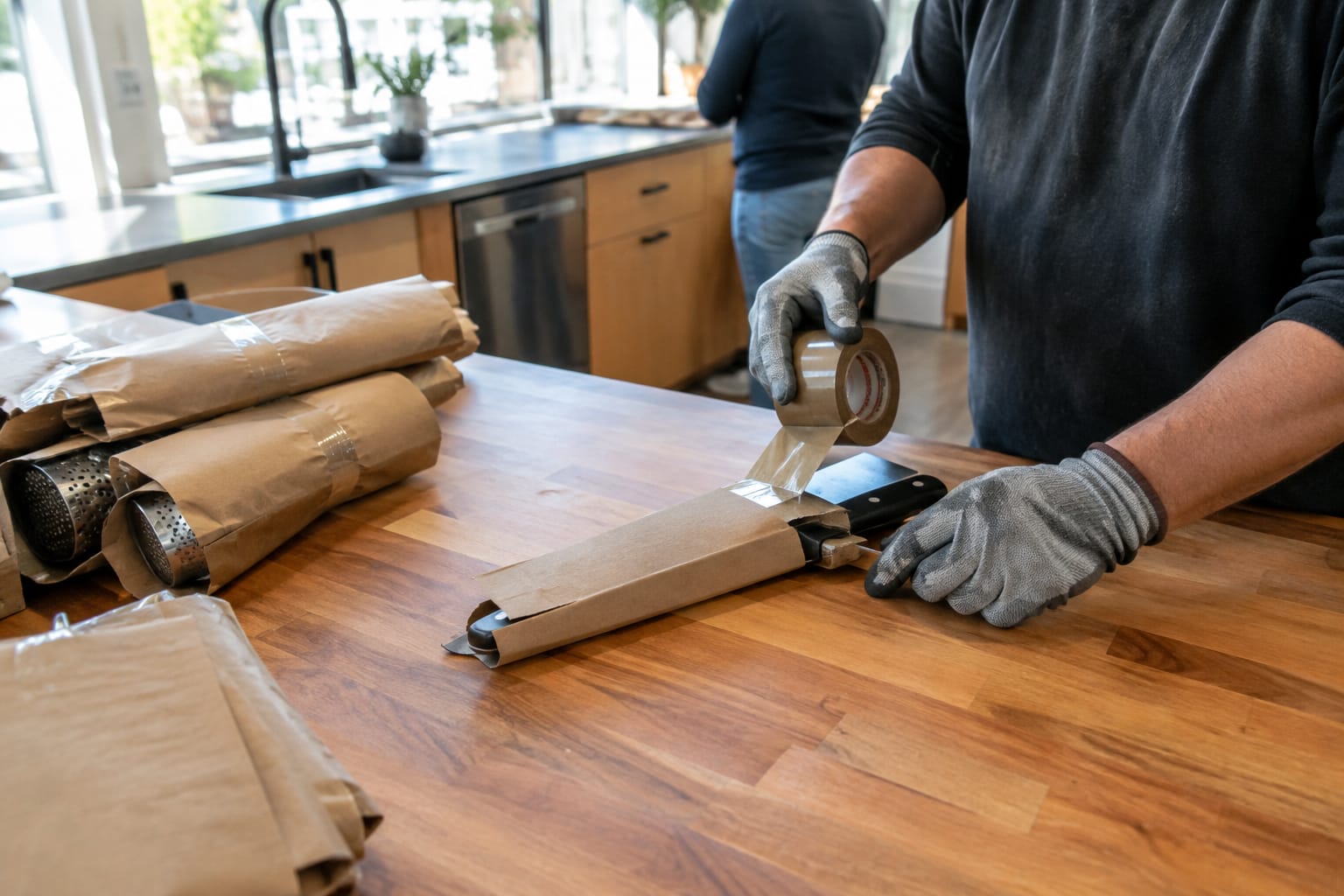
- Fold a piece of cardboard around each blade and tape it closed to make a sheath, or use the original blade guard.
- Wrap each sheathed knife in packing paper.
- Roll several knives together in a dish towel and tape the bundle shut.
- Pack graters, mandolines, peelers, and skewers the same way, with every edge covered.
- Lay the bundle flat in a small box and write SHARP on the top and sides.
Countertop Appliances: Coffee Makers, Mixers, Air Fryers
The most common appliance damage isn't to the motor. It happens when a detachable part is left attached and pries against the base. If a blender jar stays locked on its base, one bump can crack the housing or the coupling that drives the blade.
- Clean and fully dry each appliance, and drain coffee maker reservoirs so no water sits in a sealed box.
- Remove detachable parts: blender jars, coffee carafes, mixer bowls and beaters, air fryer baskets, and food processor blades.
- Wrap glass carafes and jars in bubble wrap and pack them separately or in the top layer.
- Coil cords and tape them to the appliance body.
- Use the original box if you kept it. Otherwise, pad the bottom and sides of a medium box.
- Pack heavy appliances such as stand mixers alone in a small box, padded on every side.
Keep manuals and small parts in a labeled zip bag taped to the appliance, so reassembly takes minutes rather than a search.
Oils, Liquids, and the Items Movers Can't Load
Household movers commonly refuse items that are flammable, pressurized, or perishable, and a kitchen holds more of these than most rooms. Plan to use these items up, dispose of them properly, or carry them yourself:
- Aerosol cans, including cooking spray, whipped cream, and cleaning sprays
- Propane cylinders and butane canisters from grills and camp stoves
- Lighter fluid, matches, and fondue fuel
- Perishables: fresh, refrigerated, and frozen food
- Opened liquids that can leak, such as oils, vinegar, sauces, and cleaning products
This guide to items movers won't move walks through each category and what to do instead.
Q: Can movers pack food from my pantry?
A: Most household movers won't take perishables, so refrigerated and frozen food should travel with you in a cooler. By FoodSafety.gov's timeline, a full freezer stays cold only about two days with the power off. Sealed canned and dry goods are decided case by case, so confirm with your mover in writing.
If you move oils or sauces yourself, tape the caps shut, bag each bottle, and keep them upright in a lined box in your own car.
Labeling and Loading So Nothing Gets Crushed
A label tells whoever carries the box how to handle it. Write the room, the contents, and FRAGILE on at least two sides and the top, and add arrows showing which way is up.
Before sealing each box, run two checks:
- Lid test: The flaps should close flat. A bulge means the box is overfilled, and a sag means it needs more paper.
- Shake test: Lift the box and tilt it gently. If anything shifts or clinks, open it and add paper.
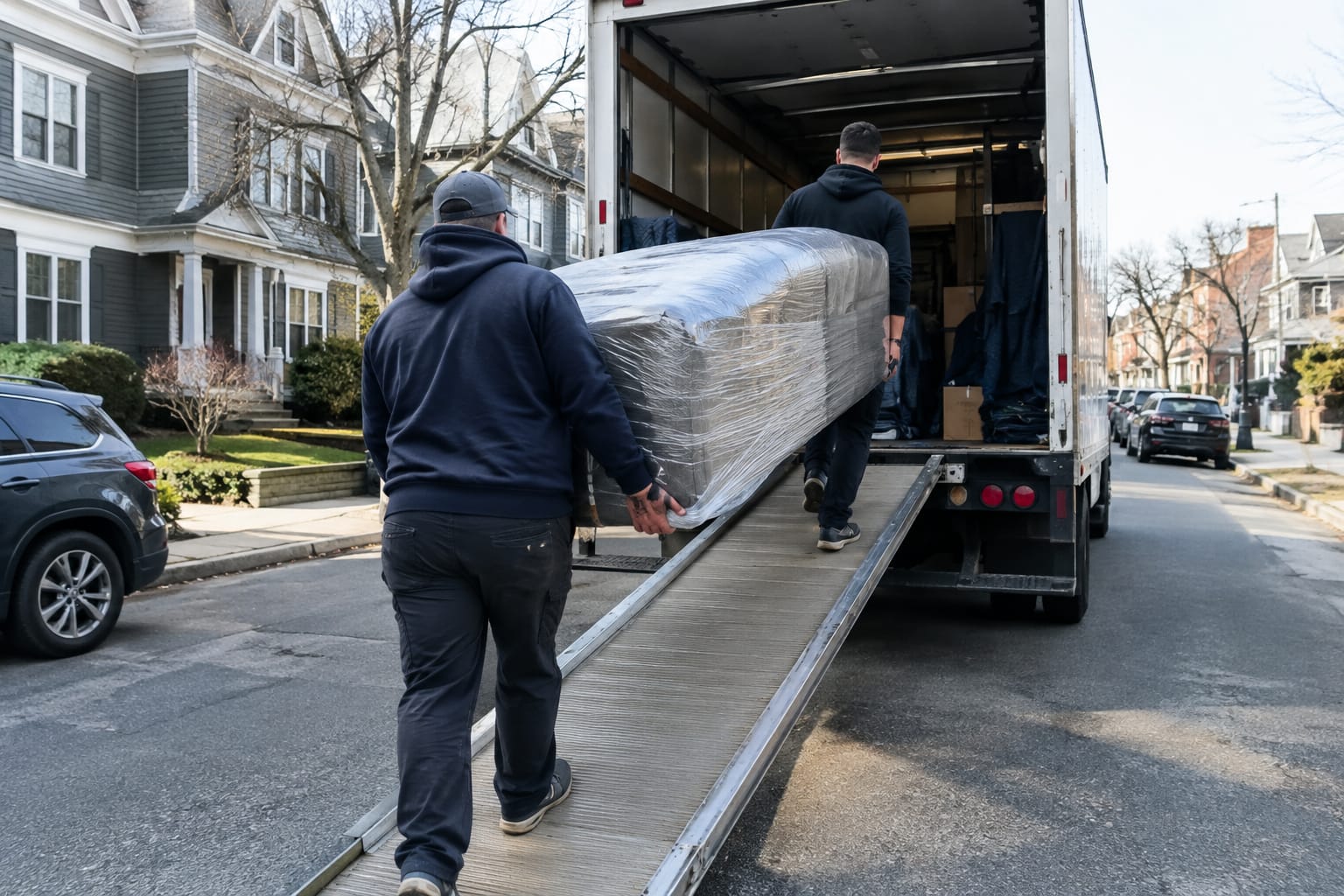
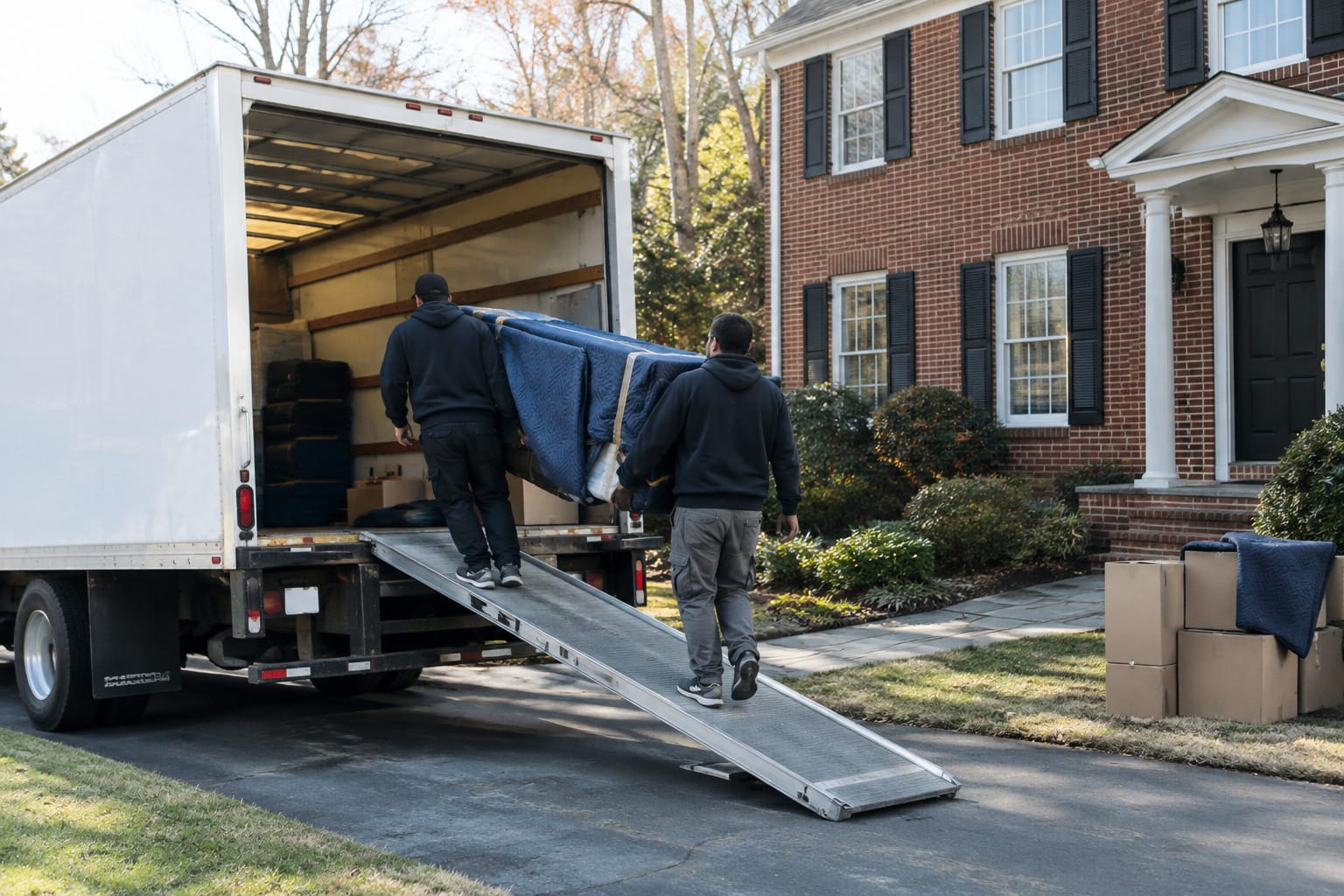
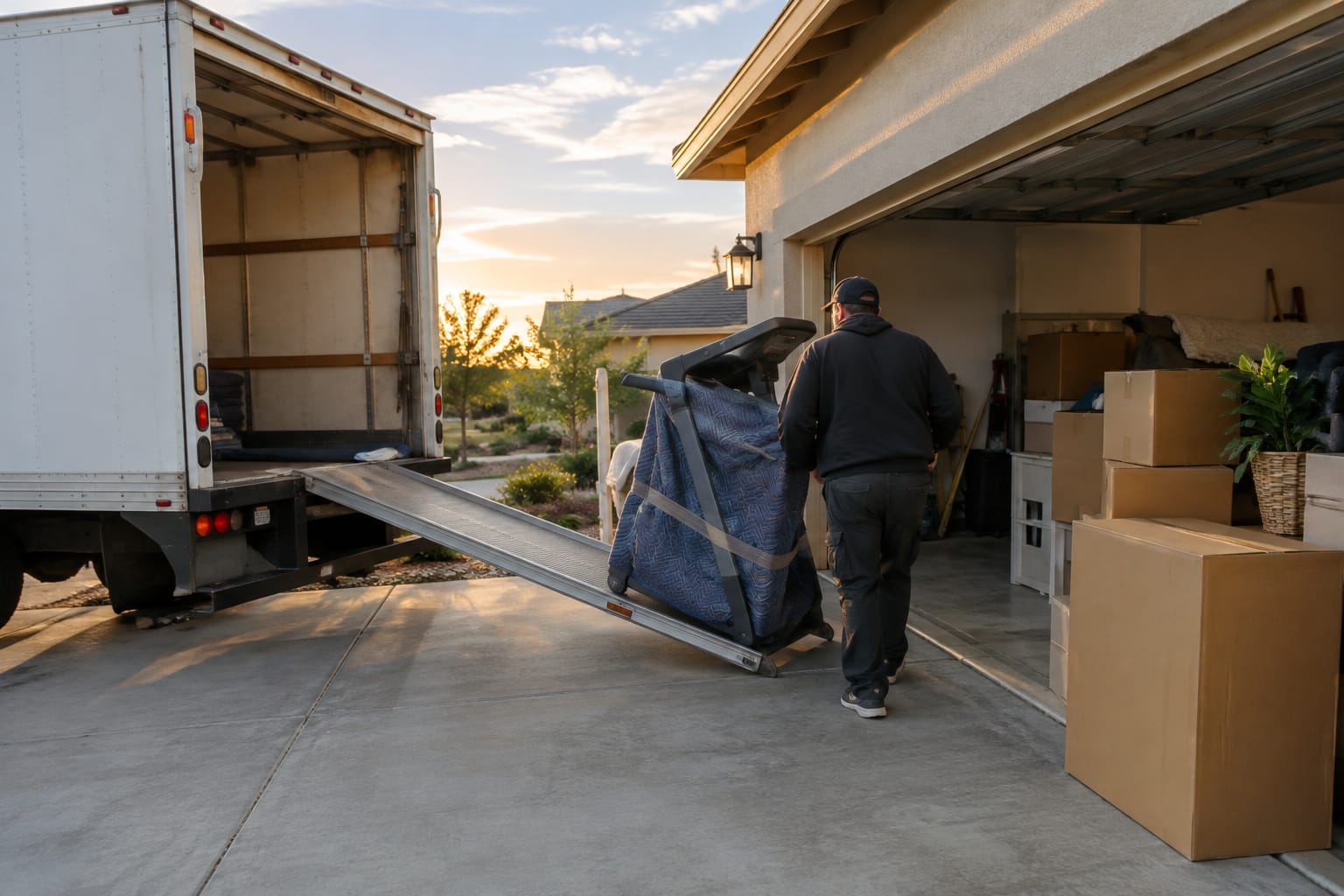
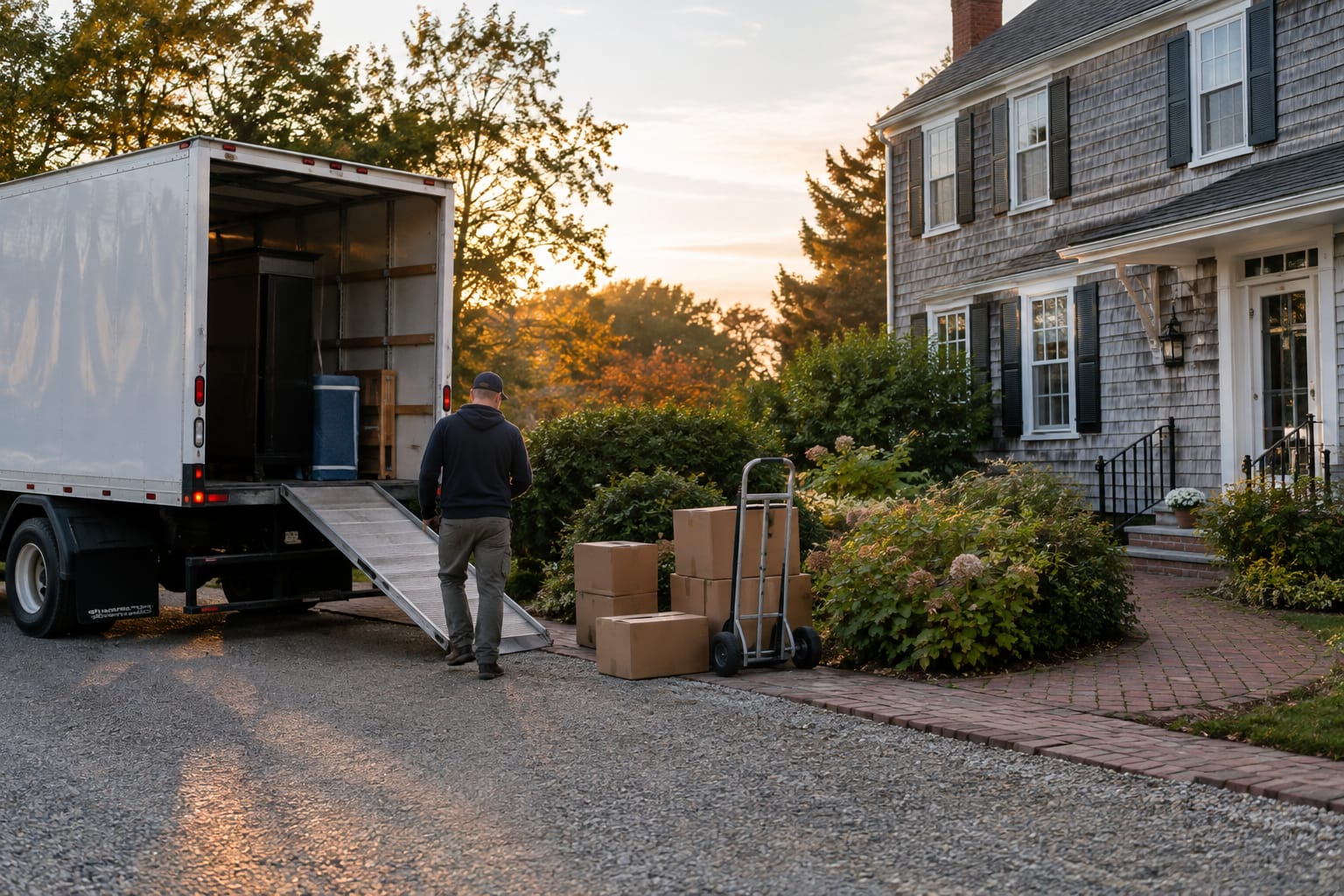
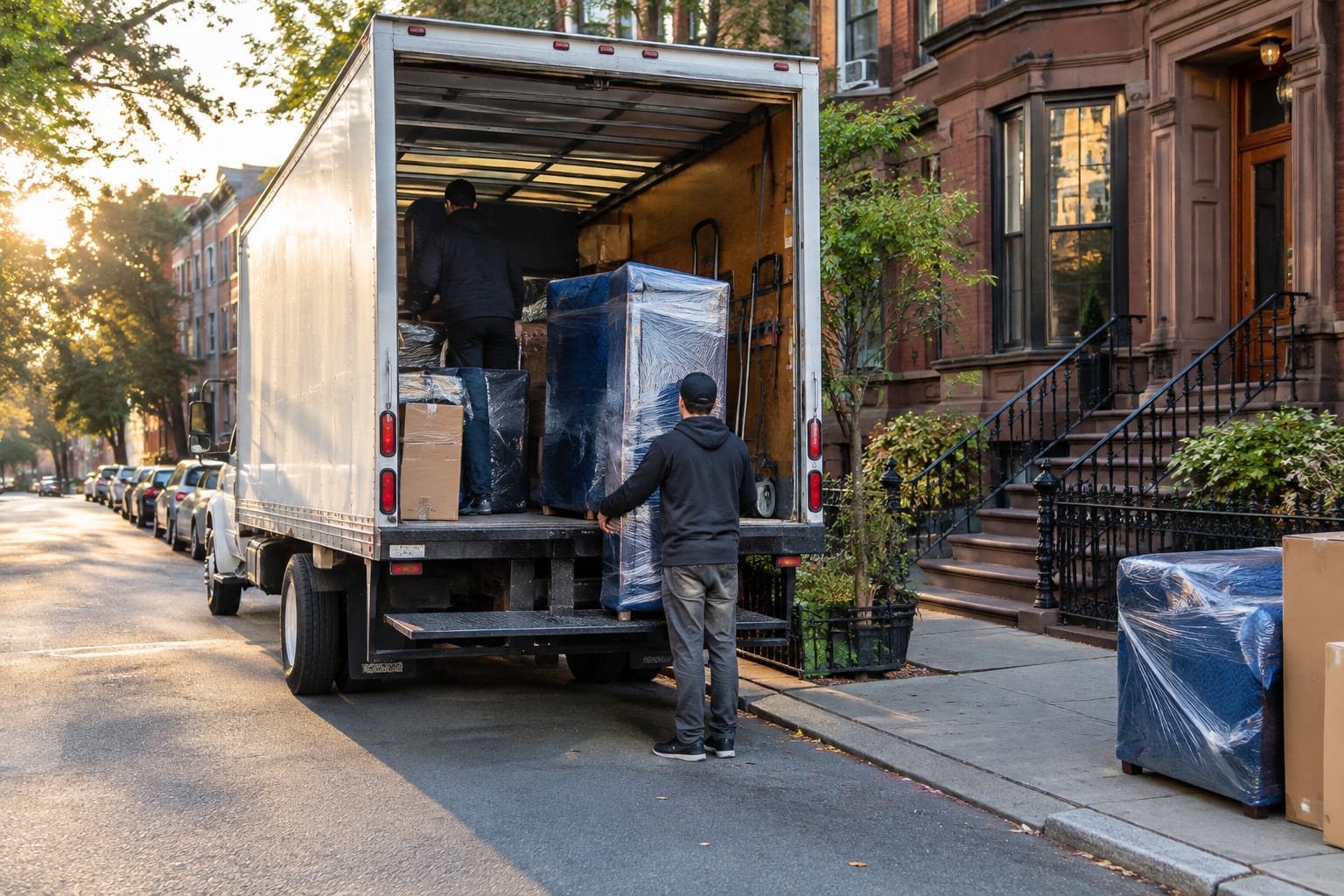
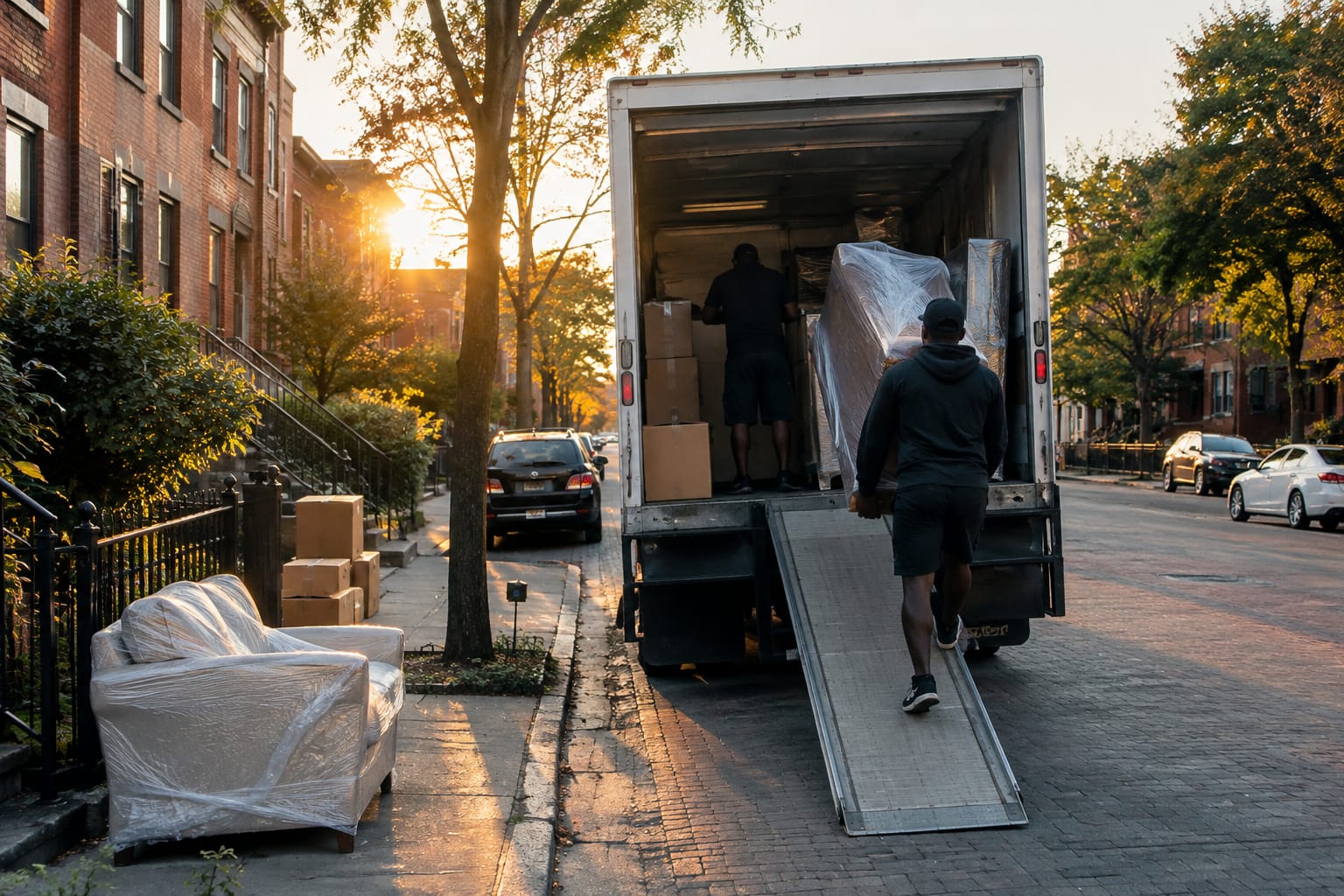
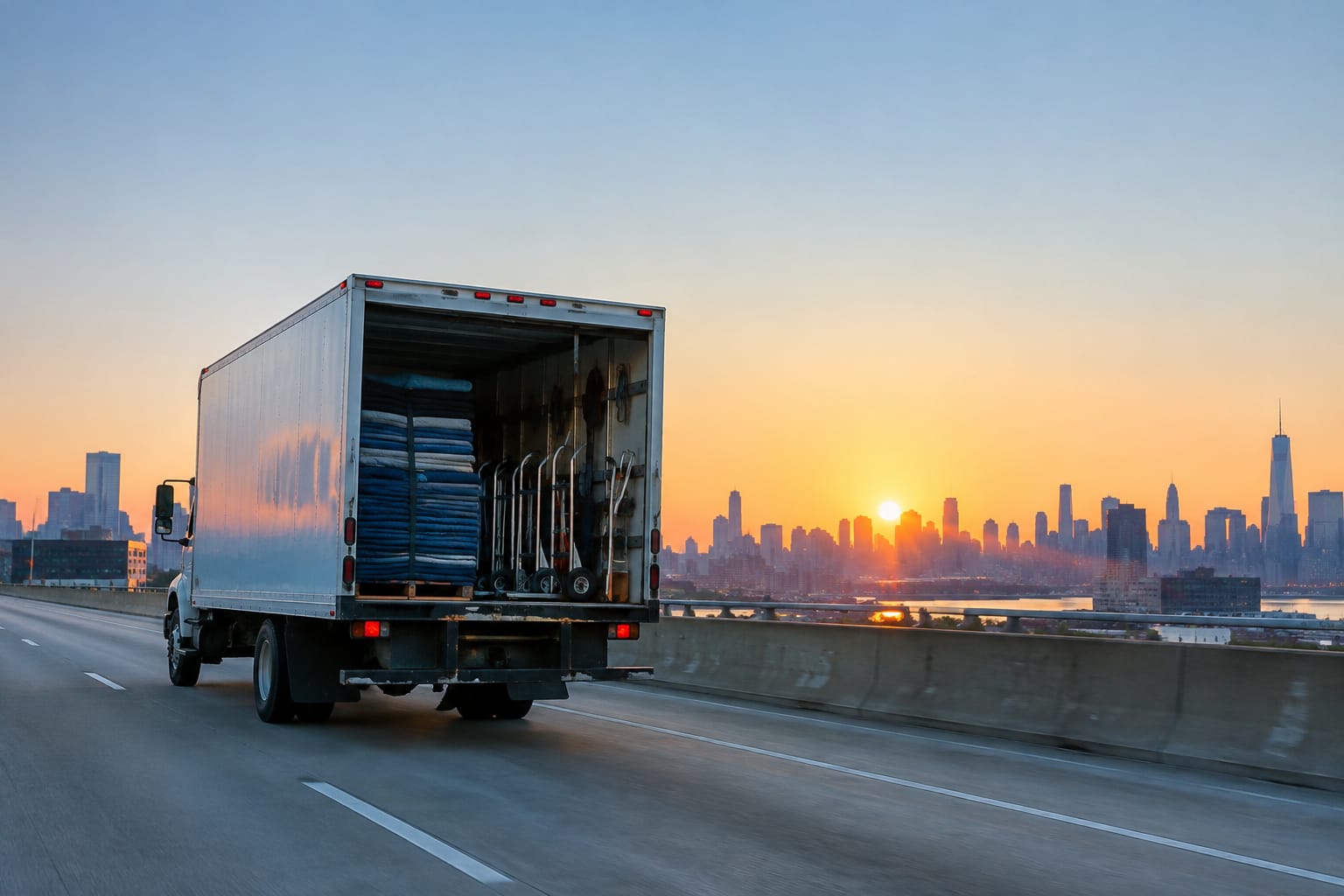
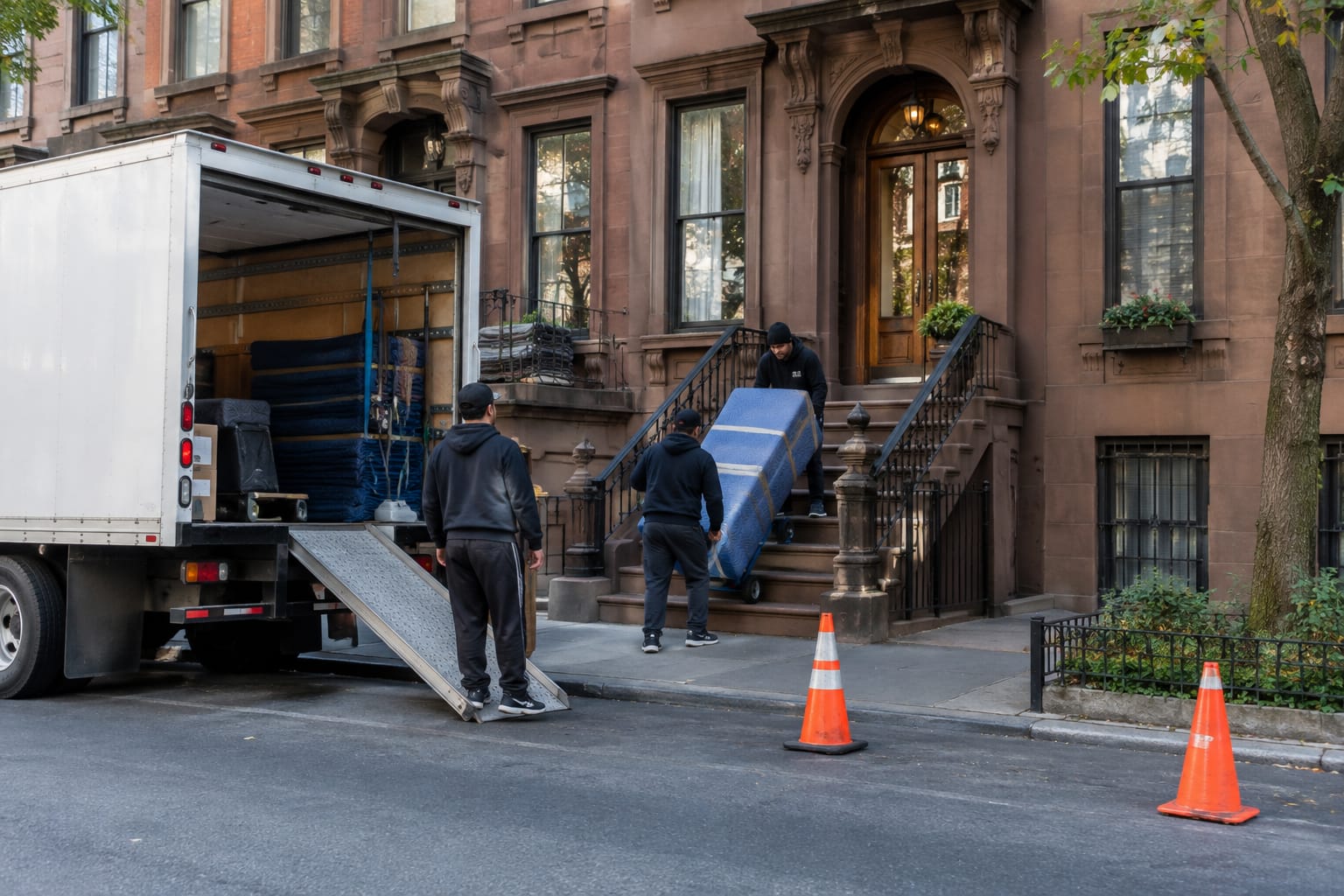
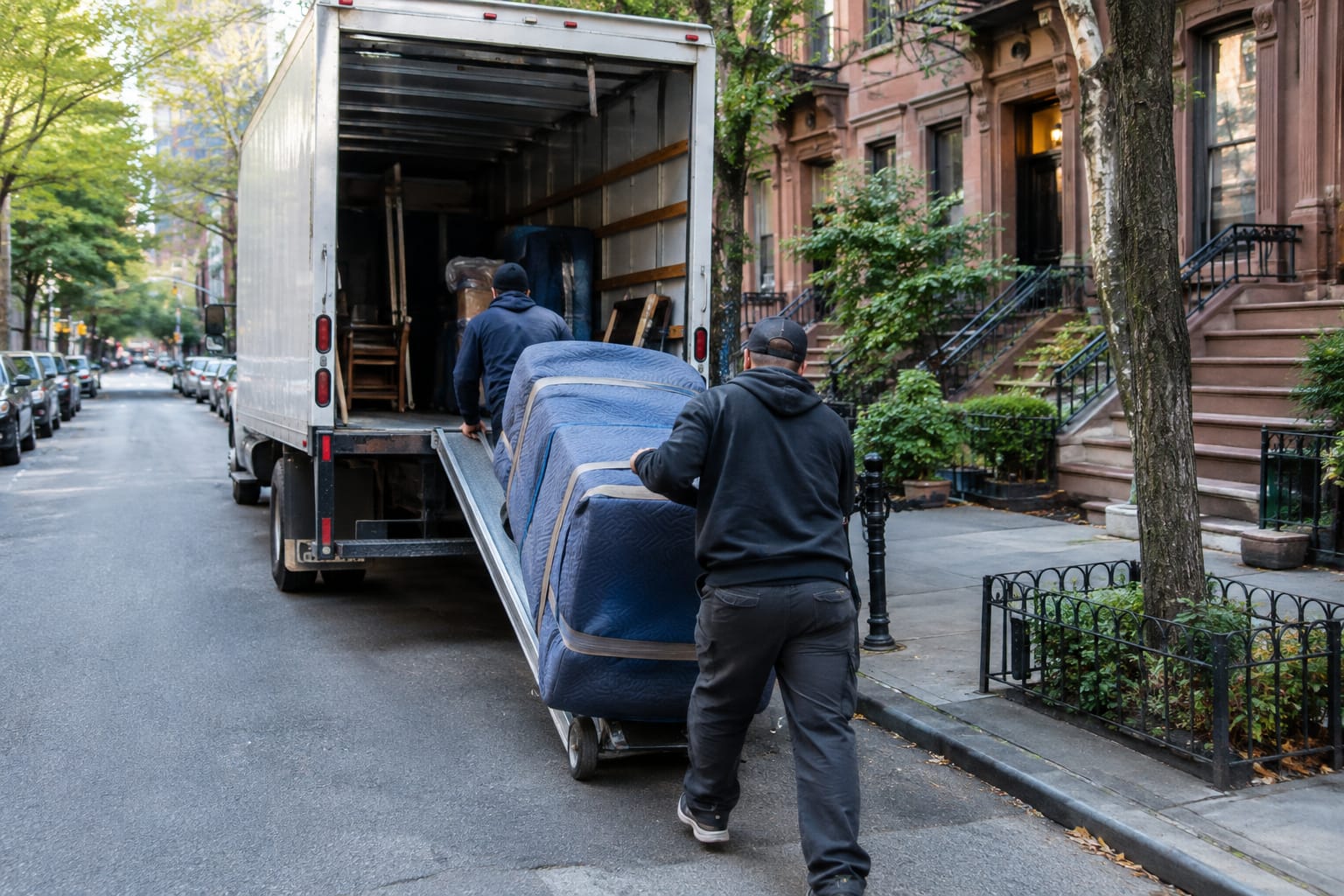
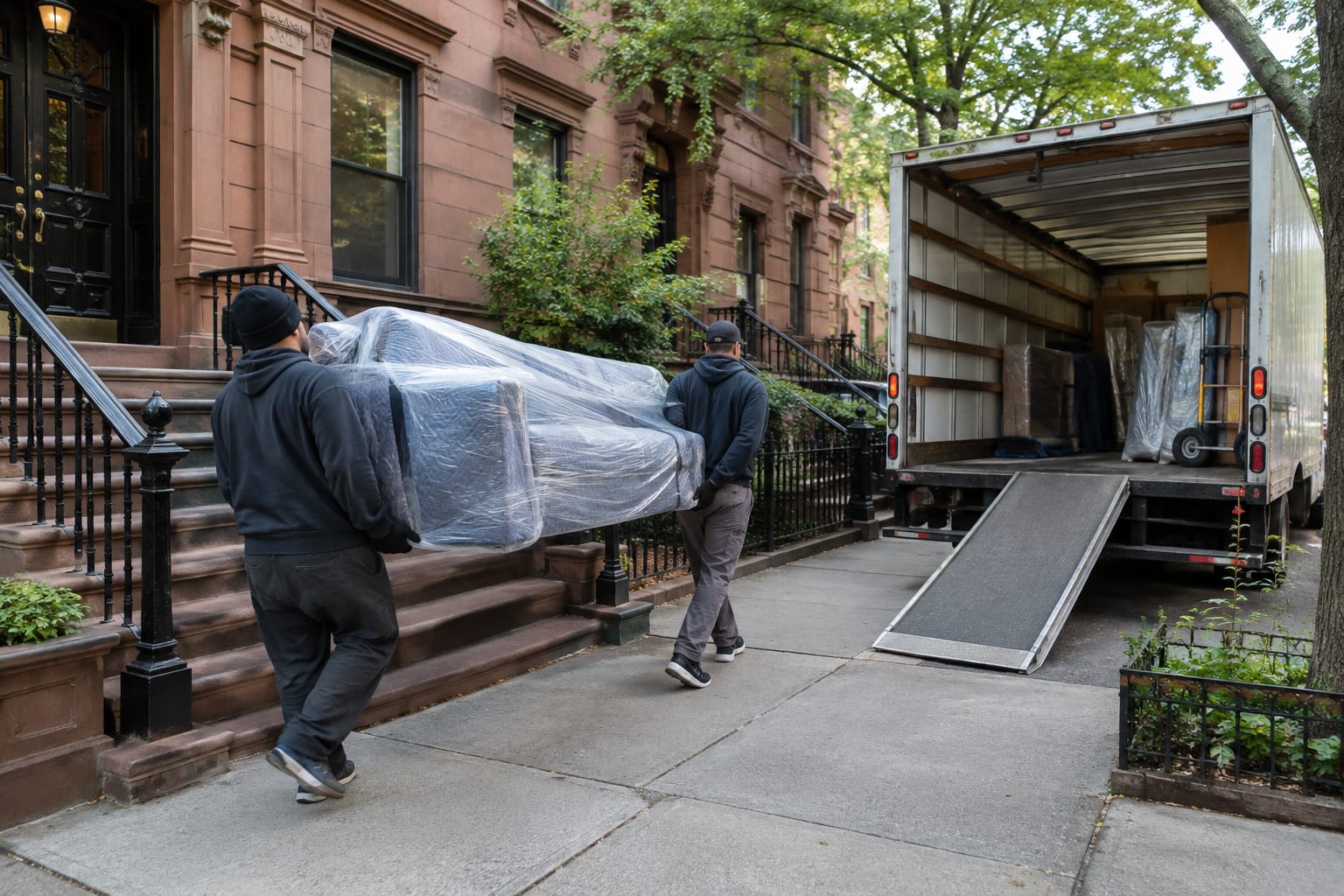
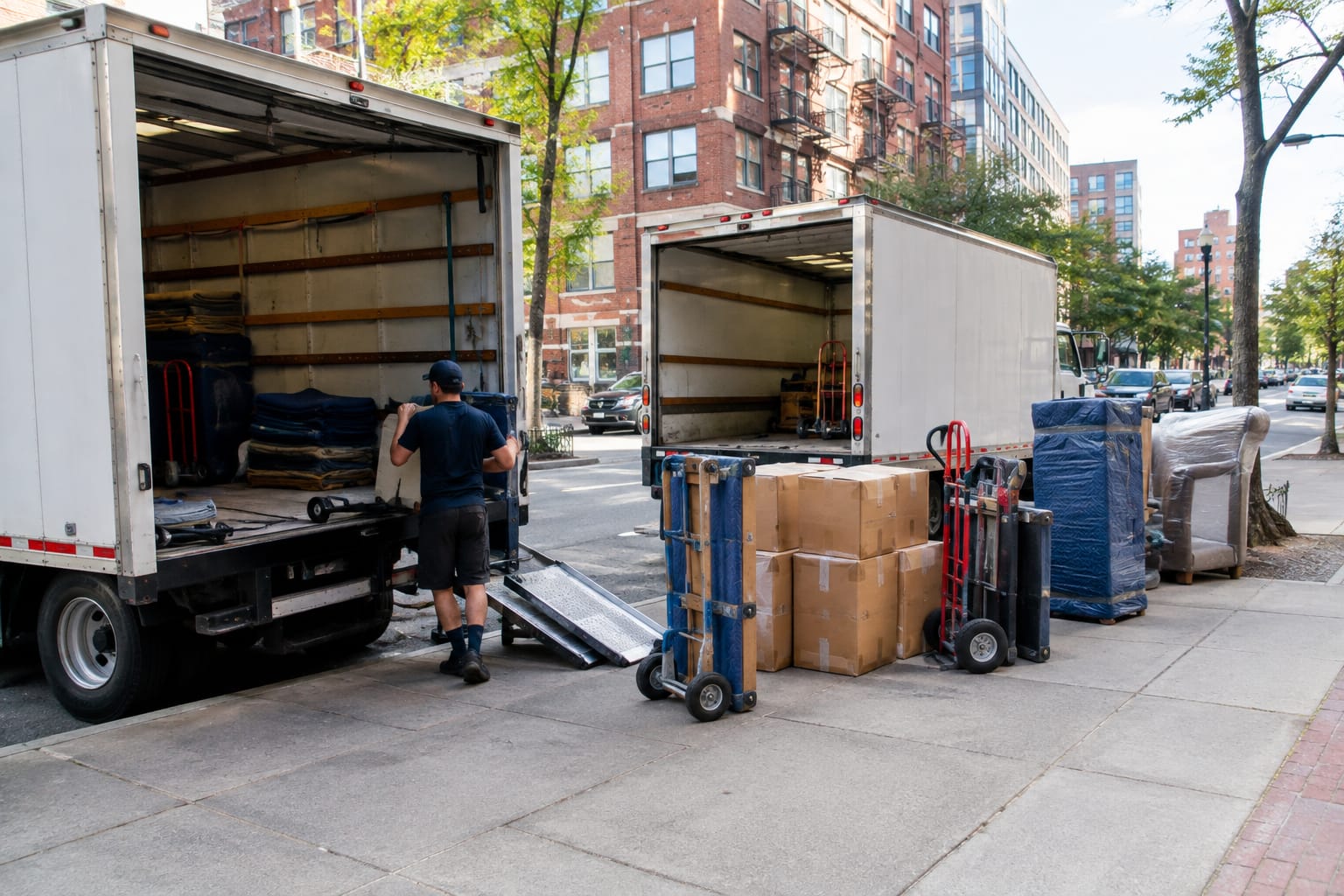
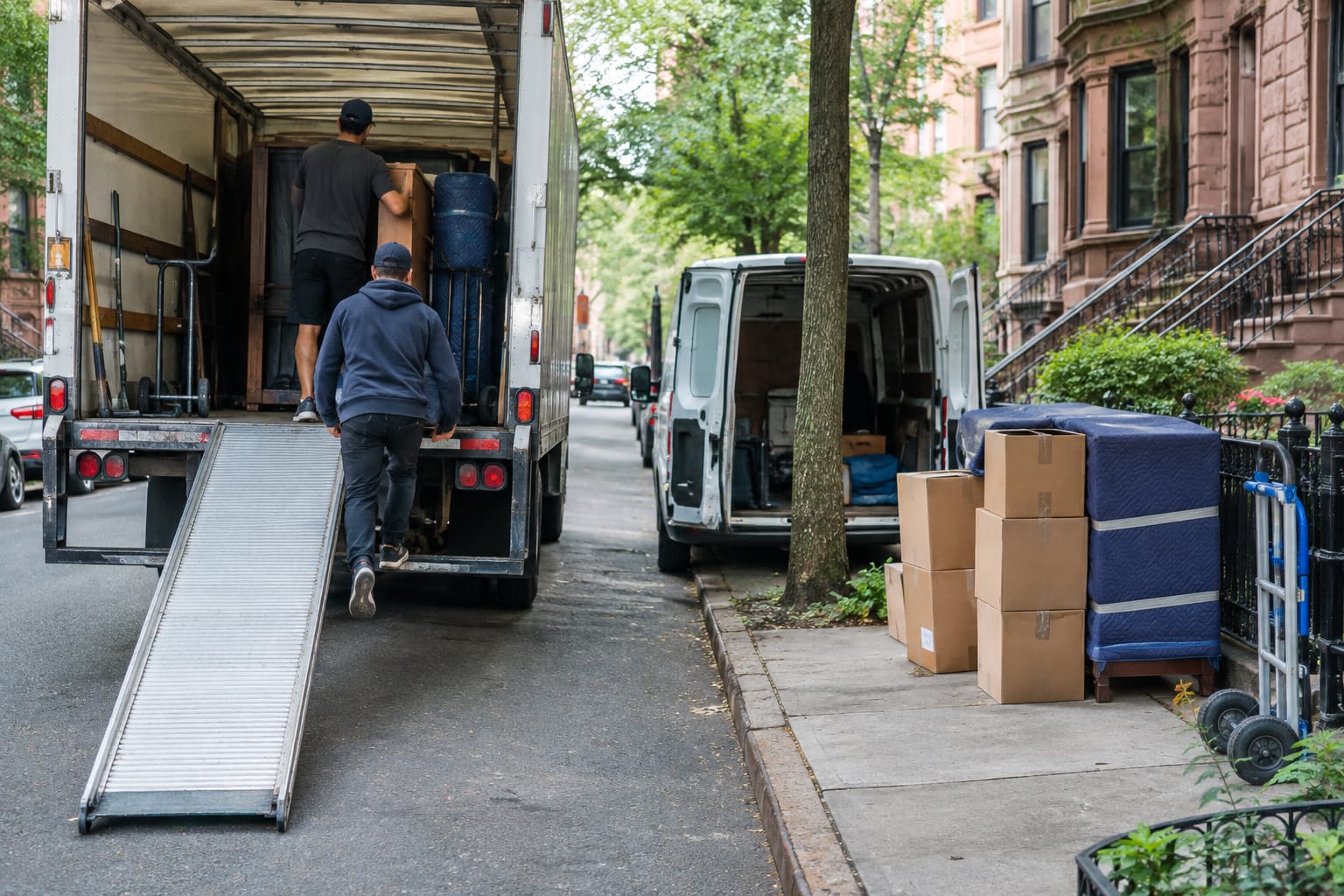
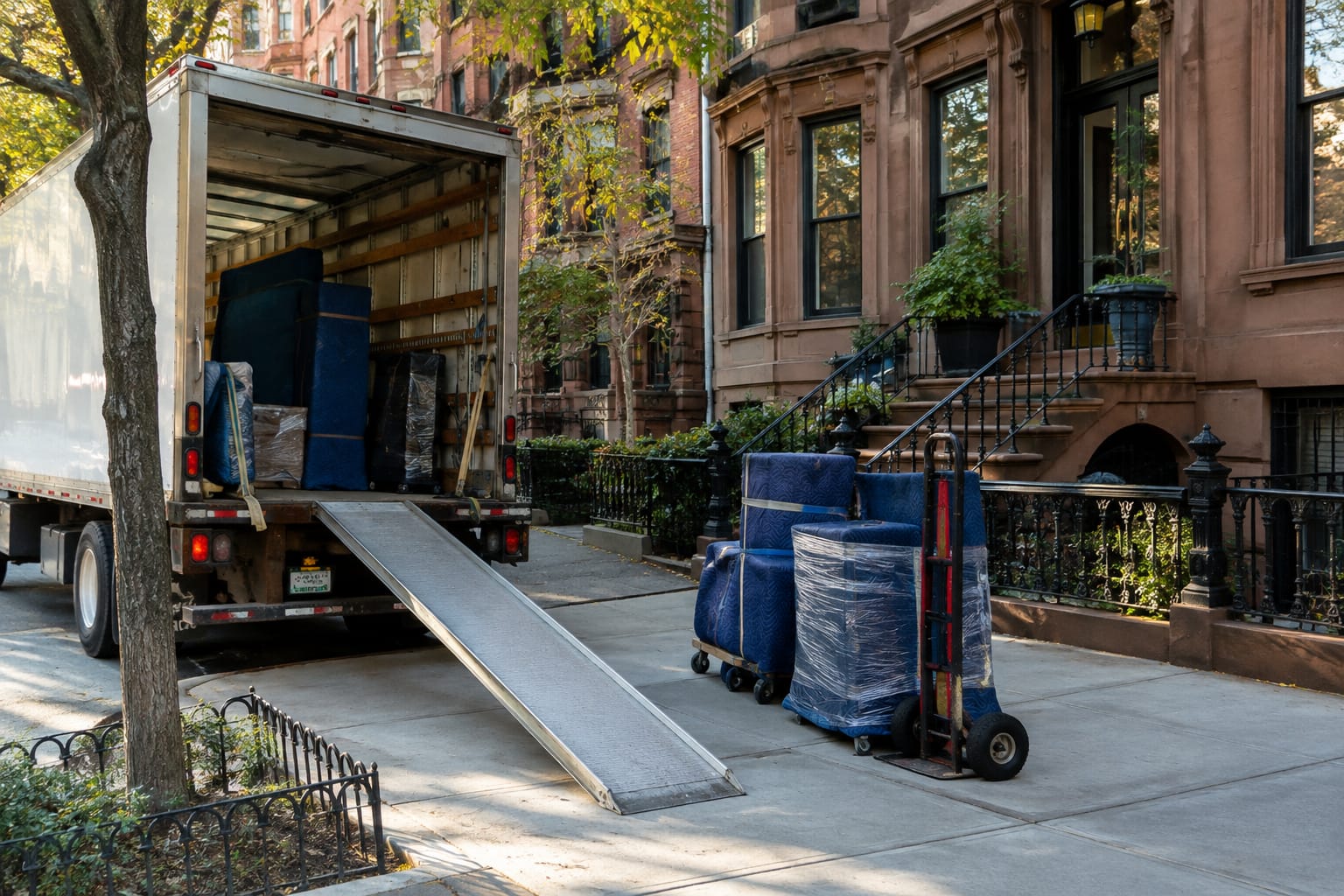
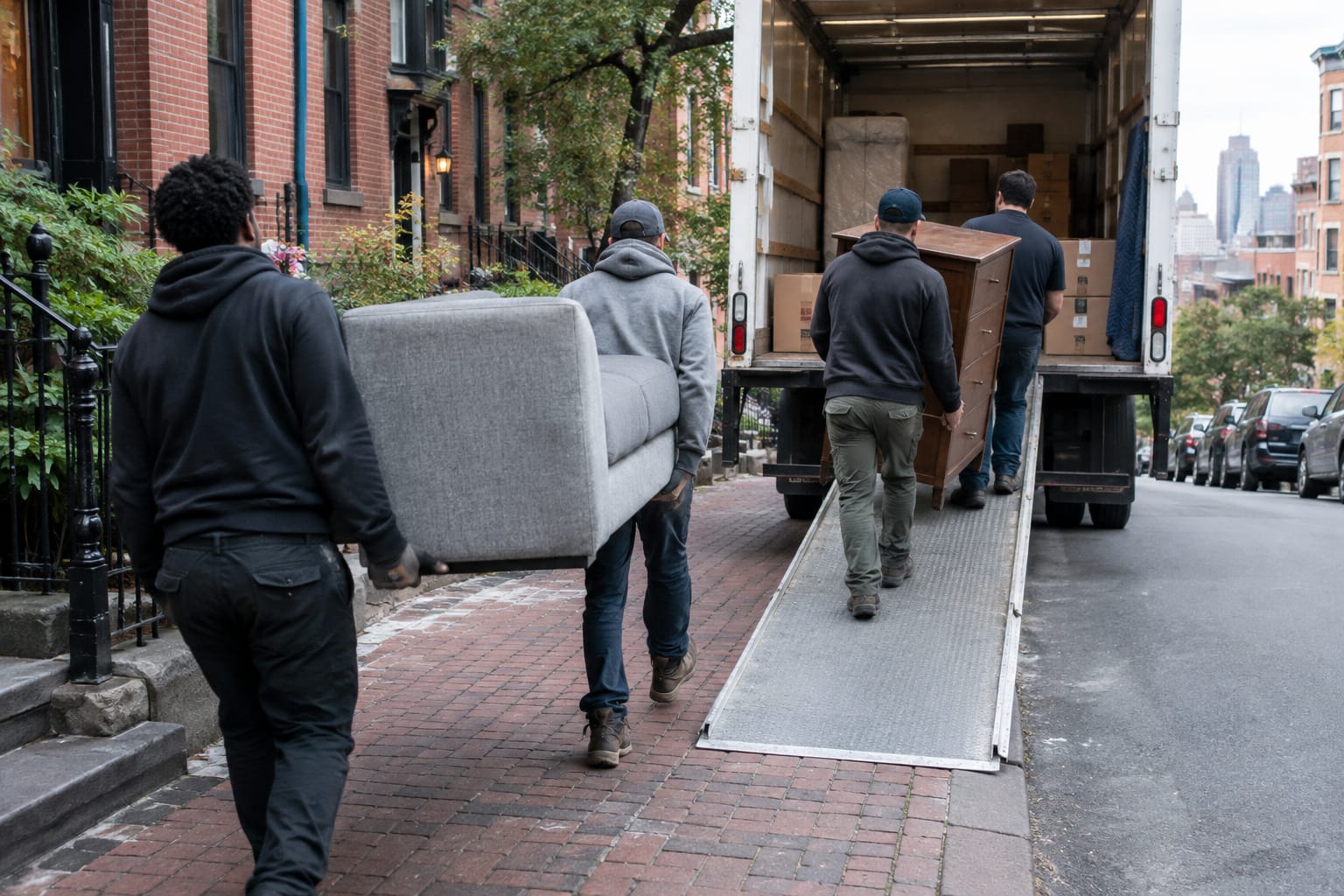
Load kitchen boxes the way a professional crew would. Heavy book boxes go on the truck floor, dish packs go on the floor or on top of other sturdy boxes (never under heavy cartons), and stemware goes on top. Crews typically move cartons on dollies, secure the load with straps, and pad furniture with moving blankets and plastic wrap so nothing shifts in transit.
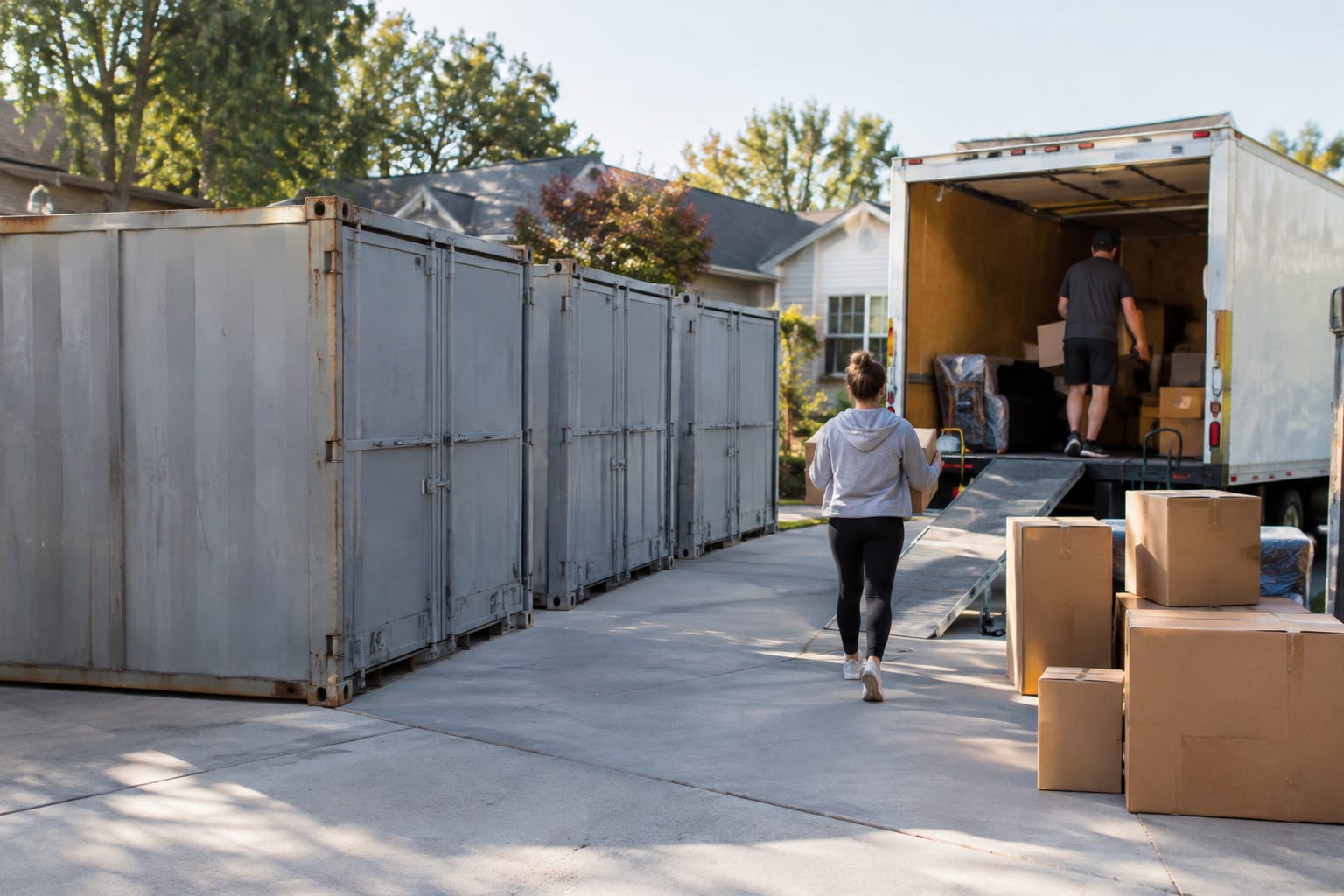
The same rules apply whether boxes go into a rental truck, a portable container, or a mover's truck. On a long-distance move, such as Greater Boston to Houston or the Washington, DC area, boxes ride for days instead of hours, so tight packing matters even more. For DIY loading, see this guide on how to pack a truck for a long-distance move.
Your Open-First Kitchen Box
The open-first box is the carton you pack last, load last, and unpack first. It keeps the new kitchen usable on the first night without digging through a stack of sealed boxes.
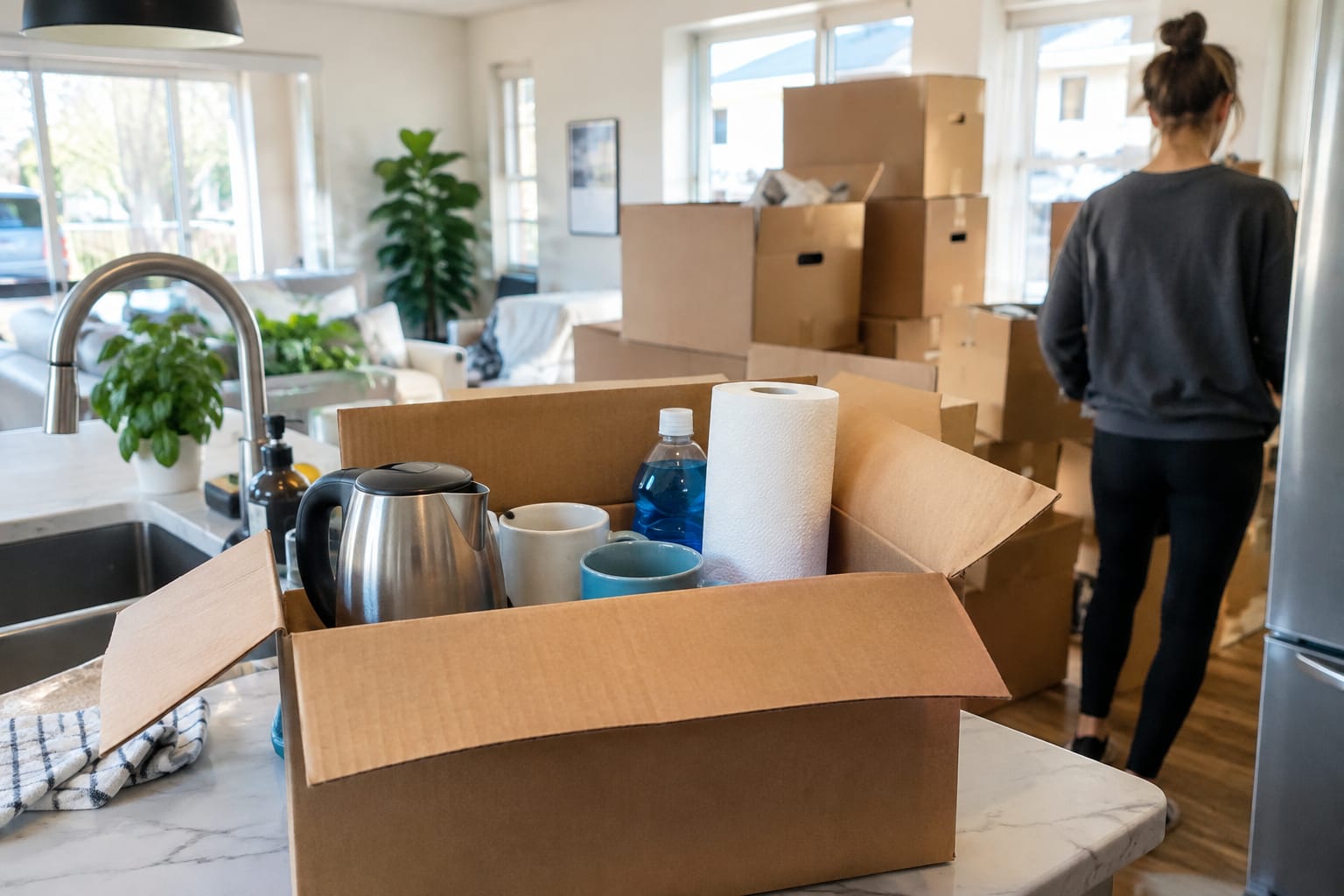
What to pack in it:
- Kettle or coffee maker, plus coffee or tea
- One plate, bowl, mug, and utensil set per person
- One pot, one pan, and a sheathed chef's knife
- Cutting board, can opener, and scissors or a box cutter
- Dish soap, a sponge, dish towels, and paper towels
- Trash bags and a few shelf-stable snacks
Mark it OPEN FIRST on every side and carry it in your own car if you can. That way it never ends up buried at the back of a truck.
When to Let Movers Pack the Kitchen Instead
The kitchen usually takes longer to pack than any other room. It has the most individually wrapped items per box, and rushed packing there shows up as breakage. That's why many people hire a packing service for the kitchen even when they pack the rest of the home themselves.
Hiring packers for the kitchen tends to make sense when:
- Moving day is close and the cabinets are still full
- You own fine china, crystal, or a large glassware collection
- The move is long distance, and boxes will be in transit for days
- You're loading a rental truck or container yourself and want professional help only with the fragile rooms
Before booking, ask how packing labor and packing materials are billed, since many movers charge for supplies separately from labor. Also ask how valuation coverage applies to boxes you pack versus boxes the crew packs, and get the answer in writing. The analysis of is it worth paying for packing covers the trade-offs. The guide to how many movers you need on packing day helps you size the crew.
With full-service movers, the crew handles loading, unloading, and unpacking as well as packing. For interstate moves, learn how to check a mover's USDOT number.
Key Takeaways
- Use a dish pack for anything breakable. Its double wall keeps the box from crushing under stacked cartons.
- Stand plates on edge. A plate's rim handles force far better than its face.
- Put glasses in cell dividers, upright. Wrap stems first, and keep stemware in the top layer.
- Keep heavy items in small boxes. Cast iron, pots, and stand mixers go in 1.5 cu ft cartons.
- Leave no empty space. Every box should pass the lid test and the shake test.
- Keep non-allowables off the truck. Aerosols, propane, open liquids, and perishables travel with you or get used up.
- Pack an open-first box. It turns the first night in a new kitchen from a search into a normal evening.
About Packing a Kitchen
How long does it take to pack a kitchen?
Longer than most people expect. A small kitchen can take one person most of a day, and a large kitchen with a stocked pantry often needs several sessions spread across the final week or two. Starting with rarely used items early keeps the last days manageable.
Can you use towels and dish cloths instead of packing paper?
As extra padding and gap filler, yes. As the only wrap for plates and glasses, no. Towels are bulky, so fewer pieces fit in each box, and they don't hold each item as snugly as a tight paper wrap. Use them around pots, between bundles, and in the open-first box.
Do moving companies provide dish pack boxes?
Many sell dish packs and cell dividers or bring them as part of a packing service, usually billed as materials. Ask whether they appear as a separate line on the estimate before moving day.
Written by Born to Move Team
Related Articles
- U-Haul vs. Hiring Movers in Boston: A Real Cost and Effort Comparison — How DIY and full-service moves compare on time, effort, and what drives the final bill.
- Items Movers Won't Move: The Non-Allowables List (and What to Do Instead) — The categories professional movers exclude and practical alternatives for each.
- Box Truck Rental for Moving: Sizes, Costs, and Loading Help — How to choose a rental truck size and load it so boxes arrive intact.
- How Many Movers Do You Need? A Crew Size Calculator — How home size, stairs, and packing scope determine the right crew.
Useful Links
- How to Pack Fragile Items
- Essential Packing Materials and Supplies for Moving
- Do Moving Companies Provide Boxes?
- How to Safely Move Your Fridge
Need help with this? Get a quote · Call (617) 903-2609
Frequently Asked Questions