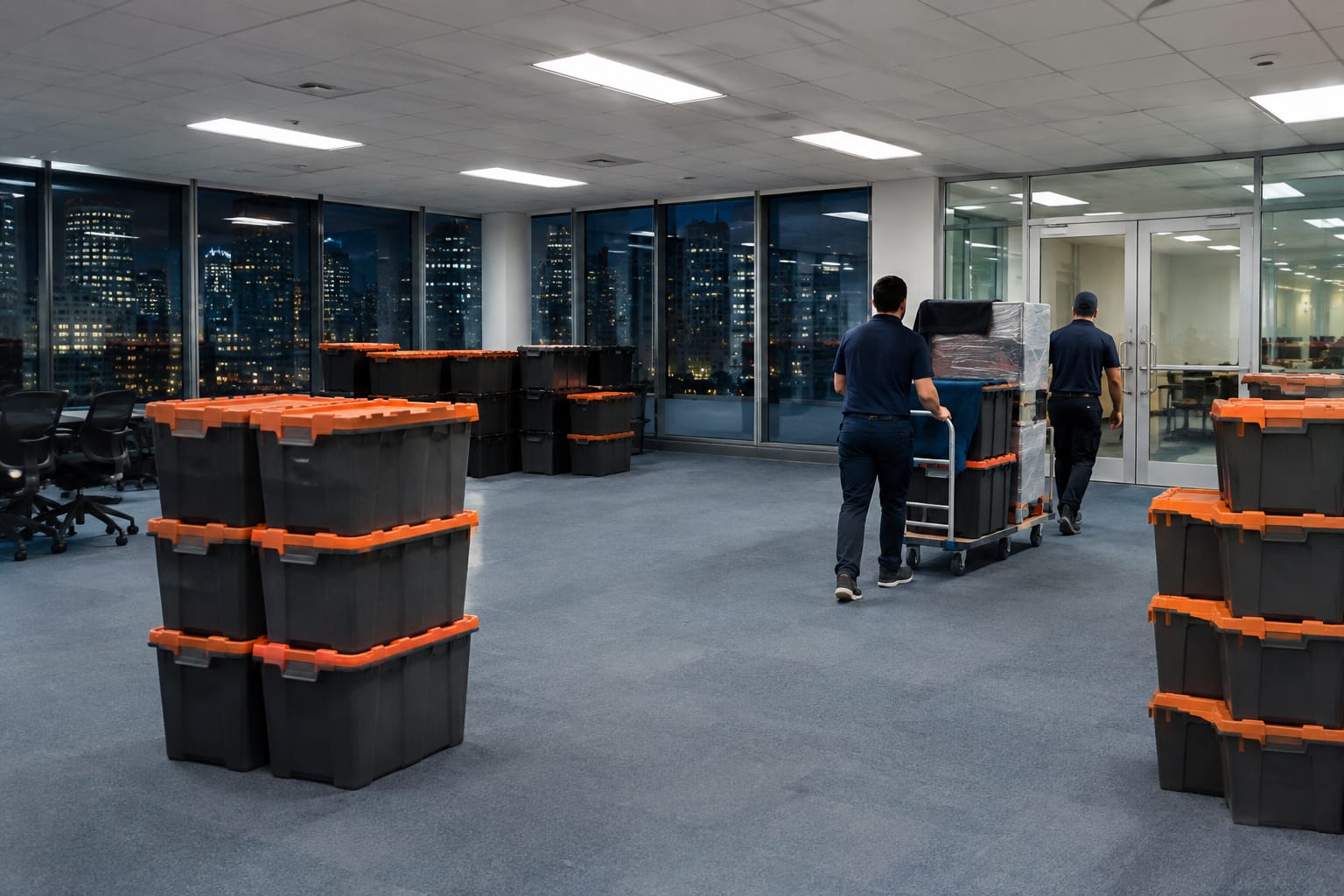
The right moving company box depends on what goes inside it. Put heavy, dense items in small boxes and light, bulky items in large ones. Fragile or awkward pieces need specialty cartons such as dish packs, wardrobe boxes, mirror cartons and mattress bags.
Damage usually starts with a mismatch. Books in a large box can split the bottom, and plates stacked flat in a thin carton can crack. This guide compares common moving boxes by size, strength and best use, then shows how to plan quantities and where to get them.
Key Takeaways
- Match box size to weight. Small boxes for dense items like books, large boxes for light items like bedding. Large boxes add volume, not weight capacity.
- Read the box maker’s certificate. The stamp on a box’s bottom flap lists its construction, strength rating and maximum gross weight.
- Use specialty cartons for fragile items. Dish packs, mirror cartons and TV boxes prevent the shifting and flexing that break plates, glass and screens.
- Double-wall for heavy and long-distance loads. Two fluted layers resist crushing far better than single-wall board when boxes are stacked for days.
- Mattress bags protect against dirt, not crushing. A mattress bag keeps a mattress clean and dry but adds no structural protection.
Moving Box Types at a Glance
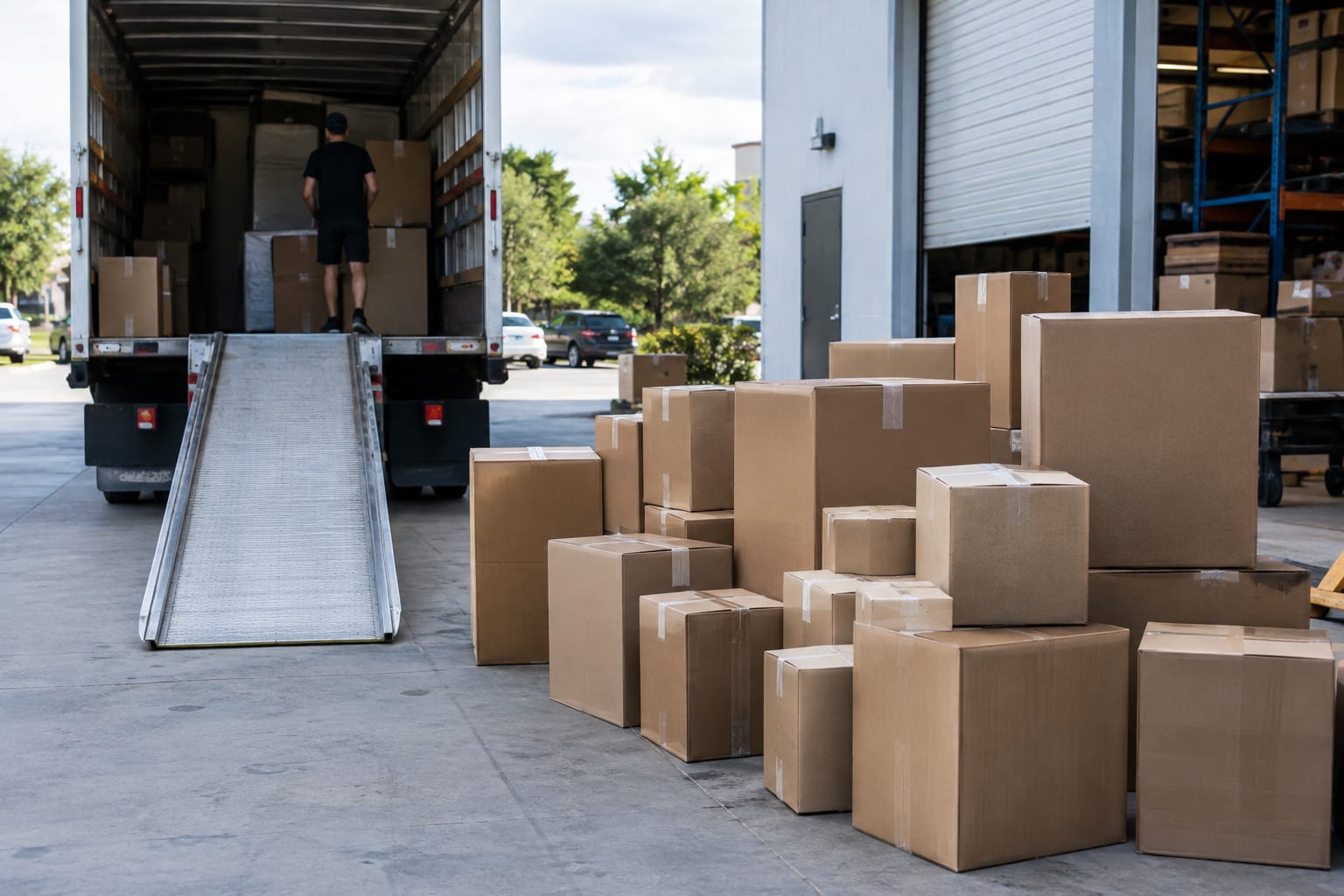
A moving box is a corrugated cardboard carton built to be stacked, carried and loaded onto a truck. Each type trades capacity for strength. Exact moving box sizes vary by manufacturer, so check the dimensions printed on the product listing before you buy.
| Box type | Size class | Best contents | Construction | Common mistake |
|---|---|---|---|---|
| Small | Smallest standard carton | Books, records, canned goods, tools | Usually single-wall | Leaving empty space, so the top caves in |
| Medium | Mid-size, most versatile | Pantry items, small appliances, toys, decor | Usually single-wall | Mixing heavy and light items in one box |
| Large | Large, light-duty | Linens, towels, pillows, lampshades | Usually single-wall | Filling it with books or dishes |
| Extra-large | Largest standard carton | Comforters, sleeping bags, bulky soft goods | Usually single-wall | Using it for anything dense |
| Wardrobe | Tall, with hanging bar | Hanging clothes, coats | Single- or double-wall | Packing clothes too tightly |
| Dish pack | Medium-large, heavy-duty | Plates, bowls, glasses, stemware | Double-wall, often with dividers | Stacking plates flat |
| Mirror / picture carton | Thin, telescoping | Mirrors, framed art, glass panels | Adjustable multi-piece | Leaving gaps around the frame |
| TV box | Thin, adjustable | Flat-screen TVs | Multi-piece with foam corners | Laying the screen flat |
| Mattress bag | Plastic sleeve | Mattresses, box springs | Plastic, not cardboard | Expecting crush protection |
| Heavy-duty / double-wall | Any size | Dense items, long-distance and storage loads | Two fluted layers | Treating it as license to overpack |
The pattern is simple: the heavier the contents, the smaller the box. For sourcing tips and how to use moving boxes like a professional crew, see our cardboard box guide.
Small, Medium and Large Boxes: Weight Limits and What Goes Where
A small box is the right home for anything dense because it limits how much weight fits in one carton. That is why the standard book box size is small. Large boxes hold more volume, not more weight, so they suit soft goods.
| Size | Pack with | Avoid |
|---|---|---|
| Small | Books, files, canned food, hand tools | Bulky soft items that waste capacity |
| Medium | Kitchen items, shoes, toys, electronics accessories | Full loads of books |
| Large / extra-large | Bedding, clothing, pillows, lampshades | Dishes, books, anything heavy |
Every box has a real weight limit. Most corrugated cartons carry a round box maker's certificate on a bottom flap that lists the construction, strength rating and maximum gross weight. Read it before you pack anything heavy.
Q: How heavy should a packed moving box be?
A: Keep it light enough to lift comfortably and never above the gross weight on the box maker's certificate.
Tape matters as much as the carton. Seal the center seam and both edge seams on the bottom, and read our guide to choosing the right packing tape for grades that hold under load.
Pro Tip: Fill every box to the top. A half-empty box collapses when another carton is stacked on it, so fill the void with crumpled paper or towels.
Wardrobe Boxes vs. Garment Bags for Clothes
A wardrobe box is a tall carton with a bar across the top, so clothes travel on their hangers and come out ready to hang. Garment bags are lighter and cheaper but give no structure.
| Wardrobe box | Garment bag | |
|---|---|---|
| Crush protection | Yes, rigid walls | None |
| Stackable on a truck | Yes | No |
| Reusable | Often, if kept dry | Yes |
| Best for | Suits, dresses, coats, longer moves | A few items on a short local move |
| Weak spot | Overloaded hanging bar | Wrinkles and snags |
Wardrobe boxes for moving work best with some breathing room between hangers. Use the floor for shoes or folded sweaters, but keep it light so the bottom does not bow. Everyday folded clothes travel fine in medium boxes or suitcases.
Dish Pack Boxes vs. Regular Boxes for Kitchenware
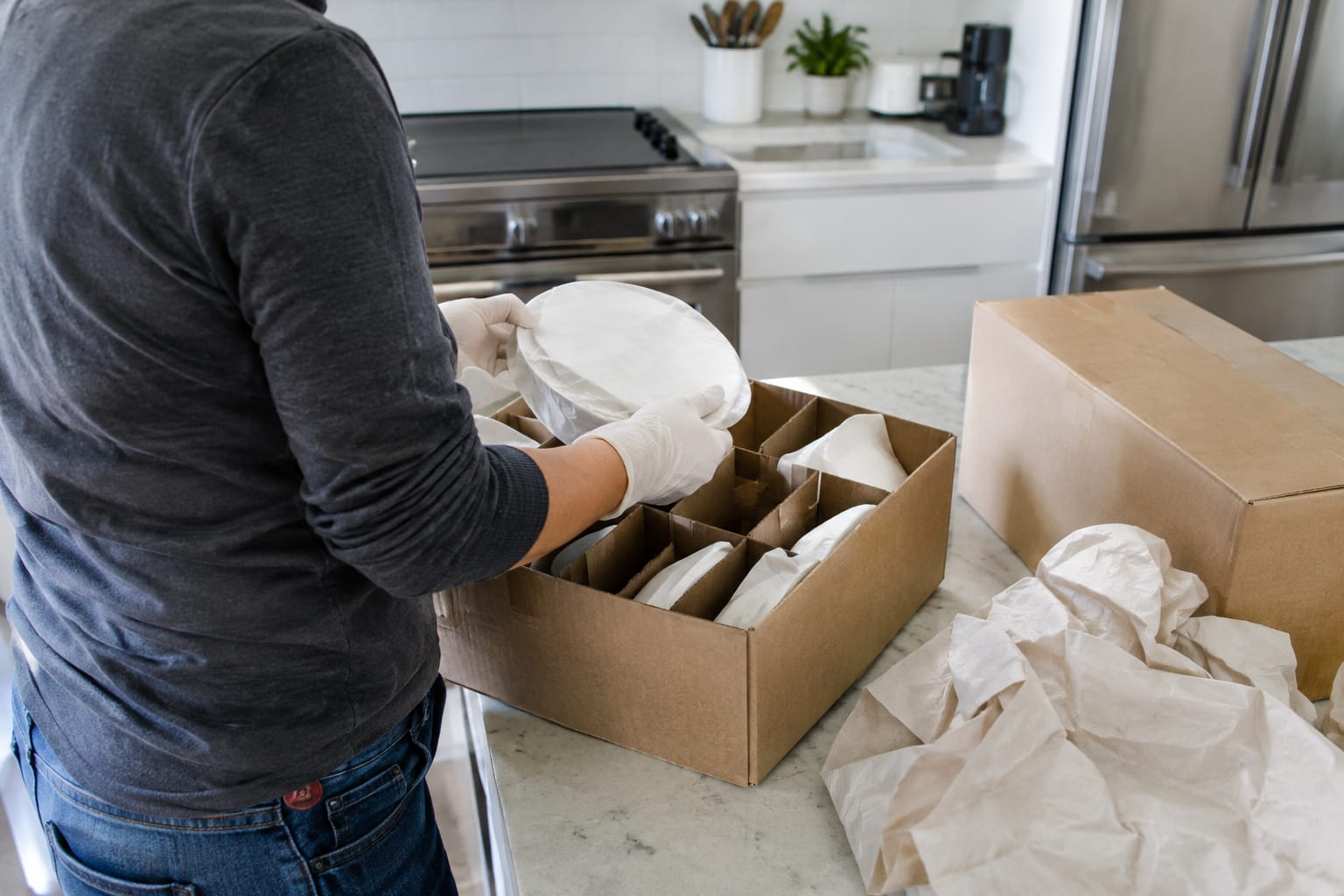
A dish pack box is a heavy-duty, usually double-wall carton designed for dishes, glassware and other breakable kitchenware. Many come with cardboard cell dividers that keep glasses from touching.
| Dish pack | Regular medium box | |
|---|---|---|
| Wall strength | Usually double-wall | Usually single-wall |
| Dividers | Often included or sold as inserts | None |
| Best for | Plates, bowls, stemware, serving pieces | Unbreakable kitchen items, pantry goods |
| Risk if misused | Gets too heavy when overfilled | Crushing and shifting |
The packing method matters as much as the box. Wrap each plate in packing paper, stand plates on edge like records in a crate, and cushion the top and bottom with crumpled paper. Plates stacked flat absorb the full force of every bump.
Regular boxes still have a role in the kitchen. Pots, pans, plastic containers and dry goods do fine in medium cartons.
Mirror Cartons vs. Custom Crates for Art and Glass
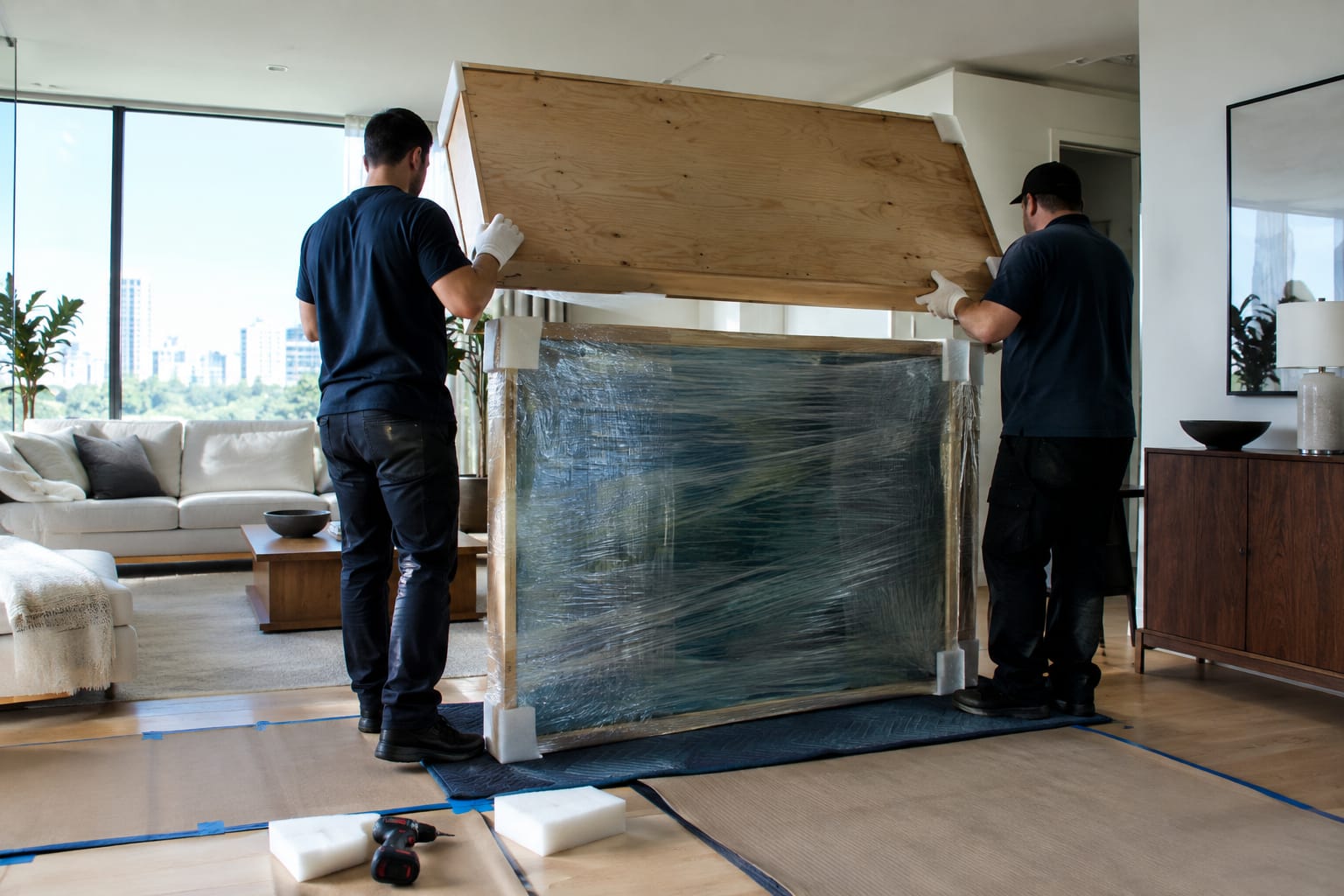
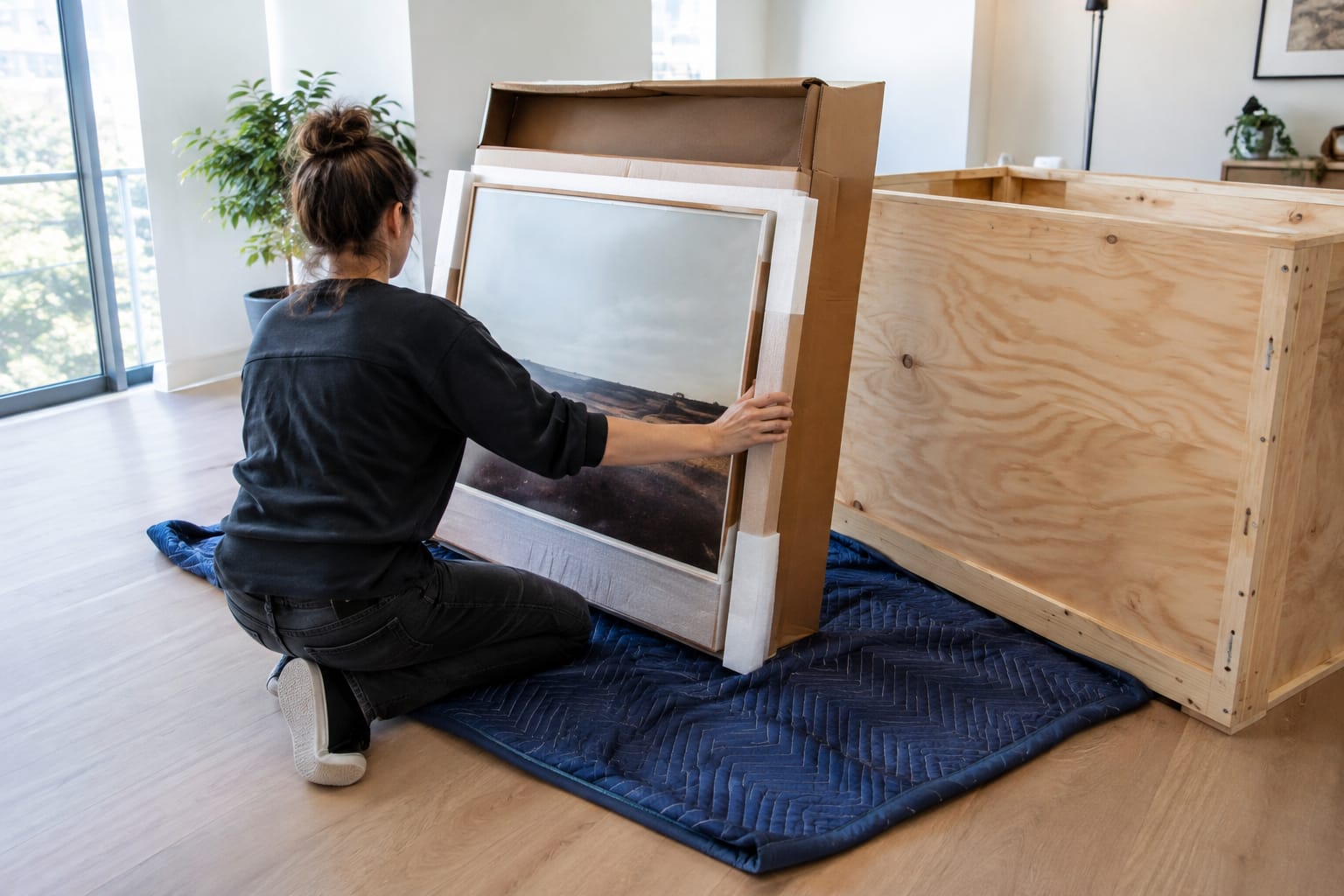
A mirror carton is a thin, telescoping box with two or four pieces that slide together to fit the frame. It is the standard mirror box for moving framed art and glass panels. A crate is a custom-built wooden enclosure, used when cardboard is not enough.
| Mirror / picture carton | Custom crate | |
|---|---|---|
| Material | Corrugated cardboard | Wood, often with foam lining |
| Fit | Adjusts to most frames | Built to the item's dimensions |
| Best for | Mirrors, framed prints, standard glass | High-value art, marble, glass tabletops |
| Effort | Wrap and box at home | Requires a builder |
For most framed pieces, a mirror carton with corner protectors and a padding layer is enough. Our guide on how to pack fragile items shows how to wrap glass so it cannot shift inside the box.
Crating earns its cost when an item is valuable, irreplaceable or unusually heavy for its size. Read when a custom crate makes sense before deciding. Pianos, pool tables and safes are a different job entirely and need equipment rather than cartons, as Born to Move's About page explains.
Born to Move's packing service covers fragile items, artwork, mirrors and electronics, with packing labor billed at the hourly crew rate; availability varies by location, so confirm when requesting a quote. Boxes, tape, shrink wrap, mattress bags and specialty cartons are always charged separately. Review how packing supplies are billed before booking professional packing and unpacking help.
Mattress Bags and TV Boxes: When You Need Them
A mattress bag is a thick plastic sleeve that keeps a mattress clean and dry. A TV moving box is an adjustable carton with foam corners that holds a flat-screen upright.
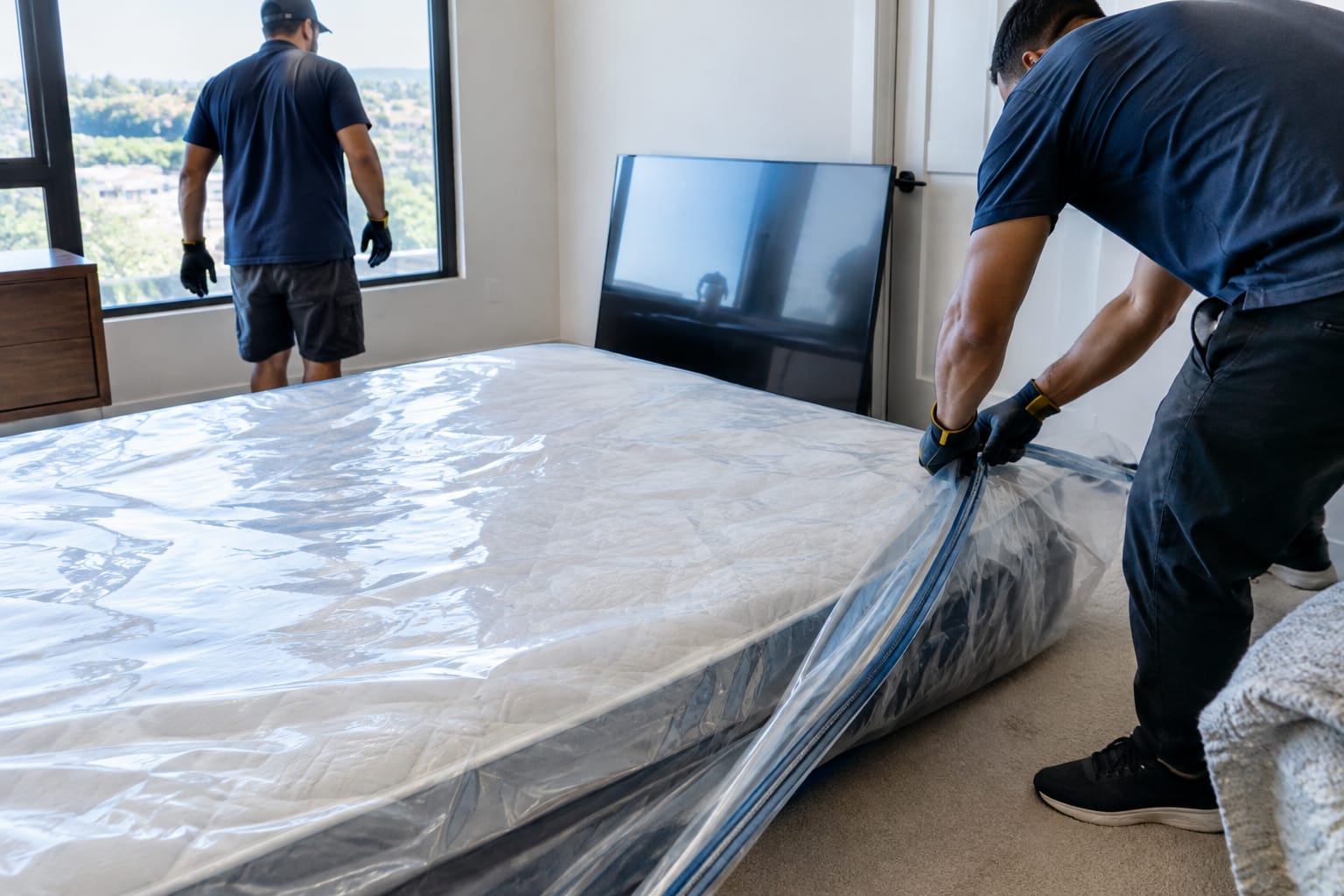
| Mattress bag | TV box | |
|---|---|---|
| Use it for | Every mattress and box spring, especially going into storage | Flat screens without their original packaging |
| Protects against | Dirt, moisture, snags | Impacts and pressure on the screen |
| Main limit | No protection against crushing or punctures | Must stay upright in transit |
| Better alternative | None practical | The original manufacturer box and foam |
Mattress bags for moving are a hygiene layer, not armor. The original box remains the strongest TV packaging because its foam was shaped for that exact model. Wrap the screen face first, and compare bubble wrap types and uses to pick the right bubble wrap for moving electronics.
More about the service: Influencer Partnership
Single-Wall vs. Double-Wall Cardboard: Strength Compared
Single-wall corrugated board has one wavy fluted layer between two flat liners. Double-wall board has two fluted layers and three liners, which is what makes heavy duty moving boxes resist crushing and punctures.
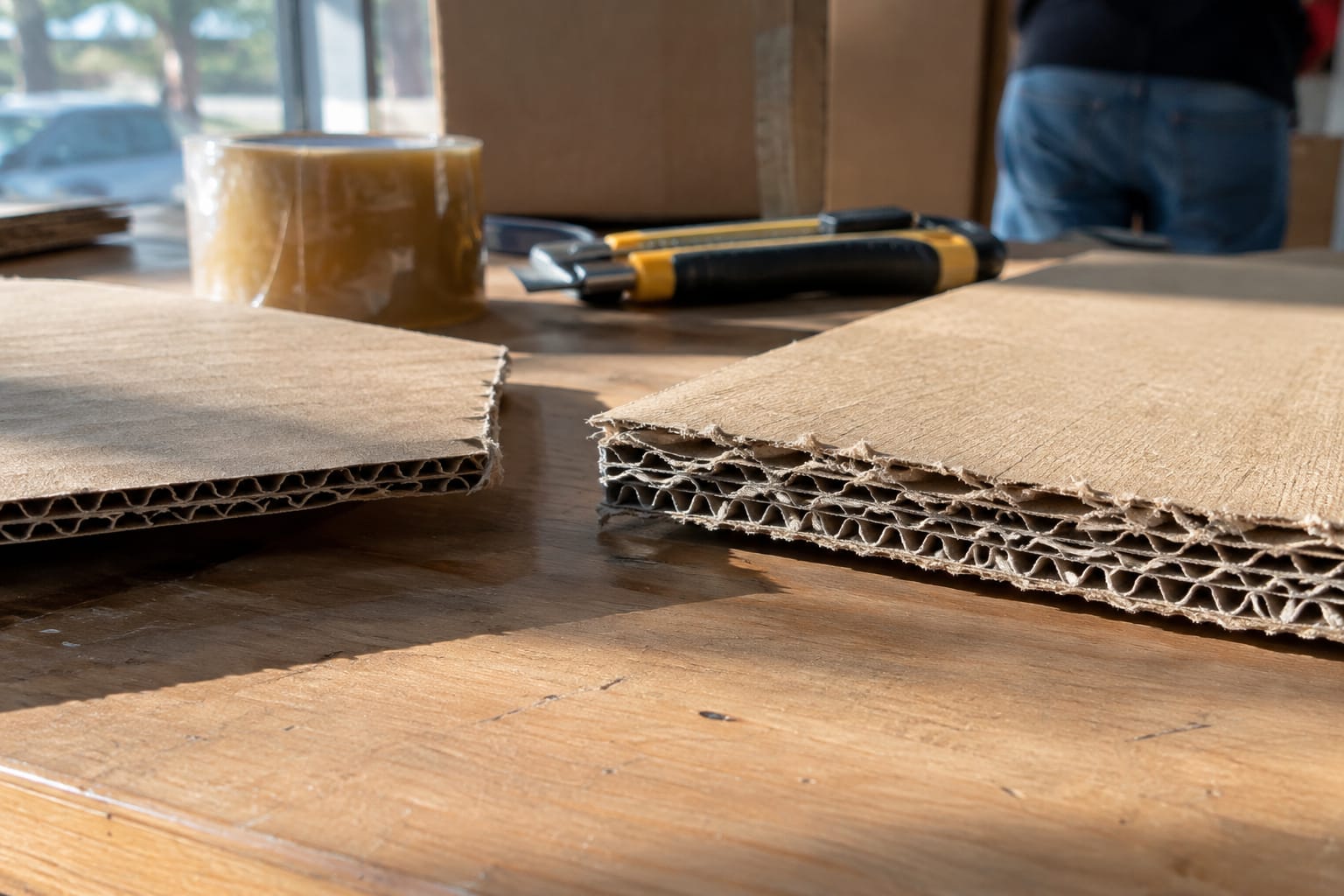
| Single-wall | Double-wall | |
|---|---|---|
| Layers | 1 flute, 2 liners | 2 flutes, 3 liners |
| Stacking strength | Moderate | High |
| Weight and price | Lighter, cheaper | Heavier, costs more |
| Best for | Most household boxes on local moves | Dish packs, heavy items, long-distance moves, storage |
Q: What is the difference between single-wall and double-wall moving boxes?
A: A single-wall box has one fluted layer and a double-wall box has two, which raises its Edge Crush Test (ECT) rating, the stacking-strength figure printed on the box maker's certificate. Choose a double-wall moving box for anything fragile, heavy or headed into storage.
Boxes at the bottom of a load carry everything stacked above them. That makes double-wall worth the upgrade on long-distance moves, where cartons stay stacked for days.
How Many Moving Boxes Do You Need?
No universal count is reliable, because two homes of the same size can hold very different amounts. A room-by-room estimate beats any chart.
- Walk each room and count shelves, drawers and closets, not furniture.
- Assign box types by contents using the table below.
- Pack one shelf or drawer as a test to see how many boxes it fills.
- Add a buffer for the last-day items that always turn up.
| Room | Box types to plan for |
|---|---|
| Kitchen | Dish packs, small and medium boxes |
| Bedroom | Wardrobe boxes, medium and large boxes, mattress bags |
| Living room | Mirror cartons, TV box, medium boxes |
| Home office | Small boxes for books and files |
| Garage and storage | Small boxes for tools, heavy-duty boxes |
For the rest of the shopping list, from markers to wrap, use our checklist of what packing supplies you need for moving.
Buying Boxes From Your Mover vs. Sourcing Your Own
Many movers sell boxes and materials, and some supply them as part of a packing service. Our breakdown of whether moving companies provide boxes covers the common arrangements.
| From your mover | Sourcing your own | |
|---|---|---|
| Quality | Moving-grade, consistent sizes | Mixed; used boxes may be weakened |
| Specialty cartons | Usually available | Harder to find |
| Cost | Billed as materials | Varies; secondhand can cost little |
| Convenience | Brought on moving day | Requires collecting and inspecting |
| Truck loading | Uniform sizes stack tightly | Odd sizes waste space |
Who packs also matters if something breaks. For interstate moves, the FMCSA's Protect Your Move resources, including the Your Rights and Responsibilities When You Move booklet, explain how liability works.
Once you unpack, decide what to do with boxes after the move. Sound cartons can be stored, passed on or recycled.
Choosing the Right Mix
The rule fits on one line: small boxes for heavy items, large boxes for light items, specialty cartons for fragile ones. Double-wall construction pays off wherever boxes carry weight or travel far.
If you would rather hand the fragile cartons to a crew, Born to Move offers full or partial packing, with materials charged separately from labor; availability varies by location, so confirm when requesting a quote.
Written by Born to Move Team
Useful Links
- Packing and Unpacking Services — how full and partial packing works and what it covers.
- What Packing Supplies Do I Need for Moving? — a complete supply checklist beyond boxes.
- Do Moving Companies Provide Boxes? — how movers typically handle boxes and materials.
- How to Pack Fragile Items — step-by-step wrapping for glass, ceramics and electronics.
- Get a Moving Quote — request an estimate based on your inventory.
Need help with this? Influencer Partnership · Get a quote · Call (617) 903-2609
Frequently Asked Questions