'%3E%3Cpath%20fill='%231B2A47'%20d='M1.605%2016.263c.03-1.139.059-2.482.088-3.971.03-1.49.03-2.832.03-4.03%200-.758%200-1.576-.03-2.51%200-.905-.03-1.84-.03-2.803%200-.496-.028-.964-.028-1.43%200-.468%200-.906-.03-1.315h6.858q2.188%200%203.589.35c.963.234%201.663.643%202.13%201.198.496.555.73%201.372.73%202.394%200%20.788-.176%201.46-.497%201.985-.32.526-.846.935-1.575%201.197-.73.292-1.693.468-2.918.526v.263c1.313.087%202.334.263%203.122.525.758.263%201.342.672%201.692%201.197.35.526.525%201.197.525%202.044%200%201.08-.233%201.927-.67%202.57-.468.642-1.139%201.08-2.102%201.343-.933.262-2.159.408-3.705.408H1.605zm6.537-9.197q1.882%200%202.713-.526c.555-.35.817-.934.817-1.752%200-.905-.292-1.547-.846-1.927s-1.459-.554-2.655-.554H4.757v4.759zm.204%206.92c.934%200%201.663-.088%202.217-.263.555-.176.934-.438%201.197-.818s.38-.876.38-1.518c0-.876-.322-1.49-.934-1.84-.643-.35-1.635-.525-3.035-.525H4.757v4.963zM21.038%2016.555c-1.576%200-2.801-.292-3.618-.905-.817-.614-1.284-1.519-1.372-2.745-.087-1.226.205-2.774.847-4.613s1.43-3.358%202.392-4.584c.963-1.226%202.043-2.131%203.298-2.744C23.839.292%2025.24%200%2026.786%200c1.576%200%202.772.321%203.59.934.816.613%201.283%201.548%201.37%202.774s-.203%202.774-.845%204.613c-.642%201.81-1.43%203.358-2.393%204.584s-2.072%202.132-3.297%202.745a9.8%209.8%200%200%201-4.173.905m.788-2.278c.642%200%201.138-.058%201.371-.116.205-.059.496-.117.847-.322.262-.146.437-.292.554-.408.204-.175.32-.292.438-.41.204-.203.35-.408.496-.583.35-.438.642-.876.963-1.402.233-.408.466-.817.67-1.284.205-.438.38-.905.555-1.372.438-1.198.671-2.278.671-3.183s-.204-1.606-.612-2.131c-.409-.497-1.051-.76-1.897-.76-.467%200-.934.059-1.43.205h-.03c-1.02.292-1.925%201.226-2.042%201.372-.116.117-.467.526-.963%201.343a15.5%2015.5%200%200%200-1.342%202.92c-.408%201.197-.642%202.277-.671%203.182-.03.906.175%201.636.584%202.161q.611.788%201.838.788M14.853%2038.54c-1.576%200-2.802-.292-3.619-.905s-1.284-1.518-1.371-2.744c-.088-1.227.204-2.774.846-4.614s1.43-3.357%202.393-4.584%202.042-2.13%203.297-2.744c1.255-.613%202.655-.905%204.173-.905%201.575%200%202.772.321%203.589.934s1.284%201.548%201.371%202.774c.088%201.226-.204%202.774-.846%204.613-.642%201.81-1.43%203.358-2.393%204.584s-2.072%202.131-3.297%202.745c-1.226.613-2.626.846-4.143.846m.787-2.277c.642%200%201.138-.059%201.372-.117.204-.058.496-.117.846-.321.263-.146.438-.292.554-.409.205-.175.321-.292.438-.409.204-.204.35-.408.496-.584a13%2013%200%200%200%201.634-2.686c.204-.438.38-.905.555-1.372.437-1.197.67-2.277.67-3.182%200-.906-.203-1.606-.612-2.132-.409-.496-1.05-.759-1.897-.759-.467%200-.934.058-1.43.204h-.029c-1.021.292-1.925%201.227-2.042%201.373-.117.116-.467.525-.963%201.343a15.5%2015.5%200%200%200-1.342%202.92c-.409%201.196-.642%202.277-.671%203.182s.175%201.635.583%202.16q.613.789%201.838.789'/%3E%3Cpath%20fill='%23FF515E'%20d='M55.966%2038.57c-1.576%200-2.801-.293-3.618-.906s-1.284-1.518-1.372-2.744c-.087-1.227.204-2.774.846-4.613s1.43-3.358%202.393-4.584c.963-1.227%202.043-2.132%203.297-2.745s2.656-.905%204.173-.905c1.576%200%202.772.321%203.589.934s1.284%201.548%201.371%202.774c.088%201.226-.204%202.774-.846%204.613-.642%201.81-1.43%203.358-2.393%204.584s-2.071%202.131-3.297%202.745c-1.225.613-2.626.846-4.143.846m.788-2.249c.642%200%201.138-.058%201.371-.117.204-.058.496-.116.846-.32.263-.147.438-.293.555-.41a7%207%200%200%200%20.437-.408c.205-.205.35-.41.496-.584a13%2013%200%200%200%201.634-2.686c.205-.438.38-.905.555-1.373.438-1.197.671-2.277.671-3.182s-.204-1.606-.613-2.131c-.408-.497-1.05-.76-1.896-.76-.467%200-.934.059-1.43.205h-.03c-1.02.292-1.925%201.226-2.042%201.372-.117.117-.467.526-.963%201.343a15.5%2015.5%200%200%200-1.342%202.92c-.409%201.197-.642%202.277-.671%203.182s.175%201.635.583%202.16q.614.79%201.839.79'/%3E%3Cpath%20fill='%231B2A47'%20d='M33.06%2016.263c0-.35%200-.935.03-1.81.029-1.051.058-2.103.058-3.154s.03-2.073.03-3.007c0-1.606-.03-3.27-.06-4.993%200-.554-.028-1.08-.028-1.606%200-.525-.03-1.021-.03-1.46h6.828c1.46%200%202.685.117%203.59.38q1.4.394%202.1%201.314.7.963.7%202.628c0%20.992-.174%201.81-.554%202.452-.35.643-.904%201.11-1.604%201.431s-1.576.467-2.627.496v.263q2.058.087%203.064.876c.671.525%201.138%201.372%201.43%202.51.087.41.233%201.023.467%201.84.233.818.408%201.431.554%201.84h-3.414a11%2011%200%200%200-.262-1.022c-.321-1.314-.526-2.19-.584-2.628a5%205%200%200%200-.642-1.46%202.13%202.13%200%200%200-.963-.73c-.408-.146-.934-.233-1.605-.233h-3.326v6.0440000000000005H33.06zm6.332-8.292c1.343%200%202.276-.205%202.86-.613.554-.41.846-1.11.846-2.073%200-.73-.146-1.314-.408-1.723-.263-.409-.671-.7-1.197-.876q-.788-.263-2.1-.263h-3.181v5.519h3.18zM49.4%2016.263l.03-2.745c.029-2.452.029-4.905.029-7.416q0-2.101-.088-5.868h4.085l5.924%2010.335c.087.234.204.438.291.643.117.204.205.408.321.613.38.788.613%201.255.672%201.372h.262c0-.058-.03-.146-.03-.204%200-.059-.028-.117-.028-.175a75%2075%200%200%201-.175-1.314%2010%2010%200%200%201-.088-1.285c0-1.547%200-3.737-.029-6.57V1.84c0-.584-.03-1.11-.03-1.576h2.977c-.03%202.482-.058%205.08-.058%207.766%200%201.694%200%204.438.029%208.292h-4.027l-5.573-9.43c-.875-1.81-1.226-2.511-1.05-2.132-.263-.613-.467-1.08-.613-1.46h-.263c.058.35.117.876.175%201.548.059.7.117%201.168.117%201.46%200%202.978%200%206.306.029%209.985H49.4zM4.698%2038.277c.029-2.627.058-5.255.058-7.883%200-1.576%200-3.503-.029-5.752-1.109%200-2.684%200-4.727.03v-2.453h12.664v2.453c-1.955-.03-3.53-.03-4.756-.03%200%20.584-.03%201.227-.03%201.957s0%201.46-.029%202.218v1.84c0%202.57.03%205.11.059%207.62z'/%3E%3Cpath%20fill='%23FF515E'%20d='M29.441%2038.277c.409-1.05.788-2.102%201.168-3.182s.787-2.16%201.167-3.241c.613-1.693%201.05-2.949%201.342-3.766l1.255-3.65c.116-.38.262-.788.379-1.139.117-.38.263-.73.38-1.05h4.61l-.671%2012.904h.262l8.316-12.905h4.669l-.7%201.869c-.876%202.452-1.343%203.766-1.43%204a501%20501%200%200%200-3.385%2010.16h-2.947c.292-.846.788-2.219%201.459-4.087.175-.526.35-1.08.554-1.606.175-.526.38-1.08.555-1.577.642-1.81%201.342-3.825%202.072-6.014h-.234l-8.724%2013.314h-2.86l.554-13.314h-.175c-.175.496-.38.992-.554%201.489-.175.496-.38%201.022-.555%201.547a163%20163%200%200%200-1.08%203.008c-.145.38-.262.759-.408%201.138-.117.38-.262.73-.408%201.11-.7%201.898-1.284%203.59-1.751%205.05h-2.86zM68.047%2038.277c.175-2.19.32-4.525.467-7.007.058-.905.204-3.912.467-9.051h3.151c-.03.438-.058.934-.088%201.46s-.058%201.08-.087%201.693a264%20264%200%200%201-.409%206.657c-.145%201.986-.35%203.591-.583%204.788h.175Q72.147%2034.892%2073.94%2032a562%20562%200%200%201%204.465-7.066c.32-.496.641-.992.933-1.46s.555-.875.817-1.255h3.268q-.568.832-1.138%201.752c-.408.613-.787%201.255-1.196%201.927-3.88%206.014-6.478%2010.131-7.85%2012.35h-5.193zM79.106%2038.277c.32-.788.758-2.014%201.37-3.65a287%20287%200%200%200%201.577-4.32c.437-1.256.904-2.628%201.4-4.088s.934-2.774%201.313-3.97h11.322l-.846%202.364H87.1l-1.664%204.847%207.645-.088-.612%201.694-7.587-.088-1.75%204.934h8.286l-.846%202.365z'/%3E%3C/g%3E%3Cdefs%3E%3CclipPath%20id='a'%3E%3Cpath%20fill='%23fff'%20d='M0%200h96v40H0z'/%3E%3C/clipPath%3E%3C/defs%3E%3C/svg%3E)
A smooth move day in Woburn comes down to seven logistics you settle before the truck arrives: curb access, building paperwork, stairs and grade, highway timing, crew size, storage gaps, and seasonal demand. Woburn is really two towns in one — the dense older streets and two-family homes near Woburn Center and Montvale, and the newer elevator complexes clustered around the Anderson Regional Transportation Center and the I-93/I-95 interchange. Those two profiles produce completely different move days.
This guide walks through each decision in plain terms, with a one-line problem and a one-line fix, so you can plan the day like a dispatcher instead of guessing. Whether you are hiring a full crew or renting a truck and hiring loading help, the same seven questions decide how long the day runs.

Key Takeaways
| Logistic | The one thing to lock down |
|---|---|
| Truck access | Confirm a legal, close curb spot; verify any street-occupancy rule with the City of Woburn |
| Building rules | Request a certificate of insurance and reserve the elevator or loading window in writing |
| Stairs & grade | Measure tight turns and flag split-levels or steep drives before the estimate is final |
| Highway timing | Start early to clear the I-93/I-95 and Anderson RTC commuter crush |
| Crew size | More movers usually shortens total hours on a stair-heavy job |
| Storage | Book short-term storage the moment your closing dates don't line up |
| Season | September 1 and summer dates book out first — reserve early |
1. Truck access and curb space on Woburn's older, narrower streets
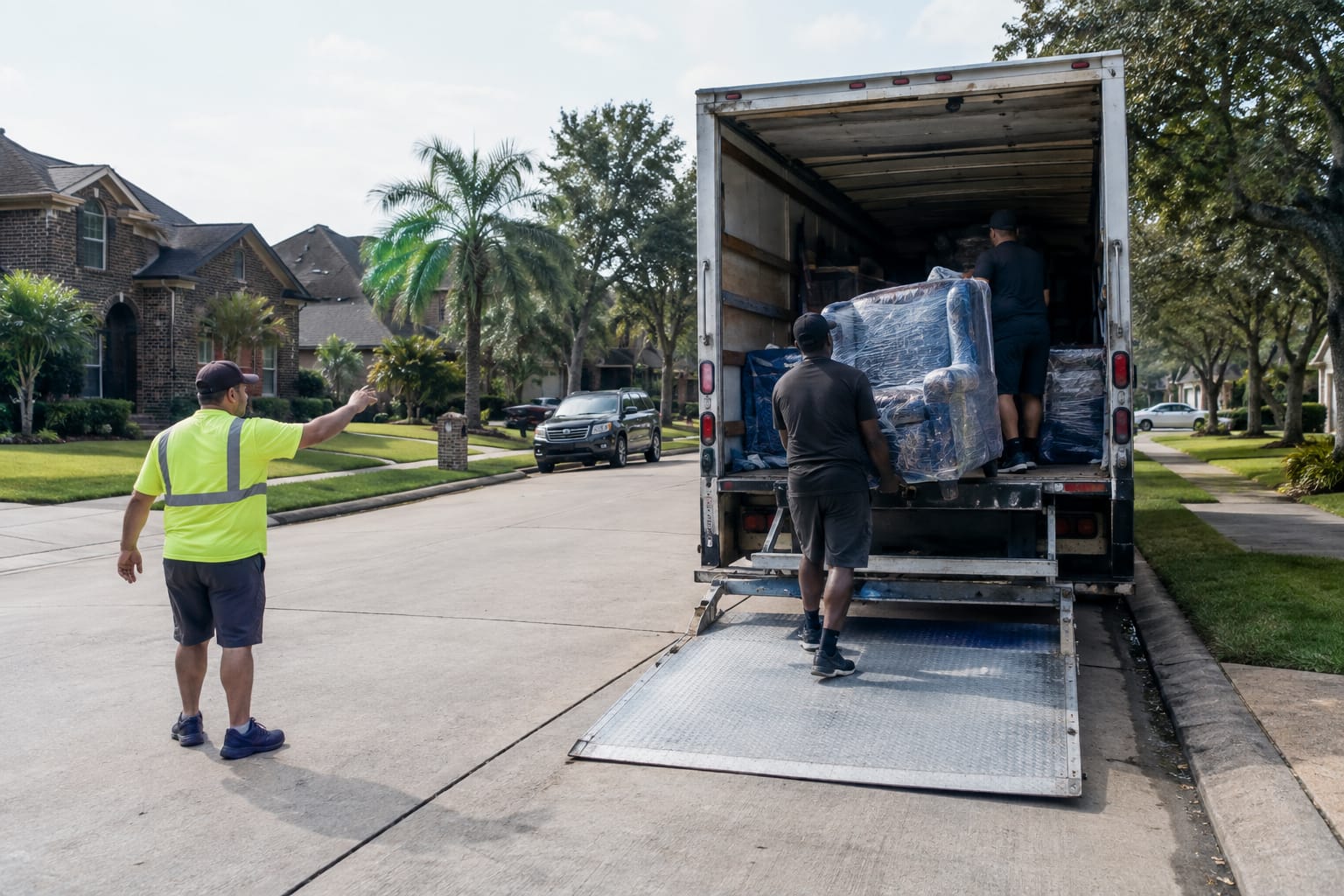
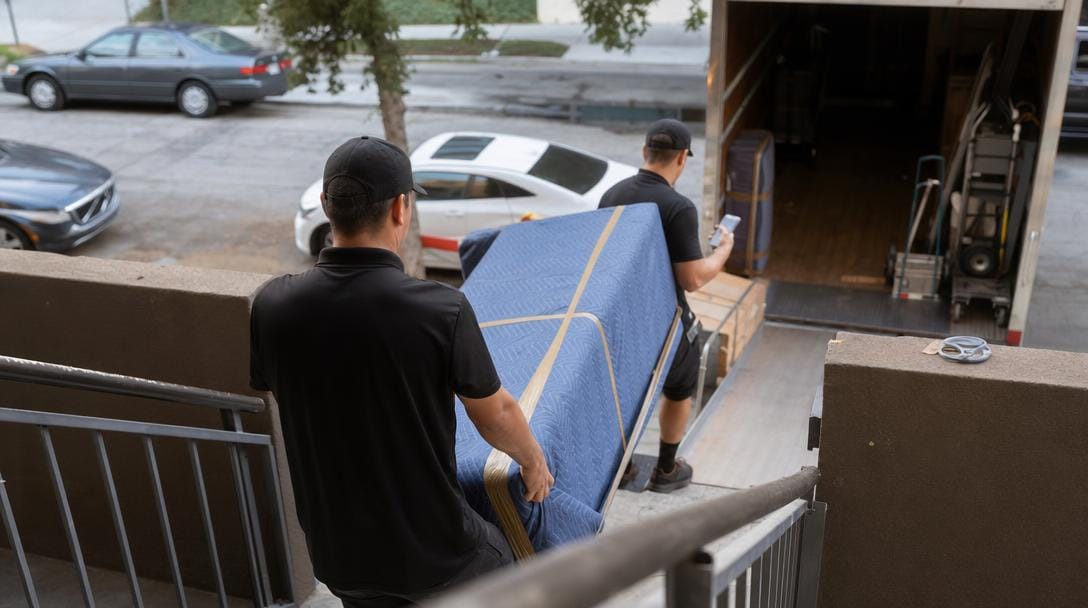
The problem: A 26-foot truck needs a legal, close place to park. Around Woburn Center, Montvale Avenue, and the two-family blocks off Main Street, curb space is tight and driveways are short.
The fix: Walk your street a day ahead and identify the closest legal spot to your door. The farther the truck sits from the entrance, the longer the carry — and a long carry adds time to an hourly job.
Confirm any requirement directly with the City of Woburn. Do not assume a spot is legal because it looks open.
Q: Do I need a permit to park a moving truck in Woburn, MA?
A: It depends on where the truck sits and for how long. Street-occupancy and no-parking arrangements are set by the City of Woburn, so confirm the rule and any fee with the Woburn Police Department or DPW before your date rather than relying on a mover's assumption.
One more Boston-area hazard worth naming: low bridges. Rental-truck drivers regularly clip parkway overpasses, and the same advice movers give on how to avoid getting "Storrowed" applies to the routes around Woburn and the Fells.
2. Building rules at newer complexes: COI, elevator reservations, loading windows
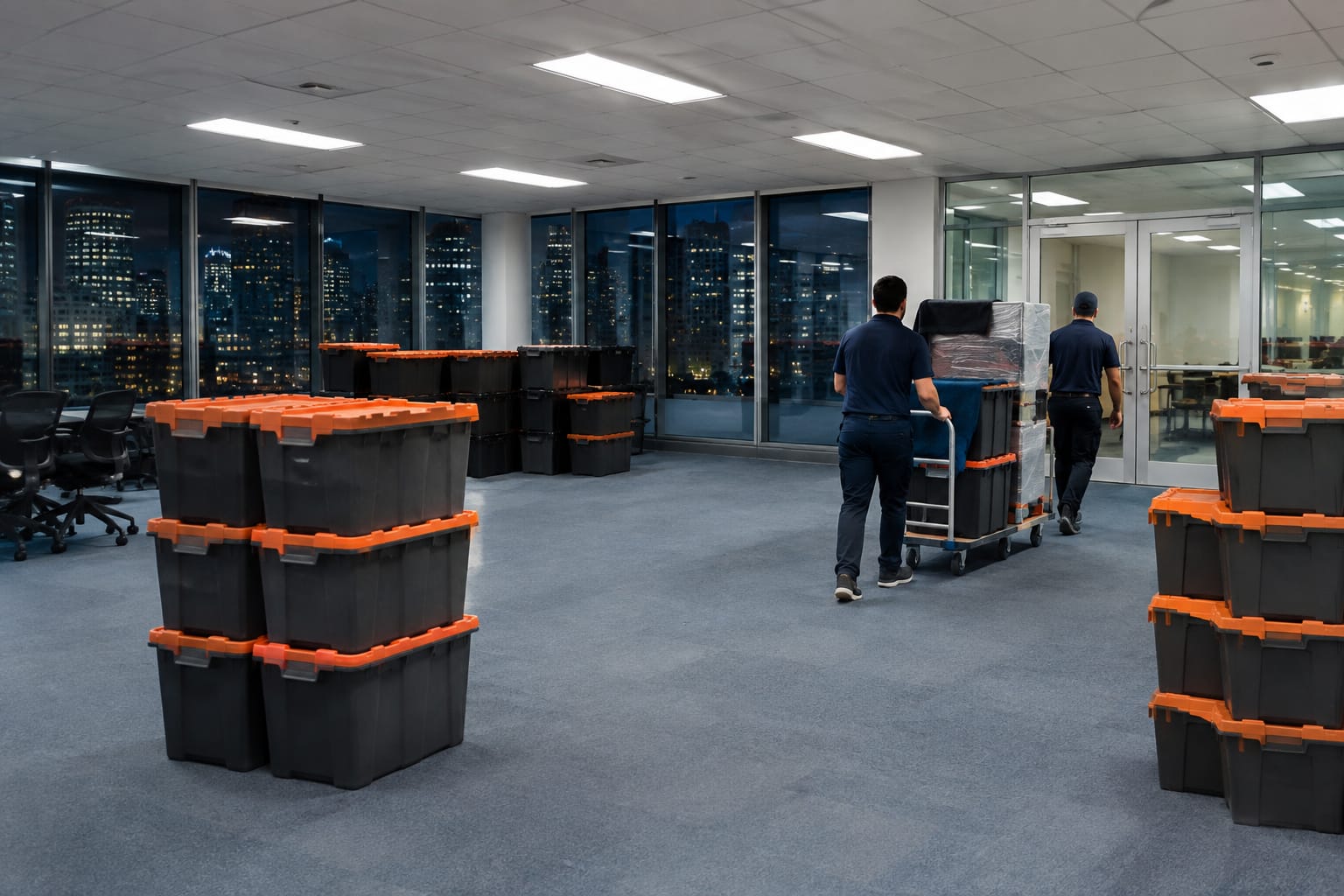
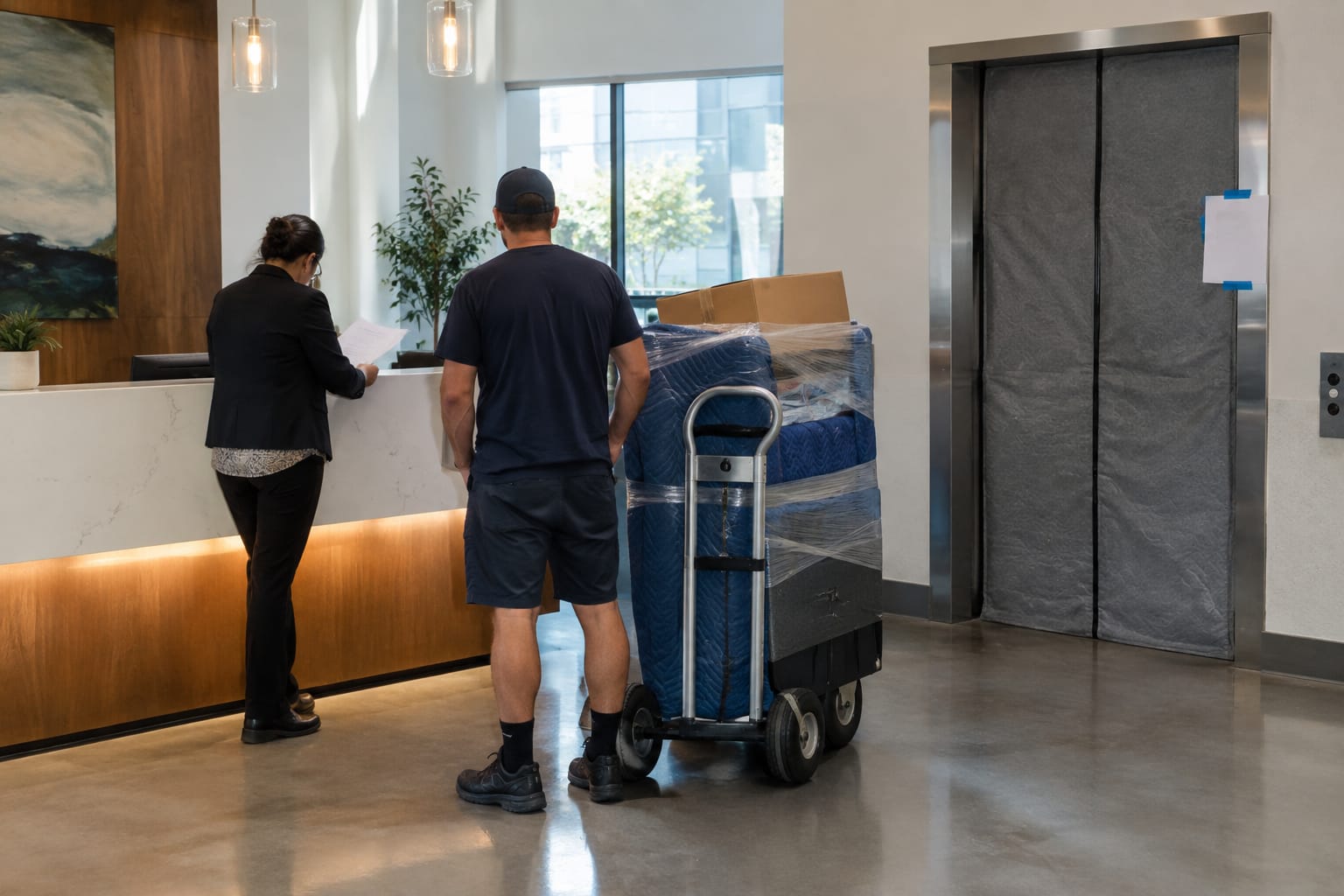
The problem: The newer apartment and condo complexes near Anderson RTC and along Washington Street enforce building rules. Most want a certificate of insurance on file and a booked elevator slot before anyone moves a box.
The fix: Ask your property manager for their exact requirements the week you book, then request the paperwork from your mover early.
A certificate of insurance (COI) is a one-page document from the mover's insurer that names your building and confirms liability and cargo coverage. Buildings want it so they are protected if a wall, floor, or elevator is damaged during the move.
Q: What is a certificate of insurance and why does my building want one?
A: A COI is proof of a mover's liability and cargo insurance, issued to name your specific building. Property managers and HOAs require it before move day so damage to common areas is covered — many will not release the elevator or loading dock without one on file.
Elevator time is the other gate. In a building with one shared elevator, an unreserved slot can stall the whole day, so read this step-by-step guide to reserve the building elevator and lock a window in writing. Get the COI approved and the elevator or loading-dock time confirmed before the date, not the morning of.
3. Stairs, split-levels, and the hills around Horn Pond
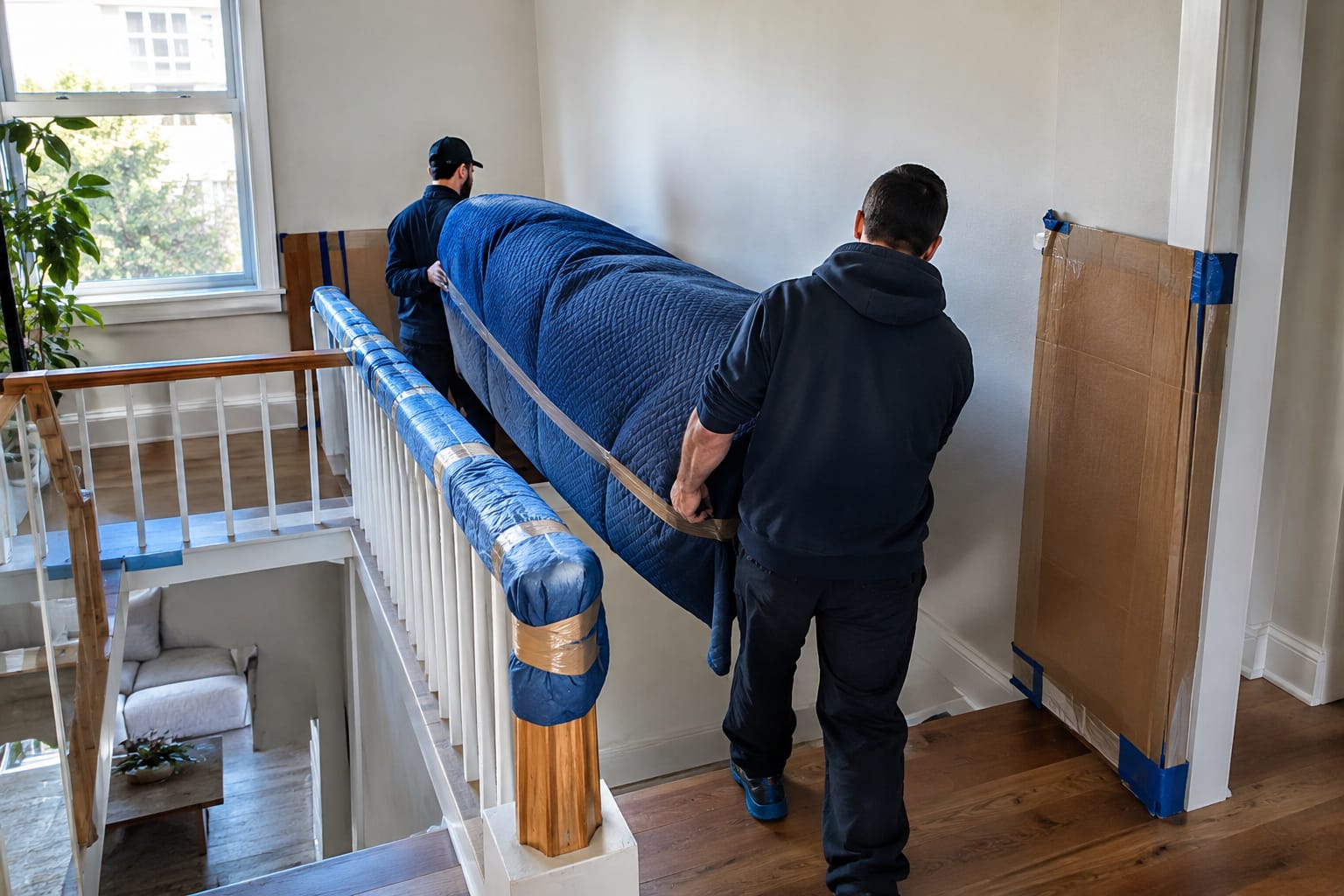
The problem: Woburn's housing stock includes plenty of stairs. Two-family homes have narrow interior staircases, split-levels have half-flights and tight landings, and the neighborhoods around Horn Pond sit on real grade.
The fix: Count your flights and measure your tightest turn — usually the bottom-of-stairs landing or a doorway — and share it when you get your quote.
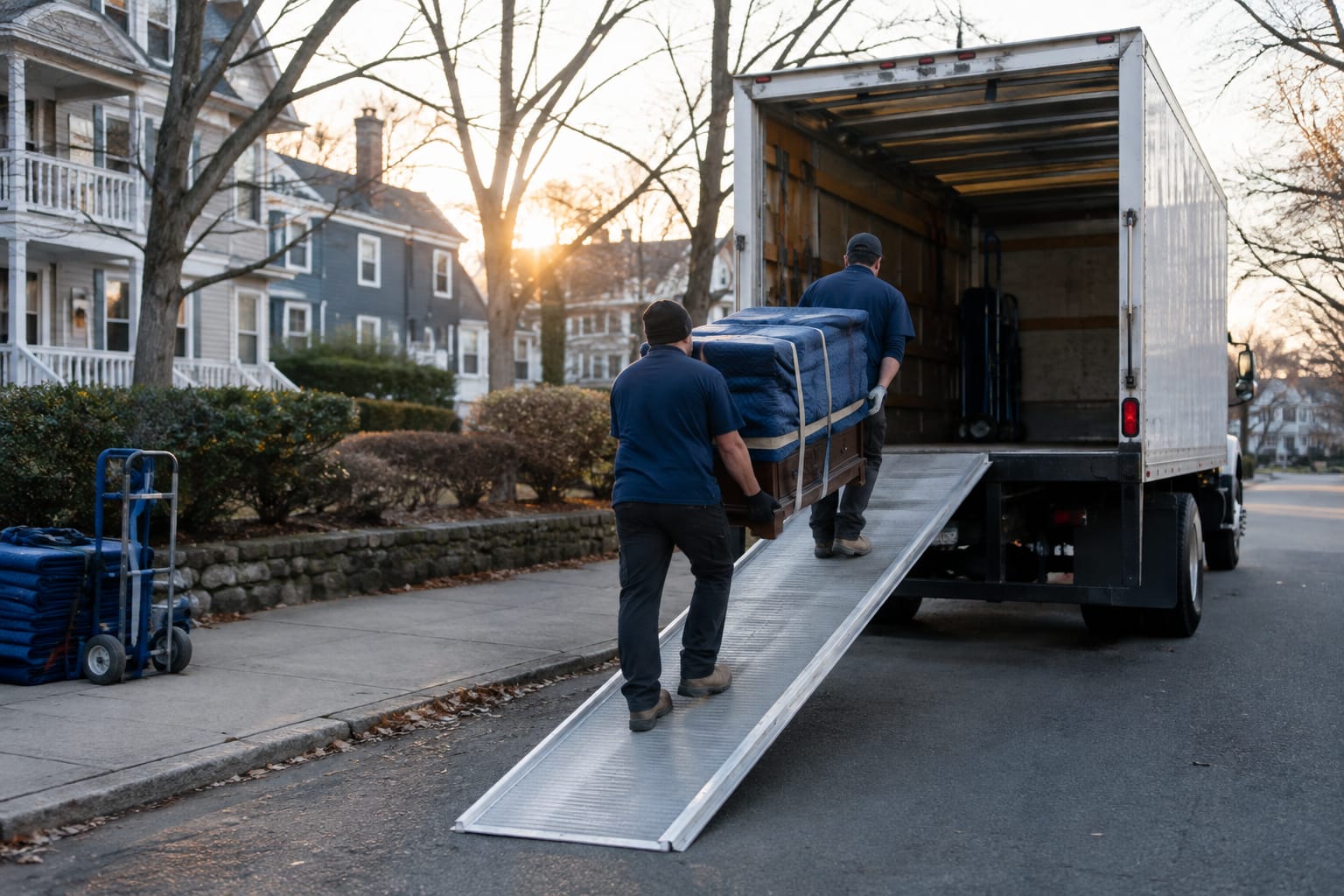
Stairs and a steep driveway change two things: how many movers you need and how long the job runs. A pull-out couch that clears a straight hallway can fight you for twenty minutes on a split-level landing.
Accurate estimates depend on this kind of detail. As one summary of how local moving costs are calculated explains, property size, distance, and any extra services drive the price — and stairs are exactly the kind of factor that separates a tight quote from a surprise. Pro Tip: Photograph your staircase, front entry, and driveway and send the pictures with your inventory; a crew that sees the obstacles in advance can bring the right dollies and padding.
4. Timing your window around I-93, I-95, and the Anderson RTC commuter crush
The problem: Woburn sits at the I-93/I-95 interchange, and the Anderson Regional Transportation Center pulls commuter traffic every weekday morning. A mid-morning start can bury your crew in stop-and-go.
The fix: Book the earliest start your building allows. An 8:00 a.m. load beats a 10:00 a.m. one that hits the tail of rush hour on the way to your new place.
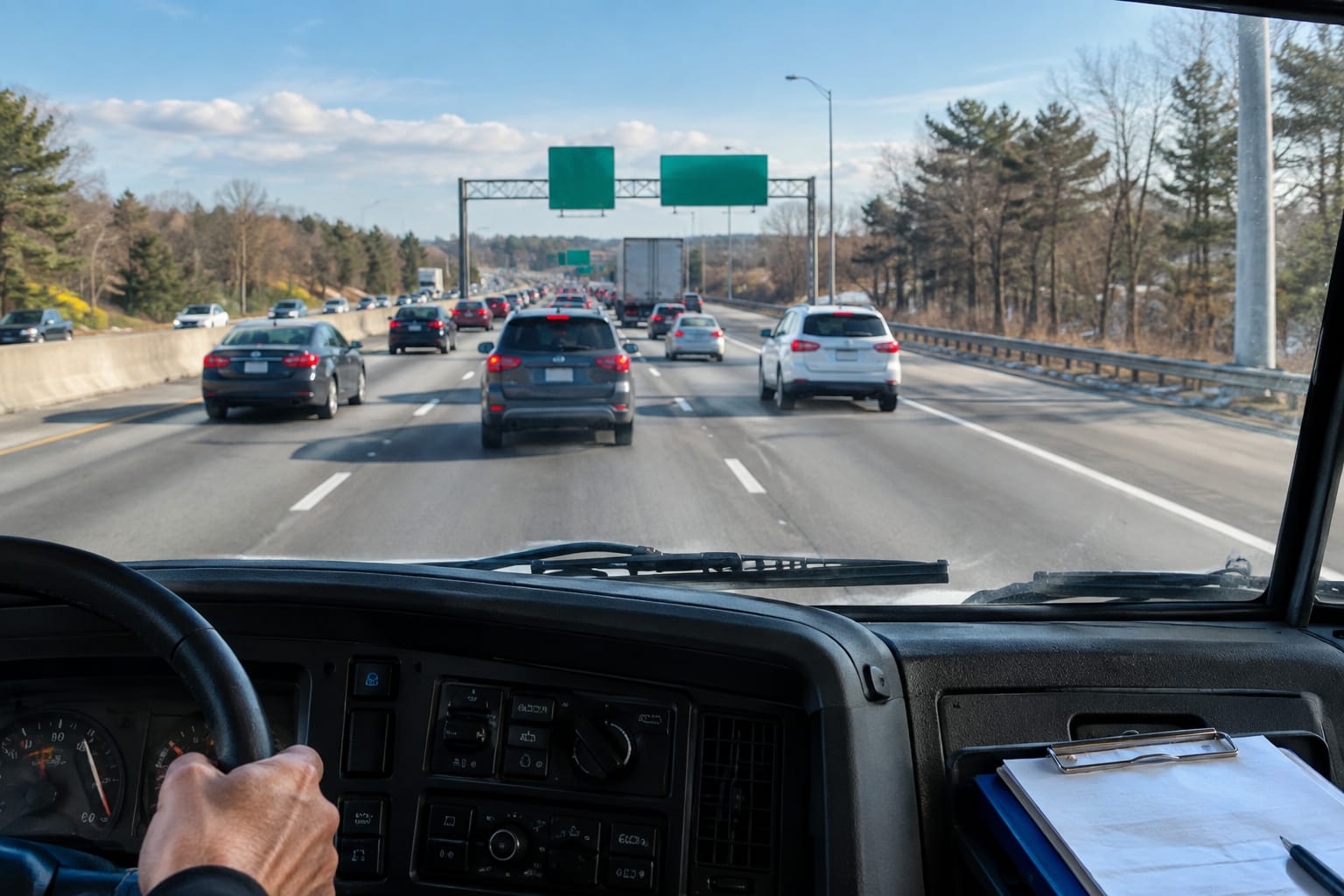
Regional traffic and transit patterns are well documented — MassDOT tracks highway conditions and the MBTA publishes the commuter-rail schedule that feeds the Anderson RTC lot. Check both for your specific date rather than relying on a generic "beat traffic" rule. If your move crosses town lines, timing matters even more; local crews who know the movers by Greater Boston neighborhood plan routes around these choke points as a matter of habit.
5. Crew size and how the hourly clock actually runs
The problem: Most local moves are billed by the hour, so the clock is the budget. The instinct to save money by booking fewer movers often backfires on a stair-heavy Woburn job.
The fix: Match crew size to your home. Two movers may be right for a small apartment on one level; a three- or four-family townhouse with stairs usually finishes faster — and sometimes cheaper overall — with a larger crew.
Here's the thing: the hourly clock runs on total labor, not headcount. Three movers who finish a stairs job in four hours can cost less than two movers grinding through the same job in seven.
Q: How much do Boston-area movers cost for a local move?
A: Local movers typically bill an hourly rate plus a minimum, and the total depends on home size, stairs, distance, and add-ons like packing. Ask each company for a written quote based on your specific inventory rather than a phone estimate — a walkthrough of how local moving costs are calculated shows which factors move the number.
Before you book, confirm the company is properly licensed. For interstate moves, confirm the current requirements with the FMCSA. Two minutes of checking protects the whole day.
6. Storage when your closing dates don't line up
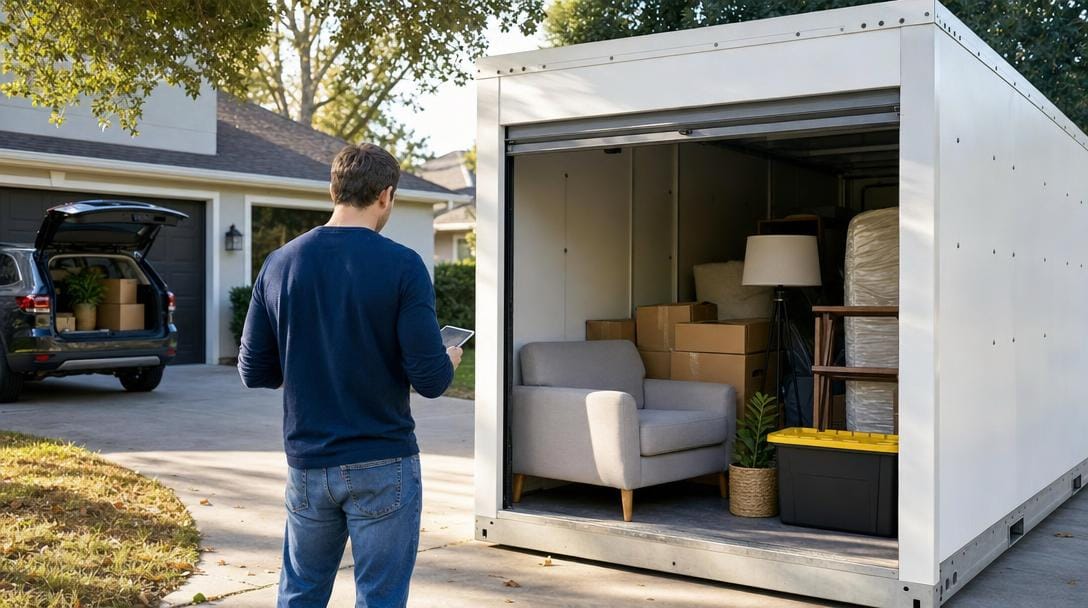
The problem: Closings rarely sync. When you sell and buy — or end one lease before the next begins — you can be homeless with a truckload of furniture for a few days or a few weeks.
The fix: Arrange short-term storage the moment you know the dates won't match. Booking it late, during peak season, is how gaps turn into scrambles.

Many full-service movers offer short- and long-term storage, which lets one crew load, hold, and redeliver without you renting a separate unit and double-handling everything. To right-size it, this guide helps you figure out how much storage you need so you are not paying for empty space or cramming a two-bedroom into a closet.
Pro Tip: If your dates might slip, ask whether storage-in-transit can flex by a few days. A closing that moves from Friday to the following Tuesday is common, and a flexible hold saves a second move.
7. Seasonal timing: September 1, winter weather, and weekend demand
The problem: Greater Boston's move calendar spikes hard. Summer weekends fill fast, and September 1 — when many of the region's leases turn over — is one of the busiest moving days in Greater Boston.
The fix: Book early for any summer or September 1 date, ideally weeks out. Waiting until August to schedule a September 1 move usually means slim pickings on crews and trucks.
That one date deserves its own plan; this breakdown of moving on September 1 in the Boston area covers why the day is so tight and how to work around it. Winter has the opposite problem — more availability, but snow, ice, and short daylight that demand extra padding, salted paths, and buffer time.
Q: How early should I book movers for a September 1 move?
A: Reserve as far ahead as you can — weeks, not days — because September 1 is Greater Boston's peak lease-turnover date and crews book out first. Locking your date and elevator window early is the only reliable way to get the start time you want.
Booking checklist: what to confirm before your date
Use this as your pre-move punch list. Each item is something to settle in the days before the truck arrives, not on move morning:
- Truck access — Identify the closest legal curb spot and confirm any street-occupancy rule with the City of Woburn.
- Certificate of insurance — Request the COI from your mover and get it approved by property management.
- Elevator or loading window — Reserve the slot in writing with your building.
- Stairs and grade — Send photos and your tightest measurement so the crew and quote are accurate.
- Start time — Choose an early window to clear the I-93/I-95 and Anderson RTC traffic.
- Crew size — Match the number of movers to your stairs and square footage.
- Storage — Book a short-term hold if your closing or lease dates don't line up.
- License check — Confirm the current licensing requirements with the relevant state and federal authorities.
What time should movers start to avoid I-93 and I-95 traffic?
Book the earliest start your building and mover allow, typically first thing in the morning. Woburn sits at the I-93/I-95 interchange with heavy weekday commuter volume around the Anderson RTC, so an early load and drive avoids the worst of it.
Can movers hold my belongings in storage between closings?
Yes. Many full-service companies offer short- and long-term storage, loading your items, holding them, and redelivering when your new place is ready — which avoids renting a separate unit and moving twice.
Are Woburn's older streets a problem for a full-size moving truck?
They can be. Blocks near Woburn Center and Montvale have limited curb space and short driveways, so scout the closest legal parking ahead of time and confirm any city requirement to keep the carry — and the clock — short.
Written by Born to Move Team, Moving Company Experts
Useful Links
- Movers in the Greater Boston Area by Neighborhood
- How to Reserve an Elevator for Your Move: A Step-by-Step Guide
- Moving in Boston on September 1 or on August 31
- What Affects the Cost of a Locally-Based Moving Company
- How Much Storage Unit You Need for Your Move
Need help with this? Get a quote · Call (617) 903-2609
Frequently Asked Questions