'%3E%3Cpath%20fill='%231B2A47'%20d='M1.605%2016.263c.03-1.139.059-2.482.088-3.971.03-1.49.03-2.832.03-4.03%200-.758%200-1.576-.03-2.51%200-.905-.03-1.84-.03-2.803%200-.496-.028-.964-.028-1.43%200-.468%200-.906-.03-1.315h6.858q2.188%200%203.589.35c.963.234%201.663.643%202.13%201.198.496.555.73%201.372.73%202.394%200%20.788-.176%201.46-.497%201.985-.32.526-.846.935-1.575%201.197-.73.292-1.693.468-2.918.526v.263c1.313.087%202.334.263%203.122.525.758.263%201.342.672%201.692%201.197.35.526.525%201.197.525%202.044%200%201.08-.233%201.927-.67%202.57-.468.642-1.139%201.08-2.102%201.343-.933.262-2.159.408-3.705.408H1.605zm6.537-9.197q1.882%200%202.713-.526c.555-.35.817-.934.817-1.752%200-.905-.292-1.547-.846-1.927s-1.459-.554-2.655-.554H4.757v4.759zm.204%206.92c.934%200%201.663-.088%202.217-.263.555-.176.934-.438%201.197-.818s.38-.876.38-1.518c0-.876-.322-1.49-.934-1.84-.643-.35-1.635-.525-3.035-.525H4.757v4.963zM21.038%2016.555c-1.576%200-2.801-.292-3.618-.905-.817-.614-1.284-1.519-1.372-2.745-.087-1.226.205-2.774.847-4.613s1.43-3.358%202.392-4.584c.963-1.226%202.043-2.131%203.298-2.744C23.839.292%2025.24%200%2026.786%200c1.576%200%202.772.321%203.59.934.816.613%201.283%201.548%201.37%202.774s-.203%202.774-.845%204.613c-.642%201.81-1.43%203.358-2.393%204.584s-2.072%202.132-3.297%202.745a9.8%209.8%200%200%201-4.173.905m.788-2.278c.642%200%201.138-.058%201.371-.116.205-.059.496-.117.847-.322.262-.146.437-.292.554-.408.204-.175.32-.292.438-.41.204-.203.35-.408.496-.583.35-.438.642-.876.963-1.402.233-.408.466-.817.67-1.284.205-.438.38-.905.555-1.372.438-1.198.671-2.278.671-3.183s-.204-1.606-.612-2.131c-.409-.497-1.051-.76-1.897-.76-.467%200-.934.059-1.43.205h-.03c-1.02.292-1.925%201.226-2.042%201.372-.116.117-.467.526-.963%201.343a15.5%2015.5%200%200%200-1.342%202.92c-.408%201.197-.642%202.277-.671%203.182-.03.906.175%201.636.584%202.161q.611.788%201.838.788M14.853%2038.54c-1.576%200-2.802-.292-3.619-.905s-1.284-1.518-1.371-2.744c-.088-1.227.204-2.774.846-4.614s1.43-3.357%202.393-4.584%202.042-2.13%203.297-2.744c1.255-.613%202.655-.905%204.173-.905%201.575%200%202.772.321%203.589.934s1.284%201.548%201.371%202.774c.088%201.226-.204%202.774-.846%204.613-.642%201.81-1.43%203.358-2.393%204.584s-2.072%202.131-3.297%202.745c-1.226.613-2.626.846-4.143.846m.787-2.277c.642%200%201.138-.059%201.372-.117.204-.058.496-.117.846-.321.263-.146.438-.292.554-.409.205-.175.321-.292.438-.409.204-.204.35-.408.496-.584a13%2013%200%200%200%201.634-2.686c.204-.438.38-.905.555-1.372.437-1.197.67-2.277.67-3.182%200-.906-.203-1.606-.612-2.132-.409-.496-1.05-.759-1.897-.759-.467%200-.934.058-1.43.204h-.029c-1.021.292-1.925%201.227-2.042%201.373-.117.116-.467.525-.963%201.343a15.5%2015.5%200%200%200-1.342%202.92c-.409%201.196-.642%202.277-.671%203.182s.175%201.635.583%202.16q.613.789%201.838.789'/%3E%3Cpath%20fill='%23FF515E'%20d='M55.966%2038.57c-1.576%200-2.801-.293-3.618-.906s-1.284-1.518-1.372-2.744c-.087-1.227.204-2.774.846-4.613s1.43-3.358%202.393-4.584c.963-1.227%202.043-2.132%203.297-2.745s2.656-.905%204.173-.905c1.576%200%202.772.321%203.589.934s1.284%201.548%201.371%202.774c.088%201.226-.204%202.774-.846%204.613-.642%201.81-1.43%203.358-2.393%204.584s-2.071%202.131-3.297%202.745c-1.225.613-2.626.846-4.143.846m.788-2.249c.642%200%201.138-.058%201.371-.117.204-.058.496-.116.846-.32.263-.147.438-.293.555-.41a7%207%200%200%200%20.437-.408c.205-.205.35-.41.496-.584a13%2013%200%200%200%201.634-2.686c.205-.438.38-.905.555-1.373.438-1.197.671-2.277.671-3.182s-.204-1.606-.613-2.131c-.408-.497-1.05-.76-1.896-.76-.467%200-.934.059-1.43.205h-.03c-1.02.292-1.925%201.226-2.042%201.372-.117.117-.467.526-.963%201.343a15.5%2015.5%200%200%200-1.342%202.92c-.409%201.197-.642%202.277-.671%203.182s.175%201.635.583%202.16q.614.79%201.839.79'/%3E%3Cpath%20fill='%231B2A47'%20d='M33.06%2016.263c0-.35%200-.935.03-1.81.029-1.051.058-2.103.058-3.154s.03-2.073.03-3.007c0-1.606-.03-3.27-.06-4.993%200-.554-.028-1.08-.028-1.606%200-.525-.03-1.021-.03-1.46h6.828c1.46%200%202.685.117%203.59.38q1.4.394%202.1%201.314.7.963.7%202.628c0%20.992-.174%201.81-.554%202.452-.35.643-.904%201.11-1.604%201.431s-1.576.467-2.627.496v.263q2.058.087%203.064.876c.671.525%201.138%201.372%201.43%202.51.087.41.233%201.023.467%201.84.233.818.408%201.431.554%201.84h-3.414a11%2011%200%200%200-.262-1.022c-.321-1.314-.526-2.19-.584-2.628a5%205%200%200%200-.642-1.46%202.13%202.13%200%200%200-.963-.73c-.408-.146-.934-.233-1.605-.233h-3.326v6.0440000000000005H33.06zm6.332-8.292c1.343%200%202.276-.205%202.86-.613.554-.41.846-1.11.846-2.073%200-.73-.146-1.314-.408-1.723-.263-.409-.671-.7-1.197-.876q-.788-.263-2.1-.263h-3.181v5.519h3.18zM49.4%2016.263l.03-2.745c.029-2.452.029-4.905.029-7.416q0-2.101-.088-5.868h4.085l5.924%2010.335c.087.234.204.438.291.643.117.204.205.408.321.613.38.788.613%201.255.672%201.372h.262c0-.058-.03-.146-.03-.204%200-.059-.028-.117-.028-.175a75%2075%200%200%201-.175-1.314%2010%2010%200%200%201-.088-1.285c0-1.547%200-3.737-.029-6.57V1.84c0-.584-.03-1.11-.03-1.576h2.977c-.03%202.482-.058%205.08-.058%207.766%200%201.694%200%204.438.029%208.292h-4.027l-5.573-9.43c-.875-1.81-1.226-2.511-1.05-2.132-.263-.613-.467-1.08-.613-1.46h-.263c.058.35.117.876.175%201.548.059.7.117%201.168.117%201.46%200%202.978%200%206.306.029%209.985H49.4zM4.698%2038.277c.029-2.627.058-5.255.058-7.883%200-1.576%200-3.503-.029-5.752-1.109%200-2.684%200-4.727.03v-2.453h12.664v2.453c-1.955-.03-3.53-.03-4.756-.03%200%20.584-.03%201.227-.03%201.957s0%201.46-.029%202.218v1.84c0%202.57.03%205.11.059%207.62z'/%3E%3Cpath%20fill='%23FF515E'%20d='M29.441%2038.277c.409-1.05.788-2.102%201.168-3.182s.787-2.16%201.167-3.241c.613-1.693%201.05-2.949%201.342-3.766l1.255-3.65c.116-.38.262-.788.379-1.139.117-.38.263-.73.38-1.05h4.61l-.671%2012.904h.262l8.316-12.905h4.669l-.7%201.869c-.876%202.452-1.343%203.766-1.43%204a501%20501%200%200%200-3.385%2010.16h-2.947c.292-.846.788-2.219%201.459-4.087.175-.526.35-1.08.554-1.606.175-.526.38-1.08.555-1.577.642-1.81%201.342-3.825%202.072-6.014h-.234l-8.724%2013.314h-2.86l.554-13.314h-.175c-.175.496-.38.992-.554%201.489-.175.496-.38%201.022-.555%201.547a163%20163%200%200%200-1.08%203.008c-.145.38-.262.759-.408%201.138-.117.38-.262.73-.408%201.11-.7%201.898-1.284%203.59-1.751%205.05h-2.86zM68.047%2038.277c.175-2.19.32-4.525.467-7.007.058-.905.204-3.912.467-9.051h3.151c-.03.438-.058.934-.088%201.46s-.058%201.08-.087%201.693a264%20264%200%200%201-.409%206.657c-.145%201.986-.35%203.591-.583%204.788h.175Q72.147%2034.892%2073.94%2032a562%20562%200%200%201%204.465-7.066c.32-.496.641-.992.933-1.46s.555-.875.817-1.255h3.268q-.568.832-1.138%201.752c-.408.613-.787%201.255-1.196%201.927-3.88%206.014-6.478%2010.131-7.85%2012.35h-5.193zM79.106%2038.277c.32-.788.758-2.014%201.37-3.65a287%20287%200%200%200%201.577-4.32c.437-1.256.904-2.628%201.4-4.088s.934-2.774%201.313-3.97h11.322l-.846%202.364H87.1l-1.664%204.847%207.645-.088-.612%201.694-7.587-.088-1.75%204.934h8.286l-.846%202.365z'/%3E%3C/g%3E%3Cdefs%3E%3CclipPath%20id='a'%3E%3Cpath%20fill='%23fff'%20d='M0%200h96v40H0z'/%3E%3C/clipPath%3E%3C/defs%3E%3C/svg%3E)
Moving to a new state ranks among the most logistically demanding decisions most people face. Hundreds of companies position themselves as interstate moving companies, but their licensing status, business models, and service quality vary far more than their websites suggest. The wrong choice leads to damaged goods, inflated final bills, or crews with no connection to the company whose contract you signed. This guide applies a consistent evaluation framework — FMCSA registration, estimate type, crew ownership, and verified review records — to help you identify the best options and avoid preventable mistakes.

Key Takeaways
| Point | Details |
|---|---|
| Federal licensing is mandatory | Every legitimate interstate moving company must hold a USDOT number and active MC (Motor Carrier) authority from the FMCSA — verifiable in seconds through the agency's public database. |
| Direct carriers vs. brokers | Broker networks match customers with subcontracted crews; direct carriers own their trucks and employ their movers, delivering more consistent service chains. |
| Binding estimates protect your budget | Non-binding estimates can legally result in final bills up to 10% above the quote; binding estimates cap the price at the agreed amount and eliminate hidden charges. |
| Interstate moving cost varies widely | Cost is driven by shipment weight, distance, and season — peak summer moves cost significantly more than off-peak weekday bookings. |
| Verify credentials before signing | The FMCSA's Protect Your Move program provides official guidance on consumer rights and a free tool to check any carrier's licensing status and complaint history. |
Understanding Interstate Moving Companies

An interstate moving company is a federally licensed carrier or broker authorized to transport household goods across state lines. This is distinct from intrastate movers, which operate only within one state and fall under that state's own regulatory authority — which may offer fewer consumer protections.
Any company engaged in moving across state lines falls under the jurisdiction of the Federal Motor Carrier Safety Administration (FMCSA), a division of the U.S. Department of Transportation. This federal oversight guarantees a minimum set of consumer rights — written estimates, access to weigh tickets, a bill of lading, and a federal arbitration process for unresolved disputes — that intrastate moves don't automatically include.
Legally operating as an interstate moving company requires two federal credentials: a USDOT number (which identifies the carrier) and an active MC (Motor Carrier) number (which authorizes the specific type of freight). Both are publicly searchable through the FMCSA SAFER System. The U.S. Census Bureau tracks interstate migration patterns — millions of Americans change their state of residence each year, making the ability to identify a legitimate carrier an essential skill.
Before your first consultation, review what to know before your interstate move, covering the documents movers must provide by law, how weight-based pricing works, and the red flags that identify unqualified operators.
What Separates the Best Interstate Moving Companies from the Rest
Most listicles of top interstate moving companies rank by brand recognition alone. Brand recognition reflects marketing spend, not service quality. The best interstate movers earn that label through four measurable criteria that any customer can independently verify.
Federal licensing and active authority. FMCSA registered movers maintain current operating authority, active carrier insurance, and a published safety record. A carrier listed as "not authorized" or "revoked" in the FMCSA database cannot legally transport your goods, regardless of how professional their website appears.
Binding estimate availability. The best interstate movers provide binding estimates — a contractual price ceiling — rather than non-binding estimates that can legally increase by up to 10% beyond the original quote. Binding-not-to-exceed estimates go further: the price drops if the shipment weighs less than expected, but never rises.
Direct crew ownership. Top interstate moving companies employ their own movers and operate their own trucks. Subcontracting introduces a crew with no prior relationship to the company whose contract you signed and different accountability structures than an employed team.
Verified review record across multiple platforms. Interstate movers reviews on a single platform can be selectively managed. Credible evaluation means cross-referencing Google, Yelp, the Better Business Bureau, and the FMCSA complaint database to identify patterns that single-platform star averages obscure.
Pro Tip: Before signing any contract, ask directly: "Will the crew that arrives on moving day be your own employees, or subcontractors?" A direct carrier answers immediately and specifically. A broker often hedges with phrases like "our trusted partner network."
Top Interstate Moving Companies Reviewed
The interstate moving market contains three primary business models. Moving companies that move long distance through the national van line model (Allied, United Van Lines, North American) operate through a franchise-agent structure: the corporate brand provides authority and a network; individual agent owners handle the actual moves. Quality varies considerably between agent markets.
Cross-state moving companies in the franchise operator model (Two Men and a Truck, College Hunks Hauling Junk) offer more consistent local service, but long-haul interstate coverage often requires handoffs between franchise territories — adding coordination complexity when a single franchise doesn't span both origin and destination.
Out of state moving companies that operate as direct regional carriers own their trucks, employ their crews, and serve defined geographic corridors with dedicated route schedules. Their footprint is more limited, but the service chain from pickup to delivery remains unbroken. Interstate relocation companies in this category sometimes offer express or same-day delivery on high-frequency lanes — a capability national van lines rarely match.
The American Moving and Storage Association (AMSA) sets voluntary professional standards for member movers, though FMCSA licensing remains the only legally required credential. For those finding good moving companies for interstate moves, combining FMCSA verification with multi-platform review analysis consistently outperforms relying on brand reputation alone.

| Evaluation Criterion | National Van Lines | Franchise Networks | Regional Direct Carriers |
|---|---|---|---|
| FMCSA licensing | Yes — van line corporate authority | Varies by franchisee | Yes — direct carrier authority |
| Crew ownership | Often use subcontracted agents | Varies by location | Typically employ own crews |
| Binding estimates | Available but not always standard | Available but varies | Often standard offering |
| Geographic coverage | National | Regional by franchise | Hub-specific with dedicated routes |
| Complaint transparency | Searchable via FMCSA | Searchable via FMCSA | Searchable via FMCSA |
| Price predictability | Moderate — subcontractor variables | Moderate | Higher — direct ownership advantage |
| Express delivery options | Rare | Rare | Available on high-frequency lanes |
How Much Does Interstate Moving Cost?
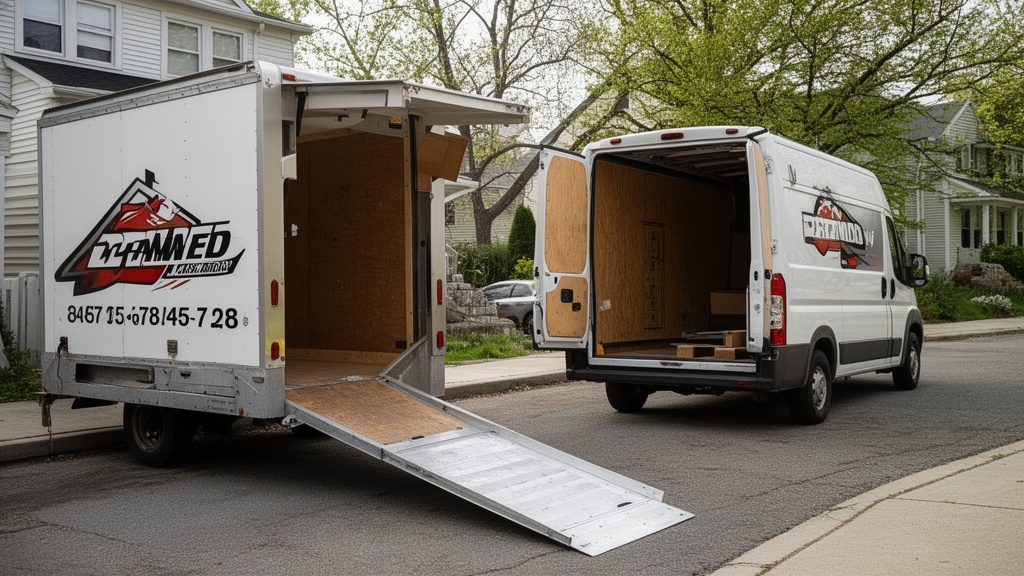
Interstate moving cost is driven by four primary variables: shipment weight, distance, time of year, and access conditions. Understanding these before requesting quotes allows for accurate comparisons rather than selection based solely on the lowest headline number.
Weight-based pricing is the industry standard for long-haul van lines: the truck is weighed at a certified scale before and after loading, and the customer is billed based on actual net weight multiplied by a per-pound rate. Flat-rate pricing — a fixed amount agreed before the move based on an inventory list — is more common among regional carriers and eliminates post-weigh surprises. Reviewing what interstate moving actually costs before requesting quotes sets realistic expectations for every line item on the final invoice.
Moving cross country — typically defined as moves spanning more than 1,000 miles — adds delivery window complexity. Most carriers offer a multi-day delivery spread rather than a guaranteed single delivery date for long-haul shipments. Customers requiring a specific delivery date should request guaranteed delivery options explicitly, which typically carry an additional fee.
Pro Tip: When comparing quotes, request itemized written estimates from at least three licensed interstate movers. Ensure every quote covers identical scope: same inventory list, same access conditions (stair carries, elevator reservations, long carries), same delivery window, and same valuation coverage level. A quote that appears 20% lower than competitors often excludes fees that others itemize.
| Cost Variable | Budget Impact | Key Insight |
|---|---|---|
| Distance | High | Primary driver — per-mile rates compound significantly across longer routes |
| Shipment weight | High | Decluttering before the move directly reduces billable pounds |
| Peak season (May–September) | Medium–High | Demand surges drive rates up; weekday moves cost less than weekends |
| Access difficulty | Medium | Stairs, long carries, and elevator reservations each add fees |
| Full packing service | Medium | Adds labor cost; self-packing reduces total rate |
| Storage-in-transit | Medium | Required when move-out and move-in dates don't align; billed separately |

Interstate Moving Regulations: Licensing and FMCSA Requirements
Federal law mandates that all carriers engaged in moving across state lines register with the FMCSA and maintain active USDOT and MC numbers. Operating without current authority is illegal — and customers who book unlicensed operators have no federal recourse if belongings are damaged, delayed, or held for additional payment.
Choosing licensed interstate movers guarantees access to a specific set of federally mandated rights: a written estimate before the move begins, the right to be present during the official weighing of the shipment, a detailed bill of lading at pickup, and access to a neutral arbitration program for unresolved damage or loss claims. These protections apply only to federally regulated interstate moves.
FMCSA registered movers must also provide every customer with a copy of "Your Rights and Responsibilities When You Move" — a federal consumer guide — before moving day. Failure to provide this document is a regulatory violation. The guide is available directly from the FMCSA Protect Your Move website for any customer who wants to review their rights independently of the mover's disclosure.
Insurance requirements apply federally as well. All interstate carriers must offer Released Value Protection at $0.60 per pound per article — free, but minimal coverage for high-value items. Full Value Protection covers repair or replacement at current market value and costs more, but eliminates the risk of a damage payout that doesn't reflect actual loss.
Getting Accurate Quotes from Interstate Movers
Accurate quotes require accurate inventories. Interstate movers near me — regardless of how close the company's nearest hub may be — base their estimates on either an in-person walk-through survey or a detailed virtual video survey. Phone estimates and form-based online submissions are notoriously imprecise and regularly lead to billing disputes at delivery.
When applying the framework outlined in how to hire an interstate moving company, confirm that each quote covers identical services: packing materials if applicable, furniture disassembly and reassembly, stair carries, declared valuation coverage, and specialty item handling. Scope omissions — not pricing differences — explain most billing surprises at delivery.
Request a binding estimate at every consultation. Non-binding estimates allow carriers to charge up to 110% of the quoted amount at delivery — the federal "110% rule" — turning a $4,500 estimate into a legally enforceable $4,950 bill. Binding estimates fix the price at the agreed amount regardless of actual weight at delivery.
Pro Tip: At the time of the estimate, ask the mover for their USDOT number, then verify it at the FMCSA SAFER System before the move date. This 90-second check confirms that operating authority and insurance are currently active — not expired or suspended since the initial booking.
Carrier Model vs. Broker Model: A Critical Distinction

The most consequential variable in interstate moving quality is often invisible on a company's website: whether the company operates as a direct carrier or a broker. Interstate movers reviews consistently document that broker-mediated moves generate higher rates of complaints — particularly around crew consistency, final billing transparency, and damage claim response times.
A direct carrier owns its trucks, employs its movers, and bears full legal responsibility for the shipment from pickup to delivery. The company name on the contract matches the company physically executing the move.
A broker is a federally licensed intermediary. Brokers connect customers with available carriers but do not physically transport goods. The broker collects payment at booking; the actual move is performed by a third-party carrier selected based on availability and cost at the time of pickup. Customers may not know which carrier is handling their goods until the pickup date.
When evaluating interstate relocation companies, confirm whether the company holds carrier authority (an MC number with "common carrier" designation) or only broker authority — both are searchable in the FMCSA database, and the distinction appears in the authority type field. For a full comparison of how these models affect customer rights and outcomes across different move types, choosing the right long-distance moving company for your situation provides a practical breakdown of each model's trade-offs.
Frequently Asked Questions
What is the difference between interstate and intrastate movers?
Interstate movers transport household goods across state lines and operate under federal regulation administered by the FMCSA, a division of the U.S. Department of Transportation. Intrastate movers operate entirely within a single state and are regulated by that state's transportation authority — which varies significantly by state. The distinction has major consumer protection implications. Federal law guarantees interstate customers specific rights: a written estimate before the move, access to weigh station records, a detailed bill of lading, and a neutral arbitration process for unresolved damage claims. Intrastate customers receive equivalent protections only if their state independently mandates them. When moving across state lines, verify that the carrier holds current USDOT and MC authority — not just a state-level license.
How far in advance should I book an interstate moving company?
For moves between October and April — typically off-peak — booking 4 to 6 weeks ahead provides adequate lead time for most destinations. For peak-season moves between May and September, particularly July and August, the industry standard recommendation is 8 to 12 weeks of advance booking. Summer is the highest-demand period for interstate moving, driven by school-year transitions and favorable weather conditions across most regions. Shorter lead times reduce available options, increase pricing pressure, and limit flexibility on delivery windows. Customers with flexible move dates should also consider midweek pickup dates, which typically offer better availability and lower pricing than Friday or Saturday moves.
How much do interstate movers typically charge?
Interstate moving cost varies substantially based on shipment weight, distance, and season. Short interstate moves for a one- or two-bedroom household typically fall at a lower price point; coast-to-coast moves for larger households can reach several thousand dollars. The primary billing variables are weight (measured in pounds at a certified scale) and distance (measured in miles from origin to destination). Additional services — full packing, furniture disassembly, long carries, specialty item handling, and storage-in-transit — add to the base rate. Binding estimates fix the final charge at the agreed amount; non-binding estimates allow carriers to charge up to 110% of the original quote at delivery. Request itemized estimates from at least three FMCSA-licensed carriers before committing.
Are interstate movers regulated by the federal government?
Yes. Interstate movers are regulated by the Federal Motor Carrier Safety Administration (FMCSA), a division of the U.S. Department of Transportation. Carriers must hold an active USDOT number and Motor Carrier (MC) authority to legally transport household goods across state lines. The FMCSA publishes each carrier's safety rating, complaint history, and insurance status through the publicly searchable SAFER System at safer.fmcsa.dot.gov. Federal law requires carriers to provide customers with "Your Rights and Responsibilities When You Move" before the move date. Customers can file complaints against licensed carriers directly through the FMCSA if disputes over loss, damage, or billing arise after delivery.
What should I look for when comparing interstate moving companies?
Five criteria distinguish reliable interstate moving companies from high-risk operators. First, verify current FMCSA registration — active USDOT and MC authority, not expired or revoked. Second, confirm whether the company is a direct carrier (owns trucks, employs movers) or a broker (subcontracts to third parties). Third, request binding estimates only; non-binding estimates introduce financial uncertainty at delivery. Fourth, research the company across multiple review platforms — Google, BBB, and the FMCSA complaint database — and look for patterns in complaints rather than just star ratings. Fifth, ask about the damage claims process: how claims are submitted, typical resolution timelines, and what valuation coverage is included by default. A company that cannot answer clearly on all five points warrants caution.
Related Articles
- Moving Companies That Move Long Distance: A Full Guide — Covers every factor that separates reliable long-haul movers from high-risk operators, including licensing verification and estimate type comparisons.
- Local Moving Companies Near Me: How to Choose the Best — Learn the key evaluation criteria for selecting a local mover, including how to verify licensing and assess pricing transparency.
- Best Cheap Moving Companies — A breakdown of how to find affordable interstate and local movers without sacrificing licensing, insurance, or service quality.
- Best Moving Companies Boston — Covers top-rated movers serving the Greater Boston area, with evaluation criteria and tips for navigating Boston's unique moving logistics.
- Appliance Moving Company: How to Move Large Appliances — Explains how specialty movers handle refrigerators, washing machines, and oversized items during interstate or local relocations.
Recommended Reading
- How to Hire an Interstate Moving Company
- What to Know About Interstate Moving
- How Much Does Interstate Moving Cost?
- Long-Distance Moving Companies: How to Choose the Right Mover
- Are There Any Good Moving Companies for Interstate Moving?