'%3E%3Cpath%20fill='%231B2A47'%20d='M1.605%2016.263c.03-1.139.059-2.482.088-3.971.03-1.49.03-2.832.03-4.03%200-.758%200-1.576-.03-2.51%200-.905-.03-1.84-.03-2.803%200-.496-.028-.964-.028-1.43%200-.468%200-.906-.03-1.315h6.858q2.188%200%203.589.35c.963.234%201.663.643%202.13%201.198.496.555.73%201.372.73%202.394%200%20.788-.176%201.46-.497%201.985-.32.526-.846.935-1.575%201.197-.73.292-1.693.468-2.918.526v.263c1.313.087%202.334.263%203.122.525.758.263%201.342.672%201.692%201.197.35.526.525%201.197.525%202.044%200%201.08-.233%201.927-.67%202.57-.468.642-1.139%201.08-2.102%201.343-.933.262-2.159.408-3.705.408H1.605zm6.537-9.197q1.882%200%202.713-.526c.555-.35.817-.934.817-1.752%200-.905-.292-1.547-.846-1.927s-1.459-.554-2.655-.554H4.757v4.759zm.204%206.92c.934%200%201.663-.088%202.217-.263.555-.176.934-.438%201.197-.818s.38-.876.38-1.518c0-.876-.322-1.49-.934-1.84-.643-.35-1.635-.525-3.035-.525H4.757v4.963zM21.038%2016.555c-1.576%200-2.801-.292-3.618-.905-.817-.614-1.284-1.519-1.372-2.745-.087-1.226.205-2.774.847-4.613s1.43-3.358%202.392-4.584c.963-1.226%202.043-2.131%203.298-2.744C23.839.292%2025.24%200%2026.786%200c1.576%200%202.772.321%203.59.934.816.613%201.283%201.548%201.37%202.774s-.203%202.774-.845%204.613c-.642%201.81-1.43%203.358-2.393%204.584s-2.072%202.132-3.297%202.745a9.8%209.8%200%200%201-4.173.905m.788-2.278c.642%200%201.138-.058%201.371-.116.205-.059.496-.117.847-.322.262-.146.437-.292.554-.408.204-.175.32-.292.438-.41.204-.203.35-.408.496-.583.35-.438.642-.876.963-1.402.233-.408.466-.817.67-1.284.205-.438.38-.905.555-1.372.438-1.198.671-2.278.671-3.183s-.204-1.606-.612-2.131c-.409-.497-1.051-.76-1.897-.76-.467%200-.934.059-1.43.205h-.03c-1.02.292-1.925%201.226-2.042%201.372-.116.117-.467.526-.963%201.343a15.5%2015.5%200%200%200-1.342%202.92c-.408%201.197-.642%202.277-.671%203.182-.03.906.175%201.636.584%202.161q.611.788%201.838.788M14.853%2038.54c-1.576%200-2.802-.292-3.619-.905s-1.284-1.518-1.371-2.744c-.088-1.227.204-2.774.846-4.614s1.43-3.357%202.393-4.584%202.042-2.13%203.297-2.744c1.255-.613%202.655-.905%204.173-.905%201.575%200%202.772.321%203.589.934s1.284%201.548%201.371%202.774c.088%201.226-.204%202.774-.846%204.613-.642%201.81-1.43%203.358-2.393%204.584s-2.072%202.131-3.297%202.745c-1.226.613-2.626.846-4.143.846m.787-2.277c.642%200%201.138-.059%201.372-.117.204-.058.496-.117.846-.321.263-.146.438-.292.554-.409.205-.175.321-.292.438-.409.204-.204.35-.408.496-.584a13%2013%200%200%200%201.634-2.686c.204-.438.38-.905.555-1.372.437-1.197.67-2.277.67-3.182%200-.906-.203-1.606-.612-2.132-.409-.496-1.05-.759-1.897-.759-.467%200-.934.058-1.43.204h-.029c-1.021.292-1.925%201.227-2.042%201.373-.117.116-.467.525-.963%201.343a15.5%2015.5%200%200%200-1.342%202.92c-.409%201.196-.642%202.277-.671%203.182s.175%201.635.583%202.16q.613.789%201.838.789'/%3E%3Cpath%20fill='%23FF515E'%20d='M55.966%2038.57c-1.576%200-2.801-.293-3.618-.906s-1.284-1.518-1.372-2.744c-.087-1.227.204-2.774.846-4.613s1.43-3.358%202.393-4.584c.963-1.227%202.043-2.132%203.297-2.745s2.656-.905%204.173-.905c1.576%200%202.772.321%203.589.934s1.284%201.548%201.371%202.774c.088%201.226-.204%202.774-.846%204.613-.642%201.81-1.43%203.358-2.393%204.584s-2.071%202.131-3.297%202.745c-1.225.613-2.626.846-4.143.846m.788-2.249c.642%200%201.138-.058%201.371-.117.204-.058.496-.116.846-.32.263-.147.438-.293.555-.41a7%207%200%200%200%20.437-.408c.205-.205.35-.41.496-.584a13%2013%200%200%200%201.634-2.686c.205-.438.38-.905.555-1.373.438-1.197.671-2.277.671-3.182s-.204-1.606-.613-2.131c-.408-.497-1.05-.76-1.896-.76-.467%200-.934.059-1.43.205h-.03c-1.02.292-1.925%201.226-2.042%201.372-.117.117-.467.526-.963%201.343a15.5%2015.5%200%200%200-1.342%202.92c-.409%201.197-.642%202.277-.671%203.182s.175%201.635.583%202.16q.614.79%201.839.79'/%3E%3Cpath%20fill='%231B2A47'%20d='M33.06%2016.263c0-.35%200-.935.03-1.81.029-1.051.058-2.103.058-3.154s.03-2.073.03-3.007c0-1.606-.03-3.27-.06-4.993%200-.554-.028-1.08-.028-1.606%200-.525-.03-1.021-.03-1.46h6.828c1.46%200%202.685.117%203.59.38q1.4.394%202.1%201.314.7.963.7%202.628c0%20.992-.174%201.81-.554%202.452-.35.643-.904%201.11-1.604%201.431s-1.576.467-2.627.496v.263q2.058.087%203.064.876c.671.525%201.138%201.372%201.43%202.51.087.41.233%201.023.467%201.84.233.818.408%201.431.554%201.84h-3.414a11%2011%200%200%200-.262-1.022c-.321-1.314-.526-2.19-.584-2.628a5%205%200%200%200-.642-1.46%202.13%202.13%200%200%200-.963-.73c-.408-.146-.934-.233-1.605-.233h-3.326v6.0440000000000005H33.06zm6.332-8.292c1.343%200%202.276-.205%202.86-.613.554-.41.846-1.11.846-2.073%200-.73-.146-1.314-.408-1.723-.263-.409-.671-.7-1.197-.876q-.788-.263-2.1-.263h-3.181v5.519h3.18zM49.4%2016.263l.03-2.745c.029-2.452.029-4.905.029-7.416q0-2.101-.088-5.868h4.085l5.924%2010.335c.087.234.204.438.291.643.117.204.205.408.321.613.38.788.613%201.255.672%201.372h.262c0-.058-.03-.146-.03-.204%200-.059-.028-.117-.028-.175a75%2075%200%200%201-.175-1.314%2010%2010%200%200%201-.088-1.285c0-1.547%200-3.737-.029-6.57V1.84c0-.584-.03-1.11-.03-1.576h2.977c-.03%202.482-.058%205.08-.058%207.766%200%201.694%200%204.438.029%208.292h-4.027l-5.573-9.43c-.875-1.81-1.226-2.511-1.05-2.132-.263-.613-.467-1.08-.613-1.46h-.263c.058.35.117.876.175%201.548.059.7.117%201.168.117%201.46%200%202.978%200%206.306.029%209.985H49.4zM4.698%2038.277c.029-2.627.058-5.255.058-7.883%200-1.576%200-3.503-.029-5.752-1.109%200-2.684%200-4.727.03v-2.453h12.664v2.453c-1.955-.03-3.53-.03-4.756-.03%200%20.584-.03%201.227-.03%201.957s0%201.46-.029%202.218v1.84c0%202.57.03%205.11.059%207.62z'/%3E%3Cpath%20fill='%23FF515E'%20d='M29.441%2038.277c.409-1.05.788-2.102%201.168-3.182s.787-2.16%201.167-3.241c.613-1.693%201.05-2.949%201.342-3.766l1.255-3.65c.116-.38.262-.788.379-1.139.117-.38.263-.73.38-1.05h4.61l-.671%2012.904h.262l8.316-12.905h4.669l-.7%201.869c-.876%202.452-1.343%203.766-1.43%204a501%20501%200%200%200-3.385%2010.16h-2.947c.292-.846.788-2.219%201.459-4.087.175-.526.35-1.08.554-1.606.175-.526.38-1.08.555-1.577.642-1.81%201.342-3.825%202.072-6.014h-.234l-8.724%2013.314h-2.86l.554-13.314h-.175c-.175.496-.38.992-.554%201.489-.175.496-.38%201.022-.555%201.547a163%20163%200%200%200-1.08%203.008c-.145.38-.262.759-.408%201.138-.117.38-.262.73-.408%201.11-.7%201.898-1.284%203.59-1.751%205.05h-2.86zM68.047%2038.277c.175-2.19.32-4.525.467-7.007.058-.905.204-3.912.467-9.051h3.151c-.03.438-.058.934-.088%201.46s-.058%201.08-.087%201.693a264%20264%200%200%201-.409%206.657c-.145%201.986-.35%203.591-.583%204.788h.175Q72.147%2034.892%2073.94%2032a562%20562%200%200%201%204.465-7.066c.32-.496.641-.992.933-1.46s.555-.875.817-1.255h3.268q-.568.832-1.138%201.752c-.408.613-.787%201.255-1.196%201.927-3.88%206.014-6.478%2010.131-7.85%2012.35h-5.193zM79.106%2038.277c.32-.788.758-2.014%201.37-3.65a287%20287%200%200%200%201.577-4.32c.437-1.256.904-2.628%201.4-4.088s.934-2.774%201.313-3.97h11.322l-.846%202.364H87.1l-1.664%204.847%207.645-.088-.612%201.694-7.587-.088-1.75%204.934h8.286l-.846%202.365z'/%3E%3C/g%3E%3Cdefs%3E%3CclipPath%20id='a'%3E%3Cpath%20fill='%23fff'%20d='M0%200h96v40H0z'/%3E%3C/clipPath%3E%3C/defs%3E%3C/svg%3E)
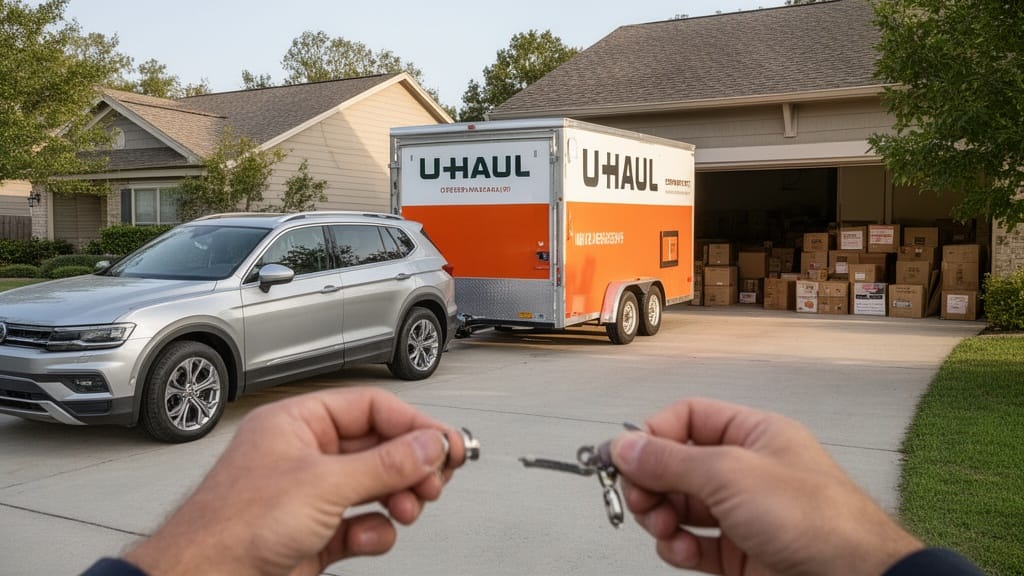
You need a tow hitch to rent any U-Haul trailer, but you do not need one to drive a U-Haul truck. Every cargo trailer, utility trailer, tow dolly, and auto transport connects to a hitch ball bolted to your vehicle's frame, so the real question is whether your car already has one—and whether it can pull the load safely.
This guide walks through the full range of U-Haul trailer and towing options, from the smallest open utility model to full vehicle transport. You will learn which trailers demand which hitch class, how to read your car's towing capacity, and when renting a truck simply beats towing.
Key Takeaways
| Point | Details |
|---|---|
| Trailers need a hitch, trucks do not | Every U-Haul trailer requires a frame-mounted receiver and hitch ball; U-Haul box trucks tow nothing and need no hitch. |
| Hitch class must match the load | Light utility trailers pair with a Class I–II hitch; heavier enclosed and auto transport trailers require Class III or higher. |
| Tow dolly vs. auto transport | A tow dolly lifts only the front wheels; an auto transport carries all four wheels off the ground. |
| Vehicle must outweigh the trailer | For a tow dolly, U-Haul requires the tow vehicle to be heavier than the loaded car being towed. |
| Rental is cheap, mistakes are not | In-town utility trailers start near a noticeable amount/day per U-Haul, but an undersized hitch or overloaded trailer risks sway and damage. |
Do You Actually Need a Tow Hitch to Rent a U-Haul Trailer?

Yes. You need a tow hitch to rent any U-Haul trailer, without exception. The trailer's coupler drops onto a hitch ball, and that ball attaches to a receiver mounted on your vehicle's frame. No hitch, no trailer.
So does my car need a hitch to tow a u-haul? If you are renting a trailer, absolutely. If you are renting a U-Haul box truck instead, the answer flips—the truck is the vehicle, it pulls nothing, and no hitch is involved.
Q: Does my car need a hitch to tow a U-Haul trailer?
A: Yes. Every U-Haul trailer—utility, cargo, tow dolly, and auto transport—requires a frame-mounted hitch receiver and a properly sized hitch ball. A U-Haul truck rental needs no hitch at all.
Many crossovers and SUVs roll off the lot with a factory receiver. Many sedans do not. U-Haul will not rent you a trailer until a compatible hitch, a matching hitch ball, and a working trailer light connector are confirmed on your vehicle.
U-Haul Trailer Types: Cargo, Utility, and Enclosed Explained
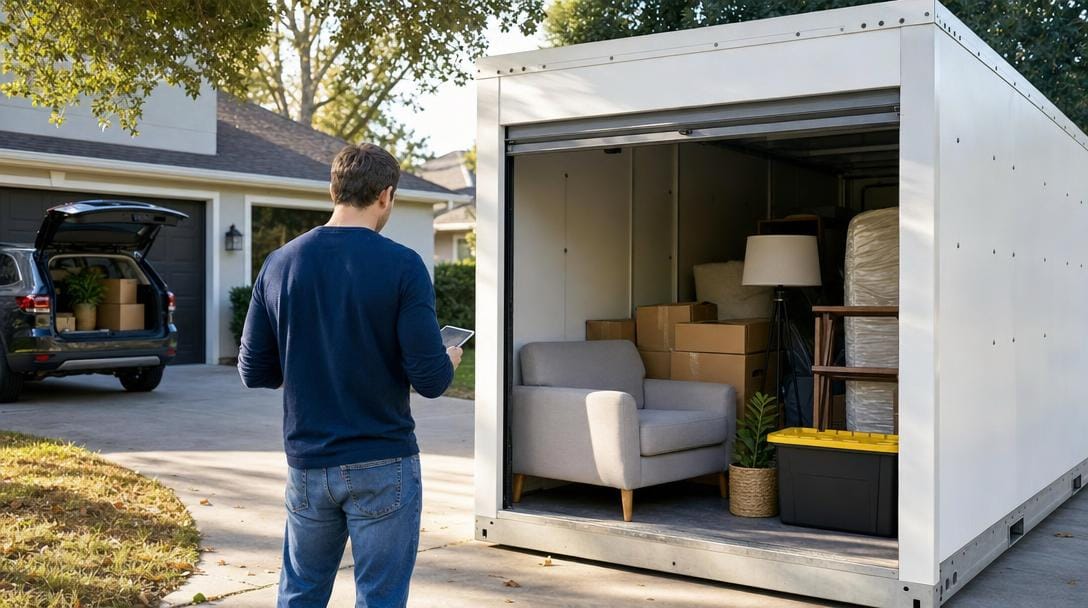
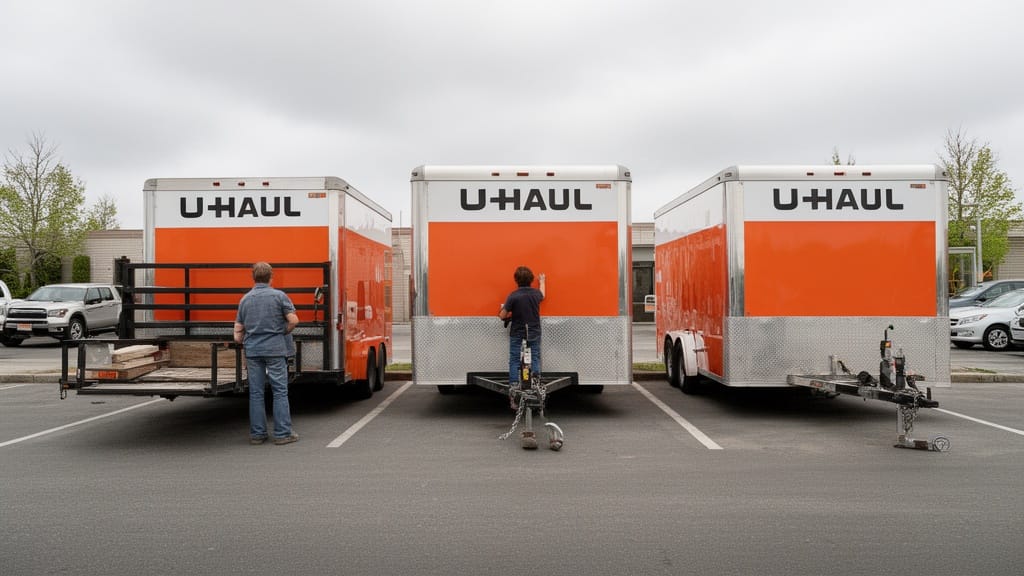
U-Haul splits its lineup into three practical families: open utility trailers, enclosed cargo trailers, and specialty trailers for vehicles or motorcycles. Each matches a different load and a different hitch class.
The open u-haul utility trailer sizes run from a compact 4×8 up through 5×8 and 6×12 ramp models. These carry furniture, appliances, and yard equipment but leave the load exposed to weather. An enclosed u-haul cargo trailer seals everything inside a locking, weatherproof box—ideal for a long haul or valuables.
| Trailer model | Type | Approx. load capacity | Best for |
|---|---|---|---|
| 4×8 utility | Open | Up to ~1,800 lbs | Studio moves, appliances |
| 5×8 cargo | Enclosed | Up to ~1,800 lbs | Weather-sensitive loads |
| 6×12 enclosed | Enclosed | Up to ~2,500 lbs | 1–2 bedroom moves |
| Auto transport | Vehicle | Full car carry | Moving a second vehicle |
Specs above reflect U-Haul's published cargo, utility, and trailer rental listings. U-Haul also rents a dedicated u-haul motorcycle trailer built with a wheel chock and tie-down points that keep a bike upright and stable in transit.
Pro Tip: Measure your largest single item—usually a sofa or mattress—before choosing a size. A 4×8 utility trailer swallows most single-room loads, but a 6×12 enclosed model earns its keep the moment you need weather protection and lockable security.
Towing a Vehicle: Auto Transport vs. Tow Dolly
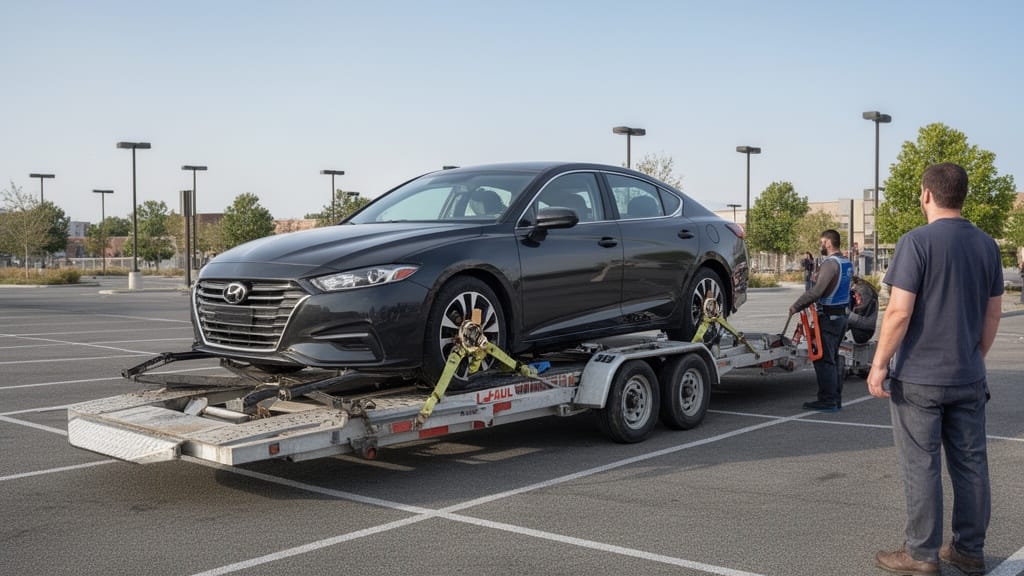
Moving a car behind your truck comes down to two products, and they are not interchangeable. A u-haul auto transport loads all four wheels onto the trailer, lifting the entire car off the road. A u-haul tow dolly raises only the front wheels while the rear wheels roll on the pavement.
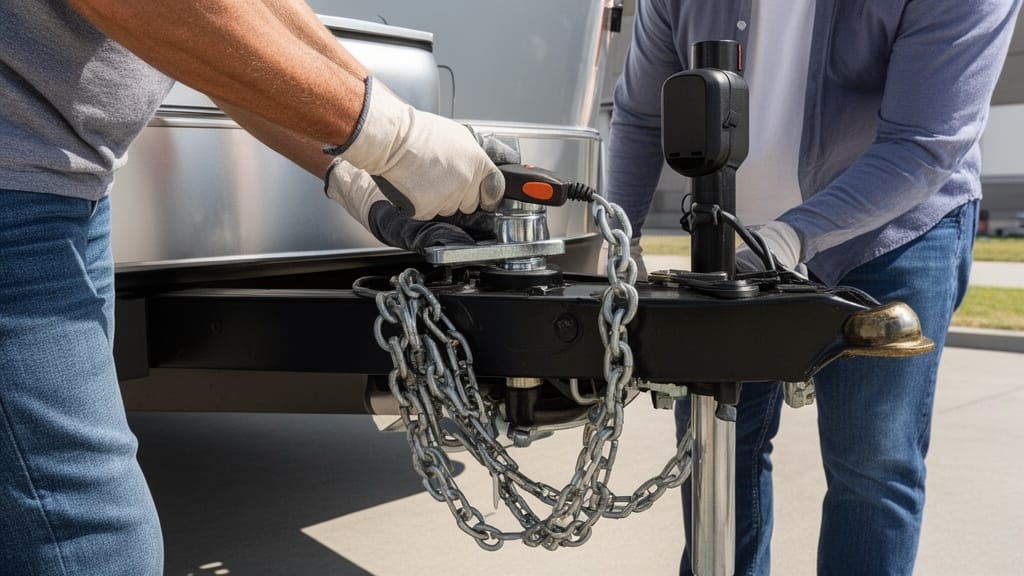
That single difference drives every other decision. A tow dolly suits most front-wheel-drive cars and costs less. An auto transport is required for all-wheel-drive and rear-wheel-drive vehicles, because dragging driven rear wheels can wreck a transmission.
| Criteria | Tow Dolly | Auto Transport |
|---|---|---|
| Wheels off ground | Front only | All four |
| Best for | Front-wheel-drive cars | AWD / RWD / heavier cars |
| Vehicle weight rule | Tow vehicle must outweigh loaded car | Confirm against trailer rating |
| Typical in-town rate | Lower daily rate | Higher daily rate |
| Storage in transit | Rear wheels roll on road | Entire car carried |
Q: What is the difference between a U-Haul tow dolly and auto transport?
A: A tow dolly lifts only the front wheels and fits most front-wheel-drive cars, while an auto transport carries all four wheels off the ground and is required for all-wheel-drive and rear-wheel-drive vehicles.
U-Haul enforces a firm safety rule for the tow dolly: the vehicle doing the towing must be heavier than the loaded car riding on the dolly. Ignore that and you invite dangerous trailer sway.
How to Know If Your Vehicle Can Tow a U-Haul Trailer
Start with two numbers from your owner's manual: your vehicle's maximum towing capacity and its gross vehicle weight rating (GVWR). The loaded trailer must stay under the towing capacity, full stop.
Then match your hitch class to the job. Hitch classes are standardized by rated capacity, and the class stamped on your receiver caps what you can safely pull.
| Hitch class | Typical capacity | Common U-Haul use |
|---|---|---|
| Class I | Up to ~2,000 lbs | Small 4×8 utility trailer |
| Class II | Up to ~3,500 lbs | Loaded cargo trailer |
| Class III | Up to ~8,000 lbs | Auto transport, 6×12 enclosed |
| Class IV | Up to ~10,000 lbs | Heavy specialty loads |
Vehicle capability varies widely. A compact crossover may tow only a light utility trailer, while a mid-size SUV rated near 5,000 lbs handles an auto transport with a loaded car. Always verify against your manufacturer's figure, not a rule of thumb.
Pro Tip: Photograph the sticker inside your driver's door jamb and the tow-rating page in your manual before visiting the rental counter. U-Haul staff can cross-check your vehicle in seconds when you arrive with the exact numbers in hand.
GoBorn can help: If sizing a hitch, checking tow ratings, and loading a trailer yourself sounds like more risk than reward, our crews handle the heavy lifting so you skip the guesswork entirely. Learn more →
What Does U-Haul Trailer and Towing Rental Cost?
U-Haul trailer rental cost is among the cheapest ways to move, especially for in-town trips. Per U-Haul's published rates, in-town utility trailers start around $14.95 per day, with enclosed cargo trailers and vehicle-hauling equipment priced higher.
| Equipment | Typical in-town starting rate | Notes |
|---|---|---|
| 4×8 utility trailer | ~a noticeable amount/day | Open, lowest cost |
| 5×8 / 6×12 cargo | Higher daily rate | Enclosed, lockable |
| Tow dolly | Mid daily rate | Front-wheel-drive cars |
| Auto transport | Highest daily rate | Full vehicle carry |
Rates shown reflect U-Haul's own published pricing and vary by location, season, and one-way versus round-trip. One-way rentals across states cost more than in-town round trips, and hitch installation is a separate charge if your car lacks a receiver.
Q: How much does it cost to rent a U-Haul trailer?
A: In-town U-Haul utility trailers start around a noticeable amount per day per U-Haul's published rates, with enclosed cargo trailers, tow dollies, and auto transports costing progressively more depending on size and trip type.
When you total hitch installation, mileage on a truck alternative, and fuel, the math sometimes favors hired help. Compare the trade-offs in our breakdown of full-service moving versus DIY truck rentals before you commit.
Installing a Hitch: U-Haul Installation vs. DIY

U-Haul installs tow hitches at most of its locations, covering the receiver, wiring for the trailer light connector, and the hitch ball itself. Professional installation guarantees the class rating matches your vehicle and that the electrical connector triggers your trailer's brake and turn signals.
DIY installation is possible on many vehicles with basic tools, but it carries real risk. A misrated receiver, a loose hitch ball, or faulty wiring turns into a roadside hazard, and it can void your rental eligibility.
Q: Does U-Haul install tow hitches?
A: Yes. U-Haul installs trailer hitches and wiring at most service centers, matching the hitch class to your vehicle's rated towing capacity and connecting the trailer light connector for legal, functioning signals.
For a one-time move, professional installation usually wins. For frequent towing, a permanent factory-grade hitch pays off over time.
Safety Checklist Before You Hit the Road With a Trailer
Most trailer accidents trace back to loading and coupling errors, not driver skill. The federal safety agencies publish detailed trailer towing safety guidance worth reviewing before your first trip.
Run this checklist every single time before departure:
- Confirm the coupler is fully seated on the hitch ball and locked.
- Cross the safety chains beneath the coupler to catch it if it drops.
- Plug in the trailer light connector and test brake and turn signals.
- Load 60% of weight toward the front of the trailer to prevent sway.
- Verify tire pressure on both trailer and tow vehicle.
- Re-check lug nuts and straps after the first few miles.
Pro Tip: Weight distribution beats every other sway-prevention trick. Keeping the heaviest items ahead of the trailer axle—not stacked at the rear—does more for stability than driving slowly ever will.
Proper loading applies to trucks too; the same balance principles appear in our guide to packing a truck for a long-distance move.
When a Trailer Makes Sense vs. When to Rent a Truck
A trailer wins when you already own a capable tow vehicle and your load is small to mid-size. You keep your own cabin, save on a separate vehicle rental, and pay the lowest daily rate in the U-Haul catalog.
A truck wins when your car cannot tow, when the load fills more than a 6×12 trailer, or when you would rather not manage trailer sway on a highway for hundreds of miles. First-time towers especially underestimate how differently a loaded trailer handles.
Here is the decision in one line: capable tow vehicle plus modest load equals trailer; no hitch, no capacity, or a full household equals truck. Both routes are cheaper than most alternatives, and both reward planning over improvisation.
Related Articles
- The True Cost of a U-Haul Move: Rental, Mileage, Fuel and Fees — See how trailer and hitch fees fit into your total moving budget.
- What Size U-Haul Do You Actually Need? (A Room-by-Room Guide) — Match trailer or truck size to your exact household inventory.
- Moving Cross-Country in a U-Haul: What Nobody Tells You — Learn how towing changes long-distance planning and handling.
- Renting Your First U-Haul? A Nervous First-Timer's Playbook — Walk through the rental process step by step with confidence.
Recommended Reading
- Full Service Moving Company vs DIY Truck Rentals
- How to Pack a Truck for a Long Distance Move
- 12 Essential Cross-Country Moving Tips
- What to Do After a U-Haul Truck Accident
Frequently Asked Questions