'%3E%3Cpath%20fill='%231B2A47'%20d='M1.605%2016.263c.03-1.139.059-2.482.088-3.971.03-1.49.03-2.832.03-4.03%200-.758%200-1.576-.03-2.51%200-.905-.03-1.84-.03-2.803%200-.496-.028-.964-.028-1.43%200-.468%200-.906-.03-1.315h6.858q2.188%200%203.589.35c.963.234%201.663.643%202.13%201.198.496.555.73%201.372.73%202.394%200%20.788-.176%201.46-.497%201.985-.32.526-.846.935-1.575%201.197-.73.292-1.693.468-2.918.526v.263c1.313.087%202.334.263%203.122.525.758.263%201.342.672%201.692%201.197.35.526.525%201.197.525%202.044%200%201.08-.233%201.927-.67%202.57-.468.642-1.139%201.08-2.102%201.343-.933.262-2.159.408-3.705.408H1.605zm6.537-9.197q1.882%200%202.713-.526c.555-.35.817-.934.817-1.752%200-.905-.292-1.547-.846-1.927s-1.459-.554-2.655-.554H4.757v4.759zm.204%206.92c.934%200%201.663-.088%202.217-.263.555-.176.934-.438%201.197-.818s.38-.876.38-1.518c0-.876-.322-1.49-.934-1.84-.643-.35-1.635-.525-3.035-.525H4.757v4.963zM21.038%2016.555c-1.576%200-2.801-.292-3.618-.905-.817-.614-1.284-1.519-1.372-2.745-.087-1.226.205-2.774.847-4.613s1.43-3.358%202.392-4.584c.963-1.226%202.043-2.131%203.298-2.744C23.839.292%2025.24%200%2026.786%200c1.576%200%202.772.321%203.59.934.816.613%201.283%201.548%201.37%202.774s-.203%202.774-.845%204.613c-.642%201.81-1.43%203.358-2.393%204.584s-2.072%202.132-3.297%202.745a9.8%209.8%200%200%201-4.173.905m.788-2.278c.642%200%201.138-.058%201.371-.116.205-.059.496-.117.847-.322.262-.146.437-.292.554-.408.204-.175.32-.292.438-.41.204-.203.35-.408.496-.583.35-.438.642-.876.963-1.402.233-.408.466-.817.67-1.284.205-.438.38-.905.555-1.372.438-1.198.671-2.278.671-3.183s-.204-1.606-.612-2.131c-.409-.497-1.051-.76-1.897-.76-.467%200-.934.059-1.43.205h-.03c-1.02.292-1.925%201.226-2.042%201.372-.116.117-.467.526-.963%201.343a15.5%2015.5%200%200%200-1.342%202.92c-.408%201.197-.642%202.277-.671%203.182-.03.906.175%201.636.584%202.161q.611.788%201.838.788M14.853%2038.54c-1.576%200-2.802-.292-3.619-.905s-1.284-1.518-1.371-2.744c-.088-1.227.204-2.774.846-4.614s1.43-3.357%202.393-4.584%202.042-2.13%203.297-2.744c1.255-.613%202.655-.905%204.173-.905%201.575%200%202.772.321%203.589.934s1.284%201.548%201.371%202.774c.088%201.226-.204%202.774-.846%204.613-.642%201.81-1.43%203.358-2.393%204.584s-2.072%202.131-3.297%202.745c-1.226.613-2.626.846-4.143.846m.787-2.277c.642%200%201.138-.059%201.372-.117.204-.058.496-.117.846-.321.263-.146.438-.292.554-.409.205-.175.321-.292.438-.409.204-.204.35-.408.496-.584a13%2013%200%200%200%201.634-2.686c.204-.438.38-.905.555-1.372.437-1.197.67-2.277.67-3.182%200-.906-.203-1.606-.612-2.132-.409-.496-1.05-.759-1.897-.759-.467%200-.934.058-1.43.204h-.029c-1.021.292-1.925%201.227-2.042%201.373-.117.116-.467.525-.963%201.343a15.5%2015.5%200%200%200-1.342%202.92c-.409%201.196-.642%202.277-.671%203.182s.175%201.635.583%202.16q.613.789%201.838.789'/%3E%3Cpath%20fill='%23FF515E'%20d='M55.966%2038.57c-1.576%200-2.801-.293-3.618-.906s-1.284-1.518-1.372-2.744c-.087-1.227.204-2.774.846-4.613s1.43-3.358%202.393-4.584c.963-1.227%202.043-2.132%203.297-2.745s2.656-.905%204.173-.905c1.576%200%202.772.321%203.589.934s1.284%201.548%201.371%202.774c.088%201.226-.204%202.774-.846%204.613-.642%201.81-1.43%203.358-2.393%204.584s-2.071%202.131-3.297%202.745c-1.225.613-2.626.846-4.143.846m.788-2.249c.642%200%201.138-.058%201.371-.117.204-.058.496-.116.846-.32.263-.147.438-.293.555-.41a7%207%200%200%200%20.437-.408c.205-.205.35-.41.496-.584a13%2013%200%200%200%201.634-2.686c.205-.438.38-.905.555-1.373.438-1.197.671-2.277.671-3.182s-.204-1.606-.613-2.131c-.408-.497-1.05-.76-1.896-.76-.467%200-.934.059-1.43.205h-.03c-1.02.292-1.925%201.226-2.042%201.372-.117.117-.467.526-.963%201.343a15.5%2015.5%200%200%200-1.342%202.92c-.409%201.197-.642%202.277-.671%203.182s.175%201.635.583%202.16q.614.79%201.839.79'/%3E%3Cpath%20fill='%231B2A47'%20d='M33.06%2016.263c0-.35%200-.935.03-1.81.029-1.051.058-2.103.058-3.154s.03-2.073.03-3.007c0-1.606-.03-3.27-.06-4.993%200-.554-.028-1.08-.028-1.606%200-.525-.03-1.021-.03-1.46h6.828c1.46%200%202.685.117%203.59.38q1.4.394%202.1%201.314.7.963.7%202.628c0%20.992-.174%201.81-.554%202.452-.35.643-.904%201.11-1.604%201.431s-1.576.467-2.627.496v.263q2.058.087%203.064.876c.671.525%201.138%201.372%201.43%202.51.087.41.233%201.023.467%201.84.233.818.408%201.431.554%201.84h-3.414a11%2011%200%200%200-.262-1.022c-.321-1.314-.526-2.19-.584-2.628a5%205%200%200%200-.642-1.46%202.13%202.13%200%200%200-.963-.73c-.408-.146-.934-.233-1.605-.233h-3.326v6.0440000000000005H33.06zm6.332-8.292c1.343%200%202.276-.205%202.86-.613.554-.41.846-1.11.846-2.073%200-.73-.146-1.314-.408-1.723-.263-.409-.671-.7-1.197-.876q-.788-.263-2.1-.263h-3.181v5.519h3.18zM49.4%2016.263l.03-2.745c.029-2.452.029-4.905.029-7.416q0-2.101-.088-5.868h4.085l5.924%2010.335c.087.234.204.438.291.643.117.204.205.408.321.613.38.788.613%201.255.672%201.372h.262c0-.058-.03-.146-.03-.204%200-.059-.028-.117-.028-.175a75%2075%200%200%201-.175-1.314%2010%2010%200%200%201-.088-1.285c0-1.547%200-3.737-.029-6.57V1.84c0-.584-.03-1.11-.03-1.576h2.977c-.03%202.482-.058%205.08-.058%207.766%200%201.694%200%204.438.029%208.292h-4.027l-5.573-9.43c-.875-1.81-1.226-2.511-1.05-2.132-.263-.613-.467-1.08-.613-1.46h-.263c.058.35.117.876.175%201.548.059.7.117%201.168.117%201.46%200%202.978%200%206.306.029%209.985H49.4zM4.698%2038.277c.029-2.627.058-5.255.058-7.883%200-1.576%200-3.503-.029-5.752-1.109%200-2.684%200-4.727.03v-2.453h12.664v2.453c-1.955-.03-3.53-.03-4.756-.03%200%20.584-.03%201.227-.03%201.957s0%201.46-.029%202.218v1.84c0%202.57.03%205.11.059%207.62z'/%3E%3Cpath%20fill='%23FF515E'%20d='M29.441%2038.277c.409-1.05.788-2.102%201.168-3.182s.787-2.16%201.167-3.241c.613-1.693%201.05-2.949%201.342-3.766l1.255-3.65c.116-.38.262-.788.379-1.139.117-.38.263-.73.38-1.05h4.61l-.671%2012.904h.262l8.316-12.905h4.669l-.7%201.869c-.876%202.452-1.343%203.766-1.43%204a501%20501%200%200%200-3.385%2010.16h-2.947c.292-.846.788-2.219%201.459-4.087.175-.526.35-1.08.554-1.606.175-.526.38-1.08.555-1.577.642-1.81%201.342-3.825%202.072-6.014h-.234l-8.724%2013.314h-2.86l.554-13.314h-.175c-.175.496-.38.992-.554%201.489-.175.496-.38%201.022-.555%201.547a163%20163%200%200%200-1.08%203.008c-.145.38-.262.759-.408%201.138-.117.38-.262.73-.408%201.11-.7%201.898-1.284%203.59-1.751%205.05h-2.86zM68.047%2038.277c.175-2.19.32-4.525.467-7.007.058-.905.204-3.912.467-9.051h3.151c-.03.438-.058.934-.088%201.46s-.058%201.08-.087%201.693a264%20264%200%200%201-.409%206.657c-.145%201.986-.35%203.591-.583%204.788h.175Q72.147%2034.892%2073.94%2032a562%20562%200%200%201%204.465-7.066c.32-.496.641-.992.933-1.46s.555-.875.817-1.255h3.268q-.568.832-1.138%201.752c-.408.613-.787%201.255-1.196%201.927-3.88%206.014-6.478%2010.131-7.85%2012.35h-5.193zM79.106%2038.277c.32-.788.758-2.014%201.37-3.65a287%20287%200%200%200%201.577-4.32c.437-1.256.904-2.628%201.4-4.088s.934-2.774%201.313-3.97h11.322l-.846%202.364H87.1l-1.664%204.847%207.645-.088-.612%201.694-7.587-.088-1.75%204.934h8.286l-.846%202.365z'/%3E%3C/g%3E%3Cdefs%3E%3CclipPath%20id='a'%3E%3Cpath%20fill='%23fff'%20d='M0%200h96v40H0z'/%3E%3C/clipPath%3E%3C/defs%3E%3C/svg%3E)
Abington commercial movers relocate offices, retail spaces, medical practices, and warehouses—planning, packing, transporting, and reinstalling business assets with minimal disruption to daily operations. Unlike a home move, a commercial relocation runs on tight schedules, after-hours windows, and strict building-insurance rules. A single missed step can stall an entire workforce.
The difference between a smooth office move and a costly one comes down to preparation. This guide breaks down what commercial movers actually do, how they protect IT and furniture, how to keep downtime near zero, and what a realistic budget looks like.

Key Takeaways
| Point | Details |
|---|---|
| Commercial ≠ residential | Office moves require after-hours scheduling, a certificate of insurance, and specialized handling of IT and modular furniture. |
| Downtime is the real cost | Lost productivity often exceeds the moving invoice; phased, weekend, or after-hours moves keep teams working. |
| Plan 6–8 weeks ahead | Building management, COI processing, and IT cutover all need lead time before moving day. |
| Verify before you hire | Confirm a mover's USDOT registration through the FMCSA's Protect Your Move resource and check insurance. |
| Cost is driven by factors, not flat fees | Crew size, access, equipment volume, and timing shape the final price more than square footage alone. |
What Makes a Commercial Move Different From a Home Move

A commercial move is a logistics project, not a heavy-lifting errand. Where a household relocation centers on boxes and bedroom furniture, an office relocation in Abington involves networked equipment, shared workstations, compliance paperwork, and a business that must keep running. The stakes are operational revenue, not personal convenience.
The biggest divide is timing. Most business moves happen on evenings, weekends, or holidays so staff return to a working office. That after-hours model is rare in residential work but standard for any commercial moving company Abington businesses rely on.
Building requirements add another layer. Property managers almost always demand a certificate of insurance (COI) naming the building as additionally insured before movers touch the loading dock. Residential moves seldom require this.
Q: What is the main difference between commercial and residential movers?
A: Commercial movers schedule around business hours, carry liability coverage that satisfies building COI requirements, and handle IT and modular furniture—while residential movers focus on household goods during daytime windows.
| Factor | Commercial Move | Residential Move |
|---|---|---|
| Scheduling | After-hours, weekends, phased | Daytime, single day |
| Insurance | COI naming building required | Basic valuation coverage |
| Key assets | Servers, IT, modular furniture | Household goods |
| Disruption cost | Lost revenue and productivity | Personal inconvenience |
| Crew | Project manager plus larger team | Small crew |
This structural difference is why business movers Abington companies hire treat each project as a managed timeline rather than a one-day job.
Services Abington Commercial Movers Provide
Professional commercial moving services cover far more than loading a truck. The scope spans pre-move planning, packing, transport, and reinstallation so the new space is functional on day one. A good office moving company assigns a single point of contact who coordinates every phase.
Typical commercial moving services include:
- Pre-move surveys and floor-plan mapping
- Labeling and inventory systems for traceable assets
- Packing and supplying crates, bins, and protective materials
- Furniture disassembly and reassembly
- IT and electronics disconnection coordination
- Specialized equipment moving (copiers, safes, lab gear)
- Storage for surplus or staged inventory
- Debris removal and recycling after the move
The best abington office movers also handle the unglamorous logistics: reserving freight elevators, protecting floors and door frames, and sequencing the load so the most urgent items arrive first. For teams weighing whether to manage pieces themselves, this guide on whether you can hire someone to move furniture explains where professional help pays off.
Pro Tip: Ask any business relocation services provider for a written, itemized scope of work before signing. Vague "full-service" promises hide the gaps—debris removal and reassembly are common exclusions that surface as surprise charges.
Moving Office Furniture, IT, and Equipment Safely
Office assets fail in three predictable ways during a move: dropped electronics, scratched furniture, and lost cables. Experienced office furniture movers prevent all three with disassembly, padding, and a labeling discipline that residential crews rarely use.
Modular workstations and cubicles must come apart panel by panel. Trained corporate movers photograph each unit before disassembly, bag and label every bolt, and number panels so reassembly is exact. The OSHA materials handling guidelines on safe lifting and load handling underpin why crews use dollies, straps, and team lifts instead of muscling heavy desks.
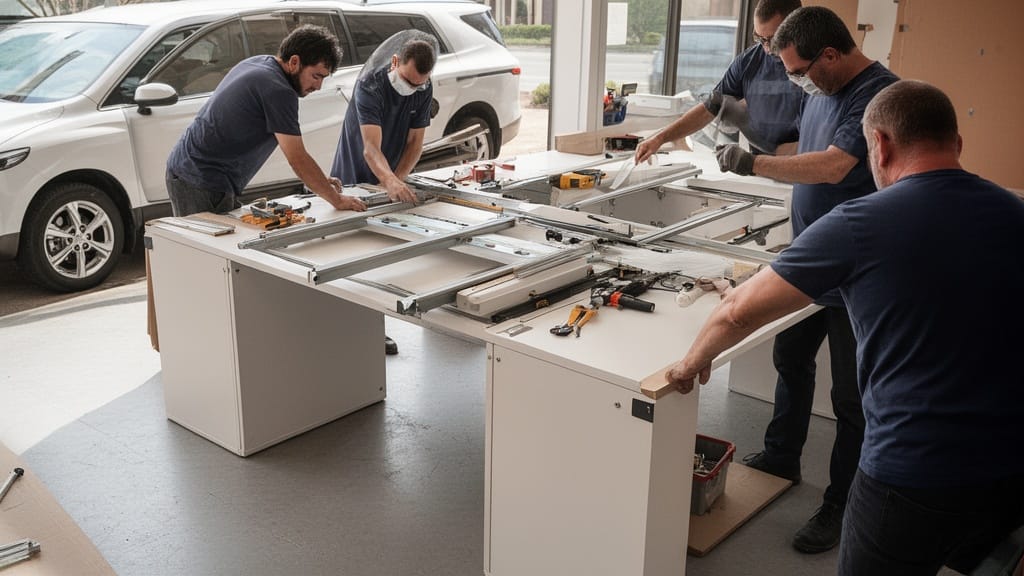
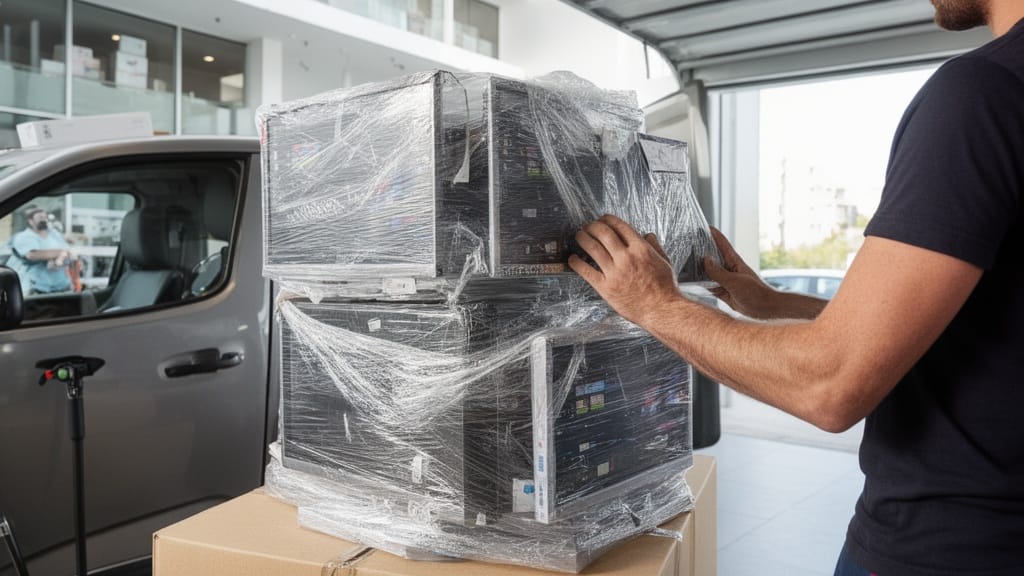
IT equipment is the highest-risk category. Movers wrap monitors and CPUs in blankets, transport them upright in padded crates, and keep them separate from heavy furniture. Crucially, movers transport hardware—they do not handle data.
Q: Do movers back up servers before a move?
A: No. Movers physically transport and crate IT hardware, but data backup, server shutdown, and network cutover are handled by your internal IT team or managed service provider before moving day.
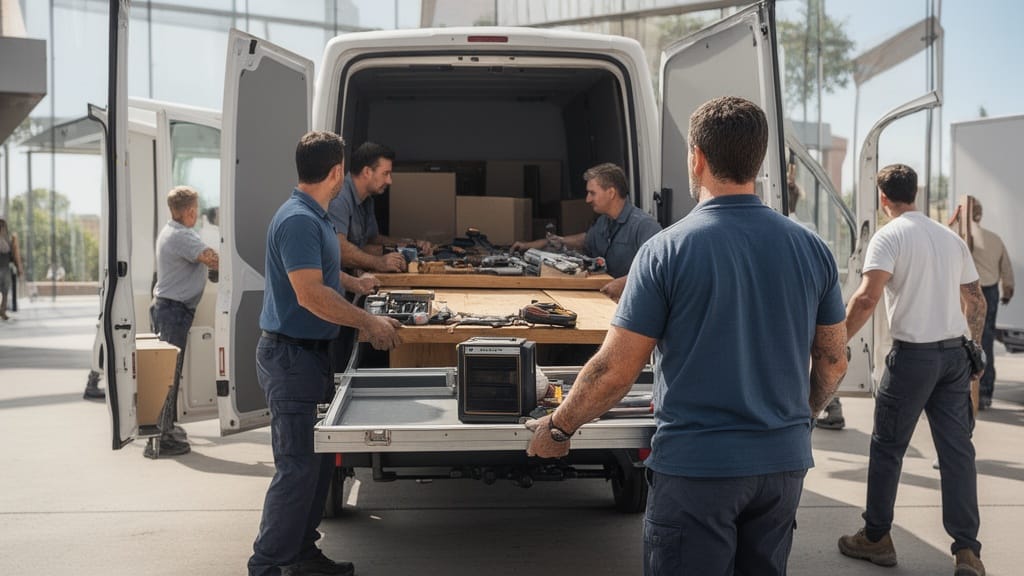
For fragile or high-value items, professional crating adds a rigid protective shell. Before any of this, sound prep matters; review how to how to prepare furniture when relocating so desks and cabinets arrive intact.
Pro Tip: Photograph the back of every workstation—every cable, port, and power connection—before disconnection. Reconnecting a 30-person floor from memory wastes hours; a phone full of reference photos restores it in minutes.
How to Minimize Business Downtime During a Move
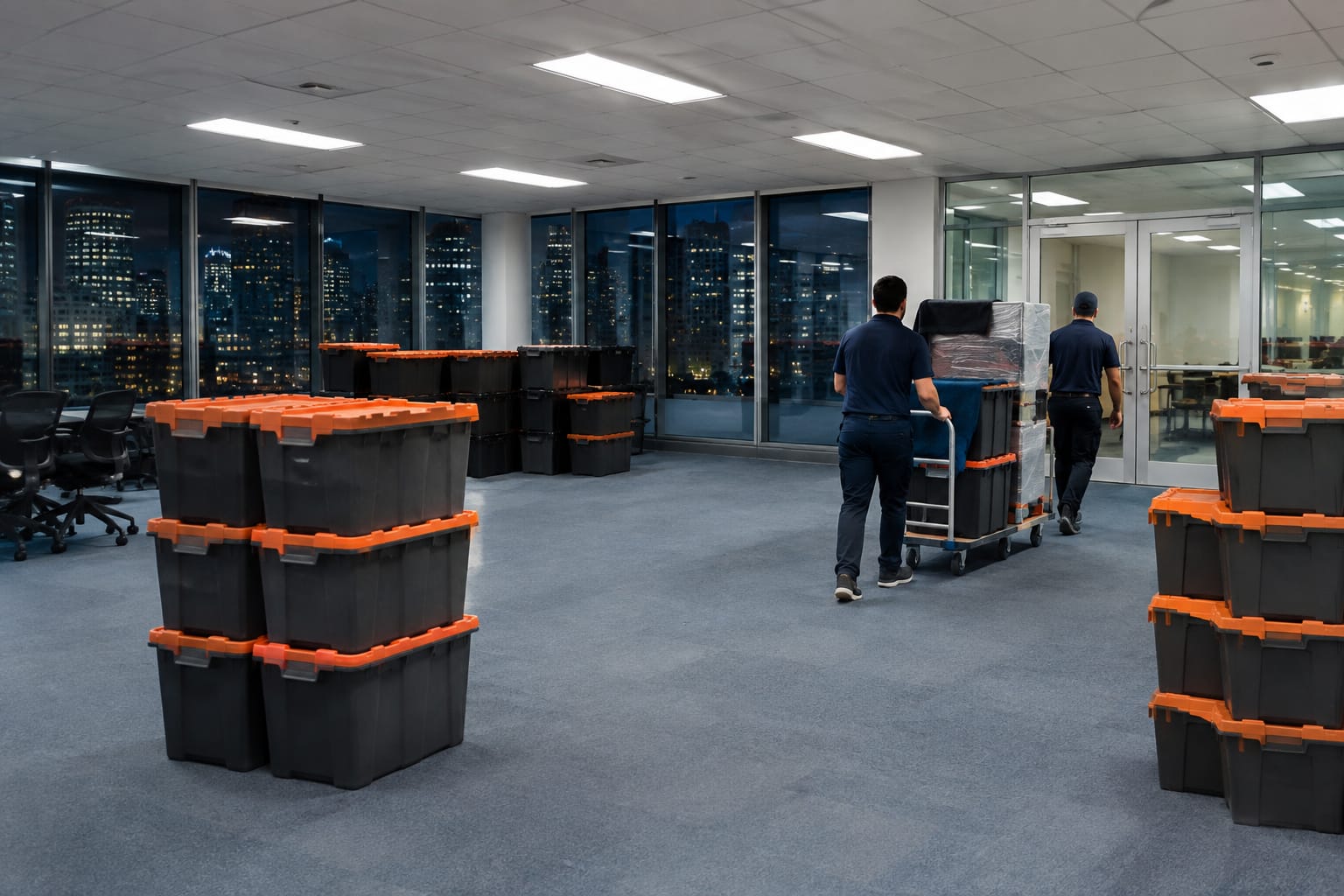
The fastest way to cut downtime is to move when the business is closed and to relocate in phases. Downtime—not the moving invoice—is usually the largest cost of an office relocation Abington firms face, because idle staff and unreachable systems drain revenue by the hour.
A proven downtime-minimization framework follows four principles:
- Schedule after-hours or weekend windows so staff arrive to a functional space.
- Phase the move by department so customer-facing teams never go fully dark.
- Cut over IT first and last—disconnect non-critical systems early, move servers last, restore connectivity before anything else.
- Pre-stage the new space with a floor plan so crews place furniture once, not twice.
Q: How do you move an office with minimal downtime?
A: Move after hours or over a weekend, relocate in phases by department, and sequence IT so servers go last and reconnect first—most small and mid-size offices can be fully operational by the next business morning.
Clear labeling is the unsung hero here. When every crate maps to a numbered location on the floor plan, the reinstall team works without asking questions. The FTC's guidance on hiring a mover reinforces that written plans and inventories prevent the confusion that stretches a one-night move into a multi-day ordeal.
Pro Tip: Move your servers and network gear last and reconnect them first. A working network lets staff resume on laptops even while desks and chairs are still being placed—turning a full outage into a minor inconvenience.
Planning a Commercial Move: Timeline and Checklist

Start planning an office move six to eight weeks out. That lead time covers building approvals, COI processing, vendor scheduling, and IT cutover—the four items most likely to cause delays. Rushing any of them is where moves go wrong.
The phased timeline below works for most small and mid-size relocations:
| Timeframe | Key Actions |
|---|---|
| 6–8 weeks out | Set budget, get quotes, book the mover, notify building management |
| 4–5 weeks out | Request COIs, finalize floor plan, order labels and crates |
| 2–3 weeks out | Brief staff, schedule IT cutover, reserve freight elevator and dock |
| 1 week out | Distribute labels, confirm crew and timing, purge surplus items |
| Moving day | Supervise load, verify inventory, oversee reinstall and IT restore |
Pro Tip: Request your certificate of insurance from the mover at least two weeks before moving day. Building management often takes several business days to review and approve a COI, and an unapproved certificate can get your crew turned away at the dock.
Before signing with any commercial moving company Abington offers, run through the questions worth asking before you book—licensing, insurance, and scope clarity prevent most moving-day disputes.
Cost Factors for an Abington Commercial Move
Commercial moves are priced by factors, not flat fees. Crew size, building access, equipment volume, and timing shape the final number far more than square footage alone. Most reputable movers apply an hourly rate with a minimum—commonly a three-hour minimum—rather than a single quote sight unseen.
The table below outlines the main cost drivers and how each pushes the price up or down.
| Cost Factor | Impact on Price |
|---|---|
| Crew size and hours | More movers and longer jobs raise labor cost; larger crews can shorten total time |
| Building access | Stairs, distant docks, and freight-elevator limits add labor hours |
| Volume and equipment | Servers, safes, and modular furniture require specialized handling |
| Timing | After-hours, weekend, and holiday moves often carry premium rates |
| Packing and materials | Crates, blankets, and crating services add to the base |
| Distance | Longer hauls increase transport and fuel time |
Q: Are commercial moves charged hourly or by the job?
A: Most abington ma commercial movers charge an hourly rate with a minimum—often three hours—because access, volume, and after-hours timing vary too much for accurate flat quotes.
Get at least three written estimates and compare scope line by line, not just the bottom number. For a broader breakdown of moving rates and what shapes them, this overview of how much movers cost is a useful baseline. The Bureau of Labor Statistics outlook for material movers also shows steady demand for skilled crews, which supports the value of experienced labor over the cheapest bid.
Choosing the Right Commercial Moving Partner
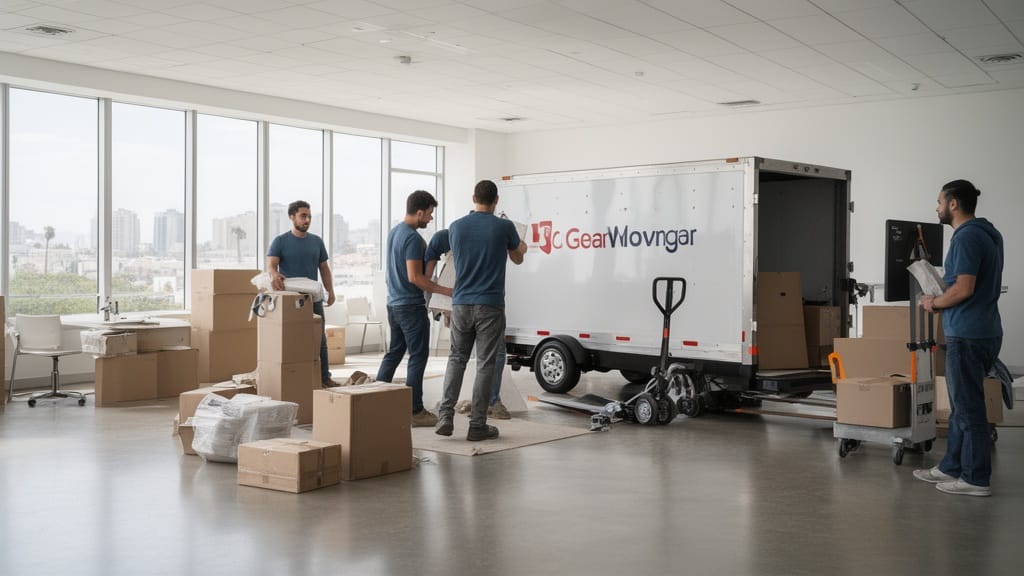
The right office relocation Abington partner is licensed, insured, and experienced specifically with business moves—not just households. Commercial work demands COI capability, after-hours availability, and equipment-handling expertise that general movers may lack.
Verify credentials before anything else. Confirm the company's safety and registration record through the FMCSA SAFER company snapshot system, which lets you check a carrier's authority and inspection history in seconds. A legitimate mover will share its USDOT number without hesitation.
Use this checklist when evaluating any office relocation abington provider:
- Proven commercial references and case examples
- Ability to issue a COI naming building management
- Written, itemized scope and estimate
- In-house crews rather than day-labor subcontractors
- Clear IT and furniture handling procedures
- Transparent hourly rates and minimum policy
Objectivity matters here: the cheapest quote rarely wins on a business move, because a damaged server or a blown weekend window costs far more than the rate difference. Strong corporate movers earn trust through process, not promises.
Related Articles
- Abington Movers: Your Complete Local Guide — A full overview of local moving options and what to expect in the Abington area.
- Abington Residential Movers: Home Moving Done Right — How home moves differ from commercial ones and how to plan them well.
- Abington Long Distance Movers: Planning Your Move — A planning framework for relocations beyond the local area.
- Choosing a Good Home Mover: Qualities That Matter — The traits that separate reliable movers from risky ones.
- How to Choose a Licensed and Insured Moving Company You Can Trust — A guide to verifying credentials before you hire.
Recommended Reading
- Why choose a Local Moving Company?
- Tips on how to prepare furniture when relocating
- How much do movers cost?
- What to Look for in a Moving Company
- How to professionally crate things
Frequently Asked Questions