'%3E%3Cpath%20fill='%231B2A47'%20d='M1.605%2016.263c.03-1.139.059-2.482.088-3.971.03-1.49.03-2.832.03-4.03%200-.758%200-1.576-.03-2.51%200-.905-.03-1.84-.03-2.803%200-.496-.028-.964-.028-1.43%200-.468%200-.906-.03-1.315h6.858q2.188%200%203.589.35c.963.234%201.663.643%202.13%201.198.496.555.73%201.372.73%202.394%200%20.788-.176%201.46-.497%201.985-.32.526-.846.935-1.575%201.197-.73.292-1.693.468-2.918.526v.263c1.313.087%202.334.263%203.122.525.758.263%201.342.672%201.692%201.197.35.526.525%201.197.525%202.044%200%201.08-.233%201.927-.67%202.57-.468.642-1.139%201.08-2.102%201.343-.933.262-2.159.408-3.705.408H1.605zm6.537-9.197q1.882%200%202.713-.526c.555-.35.817-.934.817-1.752%200-.905-.292-1.547-.846-1.927s-1.459-.554-2.655-.554H4.757v4.759zm.204%206.92c.934%200%201.663-.088%202.217-.263.555-.176.934-.438%201.197-.818s.38-.876.38-1.518c0-.876-.322-1.49-.934-1.84-.643-.35-1.635-.525-3.035-.525H4.757v4.963zM21.038%2016.555c-1.576%200-2.801-.292-3.618-.905-.817-.614-1.284-1.519-1.372-2.745-.087-1.226.205-2.774.847-4.613s1.43-3.358%202.392-4.584c.963-1.226%202.043-2.131%203.298-2.744C23.839.292%2025.24%200%2026.786%200c1.576%200%202.772.321%203.59.934.816.613%201.283%201.548%201.37%202.774s-.203%202.774-.845%204.613c-.642%201.81-1.43%203.358-2.393%204.584s-2.072%202.132-3.297%202.745a9.8%209.8%200%200%201-4.173.905m.788-2.278c.642%200%201.138-.058%201.371-.116.205-.059.496-.117.847-.322.262-.146.437-.292.554-.408.204-.175.32-.292.438-.41.204-.203.35-.408.496-.583.35-.438.642-.876.963-1.402.233-.408.466-.817.67-1.284.205-.438.38-.905.555-1.372.438-1.198.671-2.278.671-3.183s-.204-1.606-.612-2.131c-.409-.497-1.051-.76-1.897-.76-.467%200-.934.059-1.43.205h-.03c-1.02.292-1.925%201.226-2.042%201.372-.116.117-.467.526-.963%201.343a15.5%2015.5%200%200%200-1.342%202.92c-.408%201.197-.642%202.277-.671%203.182-.03.906.175%201.636.584%202.161q.611.788%201.838.788M14.853%2038.54c-1.576%200-2.802-.292-3.619-.905s-1.284-1.518-1.371-2.744c-.088-1.227.204-2.774.846-4.614s1.43-3.357%202.393-4.584%202.042-2.13%203.297-2.744c1.255-.613%202.655-.905%204.173-.905%201.575%200%202.772.321%203.589.934s1.284%201.548%201.371%202.774c.088%201.226-.204%202.774-.846%204.613-.642%201.81-1.43%203.358-2.393%204.584s-2.072%202.131-3.297%202.745c-1.226.613-2.626.846-4.143.846m.787-2.277c.642%200%201.138-.059%201.372-.117.204-.058.496-.117.846-.321.263-.146.438-.292.554-.409.205-.175.321-.292.438-.409.204-.204.35-.408.496-.584a13%2013%200%200%200%201.634-2.686c.204-.438.38-.905.555-1.372.437-1.197.67-2.277.67-3.182%200-.906-.203-1.606-.612-2.132-.409-.496-1.05-.759-1.897-.759-.467%200-.934.058-1.43.204h-.029c-1.021.292-1.925%201.227-2.042%201.373-.117.116-.467.525-.963%201.343a15.5%2015.5%200%200%200-1.342%202.92c-.409%201.196-.642%202.277-.671%203.182s.175%201.635.583%202.16q.613.789%201.838.789'/%3E%3Cpath%20fill='%23FF515E'%20d='M55.966%2038.57c-1.576%200-2.801-.293-3.618-.906s-1.284-1.518-1.372-2.744c-.087-1.227.204-2.774.846-4.613s1.43-3.358%202.393-4.584c.963-1.227%202.043-2.132%203.297-2.745s2.656-.905%204.173-.905c1.576%200%202.772.321%203.589.934s1.284%201.548%201.371%202.774c.088%201.226-.204%202.774-.846%204.613-.642%201.81-1.43%203.358-2.393%204.584s-2.071%202.131-3.297%202.745c-1.225.613-2.626.846-4.143.846m.788-2.249c.642%200%201.138-.058%201.371-.117.204-.058.496-.116.846-.32.263-.147.438-.293.555-.41a7%207%200%200%200%20.437-.408c.205-.205.35-.41.496-.584a13%2013%200%200%200%201.634-2.686c.205-.438.38-.905.555-1.373.438-1.197.671-2.277.671-3.182s-.204-1.606-.613-2.131c-.408-.497-1.05-.76-1.896-.76-.467%200-.934.059-1.43.205h-.03c-1.02.292-1.925%201.226-2.042%201.372-.117.117-.467.526-.963%201.343a15.5%2015.5%200%200%200-1.342%202.92c-.409%201.197-.642%202.277-.671%203.182s.175%201.635.583%202.16q.614.79%201.839.79'/%3E%3Cpath%20fill='%231B2A47'%20d='M33.06%2016.263c0-.35%200-.935.03-1.81.029-1.051.058-2.103.058-3.154s.03-2.073.03-3.007c0-1.606-.03-3.27-.06-4.993%200-.554-.028-1.08-.028-1.606%200-.525-.03-1.021-.03-1.46h6.828c1.46%200%202.685.117%203.59.38q1.4.394%202.1%201.314.7.963.7%202.628c0%20.992-.174%201.81-.554%202.452-.35.643-.904%201.11-1.604%201.431s-1.576.467-2.627.496v.263q2.058.087%203.064.876c.671.525%201.138%201.372%201.43%202.51.087.41.233%201.023.467%201.84.233.818.408%201.431.554%201.84h-3.414a11%2011%200%200%200-.262-1.022c-.321-1.314-.526-2.19-.584-2.628a5%205%200%200%200-.642-1.46%202.13%202.13%200%200%200-.963-.73c-.408-.146-.934-.233-1.605-.233h-3.326v6.0440000000000005H33.06zm6.332-8.292c1.343%200%202.276-.205%202.86-.613.554-.41.846-1.11.846-2.073%200-.73-.146-1.314-.408-1.723-.263-.409-.671-.7-1.197-.876q-.788-.263-2.1-.263h-3.181v5.519h3.18zM49.4%2016.263l.03-2.745c.029-2.452.029-4.905.029-7.416q0-2.101-.088-5.868h4.085l5.924%2010.335c.087.234.204.438.291.643.117.204.205.408.321.613.38.788.613%201.255.672%201.372h.262c0-.058-.03-.146-.03-.204%200-.059-.028-.117-.028-.175a75%2075%200%200%201-.175-1.314%2010%2010%200%200%201-.088-1.285c0-1.547%200-3.737-.029-6.57V1.84c0-.584-.03-1.11-.03-1.576h2.977c-.03%202.482-.058%205.08-.058%207.766%200%201.694%200%204.438.029%208.292h-4.027l-5.573-9.43c-.875-1.81-1.226-2.511-1.05-2.132-.263-.613-.467-1.08-.613-1.46h-.263c.058.35.117.876.175%201.548.059.7.117%201.168.117%201.46%200%202.978%200%206.306.029%209.985H49.4zM4.698%2038.277c.029-2.627.058-5.255.058-7.883%200-1.576%200-3.503-.029-5.752-1.109%200-2.684%200-4.727.03v-2.453h12.664v2.453c-1.955-.03-3.53-.03-4.756-.03%200%20.584-.03%201.227-.03%201.957s0%201.46-.029%202.218v1.84c0%202.57.03%205.11.059%207.62z'/%3E%3Cpath%20fill='%23FF515E'%20d='M29.441%2038.277c.409-1.05.788-2.102%201.168-3.182s.787-2.16%201.167-3.241c.613-1.693%201.05-2.949%201.342-3.766l1.255-3.65c.116-.38.262-.788.379-1.139.117-.38.263-.73.38-1.05h4.61l-.671%2012.904h.262l8.316-12.905h4.669l-.7%201.869c-.876%202.452-1.343%203.766-1.43%204a501%20501%200%200%200-3.385%2010.16h-2.947c.292-.846.788-2.219%201.459-4.087.175-.526.35-1.08.554-1.606.175-.526.38-1.08.555-1.577.642-1.81%201.342-3.825%202.072-6.014h-.234l-8.724%2013.314h-2.86l.554-13.314h-.175c-.175.496-.38.992-.554%201.489-.175.496-.38%201.022-.555%201.547a163%20163%200%200%200-1.08%203.008c-.145.38-.262.759-.408%201.138-.117.38-.262.73-.408%201.11-.7%201.898-1.284%203.59-1.751%205.05h-2.86zM68.047%2038.277c.175-2.19.32-4.525.467-7.007.058-.905.204-3.912.467-9.051h3.151c-.03.438-.058.934-.088%201.46s-.058%201.08-.087%201.693a264%20264%200%200%201-.409%206.657c-.145%201.986-.35%203.591-.583%204.788h.175Q72.147%2034.892%2073.94%2032a562%20562%200%200%201%204.465-7.066c.32-.496.641-.992.933-1.46s.555-.875.817-1.255h3.268q-.568.832-1.138%201.752c-.408.613-.787%201.255-1.196%201.927-3.88%206.014-6.478%2010.131-7.85%2012.35h-5.193zM79.106%2038.277c.32-.788.758-2.014%201.37-3.65a287%20287%200%200%200%201.577-4.32c.437-1.256.904-2.628%201.4-4.088s.934-2.774%201.313-3.97h11.322l-.846%202.364H87.1l-1.664%204.847%207.645-.088-.612%201.694-7.587-.088-1.75%204.934h8.286l-.846%202.365z'/%3E%3C/g%3E%3Cdefs%3E%3CclipPath%20id='a'%3E%3Cpath%20fill='%23fff'%20d='M0%200h96v40H0z'/%3E%3C/clipPath%3E%3C/defs%3E%3C/svg%3E)
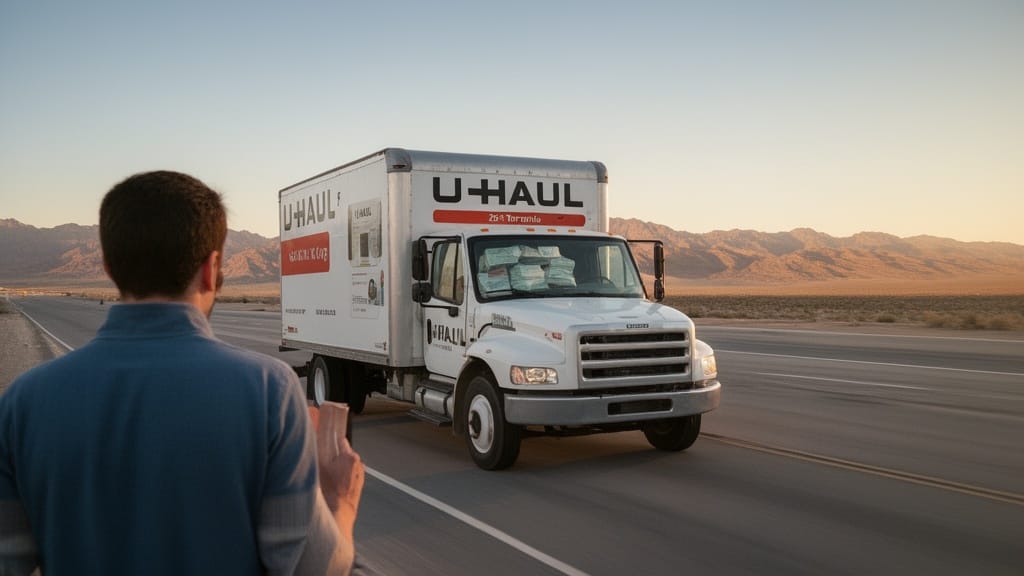
Moving cross-country in a U-Haul usually costs somewhere in the low-to-mid four figures for a one-way truck, plus fuel, and takes most drivers three to five days across a 2,000-to-3,000-mile route. That headline rental rate is only a fraction of the real story.
The quoted price hides fuel, tolls, overnight lodging, towing equipment and the physical toll of steering a loaded box truck through mountain grades and crosswinds. This guide lays out the true costs, the honest drive times and the on-road realities most listings skip — so you decide with clear eyes, not optimistic math.
Key Takeaways
| Point | Details |
|---|---|
| Total cost runs well past the rental line | The one-way truck is the low-to-mid four figures; fuel, towing, lodging and fees often add several hundred to a couple thousand more. |
| Plan 3–5 driving days | A loaded, speed-governed truck realistically covers 400–500 miles per day, not the 600+ a car manages. |
| Federal driving limits apply to you too | Fatigue is the top risk; FMCSA hours-of-service rules cap commercial drivers at 11 hours for good reason. |
| Towing has two paths | An auto transport carries all four wheels; a tow dolly only lifts the front two and suits front-wheel-drive cars. |
| Compare against full-service | For short interstate hops, a professional crew can rival DIY once you count fuel and time — see how much interstate moving costs. |
The Real Cost of a One-Way Cross-Country U-Haul

A one-way cross-country U-Haul rental for a 20-to-26-foot truck typically lands in the low-to-mid four figures before fuel. Your final cross country u-haul cost swings with route, truck size and travel dates.
Here's the part nobody flags: the rental line is maybe half of what leaves your bank account. Fuel, environmental fees, damage coverage, tolls and hotel nights stack up fast on a u-haul one-way long distance move.
| Cost Component | What to Expect | Notes |
|---|---|---|
| One-way truck rental | Low-to-mid four figures | Varies by size, route and demand |
| Fuel | Several hundred dollars | ~10 mpg on a big truck adds up |
| Damage coverage | Extra per-day add-on | Optional but widely purchased |
| Auto transport / tow dolly | Additional equipment fee | Required if you tow a car |
| Overnight lodging | Per night, 2–4 nights | Motels near truck-friendly lots |
Pro Tip: Book your long distance u-haul rental for a mid-week pickup and reserve 3–4 weeks out. One-way inventory is priced by demand, and weekend departures at month-end — when most leases turn over — carry the steepest rates.
For a fuller line-item breakdown, review a set of essential cross-country moving tips before you commit to a truck size.
How Long the Drive Actually Takes (And Why It's Longer Than You Think)
Most people budget the drive like a road trip in their car. That's the first mistake. A loaded cross country moving truck is heavier, slower and more tiring, so realistic daily mileage drops to roughly 400–500 miles.
Q: How many miles can you safely drive a loaded U-Haul in one day?
A: Plan for 400–500 miles per day. Fatigue, fuel stops, slower climbs and reduced top speed make 600-plus-mile car days unrealistic in a big truck.
| Sample Route | Approx. Distance | Realistic Driving Days |
|---|---|---|
| Boston → Los Angeles | ~3,000 miles | 5 days |
| Chicago → Seattle | ~2,050 miles | 4 days |
| New York → Denver | ~1,780 miles | 3 days |
So, how many days to drive a u-haul cross country? For most coast-to-coast routes, plan three to five full driving days plus buffer time for weather, traffic and rest. Push harder than that and fatigue becomes your biggest safety liability.
What It's Like to Drive a Loaded Truck for 2,000+ Miles
Driving a u-haul long distance is nothing like driving your car. The cab sits high, the mirrors demand constant scanning, and stopping distances stretch dramatically with several thousand pounds of furniture behind you.
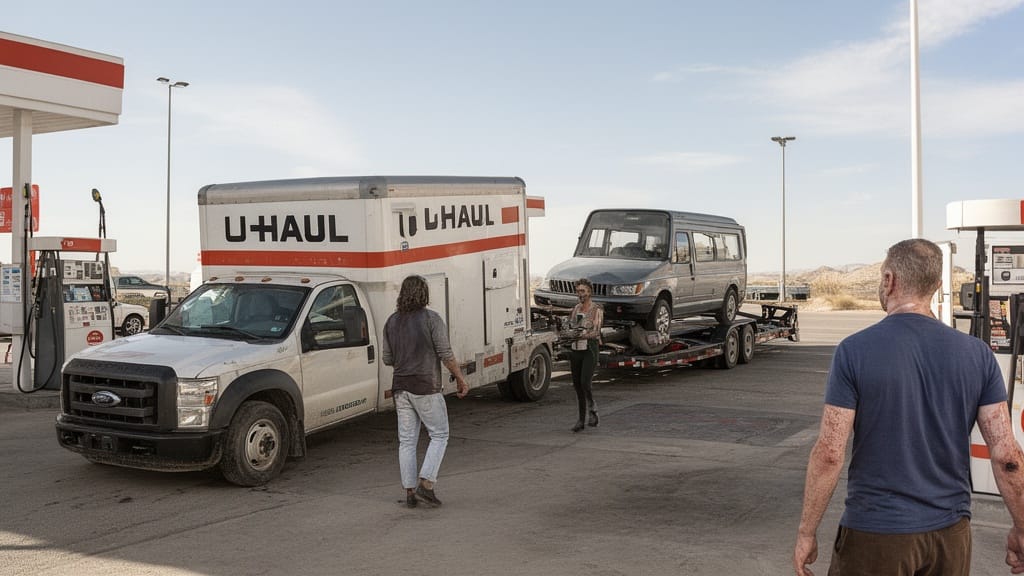
Most U-Haul trucks include a governor speed limiter that caps top speed in the mid-60s mph range. You'll cruise slower than surrounding traffic, which means staying right, planning passes carefully and accepting that big rigs will blow by you on grades.
Wind is the silent hazard. A tall box catches crosswinds like a sail, and gusts on open plains can jerk the wheel hard. Keep both hands on it, ease off the throttle, and never fight a gust with a sharp correction.
Pro Tip: Do a 10-minute "cab audit" before departure — adjust both side mirrors, mount your phone at eye level, and locate the hazard lights and parking brake by feel. You won't want to hunt for controls at 60 mph in a crosswind.
Fuel Stops, Mountain Grades and Weather You'll Hit
Fuel planning changes everything on a long haul. Big trucks average roughly 10 mpg, so a 2,500-mile trip burns a large tank's worth of stops — and pump prices, tracked weekly by the U.S. Energy Information Administration, swing sharply by region.
Mountain grades are the second reality check. Long climbs cook the engine and long descents overheat the brakes. On steep downgrades, shift to a lower gear and let engine braking hold your speed instead of riding the pedal.
Weather compounds all of it. Snow in the Rockies, ice on the plains and heat in the desert Southwest each demand a different plan, so check forecasts a day ahead and delay rather than push into a storm. These u-haul road trip tips sound obvious until you're white-knuckling a mountain pass at dusk.
Born to Move can help: If driving a loaded truck across the country sounds daunting, our same-truck, same-crew long-distance service drives overnight and delivers on time — with zero cab time for you. Learn more →
Towing Your Car: Auto Transport vs. Tow Dolly
If you need to bring your car, U-Haul offers two options that are not interchangeable. An auto transport is a full trailer that carries all four wheels off the ground. A tow dolly lifts only the front two wheels.
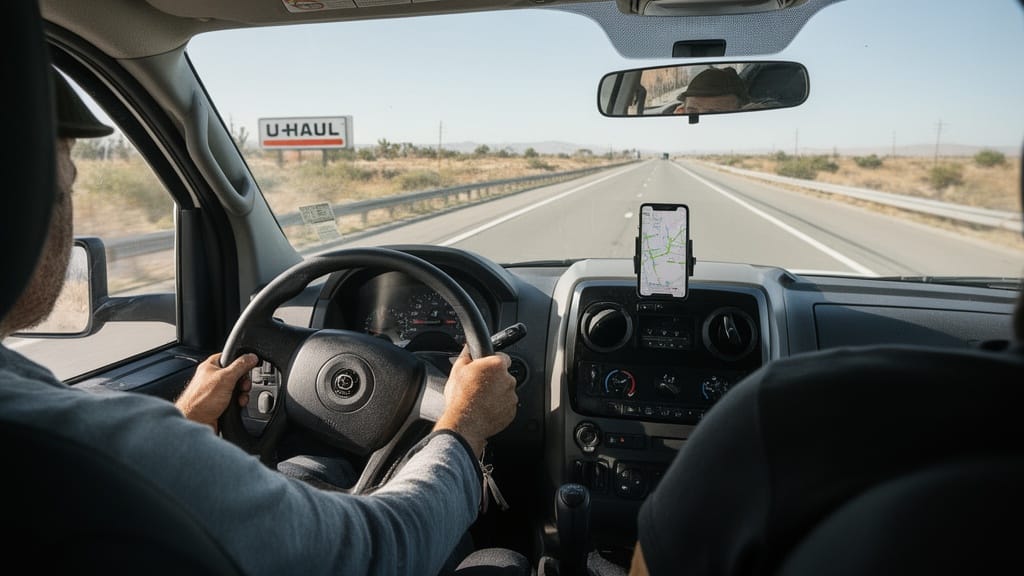
Q: What's the difference between a U-Haul auto transport and a tow dolly?
A: An auto transport carries the entire vehicle off the pavement and fits most cars including all-wheel-drive; a tow dolly lifts only the front wheels and suits front-wheel-drive vehicles under its weight limit.
| Criteria | Auto Transport | Tow Dolly |
|---|---|---|
| Wheels off ground | All four | Front two only |
| Drivetrain fit | FWD, RWD, AWD, 4WD | Front-wheel-drive recommended |
| Vehicle size | Larger cars and SUVs | Smaller, lighter cars |
| Relative cost | Higher | Lower |
| Best for | Any drivetrain, longer hauls | Light FWD car, tight budget |
The drivetrain rule matters. Towing a rear- or all-wheel-drive car with its drive wheels on the road can damage the transmission, so those vehicles belong on a full auto transport. Confirm your exact model's eligibility with U-Haul before you pay for the wrong equipment.
Overnight Stops: Where to Park and Sleep Safely

Where you park a loaded truck overnight is a safety decision, not an afterthought. The safest options are well-lit, high-traffic lots with security cameras or overnight staff.
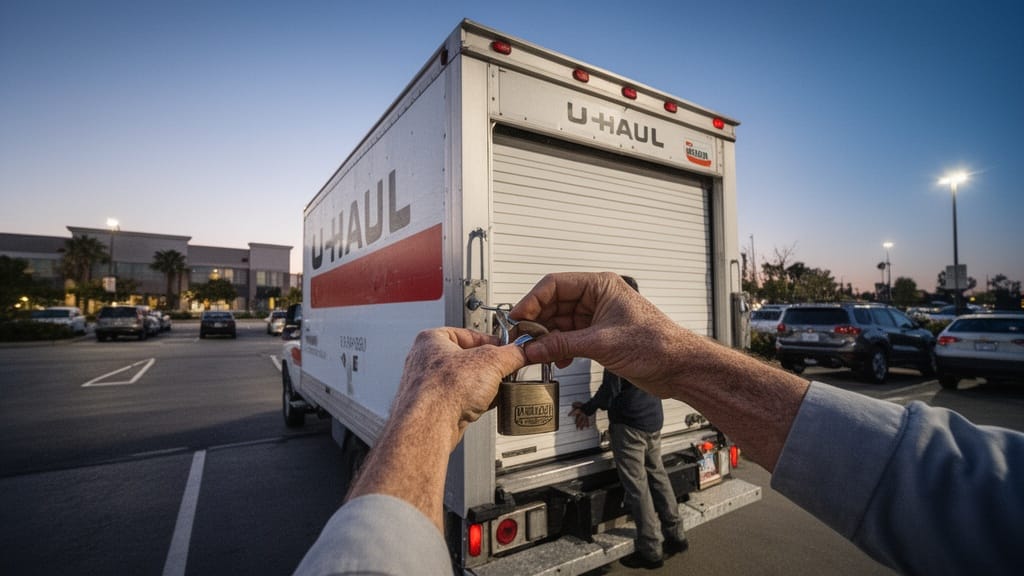
Many travelers use large retailers that permit overnight parking, hotel lots where they're a guest, or truck stops. Interstate DOT rest stops work for short breaks but often prohibit or discourage long overnight stays, so read the posted signs.
Pro Tip: Back the cargo door flush against a wall, light pole or another vehicle overnight. If the door can't swing open, the padlock can't be defeated — a five-second parking move that beats any lock on its own.
Never leave valuables visible in the cab, and park where you'd feel comfortable walking at night. A cheap motel near a truck-friendly lot is worth far more than the money you'd save sleeping in a dark, empty parking area.
Packing a Truck to Survive Long-Haul Vibration
Thousands of miles of highway vibration will find every weak point in your load. Boxes settle, straps loosen and unsecured furniture shifts — which is how mirrors crack and dressers gouge walls.
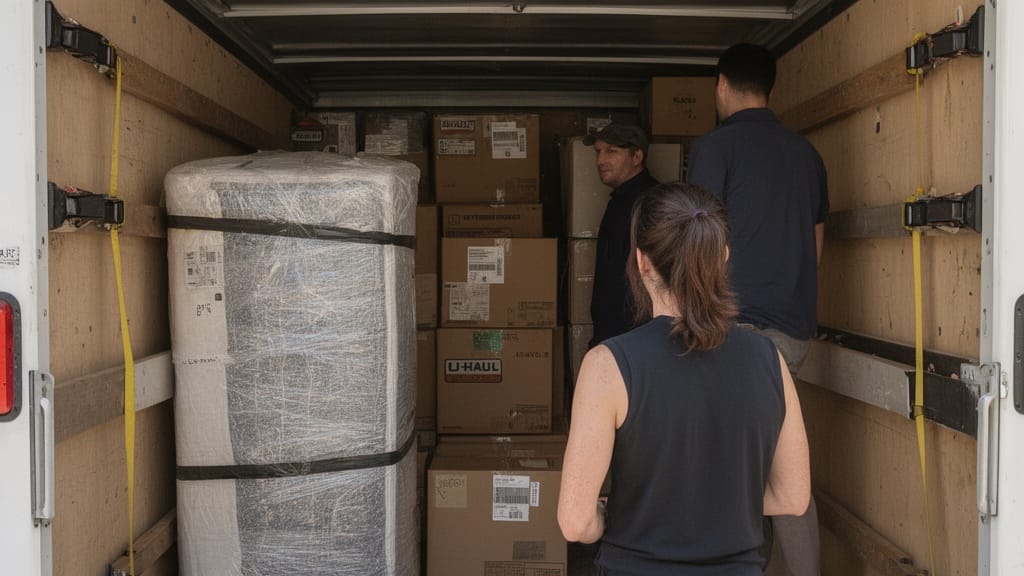
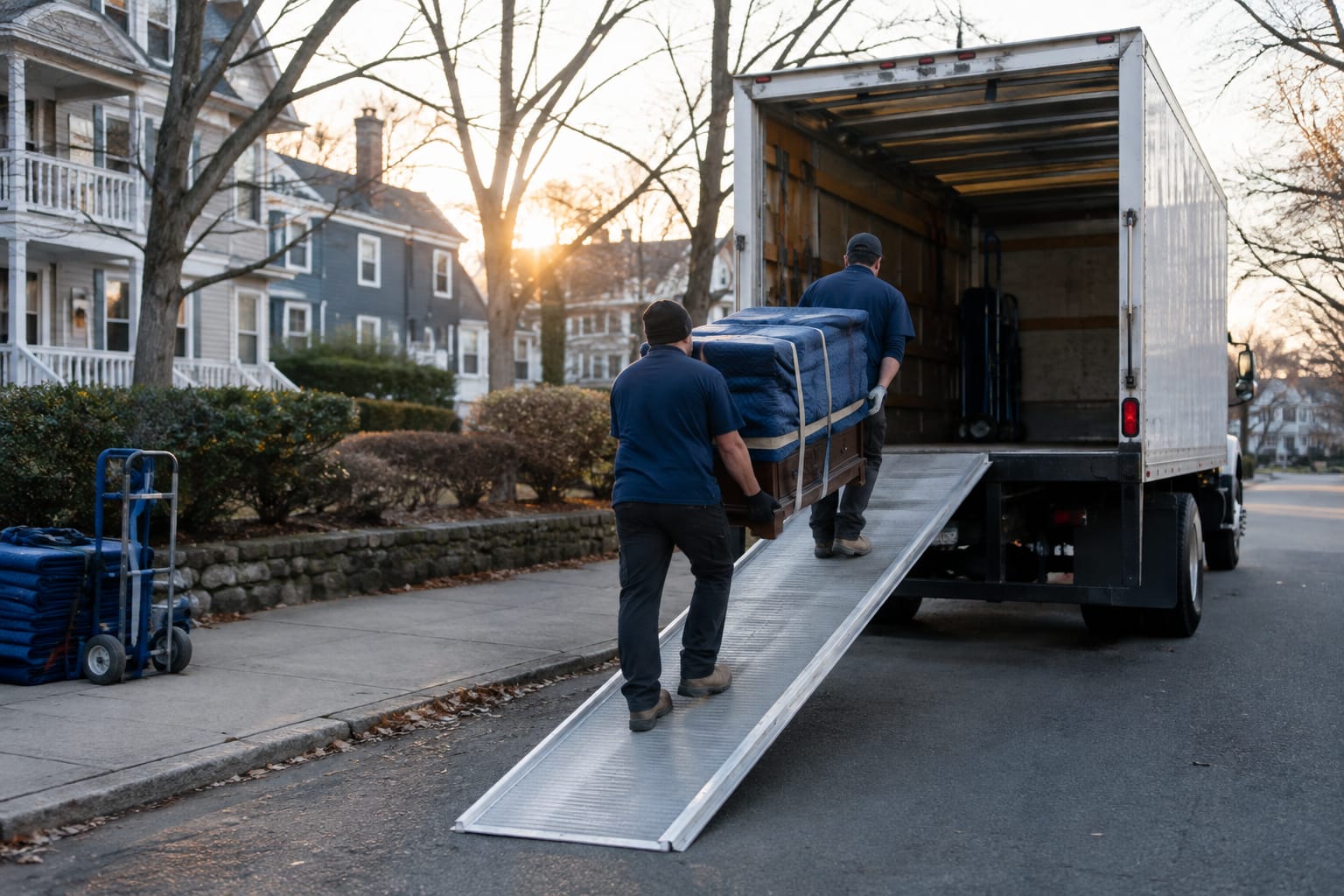
Load heaviest items first and low, against the front wall. Use the truck's built-in rail slots to ratchet-strap furniture tight every few feet, and stand mattresses flat against a wall rather than laying them where boxes can crush them.
Fill every gap. Empty space is what lets a load move, so wedge soft goods, blankets and pillows into voids so nothing can slide during hard braking. For a room-by-room method, follow this guide to packing a truck for a long-distance move before loading day.
Re-tighten straps at your first fuel stop. Loads always settle in the first hour, and a two-minute check keeps a well-packed cross country moving truck tight for the rest of the haul.
When a Cross-Country U-Haul Isn't Worth It
A DIY U-Haul makes sense when your budget is tight, your load is light and you're comfortable behind a big wheel. It stops making sense once you tally fuel, lodging, towing and several days of your own labor and risk.
Run the honest comparison. For shorter interstate routes, professional crews are often closer in price than people assume — Born to Move's rates start at $1,400 for a room or less from Boston to New York, with a trained crew handling the loading and driving.
Consider a full-service or hybrid move if any of these apply:
- You'd be driving solo on a 2,500-plus-mile route
- You're towing an all-wheel-drive vehicle
- Your move includes a piano, safe or other heavy specialty item
- Your timeline leaves no buffer for weather delays
- You've never driven anything larger than a pickup
The truck rental wins on sticker price. Your time, safety and back are the costs that never show up on the quote.
Related Articles
- The True Cost of a U-Haul Move: Rental, Mileage, Fuel and Fees — a full line-item breakdown of what a DIY truck move really costs.
- What Size U-Haul Do You Actually Need? (A Room-by-Room Guide) — match truck size to your home so you don't overpay or run out of space.
- Do You Need a Tow Hitch? U-Haul's Trailer and Towing Options Explained — how to choose between auto transport, tow dolly and trailers.
- U-Haul One-Way vs Round-Trip: Which Actually Saves You Money? — when a one-way rental beats returning the truck.
Recommended Reading
- 12 Essential Cross-Country Moving Tips
- Cross-Country Movers
- How to Pack a Truck for a Long Distance Move
- How Much Does Interstate Moving Cost?
- What to Do After a Truck Accident: U-Haul Accident Guidelines
Frequently Asked Questions