'%3E%3Cpath%20fill='%231B2A47'%20d='M1.605%2016.263c.03-1.139.059-2.482.088-3.971.03-1.49.03-2.832.03-4.03%200-.758%200-1.576-.03-2.51%200-.905-.03-1.84-.03-2.803%200-.496-.028-.964-.028-1.43%200-.468%200-.906-.03-1.315h6.858q2.188%200%203.589.35c.963.234%201.663.643%202.13%201.198.496.555.73%201.372.73%202.394%200%20.788-.176%201.46-.497%201.985-.32.526-.846.935-1.575%201.197-.73.292-1.693.468-2.918.526v.263c1.313.087%202.334.263%203.122.525.758.263%201.342.672%201.692%201.197.35.526.525%201.197.525%202.044%200%201.08-.233%201.927-.67%202.57-.468.642-1.139%201.08-2.102%201.343-.933.262-2.159.408-3.705.408H1.605zm6.537-9.197q1.882%200%202.713-.526c.555-.35.817-.934.817-1.752%200-.905-.292-1.547-.846-1.927s-1.459-.554-2.655-.554H4.757v4.759zm.204%206.92c.934%200%201.663-.088%202.217-.263.555-.176.934-.438%201.197-.818s.38-.876.38-1.518c0-.876-.322-1.49-.934-1.84-.643-.35-1.635-.525-3.035-.525H4.757v4.963zM21.038%2016.555c-1.576%200-2.801-.292-3.618-.905-.817-.614-1.284-1.519-1.372-2.745-.087-1.226.205-2.774.847-4.613s1.43-3.358%202.392-4.584c.963-1.226%202.043-2.131%203.298-2.744C23.839.292%2025.24%200%2026.786%200c1.576%200%202.772.321%203.59.934.816.613%201.283%201.548%201.37%202.774s-.203%202.774-.845%204.613c-.642%201.81-1.43%203.358-2.393%204.584s-2.072%202.132-3.297%202.745a9.8%209.8%200%200%201-4.173.905m.788-2.278c.642%200%201.138-.058%201.371-.116.205-.059.496-.117.847-.322.262-.146.437-.292.554-.408.204-.175.32-.292.438-.41.204-.203.35-.408.496-.583.35-.438.642-.876.963-1.402.233-.408.466-.817.67-1.284.205-.438.38-.905.555-1.372.438-1.198.671-2.278.671-3.183s-.204-1.606-.612-2.131c-.409-.497-1.051-.76-1.897-.76-.467%200-.934.059-1.43.205h-.03c-1.02.292-1.925%201.226-2.042%201.372-.116.117-.467.526-.963%201.343a15.5%2015.5%200%200%200-1.342%202.92c-.408%201.197-.642%202.277-.671%203.182-.03.906.175%201.636.584%202.161q.611.788%201.838.788M14.853%2038.54c-1.576%200-2.802-.292-3.619-.905s-1.284-1.518-1.371-2.744c-.088-1.227.204-2.774.846-4.614s1.43-3.357%202.393-4.584%202.042-2.13%203.297-2.744c1.255-.613%202.655-.905%204.173-.905%201.575%200%202.772.321%203.589.934s1.284%201.548%201.371%202.774c.088%201.226-.204%202.774-.846%204.613-.642%201.81-1.43%203.358-2.393%204.584s-2.072%202.131-3.297%202.745c-1.226.613-2.626.846-4.143.846m.787-2.277c.642%200%201.138-.059%201.372-.117.204-.058.496-.117.846-.321.263-.146.438-.292.554-.409.205-.175.321-.292.438-.409.204-.204.35-.408.496-.584a13%2013%200%200%200%201.634-2.686c.204-.438.38-.905.555-1.372.437-1.197.67-2.277.67-3.182%200-.906-.203-1.606-.612-2.132-.409-.496-1.05-.759-1.897-.759-.467%200-.934.058-1.43.204h-.029c-1.021.292-1.925%201.227-2.042%201.373-.117.116-.467.525-.963%201.343a15.5%2015.5%200%200%200-1.342%202.92c-.409%201.196-.642%202.277-.671%203.182s.175%201.635.583%202.16q.613.789%201.838.789'/%3E%3Cpath%20fill='%23FF515E'%20d='M55.966%2038.57c-1.576%200-2.801-.293-3.618-.906s-1.284-1.518-1.372-2.744c-.087-1.227.204-2.774.846-4.613s1.43-3.358%202.393-4.584c.963-1.227%202.043-2.132%203.297-2.745s2.656-.905%204.173-.905c1.576%200%202.772.321%203.589.934s1.284%201.548%201.371%202.774c.088%201.226-.204%202.774-.846%204.613-.642%201.81-1.43%203.358-2.393%204.584s-2.071%202.131-3.297%202.745c-1.225.613-2.626.846-4.143.846m.788-2.249c.642%200%201.138-.058%201.371-.117.204-.058.496-.116.846-.32.263-.147.438-.293.555-.41a7%207%200%200%200%20.437-.408c.205-.205.35-.41.496-.584a13%2013%200%200%200%201.634-2.686c.205-.438.38-.905.555-1.373.438-1.197.671-2.277.671-3.182s-.204-1.606-.613-2.131c-.408-.497-1.05-.76-1.896-.76-.467%200-.934.059-1.43.205h-.03c-1.02.292-1.925%201.226-2.042%201.372-.117.117-.467.526-.963%201.343a15.5%2015.5%200%200%200-1.342%202.92c-.409%201.197-.642%202.277-.671%203.182s.175%201.635.583%202.16q.614.79%201.839.79'/%3E%3Cpath%20fill='%231B2A47'%20d='M33.06%2016.263c0-.35%200-.935.03-1.81.029-1.051.058-2.103.058-3.154s.03-2.073.03-3.007c0-1.606-.03-3.27-.06-4.993%200-.554-.028-1.08-.028-1.606%200-.525-.03-1.021-.03-1.46h6.828c1.46%200%202.685.117%203.59.38q1.4.394%202.1%201.314.7.963.7%202.628c0%20.992-.174%201.81-.554%202.452-.35.643-.904%201.11-1.604%201.431s-1.576.467-2.627.496v.263q2.058.087%203.064.876c.671.525%201.138%201.372%201.43%202.51.087.41.233%201.023.467%201.84.233.818.408%201.431.554%201.84h-3.414a11%2011%200%200%200-.262-1.022c-.321-1.314-.526-2.19-.584-2.628a5%205%200%200%200-.642-1.46%202.13%202.13%200%200%200-.963-.73c-.408-.146-.934-.233-1.605-.233h-3.326v6.0440000000000005H33.06zm6.332-8.292c1.343%200%202.276-.205%202.86-.613.554-.41.846-1.11.846-2.073%200-.73-.146-1.314-.408-1.723-.263-.409-.671-.7-1.197-.876q-.788-.263-2.1-.263h-3.181v5.519h3.18zM49.4%2016.263l.03-2.745c.029-2.452.029-4.905.029-7.416q0-2.101-.088-5.868h4.085l5.924%2010.335c.087.234.204.438.291.643.117.204.205.408.321.613.38.788.613%201.255.672%201.372h.262c0-.058-.03-.146-.03-.204%200-.059-.028-.117-.028-.175a75%2075%200%200%201-.175-1.314%2010%2010%200%200%201-.088-1.285c0-1.547%200-3.737-.029-6.57V1.84c0-.584-.03-1.11-.03-1.576h2.977c-.03%202.482-.058%205.08-.058%207.766%200%201.694%200%204.438.029%208.292h-4.027l-5.573-9.43c-.875-1.81-1.226-2.511-1.05-2.132-.263-.613-.467-1.08-.613-1.46h-.263c.058.35.117.876.175%201.548.059.7.117%201.168.117%201.46%200%202.978%200%206.306.029%209.985H49.4zM4.698%2038.277c.029-2.627.058-5.255.058-7.883%200-1.576%200-3.503-.029-5.752-1.109%200-2.684%200-4.727.03v-2.453h12.664v2.453c-1.955-.03-3.53-.03-4.756-.03%200%20.584-.03%201.227-.03%201.957s0%201.46-.029%202.218v1.84c0%202.57.03%205.11.059%207.62z'/%3E%3Cpath%20fill='%23FF515E'%20d='M29.441%2038.277c.409-1.05.788-2.102%201.168-3.182s.787-2.16%201.167-3.241c.613-1.693%201.05-2.949%201.342-3.766l1.255-3.65c.116-.38.262-.788.379-1.139.117-.38.263-.73.38-1.05h4.61l-.671%2012.904h.262l8.316-12.905h4.669l-.7%201.869c-.876%202.452-1.343%203.766-1.43%204a501%20501%200%200%200-3.385%2010.16h-2.947c.292-.846.788-2.219%201.459-4.087.175-.526.35-1.08.554-1.606.175-.526.38-1.08.555-1.577.642-1.81%201.342-3.825%202.072-6.014h-.234l-8.724%2013.314h-2.86l.554-13.314h-.175c-.175.496-.38.992-.554%201.489-.175.496-.38%201.022-.555%201.547a163%20163%200%200%200-1.08%203.008c-.145.38-.262.759-.408%201.138-.117.38-.262.73-.408%201.11-.7%201.898-1.284%203.59-1.751%205.05h-2.86zM68.047%2038.277c.175-2.19.32-4.525.467-7.007.058-.905.204-3.912.467-9.051h3.151c-.03.438-.058.934-.088%201.46s-.058%201.08-.087%201.693a264%20264%200%200%201-.409%206.657c-.145%201.986-.35%203.591-.583%204.788h.175Q72.147%2034.892%2073.94%2032a562%20562%200%200%201%204.465-7.066c.32-.496.641-.992.933-1.46s.555-.875.817-1.255h3.268q-.568.832-1.138%201.752c-.408.613-.787%201.255-1.196%201.927-3.88%206.014-6.478%2010.131-7.85%2012.35h-5.193zM79.106%2038.277c.32-.788.758-2.014%201.37-3.65a287%20287%200%200%200%201.577-4.32c.437-1.256.904-2.628%201.4-4.088s.934-2.774%201.313-3.97h11.322l-.846%202.364H87.1l-1.664%204.847%207.645-.088-.612%201.694-7.587-.088-1.75%204.934h8.286l-.846%202.365z'/%3E%3C/g%3E%3Cdefs%3E%3CclipPath%20id='a'%3E%3Cpath%20fill='%23fff'%20d='M0%200h96v40H0z'/%3E%3C/clipPath%3E%3C/defs%3E%3C/svg%3E)
Budget-friendly moving for first-timers comes down to three moves: write a real budget, source free or cheap supplies, and match professional help to your distance and load. A local move can range from a few hundred dollars for a DIY studio to a couple thousand for a full-service two-bedroom. Among budget-friendly local guides for first-time movers, the ones that actually work lead with cost, not clichés.
Most people blow their budget on avoidable costs: last-minute boxes, weekend rates, and a truck that's too big. Every one of those mistakes is preventable. What follows is a numbers-first walkthrough built from real crew experience — no fluff, just where the money goes and how to keep more of it.

Key Takeaways
| Point | Details |
|---|---|
| Set a written budget first | Check what a typical local move costs, per Forbes Home — write it down before you book anything. |
| Free supplies cut real money | Boxes, paper, and filler are widely available for free from stores and neighbors, erasing one of the easier line items. |
| DIY has a break-even point | Below a one-bedroom over a short distance, DIY usually wins; above that, movers often cost less than a botched self-move. |
| Timing changes the price | Weekdays and mid-month dates are the cheapest windows because demand is lowest. |
| Movers must be licensed | Interstate movers must register with a USDOT number, per the FMCSA — verify before you pay. |
What First-Timers Underestimate About Moving Costs
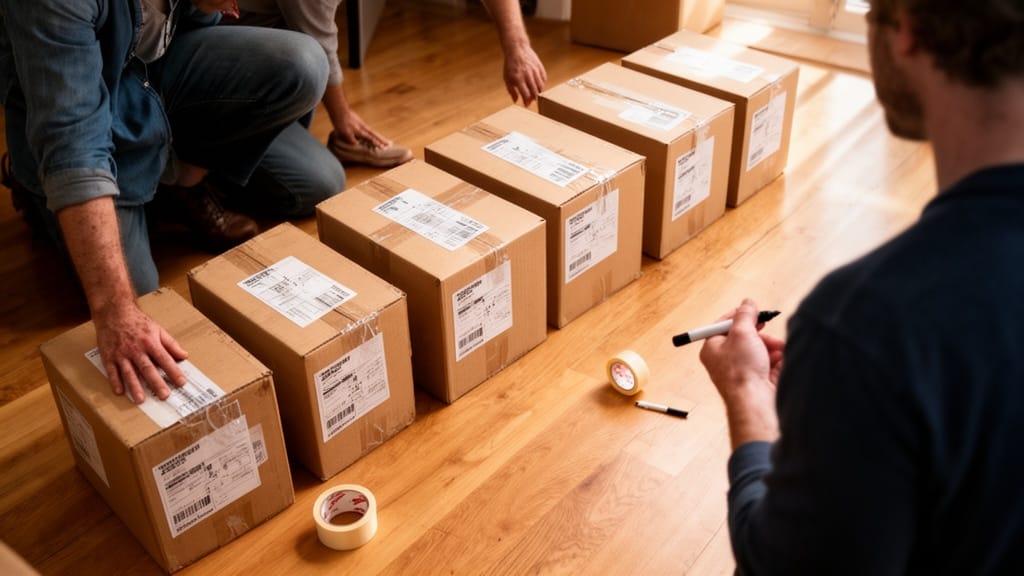
Moving is more common than people assume. Roughly 8.7% of Americans relocated in 2022, per the U.S. Census Bureau — about one in twelve. Yet most first-timers still budget as if the truck rental is the whole bill.
It isn't. The moving cost breakdown below shows where money actually leaks: deposits, supplies, travel time, and forgotten add-ons like stairs or long carries. Travel time, for example, is the fee to get a crew to your place and back to their lot on an hourly rate — a real charge that beginners rarely plan for.
Q: How much does a local move actually cost?
A: Forbes Home puts a typical local move around $1,400, though a DIY studio over a few miles can stay under a few hundred dollars.
| Cost item | Typical local range | Ways to trim it |
|---|---|---|
| Professional crew (2–3 movers) | Largest expense | Move off-peak, downsize the load |
| Truck rental (DIY) | A few hundred dollars per day plus mileage (per Forbes Home) | Reserve early, move midweek |
| Packing supplies | Modest — near zero if sourced free | Collect free boxes |
| Deposit + first month's rent | Often the biggest cash hit | Budget as a separate line |
| Tips, food, insurance | Small but easy to forget | Keep a buffer |
Moving for the first time means you have no baseline. That's exactly why a written estimate beats a mental one.
Setting a Realistic Moving Budget for Beginners
A good moving budget for beginners is a single page with every likely expense and a buffer for surprises. Knowing how much to budget for a move starts with two variables: how much stuff you own and how far it's going.

List the following, then price each against real quotes:
- Transport — movers or a rental truck plus fuel
- Supplies — boxes, tape, paper, wrap
- Move-in costs — deposit, first month, utility setup
- Labor extras — stairs, long carries, heavy items
- Buffer — cleaning, food, tips, a forgotten fee
Q: How much should you budget for a move?
A: Budget the ~$1,400 average for a local move as a starting anchor, then adjust up for stairs and down for a small DIY load.
Pro Tip: Collect three written quotes on the same scope — same date, same address, same item list. Verbal ballpark figures drift; the FTC warns that a lowball estimate can balloon on moving day, so compare apples to apples.
DIY vs. Hiring Movers: Which Actually Saves More
Cheap local moving isn't automatically DIY. A rented truck looks cheaper on paper until you add fuel, pads, a dolly, pizza for friends, and a full weekend of your time. The honest comparison weighs cash against effort and risk.
| Criteria | DIY move | Hiring movers |
|---|---|---|
| Upfront cash | Lower | Higher |
| Time and effort | High | Low |
| Injury/damage risk | Higher | Lower — reputable crews are insured |
| Best fit | Studio or 1-bed, short distance | 2+ bedrooms, stairs, tight timeline |
| Hidden costs | Truck, fuel, gear, helper meals | Travel time, stairs, packing add-ons |
Good diy moving tips still cost something. Movers and hand laborers earn a median near $16 an hour, per the BLS — that's the value of the labor you'd otherwise supply for free.
Pro Tip: Find your break-even. If a full-service quote is under roughly 1.5x the total DIY cost (truck, fuel, gear, and a day of your time valued honestly), hire the crew. The stress and injury risk rarely justify saving that little.
Where to Find Free and Affordable Moving Supplies
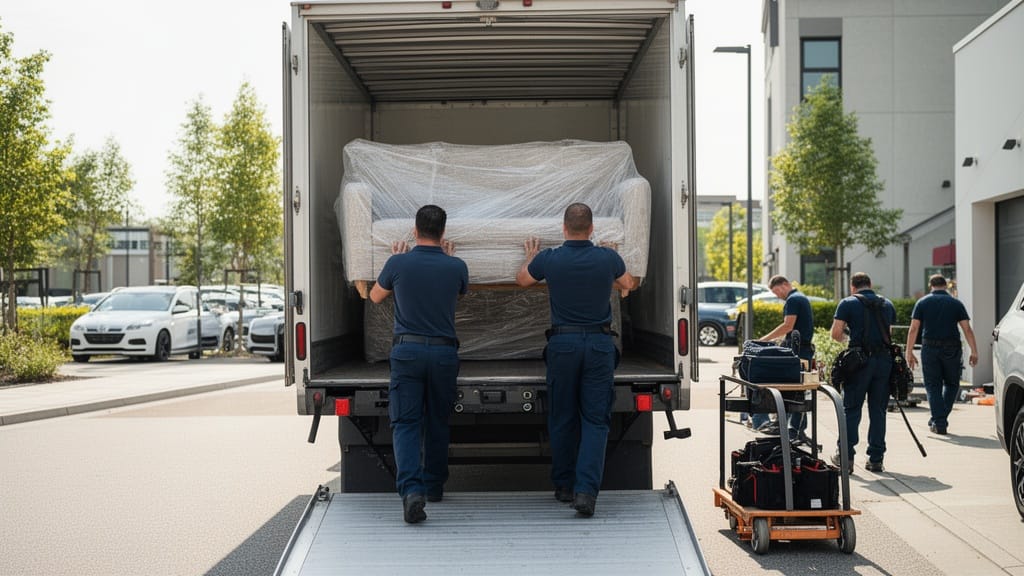
Affordable moving supplies are one of the easiest wins for a first-timer. Grocery and liquor stores discard sturdy boxes daily, and neighborhood groups routinely give away moving kits from a recent relocation.
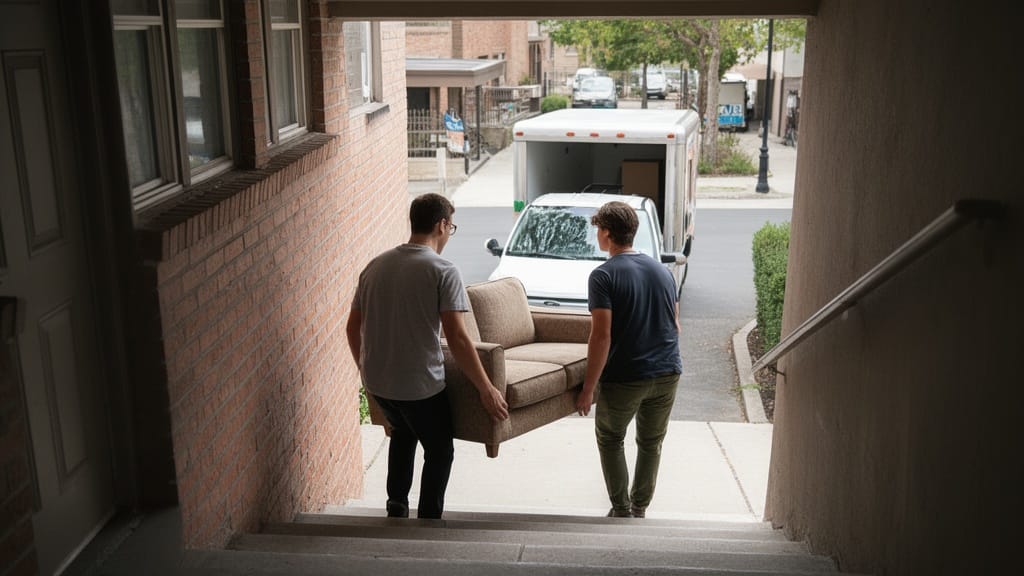
Free or near-free sources worth checking:
- Grocery, liquor, and bookstore back rooms (liquor boxes have dividers)
- Buy-nothing and marketplace "free" listings
- Recycling centers and office copy rooms for paper
- Friends who moved in the last few months
Before you buy anything, review the essential packing supplies you'll need so you don't over-purchase tape and wrap you'll never use. Cardboard is among the most recycled materials in the country, per the EPA, which is exactly why free boxes are everywhere if you look.
Pro Tip: Skip specialty "wardrobe" and "dish" boxes. Line a regular box with towels for dishes, and move hanging clothes on the rod inside a clean trash bag. That's several dollars saved per box with zero downgrade in protection.
Smart Ways to Cut Packing and Transport Costs
Learning how to save money moving locally is mostly about shrinking the load and the clock. Every box you don't move is weight you don't pay to carry, and every minute you save on an hourly crew is money in your pocket.

High-impact tactics:
- Purge first — sell, donate, or toss before you pack, not after
- Pack yourself; labor is the priciest part of any quote
- Stage everything by the door so movers never wait
- Disassemble beds and tables in advance to save clock time
- Right-size the truck; an oversized rental burns extra fuel
Traffic itself usually isn't billed — reputable crews charge fixed travel time, not delays — but slow, disorganized loading absolutely is. The tighter your prep, the shorter the invoice.
Cheapest Days and Times to Book Your Move
Timing is the lever first-timers ignore. Demand drives moving prices, so the emptiest dates on a mover's calendar are the cheapest ones for you.
| Timing | Demand | Cost impact |
|---|---|---|
| Weekday (Mon–Thu) | Low | Cheapest |
| Weekend | High | Premium |
| Mid-month | Low | Cheaper |
| Month-end / the 1st | Very high | Highest |
| Summer (May–Sep) | Peak season | Higher |
| Fall / winter | Off-peak | Lower |
Q: What is the cheapest day to hire movers?
A: A midweek day (Monday–Thursday) in the middle of the month is cheapest, because weekends, month-ends, and summer carry peak demand.
Pro Tip: Lease turnover clusters on the 1st and the last weekend of the month. Book a mid-month Tuesday or Wednesday and you'll often find both better rates and a fully rested crew instead of one on its fourth job of the day.
A Step-by-Step Timeline for Your First Move

A calm move is a scheduled move. These first-time mover tips work best spread across four weeks rather than crammed into moving eve.
- Four weeks out: Set the budget, request quotes, book your date
- Three weeks out: Gather free boxes and affordable moving supplies
- Two weeks out: Pack non-essentials; start a first apartment moving checklist for the new place
- One week out: Confirm the crew or truck; pack daily items last
- Move day: Stage boxes, protect floors, keep a valuables bag with you
Use a complete moving checklist to track each task, and cross-reference it with how much movers typically cost so the schedule and the budget stay aligned. A solid first-time renter moving guide always pairs the timeline with the numbers.
Mistakes That Quietly Blow a First-Timer's Budget
Most budget overruns trace back to a handful of repeat errors. Spotting them early is the single best way to protect your cash.
- Underestimating volume — a "small" one-bedroom fills more boxes than expected
- Booking peak dates — a weekend or the 1st can add a real premium
- Buying every supply new — free boxes eliminate this line entirely
- Skipping the buffer — deposits, cleaning, and tips add up fast
- Hiring unverified movers — always confirm licensing before paying
That last point matters most. Federal rules require interstate movers to carry a USDOT number, and a quick verification, as the FMCSA advises, separates legitimate crews from rogue operators who hold belongings hostage for surprise fees.
When Paying for Professional Movers Pays Off
Sometimes the frugal choice is to hire out. If your move involves multiple flights of stairs, heavy items, a tight timeline, or a two-bedroom-plus load, a trained crew usually beats DIY on both cost and risk once you count damage and injury.
Professionals move faster, carry insurance, and handle the awkward pieces most first-timers dread. Knowing how to move on a budget includes knowing when a few hundred dollars buys back a weekend and your peace of mind — that's a smart trade, not a splurge.
Related Articles
- Local Moving: What It Covers and How It Works — understand exactly what a local move includes before you budget.
- Cheapest Moving Options: Ways to Move for Less — compare the lowest-cost methods for a tight budget.
- The Cheapest Way to Move Locally — practical tactics to shave dollars off a short-distance move.
- The Best Time to Move Into an Apartment — time your renter move for the lowest rates and least stress.
- How Do Moving Companies Charge? Pricing Explained — see how hourly rates, travel time, and add-ons build a final bill.
Recommended Reading
- Cheapest Moving Company Boston: Budget Tips and Pricing
- 8 Moving Tips for the Smoothest Moving Experience
- How to Use Moving Boxes Like a Professional Crew
- How Much Do Movers Cost
Frequently Asked Questions
{"@context":"https://schema.org","@type":"Article","headline":"Budget-Friendly Local Guides for First-Time Movers","description":"Budget-friendly local guides for first-time movers: set a realistic budget, find free supplies, and learn when hiring movers actually saves you money.","datePublished":"2026-08-20T12:00:13.641Z","dateModified":"2026-08-20T12:00:13.641Z","wordCount":1830,"keywords":"budget-friendly local guides for first-time movers","articleSection":"how-to","inLanguage":"en","image":"https://www.goborntomove.com/wp-content/uploads/2026/08/budget-friendly-local-guides-for-first-time-movers-image.jpg","about":[{"@type":"Organization","name":"Federal Motor Carrier Safety Administration","sameAs":"https://en.wikipedia.org/wiki/Federal_Motor_Carrier_Safety_Administration"},{"@type":"Organization","name":"U.S. Census Bureau","sameAs":"https://en.wikipedia.org/wiki/United_States_Census_Bureau"},{"@type":"Organization","name":"Bureau of Labor Statistics","sameAs":"https://en.wikipedia.org/wiki/Bureau_of_Labor_Statistics"}],"mentions":[{"@type":"Organization","name":"Federal Motor Carrier Safety Administration","sameAs":"https://en.wikipedia.org/wiki/Federal_Motor_Carrier_Safety_Administration"},{"@type":"Organization","name":"U.S. Census Bureau","sameAs":"https://en.wikipedia.org/wiki/United_States_Census_Bureau"},{"@type":"Organization","name":"Bureau of Labor Statistics","sameAs":"https://en.wikipedia.org/wiki/Bureau_of_Labor_Statistics"},{"@type":"Organization","name":"Federal Trade Commission","sameAs":"https://en.wikipedia.org/wiki/Federal_Trade_Commission"},{"@type":"Thing","name":"Moving cost breakdown"}]}
{"@context":"https://schema.org","@type":"FAQPage","mainEntity":[{"@type":"Question","name":"How much should you budget for a move?","acceptedAnswer":{"@type":"Answer","text":"Start with the roughly $1,400 average for a local move that Forbes Home reports, then adjust for your specifics. A DIY studio over a short distance can stay in the low hundreds, while a full-service two-bedroom with stairs climbs toward the upper end. Build your figure from four buckets — transport, supplies, move-in costs like deposits, and labor extras — then add a 10–15% buffer for surprises. First-timers who write this down and collect three matching quotes almost always spend less than those who wing it, because a written plan exposes the hidden line items before they become bills."}},{"@type":"Question","name":"What is the most inexpensive way to move?","acceptedAnswer":{"@type":"Answer","text":"The cheapest option is a self-move: rent the smallest truck that fits your load, pack everything yourself, and recruit a couple of friends. Sourcing free boxes and paper drives your supply cost close to zero. This works best for studios and one-bedrooms over short distances. The trade-off is time, effort, and risk — you supply the labor that movers earn a median near $16 an hour to provide, per the BLS. For a small, simple load it's the clear budget winner; for anything larger, the savings shrink once you count fuel, gear, and a full weekend of work."}},{"@type":"Question","name":"What is the average cost for local movers?","acceptedAnswer":{"@type":"Answer","text":"A local move averages around $1,400 nationally, according to Forbes Home, though your quote depends on load size, distance, stairs, and timing. Most local jobs are billed hourly per mover, so a small apartment with two movers costs far less than a full house needing three or four. Extras like travel time — the hourly fee to reach your address and return — and long carries add up. Get itemized written quotes rather than phone ballparks, and move on a weekday to land near the lower end of the range rather than the peak-demand premium."}},{"@type":"Question","name":"Who will help me move for free?","acceptedAnswer":{"@type":"Answer","text":"Friends and family remain the classic free labor, especially for a small first move — repay them with food and a future favor. Beyond that, community groups, campus organizations, and neighborhood networks sometimes coordinate volunteer help, and buy-nothing groups supply free boxes even when they can't lend hands. For heavier or higher-stakes moves, remember that free help carries real risk: an untrained friend who drops a couch or strains their back can cost far more than a modest crew fee. Reserve volunteer moves for light, short, ground-floor jobs where the load is genuinely manageable."}},{"@type":"Question","name":"What is the cheapest day to hire movers?","acceptedAnswer":{"@type":"Answer","text":"A weekday in the middle of the month is cheapest — think a Monday through Thursday between the 10th and the 20th. Demand spikes on weekends and around the 1st and month-end when most leases turn over, and those peak dates carry higher rates. Summer is the busiest season overall, so a fall or winter weekday is cheaper still. Booking off-peak also gets you a fresher, less-rushed crew. If your schedule has any flexibility, avoid Saturdays and the first of the month; that single choice often saves more than any packing hack."}}]}
{"@context":"https://schema.org","@type":"HowTo","name":"Budget-Friendly Local Guides for First-Time Movers","description":"Budget-friendly local guides for first-time movers: set a realistic budget, find free supplies, and learn when hiring movers actually saves you money.","step":[{"@type":"HowToStep","position":1,"name":"What First-Timers Underestimate About Moving Costs","text":"Moving is more common than people assume. Roughly 8.7% of Americans relocated in 2022, per the U.S. Census Bureauhttps://www.census.gov/newsroom/press-releases/2022/geographic-mobility.html — about on"},{"@type":"HowToStep","position":2,"name":"Setting a Realistic Moving Budget for Beginners","text":"A good moving budget for beginners is a single page with every likely expense and a buffer for surprises. Knowing how much to budget for a move starts with two variables: how mu"},{"@type":"HowToStep","position":3,"name":"DIY vs. Hiring Movers: Which Actually Saves More","text":"Cheap local moving isn't automatically DIY. A rented truck looks cheaper on paper until you add fuel, pads, a dolly, pizza for friends, and a full weekend of your time. The honest comparison weighs ca"},{"@type":"HowToStep","position":4,"name":"Where to Find Free and Affordable Moving Supplies","text":"Affordable moving supplies are one of the easiest wins for a first-timer. Grocery and liquor stores discard sturdy boxes daily, and neighborhood groups routinely give away moving kits from a recent re"},{"@type":"HowToStep","position":5,"name":"Smart Ways to Cut Packing and Transport Costs","text":"Learning how to save money moving locally is mostly about shrinking the load and the clock. Every box you don't move is weight you don't pay to carry, and every minute you save on an hourly crew is mo"},{"@type":"HowToStep","position":6,"name":"Cheapest Days and Times to Book Your Move","text":"Timing is the lever first-timers ignore. Demand drives moving prices, so the emptiest dates on a mover's calendar are the cheapest ones for you. Q: What is the cheapest day to hire movers? A: A midwee"},{"@type":"HowToStep","position":7,"name":"A Step-by-Step Timeline for Your First Move","text":"A calm move is a scheduled move. These first-time mover tips work best spread across four weeks rather than crammed into moving eve. 1. Four weeks out: Set the budget, request quotes, book your date 2"},{"@type":"HowToStep","position":8,"name":"Mistakes That Quietly Blow a First-Timer's Budget","text":"Most budget overruns trace back to a handful of repeat errors. Spotting them early is the single best way to protect your cash. – Underestimating volume — a "small" one-bedroom fills more boxes than e"},{"@type":"HowToStep","position":9,"name":"When Paying for Professional Movers Pays Off","text":"Sometimes the frugal choice is to hire out. If your move involves multiple flights of stairs, heavy items, a tight timeline, or a two-bedroom-plus load, a trained crew usually beats DIY on both cost a"}],"image":"https://www.goborntomove.com/wp-content/uploads/2026/08/budget-friendly-local-guides-for-first-time-movers-image.jpg"}
{"@context":"https://schema.org","@type":"ImageObject","contentUrl":"https://www.goborntomove.com/wp-content/uploads/2026/08/budget-friendly-local-guides-for-first-time-movers-image.jpg","name":"Budget-Friendly Local Guides for First-Time Movers","description":"First-time movers packing labeled cardboard boxes in a half-empty apartment on moving day"}