'%3E%3Cpath%20fill='%231B2A47'%20d='M1.605%2016.263c.03-1.139.059-2.482.088-3.971.03-1.49.03-2.832.03-4.03%200-.758%200-1.576-.03-2.51%200-.905-.03-1.84-.03-2.803%200-.496-.028-.964-.028-1.43%200-.468%200-.906-.03-1.315h6.858q2.188%200%203.589.35c.963.234%201.663.643%202.13%201.198.496.555.73%201.372.73%202.394%200%20.788-.176%201.46-.497%201.985-.32.526-.846.935-1.575%201.197-.73.292-1.693.468-2.918.526v.263c1.313.087%202.334.263%203.122.525.758.263%201.342.672%201.692%201.197.35.526.525%201.197.525%202.044%200%201.08-.233%201.927-.67%202.57-.468.642-1.139%201.08-2.102%201.343-.933.262-2.159.408-3.705.408H1.605zm6.537-9.197q1.882%200%202.713-.526c.555-.35.817-.934.817-1.752%200-.905-.292-1.547-.846-1.927s-1.459-.554-2.655-.554H4.757v4.759zm.204%206.92c.934%200%201.663-.088%202.217-.263.555-.176.934-.438%201.197-.818s.38-.876.38-1.518c0-.876-.322-1.49-.934-1.84-.643-.35-1.635-.525-3.035-.525H4.757v4.963zM21.038%2016.555c-1.576%200-2.801-.292-3.618-.905-.817-.614-1.284-1.519-1.372-2.745-.087-1.226.205-2.774.847-4.613s1.43-3.358%202.392-4.584c.963-1.226%202.043-2.131%203.298-2.744C23.839.292%2025.24%200%2026.786%200c1.576%200%202.772.321%203.59.934.816.613%201.283%201.548%201.37%202.774s-.203%202.774-.845%204.613c-.642%201.81-1.43%203.358-2.393%204.584s-2.072%202.132-3.297%202.745a9.8%209.8%200%200%201-4.173.905m.788-2.278c.642%200%201.138-.058%201.371-.116.205-.059.496-.117.847-.322.262-.146.437-.292.554-.408.204-.175.32-.292.438-.41.204-.203.35-.408.496-.583.35-.438.642-.876.963-1.402.233-.408.466-.817.67-1.284.205-.438.38-.905.555-1.372.438-1.198.671-2.278.671-3.183s-.204-1.606-.612-2.131c-.409-.497-1.051-.76-1.897-.76-.467%200-.934.059-1.43.205h-.03c-1.02.292-1.925%201.226-2.042%201.372-.116.117-.467.526-.963%201.343a15.5%2015.5%200%200%200-1.342%202.92c-.408%201.197-.642%202.277-.671%203.182-.03.906.175%201.636.584%202.161q.611.788%201.838.788M14.853%2038.54c-1.576%200-2.802-.292-3.619-.905s-1.284-1.518-1.371-2.744c-.088-1.227.204-2.774.846-4.614s1.43-3.357%202.393-4.584%202.042-2.13%203.297-2.744c1.255-.613%202.655-.905%204.173-.905%201.575%200%202.772.321%203.589.934s1.284%201.548%201.371%202.774c.088%201.226-.204%202.774-.846%204.613-.642%201.81-1.43%203.358-2.393%204.584s-2.072%202.131-3.297%202.745c-1.226.613-2.626.846-4.143.846m.787-2.277c.642%200%201.138-.059%201.372-.117.204-.058.496-.117.846-.321.263-.146.438-.292.554-.409.205-.175.321-.292.438-.409.204-.204.35-.408.496-.584a13%2013%200%200%200%201.634-2.686c.204-.438.38-.905.555-1.372.437-1.197.67-2.277.67-3.182%200-.906-.203-1.606-.612-2.132-.409-.496-1.05-.759-1.897-.759-.467%200-.934.058-1.43.204h-.029c-1.021.292-1.925%201.227-2.042%201.373-.117.116-.467.525-.963%201.343a15.5%2015.5%200%200%200-1.342%202.92c-.409%201.196-.642%202.277-.671%203.182s.175%201.635.583%202.16q.613.789%201.838.789'/%3E%3Cpath%20fill='%23FF515E'%20d='M55.966%2038.57c-1.576%200-2.801-.293-3.618-.906s-1.284-1.518-1.372-2.744c-.087-1.227.204-2.774.846-4.613s1.43-3.358%202.393-4.584c.963-1.227%202.043-2.132%203.297-2.745s2.656-.905%204.173-.905c1.576%200%202.772.321%203.589.934s1.284%201.548%201.371%202.774c.088%201.226-.204%202.774-.846%204.613-.642%201.81-1.43%203.358-2.393%204.584s-2.071%202.131-3.297%202.745c-1.225.613-2.626.846-4.143.846m.788-2.249c.642%200%201.138-.058%201.371-.117.204-.058.496-.116.846-.32.263-.147.438-.293.555-.41a7%207%200%200%200%20.437-.408c.205-.205.35-.41.496-.584a13%2013%200%200%200%201.634-2.686c.205-.438.38-.905.555-1.373.438-1.197.671-2.277.671-3.182s-.204-1.606-.613-2.131c-.408-.497-1.05-.76-1.896-.76-.467%200-.934.059-1.43.205h-.03c-1.02.292-1.925%201.226-2.042%201.372-.117.117-.467.526-.963%201.343a15.5%2015.5%200%200%200-1.342%202.92c-.409%201.197-.642%202.277-.671%203.182s.175%201.635.583%202.16q.614.79%201.839.79'/%3E%3Cpath%20fill='%231B2A47'%20d='M33.06%2016.263c0-.35%200-.935.03-1.81.029-1.051.058-2.103.058-3.154s.03-2.073.03-3.007c0-1.606-.03-3.27-.06-4.993%200-.554-.028-1.08-.028-1.606%200-.525-.03-1.021-.03-1.46h6.828c1.46%200%202.685.117%203.59.38q1.4.394%202.1%201.314.7.963.7%202.628c0%20.992-.174%201.81-.554%202.452-.35.643-.904%201.11-1.604%201.431s-1.576.467-2.627.496v.263q2.058.087%203.064.876c.671.525%201.138%201.372%201.43%202.51.087.41.233%201.023.467%201.84.233.818.408%201.431.554%201.84h-3.414a11%2011%200%200%200-.262-1.022c-.321-1.314-.526-2.19-.584-2.628a5%205%200%200%200-.642-1.46%202.13%202.13%200%200%200-.963-.73c-.408-.146-.934-.233-1.605-.233h-3.326v6.0440000000000005H33.06zm6.332-8.292c1.343%200%202.276-.205%202.86-.613.554-.41.846-1.11.846-2.073%200-.73-.146-1.314-.408-1.723-.263-.409-.671-.7-1.197-.876q-.788-.263-2.1-.263h-3.181v5.519h3.18zM49.4%2016.263l.03-2.745c.029-2.452.029-4.905.029-7.416q0-2.101-.088-5.868h4.085l5.924%2010.335c.087.234.204.438.291.643.117.204.205.408.321.613.38.788.613%201.255.672%201.372h.262c0-.058-.03-.146-.03-.204%200-.059-.028-.117-.028-.175a75%2075%200%200%201-.175-1.314%2010%2010%200%200%201-.088-1.285c0-1.547%200-3.737-.029-6.57V1.84c0-.584-.03-1.11-.03-1.576h2.977c-.03%202.482-.058%205.08-.058%207.766%200%201.694%200%204.438.029%208.292h-4.027l-5.573-9.43c-.875-1.81-1.226-2.511-1.05-2.132-.263-.613-.467-1.08-.613-1.46h-.263c.058.35.117.876.175%201.548.059.7.117%201.168.117%201.46%200%202.978%200%206.306.029%209.985H49.4zM4.698%2038.277c.029-2.627.058-5.255.058-7.883%200-1.576%200-3.503-.029-5.752-1.109%200-2.684%200-4.727.03v-2.453h12.664v2.453c-1.955-.03-3.53-.03-4.756-.03%200%20.584-.03%201.227-.03%201.957s0%201.46-.029%202.218v1.84c0%202.57.03%205.11.059%207.62z'/%3E%3Cpath%20fill='%23FF515E'%20d='M29.441%2038.277c.409-1.05.788-2.102%201.168-3.182s.787-2.16%201.167-3.241c.613-1.693%201.05-2.949%201.342-3.766l1.255-3.65c.116-.38.262-.788.379-1.139.117-.38.263-.73.38-1.05h4.61l-.671%2012.904h.262l8.316-12.905h4.669l-.7%201.869c-.876%202.452-1.343%203.766-1.43%204a501%20501%200%200%200-3.385%2010.16h-2.947c.292-.846.788-2.219%201.459-4.087.175-.526.35-1.08.554-1.606.175-.526.38-1.08.555-1.577.642-1.81%201.342-3.825%202.072-6.014h-.234l-8.724%2013.314h-2.86l.554-13.314h-.175c-.175.496-.38.992-.554%201.489-.175.496-.38%201.022-.555%201.547a163%20163%200%200%200-1.08%203.008c-.145.38-.262.759-.408%201.138-.117.38-.262.73-.408%201.11-.7%201.898-1.284%203.59-1.751%205.05h-2.86zM68.047%2038.277c.175-2.19.32-4.525.467-7.007.058-.905.204-3.912.467-9.051h3.151c-.03.438-.058.934-.088%201.46s-.058%201.08-.087%201.693a264%20264%200%200%201-.409%206.657c-.145%201.986-.35%203.591-.583%204.788h.175Q72.147%2034.892%2073.94%2032a562%20562%200%200%201%204.465-7.066c.32-.496.641-.992.933-1.46s.555-.875.817-1.255h3.268q-.568.832-1.138%201.752c-.408.613-.787%201.255-1.196%201.927-3.88%206.014-6.478%2010.131-7.85%2012.35h-5.193zM79.106%2038.277c.32-.788.758-2.014%201.37-3.65a287%20287%200%200%200%201.577-4.32c.437-1.256.904-2.628%201.4-4.088s.934-2.774%201.313-3.97h11.322l-.846%202.364H87.1l-1.664%204.847%207.645-.088-.612%201.694-7.587-.088-1.75%204.934h8.286l-.846%202.365z'/%3E%3C/g%3E%3Cdefs%3E%3CclipPath%20id='a'%3E%3Cpath%20fill='%23fff'%20d='M0%200h96v40H0z'/%3E%3C/clipPath%3E%3C/defs%3E%3C/svg%3E)
Most weekend office moves run about 60 hours, from a Friday afternoon shutdown to a Monday-morning soft open. That window exists for one reason: to move a working business without losing a business day. This is not a 12-month countdown checklist. It is the hour-by-hour view of the office relocation timeline — who is doing what, what gets loaded first, when IT reconnection actually starts, and where the schedule realistically breaks.
Use it as a shared calendar you can hand to your landlord, your IT vendor, and your moving crew. Every duration here is a planning range tied to variables like elevator access, distance, and how packed you are on Thursday — not a guarantee.
Why Most Office Moves Happen Friday Night Through Sunday
A weekend office move compresses the disruption into non-working hours so staff shut down Friday and reopen Monday. The goal is simple: minimize downtime and protect billable time.
Here's the thing. A midweek move forces you to choose a day when nobody works. A Friday-to-Sunday window uses time the office is already closed. That is why after-hours and weekend commercial moves exist — to keep the loss of productive hours close to zero.
The trade-off is intensity. You are doing in 60 hours what a residential move might spread across a week. That demands a tight schedule, clear ownership, and buffer built into the plan.
Q: How long does it take to move an office over a weekend?
A: Plan for roughly a 60-hour window — Friday afternoon shutdown to Monday soft open — with the physical load-out and load-in typically spanning Friday evening through Saturday, and Sunday reserved for IT and testing.
Before the Weekend: What to Confirm in Writing by Thursday
By end of day Thursday, the move is either de-risked or already in trouble. Everything below should be confirmed in writing, not verbally.
Send this short list to your mover, landlord, and IT vendor and get replies you can save:
- Certificate of insurance (COI). Both buildings almost always require one. Confirm the exact additional-insured language your property manager needs, at both origin and destination.
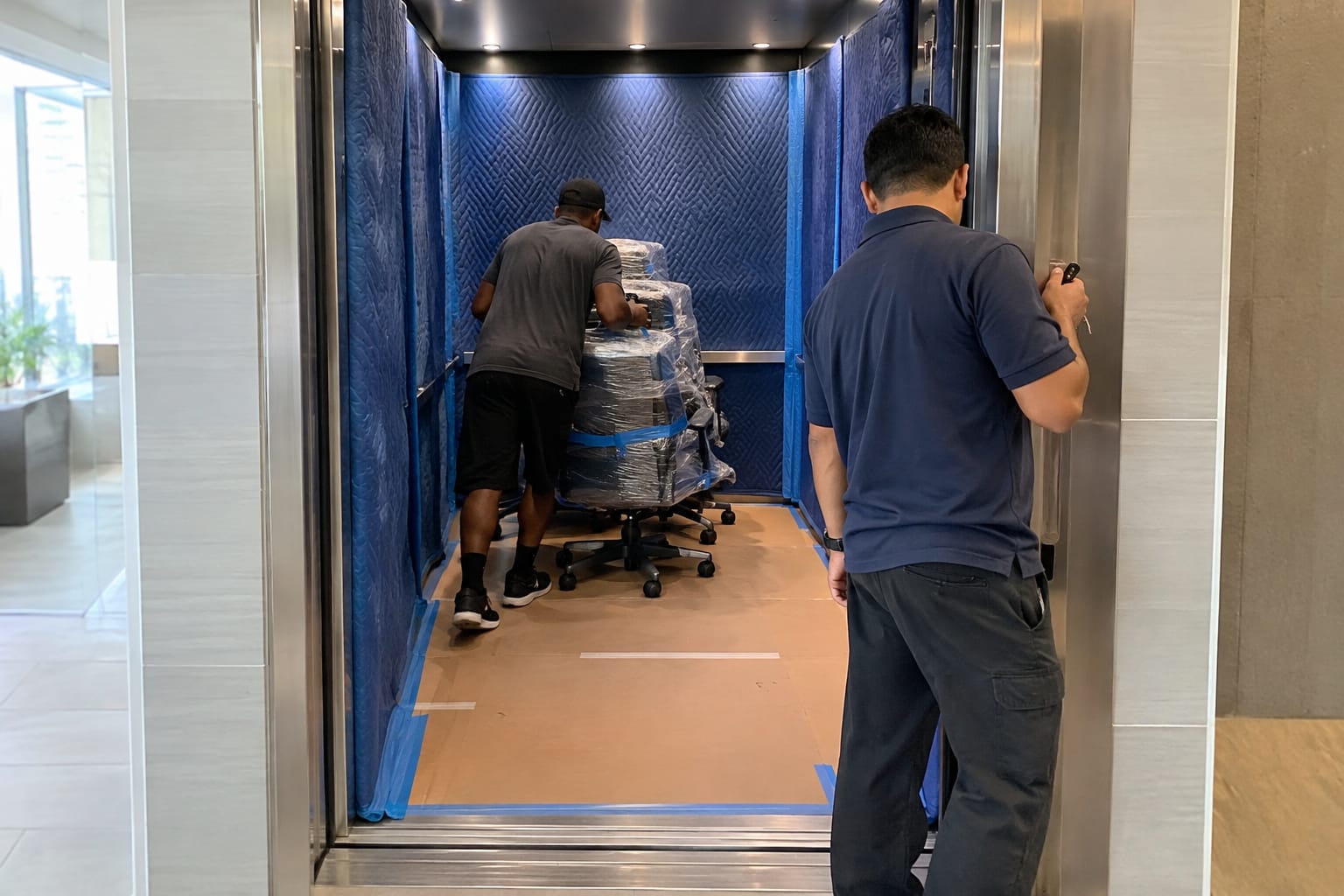
- Freight elevator and dock windows. Get the reserved hours in writing for Friday night, Saturday, and Sunday at both ends. If a building shares one elevator, reserve it early.
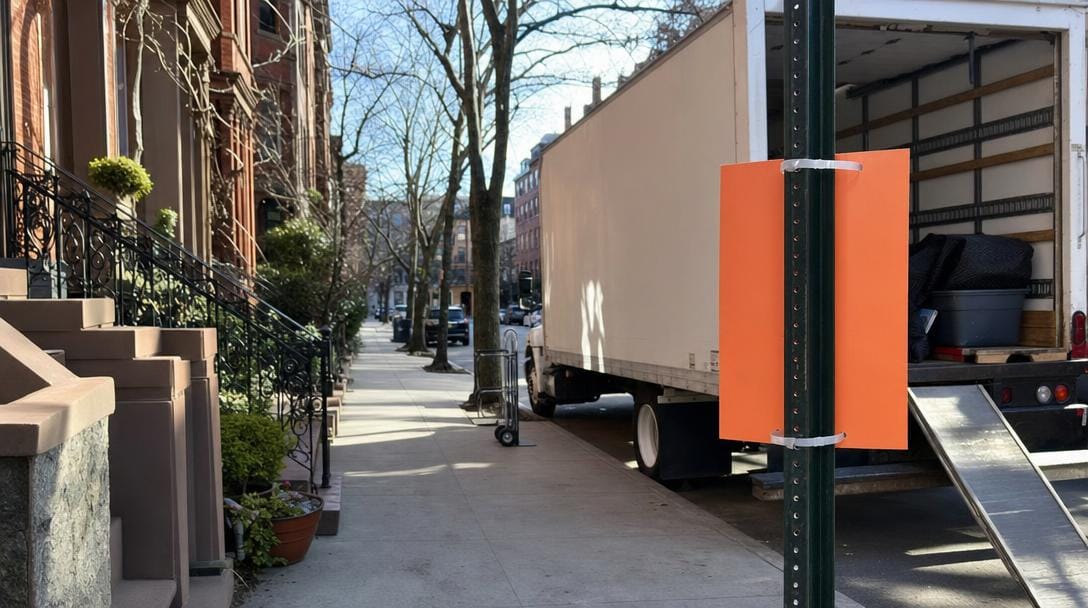
- Truck parking and access. Confirm where the truck stages and whether permits are needed. In dense cities this matters — know where you can legally park a moving truck in Boston before Friday.
- IT cutover plan. Confirm who powers down servers, who transports them, and when the new circuit and internet are live.
- Floor plan with zone labels. Every room, desk, and asset gets a code that matches a posted map at the destination.
- Mover credentials. Take a minute to verify the mover is licensed and insured before you sign anything.
Pro Tip: Print the freight elevator confirmation and tape a copy inside both elevators on move day. When a security guard questions your crew at 9 PM, paper ends the conversation fast.
The Sample Weekend Schedule (Friday 3 PM → Monday 9 AM)
Below is a downloadable-style office relocation schedule you can paste into a shared calendar. Times are planning ranges. Owners are roles, not names — assign real people before Friday.
| Time block | Task | Owner | Depends on |
|---|---|---|---|
| Fri 3:00–5:00 PM | Final workday shutdown, desk prep, employee crate-out | Office manager + staff | Crates delivered Thu |
| Fri 5:00–6:00 PM | Crew arrival, walkthrough, building protection | Move crew lead | COI on file, dock open |
| Fri 6:00–11:00 PM | Disconnect, disassemble, Load 1 departs | Crew + IT | Floor protection down |
| Sat 8:00 AM–12:00 PM | Load 2: heavy and awkward items | Crew | Elevator reserved |
| Sat 12:00–6:00 PM | Placement, furniture reassembly, zone labeling | Crew + office manager | Zone map posted |
| Sun 9:00 AM–4:00 PM | IT reconnection, testing, punch list | IT vendor | Racks placed + powered |
| Sun 4:00–7:00 PM | Final walkthrough, deficiency list, sign-off | Office manager | Testing complete |
| Mon 7:00–9:00 AM | Soft open, first-hour triage | Office manager | Workstations live |

Friday Evening: Shutdown, Crew Arrival, and the First Load
Friday's job is to empty the old office in one controlled push. It splits into three phases: staff shutdown, crew mobilization, and Load 1.
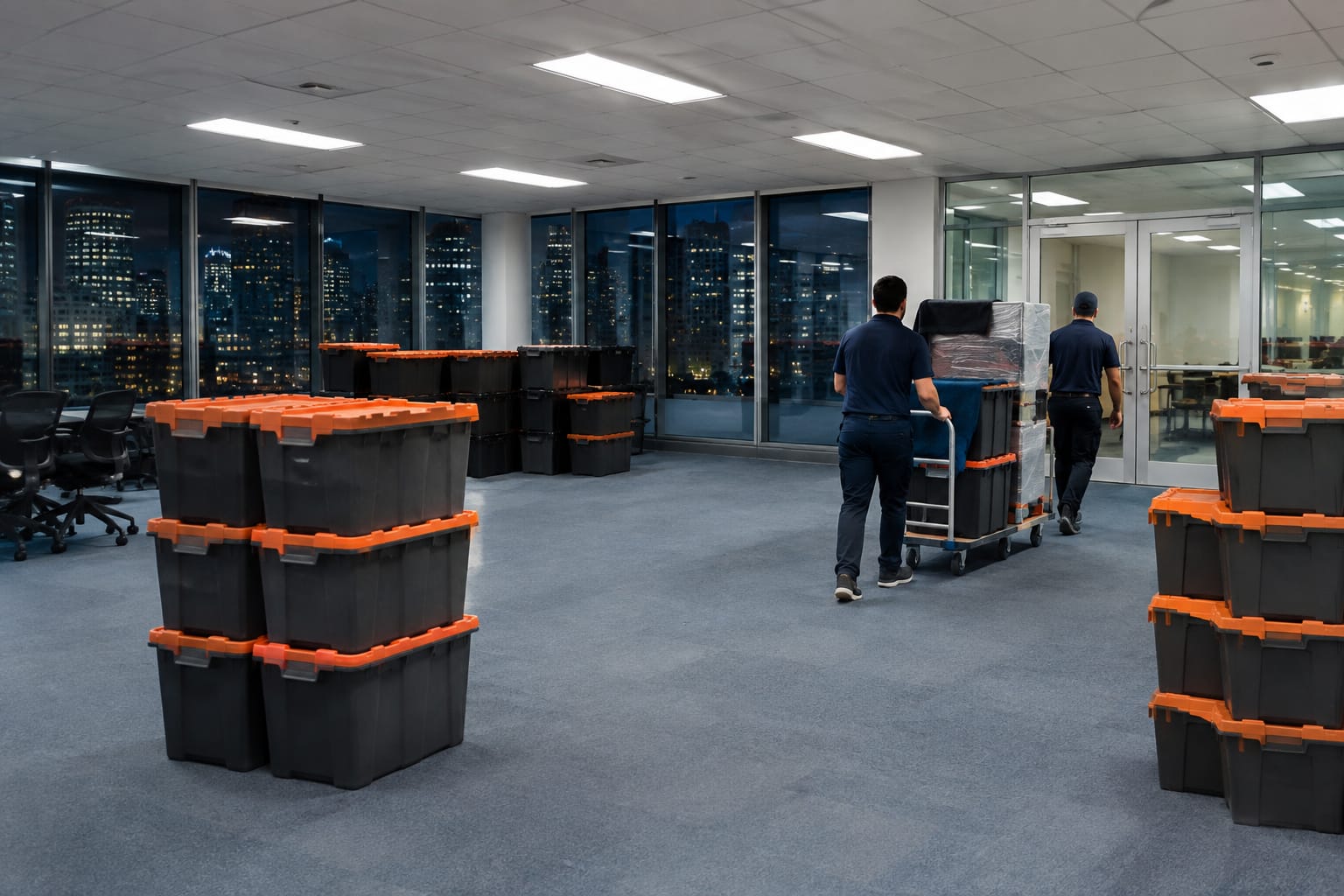
From 3:00 to 5:00 PM, staff finish their last tasks and pack personal desks into labeled crates. Give each person one gang box (a reusable plastic moving crate) and a single rule: everything must have a zone code.
At 5:00 PM the crew arrives, walks both spaces with the lead, and lays building protection — floor runners, corner guards, and elevator pads. Nothing rolls until protection is down.
From 6:00 to 11:00 PM, movers disconnect and disassemble while IT handles electronics. Cubicle panel systems come apart, monitors get bagged and labeled, and the first truckload — the bulk of boxed items and disassembled furniture — departs. A full-service crew handles this on site, from disassembly to protected transport.

Q: Should employees pack their own desks?
A: Yes — staff should crate their own personal items and label each crate with its destination zone before Friday's shutdown, which frees the professional crew to focus on furniture, electronics, and heavy equipment.
Born to Move can help: Born to Move handles commercial office relocations on business days. Learn more →
Saturday: The Heavy Load, Placement, and Reassembly
Saturday moves the awkward items and starts putting the new office back together. Morning is muscle; afternoon is precision.
From 8:00 AM to noon, the crew handles Load 2 — the heavy and awkward pieces held back on purpose: safes, lateral file banks, conference tables, and anything needing an appliance dolly. Reserve the freight elevator for this block; if you haven't already, reserve the freight elevator ahead of move day so the heavy items are not waiting on a shared lift.
From noon to 6:00 PM, the work shifts to placement and furniture reassembly. This has a hard dependency: reassembly cannot start until the floor plan zone labels are posted. Without a map on the wall, desks land in the wrong rooms and Sunday inherits the chaos.
Sensitive gear — lab equipment, large-format printers, medical or AV devices — should already be protected. If yours needs it, arrange custom crating for sensitive equipment during the week, never improvised on Saturday.
Sunday: IT Reconnection, Testing, and the Punch List
Sunday is IT's day. Reconnection, testing, and a written punch list turn a full room into a working office.
The critical dependency: IT reconnection cannot start until the server-room racks are placed, leveled, and powered. Movers set the racks; the IT vendor or managed service provider takes it from there.
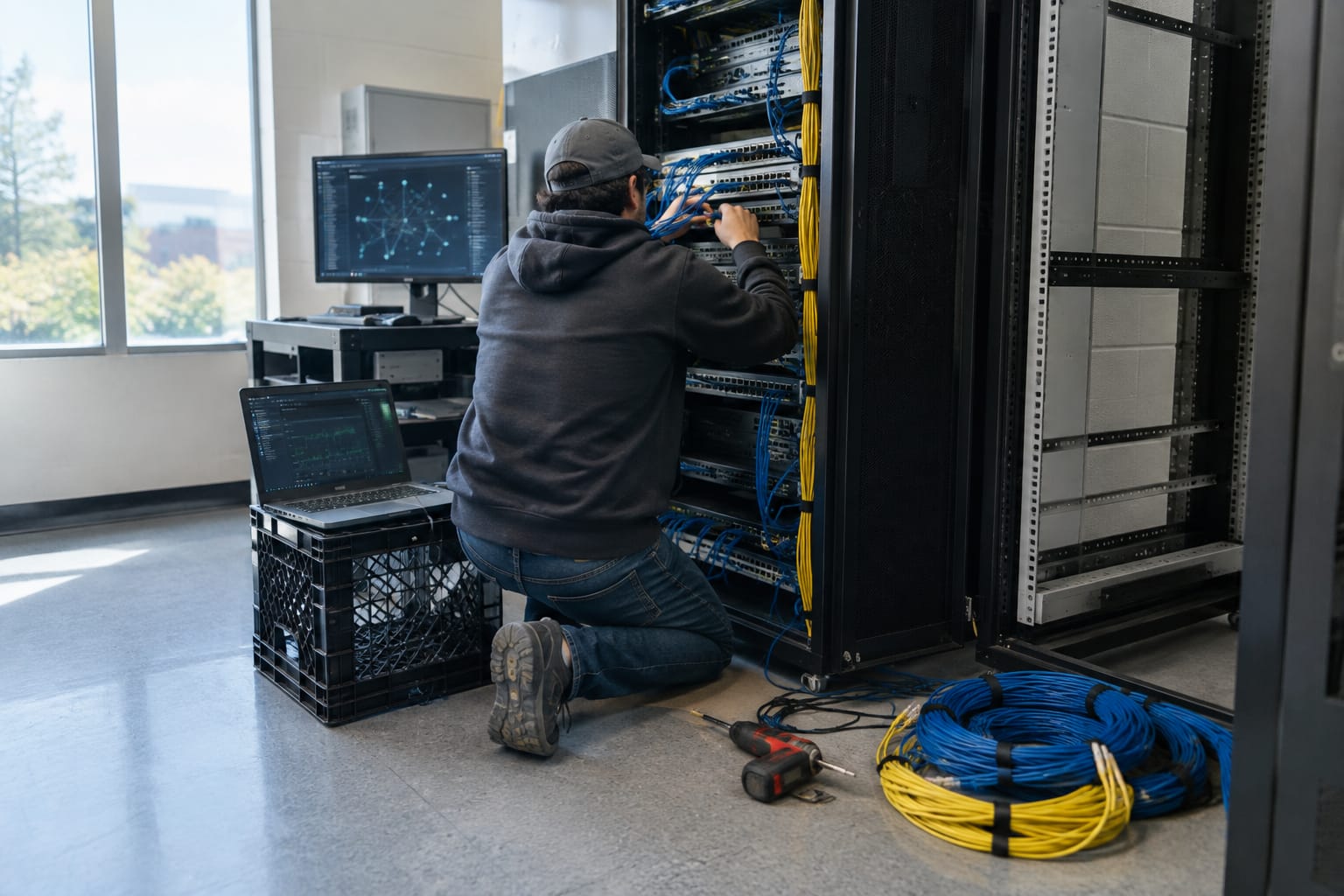
A realistic Sunday sequence:
- Rack and power the server room; confirm the circuit and internet are live.
- Reconnect the network switch and patch panel, then work outward to floor drops.
- Bring up workstations zone by zone and test — network, phones, printers.
- Log every failure on a punch list: dead port, missing cable, wrong desk.
- Walk the space at day's end and sign off on what's done versus outstanding.
Start IT while movers are still placing furniture. The two streams overlap on purpose; waiting for a perfectly empty floor wastes daylight you'll want back on Monday.
Monday 7:00 AM: The Soft Open and First-Hour Triage
Monday reopens the business, not perfectly, but working. A soft open means core functions run while the punch list finishes in the background.
The office manager arrives before staff — around 7:00 AM — to sweep for overnight failures: a phone with no dial tone, a desk missing a monitor, a jammed badge reader. First-hour triage fixes what blocks work and defers what doesn't.

Staff arriving at their desks should find monitors on standby and one crate each to unpack. A paper zone map near the entrance answers the first question everyone asks: where do I sit? By mid-morning the office is running, with only cosmetic items left on the list.
Where Weekend Office Timelines Slip — and How to Buffer
Most weekend moves that run long share a handful of failure points. Name them in advance and build buffer where they live.
- Elevator contention. A shared or unreserved freight elevator is the single biggest time sink. Reserve dedicated hours in writing.
- Packing not finished Thursday. If desks aren't crated when the crew arrives Friday, the whole night shifts back. Enforce the deadline.
- IT waiting on power. No live circuit means no reconnection. Confirm the destination's power and internet are active before the weekend.
- Missing or wrong COI. A building can turn a crew away at the dock without the right certificate. Verify the exact language early.
- No posted floor plan. Unlabeled zones stall reassembly and scatter furniture. Post the map before Saturday afternoon.
Build buffer by treating Sunday afternoon and Monday's first hour as slack, not scheduled work. If everything goes right, you finish early. If it doesn't, you have room to recover without touching Monday's revenue.
Q: What happens if the move runs past Sunday night?
A: A well-planned weekend schedule keeps Sunday afternoon and Monday's first hour as buffer, so minor overruns land in slack time rather than a lost business day — ask your mover how they handle a schedule that slips and whether they offer short-notice and urgent relocation scheduling for the overflow.
If a move gets scheduled on short notice or an unexpected deadline appears, confirm your mover offers short-notice and urgent relocation scheduling before you commit to a weekend.
How Office Size Changes the Timeline
The 60-hour frame flexes with headcount. More workstations means more crates, more disassembly, and more IT drops — the shape holds, the hours stretch.
| Office size | Realistic weekend shape | Main constraint |
|---|---|---|
| ~10 workstations | Often one long Friday night plus a Saturday finish | Packing readiness |
| ~30 workstations | Full Friday load-out, Saturday placement, Sunday IT | Elevator and dock windows |
| 75+ workstations | Both weekend days plus a phased or two-truck approach | IT reconnection volume |
Q: Can a small office move be done in one night?
A: A roughly 10-workstation office is often movable in a single Friday night into Saturday morning, provided desks are pre-packed and the destination's power and internet are already live — larger offices need the full weekend for placement and IT testing.
For Greater Boston offices moving within the metro — Cambridge, Somerville, Newton — distance is short and the constraint is almost always building access, not drive time. For a longer lane, transit hours become the variable and the schedule needs more Saturday runway.
Who Needs to Be On Site — and When
Not everyone camps out all weekend. Match presence to dependency so people show up when their decisions are needed.
- Office manager / move lead: present Friday shutdown, Saturday placement, and Monday soft open. The constant owner.
- IT vendor: critical Sunday for reconnection; on call Friday for server power-down.
- Department leads: brief Saturday-afternoon window to confirm their zone's layout.
- Facilities / property manager contact: reachable Friday night and Saturday for elevator, dock, and access issues.
- Moving crew lead: the whole physical window, coordinating loads and protection.
Give each person a specific arrival time from the schedule table above, not "sometime Saturday." Vague timing is how a two-hour task becomes a half-day.
Key Takeaways
- A weekend office move is roughly a 60-hour window — Friday shutdown to Monday soft open — built to protect a business day.
- Confirm COI, elevator and dock windows, truck access, and the IT cutover plan in writing by Thursday.
- IT reconnection can't start until server racks are placed and powered; furniture reassembly can't start until zone labels are posted.
- Elevator contention and unfinished Thursday packing are the two most common causes of overruns.
- Timeline scales with size: ~10 workstations may finish in a night; 75+ needs the full weekend and often two trucks.
What time should movers start on a Friday office move?
Most weekend office moves begin the crew's work between 5:00 and 6:00 PM Friday, after staff have shut down and cleared personal items — early enough to complete the first load before midnight.
Do office movers work on weekends and after hours?
Many commercial movers schedule after-hours and weekend starts specifically to minimize business downtime. Ask your mover directly whether they schedule Friday-night or weekend starts and confirm it in writing.
Who disconnects and reconnects computers during an office move?
Your IT vendor or managed service provider typically owns disconnect and reconnect, including servers, the network switch, and patch panel. Movers handle physical transport and set the racks; IT does the cabling and testing.
Do we need a certificate of insurance for our building?
Almost always. Both the origin and destination property managers usually require a COI with specific additional-insured language before a crew can use the dock or freight elevator — get the exact wording from each building early.
What do we need to have packed before the movers arrive?
Every desk should be crated and labeled with its destination zone, and all personal and loose items boxed. The crew focuses on furniture, electronics, and heavy equipment — not loose paperwork.
Written by Born to Move Team, Moving Company Experts
Useful Links
- How to Reserve an Elevator for Your Move: A Step-by-Step Guide
- Services Typically Offered by a Full-Service Moving Company
- Where Can I Park My Moving Truck in Boston?
- How to Professionally Crate Things
- What Questions Should I Ask When Hiring a Moving Company?
Frequently Asked Questions