'%3E%3Cpath fill='%231B2A47' d='M1.605 16.263c.03-1.139.059-2.482.088-3.971.03-1.49.03-2.832.03-4.03 0-.758 0-1.576-.03-2.51 0-.905-.03-1.84-.03-2.803 0-.496-.028-.964-.028-1.43 0-.468 0-.906-.03-1.315h6.858q2.188 0 3.589.35c.963.234 1.663.643 2.13 1.198.496.555.73 1.372.73 2.394 0 .788-.176 1.46-.497 1.985-.32.526-.846.935-1.575 1.197-.73.292-1.693.468-2.918.526v.263c1.313.087 2.334.263 3.122.525.758.263 1.342.672 1.692 1.197.35.526.525 1.197.525 2.044 0 1.08-.233 1.927-.67 2.57-.468.642-1.139 1.08-2.102 1.343-.933.262-2.159.408-3.705.408H1.605zm6.537-9.197q1.882 0 2.713-.526c.555-.35.817-.934.817-1.752 0-.905-.292-1.547-.846-1.927s-1.459-.554-2.655-.554H4.757v4.759zm.204 6.92c.934 0 1.663-.088 2.217-.263.555-.176.934-.438 1.197-.818s.38-.876.38-1.518c0-.876-.322-1.49-.934-1.84-.643-.35-1.635-.525-3.035-.525H4.757v4.963zM21.038 16.555c-1.576 0-2.801-.292-3.618-.905-.817-.614-1.284-1.519-1.372-2.745-.087-1.226.205-2.774.847-4.613s1.43-3.358 2.392-4.584c.963-1.226 2.043-2.131 3.298-2.744C23.839.292 25.24 0 26.786 0c1.576 0 2.772.321 3.59.934.816.613 1.283 1.548 1.37 2.774s-.203 2.774-.845 4.613c-.642 1.81-1.43 3.358-2.393 4.584s-2.072 2.132-3.297 2.745a9.8 9.8 0 0 1-4.173.905m.788-2.278c.642 0 1.138-.058 1.371-.116.205-.059.496-.117.847-.322.262-.146.437-.292.554-.408.204-.175.32-.292.438-.41.204-.203.35-.408.496-.583.35-.438.642-.876.963-1.402.233-.408.466-.817.67-1.284.205-.438.38-.905.555-1.372.438-1.198.671-2.278.671-3.183s-.204-1.606-.612-2.131c-.409-.497-1.051-.76-1.897-.76-.467 0-.934.059-1.43.205h-.03c-1.02.292-1.925 1.226-2.042 1.372-.116.117-.467.526-.963 1.343a15.5 15.5 0 0 0-1.342 2.92c-.408 1.197-.642 2.277-.671 3.182-.03.906.175 1.636.584 2.161q.611.788 1.838.788M14.853 38.54c-1.576 0-2.802-.292-3.619-.905s-1.284-1.518-1.371-2.744c-.088-1.227.204-2.774.846-4.614s1.43-3.357 2.393-4.584 2.042-2.13 3.297-2.744c1.255-.613 2.655-.905 4.173-.905 1.575 0 2.772.321 3.589.934s1.284 1.548 1.371 2.774c.088 1.226-.204 2.774-.846 4.613-.642 1.81-1.43 3.358-2.393 4.584s-2.072 2.131-3.297 2.745c-1.226.613-2.626.846-4.143.846m.787-2.277c.642 0 1.138-.059 1.372-.117.204-.058.496-.117.846-.321.263-.146.438-.292.554-.409.205-.175.321-.292.438-.409.204-.204.35-.408.496-.584a13 13 0 0 0 1.634-2.686c.204-.438.38-.905.555-1.372.437-1.197.67-2.277.67-3.182 0-.906-.203-1.606-.612-2.132-.409-.496-1.05-.759-1.897-.759-.467 0-.934.058-1.43.204h-.029c-1.021.292-1.925 1.227-2.042 1.373-.117.116-.467.525-.963 1.343a15.5 15.5 0 0 0-1.342 2.92c-.409 1.196-.642 2.277-.671 3.182s.175 1.635.583 2.16q.613.789 1.838.789'/%3E%3Cpath fill='%23FF515E' d='M55.966 38.57c-1.576 0-2.801-.293-3.618-.906s-1.284-1.518-1.372-2.744c-.087-1.227.204-2.774.846-4.613s1.43-3.358 2.393-4.584c.963-1.227 2.043-2.132 3.297-2.745s2.656-.905 4.173-.905c1.576 0 2.772.321 3.589.934s1.284 1.548 1.371 2.774c.088 1.226-.204 2.774-.846 4.613-.642 1.81-1.43 3.358-2.393 4.584s-2.071 2.131-3.297 2.745c-1.225.613-2.626.846-4.143.846m.788-2.249c.642 0 1.138-.058 1.371-.117.204-.058.496-.116.846-.32.263-.147.438-.293.555-.41a7 7 0 0 0 .437-.408c.205-.205.35-.41.496-.584a13 13 0 0 0 1.634-2.686c.205-.438.38-.905.555-1.373.438-1.197.671-2.277.671-3.182s-.204-1.606-.613-2.131c-.408-.497-1.05-.76-1.896-.76-.467 0-.934.059-1.43.205h-.03c-1.02.292-1.925 1.226-2.042 1.372-.117.117-.467.526-.963 1.343a15.5 15.5 0 0 0-1.342 2.92c-.409 1.197-.642 2.277-.671 3.182s.175 1.635.583 2.16q.614.79 1.839.79'/%3E%3Cpath fill='%231B2A47' d='M33.06 16.263c0-.35 0-.935.03-1.81.029-1.051.058-2.103.058-3.154s.03-2.073.03-3.007c0-1.606-.03-3.27-.06-4.993 0-.554-.028-1.08-.028-1.606 0-.525-.03-1.021-.03-1.46h6.828c1.46 0 2.685.117 3.59.38q1.4.394 2.1 1.314.7.963.7 2.628c0 .992-.174 1.81-.554 2.452-.35.643-.904 1.11-1.604 1.431s-1.576.467-2.627.496v.263q2.058.087 3.064.876c.671.525 1.138 1.372 1.43 2.51.087.41.233 1.023.467 1.84.233.818.408 1.431.554 1.84h-3.414a11 11 0 0 0-.262-1.022c-.321-1.314-.526-2.19-.584-2.628a5 5 0 0 0-.642-1.46 2.13 2.13 0 0 0-.963-.73c-.408-.146-.934-.233-1.605-.233h-3.326v6.0440000000000005H33.06zm6.332-8.292c1.343 0 2.276-.205 2.86-.613.554-.41.846-1.11.846-2.073 0-.73-.146-1.314-.408-1.723-.263-.409-.671-.7-1.197-.876q-.788-.263-2.1-.263h-3.181v5.519h3.18zM49.4 16.263l.03-2.745c.029-2.452.029-4.905.029-7.416q0-2.101-.088-5.868h4.085l5.924 10.335c.087.234.204.438.291.643.117.204.205.408.321.613.38.788.613 1.255.672 1.372h.262c0-.058-.03-.146-.03-.204 0-.059-.028-.117-.028-.175a75 75 0 0 1-.175-1.314 10 10 0 0 1-.088-1.285c0-1.547 0-3.737-.029-6.57V1.84c0-.584-.03-1.11-.03-1.576h2.977c-.03 2.482-.058 5.08-.058 7.766 0 1.694 0 4.438.029 8.292h-4.027l-5.573-9.43c-.875-1.81-1.226-2.511-1.05-2.132-.263-.613-.467-1.08-.613-1.46h-.263c.058.35.117.876.175 1.548.059.7.117 1.168.117 1.46 0 2.978 0 6.306.029 9.985H49.4zM4.698 38.277c.029-2.627.058-5.255.058-7.883 0-1.576 0-3.503-.029-5.752-1.109 0-2.684 0-4.727.03v-2.453h12.664v2.453c-1.955-.03-3.53-.03-4.756-.03 0 .584-.03 1.227-.03 1.957s0 1.46-.029 2.218v1.84c0 2.57.03 5.11.059 7.62z'/%3E%3Cpath fill='%23FF515E' d='M29.441 38.277c.409-1.05.788-2.102 1.168-3.182s.787-2.16 1.167-3.241c.613-1.693 1.05-2.949 1.342-3.766l1.255-3.65c.116-.38.262-.788.379-1.139.117-.38.263-.73.38-1.05h4.61l-.671 12.904h.262l8.316-12.905h4.669l-.7 1.869c-.876 2.452-1.343 3.766-1.43 4a501 501 0 0 0-3.385 10.16h-2.947c.292-.846.788-2.219 1.459-4.087.175-.526.35-1.08.554-1.606.175-.526.38-1.08.555-1.577.642-1.81 1.342-3.825 2.072-6.014h-.234l-8.724 13.314h-2.86l.554-13.314h-.175c-.175.496-.38.992-.554 1.489-.175.496-.38 1.022-.555 1.547a163 163 0 0 0-1.08 3.008c-.145.38-.262.759-.408 1.138-.117.38-.262.73-.408 1.11-.7 1.898-1.284 3.59-1.751 5.05h-2.86zM68.047 38.277c.175-2.19.32-4.525.467-7.007.058-.905.204-3.912.467-9.051h3.151c-.03.438-.058.934-.088 1.46s-.058 1.08-.087 1.693a264 264 0 0 1-.409 6.657c-.145 1.986-.35 3.591-.583 4.788h.175Q72.147 34.892 73.94 32a562 562 0 0 1 4.465-7.066c.32-.496.641-.992.933-1.46s.555-.875.817-1.255h3.268q-.568.832-1.138 1.752c-.408.613-.787 1.255-1.196 1.927-3.88 6.014-6.478 10.131-7.85 12.35h-5.193zM79.106 38.277c.32-.788.758-2.014 1.37-3.65a287 287 0 0 0 1.577-4.32c.437-1.256.904-2.628 1.4-4.088s.934-2.774 1.313-3.97h11.322l-.846 2.364H87.1l-1.664 4.847 7.645-.088-.612 1.694-7.587-.088-1.75 4.934h8.286l-.846 2.365z'/%3E%3C/g%3E%3Cdefs%3E%3CclipPath id='a'%3E%3Cpath fill='%23fff' d='M0 0h96v40H0z'/%3E%3C/clipPath%3E%3C/defs%3E%3C/svg%3E)
Fitness equipment moving companies are movers that take apart, protect, transport and reassemble heavy exercise machines such as treadmills, ellipticals, power racks and cable machines. Some are full-service household movers with crews trained on heavy items. Others are specialty movers that focus on rigging and commercial gym installs. The right fit depends on weight, access and what the quote covers.
Here's the thing: gym equipment is harder to move than most furniture. It is top-heavy and full of pinch points, and it often sits in a basement at the bottom of one narrow staircase. This checklist covers ten things home gym owners and small studio operators should check before booking. Each item includes what a good answer sounds like and the red flags that should end the conversation.
Key Takeaways
- Verify registration first. Interstate movers need a USDOT number and FMCSA operating authority; Massachusetts intrastate moves fall under the state Department of Public Utilities.
- Valuation is not insurance. Basic released-value protection pays by weight, not purchase price, so expensive connected machines may need optional extra coverage.
- Get disassembly in writing. Confirm which machines are taken apart and reassembled, and leave electrical, gas or water disconnection to a licensed technician.
- Measure the route. Basement gyms are often assembled in place, so measure doorways, stairs and turns before quoting.
- Studios need a downtime plan. Phase the move, number every machine against a floor plan, and confirm in writing which days and hours the mover actually works.
1. Licensing, Insurance and Valuation Coverage for Heavy Items
Check that the mover is registered for your type of move, and that you know exactly what basic valuation pays for a damaged machine.
You can look up both in the FMCSA SAFER Company Snapshot.
This walkthrough shows how to verify a mover's USDOT registration in a few minutes. Do it before you share your address or sign anything.
Valuation deserves extra attention with gym gear. Basic coverage pays by weight, not by what you paid for the machine. A connected treadmill with a large touchscreen can be worth far more than its weight-based payout.
Q: Is $0.60 per pound valuation the same as moving insurance?
A: No. FMCSA describes Released Value Protection as the no-extra-charge minimum liability of 60 cents per pound per article; Full Value Protection is a separate, higher level of liability that you pay for.
For reference, Born to Move lists USDOT 2887241 and MA DPU 31826. Its hourly local rate includes basic released-value protection at $0.60 per pound. That is not insurance, and additional coverage is optional at extra cost.
- What a good answer sounds like: "Here is our USDOT number. Basic valuation pays by weight. Here is what extra coverage would cost for your rack and treadmill."
- Red flags: No registration number for an interstate move, describing basic valuation as insurance, or vague answers about how damage claims work.
2. Experience With Treadmills, Ellipticals, and Home Gyms
Ask which of your specific machines the crew has moved before, and how they handled them.
Heavy is not one category. A folding treadmill, a selectorized cable machine and a full power rack each fail in different ways during a move. A crew that knows the difference plans crew size, tools and truck space before arriving.
| Equipment | Main moving risk | What to ask the mover |
|---|---|---|
| Folding treadmill | Deck unlocking mid-carry; console damage | Do you lock or strap the deck and protect the console? |
| Non-folding or commercial treadmill | Weight concentrated at the motor end; tight turns | How many movers, and which dolly? |
| Elliptical or cross-trainer | Swinging arms and pedals; heavy flywheel | Do you remove the arms and secure moving parts? |
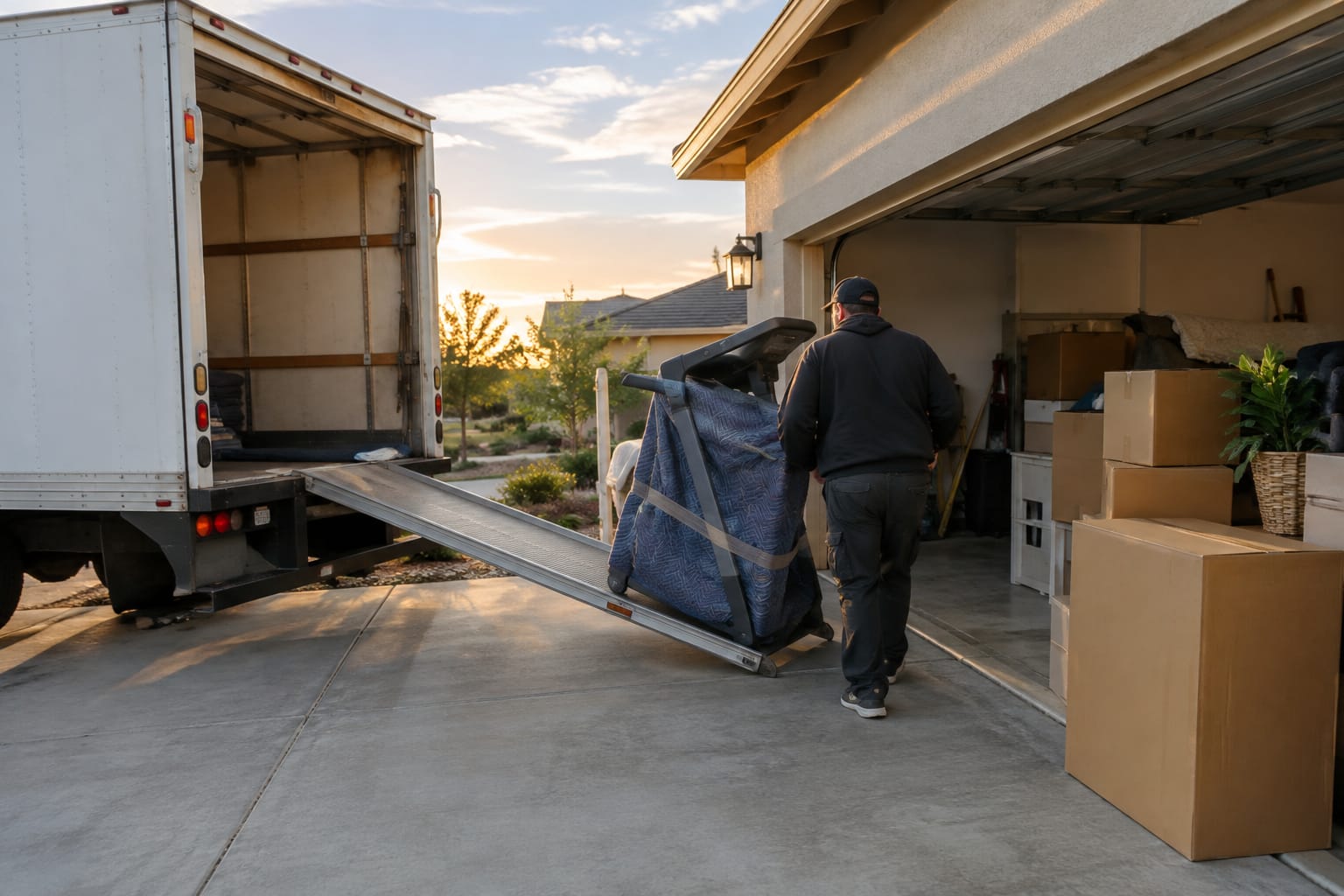
| Power rack or Smith machine | Tall uprights, many bolts, lost hardware | Will you disassemble and label every bolt? |
| Cable machine with weight stack | Stack shifting; cables kinking | How do you secure or remove the stack? |
| Bike or rower with a screen | Cracked display; bent mounts | Do you remove or wrap the screen separately? |
| Plates, dumbbells, kettlebells | Box failure; floor and truck damage | How do you box and load free weights? |
Moving a treadmill or elliptical safely starts with the owner's manual. Many manufacturers publish transport steps, such as locking the deck or removing the console. Have the manual or model number ready when you request quotes.
- What a good answer sounds like: Specific steps for your machine, such as removing the console, strapping the deck and using a four-wheel dolly on the motor end.
- Red flags: "It's just furniture," or no questions about make, model or weight.
3. Disassembly and Reassembly Included in the Quote
Get it in writing which pieces will be taken apart and put back together, and whether that time is billed.
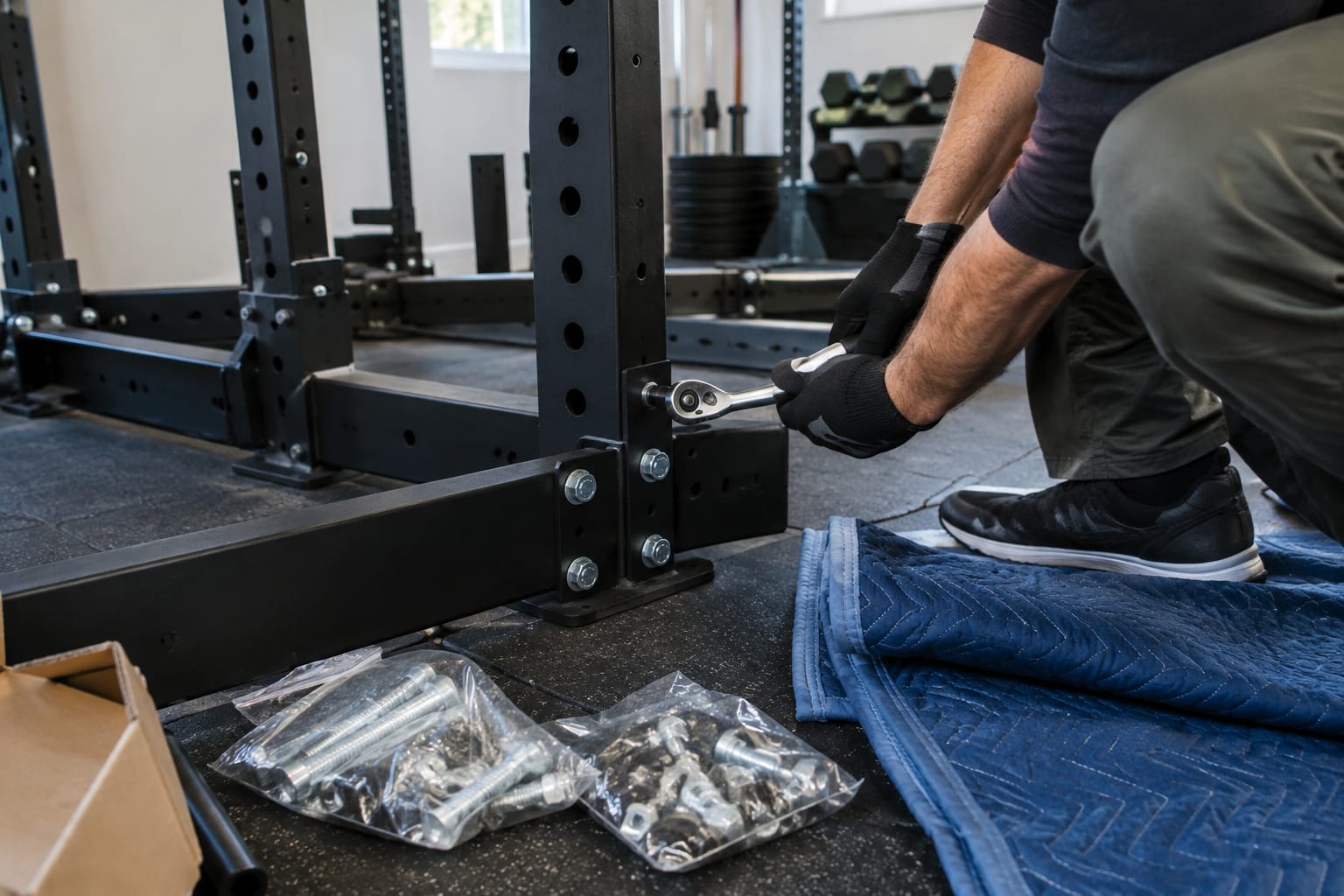
Most home gym moves involve some disassembly. Handlebar arms, consoles and rack uprights come off so the machine fits through doors and rides safely in the truck. The real question is whether reassembly at the new home is part of the job or a surprise add-on.
Basic disassembly usually falls within a moving crew's scope. Complex work, such as re-threading a cable machine or rebuilding a commercial unit to factory spec, may call for the manufacturer's technician. A good mover tells you where that line sits before moving day.
The same habits that protect other bulky pieces apply here; these tips on preparing large furniture for relocation cover wrapping and labeling.
One firm boundary: movers do not handle electrical, gas or water connections. Hardwired treadmills, saunas, steam units and plumbed cold plunges need a licensed electrician or plumber to disconnect them before the crew arrives and reconnect them afterward.
Pro Tip: Photograph each machine from several angles before anything comes apart, and tape bagged hardware to the frame it came from. Reassembly goes faster, and the photos document condition if a question comes up later.
- What a good answer sounds like: "We'll remove the arms and console, bag and label the hardware, and reassemble everything at the new address as part of the job."
- Red flags: "We'll figure it out on the day," or reassembly mentioned only after the truck is loaded.
4. The Right Equipment: Dollies, Straps, Pads, and Hoisting
Confirm the crew brings tools matched to the weight of your equipment and the route out of your home.
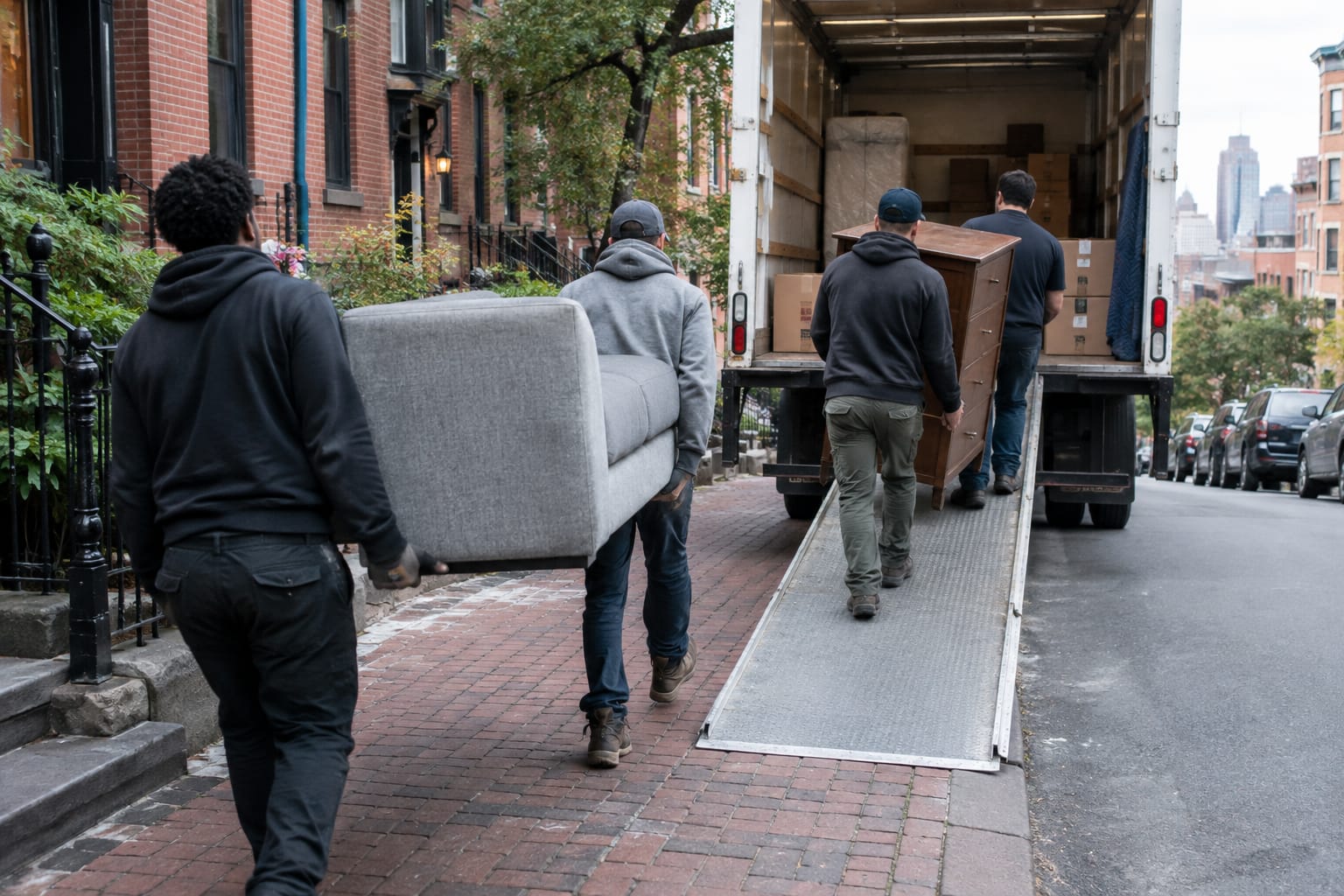
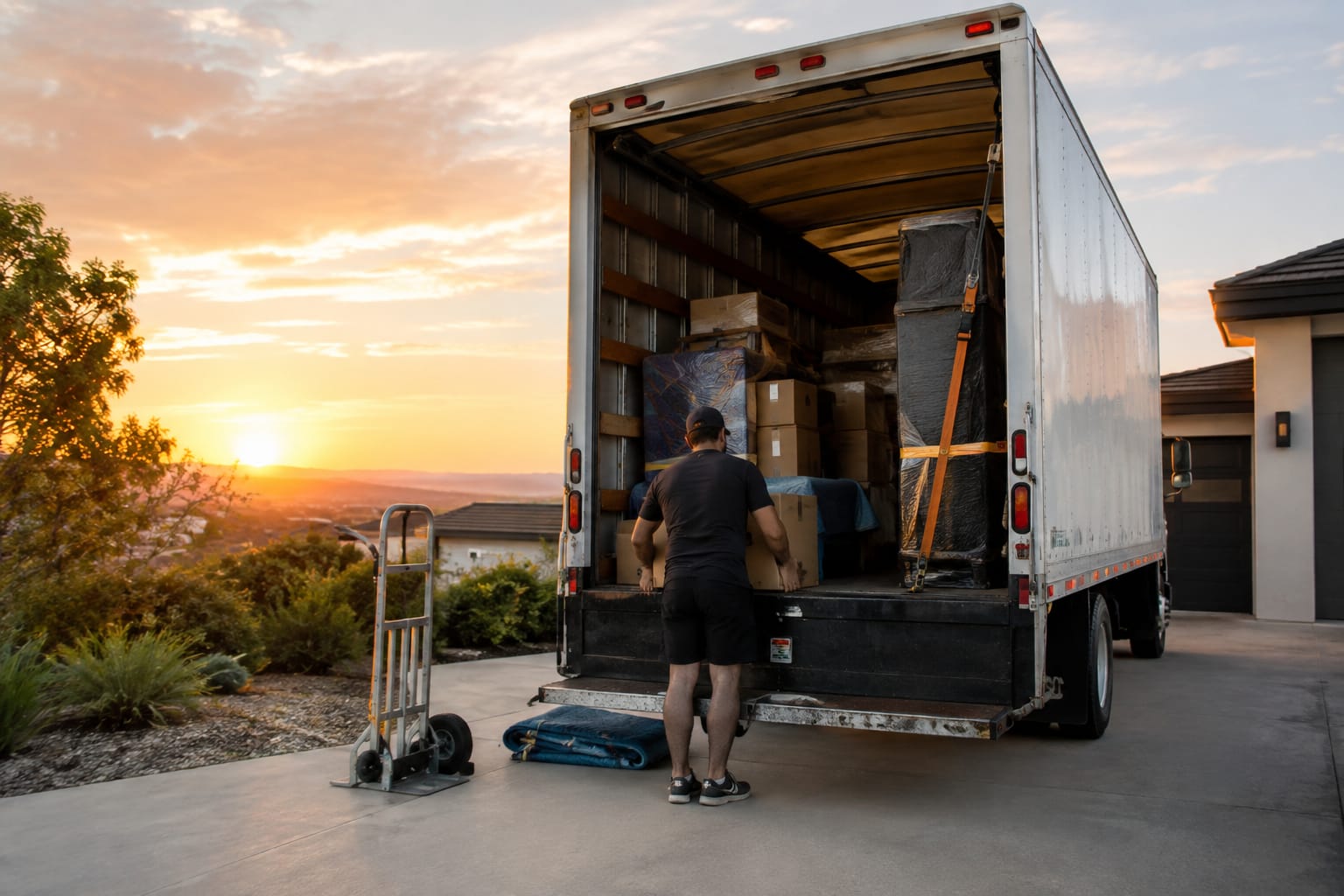
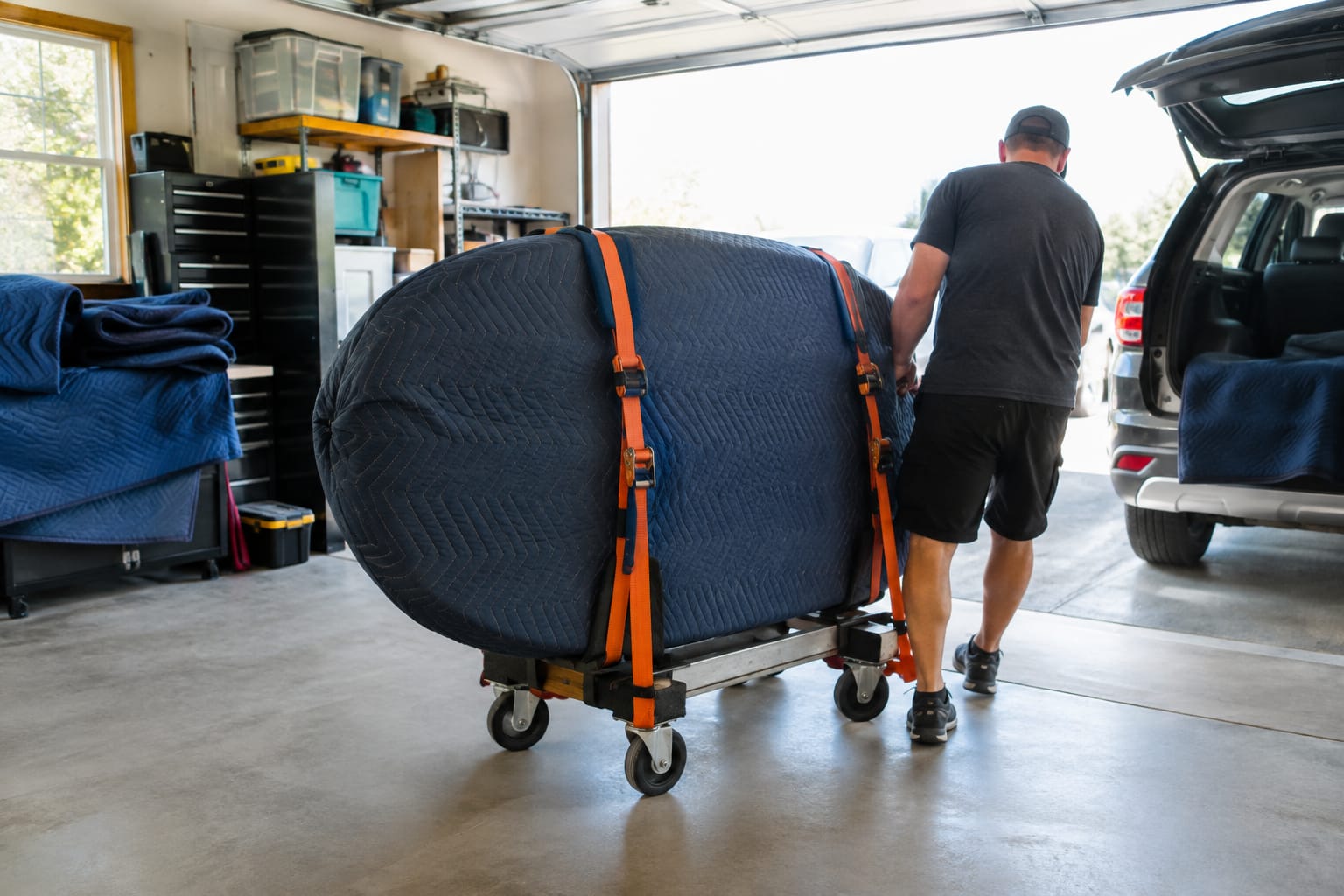
Heavy item moving depends on gear more than muscle. A prepared crew arrives with:
- Four-wheel furniture dollies for racks, benches and machine frames
- Appliance hand trucks with straps for upright treadmills and stack machines
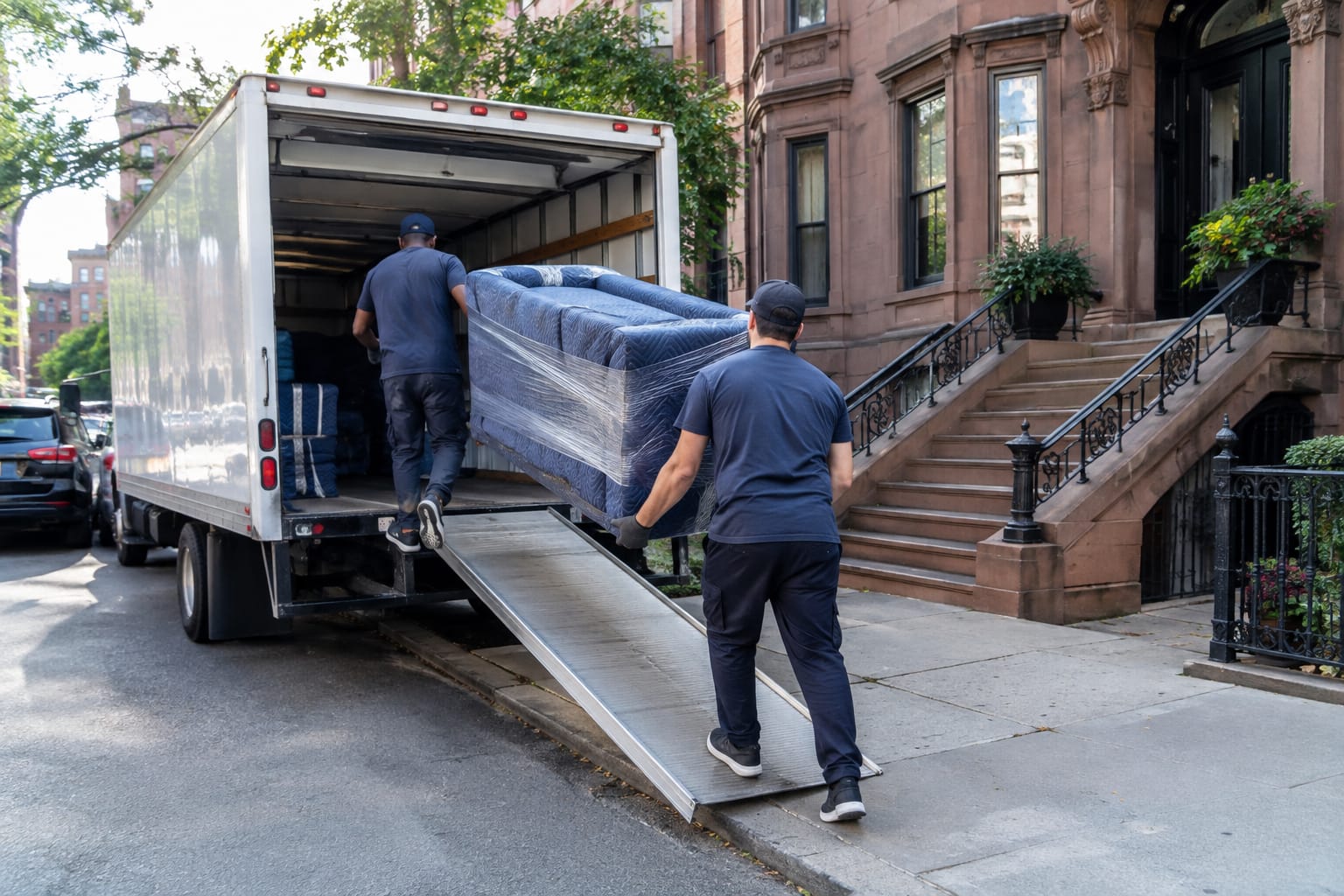
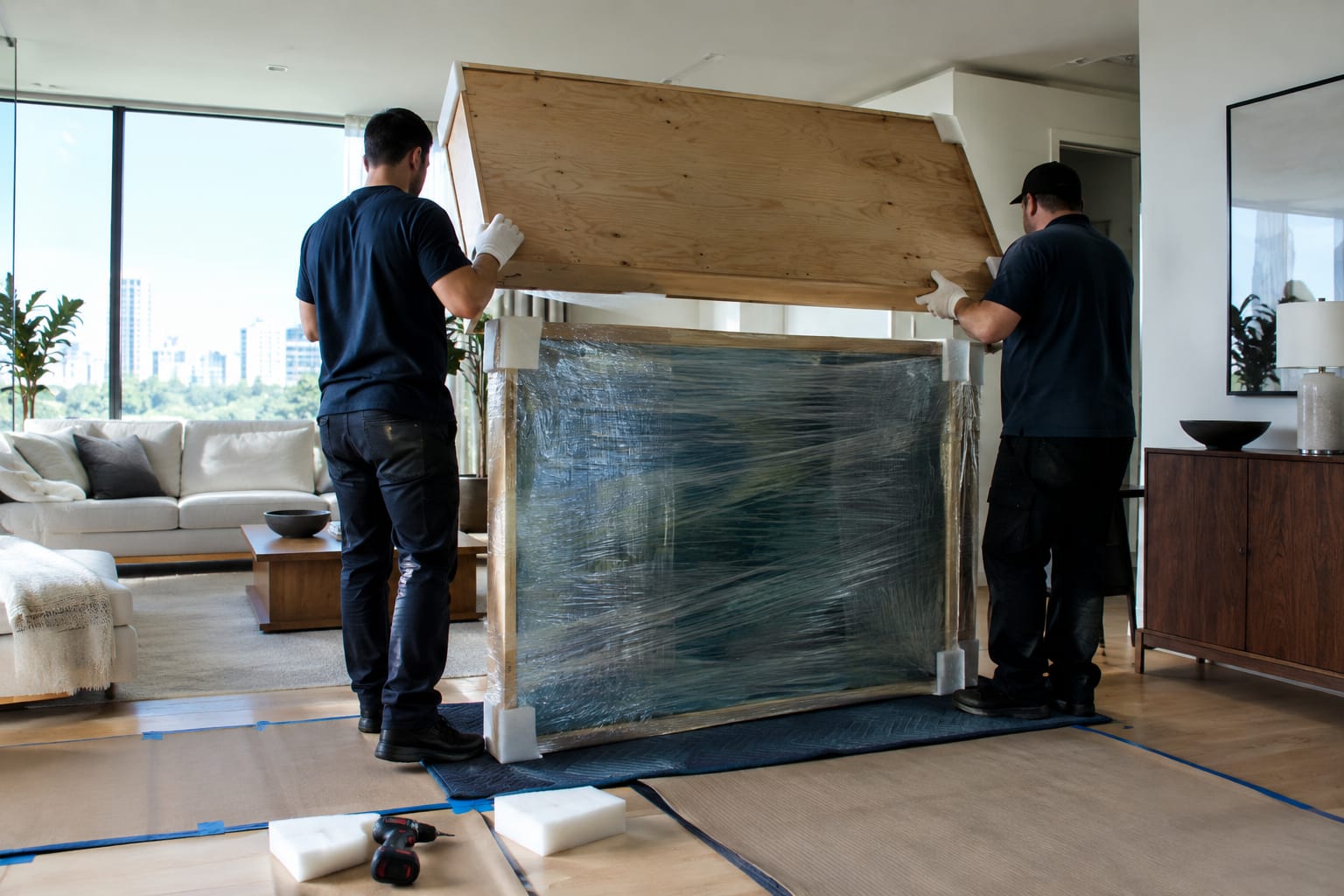
- Moving blankets and shrink wrap to protect frames, screens and upholstery
- Ratchet straps to secure machines inside the truck
- Floor and doorway protection along the route
- Hex keys and socket sets for disassembly
Free weights need their own plan. Plates and dumbbells go in small, sturdy boxes or crates, never one oversized carton. They ride low in the truck, where they cannot shift into furniture.
When a machine cannot fit through the interior route, the conversation turns to hoisting: lifting it through a window or over a balcony with rigging or a crane. That is specialist work that often needs a separate quote, and sometimes a city permit for street use. The weight-and-balance problems resemble those of pianos, and these tips for moving a piano show how movers plan for them.
- What a good answer sounds like: A list of the dollies, straps and protection the crew will bring, based on your inventory.
- Red flags: A crew planning to carry a rack frame by hand, or no straps for securing machines in the truck.
5. How They Handle Stairs, Basements, and Tight Doorways
Choose a mover who asks about stairs, turns and doorway widths before moving day, not at the top of the basement steps.
Basement home gyms are the classic problem. Equipment often went in as boxed parts and was assembled in place, so the finished machine may not fit back out the same way. Measure the tightest points on the route: doorways, stair width, landings and ceiling height at turns.
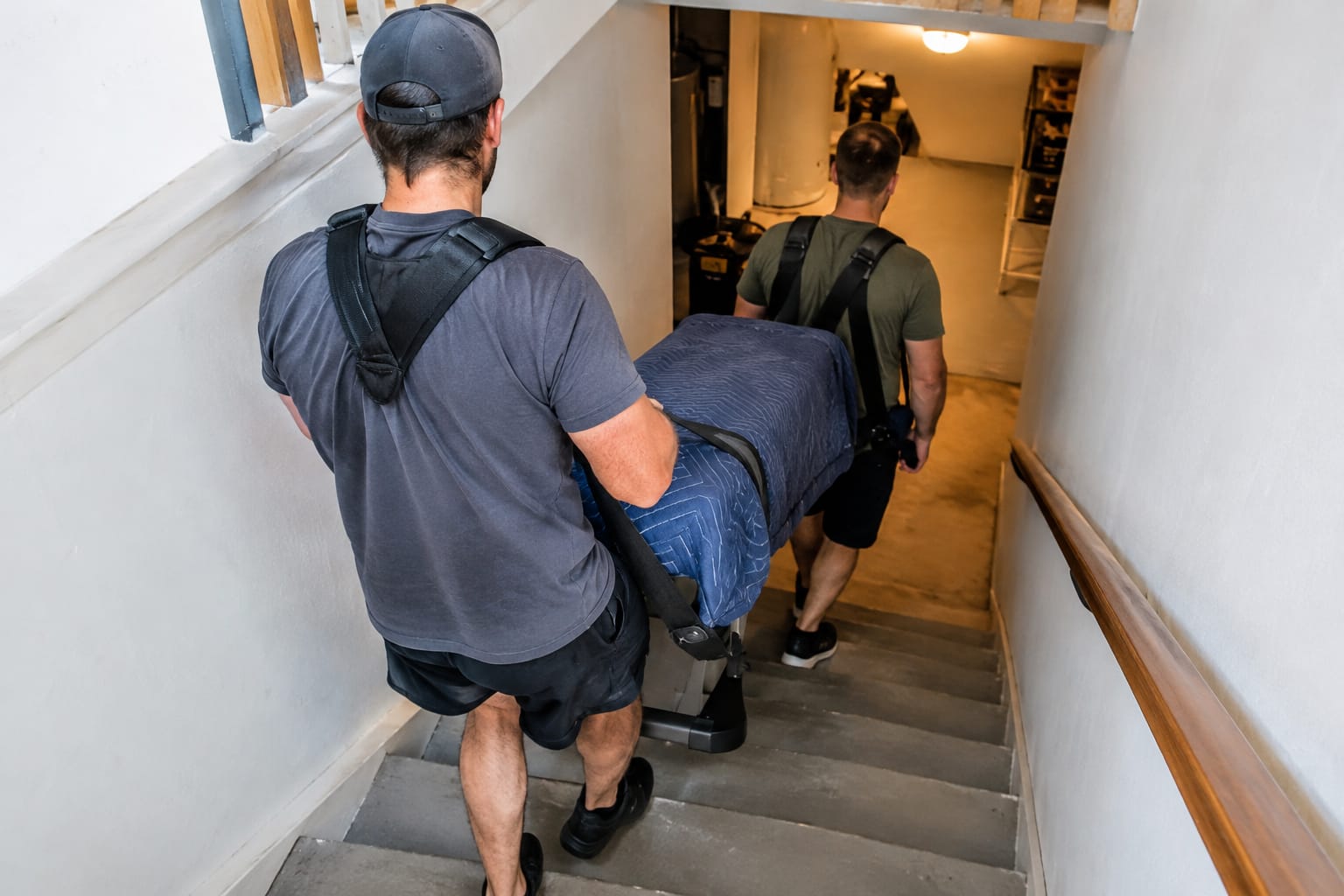
Compare those measurements with the machine's dimensions from the manual. Simple fixes cover most cases: taking doors off their hinges, removing handrails or partially disassembling the machine. Moving a power rack down a turning staircase, for example, is often possible only in pieces.
Apartments add more steps. Many buildings require you to reserve a service elevator and protect hallways. In Boston, truck access is its own puzzle, and this guide on where to park a moving truck in Boston covers permits and street rules.
- What a good answer sounds like: Questions about floor level, stair turns, doorway widths, elevator access and truck parking, ideally backed by photos or a video walk-through.
- Red flags: A quote issued with no questions about access at either address.
6. Transparent Pricing for Heavy and Specialty Items
Know how heavy items change your price before you book, and get that explanation in writing.
Local moves are usually billed hourly, so heavy equipment affects cost through time and crew size. Some movers also add per-item heavy fees, stair charges or long-carry fees.
As one example of published pricing, Born to Move lists hourly crew rates from $160 per hour for 2 movers and a truck, $240 for 3 movers and $320 for 4 movers. A 3-hour minimum including travel time applies, travel time is billed at the same hourly rate, and seasonal rates apply, so confirm the current rate on your quote.
Card payments add 3% under the same published rate terms. Packing supplies such as boxes, tape, shrink wrap and mattress bags are charged separately.
Interstate moves work differently. Movers price them on weight or inventory.
Check that every machine appears on the order for service and the bill of lading. This explainer on how interstate movers calculate your cost goes deeper. If your home gym is heading south, start with how Boston-to-New York moves are priced.
- What a good answer sounds like: A written estimate that lists each machine, the crew size, any heavy-item or stair fees, and the estimate type.
- Red flags: A firm price by phone without an inventory, refusal to put the estimate in writing, or pressure to pay a large cash deposit.
7. Scheduling a Commercial Gym or Studio Move Around Business Hours
For a studio or small gym, ask for a written plan that limits closed days and fits the mover's actual working hours.
Commercial gym moves are about downtime as much as equipment. Every closed day means cancelled classes and frustrated members. Studios typically shrink the gap in a few ways:
- Moving in phases: spare, stored and rarely used equipment first; core machines last
- Picking the quietest days in the class schedule and notifying members early
- Booking outside business hours when a mover offers it, often at a different rate; confirm in writing which days and hours a mover actually works, since not every company offers evenings or weekends
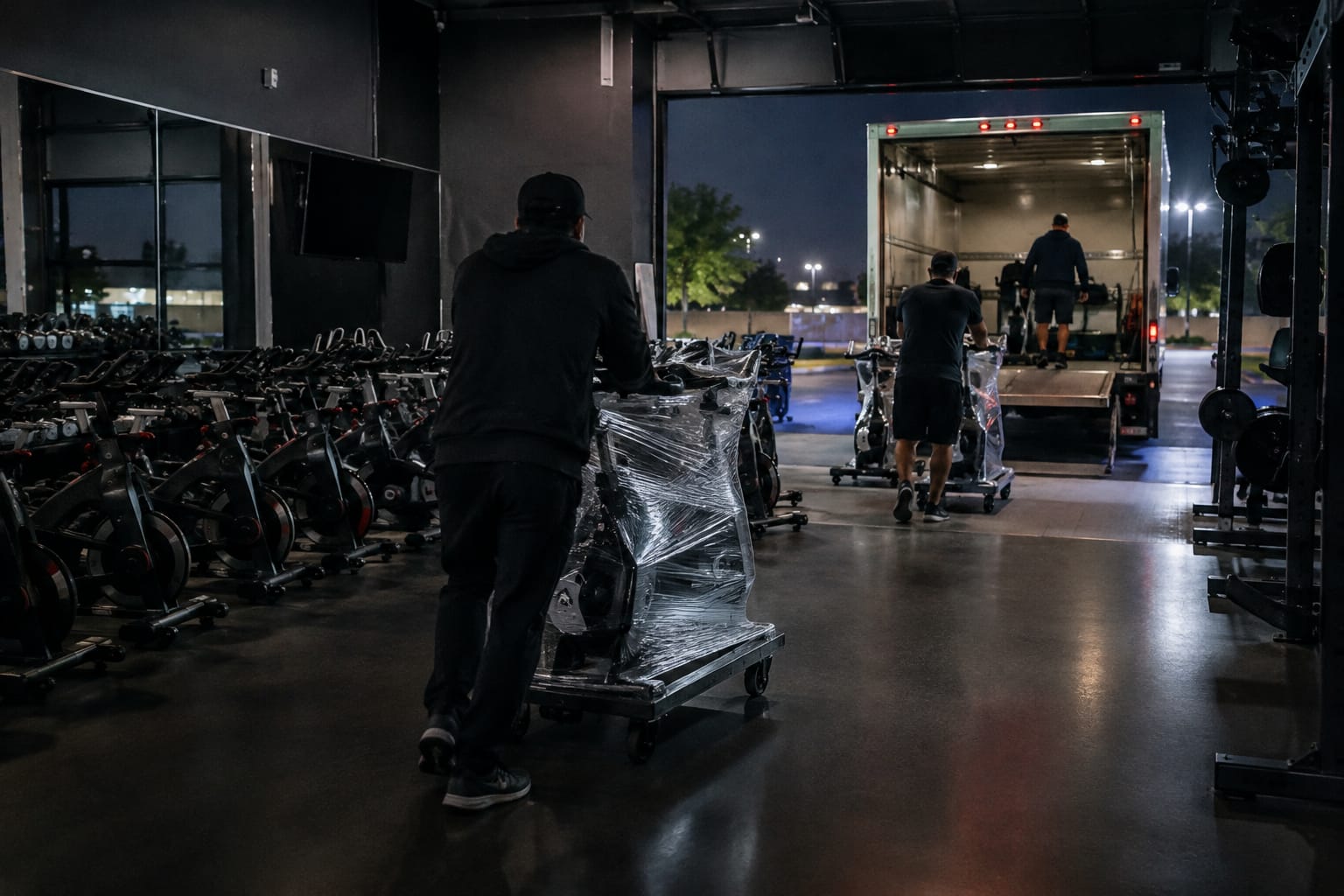
Planning detail matters more at commercial scale. Number every machine and match it to a floor plan of the new space, so the crew places each piece once. Confirm loading dock and freight elevator hours at both buildings.
Rubber flooring, mirrors and wall-mounted storage may need a separate contractor.
- What a good answer sounds like: A site visit or video survey, a numbered inventory and a written schedule with the delivery window agreed in advance.
- Red flags: No walk-through for a multi-machine studio, or a schedule that ignores your building's dock and elevator rules.
More about the service: Moving Companies Hopkinton MA
8. Certificate of Insurance for Buildings and Landlords
Confirm the mover can send a certificate of insurance to your building or landlord before moving day.
Q: What is a certificate of insurance for a move?
A: It is a short document, often the standard ACORD 25 form, that shows a mover's liability coverage and lists your building or landlord as the certificate holder. Many apartment buildings, condo associations and commercial landlords require one before movers can use the elevator or loading dock.
Ask building management for their exact requirements early: the legal names to list, any additional-insured wording and coverage minimums. Forward them to every mover you are considering. Unusual wording can take days to process, so do not leave it for the final week.
Keep one distinction clear. A certificate of insurance protects the building, not your equipment. Your machines are covered by the valuation option you choose in item 1.
- What a good answer sounds like: "Send us your building's requirements and we'll have the certificate issued before your move date."
- Red flags: Hesitation about producing a certificate, or asking you to sort it out with the building yourself.
9. Reviews That Mention Heavy or Unusual Items
Look for reviews that describe heavy, awkward items specifically, and read how the company responded when something went wrong.
Generic praise tells you little. Search a mover's reviews for words like treadmill, gym, piano, safe or stairs. Those reviews show how crews handle weight, tight routes and disassembly.
The company's replies matter as much as the ratings. A professional response to a damage complaint explains how the claim was handled. For interstate moves, federal rules allow 9 months to file a written claim for loss or damage, so pressure to settle on the spot is a warning sign.
This guide to finding a reputable moving company covers more vetting steps beyond reviews.
- What a good answer sounds like: A clear description of the claims process, including how to report damage and how long the mover takes to respond.
- Red flags: Only vague praise, no reviews mentioning heavy items, or defensive replies to complaints.
10. Questions to Ask Before You Book
Use one consistent list of questions with every mover so their quotes are comparable.
Copy, print or save this list and bring it to each estimate:
- What is your USDOT number, and your MC number for interstate moves?
- Have you moved my specific machines before, and how did you handle them?
- Which pieces will you disassemble, and is reassembly included?
- How many movers and what equipment will you send?
- Have you accounted for my stairs, doorways, elevator and truck parking?
- What does basic valuation pay, and what does extra coverage cost?
- Which fees apply to heavy items, stairs or long carries?
- For interstate moves, is this a binding, non-binding or binding-not-to-exceed estimate?
- Can you issue a certificate of insurance to my building or landlord?
- Which days and hours do you work, and what delivery window will we agree in writing?
- What should I disconnect or prepare before your crew arrives?
For a broader list that applies to any household move, here are more questions to ask a moving company.
Choosing the Right Mover for Your Home Gym or Studio
What does this mean in practice? For a folding treadmill, a bench and a set of dumbbells, a full-service household mover with solid answers to the list above is usually enough. For a multi-machine studio, a rack that needs hoisting or commercial units under warranty, bring in the manufacturer or a specialty rigger alongside the mover.
If you only need help with the heaviest pieces, this explainer on hiring someone to move furniture covers labor-focused options.
Across Greater Boston, Born to Move runs hourly local moves with a truck, moving blankets, floor protection and basic furniture disassembly and reassembly. Whichever mover you choose, list every machine by make and model in your inventory so the crew size and time are planned correctly.
Written by Born to Move Team
Useful Links
- Born to Move Prices — Current hourly crew rates, minimums and billing terms for local moves.
- Commercial Moving — How office and business relocations are planned and scoped.
- Can I Hire Someone to Move Furniture? — Options for getting help with heavy pieces only.
- How to Find a Reputable Moving Company — Vetting steps before you sign with any mover.
- Request a Moving Quote — Submit your inventory and access details for a written estimate.
Need help with this? Moving Companies Hopkinton MA · Get a quote · Call (617) 903-2609
Frequently Asked Questions