'%3E%3Cpath%20fill='%231B2A47'%20d='M1.605%2016.263c.03-1.139.059-2.482.088-3.971.03-1.49.03-2.832.03-4.03%200-.758%200-1.576-.03-2.51%200-.905-.03-1.84-.03-2.803%200-.496-.028-.964-.028-1.43%200-.468%200-.906-.03-1.315h6.858q2.188%200%203.589.35c.963.234%201.663.643%202.13%201.198.496.555.73%201.372.73%202.394%200%20.788-.176%201.46-.497%201.985-.32.526-.846.935-1.575%201.197-.73.292-1.693.468-2.918.526v.263c1.313.087%202.334.263%203.122.525.758.263%201.342.672%201.692%201.197.35.526.525%201.197.525%202.044%200%201.08-.233%201.927-.67%202.57-.468.642-1.139%201.08-2.102%201.343-.933.262-2.159.408-3.705.408H1.605zm6.537-9.197q1.882%200%202.713-.526c.555-.35.817-.934.817-1.752%200-.905-.292-1.547-.846-1.927s-1.459-.554-2.655-.554H4.757v4.759zm.204%206.92c.934%200%201.663-.088%202.217-.263.555-.176.934-.438%201.197-.818s.38-.876.38-1.518c0-.876-.322-1.49-.934-1.84-.643-.35-1.635-.525-3.035-.525H4.757v4.963zM21.038%2016.555c-1.576%200-2.801-.292-3.618-.905-.817-.614-1.284-1.519-1.372-2.745-.087-1.226.205-2.774.847-4.613s1.43-3.358%202.392-4.584c.963-1.226%202.043-2.131%203.298-2.744C23.839.292%2025.24%200%2026.786%200c1.576%200%202.772.321%203.59.934.816.613%201.283%201.548%201.37%202.774s-.203%202.774-.845%204.613c-.642%201.81-1.43%203.358-2.393%204.584s-2.072%202.132-3.297%202.745a9.8%209.8%200%200%201-4.173.905m.788-2.278c.642%200%201.138-.058%201.371-.116.205-.059.496-.117.847-.322.262-.146.437-.292.554-.408.204-.175.32-.292.438-.41.204-.203.35-.408.496-.583.35-.438.642-.876.963-1.402.233-.408.466-.817.67-1.284.205-.438.38-.905.555-1.372.438-1.198.671-2.278.671-3.183s-.204-1.606-.612-2.131c-.409-.497-1.051-.76-1.897-.76-.467%200-.934.059-1.43.205h-.03c-1.02.292-1.925%201.226-2.042%201.372-.116.117-.467.526-.963%201.343a15.5%2015.5%200%200%200-1.342%202.92c-.408%201.197-.642%202.277-.671%203.182-.03.906.175%201.636.584%202.161q.611.788%201.838.788M14.853%2038.54c-1.576%200-2.802-.292-3.619-.905s-1.284-1.518-1.371-2.744c-.088-1.227.204-2.774.846-4.614s1.43-3.357%202.393-4.584%202.042-2.13%203.297-2.744c1.255-.613%202.655-.905%204.173-.905%201.575%200%202.772.321%203.589.934s1.284%201.548%201.371%202.774c.088%201.226-.204%202.774-.846%204.613-.642%201.81-1.43%203.358-2.393%204.584s-2.072%202.131-3.297%202.745c-1.226.613-2.626.846-4.143.846m.787-2.277c.642%200%201.138-.059%201.372-.117.204-.058.496-.117.846-.321.263-.146.438-.292.554-.409.205-.175.321-.292.438-.409.204-.204.35-.408.496-.584a13%2013%200%200%200%201.634-2.686c.204-.438.38-.905.555-1.372.437-1.197.67-2.277.67-3.182%200-.906-.203-1.606-.612-2.132-.409-.496-1.05-.759-1.897-.759-.467%200-.934.058-1.43.204h-.029c-1.021.292-1.925%201.227-2.042%201.373-.117.116-.467.525-.963%201.343a15.5%2015.5%200%200%200-1.342%202.92c-.409%201.196-.642%202.277-.671%203.182s.175%201.635.583%202.16q.613.789%201.838.789'/%3E%3Cpath%20fill='%23FF515E'%20d='M55.966%2038.57c-1.576%200-2.801-.293-3.618-.906s-1.284-1.518-1.372-2.744c-.087-1.227.204-2.774.846-4.613s1.43-3.358%202.393-4.584c.963-1.227%202.043-2.132%203.297-2.745s2.656-.905%204.173-.905c1.576%200%202.772.321%203.589.934s1.284%201.548%201.371%202.774c.088%201.226-.204%202.774-.846%204.613-.642%201.81-1.43%203.358-2.393%204.584s-2.071%202.131-3.297%202.745c-1.225.613-2.626.846-4.143.846m.788-2.249c.642%200%201.138-.058%201.371-.117.204-.058.496-.116.846-.32.263-.147.438-.293.555-.41a7%207%200%200%200%20.437-.408c.205-.205.35-.41.496-.584a13%2013%200%200%200%201.634-2.686c.205-.438.38-.905.555-1.373.438-1.197.671-2.277.671-3.182s-.204-1.606-.613-2.131c-.408-.497-1.05-.76-1.896-.76-.467%200-.934.059-1.43.205h-.03c-1.02.292-1.925%201.226-2.042%201.372-.117.117-.467.526-.963%201.343a15.5%2015.5%200%200%200-1.342%202.92c-.409%201.197-.642%202.277-.671%203.182s.175%201.635.583%202.16q.614.79%201.839.79'/%3E%3Cpath%20fill='%231B2A47'%20d='M33.06%2016.263c0-.35%200-.935.03-1.81.029-1.051.058-2.103.058-3.154s.03-2.073.03-3.007c0-1.606-.03-3.27-.06-4.993%200-.554-.028-1.08-.028-1.606%200-.525-.03-1.021-.03-1.46h6.828c1.46%200%202.685.117%203.59.38q1.4.394%202.1%201.314.7.963.7%202.628c0%20.992-.174%201.81-.554%202.452-.35.643-.904%201.11-1.604%201.431s-1.576.467-2.627.496v.263q2.058.087%203.064.876c.671.525%201.138%201.372%201.43%202.51.087.41.233%201.023.467%201.84.233.818.408%201.431.554%201.84h-3.414a11%2011%200%200%200-.262-1.022c-.321-1.314-.526-2.19-.584-2.628a5%205%200%200%200-.642-1.46%202.13%202.13%200%200%200-.963-.73c-.408-.146-.934-.233-1.605-.233h-3.326v6.0440000000000005H33.06zm6.332-8.292c1.343%200%202.276-.205%202.86-.613.554-.41.846-1.11.846-2.073%200-.73-.146-1.314-.408-1.723-.263-.409-.671-.7-1.197-.876q-.788-.263-2.1-.263h-3.181v5.519h3.18zM49.4%2016.263l.03-2.745c.029-2.452.029-4.905.029-7.416q0-2.101-.088-5.868h4.085l5.924%2010.335c.087.234.204.438.291.643.117.204.205.408.321.613.38.788.613%201.255.672%201.372h.262c0-.058-.03-.146-.03-.204%200-.059-.028-.117-.028-.175a75%2075%200%200%201-.175-1.314%2010%2010%200%200%201-.088-1.285c0-1.547%200-3.737-.029-6.57V1.84c0-.584-.03-1.11-.03-1.576h2.977c-.03%202.482-.058%205.08-.058%207.766%200%201.694%200%204.438.029%208.292h-4.027l-5.573-9.43c-.875-1.81-1.226-2.511-1.05-2.132-.263-.613-.467-1.08-.613-1.46h-.263c.058.35.117.876.175%201.548.059.7.117%201.168.117%201.46%200%202.978%200%206.306.029%209.985H49.4zM4.698%2038.277c.029-2.627.058-5.255.058-7.883%200-1.576%200-3.503-.029-5.752-1.109%200-2.684%200-4.727.03v-2.453h12.664v2.453c-1.955-.03-3.53-.03-4.756-.03%200%20.584-.03%201.227-.03%201.957s0%201.46-.029%202.218v1.84c0%202.57.03%205.11.059%207.62z'/%3E%3Cpath%20fill='%23FF515E'%20d='M29.441%2038.277c.409-1.05.788-2.102%201.168-3.182s.787-2.16%201.167-3.241c.613-1.693%201.05-2.949%201.342-3.766l1.255-3.65c.116-.38.262-.788.379-1.139.117-.38.263-.73.38-1.05h4.61l-.671%2012.904h.262l8.316-12.905h4.669l-.7%201.869c-.876%202.452-1.343%203.766-1.43%204a501%20501%200%200%200-3.385%2010.16h-2.947c.292-.846.788-2.219%201.459-4.087.175-.526.35-1.08.554-1.606.175-.526.38-1.08.555-1.577.642-1.81%201.342-3.825%202.072-6.014h-.234l-8.724%2013.314h-2.86l.554-13.314h-.175c-.175.496-.38.992-.554%201.489-.175.496-.38%201.022-.555%201.547a163%20163%200%200%200-1.08%203.008c-.145.38-.262.759-.408%201.138-.117.38-.262.73-.408%201.11-.7%201.898-1.284%203.59-1.751%205.05h-2.86zM68.047%2038.277c.175-2.19.32-4.525.467-7.007.058-.905.204-3.912.467-9.051h3.151c-.03.438-.058.934-.088%201.46s-.058%201.08-.087%201.693a264%20264%200%200%201-.409%206.657c-.145%201.986-.35%203.591-.583%204.788h.175Q72.147%2034.892%2073.94%2032a562%20562%200%200%201%204.465-7.066c.32-.496.641-.992.933-1.46s.555-.875.817-1.255h3.268q-.568.832-1.138%201.752c-.408.613-.787%201.255-1.196%201.927-3.88%206.014-6.478%2010.131-7.85%2012.35h-5.193zM79.106%2038.277c.32-.788.758-2.014%201.37-3.65a287%20287%200%200%200%201.577-4.32c.437-1.256.904-2.628%201.4-4.088s.934-2.774%201.313-3.97h11.322l-.846%202.364H87.1l-1.664%204.847%207.645-.088-.612%201.694-7.587-.088-1.75%204.934h8.286l-.846%202.365z'/%3E%3C/g%3E%3Cdefs%3E%3CclipPath%20id='a'%3E%3Cpath%20fill='%23fff'%20d='M0%200h96v40H0z'/%3E%3C/clipPath%3E%3C/defs%3E%3C/svg%3E)
U-Haul storage between homes bridges the gap when your move-out and move-in dates don't line up. You rent a self-storage unit or a portable U-Box, load it straight from your rental truck, and retrieve everything once the new place is ready. It turns a scheduling headache into a manageable two-step move.
Most people picture U-Haul as a truck company. In a gap move, the storage side matters just as much. This guide breaks down the two storage formats, how to size a unit for a temporary move, what it actually costs, and how to time the truck, the unit, and the move-in so nothing gets stranded.

| Point | Details |
|---|---|
| The core problem | Move-out and move-in dates rarely align, leaving belongings with nowhere to go for days or weeks. |
| Two formats | U-Haul offers walk-in self-storage units and portable U-Box containers delivered to your driveway. |
| Sizing | A one-bedroom typically fits in a 5×10; a two-bedroom home usually needs a 10×10 or 10×15 unit. |
| Cost lever | One-way truck renters often qualify for one free month of self-storage, cutting short-gap costs. |
| Timing wins | Storage lets you close, move out, and move in on separate days without paying for two overlapping homes. |
Why a Storage Gap Happens Between Two Homes
A storage gap opens whenever your possession dates don't overlap. The buyer takes your old home on one date, but your new closing or lease start lands days or weeks later. Your furniture needs somewhere to sit in between.
This is one of the most common friction points in moving. Census Bureau data shows roughly 8% of Americans relocate each year, and a large share of those juggle two mismatched dates. Closing delays, seller rent-backs, and September 1 lease turnover in cities like Boston all widen the window.
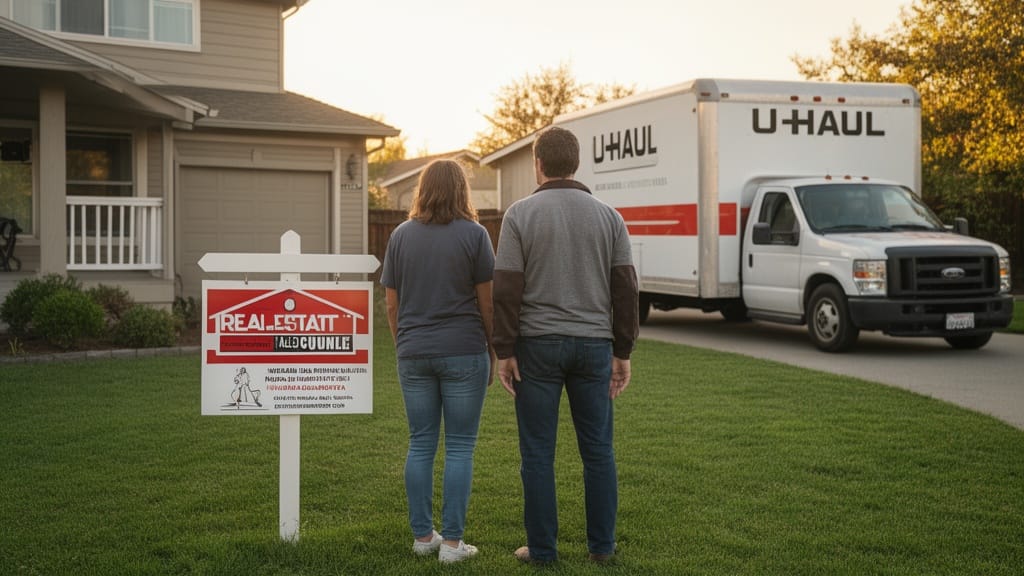
The storage gap between closing dates is rarely something you control. Mortgage funding slips a day. A seller asks for extra time. A building only allows move-ins on the first of the month. Temporary storage during a move absorbs that uncertainty so a one-day slip doesn't collapse your whole plan.
Q: What do I do with my stuff between selling and buying a house?
A: Load it into a self-storage unit or portable container, keep it there for the gap period, then deliver it to the new home once you have keys — typically a few days to a few weeks.
U-Haul's Two Storage Options: Self-Storage vs. U-Box
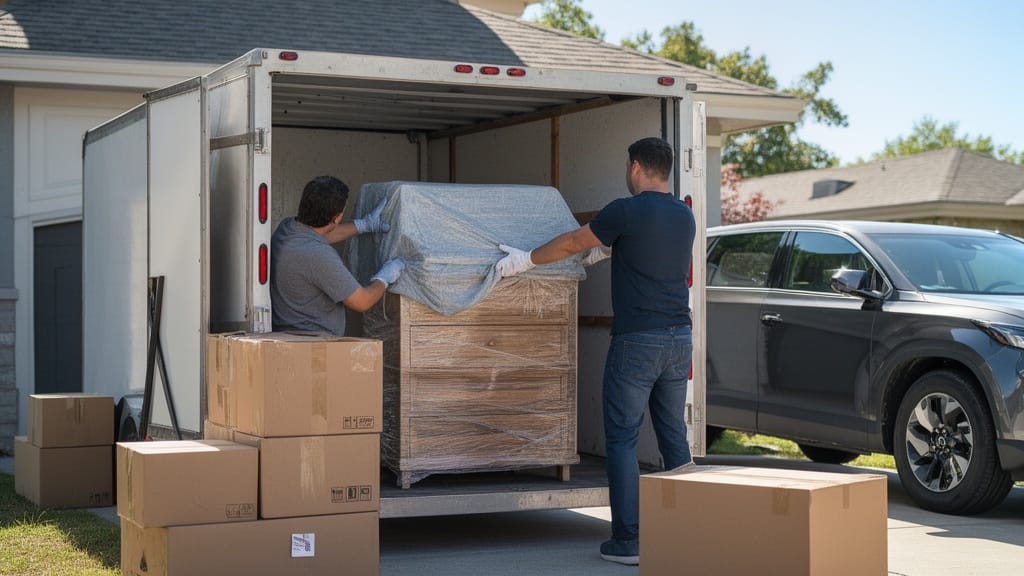
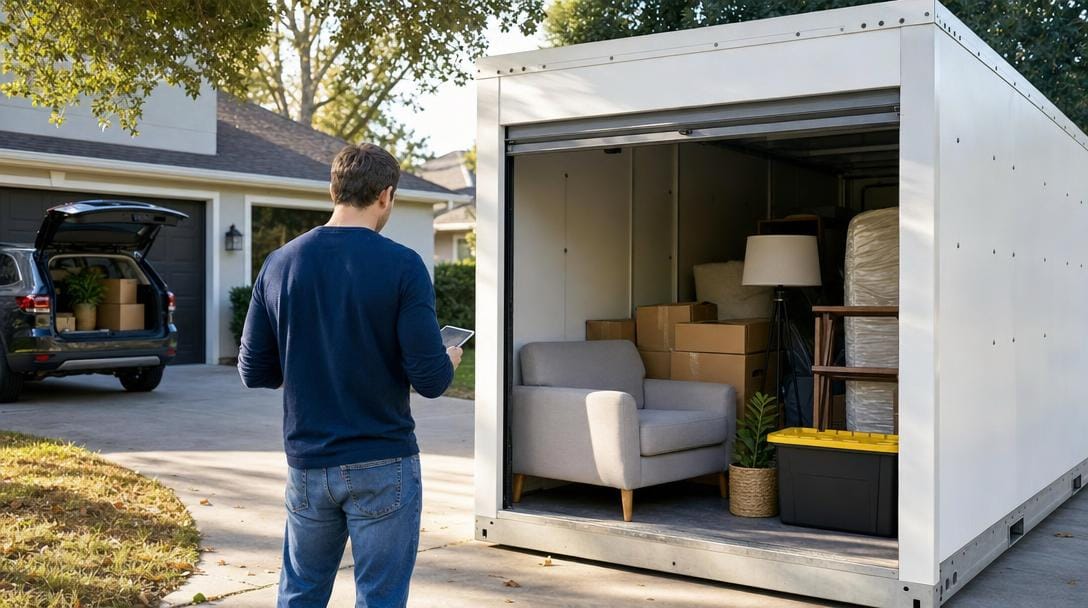
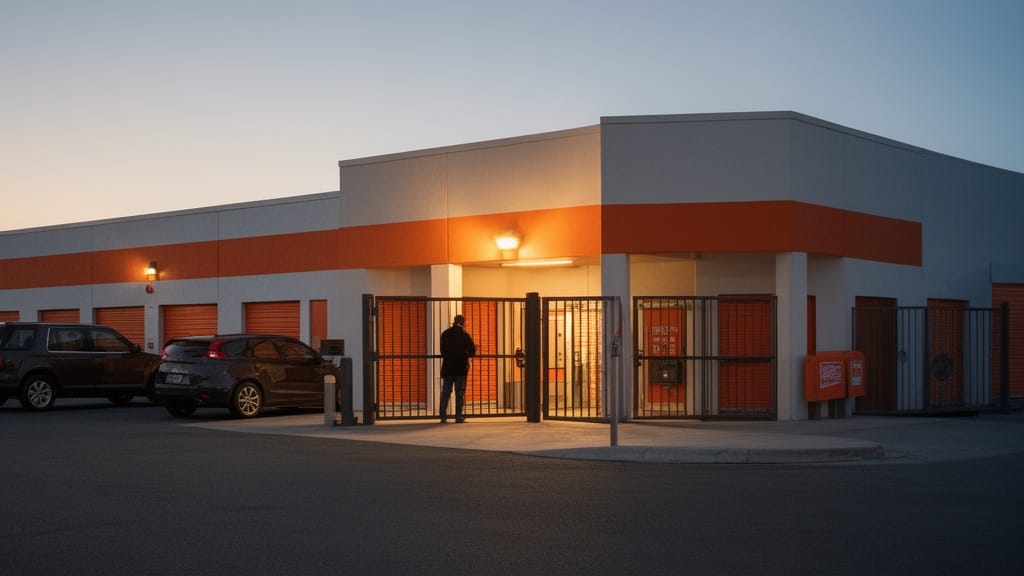
U-Haul splits storage into two products. U-Haul self storage is a traditional unit at a facility you drive to. U-Box storage is a portable container U-Haul drops at your curb, then hauls to its warehouse or your next city.
The right pick depends on who moves the box. With self-storage, you handle the truck twice — load in, then load out. With a U-Box, U-Haul transports the loaded container for you, which suits long-distance gaps.
| Criteria | U-Haul Self-Storage | U-Box Portable Container |
|---|---|---|
| Location | You drive to a facility | Delivered to your driveway |
| Best for | Local gap, frequent access | Long-distance or hands-off moves |
| Access | Walk-in, often extended hours | Access at warehouse or when redelivered |
| Climate control | Available at many facilities | Warehouse-stored, weather-protected |
| You move it? | Yes, both directions | U-Haul transports it |
| Ideal gap length | Days to many months | Days to weeks, especially cross-country |
Q: What is the difference between U-Haul self-storage and a U-Box?
A: Self-storage is a fixed unit you load and access yourself; a U-Box is a portable container U-Haul delivers, stores, and transports for you.
For a local closing-date gap where you want to grab a lamp or a box of clothes midweek, a walk-in unit wins on access. For a gap that also spans a long-distance move, the U-Box doubles as your shipping method.
Choosing the Right Storage Unit Size for a Temporary Move
Size is where most gap movers overpay or overstuff. U-Haul storage unit sizes run from small 5×5 lockers up to large 10×20+ rooms, roughly mirroring a closet, a bedroom, or a full garage. Match the unit to what you're storing, not to your entire life.
Here's a working reference for a full household in transit:
| Home size | Suggested unit | Rough equivalent |
|---|---|---|
| Studio / dorm | 5×5 or 5×10 | Large closet |
| 1-bedroom apartment | 5×10 | Small bedroom |
| 2-bedroom home | 10×10 or 10×15 | One-car garage |
| 3-4 bedroom home | 10×20+ | Two-car garage |
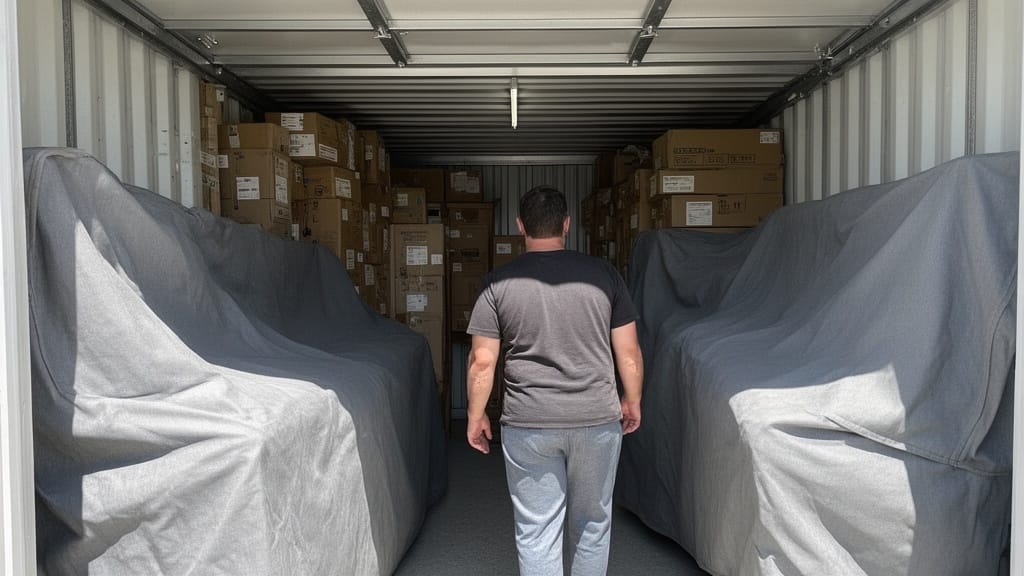
Still unsure? A quick inventory beats guesswork. Our guides on which storage unit you need for your move and how to figure out the right storage unit size walk through counting boxes and stacking math room by room.
Pro Tip: Size up one tier if you plan to keep the truck-loading crew moving fast. A slightly larger unit lets movers stack floor-to-ceiling with a walkway instead of playing Tetris — and speeds both load-in and load-out on truck-rental days.
What U-Haul Storage Actually Costs for a Short-Term Gap
So, how much is U-Haul storage for a few weeks? Monthly rates scale with unit size, location, and climate control, and metro facilities cost more than rural ones. Expect a small unit to sit at the low end and a garage-sized room several times that per month.
The biggest cost lever is the promotion. U-Haul commonly offers one free month of self-storage for one-way truck and trailer renters. For a temporary storage during move that lasts under 30 days, that promo can cover the entire gap.
| Cost factor | How it moves your bill |
|---|---|
| Unit size | Larger units cost proportionally more per month |
| Climate control | Adds a premium over standard units |
| Location | Dense metros price higher than suburbs |
| One-way truck promo | Can waive the first month entirely |
| Overnight/short holds | Some movers charge per night, not per month |
For a very short hold, per-night storage can beat a full month. GoBorn, for example, offers overnight storage at $250 per night for up to four nights — useful when a closing slips by a day or two rather than weeks. For anything longer, a monthly short term moving storage unit is the cheaper math.
GoBorn can help: When your dates don't line up, GoBorn stores your belongings short- or long-term and delivers everything back when the new place is ready. Learn more →
Q: How much does a two-week storage gap cost?
A: Often little to nothing if you qualify for U-Haul's one-free-month truck-renter promo; otherwise you pay a single prorated month, since most facilities bill in 30-day blocks.
Climate Control and What Belongs in Storage (and What Doesn't)
Climate-controlled storage keeps a unit within a stable temperature and humidity range, protecting items that warp, crack, or grow mold in ordinary conditions. For a summer or winter gap, it's worth the premium on the right belongings.
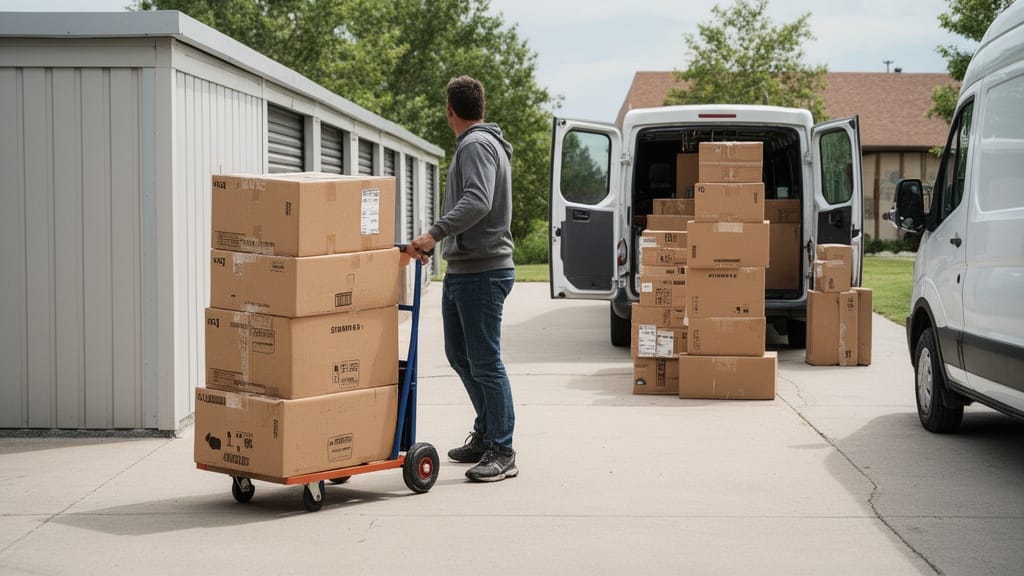
Put these in climate control:
- Wood and leather furniture, which crack in dry heat and swell in humidity
- Electronics, TVs, and appliances
- Artwork, photos, vinyl records, and important documents
- Musical instruments and anything with glue joints
Skip storage entirely for hazardous or perishable items. Never store propane tanks, gasoline, paint, cleaning chemicals, food, or plants. Also carry valuables, medications, and key paperwork with you rather than sealing them in a unit.
Pro Tip: Photograph high-value items before they go in, and choose the right protection level for your inventory. Movers typically offer either released valuation near 60 cents per pound or full-value coverage — the FMCSA explains both liability options so you can match coverage to what's actually in the unit.
How to Pack a Storage Unit So You Can Still Find Things

A gap move means you'll likely revisit the unit before the new home is ready. Pack it like a store aisle, not a landfill. Leave a center walkway and keep frequently needed boxes at the front.
Follow this loading order:
- Place large, heavy furniture along the back and side walls first.
- Stack sturdy boxes floor-to-ceiling, heaviest on the bottom.
- Label every box on multiple sides and face labels outward.
- Keep a clear path down the middle for mid-gap retrieval.
- Store a "first-week" box of essentials right by the door.
Wrap furniture in moving blankets and plastic before it enters the unit. Disassembled bed frames, table legs, and mirrors travel flat and safe against a wall. Our tips on preparing furniture when relocating cover wrapping and disassembly in detail.
Combining Truck, Storage, and Move-In Timing
The whole point of U-Haul storage for moving is decoupling three events that used to happen in one exhausting day: move-out, transit, and move-in. Storage lets you handle each on its own schedule.
A clean gap-move timeline looks like this:
- Day 1: Load the U-Haul truck at the old home and drive to the storage facility.
- Day 1-2: Unload into the unit, leaving a walkway and essentials up front.
- Gap period: Live out of a suitcase; retrieve items as needed.
- Move-in day: Reload the truck from the unit and deliver to the new home.
The hidden cost here is doing it twice. If loading a truck two extra times sounds brutal, a hands-off crew or a portable U-Box that U-Haul transports can eliminate one full lift.
When Storage Beats Rushing an Overlapping Move
Storage wins whenever forcing move-out and move-in onto the same day would cost more than the unit. Paying for a bridge unit is almost always cheaper than paying two mortgages, breaking a lease, or booking a last-minute hotel with your furniture on the truck.
Rush moves also break things. Cramming a closing morning and a move-in afternoon into one window means tired crews, skipped padding, and forced parking. A short short term moving storage buffer of even 48 hours removes that pressure.
Use storage when the gap is real and the stakes are high. Skip it only when your dates genuinely overlap and you can move in the same day. If you'd like to map your specific gap, GoBorn offers a free consultation to plan the truck, the storage, and the timing together.
Related Articles
- What Size U-Haul Do You Actually Need? (A Room-by-Room Guide) — Match truck size to your home so you make one trip, not three.
- U-Haul U-Box vs a Rental Truck: Which Is Right for Your Move? — Decide between a portable container and a drive-it-yourself truck.
- The True Cost of a U-Haul Move: Rental, Mileage, Fuel and Fees — See the full price picture beyond the advertised base rate.
- Moving Cross-Country in a U-Haul: What Nobody Tells You — Plan a long-distance gap move without expensive surprises.
Recommended Reading
- How Can I Know Which Storage Unit I Need for My Move?
- How to Figure Out Which Storage Unit Is Required for My Move
- How to Properly Load a Moving Pod
- What to Do When You Move Into a New Apartment
Frequently Asked Questions