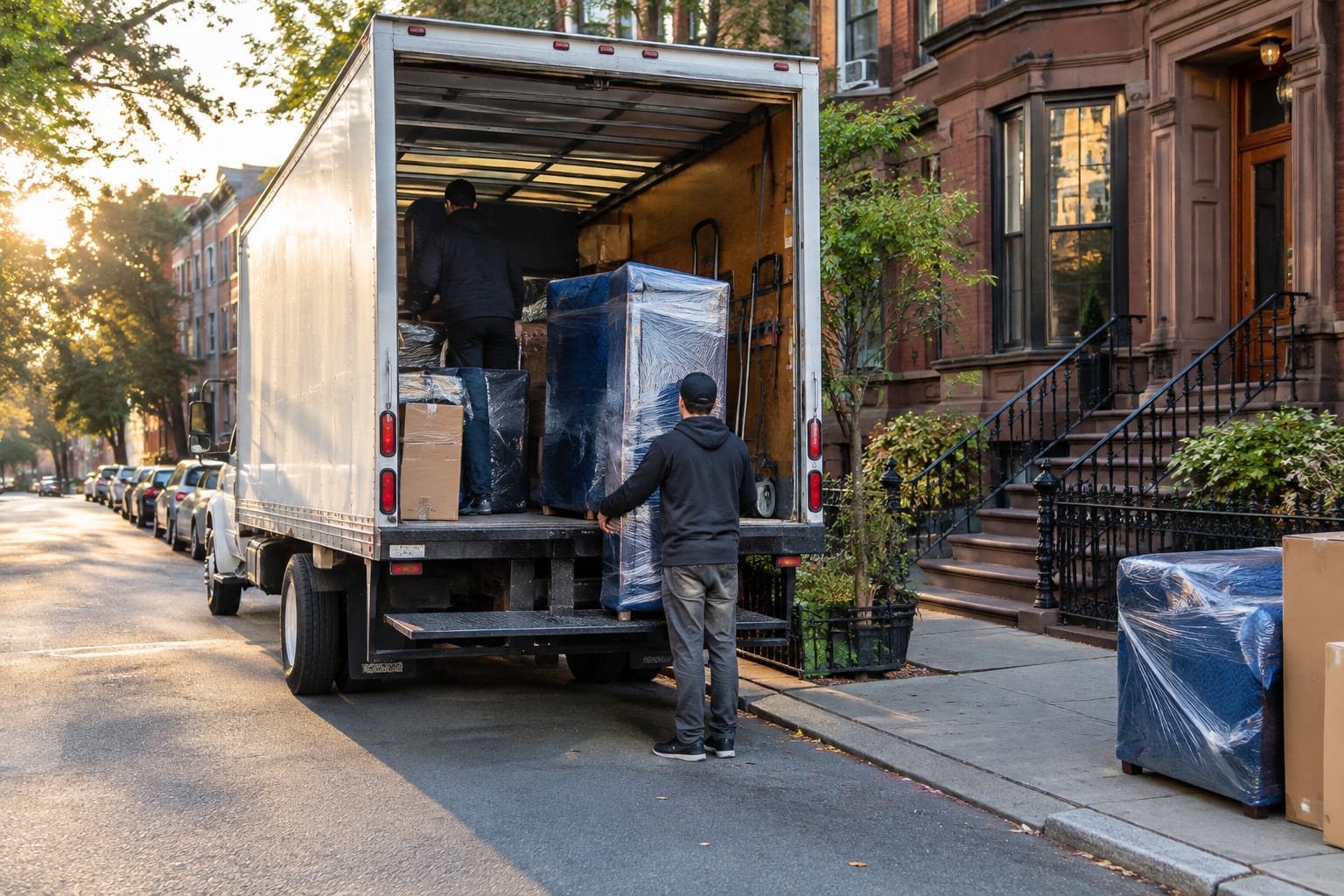
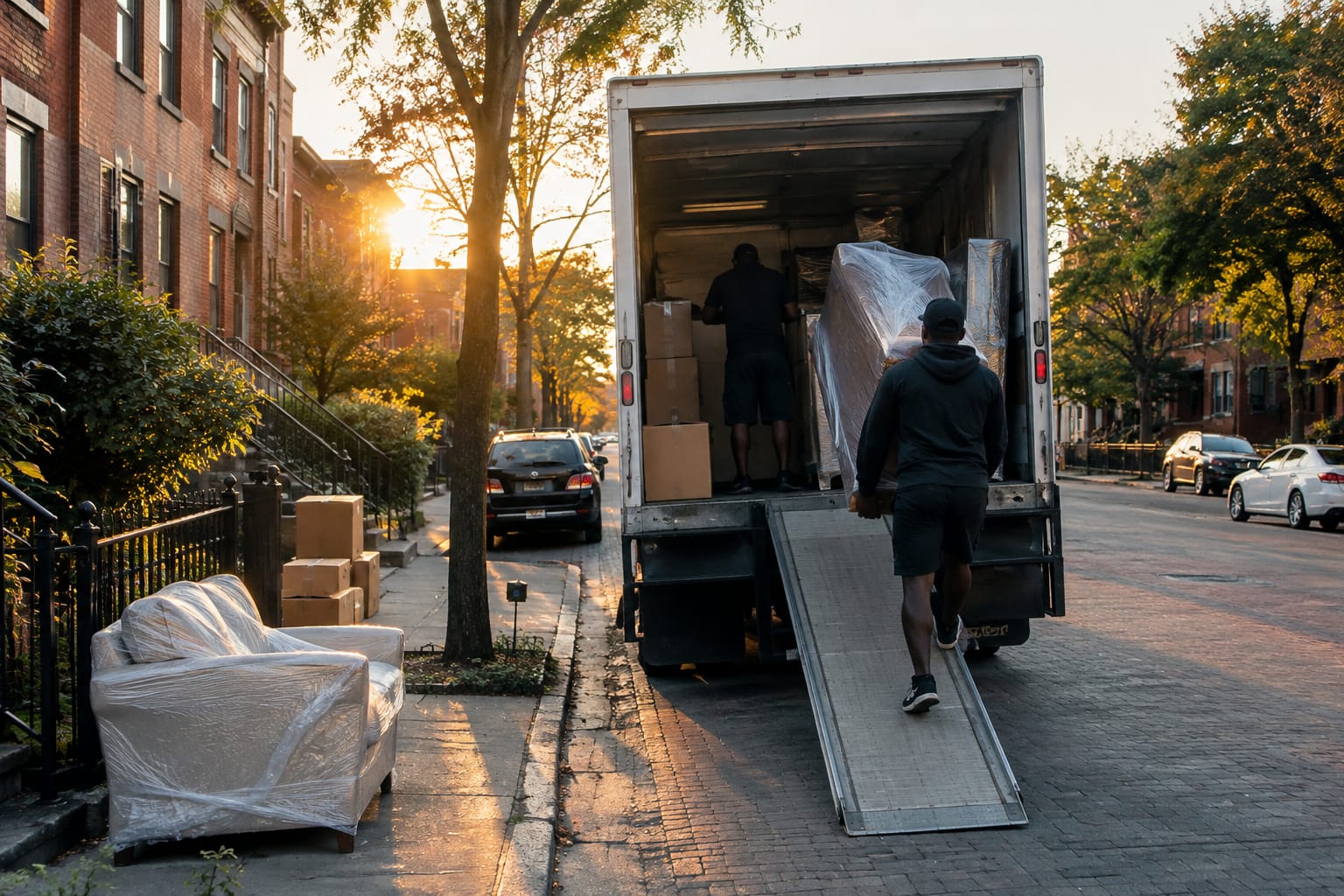
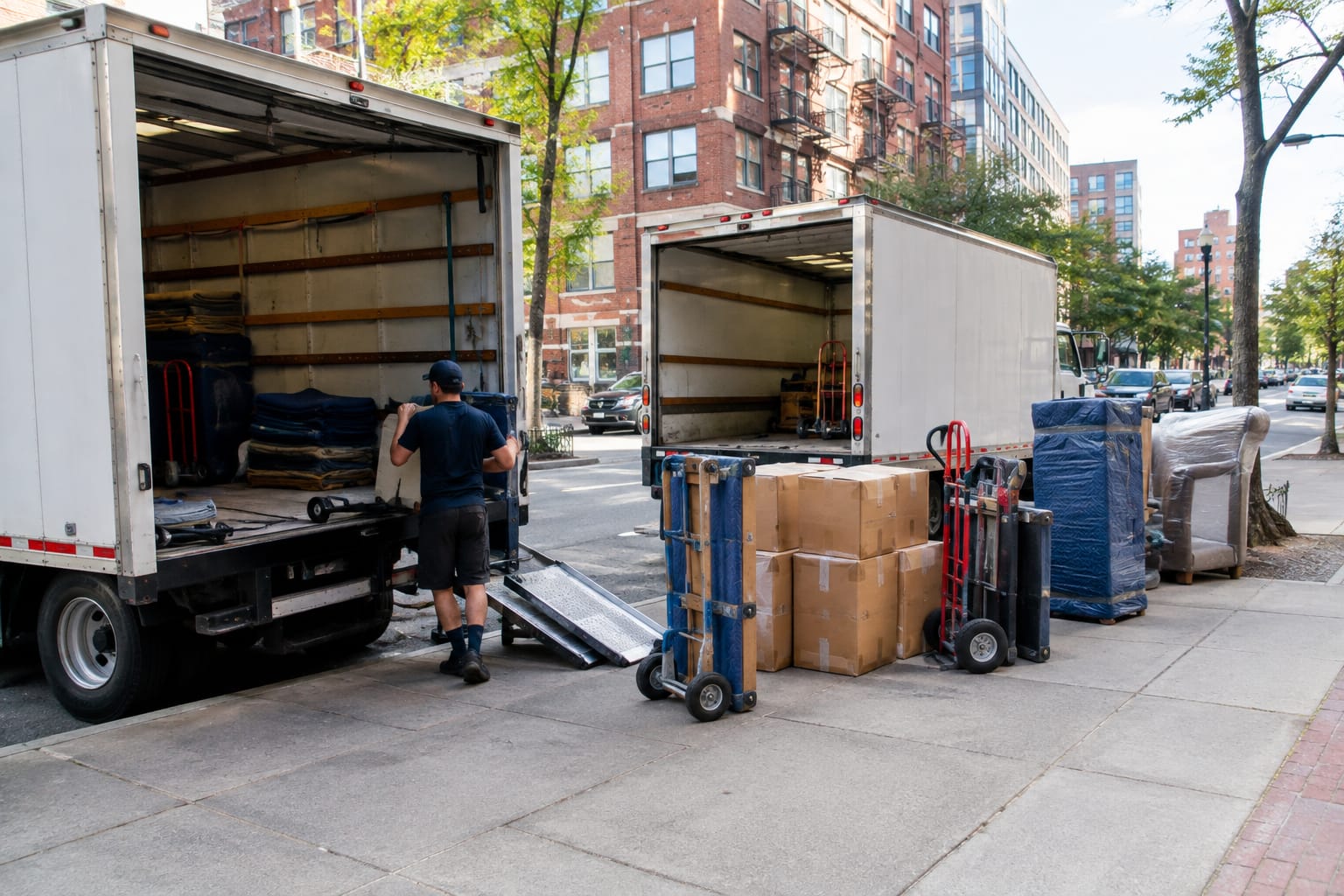
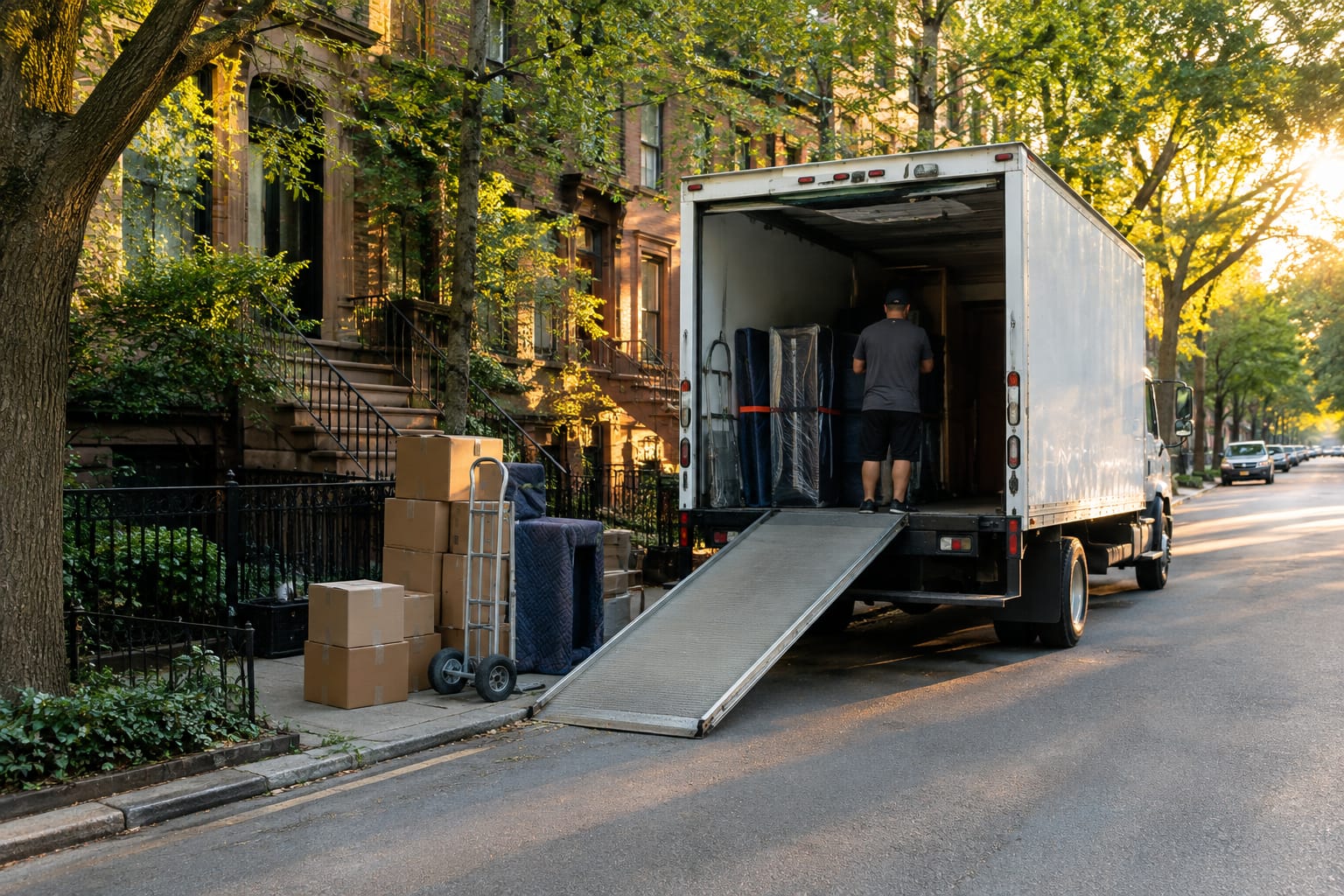
To unload a moving truck safely at a walk-up apartment, start with legal parking close to the door. Measure every stair turn and doorway, then pad the stairwell. Unload heavy furniture first while everyone is fresh, and carry it in teams of two with the stronger person on the lower end. Take apart anything that won't clear the tightest turn.
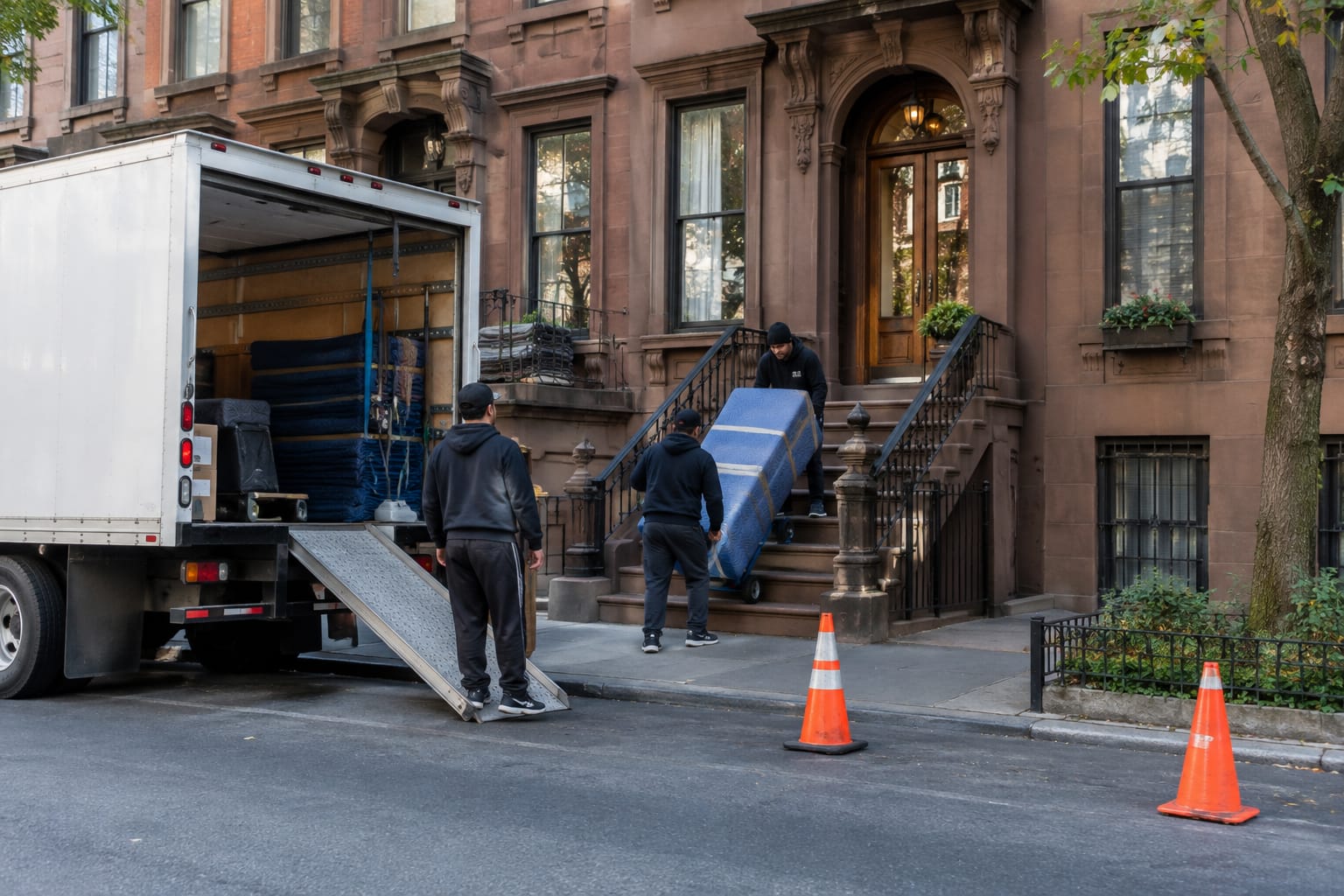
Walk-ups are hard on improvised plans. A triple-decker in Somerville or a brick walk-up in Brighton usually has one narrow stairwell, a tight turn at every landing, and no driveway. The truck sits at the curb, and every item travels the sidewalk, the front steps and two or three flights.
This guide splits the job into five steps. It covers the mistakes that commonly cause strained backs and gouged walls, and it explains when hiring help for the stairs makes more sense than doing it yourself.
Key Takeaways
- Park legally and close. Reserve curb space with a city permit in Boston, Cambridge or Somerville and set up a curbside staging zone that leaves a lane for pedestrians.
- Measure the tightest turn. The narrowest landing or door frame decides what goes up whole; compare it with each large item’s diagonal depth before lifting.
- Heavy first, boxes last. Carry bulky furniture up while the crew is fresh and the stairwell is empty, and never stage items on stairs or landings.
- Two-person carries on stairs. Put the stronger lifter on the lower end.
- Disassemble before hoisting. Remove legs, arms and doors first; treat window or crane hoisting as specialist work that needs trained crews and permits.
Before the Truck Arrives: Parking, Permits and a Clear Path to the Door
A safe unload starts with a legal parking spot as close to the front door as possible. Every extra stretch of sidewalk adds carrying time. Fatigue is what turns a routine carry into a dropped dresser or a pulled back.
Check with the city where you're moving. Apply early, especially around Boston's September 1 moving crunch, when a large share of leases turn over at once. For street-level detail, see this guide to parking a moving truck in Boston.
Plan the drive as well as the parking. Older Boston-area parkways have low overpasses, and a rental box truck is much taller than the car most drivers are used to. Before moving day, learn how to avoid getting your truck stuck under a low bridge.
Q: What does it mean to get "Storrowed" in Boston?
A: It's local slang for a truck or van hitting a low overpass on Storrow Drive.
Next, walk the route from the truck ramp to the apartment door. Here's what to do on that walk:
- Wedge the exterior doors open with door stops.
- Lift doormats and clear bikes and strollers out of the hallway.
- Note any loose treads, burned-out bulbs or wobbly railings.
- Give neighbors in the building a heads-up.
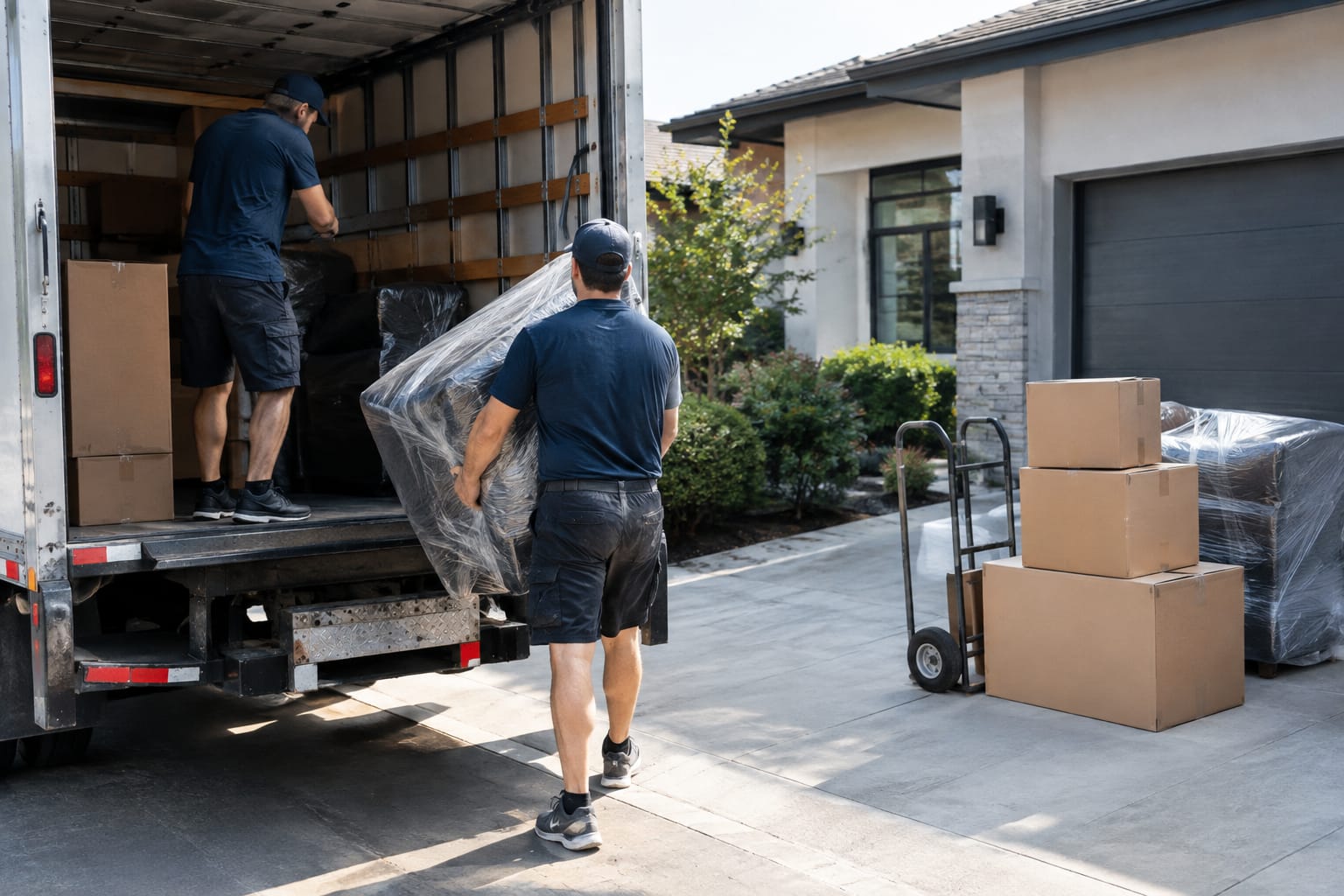
If the truck can't park right at the door, set up a curbside staging zone. A blanket-covered patch of sidewalk or the building vestibule works, as long as you leave a clear lane for pedestrians. Keep one person with the truck at all times.
Step 1: Measure Stairwells, Landings and Doorways Before You Lift Anything
The tightest point on the route decides what goes up whole and what needs to come apart. That point is usually the first landing turn or the apartment's own door frame. Measure it before anyone picks up a sofa.
Measure-before-you-lift checklist
- Width of the front door and every interior door on the route, with each door fully open
- Stairwell width at its narrowest point, measured from the railing, not the wall
- Headroom above each landing turn, which limits how far you can tilt a long item
- Landing depth, meaning how far a long piece can swing before it hits the wall
- Height, width, depth and diagonal depth of the sofa, mattress, dresser and any other large item
- Anything that sticks out into the path, such as light fixtures, radiators and banister posts
Diagonal depth is the measurement that matters most. It tells you whether a sofa will clear a door frame when you tilt it on its side.
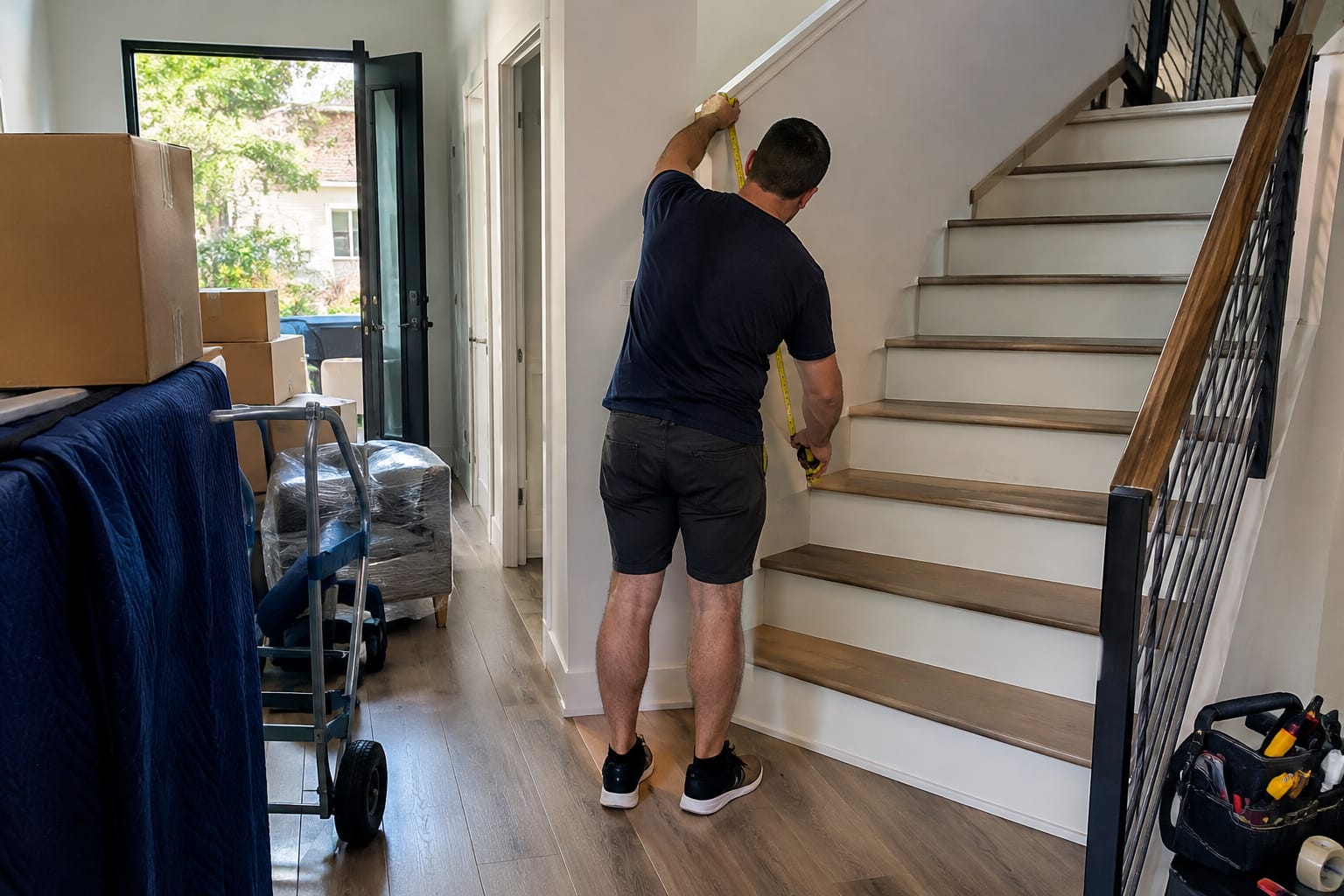
Safety note: Measure while the apartment is empty and the lights are on. Take a phone photo of each landing so everyone can plan the turns before anyone is holding weight.
Step 2: Protect the Stairwell, Railings and Floors
Pad whatever is going to get hit. In a walk-up, that means banister posts, landing corners and door frames. In a rental, damage to common areas tends to become a fight with the landlord or a deduction from a security deposit.
- Banisters and newel posts: Wrap them in moving pads. Secure the pads with stretch wrap, not tape on painted or varnished wood.
- Door frames: Fit jamb protectors or folded pads on both sides of each doorway the furniture will pass through.
- Landing corners: Cover them with cardboard corner guards or pads at about the height where a dresser or sofa end will swing.
- Floors: Lay runners on landings and inside the apartment, where you set items down to rest or pivot.
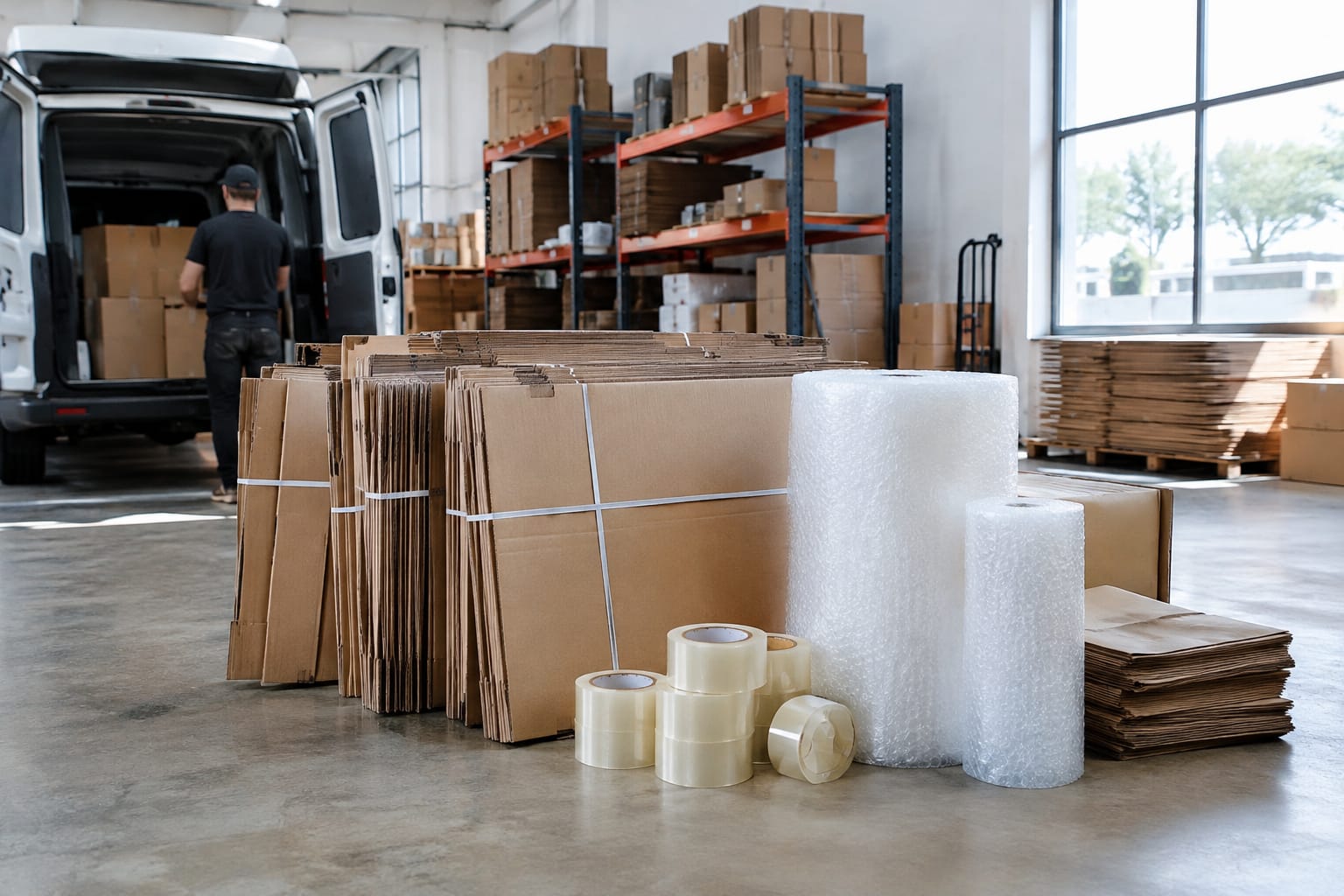
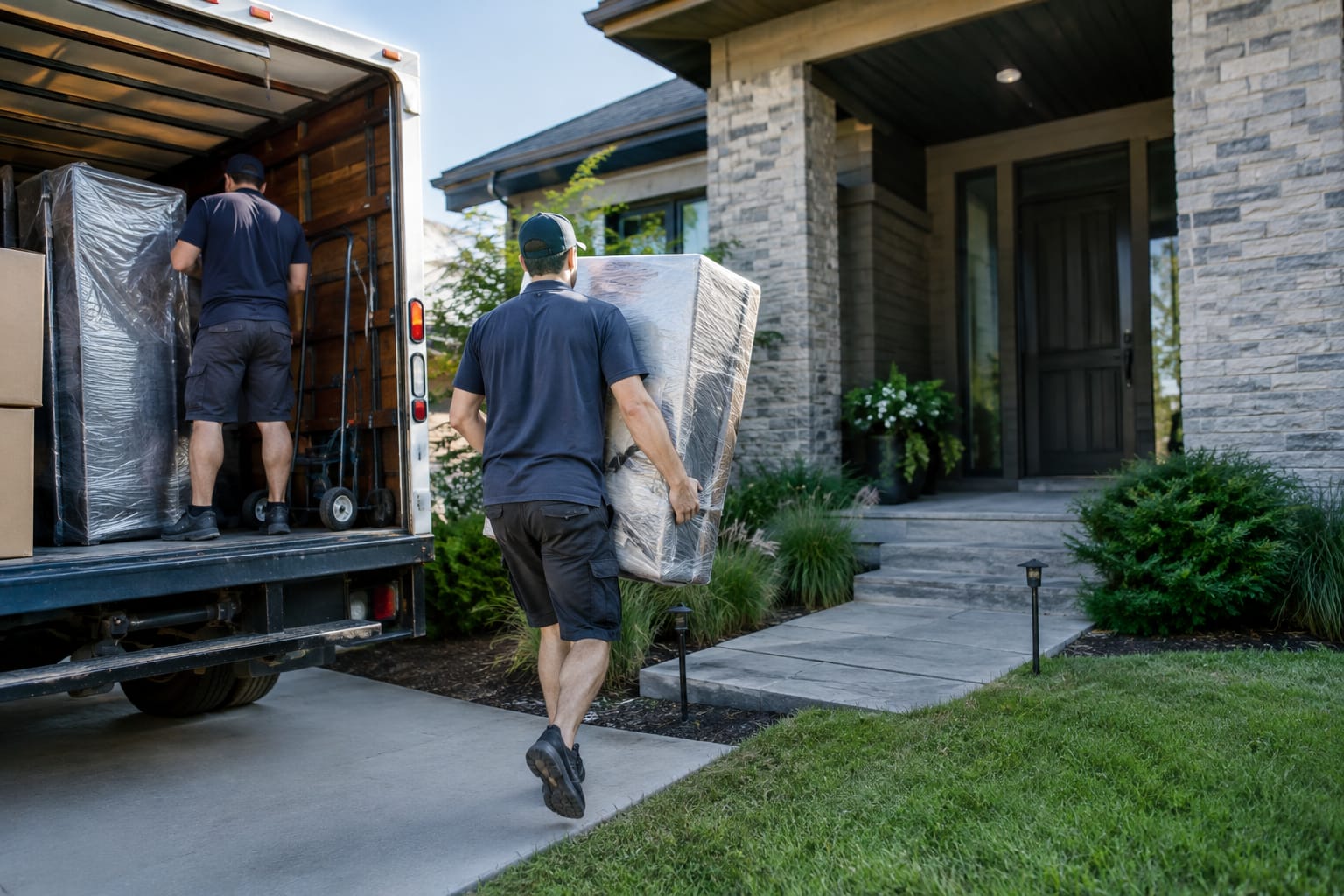
The furniture needs padding too. Wrap every piece in blankets and stretch wrap before it comes off the truck, and leave the wrap on until the piece is in its final room.
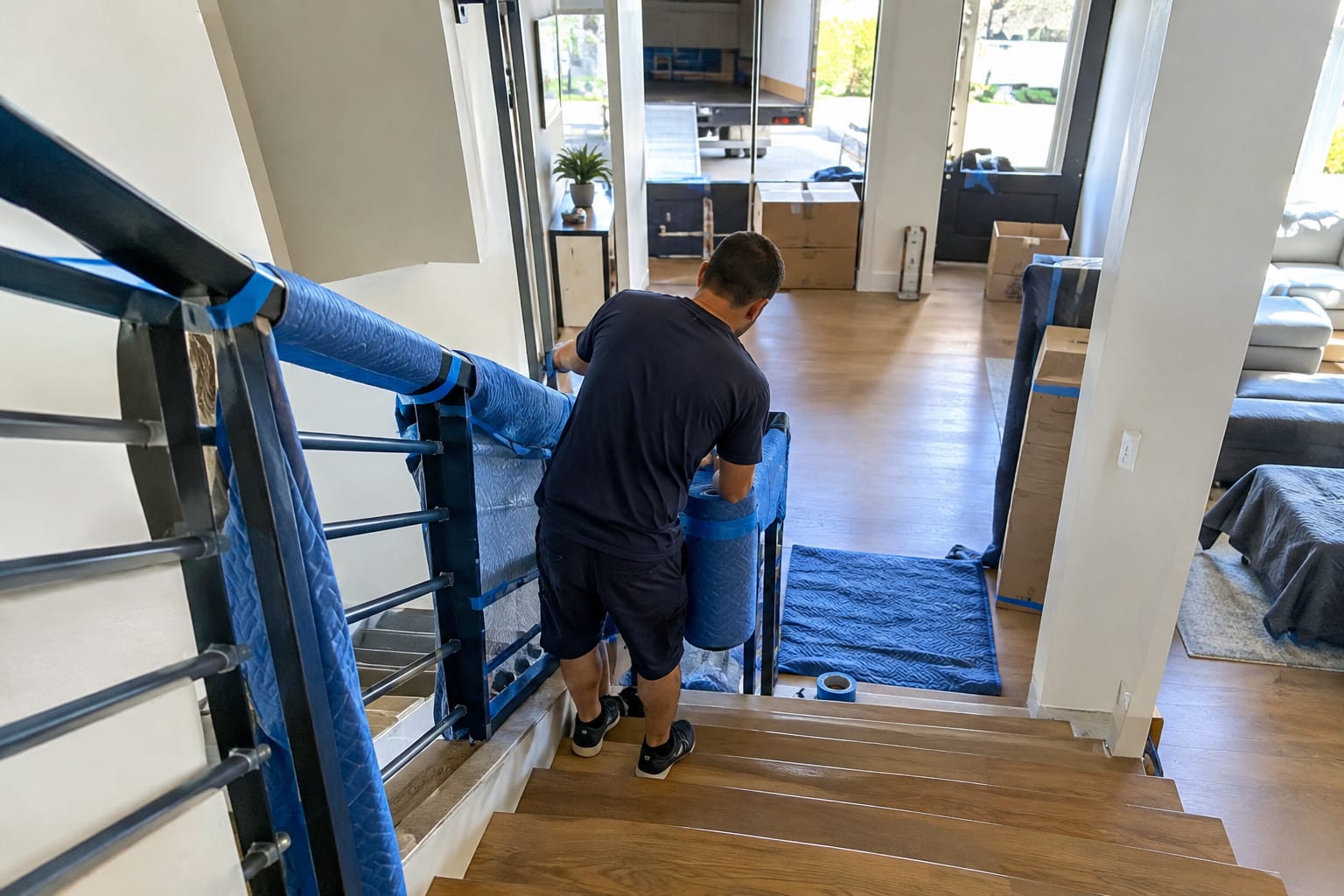
Safety note: Loose cardboard on stair treads is a slip hazard. Either tape every edge down flat or leave the treads bare and protect only the landings.
Step 3: Stage the Unload Order So the Heaviest Items Go Up First
Carry the heaviest and bulkiest furniture up first, while the crew has the most energy and the stairwell and rooms are empty. Boxes go last. They're light, they stack anywhere, and they fill the leftover space.
A workable order looks like this:
- Bed frames, sofas, dressers and wardrobes, which set the room layout
- Tables, chairs, bookcases and desks
- Mattresses, sealed in mattress bags
- Boxes labeled by room, heavy boxes such as books before light ones
- Fragile items and electronics, carried by hand
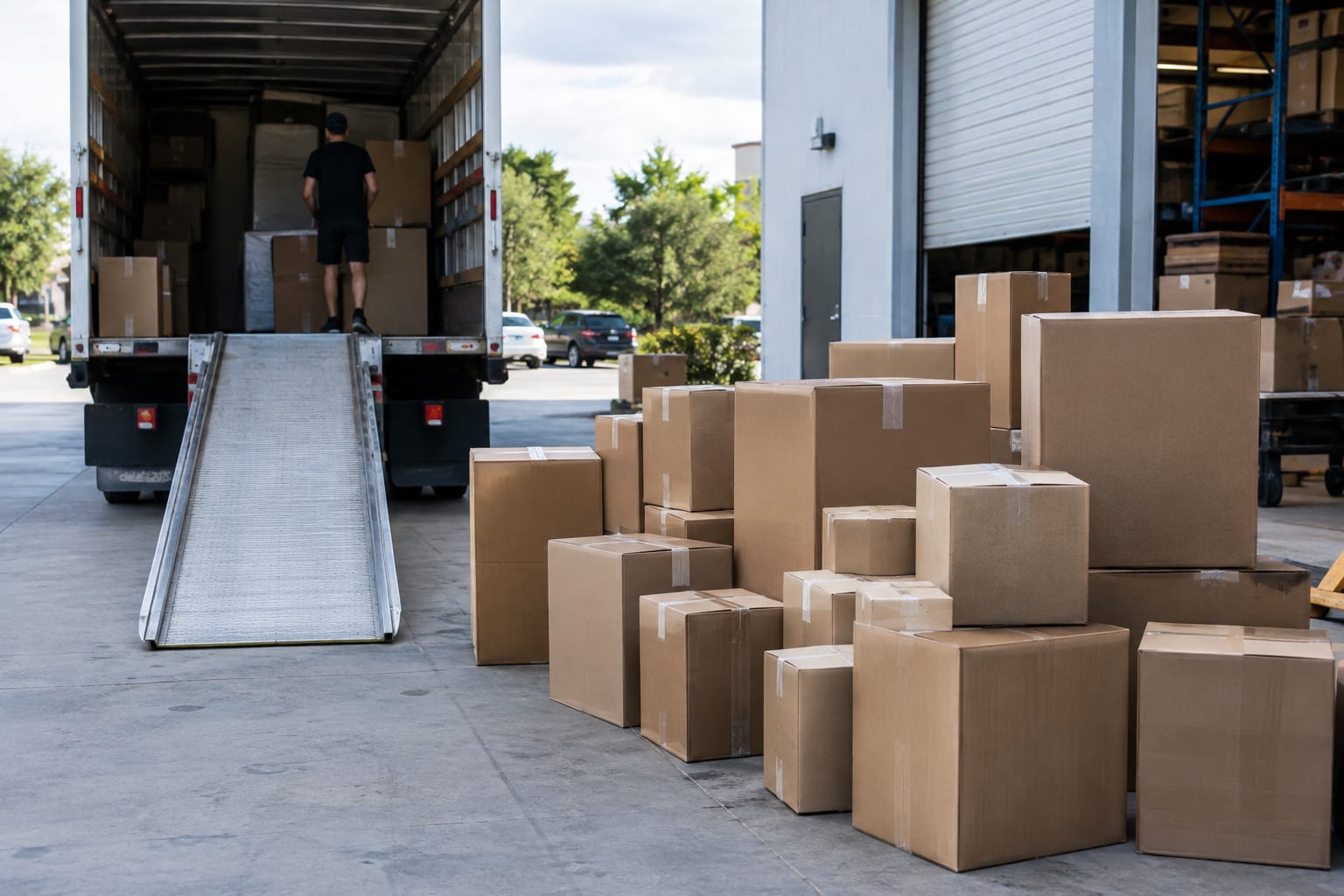
A well-loaded truck has its heavy pieces against the cab wall, so boxes often block them. Pull those boxes out onto the curbside staging area or into the vestibule. Don't park them on the stairs.
Give everyone a clear role. One person works inside the truck, the carriers move between the truck and the apartment, and one person in the apartment tells them where each piece goes. That way nothing gets set down twice.
Safety note: Never stack items on stairs or landings. In walk-ups, the stairwell is often a primary escape route.
Step 4: Use Two-Person Carries and Safe Lifting on Narrow Stairs
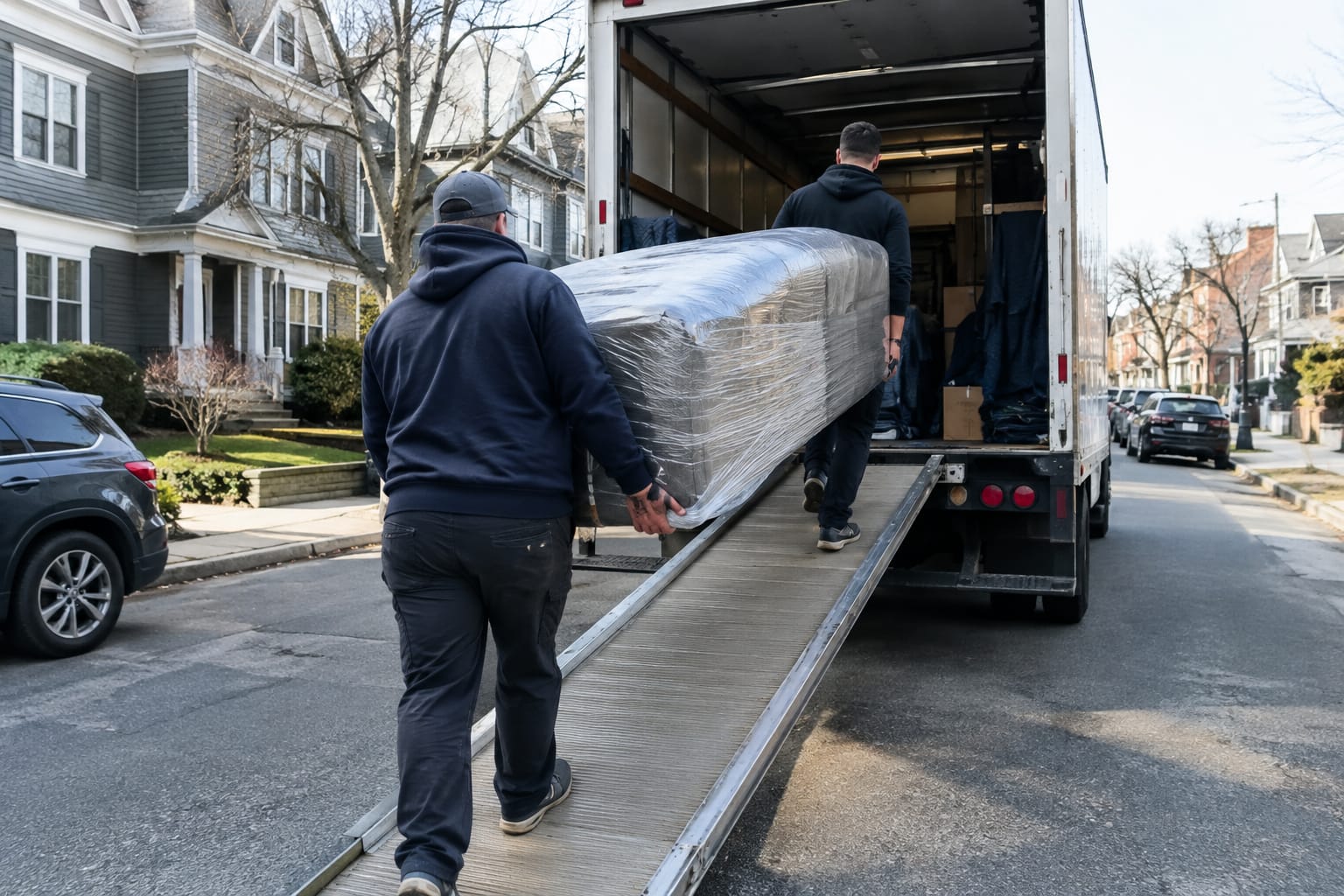
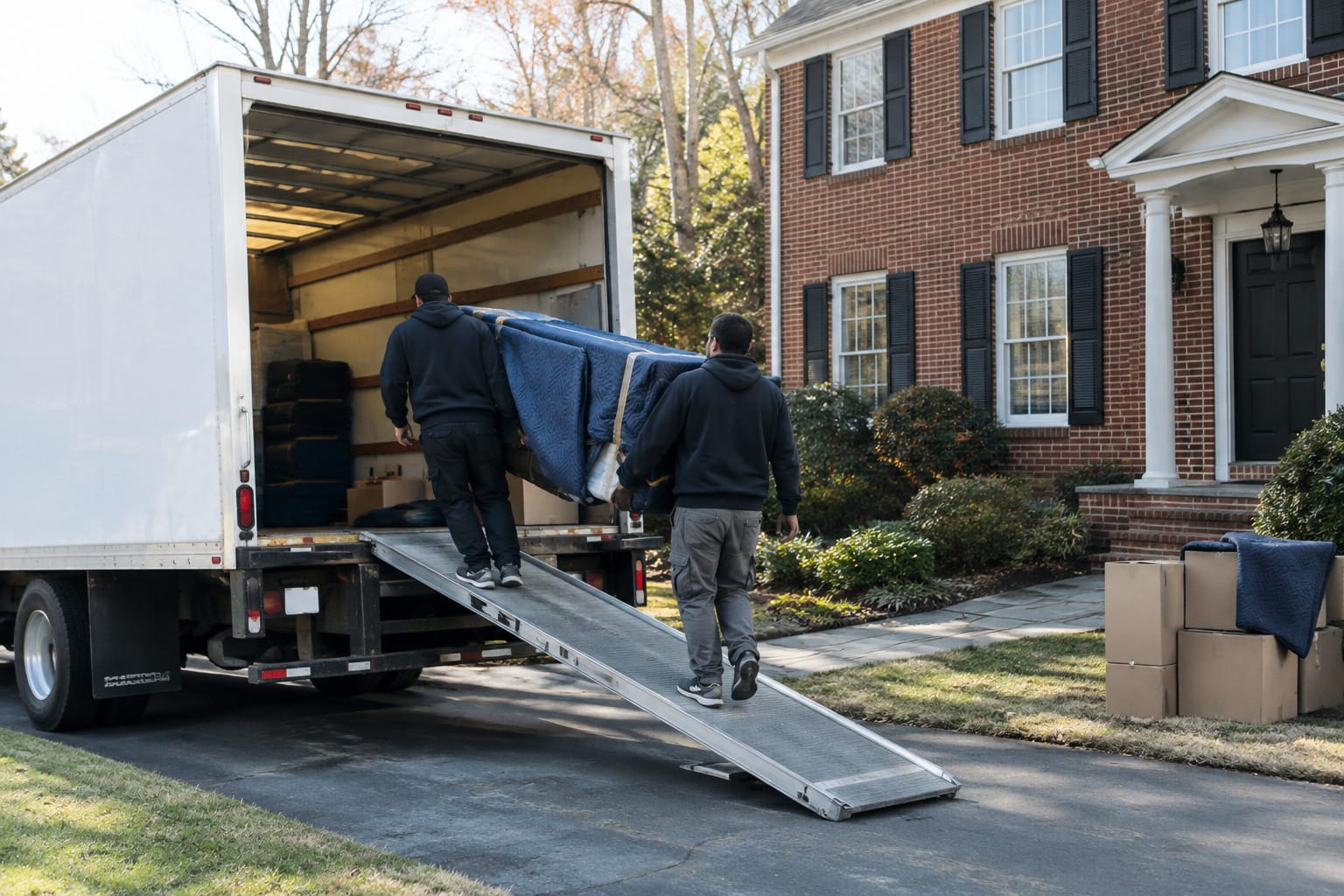
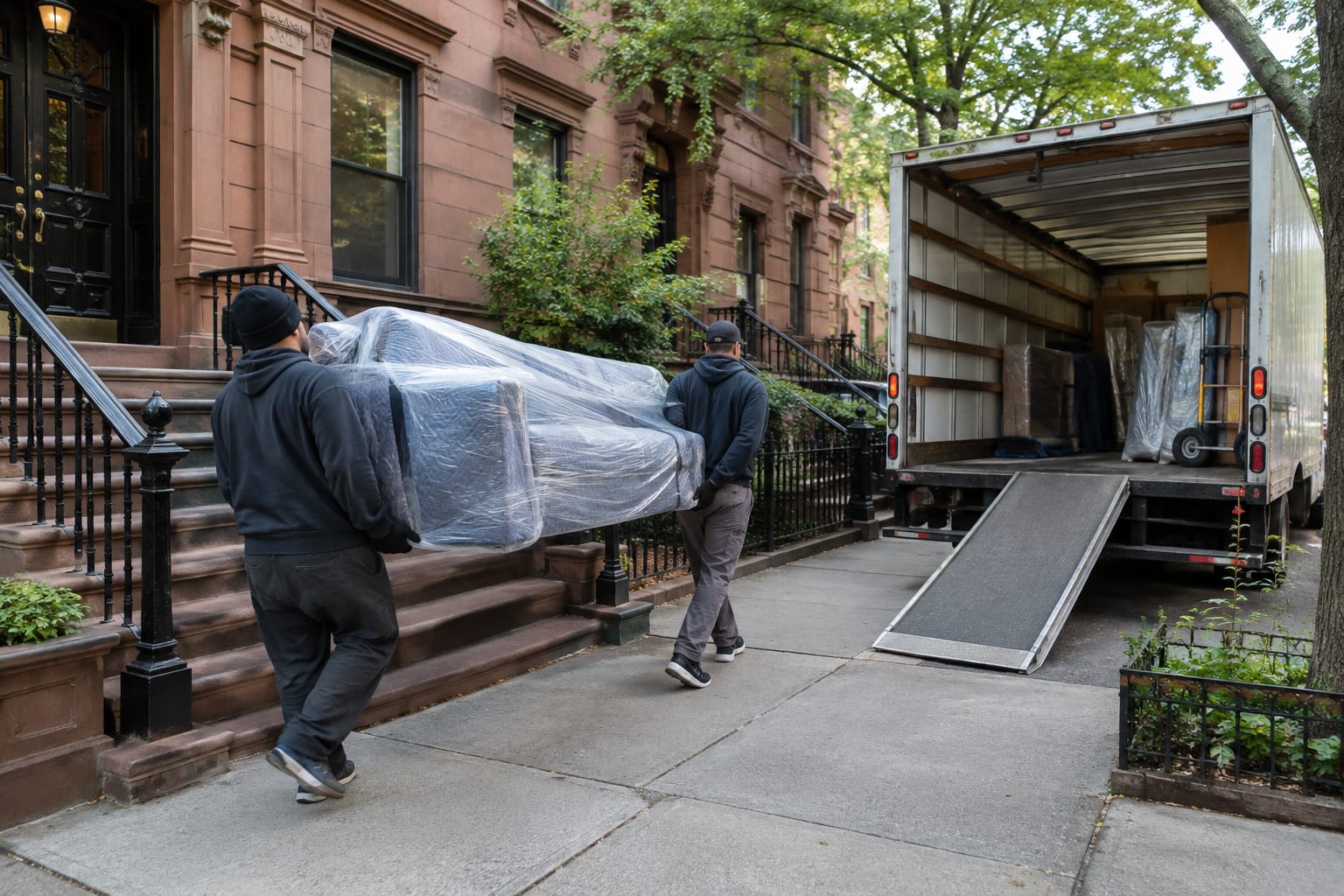
Carry anything large with two people and move one step at a time. On stairs, the person on the lower end carries most of the weight. Put the stronger lifter at the bottom, and have the person at the top call each move.
The basics apply on every flight:
- Lift with your legs, keep your back straight and hold the load close to your body.
- Turn your feet instead of twisting your torso at landings.
- Use simple, agreed words such as "step," "stop" and "set it down" so nobody guesses.
- Rest on landings. Don't rest on the stairs.
Lifting straps work well on flat ground and short flights. On stairs, they shift even more weight onto the lower person, so use them with care.
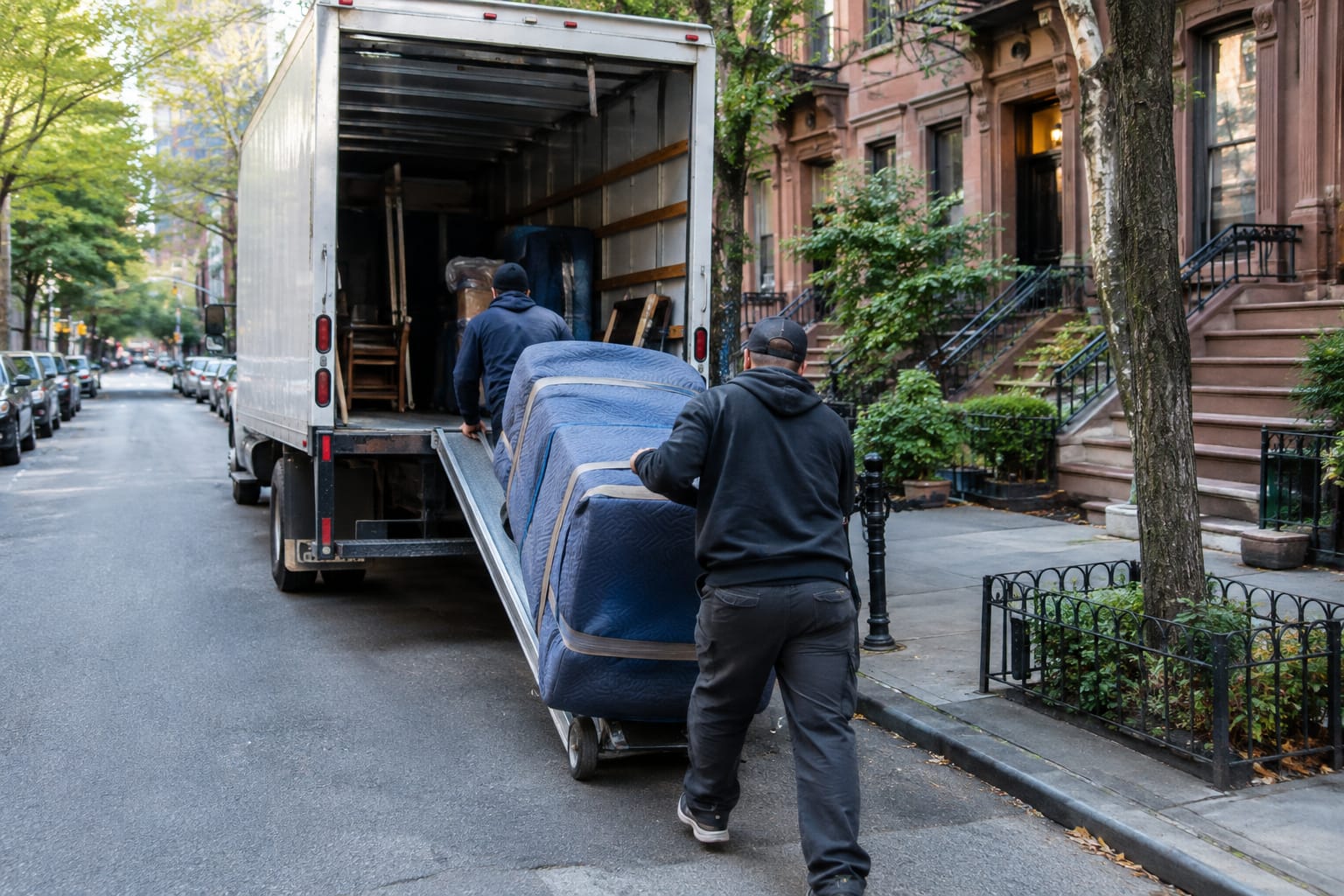
Hand trucks and appliance dollies can go up stairs one step at a time. One person pulls from above and the other steadies the load from below. A four-wheel furniture dolly is useful only on the sidewalk and in hallways. Never try to roll one up a flight of stairs.
Q: How heavy is too heavy for one person to carry up stairs?
A: Confirm current safe-lifting guidance with the relevant authority before planning the carry. Stairs, awkward grips and twisting all lower that limit, so anything near it should be a two-person carry.
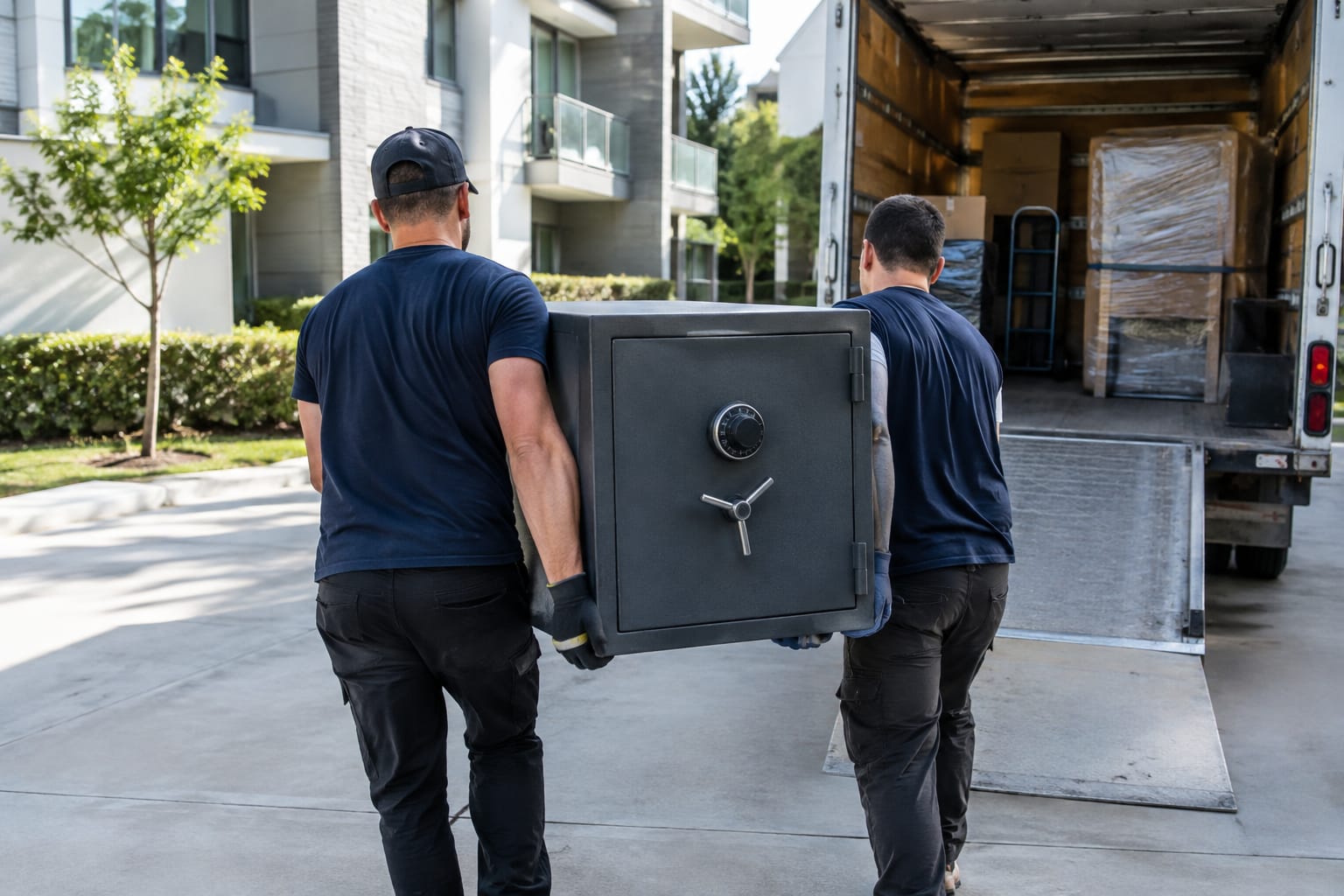
Safety note: Wear closed-toe shoes with a good grip and work gloves. In rain or snow, put mats at the building entrance so wet soles don't carry water onto the treads.
Step 5: Handle Items That Won't Fit (Disassembly, Door Removal or Hoisting)
When a piece won't clear the tightest turn, you have three options: take it apart, take a door off, or bring it up the outside of the building. Try them in that order.
Disassembly comes first. Remove sofa legs and loose back cushions. Break down bed frames and unscrew table legs. Put the hardware for each piece in a labeled bag and tape it to that piece. For more detail, see this guide on how to prepare furniture for a move.
If you need to get a couch up narrow stairs, stand it on end with the back facing the turn. Then hook the top of the sofa around the corner of the landing while the bottom person pivots. At a doorway, tilt the sofa on its side and feed it through arm first, with a slight curve as it passes the frame.
Pro Tip: Before you carry a sofa anywhere, unzip or lift the dust cover on its underside. Many sofas have bolted-on arms or backs, and sectionals separate into pieces, which can turn an impossible fit into an easy one.
Door removal comes second. Tap the hinge pins up and out with a screwdriver and hammer, then lift the door off. This frees up the space the open door itself was taking. Get the landlord's approval before you remove any door or stair hardware, and never remove a banister.
Hoisting is the last resort. Some pieces in a Boston-area triple-decker will only go in through a window or over a porch rail. Hoisting with ropes or a crane is specialist work that needs trained riggers, the right equipment, and insurance. Don't try to rope-hoist furniture yourself. Compare the cost of hoisting with replacing the piece with a sectional or a model that comes apart.
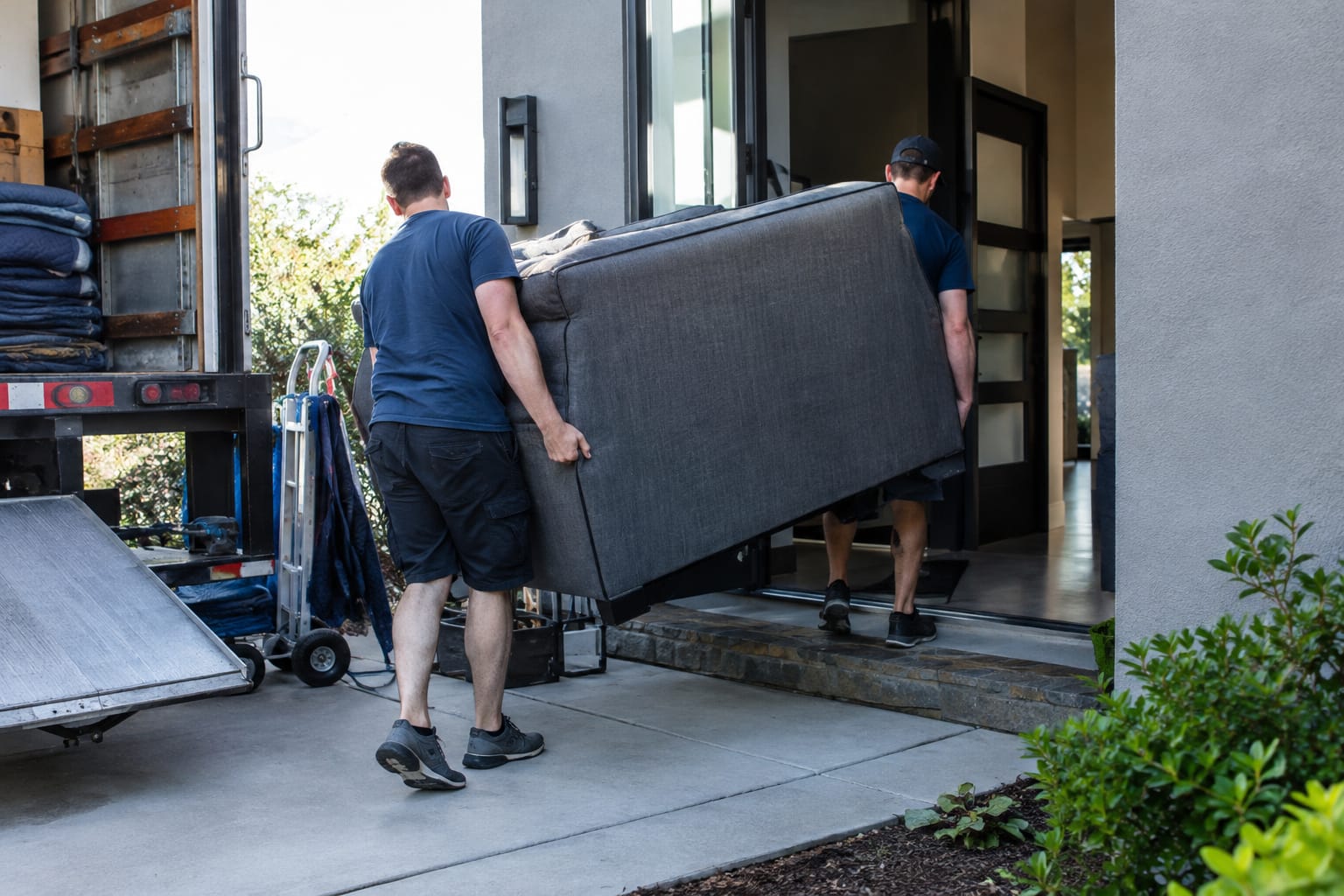
Common Walk-Up Unloading Mistakes That Cause Injuries and Damage
Most walk-up injuries and dings come from a few repeated habits, not from bad luck. Watch for these:
- Racing the parking clock. Book the permit window with time to spare. Rushing on stairs leads to slips and dropped corners.
- Overpacked boxes. Pack books and kitchenware in small boxes. A large box of books gets dangerously heavy by the second flight.
- No spotter on backward climbs. The top person often climbs backward. Someone needs to watch the steps behind them and call out each landing.
- Forcing a piece past a turn. If it sticks, stop, back it out and remeasure. Forcing it scrapes walls and cracks frames.
- Skipping breaks. Stairs drain energy faster than flat carrying. Rotate the lower-end position between carries.
- Removing pads too early. Keep furniture wrapped until it reaches its final spot, because the last doorway is where many scratches happen.
- Leaving the truck open and unattended. An open truck at the curb invites theft while everyone is upstairs.
When It Makes Sense to Hire Movers for the Stairs
Hire help when the route has several flights, when the largest pieces barely clear the tightest turn, or when your helpers have never carried furniture on stairs. Hiring help doesn't mean giving up the truck you already rented.
Many local moving companies sell labor-only help. You rent and drive the truck or portable container, and a trained crew handles the carrying, padding and disassembly. If that fits your move, look into hourly loading and unloading help for rental trucks in Greater Boston.
Q: Can you hire movers only to unload a truck you rented yourself?
A: Yes. Labor-only crews in Greater Boston regularly unload customer-rented trucks and portable containers, usually billed by the hour with a minimum number of hours.
Before you book, ask these questions:
- How is billing calculated, and does travel time count toward the hours?
- Do stairs or long carries from the curb change the price?
- Which pads, wrap and tools does the crew bring, and which materials cost extra?
- Can they issue a certificate of insurance if the building requires one?
- What liability coverage applies?
For interstate moves, check a mover's USDOT number before you sign anything.
Written by Born to Move Team
Useful Links
- Where Can I Park My Moving Truck in Boston?
- Tips on How to Prepare Furniture When Relocating
- What To Do When You Move Into a New Apartment
- Moving in Boston on September 1
- Packing and Loading Services
Need help with this? Faq · Get a quote · Call (617) 903-2609
Frequently Asked Questions