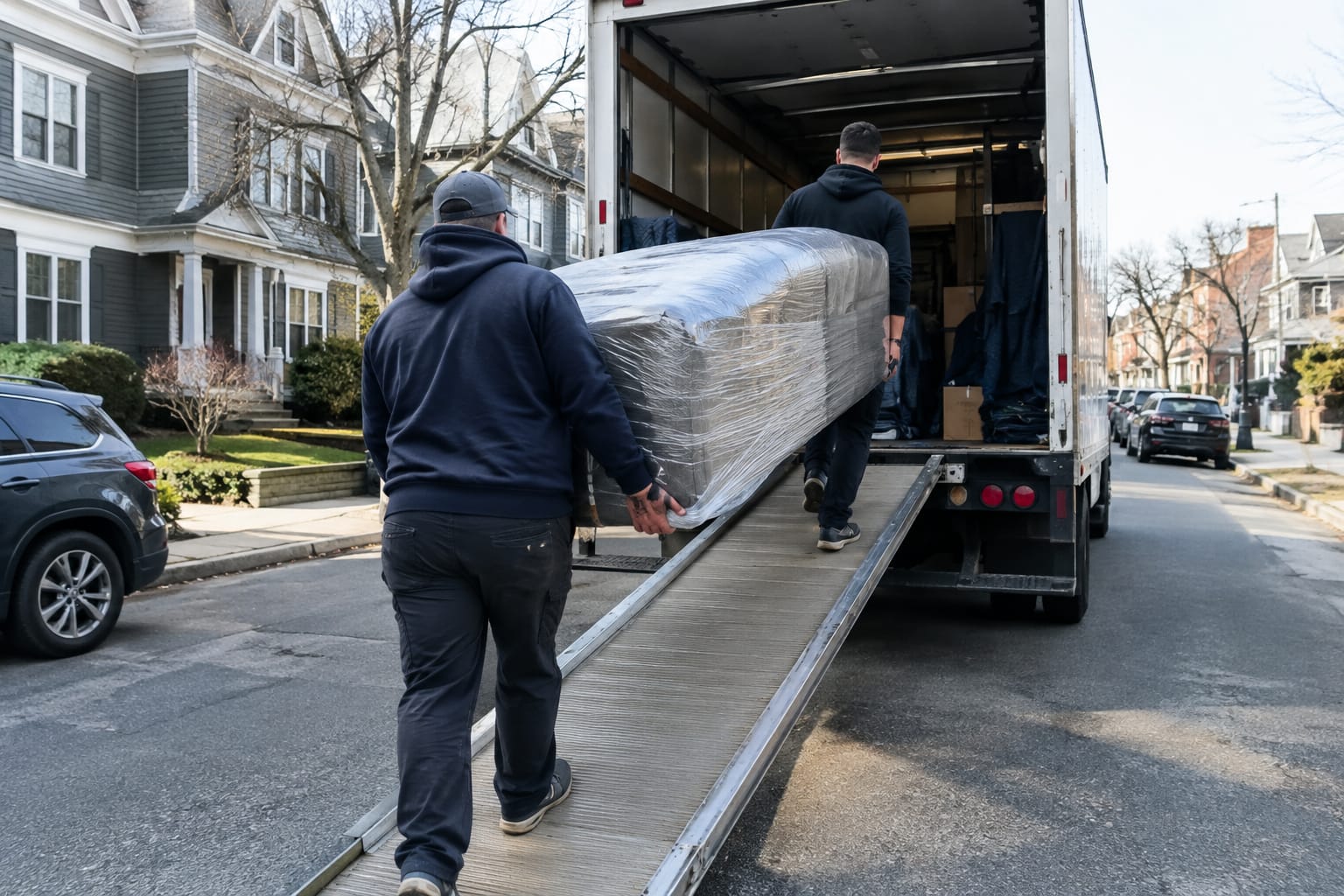
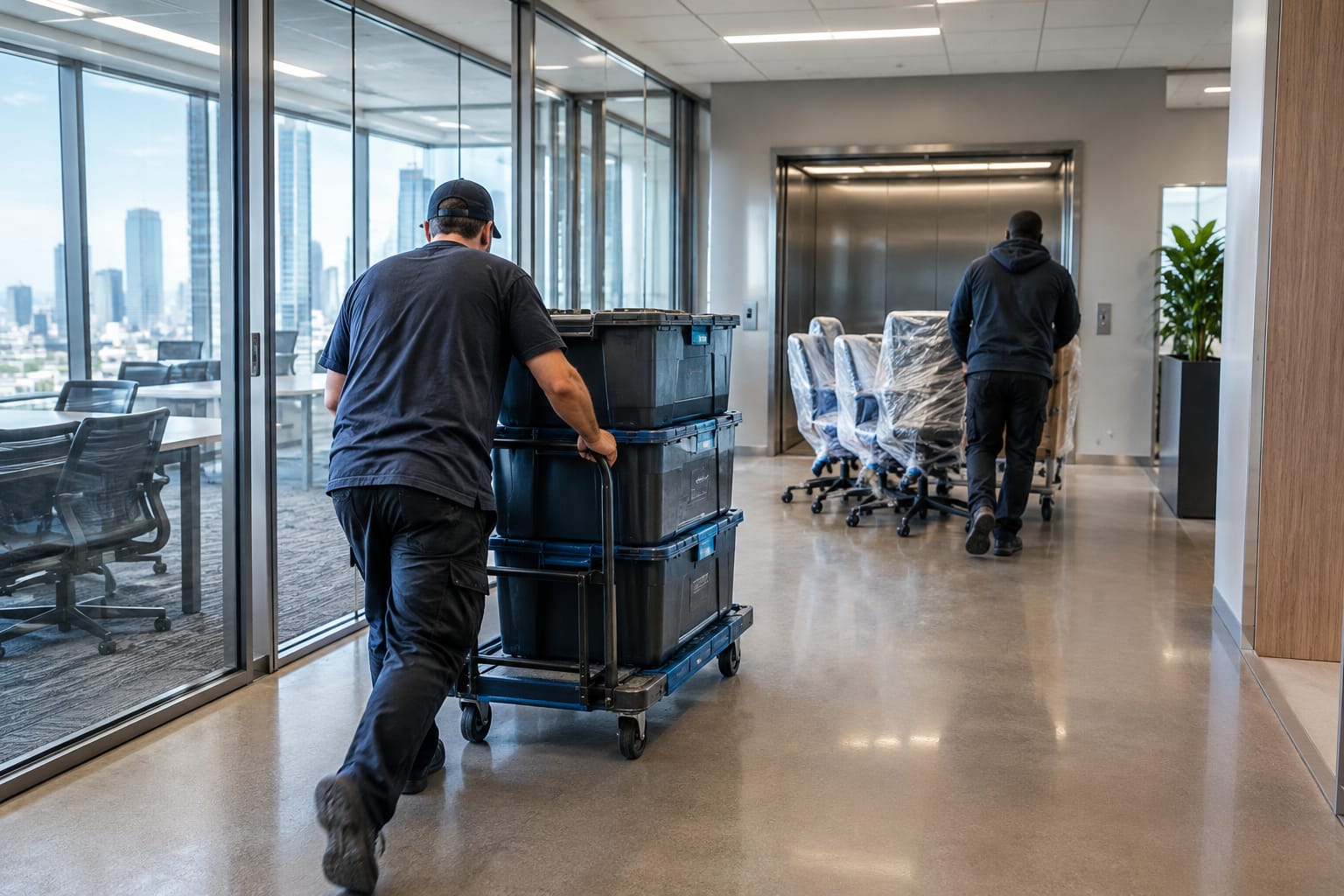
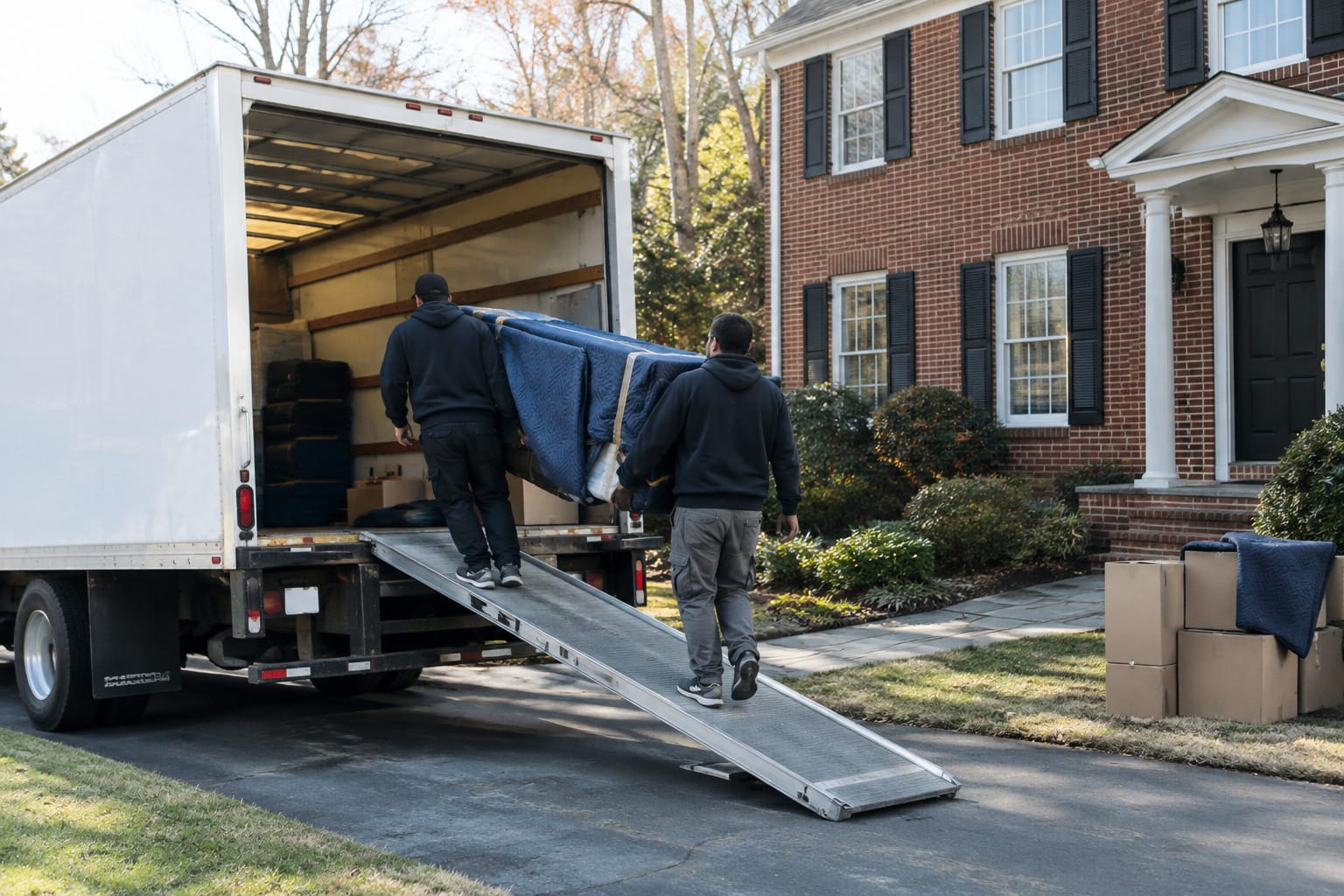
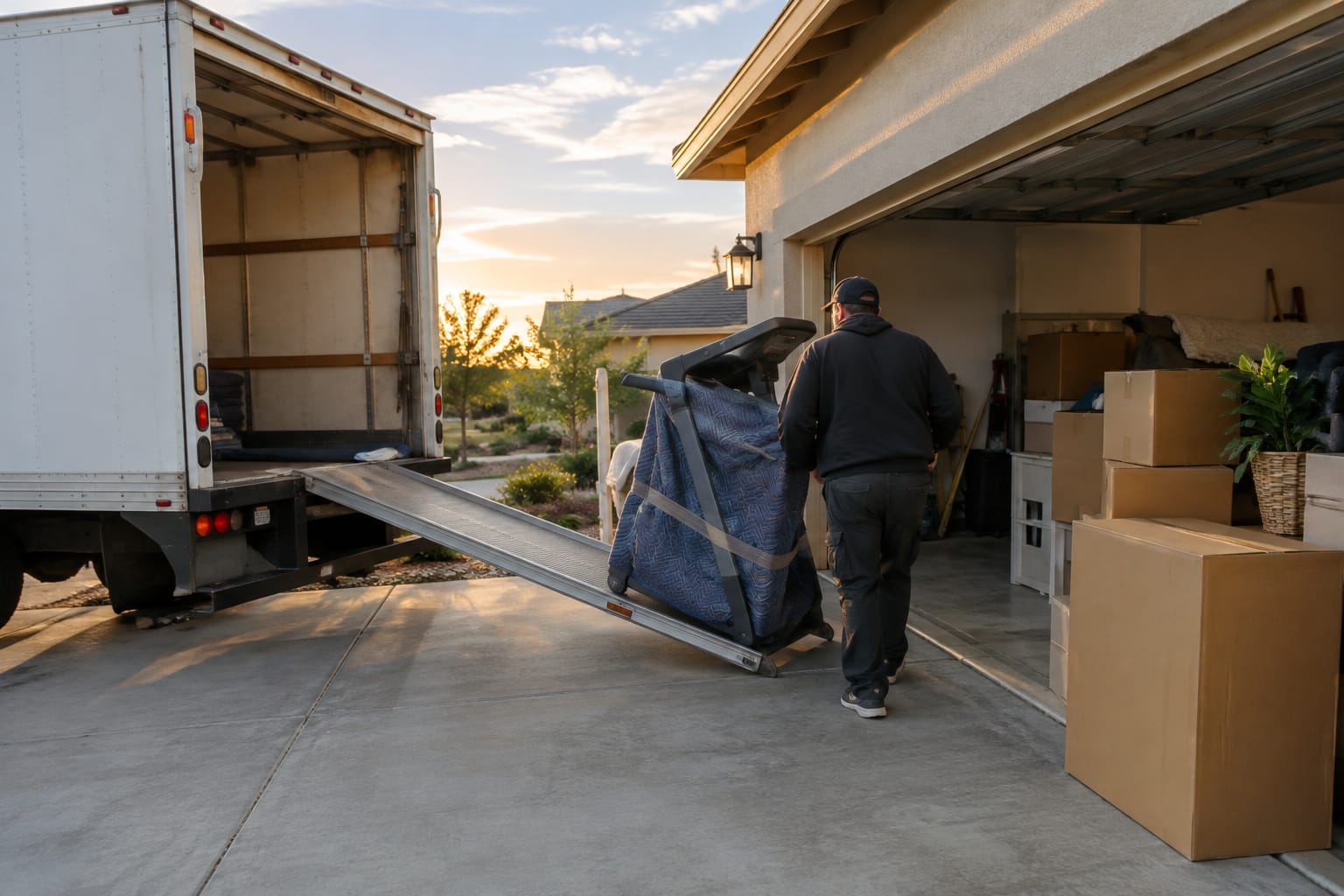
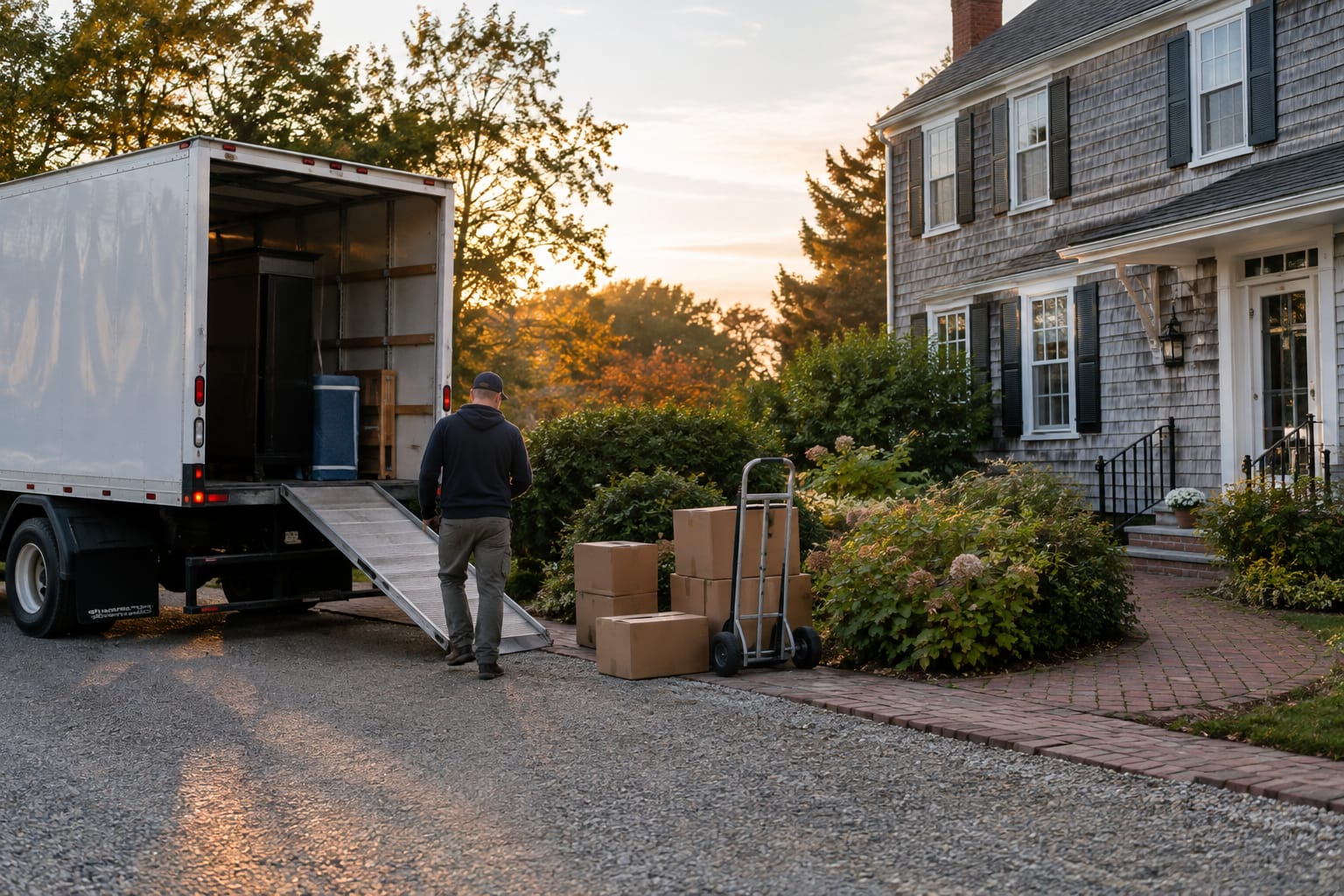
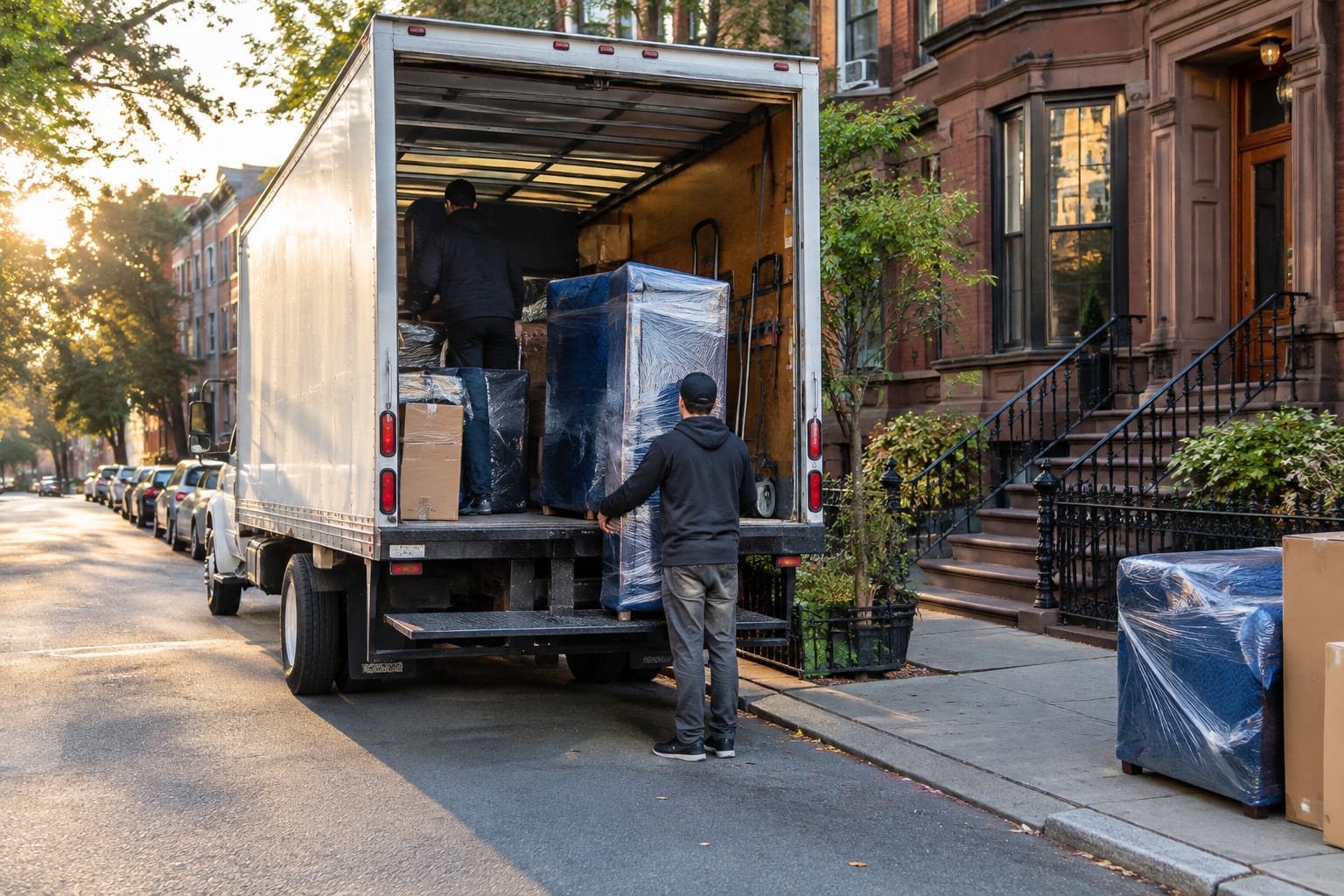
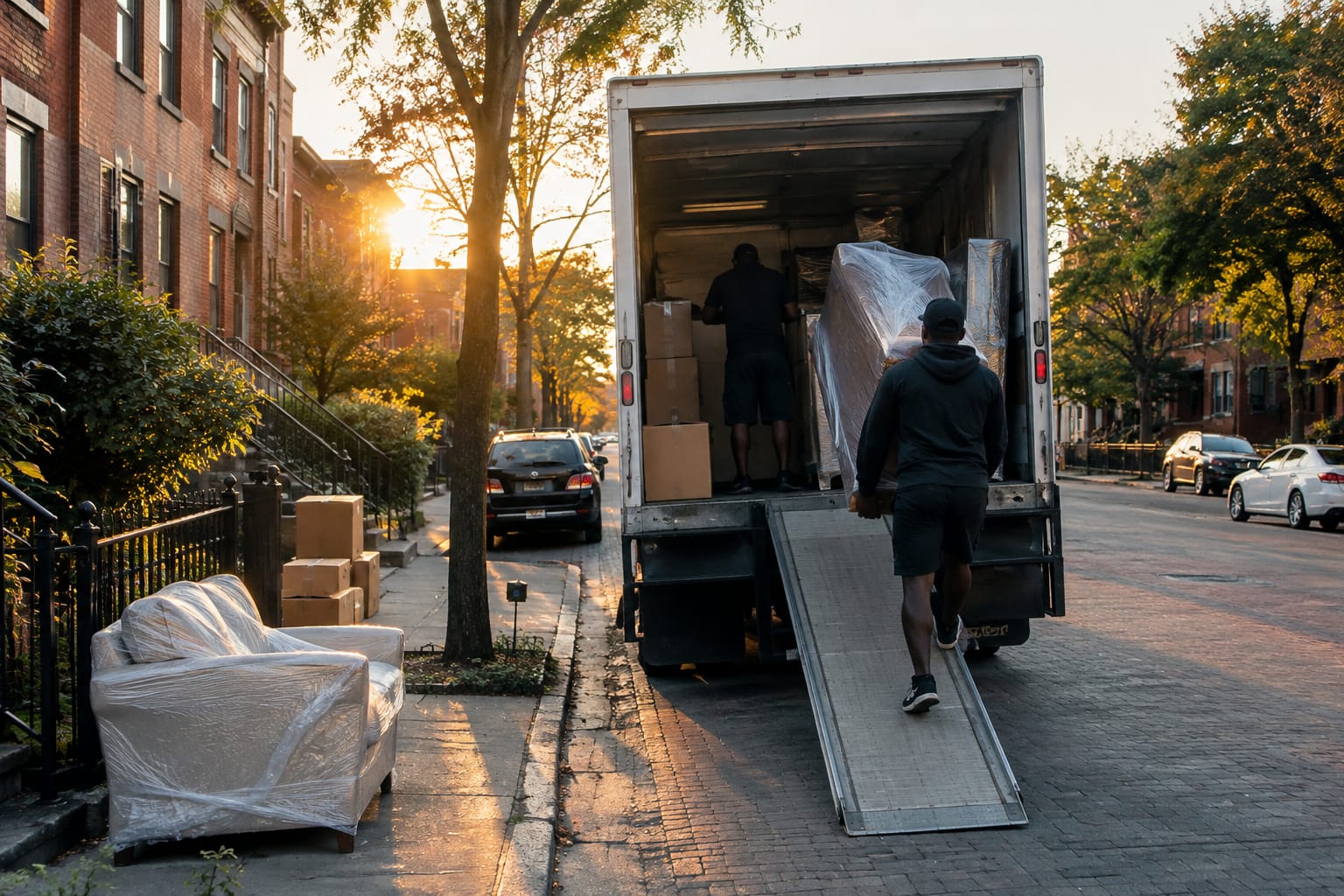
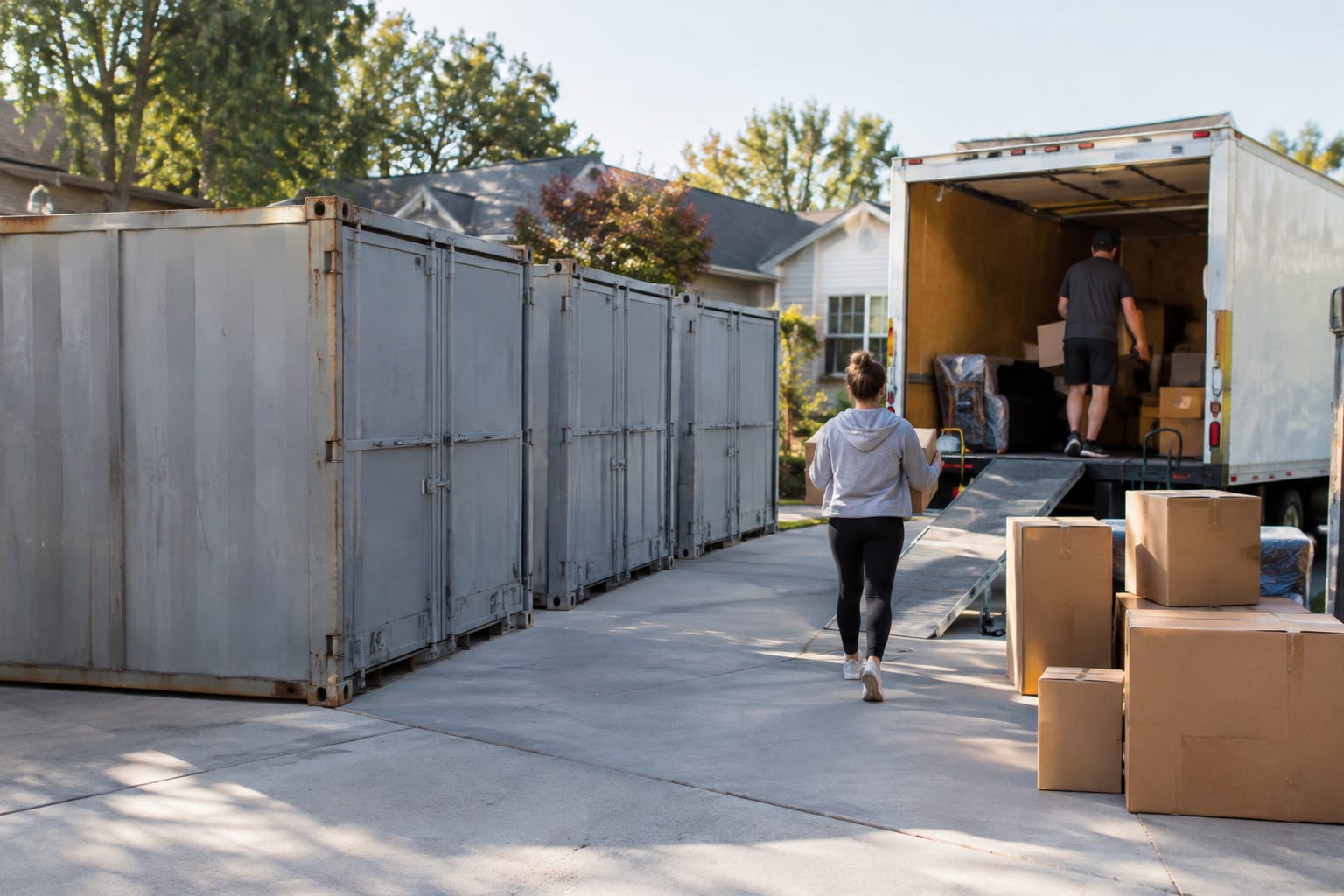
The hours of loading help you need for your move depend on four variables: how much you are loading, how easy your home is to get in and out of, how many movers carry at once, and how ready everything is when the crew arrives. Add travel time, then compare the total against the hourly minimum. The larger of the two numbers is your billable estimate.
Generic ranges by home size miss most of this. Two 2-bedroom apartments can load at very different speeds. One might be a ground-floor unit with the truck at the door, and the other a fourth-floor walk-up with parking a block away.
This guide gives you a worksheet you fill in yourself. It then shows how to turn your moving time estimate into a realistic budget.

Key Takeaways
- Four variables drive the hours. Inventory, access, crew size and readiness determine on-site time; travel time and the hourly minimum turn it into billed hours.
- Time one round trip yourself. A timed walk from the farthest room to the truck captures stairs, hallways and parking distance better than any generic range.
- Bigger crews must earn their rate. A three-person crew bills 1.5 times the two-person rate, so it needs to cut total billed time by at least one-third to break even.
- Travel and minimums count. Under published Greater Boston local terms, travel time is billed at the crew rate and counts toward a 3-hour minimum.
- Readiness is the cheapest saving. Packed boxes, emptied drawers, reserved elevators and legal parking remove waiting time, which is the most common source of wasted hours.
Your Loading Estimate at a Glance
Here's the whole method in one line: multiply your carrying trips by your round-trip time and divide by the number of carrying teams. Then add readiness time and travel, and compare the result against the minimum.
- Count your carrying trips (Step 1).
- Time one round trip from the farthest room to the truck (Step 2).
- Divide trips × round-trip time by the number of people or teams carrying at once (Step 3).
- Add time for wrapping, disassembly and anything still unpacked (Step 4).
- Add travel time, then compare the total against the hourly minimum (Step 5).
| Input | How to measure it | Your figure |
|---|---|---|
| Carrying trips | Large items + medium items + hand-truck loads of boxes | ___ trips |
| Round-trip time | Timed walk from the farthest room to the truck and back, carrying a box | ___ min |
| Carrying teams | Two-person teams for heavy items; individuals for boxes | ___ |
| Readiness time | Items still to pack, disassemble or wrap | ___ min |
| Travel time | Drive time the company bills, per its written quote | ___ min |
| Hourly minimum | From the written quote | ___ hrs |
Fill in the right-hand column as you work through the steps below.
Step 1: Build a Quick Inventory of What Needs to Be Loaded
Start with a room-by-room count, because volume drives every other number. Walk each room with a notepad and sort what you see into three groups.
- Large items: sofas, beds, dressers, dining tables, desks, washers and dryers. Each one is usually a two-person carry.
- Medium items: chairs, nightstands, lamps, TVs and small shelves that one person can manage.
- Boxes and bags: count what's packed, then estimate what's left to pack.
Next, convert the list into carrying trips. A large item is one trip for two people, and a medium item is one trip for one person. Boxes go out in hand-truck (dolly) stacks, so divide your box count by the number of boxes that fit safely on one load.

Check the spaces people forget: basement, attic, hall closets, balcony, shed, or a storage unit across town. Leave out anything you are selling, donating or driving yourself. Every item on the list adds time to the clock.
Step 2: Score Your Access: Stairs, Elevators, Long Carries and Parking
Access decides how long each trip takes. The simplest way to measure it is to time yourself. Carry one medium box from the room farthest from the exit to the spot where the truck will park, then walk back.
That single round trip captures stairs, hallways, tight turns and the walk to the curb. Professional movers protect floors and door frames along the way and work at their own pace, so treat your number as a planning figure, not a prediction.
Note anything that adds waiting time:
- Shared elevators. Other residents may need the elevator during the move. Many buildings let you reserve the elevator for moving day, which removes most of the waiting.
- Truck parking. If the truck can't park near the door, every trip gets longer. In Boston, check where you can legally park a moving truck and whether the street needs a permit.
Q: Do stairs add to the cost of hourly loading help?
A: On a purely hourly quote, stairs show up as extra minutes, since every trip up a walk-up in Boston, Brooklyn or Providence takes longer than a ground-floor carry. Ask whether the written quote also lists a separate stair or long-carry charge.
Step 3: Decide Your Crew Size (2, 3 or 4 Movers)
Crew size sets how many trips happen at once. Two movers work as one team on heavy pieces. A third mover can shuttle boxes or stay in the truck stacking, and a fourth adds another carrying lane.
Extra movers only help when the home has room for them. Wide stairs, two exits or a large volume all reward a bigger crew. In a narrow walk-up or a building with one slow elevator, extra movers end up waiting their turn.
In your worksheet, divide heavy-item trips by the number of two-person teams. Divide box and medium-item trips by the number of people carrying them.
Published hourly rates by crew size for Greater Boston local moves start from $160 per hour for two movers and a truck, $240 for three and $320 for four, as of September 2026, with seasonal rates applying. Based on the published starting rates, a third mover raises the hourly cost 1.5 times, and a fourth doubles it; seasonal rates may change this. A larger crew saves money only when it shortens the job enough to offset that increase.
Q: Will a third mover make my move cheaper overall?
A: Only if it cuts total billed hours by at least one-third, because at the published starting rates a three-person crew bills 1.5 times the two-person hourly rate on Greater Boston local moves, subject to seasonal change. Travel time doesn't shrink with crew size, which makes the threshold harder to reach.
If you are only moving a few heavy pieces, you might not need a full crew. This guide to hiring someone to move furniture covers smaller jobs.
Step 4: Factor In Readiness: Packed Boxes, Disassembly and Wrapping
Readiness is the variable you control most. On an hourly job, the crew bills every minute it spends taping a box, emptying a drawer or hunting for an Allen key.

Before the crew arrives:
- Seal and label every box, and empty dresser and desk drawers.
- Take apart bed frames and tables if you can, and tape the hardware in a bag to the frame. Basic disassembly and reassembly is part of many local hourly moves, but it still runs on the clock.
- Gather loose items such as lamps, rugs and wall art in one place.
- Stage packed boxes in the room closest to the exit.
Add worksheet time for anything that won't be ready, including items still to pack and furniture still assembled. Movers wrap furniture in moving blankets before it goes on the truck, so large pieces take longer than the carry alone. Packing supplies such as boxes, tape, shrink wrap and mattress bags are typically billed separately from hourly labor.
If you have already rented a truck or a portable container, you are shopping for labor-only moving help. That means a crew loads or unloads equipment you arranged yourself. The same worksheet applies, and providers of loading help for rental trucks and containers generally bill it hourly by crew size, so confirm the minimum before booking.
Step 5: Add Travel Time and Hourly Minimums to Your Estimate
Your on-site total isn't your billed total. Most hourly quotes add two things: travel time and a minimum.
Travel time covers the crew's driving: to your home, between addresses and, under some policies, back to base. Ask exactly which legs the quote bills.
On the published Greater Boston local hourly rates, travel time is billed at the same hourly rate and counts toward a 3-hour minimum. Card payments add 3%. The rate includes basic released-value protection of $0.60 per pound; additional coverage is optional and costs extra.
Q: Does travel time count toward the 3-hour minimum on local moves?
A: Yes, under the published Greater Boston local hourly terms, travel time counts toward the 3-hour minimum and is billed at the crew's hourly rate. Other companies set their own rules, so check the written quote.
Now compare. If on-site work plus travel comes in under the minimum, you pay the minimum. A small job may leave room for extra tasks, such as moving furniture between rooms, within hours you are already paying for.
For a fuller picture, see this breakdown of local moving costs and this guide to what an hourly moving rate includes.
Long-distance and interstate moves work differently. They are quoted from a confirmed inventory, not by the hour.
Worked Example: Turning Your Estimate Into a Budget
The figures below are illustrative inputs, not typical job times. They show how the arithmetic works, and your own worksheet replaces them.
Picture a two-bedroom apartment on the second floor of a walk-up, with the truck parked at the curb and a local destination.
| Line item | Illustrative hours |
|---|---|
| Loading: carrying, wrapping, stacking | 2.5 |
| Unloading at the new home | 2.0 |
| Travel time | 1.0 |
| Billed total (above the 3-hour minimum) | 5.5 |
At the from-rate for two movers of $160 per hour, the total for 5.5 billed hours is that rate multiplied by the hours, before any seasonal adjustment. Paying by card adds 3% to this illustrative total. Packing supplies, if needed, come on top.
Now test a bigger crew. A three-person crew bills 1.5 times the two-person rate, so it would need to finish the whole job, travel included, in about 3 hours 40 minutes to cost the same. Travel stays at one hour regardless of crew size, so on-site work would have to fall from 4.5 hours to about 2 hours 40 minutes.
That's why the question of how long movers take for a 2 bedroom has no single answer. Getting an accurate quote for a 1-2 bedroom move starts with your real inventory and access, and this guide to getting an accurate quote for a 1-2 bedroom move walks through what to share.
How to Avoid Paying for Hours You Don't Need
Most wasted hours come from waiting, not carrying. These steps cut them out.
- Finish packing the day before. Sealed, labeled boxes move fastest.
- Book elevators and parking early. A reserved elevator and a legal spot at the door shorten every trip.
- Clear the path. Remove rugs, shoes and clutter from hallways and stairs.
- Handle appliance disconnections in advance. Confirm the current requirements for gas, water and electrical disconnections with the relevant local authority.
- Keep valuables with you. Cash, jewelry, medications and important documents travel in your own bag.
- Stay on site. One decision-maker answering questions keeps the crew moving.
- Get the terms in writing. Confirm crew size, minimum, travel billing and supply charges before moving day.
Pro Tip: If you are loading a rental truck or container, have it parked, empty and unlocked, with the ramp clear, before the crew arrives. Loading can't start until it is, and that wait is billed time.
If the worksheet shows more hours than your budget allows, compare full-service movers vs renting a truck. A hybrid approach, where you drive and a crew handles only the heavy lifting, can land between the two.
Written by Born to Move Team
Useful Links
- Packing and Loading Services
- How to Pack a Truck for a Long Distance Move
- Where Can I Park My Moving Truck in Boston
- How to Prepare Furniture When Relocating
- Moving FAQ
Need help with this? About us · Get a quote · Call (617) 903-2609