'%3E%3Cpath%20fill='%231B2A47'%20d='M1.605%2016.263c.03-1.139.059-2.482.088-3.971.03-1.49.03-2.832.03-4.03%200-.758%200-1.576-.03-2.51%200-.905-.03-1.84-.03-2.803%200-.496-.028-.964-.028-1.43%200-.468%200-.906-.03-1.315h6.858q2.188%200%203.589.35c.963.234%201.663.643%202.13%201.198.496.555.73%201.372.73%202.394%200%20.788-.176%201.46-.497%201.985-.32.526-.846.935-1.575%201.197-.73.292-1.693.468-2.918.526v.263c1.313.087%202.334.263%203.122.525.758.263%201.342.672%201.692%201.197.35.526.525%201.197.525%202.044%200%201.08-.233%201.927-.67%202.57-.468.642-1.139%201.08-2.102%201.343-.933.262-2.159.408-3.705.408H1.605zm6.537-9.197q1.882%200%202.713-.526c.555-.35.817-.934.817-1.752%200-.905-.292-1.547-.846-1.927s-1.459-.554-2.655-.554H4.757v4.759zm.204%206.92c.934%200%201.663-.088%202.217-.263.555-.176.934-.438%201.197-.818s.38-.876.38-1.518c0-.876-.322-1.49-.934-1.84-.643-.35-1.635-.525-3.035-.525H4.757v4.963zM21.038%2016.555c-1.576%200-2.801-.292-3.618-.905-.817-.614-1.284-1.519-1.372-2.745-.087-1.226.205-2.774.847-4.613s1.43-3.358%202.392-4.584c.963-1.226%202.043-2.131%203.298-2.744C23.839.292%2025.24%200%2026.786%200c1.576%200%202.772.321%203.59.934.816.613%201.283%201.548%201.37%202.774s-.203%202.774-.845%204.613c-.642%201.81-1.43%203.358-2.393%204.584s-2.072%202.132-3.297%202.745a9.8%209.8%200%200%201-4.173.905m.788-2.278c.642%200%201.138-.058%201.371-.116.205-.059.496-.117.847-.322.262-.146.437-.292.554-.408.204-.175.32-.292.438-.41.204-.203.35-.408.496-.583.35-.438.642-.876.963-1.402.233-.408.466-.817.67-1.284.205-.438.38-.905.555-1.372.438-1.198.671-2.278.671-3.183s-.204-1.606-.612-2.131c-.409-.497-1.051-.76-1.897-.76-.467%200-.934.059-1.43.205h-.03c-1.02.292-1.925%201.226-2.042%201.372-.116.117-.467.526-.963%201.343a15.5%2015.5%200%200%200-1.342%202.92c-.408%201.197-.642%202.277-.671%203.182-.03.906.175%201.636.584%202.161q.611.788%201.838.788M14.853%2038.54c-1.576%200-2.802-.292-3.619-.905s-1.284-1.518-1.371-2.744c-.088-1.227.204-2.774.846-4.614s1.43-3.357%202.393-4.584%202.042-2.13%203.297-2.744c1.255-.613%202.655-.905%204.173-.905%201.575%200%202.772.321%203.589.934s1.284%201.548%201.371%202.774c.088%201.226-.204%202.774-.846%204.613-.642%201.81-1.43%203.358-2.393%204.584s-2.072%202.131-3.297%202.745c-1.226.613-2.626.846-4.143.846m.787-2.277c.642%200%201.138-.059%201.372-.117.204-.058.496-.117.846-.321.263-.146.438-.292.554-.409.205-.175.321-.292.438-.409.204-.204.35-.408.496-.584a13%2013%200%200%200%201.634-2.686c.204-.438.38-.905.555-1.372.437-1.197.67-2.277.67-3.182%200-.906-.203-1.606-.612-2.132-.409-.496-1.05-.759-1.897-.759-.467%200-.934.058-1.43.204h-.029c-1.021.292-1.925%201.227-2.042%201.373-.117.116-.467.525-.963%201.343a15.5%2015.5%200%200%200-1.342%202.92c-.409%201.196-.642%202.277-.671%203.182s.175%201.635.583%202.16q.613.789%201.838.789'/%3E%3Cpath%20fill='%23FF515E'%20d='M55.966%2038.57c-1.576%200-2.801-.293-3.618-.906s-1.284-1.518-1.372-2.744c-.087-1.227.204-2.774.846-4.613s1.43-3.358%202.393-4.584c.963-1.227%202.043-2.132%203.297-2.745s2.656-.905%204.173-.905c1.576%200%202.772.321%203.589.934s1.284%201.548%201.371%202.774c.088%201.226-.204%202.774-.846%204.613-.642%201.81-1.43%203.358-2.393%204.584s-2.071%202.131-3.297%202.745c-1.225.613-2.626.846-4.143.846m.788-2.249c.642%200%201.138-.058%201.371-.117.204-.058.496-.116.846-.32.263-.147.438-.293.555-.41a7%207%200%200%200%20.437-.408c.205-.205.35-.41.496-.584a13%2013%200%200%200%201.634-2.686c.205-.438.38-.905.555-1.373.438-1.197.671-2.277.671-3.182s-.204-1.606-.613-2.131c-.408-.497-1.05-.76-1.896-.76-.467%200-.934.059-1.43.205h-.03c-1.02.292-1.925%201.226-2.042%201.372-.117.117-.467.526-.963%201.343a15.5%2015.5%200%200%200-1.342%202.92c-.409%201.197-.642%202.277-.671%203.182s.175%201.635.583%202.16q.614.79%201.839.79'/%3E%3Cpath%20fill='%231B2A47'%20d='M33.06%2016.263c0-.35%200-.935.03-1.81.029-1.051.058-2.103.058-3.154s.03-2.073.03-3.007c0-1.606-.03-3.27-.06-4.993%200-.554-.028-1.08-.028-1.606%200-.525-.03-1.021-.03-1.46h6.828c1.46%200%202.685.117%203.59.38q1.4.394%202.1%201.314.7.963.7%202.628c0%20.992-.174%201.81-.554%202.452-.35.643-.904%201.11-1.604%201.431s-1.576.467-2.627.496v.263q2.058.087%203.064.876c.671.525%201.138%201.372%201.43%202.51.087.41.233%201.023.467%201.84.233.818.408%201.431.554%201.84h-3.414a11%2011%200%200%200-.262-1.022c-.321-1.314-.526-2.19-.584-2.628a5%205%200%200%200-.642-1.46%202.13%202.13%200%200%200-.963-.73c-.408-.146-.934-.233-1.605-.233h-3.326v6.0440000000000005H33.06zm6.332-8.292c1.343%200%202.276-.205%202.86-.613.554-.41.846-1.11.846-2.073%200-.73-.146-1.314-.408-1.723-.263-.409-.671-.7-1.197-.876q-.788-.263-2.1-.263h-3.181v5.519h3.18zM49.4%2016.263l.03-2.745c.029-2.452.029-4.905.029-7.416q0-2.101-.088-5.868h4.085l5.924%2010.335c.087.234.204.438.291.643.117.204.205.408.321.613.38.788.613%201.255.672%201.372h.262c0-.058-.03-.146-.03-.204%200-.059-.028-.117-.028-.175a75%2075%200%200%201-.175-1.314%2010%2010%200%200%201-.088-1.285c0-1.547%200-3.737-.029-6.57V1.84c0-.584-.03-1.11-.03-1.576h2.977c-.03%202.482-.058%205.08-.058%207.766%200%201.694%200%204.438.029%208.292h-4.027l-5.573-9.43c-.875-1.81-1.226-2.511-1.05-2.132-.263-.613-.467-1.08-.613-1.46h-.263c.058.35.117.876.175%201.548.059.7.117%201.168.117%201.46%200%202.978%200%206.306.029%209.985H49.4zM4.698%2038.277c.029-2.627.058-5.255.058-7.883%200-1.576%200-3.503-.029-5.752-1.109%200-2.684%200-4.727.03v-2.453h12.664v2.453c-1.955-.03-3.53-.03-4.756-.03%200%20.584-.03%201.227-.03%201.957s0%201.46-.029%202.218v1.84c0%202.57.03%205.11.059%207.62z'/%3E%3Cpath%20fill='%23FF515E'%20d='M29.441%2038.277c.409-1.05.788-2.102%201.168-3.182s.787-2.16%201.167-3.241c.613-1.693%201.05-2.949%201.342-3.766l1.255-3.65c.116-.38.262-.788.379-1.139.117-.38.263-.73.38-1.05h4.61l-.671%2012.904h.262l8.316-12.905h4.669l-.7%201.869c-.876%202.452-1.343%203.766-1.43%204a501%20501%200%200%200-3.385%2010.16h-2.947c.292-.846.788-2.219%201.459-4.087.175-.526.35-1.08.554-1.606.175-.526.38-1.08.555-1.577.642-1.81%201.342-3.825%202.072-6.014h-.234l-8.724%2013.314h-2.86l.554-13.314h-.175c-.175.496-.38.992-.554%201.489-.175.496-.38%201.022-.555%201.547a163%20163%200%200%200-1.08%203.008c-.145.38-.262.759-.408%201.138-.117.38-.262.73-.408%201.11-.7%201.898-1.284%203.59-1.751%205.05h-2.86zM68.047%2038.277c.175-2.19.32-4.525.467-7.007.058-.905.204-3.912.467-9.051h3.151c-.03.438-.058.934-.088%201.46s-.058%201.08-.087%201.693a264%20264%200%200%201-.409%206.657c-.145%201.986-.35%203.591-.583%204.788h.175Q72.147%2034.892%2073.94%2032a562%20562%200%200%201%204.465-7.066c.32-.496.641-.992.933-1.46s.555-.875.817-1.255h3.268q-.568.832-1.138%201.752c-.408.613-.787%201.255-1.196%201.927-3.88%206.014-6.478%2010.131-7.85%2012.35h-5.193zM79.106%2038.277c.32-.788.758-2.014%201.37-3.65a287%20287%200%200%200%201.577-4.32c.437-1.256.904-2.628%201.4-4.088s.934-2.774%201.313-3.97h11.322l-.846%202.364H87.1l-1.664%204.847%207.645-.088-.612%201.694-7.587-.088-1.75%204.934h8.286l-.846%202.365z'/%3E%3C/g%3E%3Cdefs%3E%3CclipPath%20id='a'%3E%3Cpath%20fill='%23fff'%20d='M0%200h96v40H0z'/%3E%3C/clipPath%3E%3C/defs%3E%3C/svg%3E)
An office move is priced as a stack of line items, not a single number. Labor, trucks, packing, furniture work, IT handling, specialty rigging, building requirements, and decommissioning each land on the estimate separately. Understanding those eight lines is the difference between an office moving cost you can defend to finance and an invoice that blindsides you.
Here's the problem: most articles answer "how much does an office move cost" with one invented cost-per-employee range and a quote form. That number is useless the moment your building demands a certificate of insurance or an after-hours window. This guide breaks the estimate into its real components, shows what scales each one, and gives you a checklist to compare two commercial moving quotes line by line.

How Office Moves Are Quoted: Hourly, Flat-Rate, and Binding Estimates
Commercial moves are quoted three ways, and the format decides who absorbs the risk if the day runs long. Getting this straight before you read a single dollar figure protects your budget.
An hourly rate charges for actual crew-hours used, which favors small, predictable moves. A flat-rate (or lump-sum) quote fixes the price for a defined scope. A binding estimate is a written price guarantee for the services listed — you pay that amount even if the job takes longer than expected.
The federal definitions matter here. Per the FMCSA guide Your Rights and Responsibilities When You Move, a non-binding estimate is the mover's best guess and the final bill can exceed it, while a binding not-to-exceed estimate caps your cost — you pay less if the actual weight or hours come in low, but never more. For a cross-state office relocation, the binding not-to-exceed format gives finance the tightest ceiling.
| Quote type | How it's priced | Who carries the risk | Best for |
|---|---|---|---|
| Hourly rate | Crew-hours × rate, plus truck/travel | You (if the day runs long) | Small local office moves |
| Flat / lump-sum | Fixed price for a defined scope | The mover | Well-scoped moves after a walkthrough |
| Binding estimate | Guaranteed written price | The mover | Interstate and large commercial jobs |
| Binding not-to-exceed | Capped price, can go lower | The mover (capped) | Budget-sensitive corporate moves |
Q: Is an office move priced hourly or flat-rate?
A: Small local office moves are usually hourly; larger and interstate commercial jobs are typically flat-rate or binding after an on-site or video walkthrough. GoBorn quotes commercial moves after assessing scope so the format matches the job.
Whichever format you choose, insist the estimate be written and itemized. A verbal number is not a quote — it is a conversation. The same logic that drives residential how much movers cost applies at commercial scale, just with more moving parts.
1. Labor: Crew Size, Hours, and Minimums
Labor is the largest line on nearly every office moving estimate, and it scales with crew-hours. More movers finish faster; fewer movers stretch the clock. The right crew size is a function of your square footage, elevator access, and how much is pre-packed.
Most movers bill labor at an hourly rate per mover and apply an hourly minimum. GoBorn's published guidance on local moving service pricing notes you should be prepared to pay $25 to $60 an hour for each professional mover, covering crew labor only — the truck and add-on services are separate. Commercial crews are larger, so the hourly minimum matters less than the total crew-hours.
Gratuity is optional and separate from the quote. The same pricing guide puts the standard tip at 10% to 20% of the total move cost, reflecting satisfaction and difficulty. Budget for it, but do not let a mover build it into the estimate.
Pro Tip: Ask how the mover handles the clock. A crew that stops billing when the truck is loaded — versus one that bills door-to-door including drive time — changes your labor total more than the hourly rate does.
2. Trucks, Travel Time, and Mileage
The truck line covers the vehicle, fuel, and the travel-time charge to get the crew to and from your site. On local moves this often appears as a flat trip fee or a set number of billable travel-hours; on long-distance lanes it is folded into mileage or the binding price.
Truckloads are the variable that scales this line. A 26-foot box truck moves a small office in one or two loads; a full floor may need multiple trucks or trips, each adding travel time. Reducing loads — by decommissioning furniture you are not keeping — directly trims this cost.

For GoBorn's signature Boston-to-New York corridor, published rates start at $1,150 for a room-or-less load from Boston to NYC, with the final figure driven by volume. An office move on that lane is quoted after scope review, but the same principle holds: fewer, fuller truckloads cost less than many partial ones.
3. Packing Materials, Crate Rentals, and Pack Labor
Packing splits into three sub-lines: materials, plastic moving crate rental, and the labor to pack. Offices lean on rented crates instead of cardboard because crates stack cleanly, protect electronics, and get returned — but they bill per crate per day.
Crate-days are the scaling variable. Rent 200 crates for three days and you pay for 600 crate-days; hold them a week because your new floor isn't ready and the line balloons. Order crates to arrive close to your move date and schedule pickup promptly.
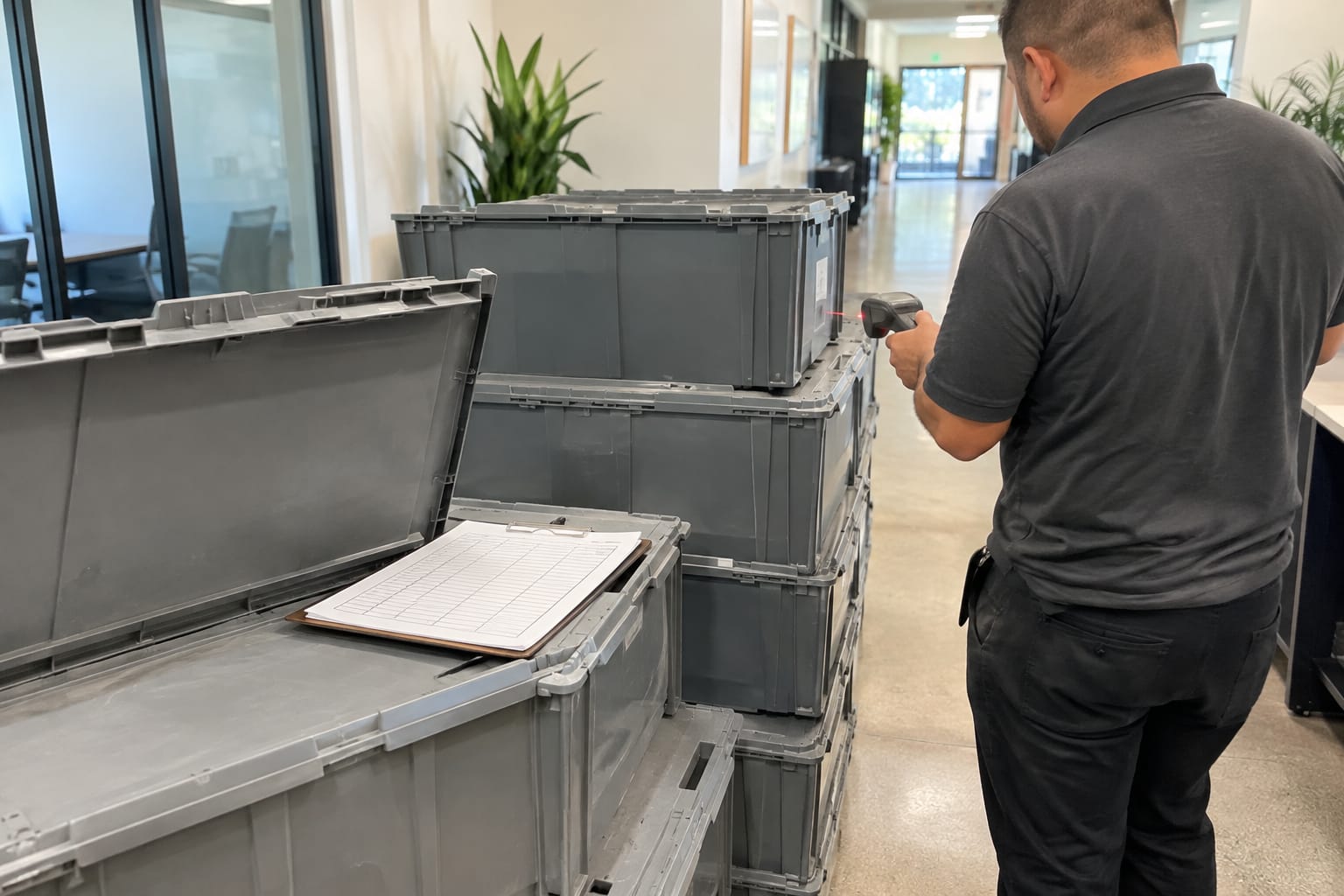
Pack labor is optional but often worth it for a business that cannot afford lost or mislabeled files. If you are weighing self-pack against professional packing, GoBorn's breakdown of whether paying for packing is worth it walks through the trade-off. For an office, the deciding factor is usually downtime, not box count.
GoBorn can help: We scope commercial moves line by line and schedule office relocations after hours and on weekends to minimize business downtime. Learn more →
4. Furniture Disassembly, Reassembly, and Installation
Furniture work is a labor sub-line that offices routinely underestimate. Desks, cubicle panels, conference tables, and modular workstations get disassembled at origin and reassembled at destination — and reassembly almost always takes longer than teardown.
The scaling variable is the number of workstations and how systems-based your furniture is. A room of freestanding desks is quick; a floor of interlocking cubicle systems with panel-hung components is a genuine installation project. Some movers quote reassembly as a separate furniture installation cost, and a few leave it off the verbal quote entirely — confirm it is written in.
GoBorn's crews handle furniture disassembly, padding, and plastic wrap as part of moving day, then careful reassembly at the destination, so the pieces that came apart go back together correctly. Confirm whether your quote includes reassembly or just transport — that gap is a common source of invoice surprise.
5. IT Disconnect, Reconnect, and Equipment Handling
IT handling is where office moves diverge sharply from home moves. Movers physically transport and re-stage equipment, but who disconnects and reconnects computers, phones, and network gear varies by contract.
Q: Does the mover's quote include disconnecting and reconnecting my computers?
A: Not always. Many commercial movers transport and re-stage IT equipment but expect your internal team or an IT vendor to handle the actual disconnect and reconnect. Confirm the scope in writing before you sign.
The safe approach is to assign every device a destination label and decide, in writing, where the mover's responsibility ends. Movers excel at safe transport and placement; live network reconnection is usually your IT team's job. Clarifying this prevents both a coverage gap and paying twice for the same task.
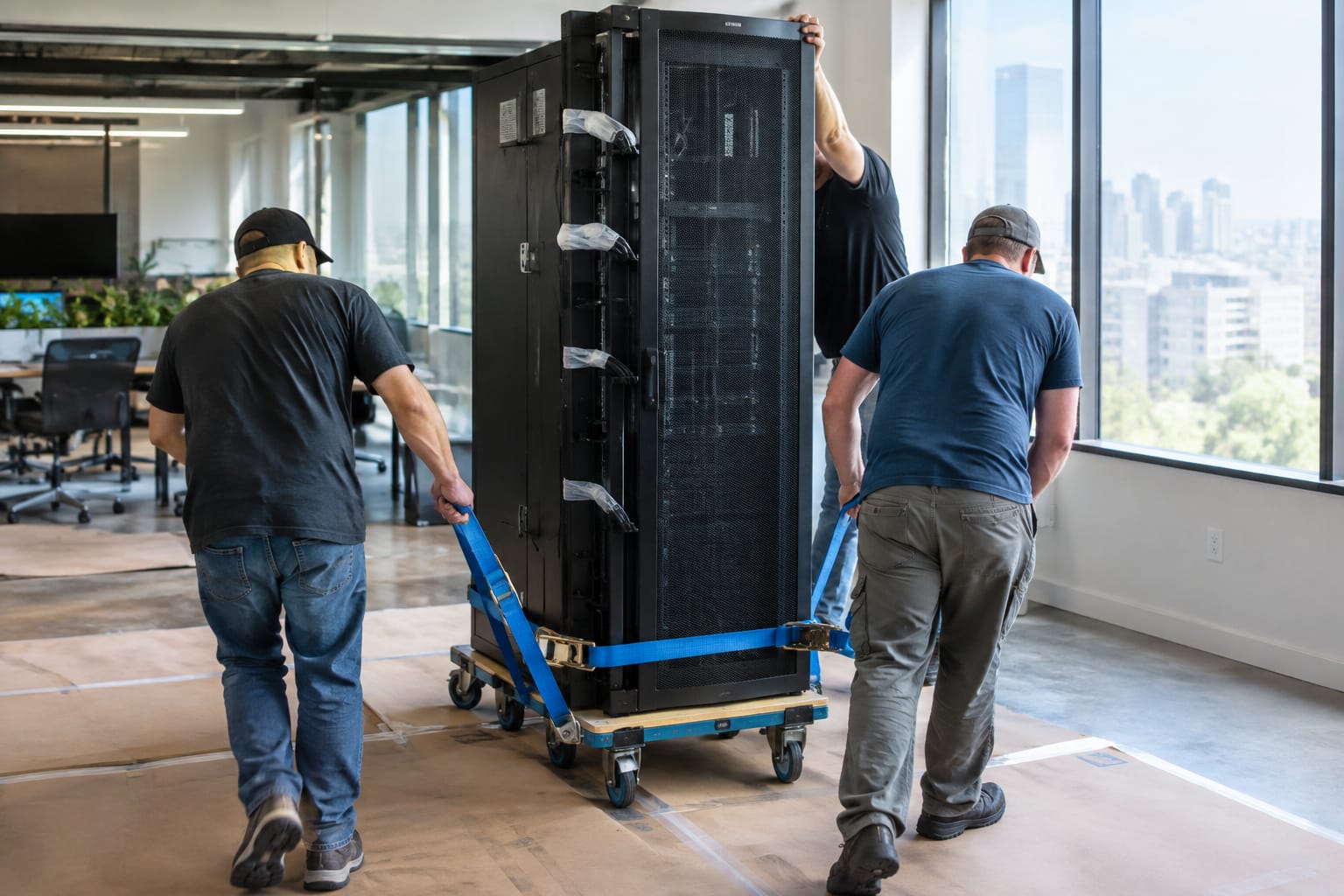
Server racks, network closets, and monitors need padded handling and, often, Masonite floor protection so building management doesn't bill you for scratched floors. Treat that protection as part of the move, not an afterthought.
6. Specialty Items: Safes, Server Racks, Art, and Lab Equipment
Specialty items are priced individually because they need specific equipment, extra crew, or rigging. A floor safe, a populated server rack, framed art, or lab and medical equipment each carries its own handling line.
Weight, stairs, and rigging drive this cost. A 700-pound safe down a loading ramp on a stair-climbing hand truck is a different job than rolling file boxes, and the estimate should say so explicitly. Disclose every heavy or fragile item during the walkthrough — surfacing a safe on move day is the fastest way to blow a binding estimate open.

Pro Tip: Photograph and list every specialty item before requesting quotes. Movers price what they can see; an unlisted server rack or gun safe becomes a change order at the worst possible moment.
Try GoBorn's after-hours commercial moves: We schedule office, retail, warehouse, and light-industrial relocations on evenings and weekends so your team keeps working while we move the heavy and specialty items. Get started →
7. Building Requirements: COIs, Elevator Windows, and After-Hours Access
Your building's rules can add more to an office moving cost than the furniture itself. Two requirements dominate: the certificate of insurance and the access window.
Most commercial landlords and property managers require a certificate of insurance (COI) naming the building before a mover sets foot on the dock. GoBorn maintains the required liability and cargo insurance and issues building-specific COIs on request to management, HOAs, and commercial properties — a routine step that stalls unprepared movers for days.
The access window is the second cost driver. Many towers only permit freight moves after business hours or on weekends, and a short elevator window forces a larger crew to finish in time. That after-hours access can carry a surcharge, but the trade-off is zero business downtime.
Q: Do commercial movers charge extra for weekend or after-hours moves?
A: Often, yes — after-hours and weekend commercial moves can carry a surcharge because they require scheduled crews outside normal hours. GoBorn offers exactly this to minimize downtime; get it priced in the written quote so it isn't a surprise.
Before you book, confirm your building's certificate requirements, dock reservations, and elevator rules in writing. If your move involves a Boston high-rise, reserving the freight elevator early is non-negotiable.
8. Storage, Decommissioning, and Disposal
The final line is the one most verbal quotes skip entirely: what happens to space and furniture on both ends. It splits into storage between lease dates and decommissioning of the space you're leaving.
Office decommissioning means returning the old space to broom-clean or lease-required condition — removing furniture, cabling, and signage, and disposing of what you aren't taking. It is billed by volume and labor, and someone always pays for it. Read your exit lease clause before assuming the landlord handles it.
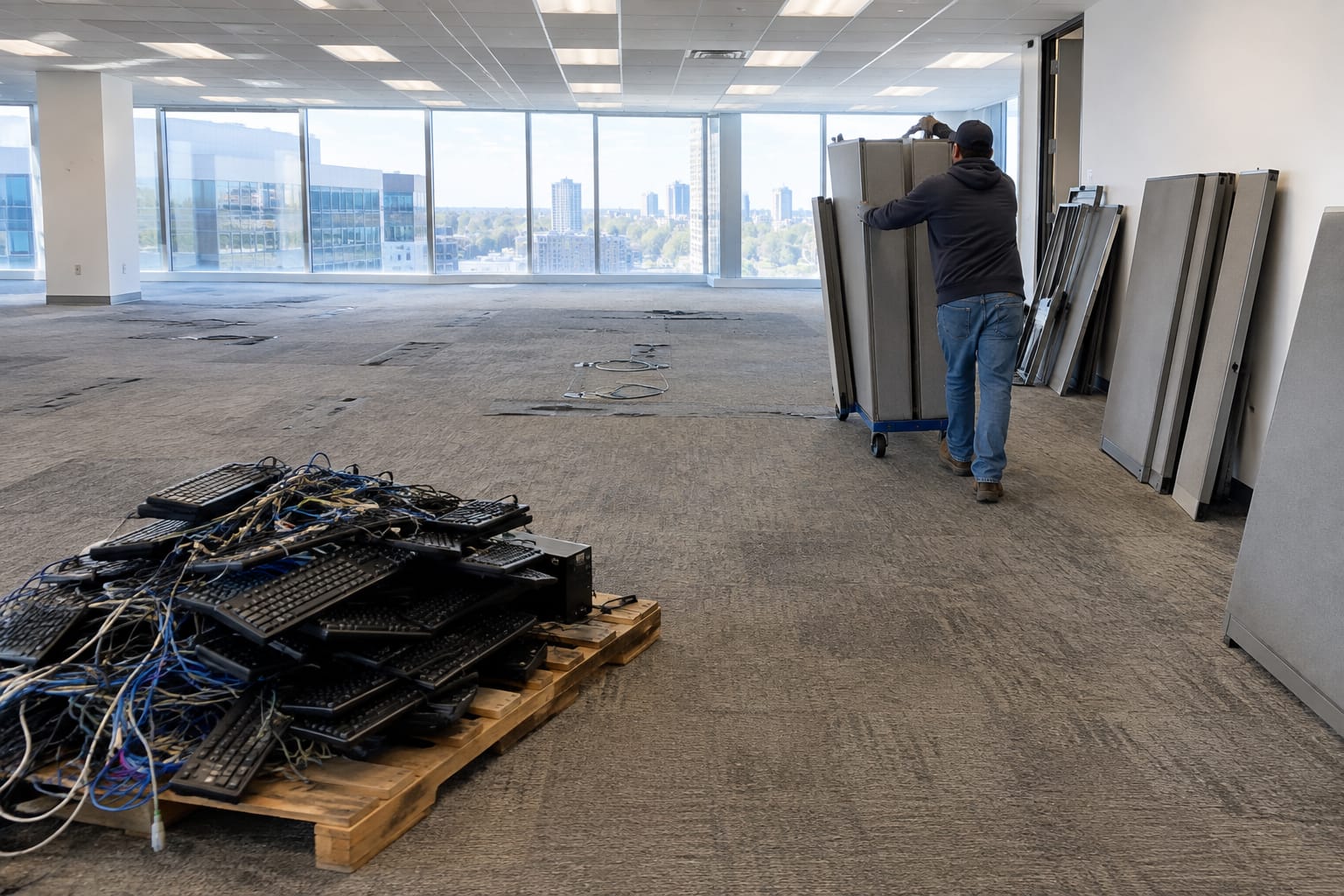
Storage bridges the common gap when your new floor isn't ready on move-out day. If you need to hold furniture and files between leases, GoBorn's guide to sizing storage between lease dates helps you avoid over-renting. Both storage and decommissioning belong on the estimate up front — not as a change order after the trucks leave.
What Pushes Your Quote Up — and What Brings It Down
Every office moving cost moves along a few predictable levers. Knowing them lets you negotiate scope instead of just haggling on rate.
Pushes the quote up: long carries and stairs, tight or after-hours elevator windows, many partial truckloads, extended crate-rental days, systems furniture reassembly, undisclosed specialty items, and decommissioning volume.
Brings the quote down: decluttering before the move, decommissioning furniture you won't reuse, pre-labeling by destination, consolidating into full truckloads, returning crates promptly, and giving the mover a complete walkthrough so the estimate is accurate the first time.
The single biggest lever is scope accuracy. A precise walkthrough turns a defensive, padded estimate into a tight one — because the mover no longer prices for surprises.
How to Compare Two Office Moving Quotes Line by Line
The real BOFU job isn't finding the lowest number — it's confirming two quotes cover the same work. A cheaper estimate that omits reassembly, COI-driven after-hours labor, and decommissioning isn't cheaper; it's incomplete.
Lay both quotes side by side and check each line:
- Estimate type — Are both hourly, both flat, or both binding? An hourly quote and a binding quote aren't comparable until you normalize them.
- Labor — Same crew size and hours? Is travel time billed the same way?
- Trucks and travel — Same number of loads and the same mileage or trip-fee basis?
- Packing — Are crate-rental days and pack labor in both, or did one leave crates out?
- Furniture — Does each include reassembly and installation, not just teardown and transport?
- IT handling — Same disconnect/reconnect boundary?
- Specialty items — Are your safe, racks, and art itemized identically?
- Building and after-hours — Is COI issuance and any after-hours surcharge stated on both?
- Storage and decommissioning — Present on both, or hidden on one?
- Valuation — Same protection level (covered next)?
If a line is missing on one quote, it's not a saving — it's a future change order. Make the mover add it before you compare totals.
Red Flags in a Commercial Moving Estimate
A few signals separate a trustworthy commercial mover from a costly one. The clearest is valuation coverage, which decides what you recover if something breaks.
Per the FMCSA, released value protection is offered at no additional cost but reimburses by weight, not value — a fraction of what damaged electronics or furniture are worth — while full value protection costs more and covers repair or replacement. For an office full of equipment, released value alone is a red flag. One GoBorn reviewer learned this the hard way, writing on Trustpilot: "The antique cabinet glass was broken in the move. They would not completely cover the cost of the damage." Confirm your valuation level in writing before move day.
Other red flags: a refusal to do a walkthrough, an estimate that isn't written and itemized, a demand for a large deposit, and no verifiable license. Always check the mover's US DOT number and confirm state registration — GoBorn carries required insurance and holds an Illinois Commerce Commission registration (ILCC #244189) for Illinois moves, and issues COIs on request. Learn to spot estimate tactics used in moving scams so a lowball verbal number doesn't become a hostage situation on the loading dock.
How GoBorn Prices and Runs an Office Move
GoBorn addresses the two failure points in this article directly: incomplete estimates and business downtime. Every commercial move is scoped line by line — labor, trucks, packing, furniture, IT, specialty items, building requirements, and decommissioning — so the written quote reflects the real job, not a padded guess.
Operating since 2016 with thousands of completed local and interstate moves, GoBorn runs office, retail, warehouse, and light-industrial relocations after hours and on weekends to keep your team working. With hubs across the country — Boston, Nashua, Providence, NYC, Chicago, LA, Houston, San Francisco, Connecticut, Miami, and Washington DC — and required liability and cargo insurance with COIs issued on request, the logistics that stall other movers are routine here.
Ready for an itemized office moving quote you can hand to finance? Request your commercial move quote →
Key Takeaways
- An office moving cost is eight line items — labor, trucks, packing, furniture work, IT, specialty items, building requirements, and decommissioning — not one number.
- The estimate format decides who carries the risk; a binding not-to-exceed caps your cost, per FMCSA.
- The lines movers most often omit from a verbal quote are furniture reassembly, crate-rental days, after-hours labor, and decommissioning.
- Compare two quotes line by line; a missing line is a future change order, not a saving.
- Confirm valuation coverage in writing — released value reimburses by weight, not replacement value.
About Office Moving Costs
How much does it cost to move an office?
There is no single honest number — cost depends on square footage, truckloads, crate-days, furniture reassembly, building rules, and decommissioning. Get an itemized written estimate after a walkthrough rather than a cost-per-employee guess.
What is a binding estimate and should I ask for one?
A binding estimate is a guaranteed written price for the listed services. For a large or interstate office move, a binding not-to-exceed version is best: it caps your cost but can bill lower, per the FMCSA.
Who pays to remove furniture we're leaving behind?
Someone always does — it's called decommissioning, billed by volume and labor. Check your exit lease clause; if the landlord doesn't cover restoration, budget it as its own line.
How much do Boston movers cost for a commercial job?
Commercial jobs are scoped individually, but GoBorn publishes local labor guidance of $25 to $60 per mover per hour and Boston-to-NYC rates starting at $1,150 for a room-or-less load. Office moves are quoted after a scope review.
What hidden fees show up on office moving invoices?
The usual culprits are extended crate-rental days, after-hours access surcharges, furniture reassembly not included in a verbal quote, long-carry and stair fees, and decommissioning. Insist every one appears on the written estimate.
Written by GoBorn Team, Moving Company Experts
Useful Links
- How Much Do Movers Cost?
- The Prices of a Locally-Based Moving Company
- Licensed Moving Company Boston: How to Verify Movers
- How to Avoid Moving Scams
- What Questions Should I Ask When Hiring a Moving Company?
Frequently Asked Questions