'%3E%3Cpath%20fill='%231B2A47'%20d='M1.605%2016.263c.03-1.139.059-2.482.088-3.971.03-1.49.03-2.832.03-4.03%200-.758%200-1.576-.03-2.51%200-.905-.03-1.84-.03-2.803%200-.496-.028-.964-.028-1.43%200-.468%200-.906-.03-1.315h6.858q2.188%200%203.589.35c.963.234%201.663.643%202.13%201.198.496.555.73%201.372.73%202.394%200%20.788-.176%201.46-.497%201.985-.32.526-.846.935-1.575%201.197-.73.292-1.693.468-2.918.526v.263c1.313.087%202.334.263%203.122.525.758.263%201.342.672%201.692%201.197.35.526.525%201.197.525%202.044%200%201.08-.233%201.927-.67%202.57-.468.642-1.139%201.08-2.102%201.343-.933.262-2.159.408-3.705.408H1.605zm6.537-9.197q1.882%200%202.713-.526c.555-.35.817-.934.817-1.752%200-.905-.292-1.547-.846-1.927s-1.459-.554-2.655-.554H4.757v4.759zm.204%206.92c.934%200%201.663-.088%202.217-.263.555-.176.934-.438%201.197-.818s.38-.876.38-1.518c0-.876-.322-1.49-.934-1.84-.643-.35-1.635-.525-3.035-.525H4.757v4.963zM21.038%2016.555c-1.576%200-2.801-.292-3.618-.905-.817-.614-1.284-1.519-1.372-2.745-.087-1.226.205-2.774.847-4.613s1.43-3.358%202.392-4.584c.963-1.226%202.043-2.131%203.298-2.744C23.839.292%2025.24%200%2026.786%200c1.576%200%202.772.321%203.59.934.816.613%201.283%201.548%201.37%202.774s-.203%202.774-.845%204.613c-.642%201.81-1.43%203.358-2.393%204.584s-2.072%202.132-3.297%202.745a9.8%209.8%200%200%201-4.173.905m.788-2.278c.642%200%201.138-.058%201.371-.116.205-.059.496-.117.847-.322.262-.146.437-.292.554-.408.204-.175.32-.292.438-.41.204-.203.35-.408.496-.583.35-.438.642-.876.963-1.402.233-.408.466-.817.67-1.284.205-.438.38-.905.555-1.372.438-1.198.671-2.278.671-3.183s-.204-1.606-.612-2.131c-.409-.497-1.051-.76-1.897-.76-.467%200-.934.059-1.43.205h-.03c-1.02.292-1.925%201.226-2.042%201.372-.116.117-.467.526-.963%201.343a15.5%2015.5%200%200%200-1.342%202.92c-.408%201.197-.642%202.277-.671%203.182-.03.906.175%201.636.584%202.161q.611.788%201.838.788M14.853%2038.54c-1.576%200-2.802-.292-3.619-.905s-1.284-1.518-1.371-2.744c-.088-1.227.204-2.774.846-4.614s1.43-3.357%202.393-4.584%202.042-2.13%203.297-2.744c1.255-.613%202.655-.905%204.173-.905%201.575%200%202.772.321%203.589.934s1.284%201.548%201.371%202.774c.088%201.226-.204%202.774-.846%204.613-.642%201.81-1.43%203.358-2.393%204.584s-2.072%202.131-3.297%202.745c-1.226.613-2.626.846-4.143.846m.787-2.277c.642%200%201.138-.059%201.372-.117.204-.058.496-.117.846-.321.263-.146.438-.292.554-.409.205-.175.321-.292.438-.409.204-.204.35-.408.496-.584a13%2013%200%200%200%201.634-2.686c.204-.438.38-.905.555-1.372.437-1.197.67-2.277.67-3.182%200-.906-.203-1.606-.612-2.132-.409-.496-1.05-.759-1.897-.759-.467%200-.934.058-1.43.204h-.029c-1.021.292-1.925%201.227-2.042%201.373-.117.116-.467.525-.963%201.343a15.5%2015.5%200%200%200-1.342%202.92c-.409%201.196-.642%202.277-.671%203.182s.175%201.635.583%202.16q.613.789%201.838.789'/%3E%3Cpath%20fill='%23FF515E'%20d='M55.966%2038.57c-1.576%200-2.801-.293-3.618-.906s-1.284-1.518-1.372-2.744c-.087-1.227.204-2.774.846-4.613s1.43-3.358%202.393-4.584c.963-1.227%202.043-2.132%203.297-2.745s2.656-.905%204.173-.905c1.576%200%202.772.321%203.589.934s1.284%201.548%201.371%202.774c.088%201.226-.204%202.774-.846%204.613-.642%201.81-1.43%203.358-2.393%204.584s-2.071%202.131-3.297%202.745c-1.225.613-2.626.846-4.143.846m.788-2.249c.642%200%201.138-.058%201.371-.117.204-.058.496-.116.846-.32.263-.147.438-.293.555-.41a7%207%200%200%200%20.437-.408c.205-.205.35-.41.496-.584a13%2013%200%200%200%201.634-2.686c.205-.438.38-.905.555-1.373.438-1.197.671-2.277.671-3.182s-.204-1.606-.613-2.131c-.408-.497-1.05-.76-1.896-.76-.467%200-.934.059-1.43.205h-.03c-1.02.292-1.925%201.226-2.042%201.372-.117.117-.467.526-.963%201.343a15.5%2015.5%200%200%200-1.342%202.92c-.409%201.197-.642%202.277-.671%203.182s.175%201.635.583%202.16q.614.79%201.839.79'/%3E%3Cpath%20fill='%231B2A47'%20d='M33.06%2016.263c0-.35%200-.935.03-1.81.029-1.051.058-2.103.058-3.154s.03-2.073.03-3.007c0-1.606-.03-3.27-.06-4.993%200-.554-.028-1.08-.028-1.606%200-.525-.03-1.021-.03-1.46h6.828c1.46%200%202.685.117%203.59.38q1.4.394%202.1%201.314.7.963.7%202.628c0%20.992-.174%201.81-.554%202.452-.35.643-.904%201.11-1.604%201.431s-1.576.467-2.627.496v.263q2.058.087%203.064.876c.671.525%201.138%201.372%201.43%202.51.087.41.233%201.023.467%201.84.233.818.408%201.431.554%201.84h-3.414a11%2011%200%200%200-.262-1.022c-.321-1.314-.526-2.19-.584-2.628a5%205%200%200%200-.642-1.46%202.13%202.13%200%200%200-.963-.73c-.408-.146-.934-.233-1.605-.233h-3.326v6.0440000000000005H33.06zm6.332-8.292c1.343%200%202.276-.205%202.86-.613.554-.41.846-1.11.846-2.073%200-.73-.146-1.314-.408-1.723-.263-.409-.671-.7-1.197-.876q-.788-.263-2.1-.263h-3.181v5.519h3.18zM49.4%2016.263l.03-2.745c.029-2.452.029-4.905.029-7.416q0-2.101-.088-5.868h4.085l5.924%2010.335c.087.234.204.438.291.643.117.204.205.408.321.613.38.788.613%201.255.672%201.372h.262c0-.058-.03-.146-.03-.204%200-.059-.028-.117-.028-.175a75%2075%200%200%201-.175-1.314%2010%2010%200%200%201-.088-1.285c0-1.547%200-3.737-.029-6.57V1.84c0-.584-.03-1.11-.03-1.576h2.977c-.03%202.482-.058%205.08-.058%207.766%200%201.694%200%204.438.029%208.292h-4.027l-5.573-9.43c-.875-1.81-1.226-2.511-1.05-2.132-.263-.613-.467-1.08-.613-1.46h-.263c.058.35.117.876.175%201.548.059.7.117%201.168.117%201.46%200%202.978%200%206.306.029%209.985H49.4zM4.698%2038.277c.029-2.627.058-5.255.058-7.883%200-1.576%200-3.503-.029-5.752-1.109%200-2.684%200-4.727.03v-2.453h12.664v2.453c-1.955-.03-3.53-.03-4.756-.03%200%20.584-.03%201.227-.03%201.957s0%201.46-.029%202.218v1.84c0%202.57.03%205.11.059%207.62z'/%3E%3Cpath%20fill='%23FF515E'%20d='M29.441%2038.277c.409-1.05.788-2.102%201.168-3.182s.787-2.16%201.167-3.241c.613-1.693%201.05-2.949%201.342-3.766l1.255-3.65c.116-.38.262-.788.379-1.139.117-.38.263-.73.38-1.05h4.61l-.671%2012.904h.262l8.316-12.905h4.669l-.7%201.869c-.876%202.452-1.343%203.766-1.43%204a501%20501%200%200%200-3.385%2010.16h-2.947c.292-.846.788-2.219%201.459-4.087.175-.526.35-1.08.554-1.606.175-.526.38-1.08.555-1.577.642-1.81%201.342-3.825%202.072-6.014h-.234l-8.724%2013.314h-2.86l.554-13.314h-.175c-.175.496-.38.992-.554%201.489-.175.496-.38%201.022-.555%201.547a163%20163%200%200%200-1.08%203.008c-.145.38-.262.759-.408%201.138-.117.38-.262.73-.408%201.11-.7%201.898-1.284%203.59-1.751%205.05h-2.86zM68.047%2038.277c.175-2.19.32-4.525.467-7.007.058-.905.204-3.912.467-9.051h3.151c-.03.438-.058.934-.088%201.46s-.058%201.08-.087%201.693a264%20264%200%200%201-.409%206.657c-.145%201.986-.35%203.591-.583%204.788h.175Q72.147%2034.892%2073.94%2032a562%20562%200%200%201%204.465-7.066c.32-.496.641-.992.933-1.46s.555-.875.817-1.255h3.268q-.568.832-1.138%201.752c-.408.613-.787%201.255-1.196%201.927-3.88%206.014-6.478%2010.131-7.85%2012.35h-5.193zM79.106%2038.277c.32-.788.758-2.014%201.37-3.65a287%20287%200%200%200%201.577-4.32c.437-1.256.904-2.628%201.4-4.088s.934-2.774%201.313-3.97h11.322l-.846%202.364H87.1l-1.664%204.847%207.645-.088-.612%201.694-7.587-.088-1.75%204.934h8.286l-.846%202.365z'/%3E%3C/g%3E%3Cdefs%3E%3CclipPath%20id='a'%3E%3Cpath%20fill='%23fff'%20d='M0%200h96v40H0z'/%3E%3C/clipPath%3E%3C/defs%3E%3C/svg%3E)
A full-service move is a relocation where trained movers handle every physical step—packing your belongings, disassembling furniture, loading the truck, transporting everything, then unloading, unpacking, and reassembling at your new home. You supply the destination. The crew supplies the labor.
Here’s the thing: the phrase gets used loosely. Two companies advertising the same service can include very different tasks. This guide breaks down exactly what a full-service move covers, what it costs, and how it compares to cheaper self-service and DIY options—so you can read any quote line by line.

Key Takeaways
| Point | Details |
|---|---|
| Full-service defined | One crew handles packing, loading, transport, unloading, and furniture reassembly end to end. |
| Packing is the divider | A true full service move includes packing labor and supplies—always confirm this in writing before booking. |
| Cost varies widely | Local jobs often run into the low thousands; long-distance can reach five figures, per published moving-cost data. |
| Biggest advantage | It removes nearly all physical work and shifts damage liability to the mover’s valuation coverage. |
| Compare line by line | Review the features of a full-service moving company against every quote you collect. |
Full-Service Move Definition in Plain English

The full service move meaning is simple: a moving company completes the entire relocation on your behalf, from the first box taped shut to the last screw tightened. Nothing physical is left for you to do.
A full service moving company brings its own crew, truck, tools, and packing materials. The team wraps and protects your furniture, loads it, drives it, and sets it back up at the destination. This end-to-end model is why the industry also calls it a full service relocation.
Q: What does full-service mean when hiring movers?
A: It means the moving crew performs every labor task—packing, wrapping, disassembly, loading, transport, unloading, and reassembly—so the customer only directs where items go.
Contrast that with labor-only or self-service options, where you handle major pieces of the job yourself. Millions of households relocate each year, according to U.S. Census Bureau migration data, and full-service is the option for people who want the least hands-on experience possible.
What a Full-Service Move Typically Includes
Wondering what do full service movers do on the actual move day? A standard crew follows a predictable sequence. They arrive on schedule, protect your home, and work through every item until the truck is loaded and driven off.
Here is what a full-service package usually covers:
- Furniture disassembly (beds, tables, modular shelving)
- Wrapping and padding of every item with blankets, pads, and shrink wrap
- Professional packing of boxes, using supplied materials
- Loading and securing the truck
- Transport to the new address
- Unloading and placing boxes in the correct rooms
- Unpacking and unwrapping items
- Furniture reassembly at the destination

This is a genuine packing and moving service, not just muscle for the heavy items. The defining feature is that the same crew that packs your kitchen also reassembles your bed frame hours later.
Pro Tip: Ask how travel time is billed. Many movers charge a fixed travel-time fee covering the round trip from their lot to your home—reputable crews do not add charges for traffic delays, so confirm that policy up front.
Packing, Unpacking, and Supplies: Who Does What
This is where quotes diverge the most. So, does full service moving include packing? Yes—by definition, a true full-service package includes both packing labor and the materials to do it. If packing is quoted separately, you are looking at a partial service dressed up with the full-service label.
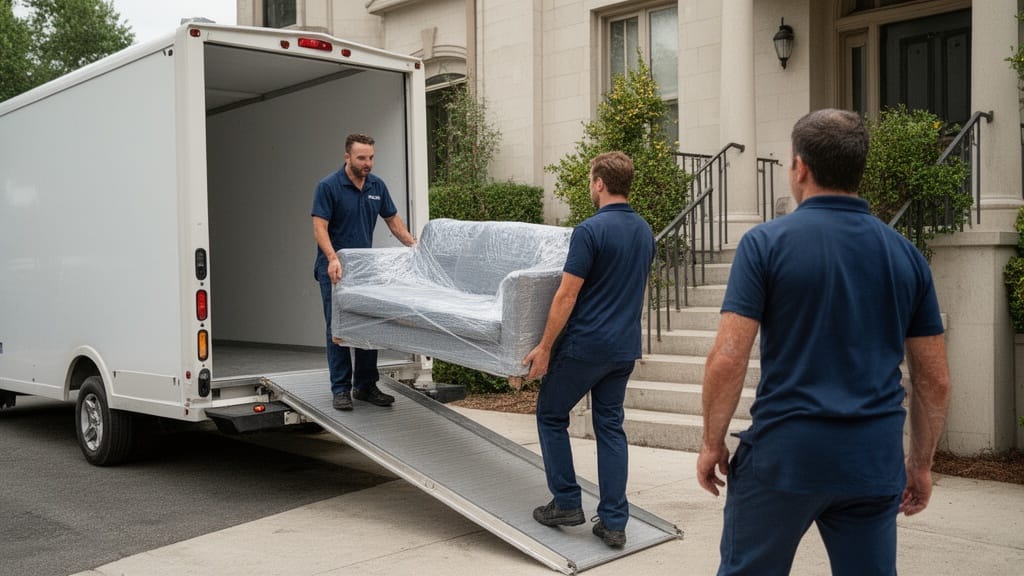
A professional packing service means the crew boxes your fragile dishes, wraps framed art, and labels everything by room. These are the movers who pack for you rather than handing you empty boxes a week early. To see how these tasks are scoped, review how movers with packing services structure their offerings.
Q: Do full-service movers bring their own boxes and supplies?
A: Yes. A full-service package includes boxes, tape, packing paper, bubble wrap, and furniture pads, and the cost of those materials is built into the quote.
Unpacking is the step most often trimmed to save money. Full unpacking means the crew removes items from boxes and places them on surfaces; it rarely means organizing your closets. Clarify the exact endpoint of “unpacking” so expectations match the invoice.
Pro Tip: Request a materials line item. When packing supplies are itemized, you can compare bids accurately and spot a company padding the bill with inflated box counts.
Add-On Services: Storage, Specialty Items, and Assembly

Even an all inclusive moving service has boundaries, and specialty needs usually sit outside the base rate. Understanding these add-ons prevents surprise fees on move day.
Common add-ons include:
- Short- and long-term storage when move-out and move-in dates don’t align
- Specialty item handling for pianos, safes, gym equipment, and artwork
- Crating for chandeliers, marble tops, and high-value fragile pieces
- White glove moving for antiques and luxury goods requiring extra protection and placement
- Appliance disconnect and reconnect for washers, dryers, and refrigerators
White glove moving is the premium tier: meticulous wrapping, custom crating, debris removal, and precise placement of every piece. It is common for high-value or fragile inventories where standard padding isn’t enough.
Specialty items carry the biggest hidden costs. A piano or safe requires extra crew, equipment, and skill—review dedicated tips for moving a piano before assuming it’s covered. The Federal Motor Carrier Safety Administration’s guidance on protecting your move is a useful reference for what interstate movers must disclose about such charges.
How Much a Full-Service Move Costs
The honest answer: full service movers cost more than any other option because you're paying for labor at every stage. According to published moving-cost data, long-distance full-service relocations generally cost considerably more than a full-service local move, with the final price depending on weight and distance.
Several variables move that number up or down:
| Cost factor | How it affects price |
|---|---|
| Home size | More rooms mean more hours and a larger crew. |
| Distance | Long-distance is priced by shipment weight plus mileage. |
| Packing scope | Full packing adds labor and material costs. |
| Specialty items | Pianos, safes, and antiques add flat fees. |
| Access | Stairs, long carries, and elevators add billable time. |
| Timing | Summer and month-end dates cost more due to demand. |
Q: How much does a full-service move cost on average?
A: Local full-service moves typically fall in the low thousands, while long-distance jobs usually cost considerably more, with packing, distance, and home size driving the final figure.
For a deeper breakdown of hourly rates and crew sizes, see this explainer on how much movers cost. Get at least three written estimates before deciding.
Pro Tip: Insist on a binding or not-to-exceed estimate. The FMCSA's rights and responsibilities guidance explains how estimate types affect your final bill—a non-binding quote can legally climb higher on delivery day.
Comparing Full-Service, Self-Service, and DIY Moving
The full service vs self service move decision comes down to how much labor you’re willing to trade for savings. DIY sits at the far end: you rent a truck and do everything yourself.
| Feature | Full-Service | Self-Service | DIY |
|---|---|---|---|
| Packing | Crew packs everything | You pack, movers load | You do all packing |
| Loading & unloading | Movers | Movers | You and helpers |
| Transport | Movers drive | Company hauls container | You drive rental |
| Supplies | Included | You purchase | You purchase |
| Time investment | Lowest | Moderate | Highest |
| Relative cost | Highest | Moderate | Lowest |
| Damage liability | Mover’s valuation coverage | Shared | Entirely yours |
Self-service is the middle ground: you pack a portable container, a company transports it, and you unload. DIY offers the lowest sticker price but the highest personal risk—the Bureau of Labor Statistics notes that manual material handling carries elevated injury rates, a real concern when untrained people lift heavy furniture.
Whichever route you pick, verify the company’s credentials first. The FTC’s guidance on hiring a mover walks through licensing, insurance, and complaint checks that protect you from rogue operators.
Who Should Choose Full-Service Relocation

Full-service isn’t for everyone, but it’s the clear winner for specific situations. It converts a multi-week ordeal into a single directed day.

A full-service move makes the most sense when you:
- Are relocating on a tight timeline with no days to spare for packing
- Own fragile, high-value, or heavy items that need expert handling
- Have physical limitations that make lifting unsafe
- Are managing a corporate or family relocation across a long distance
- Value your time more than the premium you’ll pay for the labor
The reader who should skip it: someone with a small apartment, a flexible schedule, and a tight budget. For that person, self-service or DIY delivers better value. Match the service tier to your actual constraints, not to the marketing.
Related Articles
- How to Hire a Moving Company: Step-by-Step — A practical walkthrough for vetting and booking a reputable crew.
- How Do Moving Companies Charge? Pricing Explained — Understand hourly rates, flat rates, and long-distance weight-based pricing.
- What Is a Flat-Rate Moving Company? — Learn how flat-rate quotes work and when they beat hourly billing.
- Local Moving: What It Covers and How It Works — See how short-distance moves are scoped and priced.
Recommended Reading
- Full service moving company details and features
- Is it worth paying for packing when moving?
- Full service moving company vs DIY truck rentals
- What to look for in a moving company
- Do moving companies provide boxes?
Frequently Asked Questions