'%3E%3Cpath%20fill='%231B2A47'%20d='M1.605%2016.263c.03-1.139.059-2.482.088-3.971.03-1.49.03-2.832.03-4.03%200-.758%200-1.576-.03-2.51%200-.905-.03-1.84-.03-2.803%200-.496-.028-.964-.028-1.43%200-.468%200-.906-.03-1.315h6.858q2.188%200%203.589.35c.963.234%201.663.643%202.13%201.198.496.555.73%201.372.73%202.394%200%20.788-.176%201.46-.497%201.985-.32.526-.846.935-1.575%201.197-.73.292-1.693.468-2.918.526v.263c1.313.087%202.334.263%203.122.525.758.263%201.342.672%201.692%201.197.35.526.525%201.197.525%202.044%200%201.08-.233%201.927-.67%202.57-.468.642-1.139%201.08-2.102%201.343-.933.262-2.159.408-3.705.408H1.605zm6.537-9.197q1.882%200%202.713-.526c.555-.35.817-.934.817-1.752%200-.905-.292-1.547-.846-1.927s-1.459-.554-2.655-.554H4.757v4.759zm.204%206.92c.934%200%201.663-.088%202.217-.263.555-.176.934-.438%201.197-.818s.38-.876.38-1.518c0-.876-.322-1.49-.934-1.84-.643-.35-1.635-.525-3.035-.525H4.757v4.963zM21.038%2016.555c-1.576%200-2.801-.292-3.618-.905-.817-.614-1.284-1.519-1.372-2.745-.087-1.226.205-2.774.847-4.613s1.43-3.358%202.392-4.584c.963-1.226%202.043-2.131%203.298-2.744C23.839.292%2025.24%200%2026.786%200c1.576%200%202.772.321%203.59.934.816.613%201.283%201.548%201.37%202.774s-.203%202.774-.845%204.613c-.642%201.81-1.43%203.358-2.393%204.584s-2.072%202.132-3.297%202.745a9.8%209.8%200%200%201-4.173.905m.788-2.278c.642%200%201.138-.058%201.371-.116.205-.059.496-.117.847-.322.262-.146.437-.292.554-.408.204-.175.32-.292.438-.41.204-.203.35-.408.496-.583.35-.438.642-.876.963-1.402.233-.408.466-.817.67-1.284.205-.438.38-.905.555-1.372.438-1.198.671-2.278.671-3.183s-.204-1.606-.612-2.131c-.409-.497-1.051-.76-1.897-.76-.467%200-.934.059-1.43.205h-.03c-1.02.292-1.925%201.226-2.042%201.372-.116.117-.467.526-.963%201.343a15.5%2015.5%200%200%200-1.342%202.92c-.408%201.197-.642%202.277-.671%203.182-.03.906.175%201.636.584%202.161q.611.788%201.838.788M14.853%2038.54c-1.576%200-2.802-.292-3.619-.905s-1.284-1.518-1.371-2.744c-.088-1.227.204-2.774.846-4.614s1.43-3.357%202.393-4.584%202.042-2.13%203.297-2.744c1.255-.613%202.655-.905%204.173-.905%201.575%200%202.772.321%203.589.934s1.284%201.548%201.371%202.774c.088%201.226-.204%202.774-.846%204.613-.642%201.81-1.43%203.358-2.393%204.584s-2.072%202.131-3.297%202.745c-1.226.613-2.626.846-4.143.846m.787-2.277c.642%200%201.138-.059%201.372-.117.204-.058.496-.117.846-.321.263-.146.438-.292.554-.409.205-.175.321-.292.438-.409.204-.204.35-.408.496-.584a13%2013%200%200%200%201.634-2.686c.204-.438.38-.905.555-1.372.437-1.197.67-2.277.67-3.182%200-.906-.203-1.606-.612-2.132-.409-.496-1.05-.759-1.897-.759-.467%200-.934.058-1.43.204h-.029c-1.021.292-1.925%201.227-2.042%201.373-.117.116-.467.525-.963%201.343a15.5%2015.5%200%200%200-1.342%202.92c-.409%201.196-.642%202.277-.671%203.182s.175%201.635.583%202.16q.613.789%201.838.789'/%3E%3Cpath%20fill='%23FF515E'%20d='M55.966%2038.57c-1.576%200-2.801-.293-3.618-.906s-1.284-1.518-1.372-2.744c-.087-1.227.204-2.774.846-4.613s1.43-3.358%202.393-4.584c.963-1.227%202.043-2.132%203.297-2.745s2.656-.905%204.173-.905c1.576%200%202.772.321%203.589.934s1.284%201.548%201.371%202.774c.088%201.226-.204%202.774-.846%204.613-.642%201.81-1.43%203.358-2.393%204.584s-2.071%202.131-3.297%202.745c-1.225.613-2.626.846-4.143.846m.788-2.249c.642%200%201.138-.058%201.371-.117.204-.058.496-.116.846-.32.263-.147.438-.293.555-.41a7%207%200%200%200%20.437-.408c.205-.205.35-.41.496-.584a13%2013%200%200%200%201.634-2.686c.205-.438.38-.905.555-1.373.438-1.197.671-2.277.671-3.182s-.204-1.606-.613-2.131c-.408-.497-1.05-.76-1.896-.76-.467%200-.934.059-1.43.205h-.03c-1.02.292-1.925%201.226-2.042%201.372-.117.117-.467.526-.963%201.343a15.5%2015.5%200%200%200-1.342%202.92c-.409%201.197-.642%202.277-.671%203.182s.175%201.635.583%202.16q.614.79%201.839.79'/%3E%3Cpath%20fill='%231B2A47'%20d='M33.06%2016.263c0-.35%200-.935.03-1.81.029-1.051.058-2.103.058-3.154s.03-2.073.03-3.007c0-1.606-.03-3.27-.06-4.993%200-.554-.028-1.08-.028-1.606%200-.525-.03-1.021-.03-1.46h6.828c1.46%200%202.685.117%203.59.38q1.4.394%202.1%201.314.7.963.7%202.628c0%20.992-.174%201.81-.554%202.452-.35.643-.904%201.11-1.604%201.431s-1.576.467-2.627.496v.263q2.058.087%203.064.876c.671.525%201.138%201.372%201.43%202.51.087.41.233%201.023.467%201.84.233.818.408%201.431.554%201.84h-3.414a11%2011%200%200%200-.262-1.022c-.321-1.314-.526-2.19-.584-2.628a5%205%200%200%200-.642-1.46%202.13%202.13%200%200%200-.963-.73c-.408-.146-.934-.233-1.605-.233h-3.326v6.0440000000000005H33.06zm6.332-8.292c1.343%200%202.276-.205%202.86-.613.554-.41.846-1.11.846-2.073%200-.73-.146-1.314-.408-1.723-.263-.409-.671-.7-1.197-.876q-.788-.263-2.1-.263h-3.181v5.519h3.18zM49.4%2016.263l.03-2.745c.029-2.452.029-4.905.029-7.416q0-2.101-.088-5.868h4.085l5.924%2010.335c.087.234.204.438.291.643.117.204.205.408.321.613.38.788.613%201.255.672%201.372h.262c0-.058-.03-.146-.03-.204%200-.059-.028-.117-.028-.175a75%2075%200%200%201-.175-1.314%2010%2010%200%200%201-.088-1.285c0-1.547%200-3.737-.029-6.57V1.84c0-.584-.03-1.11-.03-1.576h2.977c-.03%202.482-.058%205.08-.058%207.766%200%201.694%200%204.438.029%208.292h-4.027l-5.573-9.43c-.875-1.81-1.226-2.511-1.05-2.132-.263-.613-.467-1.08-.613-1.46h-.263c.058.35.117.876.175%201.548.059.7.117%201.168.117%201.46%200%202.978%200%206.306.029%209.985H49.4zM4.698%2038.277c.029-2.627.058-5.255.058-7.883%200-1.576%200-3.503-.029-5.752-1.109%200-2.684%200-4.727.03v-2.453h12.664v2.453c-1.955-.03-3.53-.03-4.756-.03%200%20.584-.03%201.227-.03%201.957s0%201.46-.029%202.218v1.84c0%202.57.03%205.11.059%207.62z'/%3E%3Cpath%20fill='%23FF515E'%20d='M29.441%2038.277c.409-1.05.788-2.102%201.168-3.182s.787-2.16%201.167-3.241c.613-1.693%201.05-2.949%201.342-3.766l1.255-3.65c.116-.38.262-.788.379-1.139.117-.38.263-.73.38-1.05h4.61l-.671%2012.904h.262l8.316-12.905h4.669l-.7%201.869c-.876%202.452-1.343%203.766-1.43%204a501%20501%200%200%200-3.385%2010.16h-2.947c.292-.846.788-2.219%201.459-4.087.175-.526.35-1.08.554-1.606.175-.526.38-1.08.555-1.577.642-1.81%201.342-3.825%202.072-6.014h-.234l-8.724%2013.314h-2.86l.554-13.314h-.175c-.175.496-.38.992-.554%201.489-.175.496-.38%201.022-.555%201.547a163%20163%200%200%200-1.08%203.008c-.145.38-.262.759-.408%201.138-.117.38-.262.73-.408%201.11-.7%201.898-1.284%203.59-1.751%205.05h-2.86zM68.047%2038.277c.175-2.19.32-4.525.467-7.007.058-.905.204-3.912.467-9.051h3.151c-.03.438-.058.934-.088%201.46s-.058%201.08-.087%201.693a264%20264%200%200%201-.409%206.657c-.145%201.986-.35%203.591-.583%204.788h.175Q72.147%2034.892%2073.94%2032a562%20562%200%200%201%204.465-7.066c.32-.496.641-.992.933-1.46s.555-.875.817-1.255h3.268q-.568.832-1.138%201.752c-.408.613-.787%201.255-1.196%201.927-3.88%206.014-6.478%2010.131-7.85%2012.35h-5.193zM79.106%2038.277c.32-.788.758-2.014%201.37-3.65a287%20287%200%200%200%201.577-4.32c.437-1.256.904-2.628%201.4-4.088s.934-2.774%201.313-3.97h11.322l-.846%202.364H87.1l-1.664%204.847%207.645-.088-.612%201.694-7.587-.088-1.75%204.934h8.286l-.846%202.365z'/%3E%3C/g%3E%3Cdefs%3E%3CclipPath%20id='a'%3E%3Cpath%20fill='%23fff'%20d='M0%200h96v40H0z'/%3E%3C/clipPath%3E%3C/defs%3E%3C/svg%3E)
How much does it cost to move a baby grand piano? A local baby grand piano move typically runs a noticeable amount to a noticeable amount, and a long-distance move starts around $1,000 — figures drawn from Born to Move's published crew rates and starting interstate pricing. The exact number depends on weight, leg removal, stairs, and distance. This guide breaks down every cost driver, with real dollar examples and a transparent look at how a professional crew quotes the job.
Key Takeaways
| Point | Details |
|---|---|
| Local move range | A local baby grand piano move typically runs a noticeable amount to a noticeable amount, based on Born to Move's $120–$210 per-hour crew rates with a three-hour minimum. |
| Long-distance start | Long-distance piano moves start around $1,000; Born to Move's interstate rates begin at $1,150 for a room or less from Boston to New York City. |
| Crew size drives price | Most baby grand moves need a 3-mover crew at $170/hr; stairs or hoisting push the job to a 4-mover crew at $210/hr. |
| Valuation matters | Interstate movers must offer released-value coverage at $0.60 per pound under FMCSA rules. |
| Get it in writing | Disclose stairs, doorways, and special items upfront for a guaranteed price — see how much movers cost. |
What It Actually Costs to Move a Baby Grand Piano
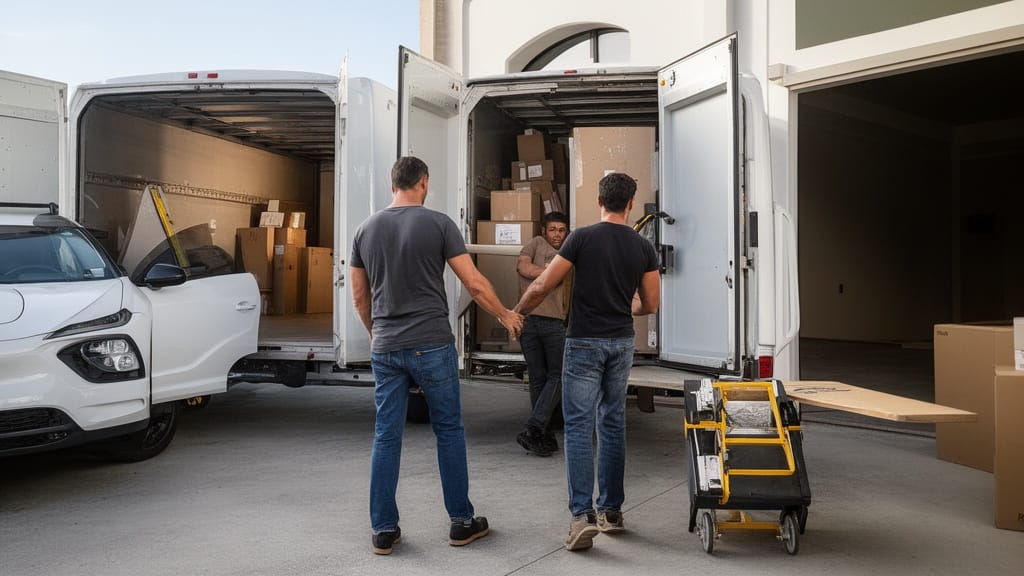
A local baby grand piano move typically runs a noticeable amount to a noticeable amount. That estimate is built directly on Born to Move's published crew rates of $120 to $210 per hour, each with a three-hour minimum that includes travel time. The single biggest variable is how many movers your job demands.
Born to Move publishes three tiered crew rates. Every tier includes the truck, equipment, and travel time:
| Crew Size | Hourly Rate | Best For |
|---|---|---|
| 2 movers + truck | $120/hr | Light uprights, ground-floor flat carries |
| 3 movers + truck | $170/hr | Most baby grand piano moves |
| 4 movers + truck | $210/hr | Stairs, tight access, hoisting, crane work |
A baby grand piano almost always needs a 3-mover crew. Two movers can handle a light upright on a level carry, but a 500-plus-pound grand riding on a piano board needs three sets of hands at minimum. At the $170 hourly rate with the three-hour minimum, that puts the typical baby grand piano moving cost between a noticeable amount and a noticeable amount for a standard local job.
Q: How much does it cost to move a baby grand piano locally?
A: A local move typically runs a noticeable amount to a noticeable amount, based on Born to Move's $120–$210 hourly crew rates with a three-hour minimum that includes travel time.
Here's the thing: the headline rate is only the starting point. Access, distance, and the instrument's weight all move the final number. The next section breaks down each factor.
Key Factors That Determine Your Piano Moving Price
Five variables set your final price: weight, leg removal, building access, distance, and valuation coverage. Understanding each one tells you exactly why one quote beats another — and what you can control before moving day.
When you ask how much to move a piano, a real crew weighs these factors in order:
- Weight and size. A baby grand piano weighs roughly 500 to 650 pounds. More weight means more movers and slower, more careful handling.
- Leg and lyre removal. A grand's legs and pedal lyre must come off and be padded separately, adding setup and reassembly time.
- Building access. Stairs, narrow doorways, tight turns, and elevator reservations each add labor hours.
- Distance. Local jobs bill by the hour; long-distance jobs price by mileage, weight, and volume.
- Valuation coverage. Basic released-value protection is included; full-value protection costs more but covers the instrument's real worth.
Pro Tip: Measure your narrowest doorway and the curved turn at the bottom of your staircase before you call. A baby grand's case is wider than most interior doors, so the crew may need to remove the lid or tilt the case on its skid — knowing the tight spots in advance keeps your guaranteed price accurate.
Disclosing these details upfront is the difference between a clean quote and a surprise charge. Born to Move's guaranteed price protects customers from day-of increases, but only when the crew knows the real conditions. For a primer on prep, review these tips and techniques for moving a piano.
Local vs. Long-Distance Baby Grand Piano Moving Costs
Local and long-distance piano moves are priced two different ways. Local piano moving prices run on an hourly model; long distance piano moving cost is calculated by mileage, weight, and total volume. The table below shows how the two compare for a baby grand.
| Cost Factor | Local Move | Long-Distance Move |
|---|---|---|
| Pricing model | Hourly ($120–$210/hr, 3-hr min) | Mileage + weight + volume |
| Typical starting cost | a noticeable amount–a noticeable amount | From ~$1,000 (Born to Move starts at $1,150 Boston→NYC for a room or less) |
| Crew | Same crew, same day | Same truck, same crew, overnight delivery |
| Delivery window | Same day | Next-day to several days by distance |
| Travel charge | Fixed travel time, no traffic surcharge | Built into the flat quote |
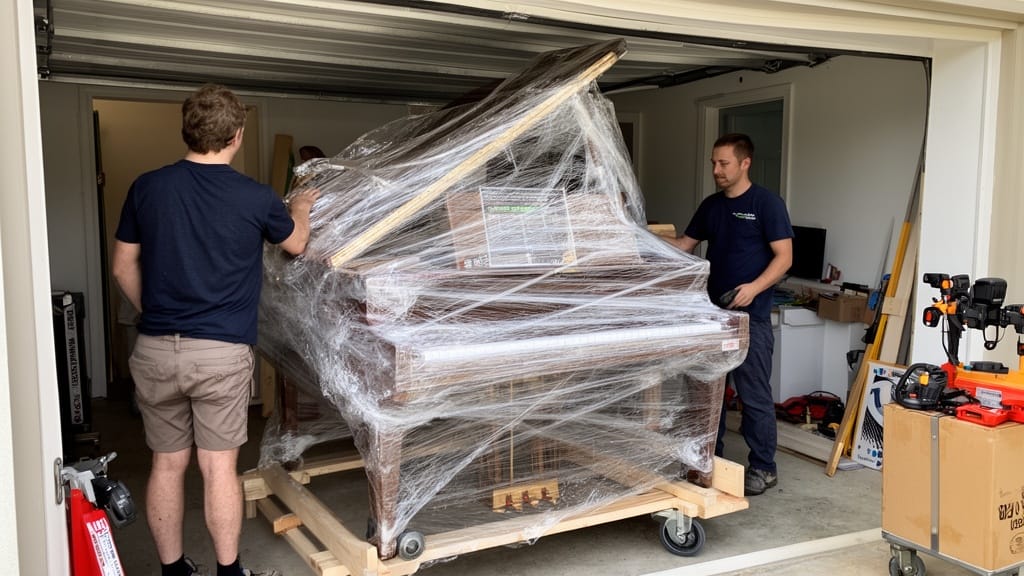
For interstate moves, Born to Move keeps the same truck and the same crew from pickup to delivery and drives overnight to dodge morning traffic. As a fully licensed interstate carrier, FMCSA-regulated drivers can operate up to 11 hours per day, which is what makes fast cross-country grand piano transport cost predictable rather than open-ended.
Q: How is long-distance piano moving priced differently from local?
A: Local moves bill hourly with a three-hour minimum; long-distance moves use a flat quote based on mileage and weight, starting around $1,150 for short interstate routes like Boston to New York.
The key advantage of a single crew on both ends: your baby grand is handled by the same trained movers who wrapped it, not handed off to an unknown delivery team.
Born to Move can help: From a single curved-leg baby grand to a full household relocation, Born to Move delivers a guaranteed price with no surprise charges on moving day. Learn more →
Why Baby Grand Pianos Cost More Than Upright Pianos
A baby grand costs more to move than an upright because of its shape, weight distribution, and the disassembly it requires. An upright piano stands on a flat base and rolls onto a dolly with two movers. A baby grand piano cannot.
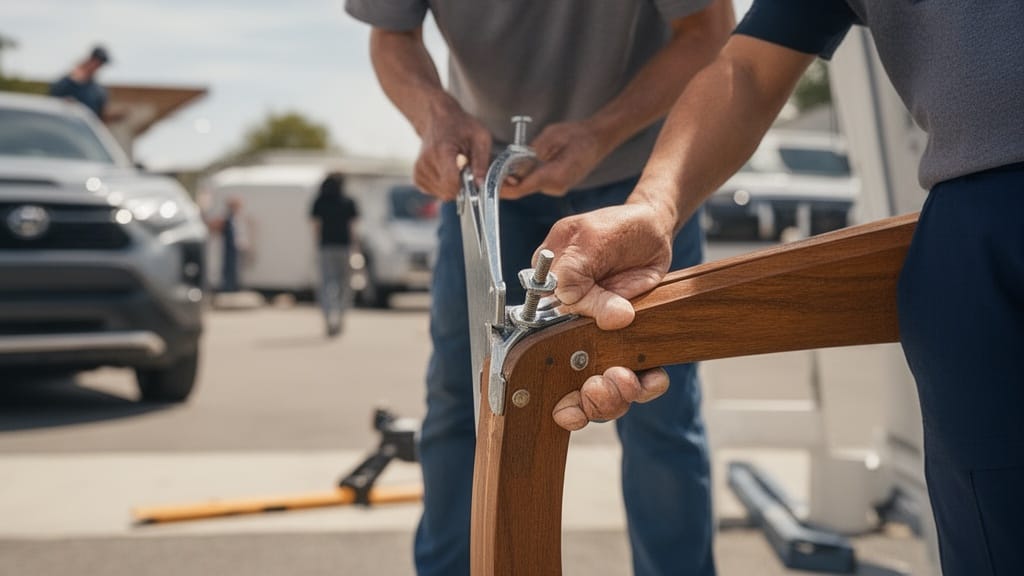
Moving a grand is a multi-step process that a spinet piano or standard upright piano never demands:
- The lid and music rack are secured or removed.
- The pedal lyre is detached and padded.
- The piano is tilted onto a piano skid board (also called a piano board), with the flat side of the case resting against the padded board.
- The curved legs are unbolted while the case is supported on the skid.
- The wrapped instrument is strapped to the skid and rolled onto a four-wheel dolly for transport.
A concert grand pushes this even further, often topping 900 pounds and requiring a four-person crew. That weight-and-disassembly reality is exactly why piano movers cost more for grands: the cost to move a grand piano reflects extra labor hours, specialized equipment, and the risk of handling a fragile, six-figure-capable instrument.
Pro Tip: Never remove a baby grand's legs yourself the night before. The case must be tilted onto the skid board first so the weight transfers safely — taking the legs off while the piano is upright can crack the rim or pull the case apart. Leave disassembly to the crew. For a deeper walkthrough on moving a piano safely, see the dedicated guide.
Stairs, Tight Doorways, and Other Cost Add-Ons
Stairs, narrow doorways, and hoisting are the three add-ons that move a baby grand quote upward. Each one adds labor hours or a larger crew, and the piano moving rates per hour climb accordingly.
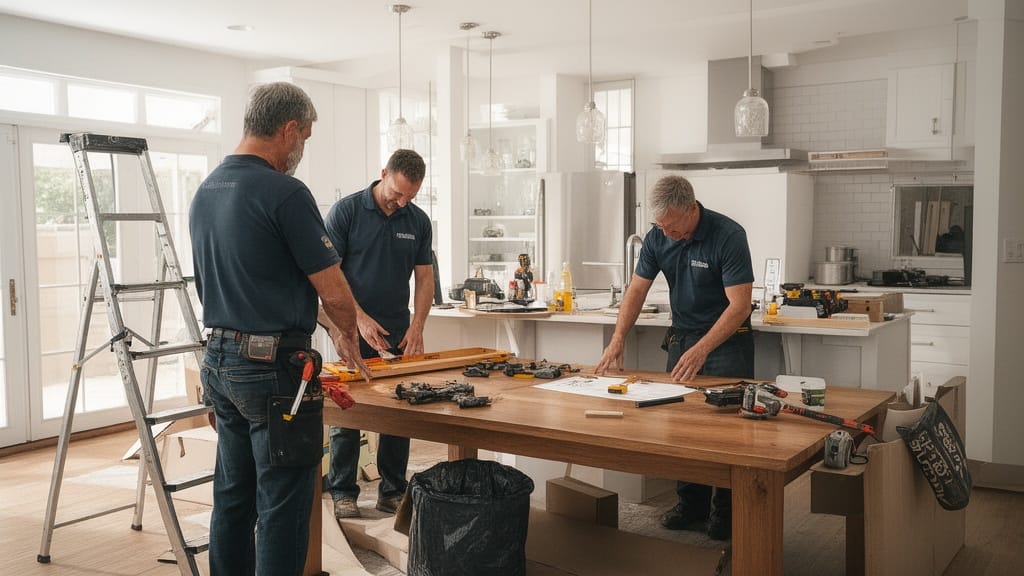
Consider a real scenario: a baby grand on the third floor of a walkup with a 30-inch front door. The case won't clear the door upright, so the crew removes the legs and lyre, then walks the wrapped piano down two flights on the skid board with one mover bracing above and one guiding below. That job needs a fourth mover for safety, which lifts the rate from $170 to $210 per hour under Born to Move's published pricing — and the stairs typically add an hour or more of careful labor.
| Add-On Scenario | Why It Adds Cost | Typical Impact |
|---|---|---|
| Flight of stairs | Slower, braced carry on the skid board | +1 hour or more of labor |
| Narrow doorway | Leg removal, lid removal, tilting | Added setup time |
| Fourth mover needed | Safety on stairs or heavy grand | Rate moves to $210/hr |
| Item won't fit any door | Hand-hoisting or crane through a window/balcony | Crane fee added |
| Overnight storage | Holding the piano between dates | $250 per night, up to 4 nights |
When a piano simply will not fit through any opening, Born to Move performs hand-hoisting and crane services, bringing the instrument in through a window or balcony. That's specialized work most general movers won't touch.
Try Born to Move's hoisting and crane service: When a baby grand won't clear the door, Born to Move's movers bring it in through the window or balcony — no scratched walls, no improvised rigging. Get started →
Inside the Price: What Professional Piano Movers Cover
A professional piano move includes the truck, the trained crew, the protective equipment, and valuation coverage. With specialty piano movers, you are paying for risk reduction, not just transport. Here's what's bundled into the rate.
Born to Move's piano-handling kit is purpose-built for grands:
- Quilted moving blankets that fully wrap the case, lid, and legs.
- A piano board (piano skid board) that bears the case weight during the tilt and carry.
- Heavy-duty straps that lock the wrapped instrument to the skid and dolly.
- A four-wheel piano dolly for stable rolling over flat ground and into the truck.
Valuation coverage is the part customers overlook. As a fully licensed and insured interstate carrier, Born to Move provides released-value protection, the federal baseline that pays $0.60 per pound per article under FMCSA rules. For a high-value instrument, ask about upgrading this binding/valuation coverage to full-value protection so a claim reflects the piano's actual worth, not just its weight.
Pro Tip: Photograph your baby grand from four angles the day before the move, including the soundboard and any existing scratches. Time-stamped photos give you and the crew a clear before-and-after record, which makes any valuation claim faster and removes ambiguity about pre-existing wear.
How to Get an Accurate Piano Moving Quote
The most accurate piano quote comes from disclosing every detail before booking. Born to Move's online calculator and follow-up call turn those details into a guaranteed price with no surprise charges. The process takes minutes.
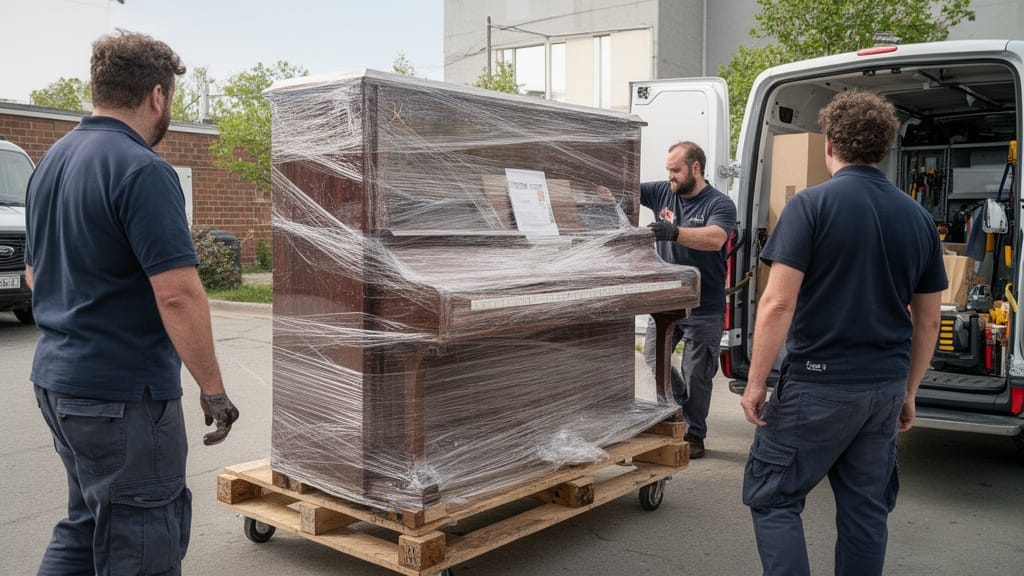
To get a precise quote, share these specifics:
- Piano type and size — baby grand, upright piano, spinet piano, or concert grand.
- Pickup and destination addresses with floor numbers.
- Access details — stairs, doorway widths, elevator availability, and parking.
- Special needs — hoisting, crane, overnight storage, or long-distance delivery dates.
Enter your move date, origin, destination, service type, and extras into the online calculator, and the team follows up by phone with a final price. Because Born to Move charges fixed travel time and does not bill for traffic, the quote you approve is the quote you pay. To benchmark a piano move against a standard relocation, compare it with how much movers cost for general hourly work.
Born to Move's Transparent Piano Moving Pricing
Born to Move prices baby grand piano moves on the same transparent, tiered model it uses for every job: a clear hourly rate for local moves, a flat mileage-and-weight quote for long distance, and a guaranteed price that holds on moving day. No padded fees, no vague "it depends" answers.
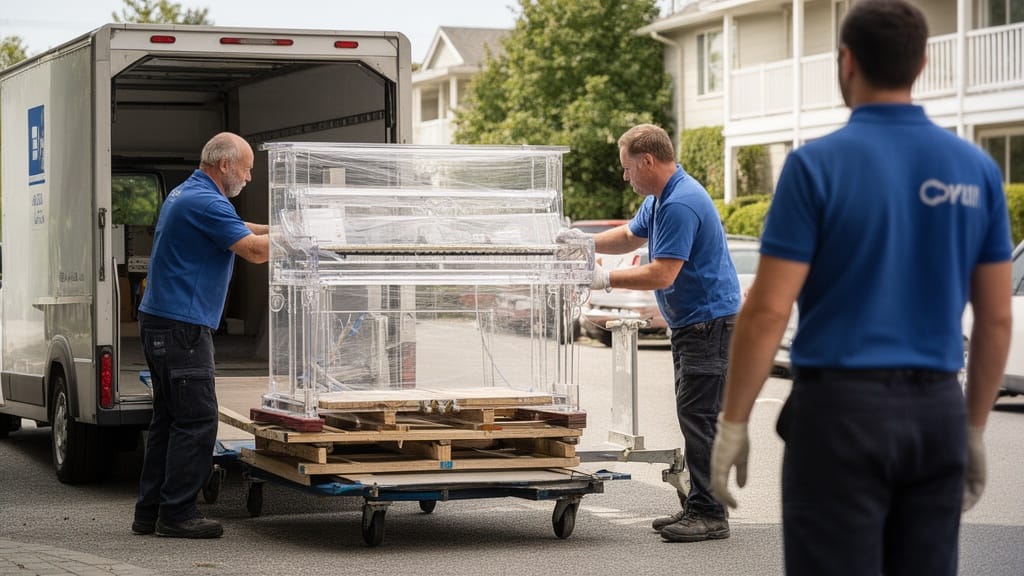
Based in Newton, MA, the crew serves Boston, Cambridge, Brookline, Waltham, and nearby areas for local grand piano moves, and operates as a fully licensed and insured interstate mover for cross-country routes. Whether it's a one-flight carry in Brookline or a same-truck, same-crew haul to New York, the piano is wrapped, skidded, and strapped by movers who handle grands regularly — and hoisted through a window when the door won't cooperate.
Ready to lock in a guaranteed baby grand piano moving cost with no surprises? Request a quote and get a firm price before the truck ever rolls.
Get Your Free Piano Moving Quote →
Related Articles
- Two Movers and a Truck: Is a 2-Person Crew Enough? — Learn when a 2-person crew works and when a piano demands more hands.
- Born to Move Movers: Services and What Sets Us Apart — See the full range of specialty services, including piano and oversized-item handling.
- What's Included in Our All-Inclusive Hourly Moving Rates (No Hidden Fees) — Understand exactly what the hourly rate covers and why there are no surprise charges.
- Moving Trends: What to Expect and How to Plan — Get ahead of pricing and scheduling shifts before you book your move.
Recommended Reading
- Tips and Techniques for Moving a Piano
- Seamless Piano Moving: Your Instrument in Safe Hands
- How Much Do Movers Cost?
- How to Professionally Crate Things
- What Is a Good Tip for Movers?
Frequently Asked Questions