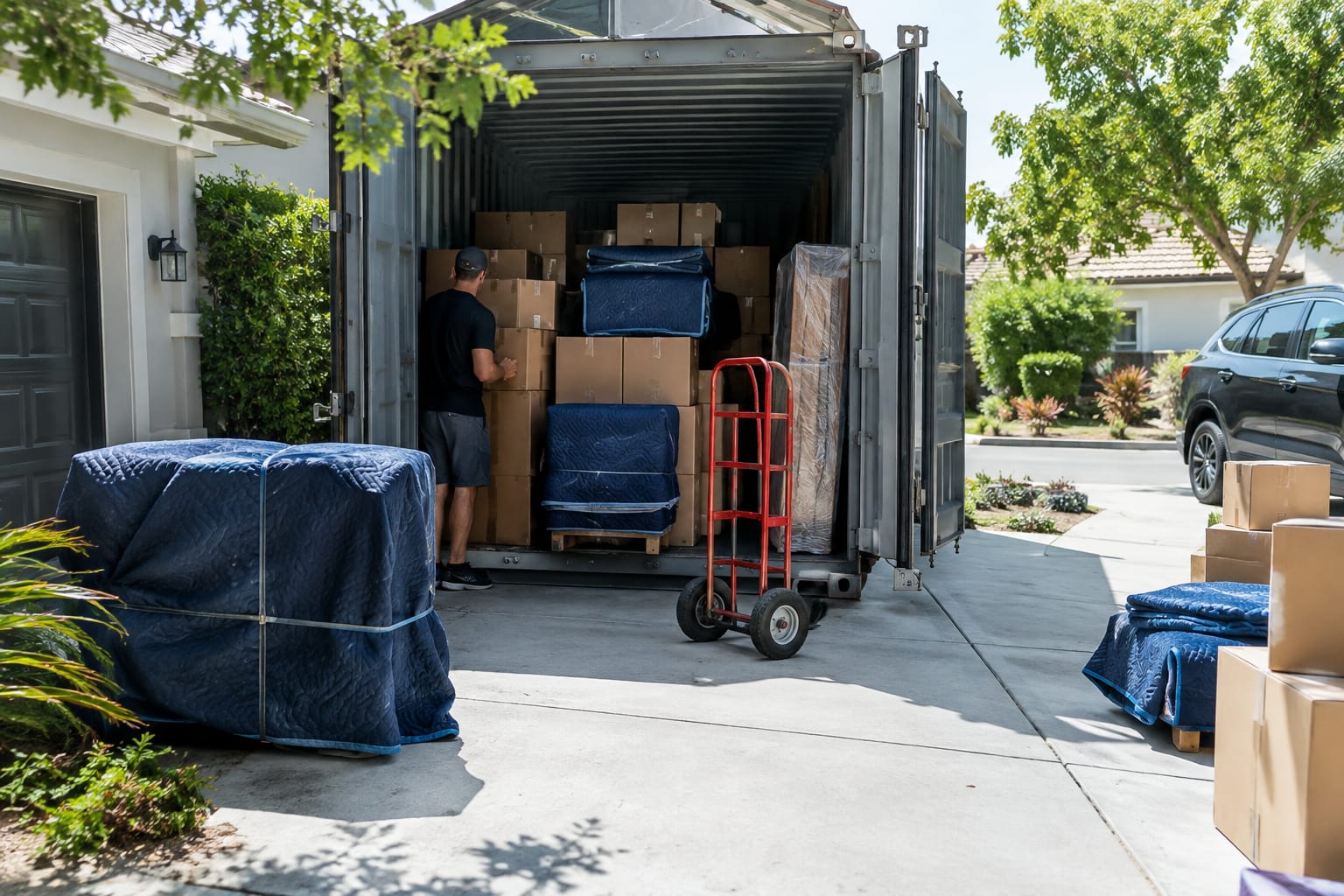
A residential moving company is a licensed carrier that moves household goods from one home to another using its own crew, truck and equipment. Most residential movers bill local moves by the hour with a minimum. Long-distance moves are usually quoted as an estimate built from your inventory. Services range from loading only to full packing and storage.
That definition leaves out most of what drives your final bill. Crew size, travel time, packing supplies, valuation coverage and the type of estimate you sign all change the number. This guide covers what residential moving services include, how pricing works, and how to verify a mover before anyone touches your furniture.

Key Takeaways
- Two pricing models. Local moves are usually billed hourly with a minimum that includes travel time. Long-distance moves are usually quoted as a flat rate built from a confirmed inventory and route.
- Supplies are billed separately. Boxes, tape, shrink wrap and mattress bags are typically separate line items from packing labor, so compare quotes on both.
- Basic protection is not insurance. Released value protection pays by weight, not by value. Full Value Protection is optional and costs extra.
- Verify before you book. Check the USDOT number on FMCSA’s SAFER Company Snapshot, confirm state registration, and insist on a written estimate based on your inventory.
- Compare totals, not rates. A bigger crew costs more per hour but can finish in fewer hours. Ask for an hours estimate at two crew sizes and compare the totals.
What a Residential Moving Company Does (and What It Won't Move)
A residential moving company relocates households, from studio apartments to single-family homes. The core job has four parts: protecting, loading, transporting and unloading your furniture and boxes. Full service residential movers add packing, unpacking, furniture disassembly and storage on top of that.
The equipment and prep work are part of what you pay for. A typical crew arrives with moving blankets, dollies, straps and floor protection. It also takes apart beds and tables that won't fit through a doorway. Apartment movers in dense neighborhoods also have to plan around elevators, walk-ups and curbside parking, and all of these affect how long the job takes.
What a home moving company won't take matters just as much. Expect movers to refuse hazardous materials such as propane, paint and ammunition, and perishable food. Keep pets, cash, jewelry, medication and important documents with you, and leave live plants off any interstate truck.
One more limit: moving crews don't disconnect gas, water or electrical lines for appliances. Schedule a licensed technician for that work before moving day.
Residential Moving Services: Packing, Loading, Storage and Specialty Items
Most residential moving services come in layers, and you pay only for the layers you choose:
- Loading and unloading only. Useful when you've already rented a truck or portable container and need trained hands and proper padding.
- Packing and unpacking. Movers offer full or partial packing services, from one room of fragile items to the whole house.
- Transport. The crew drives the truck, so you skip the rental pickup, fuel stops and the job of parking a large vehicle.
- Storage. Useful when closing dates don't line up and you need short- and long-term storage between homes.
- Specialty items. Pianos, pool tables, safes, artwork and oversized mirrors may need extra crew, special equipment or crating.
If you're considering the top tier, ask exactly what full-service moving includes.
Packing usually carries two separate charges: the labor and the materials. Boxes, tape, shrink wrap and mattress bags typically show up as their own line items, so ask for both before you compare quotes. This guide on whether moving companies provide boxes explains how supplies are usually handled.

For storage, ask three questions. Is each item numbered on an inventory sheet? Does furniture stay wrapped while it's stored? How are access visits and redelivery scheduled? The answers tell you more than the monthly rate does.
Raise specialty items early in the quote. A piano needs a crew that knows how to protect its legs, pedals and keys. A slate pool table usually comes apart in sections, so read up on what moving a pool table between homes involves before you add it to your inventory.
How Residential Movers Price a Move: Hourly vs Flat Rate
Local moves are usually priced by the hour with a minimum. Long-distance moves are usually priced as a flat rate based on your inventory and route. With hourly moving rates, you pay for crew time plus the truck. A flat rate sets the price up front based on what you're moving, how far it's going, and how difficult access is at each end.
Hourly pricing rewards preparation. Every box you pack before the crew arrives and every hallway you clear takes time off the clock. For a broader look at how much local movers cost, that guide walks through the factors behind local rates.
For instance, Born to Move publishes its current hourly rates by crew size: from $160 per hour for 2 movers and a truck, from $240 per hour for 3 movers, and from $320 per hour for 4 movers. Each rate has a 3-hour minimum that includes travel time. Seasonal rates apply, so confirm the current rate when you get a quote.
Here's an illustrative example of the math. A two-mover crew working 4 hours, travel included, is priced from the $160 starting rate. That total excludes packing supplies and extra coverage. Card payments add 3% on top.
Q: Is travel time included in a moving company's hourly rate?
A: Usually it's billed, not free. A common structure, including the one in the example above, bills travel at the same hourly rate and counts it toward the 3-hour minimum. Ask where the clock starts and where it stops.
What's Included in the Rate and What Costs Extra
The table below uses those published terms as a reference to show how a local hourly move breaks down. Check every quote you receive against the same list.
| Item | How it's handled on a local hourly move |
|---|---|
| Crew labor, truck, fuel and tolls | Included in the hourly rate |
| Moving blankets and floor protection | Included |
| Basic furniture disassembly and reassembly | Included |
| Basic released-value protection | Included at the basic level (explained below) |
| Travel time | Billed at the same hourly rate; counts toward the 3-hour minimum |
| Packing labor | Billed hourly at the same crew rate |
| Packing supplies: boxes, tape, shrink wrap, mattress bags | Always charged separately |
| Extra valuation coverage | Optional, costs extra |
| Card payments | Processing fee added (see the example above) |
| Truck parking or city parking permit | Arranged by the customer |
| Stairs, elevators, long carries | Add time on an hourly move; confirm how a flat-rate quote prices them |
Parking is often overlooked by Boston-area households. The customer arranges truck parking or a city permit, and this guide on where to park a moving truck in Boston explains the process. If your lease ends around the city's busiest turnover date, read about moving in Boston on September 1 before you book.
How to Get an Accurate Moving Quote
An accurate moving quote starts with a complete inventory and honest access details. The mover should review both through a video walk-through, an in-home survey or a detailed online form. A price given over the phone without seeing your inventory is a guess, not an estimate.

Give the estimator these details:
- A room-by-room inventory, including closets, basement, attic and garage.
- Large or heavy items such as sectional sofas, armoires, safes, pianos and treadmills.
- Access at both addresses: floor number, stairs, elevator, and the distance from the truck to the door.
- Parking: driveway, street, loading zone, or whether a permit is required.
- What you'll pack yourself and what you want the crew to pack.
- Items going to storage, to donation or to a second address.
Get every quote in writing, and compare quotes built on the same inventory. A quote far below the others usually reflects a smaller inventory, a smaller crew or fewer services, not a better deal. When you're ready, request a quote based on your inventory so the number matches your actual home.
Long-distance pricing adds more variables. This explainer on how interstate movers determine the cost of a move covers the main cost factors.
Crew Size: When a Two-Mover Team Is Enough
A two-mover crew can handle most studios and one-bedroom apartments with standard access. Larger homes, walk-ups and heavy furniture usually call for three or four movers. Searches for a "two men moving company" are usually looking for exactly this setup: two movers and a truck.
A bigger crew costs more per hour but can finish in fewer hours. Whether that comes out cheaper depends on the job. Long carries, several flights of stairs and bulky pieces that take three people to lift favor a bigger crew. A compact ground-floor apartment rarely does.
Ask the estimator for an hours estimate at two crew sizes, then compare the totals instead of the hourly rates. A good sign: the mover recommends a crew size based on your inventory instead of defaulting to the largest crew.
Time limits at the building matter too. If your building limits elevator time, a larger crew helps you finish within the reserved window. This guide on how to reserve the elevator covers what to arrange with building management.
Local vs Long-Distance Residential Moves
A local move stays within one metro area and is usually billed hourly. A long-distance move is usually quoted as a flat rate.
The paperwork and your rights change once a move crosses state lines. Long-distance and interstate moving typically starts with a confirmed inventory and a written estimate before booking. Confirm the current rules on moving estimates with the FMCSA before you book.
Two documents carry the most weight. The order for service lists the services and dates you agreed to. Read the bill of lading before you sign at pickup.
This primer on what to know about interstate moving adds planning steps.
When you compare flat rate long distance movers, confirm three things. The quote should cover labor, truck, fuel, tolls and mileage. It should be based on a confirmed inventory. And the delivery window should be agreed in writing before you book.
Basic Protection vs Extra Coverage: What Released Value Means
It is not insurance, and it pays by weight rather than by value. The federal consumer booklet text in 49 CFR Part 375, Appendix A describes how this works.
Full Value Protection is the higher level. It is optional and costs extra.
Third-party moving insurance and your homeowners or renters policy are separate products. Ask your insurer before the move what, if anything, applies to goods in transit.
Q: Is released value protection the same as moving insurance?
A: No. Full Value Protection is an optional upgrade at extra cost, and actual insurance comes from a separate insurer.
Inspect your belongings at delivery and write any visible damage on the inventory or delivery receipt before you sign.
More about the service: International Moving Services Greater Boston
How to Verify a Residential Moving Company Before You Book
Verification takes little time and prevents many costly surprises. Search results for "house movers near me" mix real carriers with brokers and directories, so verify the company that will actually do your move.
- Look up the mover's USDOT number on FMCSA's SAFER Company Snapshot. The legal name and address should match the quote.
- For interstate moves, confirm the mover has active operating authority (an MC number) for household goods.
- For moves within Massachusetts, confirm the current licensing requirements with the relevant state authority.
- Confirm the company's insurance. Many buildings require a certificate of insurance before the crew can use the elevator or loading dock.
- Get a written estimate based on your inventory, not a verbal number.
- Read reviews on independent platforms, and look at how the company responds to complaints.
This walkthrough shows how to check a mover's US DOT number step by step. For reference, Born to Move lists USDOT 2887241, MC 985934 and Massachusetts DPU 31826. Licensed and insured movers share these numbers readily, and you can verify each one yourself.
Q: How do I check a moving company's USDOT number?
A: Enter the number or company name in FMCSA's SAFER Company Snapshot. Confirm that the status is active and that the legal name and address match your quote.

Moving Company Red Flags
FMCSA publishes a list of warning signs of a rogue mover. Several of them show up early in the process:
- No on-site or video survey, only a phone price.
- A large deposit demanded before the move, or cash-only payment.
- An estimate far below every other quote.
- No local address, no license information, or a website with no company name.
- Pressure to sign blank or incomplete paperwork.
This guide to common moving scams and how to spot them explains how each one plays out and what to do instead.
What Happens on Moving Day, Step by Step
A well-run moving day follows a predictable order. Knowing the steps helps you spot problems early and keeps an hourly bill under control.
- Arrival and walk-through. The crew arrives within the agreed time window and walks the home with you. Together you confirm what goes, what stays and what's fragile.
- Protection. The crew lays floor runners and pads door frames along the path to the truck.
- Disassembly and wrapping. Beds, tables and similar pieces come apart. Furniture is padded with blankets and shrink-wrapped where needed.
- Paperwork (interstate moves). You review the inventory and sign the bill of lading before the truck leaves.
- Loading. Heavy furniture goes against the truck's front wall, boxes stack in tiers, and straps secure each section.
- Transport. The crew drives the planned route to your new home.
- Unloading and setup. Furniture goes to the rooms you specify and is reassembled.
- Final check and payment. You walk through both homes, note any damage on the paperwork, and settle the bill.

Route planning matters in Greater Boston. Low bridges on Storrow Drive are a well-known hazard for tall trucks. These tips on how not to get Storrowed explain why crews plan routes around the parkways.
Your own preparation shortens the day. Empty drawers, pack and seal boxes, and follow this guide on how to prepare furniture for relocation. If you plan to tip the crew, this guide on what a good tip for movers looks like covers common practice.
Hiring Movers vs Renting a Truck: Which Fits Your Move
Renting a truck fits small moves when you have reliable helpers and are comfortable driving a large vehicle. Hiring movers fits larger homes, walk-ups, heavy furniture and tight schedules. A hybrid option sits in between: you rent a truck or container and hire a crew just for loading.
| Option | Who packs and loads | Who drives | Fits |
|---|---|---|---|
| DIY truck rental (U-Haul, Penske, Budget) | You | You | Small moves with reliable helpers |
| Portable container (PODS and similar) | You, unless you hire loading help | The container company | Flexible timing or storage needs |
| Hybrid: rental plus loading labor | A hired crew loads; you may pack | You | Moves with heavy furniture on a tighter budget |
| Full-service movers | The crew, with optional packing | The mover | Larger homes, walk-ups, tight timelines |
A DIY move costs more than the rental itself. Budget for mileage, fuel, damage protection, dolly and pad rentals, parking, and your own time. Rental brands publish current rates on their own sites, and those rates change with date, location and distance. Price the full rental, not just the advertised daily rate.
This comparison of full-service movers vs a DIY truck rental goes deeper into the trade-offs. Next, price both options using the same inventory and the same date, then compare the full totals.
Choosing a Residential Moving Company: The Short Checklist
Five checks cover most of the decision. Verify the mover's USDOT and state numbers. Get a written estimate based on your inventory. Compare what's included against what's billed separately. Choose your valuation level on purpose. Then match the crew size to your home and its access.
If you're comparing local residential movers in Boston, Born to Move is a licensed and insured moving company headquartered in Newton, MA. It builds hourly and flat-rate estimates from a review of your inventory and access conditions.
Do residential movers charge extra for stairs?
On an hourly move, stairs usually aren't a separate line item, but they add time, and time is what you pay for. On a flat-rate quote, stairs, elevators and long carries are typically built into the estimate. List them during the quote so they aren't a surprise on moving day.
Do I have to pay a deposit to book a residential move?
Policies vary by mover and location. Some movers reserve dates with no deposit, while others take a small one. The safer pattern is a modest deposit or none, paired with a written estimate.
Written by Born to Move Team
Useful Links
- Born to Move Moving Prices — hourly crew rates, minimums and booking conditions
- Get a Moving Quote — submit your inventory for a written estimate
- How to Find a Reputable Moving Company — vetting steps before you book
- What to Look for in a Moving Company — the qualities that separate solid movers from risky ones
- How Much Do Movers Cost — the factors that shape a moving bill
Need help with this? International Moving Services Greater Boston · Get a quote · Call (617) 903-2609
Frequently Asked Questions