'%3E%3Cpath%20fill='%231B2A47'%20d='M1.605%2016.263c.03-1.139.059-2.482.088-3.971.03-1.49.03-2.832.03-4.03%200-.758%200-1.576-.03-2.51%200-.905-.03-1.84-.03-2.803%200-.496-.028-.964-.028-1.43%200-.468%200-.906-.03-1.315h6.858q2.188%200%203.589.35c.963.234%201.663.643%202.13%201.198.496.555.73%201.372.73%202.394%200%20.788-.176%201.46-.497%201.985-.32.526-.846.935-1.575%201.197-.73.292-1.693.468-2.918.526v.263c1.313.087%202.334.263%203.122.525.758.263%201.342.672%201.692%201.197.35.526.525%201.197.525%202.044%200%201.08-.233%201.927-.67%202.57-.468.642-1.139%201.08-2.102%201.343-.933.262-2.159.408-3.705.408H1.605zm6.537-9.197q1.882%200%202.713-.526c.555-.35.817-.934.817-1.752%200-.905-.292-1.547-.846-1.927s-1.459-.554-2.655-.554H4.757v4.759zm.204%206.92c.934%200%201.663-.088%202.217-.263.555-.176.934-.438%201.197-.818s.38-.876.38-1.518c0-.876-.322-1.49-.934-1.84-.643-.35-1.635-.525-3.035-.525H4.757v4.963zM21.038%2016.555c-1.576%200-2.801-.292-3.618-.905-.817-.614-1.284-1.519-1.372-2.745-.087-1.226.205-2.774.847-4.613s1.43-3.358%202.392-4.584c.963-1.226%202.043-2.131%203.298-2.744C23.839.292%2025.24%200%2026.786%200c1.576%200%202.772.321%203.59.934.816.613%201.283%201.548%201.37%202.774s-.203%202.774-.845%204.613c-.642%201.81-1.43%203.358-2.393%204.584s-2.072%202.132-3.297%202.745a9.8%209.8%200%200%201-4.173.905m.788-2.278c.642%200%201.138-.058%201.371-.116.205-.059.496-.117.847-.322.262-.146.437-.292.554-.408.204-.175.32-.292.438-.41.204-.203.35-.408.496-.583.35-.438.642-.876.963-1.402.233-.408.466-.817.67-1.284.205-.438.38-.905.555-1.372.438-1.198.671-2.278.671-3.183s-.204-1.606-.612-2.131c-.409-.497-1.051-.76-1.897-.76-.467%200-.934.059-1.43.205h-.03c-1.02.292-1.925%201.226-2.042%201.372-.116.117-.467.526-.963%201.343a15.5%2015.5%200%200%200-1.342%202.92c-.408%201.197-.642%202.277-.671%203.182-.03.906.175%201.636.584%202.161q.611.788%201.838.788M14.853%2038.54c-1.576%200-2.802-.292-3.619-.905s-1.284-1.518-1.371-2.744c-.088-1.227.204-2.774.846-4.614s1.43-3.357%202.393-4.584%202.042-2.13%203.297-2.744c1.255-.613%202.655-.905%204.173-.905%201.575%200%202.772.321%203.589.934s1.284%201.548%201.371%202.774c.088%201.226-.204%202.774-.846%204.613-.642%201.81-1.43%203.358-2.393%204.584s-2.072%202.131-3.297%202.745c-1.226.613-2.626.846-4.143.846m.787-2.277c.642%200%201.138-.059%201.372-.117.204-.058.496-.117.846-.321.263-.146.438-.292.554-.409.205-.175.321-.292.438-.409.204-.204.35-.408.496-.584a13%2013%200%200%200%201.634-2.686c.204-.438.38-.905.555-1.372.437-1.197.67-2.277.67-3.182%200-.906-.203-1.606-.612-2.132-.409-.496-1.05-.759-1.897-.759-.467%200-.934.058-1.43.204h-.029c-1.021.292-1.925%201.227-2.042%201.373-.117.116-.467.525-.963%201.343a15.5%2015.5%200%200%200-1.342%202.92c-.409%201.196-.642%202.277-.671%203.182s.175%201.635.583%202.16q.613.789%201.838.789'/%3E%3Cpath%20fill='%23FF515E'%20d='M55.966%2038.57c-1.576%200-2.801-.293-3.618-.906s-1.284-1.518-1.372-2.744c-.087-1.227.204-2.774.846-4.613s1.43-3.358%202.393-4.584c.963-1.227%202.043-2.132%203.297-2.745s2.656-.905%204.173-.905c1.576%200%202.772.321%203.589.934s1.284%201.548%201.371%202.774c.088%201.226-.204%202.774-.846%204.613-.642%201.81-1.43%203.358-2.393%204.584s-2.071%202.131-3.297%202.745c-1.225.613-2.626.846-4.143.846m.788-2.249c.642%200%201.138-.058%201.371-.117.204-.058.496-.116.846-.32.263-.147.438-.293.555-.41a7%207%200%200%200%20.437-.408c.205-.205.35-.41.496-.584a13%2013%200%200%200%201.634-2.686c.205-.438.38-.905.555-1.373.438-1.197.671-2.277.671-3.182s-.204-1.606-.613-2.131c-.408-.497-1.05-.76-1.896-.76-.467%200-.934.059-1.43.205h-.03c-1.02.292-1.925%201.226-2.042%201.372-.117.117-.467.526-.963%201.343a15.5%2015.5%200%200%200-1.342%202.92c-.409%201.197-.642%202.277-.671%203.182s.175%201.635.583%202.16q.614.79%201.839.79'/%3E%3Cpath%20fill='%231B2A47'%20d='M33.06%2016.263c0-.35%200-.935.03-1.81.029-1.051.058-2.103.058-3.154s.03-2.073.03-3.007c0-1.606-.03-3.27-.06-4.993%200-.554-.028-1.08-.028-1.606%200-.525-.03-1.021-.03-1.46h6.828c1.46%200%202.685.117%203.59.38q1.4.394%202.1%201.314.7.963.7%202.628c0%20.992-.174%201.81-.554%202.452-.35.643-.904%201.11-1.604%201.431s-1.576.467-2.627.496v.263q2.058.087%203.064.876c.671.525%201.138%201.372%201.43%202.51.087.41.233%201.023.467%201.84.233.818.408%201.431.554%201.84h-3.414a11%2011%200%200%200-.262-1.022c-.321-1.314-.526-2.19-.584-2.628a5%205%200%200%200-.642-1.46%202.13%202.13%200%200%200-.963-.73c-.408-.146-.934-.233-1.605-.233h-3.326v6.0440000000000005H33.06zm6.332-8.292c1.343%200%202.276-.205%202.86-.613.554-.41.846-1.11.846-2.073%200-.73-.146-1.314-.408-1.723-.263-.409-.671-.7-1.197-.876q-.788-.263-2.1-.263h-3.181v5.519h3.18zM49.4%2016.263l.03-2.745c.029-2.452.029-4.905.029-7.416q0-2.101-.088-5.868h4.085l5.924%2010.335c.087.234.204.438.291.643.117.204.205.408.321.613.38.788.613%201.255.672%201.372h.262c0-.058-.03-.146-.03-.204%200-.059-.028-.117-.028-.175a75%2075%200%200%201-.175-1.314%2010%2010%200%200%201-.088-1.285c0-1.547%200-3.737-.029-6.57V1.84c0-.584-.03-1.11-.03-1.576h2.977c-.03%202.482-.058%205.08-.058%207.766%200%201.694%200%204.438.029%208.292h-4.027l-5.573-9.43c-.875-1.81-1.226-2.511-1.05-2.132-.263-.613-.467-1.08-.613-1.46h-.263c.058.35.117.876.175%201.548.059.7.117%201.168.117%201.46%200%202.978%200%206.306.029%209.985H49.4zM4.698%2038.277c.029-2.627.058-5.255.058-7.883%200-1.576%200-3.503-.029-5.752-1.109%200-2.684%200-4.727.03v-2.453h12.664v2.453c-1.955-.03-3.53-.03-4.756-.03%200%20.584-.03%201.227-.03%201.957s0%201.46-.029%202.218v1.84c0%202.57.03%205.11.059%207.62z'/%3E%3Cpath%20fill='%23FF515E'%20d='M29.441%2038.277c.409-1.05.788-2.102%201.168-3.182s.787-2.16%201.167-3.241c.613-1.693%201.05-2.949%201.342-3.766l1.255-3.65c.116-.38.262-.788.379-1.139.117-.38.263-.73.38-1.05h4.61l-.671%2012.904h.262l8.316-12.905h4.669l-.7%201.869c-.876%202.452-1.343%203.766-1.43%204a501%20501%200%200%200-3.385%2010.16h-2.947c.292-.846.788-2.219%201.459-4.087.175-.526.35-1.08.554-1.606.175-.526.38-1.08.555-1.577.642-1.81%201.342-3.825%202.072-6.014h-.234l-8.724%2013.314h-2.86l.554-13.314h-.175c-.175.496-.38.992-.554%201.489-.175.496-.38%201.022-.555%201.547a163%20163%200%200%200-1.08%203.008c-.145.38-.262.759-.408%201.138-.117.38-.262.73-.408%201.11-.7%201.898-1.284%203.59-1.751%205.05h-2.86zM68.047%2038.277c.175-2.19.32-4.525.467-7.007.058-.905.204-3.912.467-9.051h3.151c-.03.438-.058.934-.088%201.46s-.058%201.08-.087%201.693a264%20264%200%200%201-.409%206.657c-.145%201.986-.35%203.591-.583%204.788h.175Q72.147%2034.892%2073.94%2032a562%20562%200%200%201%204.465-7.066c.32-.496.641-.992.933-1.46s.555-.875.817-1.255h3.268q-.568.832-1.138%201.752c-.408.613-.787%201.255-1.196%201.927-3.88%206.014-6.478%2010.131-7.85%2012.35h-5.193zM79.106%2038.277c.32-.788.758-2.014%201.37-3.65a287%20287%200%200%200%201.577-4.32c.437-1.256.904-2.628%201.4-4.088s.934-2.774%201.313-3.97h11.322l-.846%202.364H87.1l-1.664%204.847%207.645-.088-.612%201.694-7.587-.088-1.75%204.934h8.286l-.846%202.365z'/%3E%3C/g%3E%3Cdefs%3E%3CclipPath%20id='a'%3E%3Cpath%20fill='%23fff'%20d='M0%200h96v40H0z'/%3E%3C/clipPath%3E%3C/defs%3E%3C/svg%3E)
A moving quotation is a moving company's written estimate of what your relocation will cost, calculated from shipment weight or volume, distance, labor hours, and any specialty services. A trustworthy quote breaks every charge into line items so you can compare companies side by side and avoid surprises on moving day.
Most disputes between customers and movers begin with a misread estimate. This guide decodes the three estimate types, shows how movers build your number, and explains how to quote tricky items like a TV, treadmill, or piano — plus how to catch a lowball scam before you sign anything.

Key Takeaways
| Point | Details |
|---|---|
| Three estimate types exist | A binding estimate locks the price, a non-binding estimate can rise with actual weight, and a not-to-exceed estimate caps your cost while letting it fall. See the FMCSA rules on moving estimates. |
| Quotes should be free | Reputable movers deliver a free moving quote by phone, in-home visit, or virtual survey — never a paid one. |
| Line items reveal the truth | A real quote itemizes labor, travel, packing, and surcharges. A single lump sum hides how the number was built. |
| Deposits stay small | A large upfront moving deposit is a top warning sign flagged by the FTC's guidance on hiring a moving company. |
| Specialty items add cost | A TV, treadmill, piano, or safe usually carries a separate single item moving charge for extra labor and equipment. |
What a Moving Quotation Is and What It Includes

A moving quotation is the priced summary of your entire relocation. It converts your inventory, distance, and service choices into a number you can approve before work begins.
A complete quote is never a single figure. It is a moving quote breakdown that separates each cost so you can see exactly what you are paying for. Every honest estimate should show these line items:
- Labor — the hourly moving rate or flat crew charge for loading, driving, and unloading.
- Transportation — mileage, fuel, and travel time between locations.
- Packing — materials and labor if the crew boxes your belongings.
- Specialty handling — extra fees for a piano, safe, treadmill, or oversized furniture.
- Valuation — the liability coverage protecting your goods in transit.
Each entry is a line item moving cost, and reading them is how you compare two companies fairly. A mover charging a low hourly rate but padding travel time can cost more than a competitor with transparent numbers.
Q: Do moving companies charge for a quote?
A: No. Reputable movers provide a free moving quote by phone, in-home visit, or virtual survey. Federal rules require interstate movers to give written estimates at no charge, per the FMCSA's moving-estimate requirements.
With about 8% of Americans relocating each year, a clear quotation is the single most useful document in the process. It sets expectations and becomes your reference if the final bill looks off.
Binding vs. Non-Binding vs. Not-to-Exceed Estimates
Three estimate types dominate the industry, and the difference decides whether your price is locked, flexible, or capped. Reading the checkbox at the top of your paperwork tells you which one you have.

A binding moving estimate guarantees the total cost based on the goods and services listed. A non-binding estimate is the mover's best prediction, and the final charge adjusts to the actual weight or hours. A not-to-exceed estimate — sometimes called a binding not-to-exceed — caps your price at the quoted figure but lets you pay less if the shipment weighs under the estimate.
| Feature | Binding Estimate | Non-Binding Estimate | Not-to-Exceed Estimate |
|---|---|---|---|
| Price certainty | Fixed at quoted amount | Can rise or fall | Capped, can only fall |
| Best for | Full inventories | Uncertain shipments | Cost-conscious movers |
| Risk of overage | None if inventory is accurate | Final weight can raise it | None above the cap |
| Extra services | May be billed separately | Billed at actual cost | Included up to the cap |
| Who benefits most | Planners who finalized items | Flexible, lighter loads | Anyone wanting a ceiling |
The FMCSA's binding and non-binding estimate definitions are the federal standard for interstate moves. Local moves follow state rules, but the same logic applies.
Pro Tip: Ask which estimate type you are signing before you focus on the price. A low non-binding estimate can legally climb on delivery day, while a slightly higher not-to-exceed number protects you from any increase.
How Movers Calculate Your Quote
Movers build a quote from four inputs: the size of your shipment, the distance, the labor required, and the services you add. Local moves usually price on an hourly moving rate, while long-distance moves price on weight and mileage.
A flat rate moving quote bundles the whole job into one guaranteed price. It works best when the inventory is settled and the crew has surveyed everything. An hourly model rewards efficient, lightly packed homes but leaves the final total open until the clock stops.
Online tools help you sanity-check an offer. A moving cost calculator estimates a range from your home size and distance, though it cannot replace a real survey. For a grounded benchmark, review how much movers cost and see how interstate movers determine the cost of your move before comparing bids.
Q: How do movers reach an accurate number?
A: They survey your inventory in person or by video, then apply weight or hours, distance, and services. A written accurate moving estimate always follows a survey, per the FTC's advice on getting moving estimates.
Size matters more than distance for many local jobs. If you are relocating a smaller home, learn how to get an accurate quote for a 1-2 bedroom apartment move so the crew size and truck match your load.
Pro Tip: Request the quote as a written moving estimate, not a verbal figure. A phone number spoken by a salesperson is not enforceable, but a signed document with line items is.
Getting a Quote for Single Items and Specialty Pieces
You do not need a whole-home move to get a quote. Single item moving is a standard service, and most companies price one heavy or awkward piece separately.
Specialty quoting depends on weight, fragility, and access. A gun safe, marble table, aquarium, or grandfather clock each needs custom handling. The quote reflects the crew size, equipment, and time the item demands — not just its footprint.
Q: Can I get a quote for moving just one item?
A: Yes. Movers routinely quote single item moving jobs like a couch, appliance, or piano, usually as a flat fee based on weight, stairs, and distance.
A piano is the classic example because its weight and internal fragility demand specialists. Review the mechanics of quoting a piano move to understand why a specialty quote runs higher than moving a comparable-weight dresser. If you only need muscle for one piece, you can also confirm whether you can hire someone to move furniture rather than booking a full crew.
Quoting Heavy and Bulky Furniture
Moving heavy furniture raises a quote because weight, disassembly, and doorway clearance all add labor. A sectional sofa, sleeper bed, or solid-wood armoire can require two or more movers and protective gear.
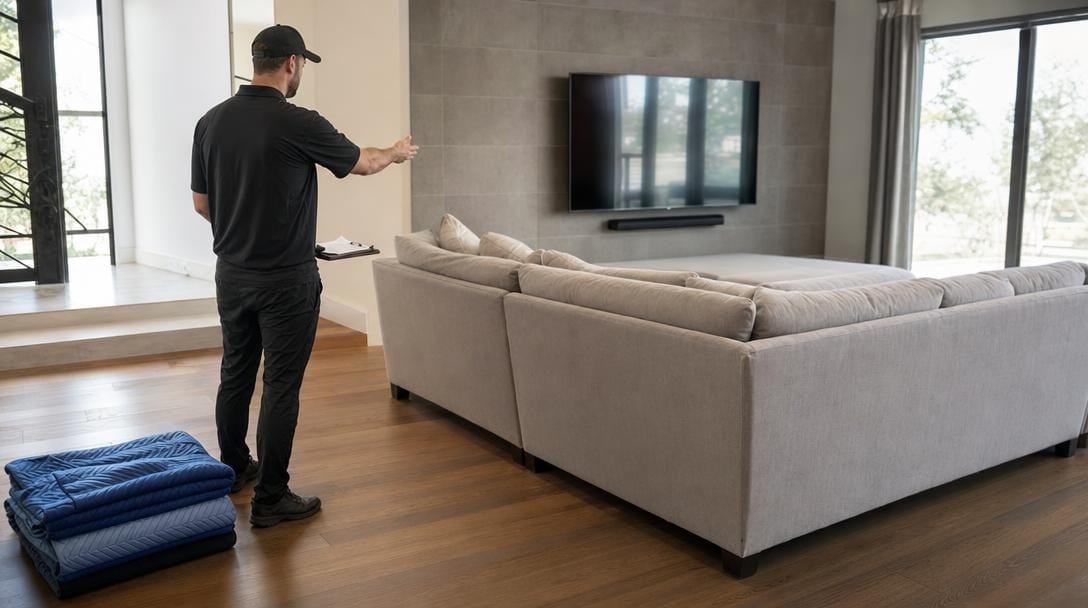
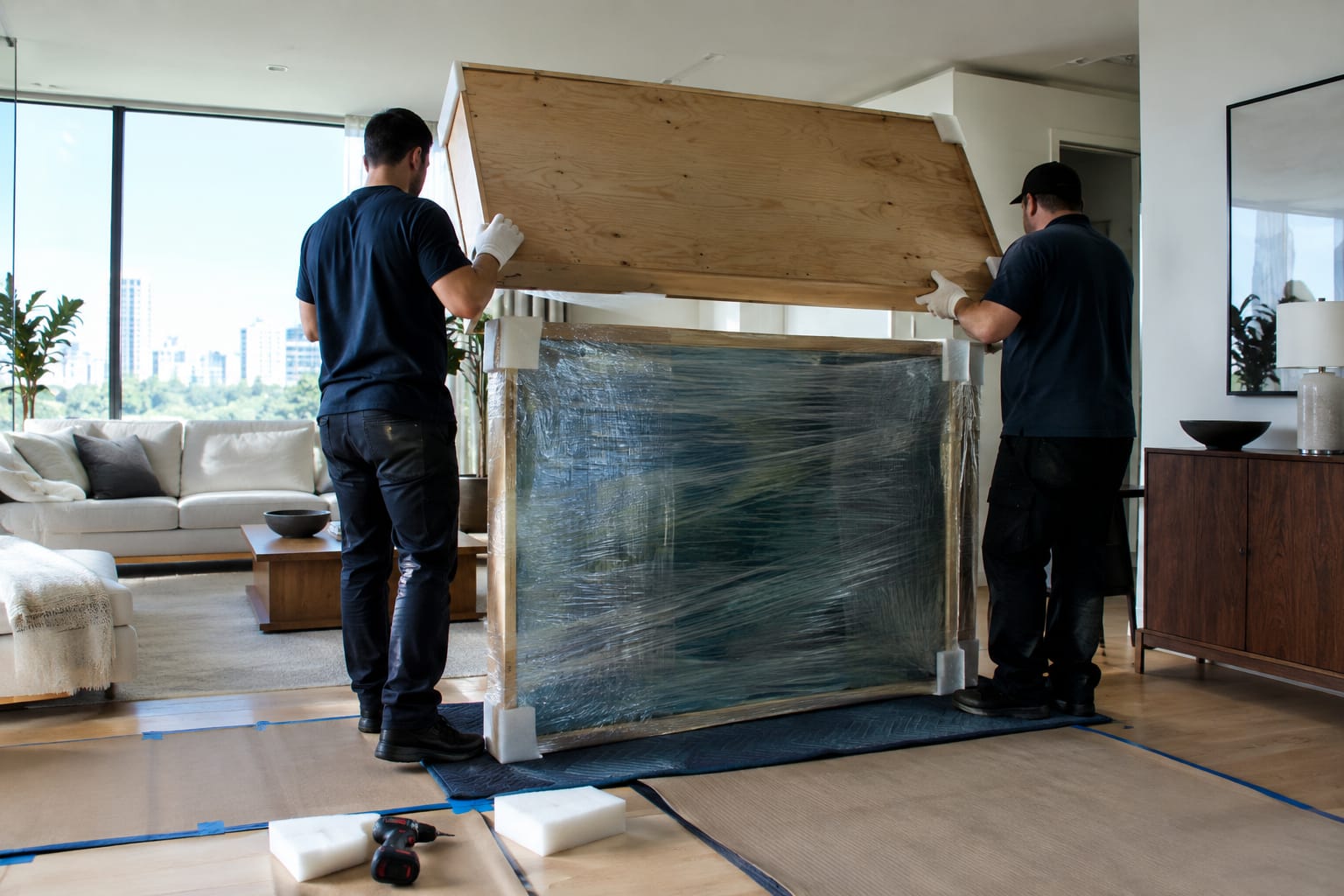
The crew prices these pieces on three factors: the number of movers needed, the disassembly and reassembly time, and the tight-space navigation. Stairs, elevators, and long carries from the truck all extend the hours. On moving day, professional crews handle disassembly, padding, and plastic wrap, then load with dollies, straps, and moving blankets — the equipment those specialty charges pay for.
Common heavy-item drivers on a quote include:
- Weight and bulk — items over roughly 300 pounds often need extra crew.
- Disassembly — beds, sectionals, and modular units add hands-on time.
- Access — narrow halls, stairwells, and elevators slow the carry.
- Protection — shrink wrap, blankets, and corner guards for high-value pieces.
Prepping furniture in advance trims labor time. Learn how to prepare furniture when relocating so the crew spends fewer billable minutes wrapping and dismantling on the day.
Quoting Electronics Like a TV or Treadmill

Electronics get their own line because they are fragile, valuable, and often oversized. Moving tv setups and gym equipment are two of the most commonly mis-quoted items in a home.
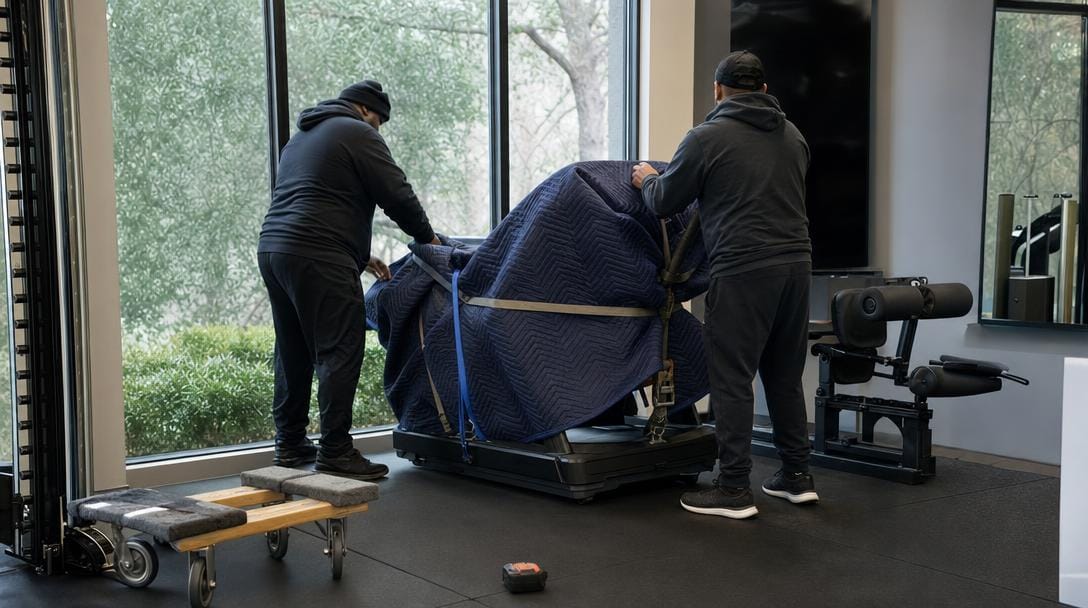
A large flat-screen TV needs a specialty box or foam-lined crate and careful handling to avoid panel cracks. Quoting a moving tv correctly means noting the screen size and whether the original packaging exists — a 75-inch screen without its box costs more to protect than a 40-inch with foam inserts.
Moving treadmill and other gym machines are heavy, mechanically complex, and frequently sit upstairs. A quote for moving treadmill equipment factors in folding or partial disassembly, the two-person lift, and stair navigation from a basement or spare room.
| Electronic Item | Main Quote Driver | Typical Handling |
|---|---|---|
| Flat-screen TV | Screen size and packaging | Specialty box, blanket wrap, upright transport |
| Treadmill | Weight and stairs | Fold or disassemble, two movers, dolly |
| Home theater / speakers | Cable count and components | Labeled boxes, padded crates |
| Desktop computer | Data sensitivity | Anti-static wrap, owner-transported ideally |
Pro Tip: Photograph cable connections on your TV and audio gear before the crew unplugs anything. It costs nothing on the quote and saves an hour of reconnection guesswork at the new home.
Hidden Fees and Surcharges to Watch For
Hidden fees are charges that never appeared on the original quote yet show up on the final bill. They are the leading reason a customer feels ambushed, and they are almost always avoidable with the right questions.
Common surcharges to confirm before signing include:
- Long-carry fee — when the truck cannot park near the door.
- Stair and elevator fees — per-flight charges above the ground floor.
- Shuttle fee — a smaller vehicle for streets a full truck cannot reach.
- Bulky-item fee — for pianos, safes, and oversized furniture.
- Fuel and travel time — the drive to your first stop and back to the depot.
A transparent mover lists these possibilities up front. Learn to avoid the lowball tactics scammers use by asking for every potential surcharge in writing, because a quote that omits them is not truly complete.
Q: Why did my final bill differ from the quote?
A: Usually because the estimate was non-binding and the actual weight or hours ran higher, or because surcharges like stairs and long carries were not disclosed. A binding moving estimate prevents most of these gaps.
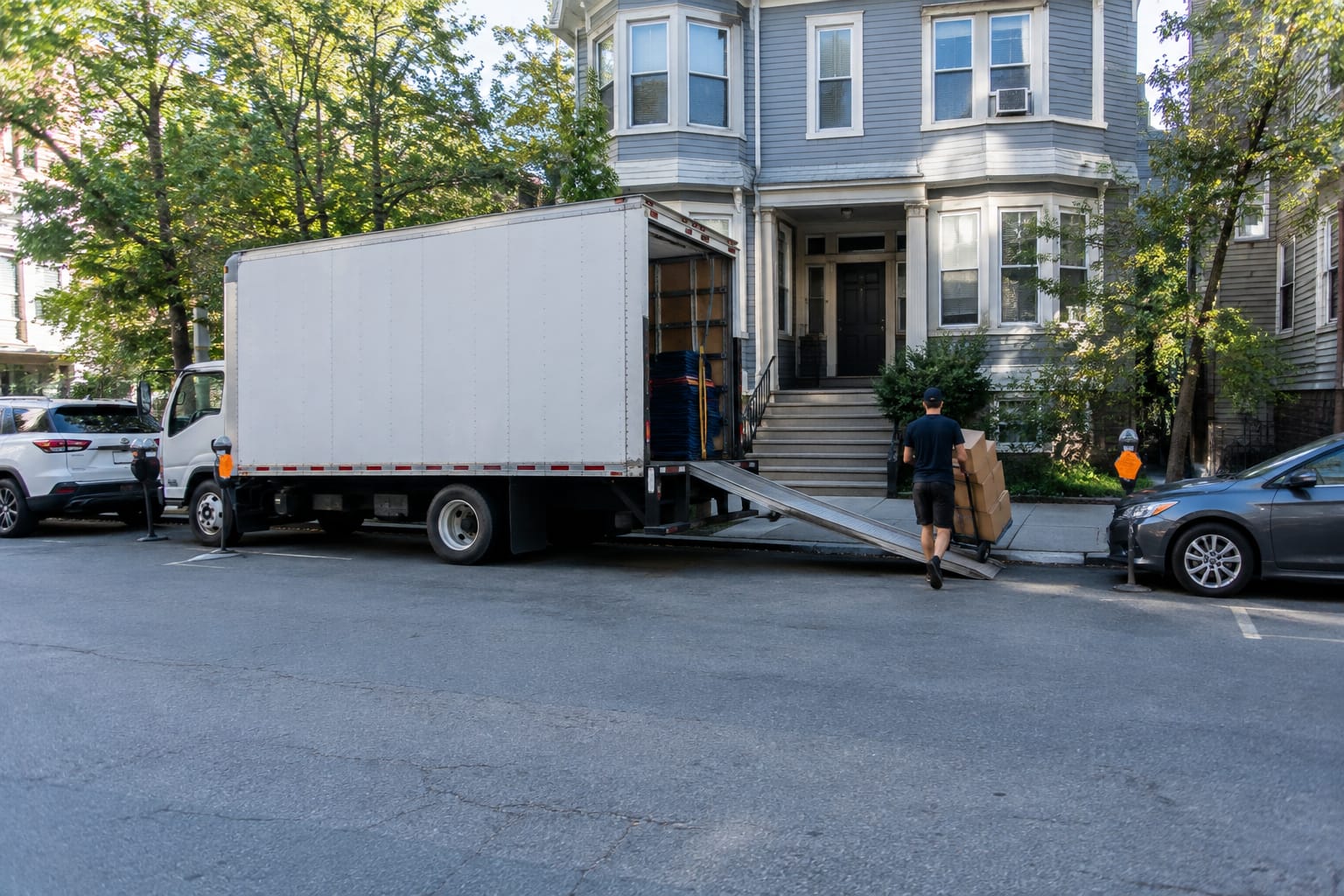
Parking and access issues drive many surprise fees. If you are moving in a dense city, confirm the plan for where to park a moving truck so a shuttle charge does not appear after the fact.
How to Spot a Lowball or Scam Quote
A lowball quote is an unrealistically cheap number designed to win your booking, then balloon once your belongings are on the truck. Spotting one is the most valuable skill in this guide.
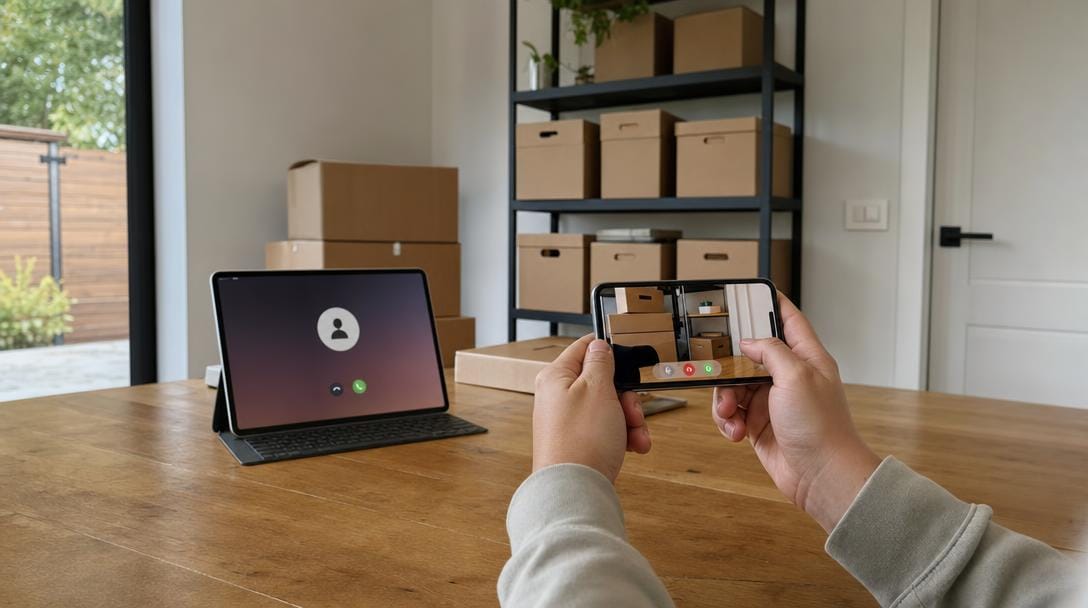
The clearest warning sign is a quote given without any survey. A legitimate virtual moving survey or in-person walkthrough produces a defensible number; a price quoted sight-unseen over the phone in two minutes does not. A virtual moving survey uses a video call so the estimator can see your rooms remotely and count real items.
Red flags that signal a scam quote:
- Large deposit demand — a big upfront moving deposit or cash-only requirement.
- No written estimate — only a verbal figure and vague promises.
- No USDOT number — interstate movers must be registered.
- Blank or unsigned inventory — refusing to itemize your goods.
- A price far below every competitor — the bait for a later hostage-load fee.
Always verify a company's registration. You can check a mover's USDOT number through the FMCSA, and the Better Business Bureau's mover directory shows complaint histories before you commit.
Q: What are the biggest red flags in a moving quote?
A: A demand for a large deposit, a price quoted without any survey, and no USDOT number. The FMCSA's Protect Your Move program lists these as the top signs of a moving fraud operation.
Questions to Ask Before Accepting a Quote
Before signing, confirm the fundamentals in writing. The right questions turn a vague quote into an enforceable agreement and expose weak operators fast.
Ask each mover directly:
- Is this a binding, non-binding estimate, or not-to-exceed estimate?
- Are you offering a flat rate moving quote or billing by the hour?
- What surcharges could apply for stairs, long carries, or bulky items?
- What deposit do you require, and what is the cancellation policy?
- Is my USDOT or state license number current and verifiable?
For a deeper checklist, review the full list of questions to ask when hiring a moving company and confirm you know what to look for in a moving company before you choose.
Getting three written quotes is the industry norm because it exposes both the outlier low bid and any inflated one. The FTC recommends comparing multiple written estimates rather than trusting a single phone number.
How do I get an accurate moving quotation?
Book a survey — in person or by video — so the mover can see and count your inventory instead of guessing. An accurate moving estimate always follows a walkthrough, whether it is a traditional in-home estimate or a virtual moving survey over a video call. Provide a full inventory, mention stairs and long carries, and disclose specialty items like a piano, safe, or treadmill. Then request the price as a written, itemized document, not a verbal figure. Comparing three written quotes reveals whether a number is realistic. The FTC advises getting written estimates from several movers before committing, which protects you from a bid that looks cheap but hides surcharges.
What is the difference between a binding and non-binding estimate?
A binding estimate guarantees the total price based on the listed goods and services, so the number cannot rise on delivery day. A non-binding estimate is the mover's prediction, and the final charge adjusts to the actual weight or hours worked. A third option, the not-to-exceed estimate, caps your cost at the quote while letting you pay less if the shipment weighs under the estimate. The FMCSA defines all three estimate types for interstate moves. Binding suits finalized inventories; not-to-exceed suits anyone wanting a firm ceiling with room to fall.
Why did my final moving bill differ from the quote?
The most common reason is a non-binding estimate whose final weight or labor hours came in higher than predicted. Undisclosed surcharges are the second cause — stair fees, long-carry fees, shuttle charges, and bulky-item handling that never appeared on the original document. Adding items after the survey or extending the job past the estimated hours also raises an hourly bill. A binding moving estimate or not-to-exceed estimate eliminates most of these gaps by locking or capping the price. If a charge was never disclosed in writing, dispute it and reference your signed quote and inventory.
Can I get a quote for moving just one item?
Yes. Single item moving is a standard service, and movers regularly quote one couch, appliance, safe, piano, or treadmill without a full-home booking. The price is usually a flat fee shaped by the item's weight, the number of stairs, the distance, and any disassembly. A specialty piece such as a piano or gun safe costs more than a same-weight dresser because it needs trained handlers and equipment. Provide dimensions, weight, and access details — narrow doorways, elevators, or basement stairs — so the flat fee reflects the real job rather than a rough guess.
What are red flags in a moving quote?
The biggest warning signs are a price quoted without any survey, a demand for a large upfront moving deposit or cash only, and a missing USDOT or state license number. A blank or unsigned inventory, no written estimate, and a bid far below every competitor also signal trouble, since a lowball number often precedes a hostage-load fee once your goods are on the truck. Verify registration through the FMCSA's Protect Your Move resources and check complaint histories before you sign. A legitimate mover welcomes questions and puts every potential charge in writing.
Related Articles
- PODS Moving Cost vs Full-Service Movers: Price Compared — See how container pricing stacks up against a full-service quote line by line.
- Movers Near Me: How to Find Reliable Local Movers — Learn how to vet nearby companies before requesting a quote.
- Two Men and a Truck Moving Company: Reviews and Alternatives — Compare a national brand's pricing model against local options.
- All My Sons Moving Company: Reviews and Alternatives — Understand common quote complaints and how to avoid them.
Recommended Reading
- How much do movers cost?
- How to Get an Accurate Quote for a 1-2 Bedroom Apartment Move
- How to Avoid Moving Scams
- What Questions Should I Ask When Hiring a Moving Company?
- The prices of a locally-based moving company
Frequently Asked Questions