Top rated moving services earn their ratings through consistent, verifiable behavior: a written estimate based on a real inventory, a clear hourly or flat-rate price structure, registered operating authority, a certificate of insurance on request, and recent reviews that hold up across several platforms. A star score alone will not tell you which mover fits your move.
This guide explains what ratings actually measure, how moving prices are built, which credentials to check yourself, and the questions and red flags that separate a reliable crew from a well-marketed profile.

| Point | Details |
|---|---|
| Ratings Need Context | Review volume, recency and consistency across platforms matter more than a single average score. |
| Price Structure Reveals a Lot | Ask how the quote is built: crew size, hourly minimum, travel time, packing supplies and payment fees. |
| Check Registration Yourself | For an interstate move, look up the mover's USDOT number through FMCSA's Protect Your Move resources before you book. |
| Liability Is Not Insurance | Ask what liability level the quote includes and what additional coverage costs. Basic released-value protection is not a replacement-value policy. |
| Get It in Writing | Written estimate, written delivery window for long-distance moves, and the FMCSA booklet for interstate moves. |
What Makes a Moving Service 'Top Rated'?
A top rated moving service is one that customers describe the same way, again and again, across different platforms and over time. The themes that show up in strong reviews are predictable: the crew arrived within the agreed window, furniture was wrapped and protected, the final bill matched what was explained before booking, and problems were handled without the customer having to chase anyone.
Review volume matters as much as the score itself. A perfect average from a handful of reviews tells you little; a slightly lower average from a large, steady stream of recent reviews tells you the company performs consistently, not that it had a lucky month.
The absence of those behaviors dominates negative feedback: late arrivals, surprise charges at the end of the job, and slow or evasive responses to damage claims. When you read reviews, you are really reading for those patterns.
How Moving Services Are Rated and Reviewed
Most review platforms combine a star rating with written feedback, and some indicate whether the job was booked through the platform. Google, Yelp, Thumbtack and the Better Business Bureau are common places to check what customers say. Each one weights signals differently, and each has blind spots.
The biggest limitation is that aggregated scores mix every job type together. A one-bedroom local move and a multi-state relocation are rated on the same scale, even though a company can excel at one and struggle with the other. Read for reviews that match your move.
Here's what to prioritize when reading reviews:
- Recency: Focus on reviews from roughly the last year. Crew turnover and ownership changes can shift quality quickly.
- Volume: A larger body of reviews gives a more reliable picture than a few glowing ones.
- Specificity: Useful reviews describe the building, the route, the items moved or how the bill compared to the quote.
- Response pattern: How a company replies to negative reviews says more about its professionalism than the complaint itself.
Pro Tip: Sort reviews by 'Most Recent' rather than 'Most Helpful.' Platforms often surface older, longer reviews first, which may not reflect how the company operates today.
How Moving Prices Work and What Drives Your Cost
Ratings tell you about past customers. The quote tells you about your move. Understanding how a price is built is the fastest way to compare movers fairly. For a deeper breakdown, see our guide to the cost of local moving services.
Local moves are usually priced by the hour. The hourly rate depends mainly on crew size (two, three or four movers plus a truck). Ask every mover the same questions:
- Is there an hourly minimum, and does it include travel time?
- Is travel time billed at the same hourly rate as the move itself?
- Are packing supplies such as boxes, tape, shrink wrap and mattress bags included or billed separately?
- Is there a fee for paying by card?
- Do rates change by season or day of the week?
- What liability level does the hourly rate include?
Long-distance and interstate moves are usually quoted per move, based on your inventory, the route and access conditions at both ends.
| Cost Driver | Why It Changes the Price |
|---|---|
| Crew size | More movers raise the hourly rate but can shorten the job |
| Volume and inventory | More items mean more loading time or a larger flat-rate quote |
| Access | Stairs, long carries, elevator waits and parking distance add time |
| Travel time | Often billed at the hourly rate on local moves |
| Packing labor and supplies | Labor is typically hourly; materials are usually billed separately |
| Season | Peak periods often carry higher rates and tighter availability |
| Payment method | Some movers add a processing fee for card payments |
A low quote that skips half of these questions is not cheaper; it is incomplete. The total you actually pay is what matters.
What to Expect From a Full-Service Mover
Well-run moving companies deliver a defined set of services consistently. Here's what separates a dependable operation from a company with good marketing and average execution.
Full-Service Capability
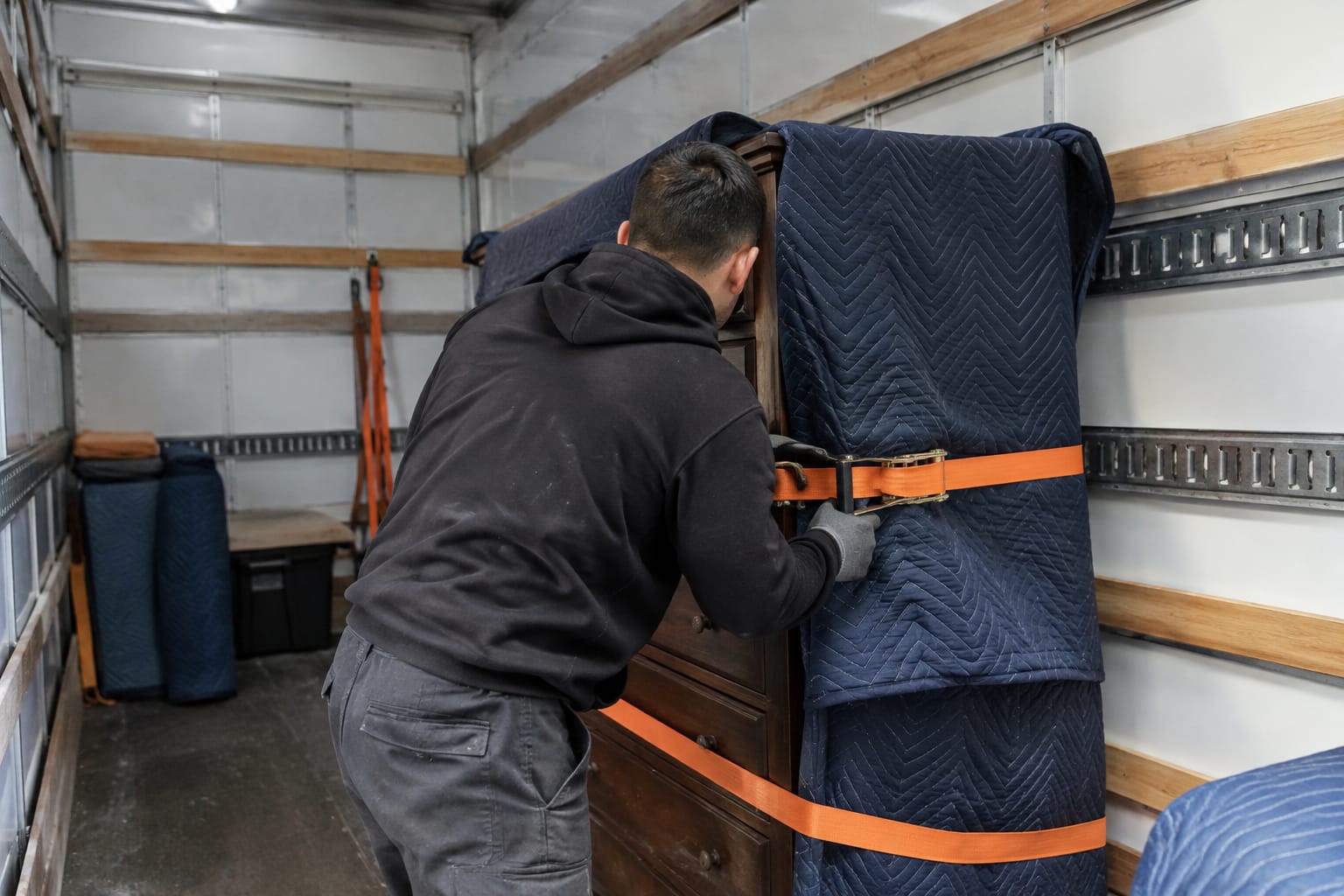
A full-service crew handles the whole cycle: disassembling large furniture, padding and wrapping items, loading and securing the truck, transporting, unloading and reassembling at the destination. Ask which of these steps are included in the rate and which are add-ons.
Fees Explained Before Booking
The most common complaint about movers is a final bill that does not match the conversation that happened before booking. A reliable mover explains every line item up front, in writing, and tells you what could change it.
Specialty Items
Pianos, safes, pool tables, fine art and pieces that need hoisting through a window all require specific equipment and experience. If you own any of these, ask whether the mover handles them with its own crew, what equipment it uses, and how the item is priced, rather than assuming it is covered by the standard rate.
| Service Category | What to Ask | Why It Matters |
|---|---|---|
| Full-service moving | Which steps are included in the rate? | Avoids add-on surprises |
| Packing | Is labor hourly, and are supplies billed separately? | Supplies can add up on larger homes |
| Specialty items | Who moves them and with what equipment? | Heavy items need trained crews |
| Long-distance | Does one crew and truck handle pickup to delivery? | Fewer handoffs, clearer accountability |
| Storage | How are items inventoried and accessed? | Protects your belongings between moves |
Understanding what to look for in a moving company goes beyond star ratings: the specific services offered and how they're delivered are equally important.
Pro Tip: When requesting quotes, ask each mover how they handle a damage claim. A dependable company describes a clear, documented process. Vague answers reveal something about accountability.

Licensing, Insurance and Liability: What to Check
Credentials are where good reviews meet verifiable facts. Check these before you book:
- USDOT number for interstate moves. Ask for it, then look it up yourself using FMCSA's Protect Your Move resources. Confirm the company name and address match the business you are talking to. Our guide on how to check a moving company's US DOT number walks through it.
- State authority for in-state moves. Check with your state's transportation or utilities regulator.
- Certificate of insurance (COI). Apartment buildings, condos and HOAs often require one before movers can use the loading dock or elevator. A reputable mover can issue a building-specific COI on request.
- Liability level. Ask what level of liability the quote includes. Ask what additional coverage is available and what it costs, and read the FMCSA booklet for interstate moves.
Choosing Highly Rated Movers Near Me
Searching for highly rated movers near me returns results that vary widely in quality. Local movers live and die by community reputation, which makes local reviews from real neighbors especially meaningful.
When evaluating top moving services near me, prioritize companies that:
- Operate in your metro area, not just your state
- Have a verifiable business address and a working phone line
- Can describe moves in buildings like yours: walk-ups, elevator buildings, tight streets
- Provide registration numbers and an insurance certificate on request without hesitation
Local moves also depend on details that have nothing to do with ratings:
- Parking and permits. Check with your city or town permit office well before moving day.
- Building rules. Many apartment buildings require a booked service elevator, set move-in hours and a COI from the mover.
- Season. Peak moving periods fill calendars fast and can raise rates, so request quotes early.
Finding a reputable moving company locally means verifying credentials beyond the star rating.
Long-Distance Moves: What to Confirm Before You Sign
Long-distance moves expose weaknesses that never surface on local jobs. The most important question is continuity: will the same crew and truck that loads your belongings also deliver them, or will your shipment be transferred between carriers? Every handoff is another chance for damage, delay or lost items.
Confirm these points in writing:
- The estimate type (binding, non-binding or binding-not-to-exceed) and the inventory it is based on
- The delivery window, agreed in writing before booking, not a vague range
- What the price covers: labor, truck, fuel, tolls, mileage, packing
- The liability level and the cost of any additional coverage
- The FMCSA booklet Your Rights and Responsibilities When You Move, so you understand your rights before moving day
An accurate long-distance quote starts with an accurate inventory. Movers that offer a video walk-through or on-site survey usually produce estimates that hold up better than a phone guess.
Need help with this? Get a quote
Senior Moving Services: Finding Reliable Help for Older Adults
The search for senior moving services near me deserves more scrutiny than a standard relocation. Older adults often move under emotionally and physically demanding circumstances: downsizing from a long-term family home or moving closer to family.
When vetting a mover for an older relative, look for:
- Patient communication: The crew explains each step and confirms decisions with the person moving, not only the coordinating family member
- Careful pacing: Enough time is allotted so nobody feels rushed through packing or decisions
- Clear paperwork: Estimates and inventories written plainly enough for the client to review independently
Older adults are also frequent targets of fraudulent movers. Before booking for a family member, review how to avoid moving scams. The warning signs are identifiable and the risks are serious.

How to Verify a Moving Company's Ratings Before You Book
How to verify moving company reviews is one of the most underused steps in hiring. Fake reviews, suppressed complaints and inflated ratings all happen. This four-step process gives you reliable information.
Step 1: Cross-check across multiple platforms
A company rated highly on one site and poorly on another has a reputation problem somewhere. Check Google, Yelp, Thumbtack and the BBB. Consistent ratings across platforms are much harder to manipulate.
Step 2: Confirm federal registration for interstate moves
Look up the USDOT number through FMCSA's Protect Your Move resources and confirm the registered name matches the company quoting you.
Step 3: Check state authority
If you are moving within one state, ask whether the mover holds state authority and confirm it with the state regulator.
Step 4: Read the negative reviews
Read every one- and two-star review. Look for patterns, not isolated incidents. Several reviews describing surprise charges is a pattern; one review about a scuffed lamp probably is not.
| Verification Step | What It Checks | What to Look For |
|---|---|---|
| Cross-platform review check | Consistent reputation | Similar scores and themes everywhere |
| USDOT lookup | Federal registration | Name and address match the quote |
| State authority check | In-state operating authority | Active registration with the state regulator |
| Negative review analysis | Complaint patterns | Repeated issues, how the company responded |
| Written estimate request | Price transparency | Itemized, based on your inventory |
Questions to Ask and Red Flags to Watch For
Before you sign anything, ask:
- How is the price calculated, and what could change it?
- Is there an hourly minimum, and is travel time included?
- Are packing supplies billed separately?
- What liability level is included, and what does extra coverage cost?
- Can you issue a COI for my building?
- Will one crew handle the move from start to finish?
Red flags include refusing to put an estimate in writing, a quote far below every other quote with no explanation, a large cash deposit demanded up front, no verifiable address, and pressure to sign blank or incomplete paperwork. See the full list of questions to ask a moving company before booking.
Where Born to Move Fits
Born to Move is a licensed and insured moving company (USDOT 2887241, MC 985934, MA DPU 31826, Illinois ICC 244189) with offices in Newton, MA (headquarters), Nashua, NH, Pawtucket, RI, Brooklyn, NY, Chicago, IL and Miami, FL. Local hourly moves are priced from $160/hr for 2 movers + truck, from $240/hr for 3 movers + truck and from $320/hr for 4 movers + truck, with a 3-hour minimum including travel time (billed at the same hourly rate) and a 3% fee on card payments. Seasonal rates apply, so the current rate is confirmed when you request a quote. The hourly rate includes basic released-value protection of $0.60 per pound, which is basic liability, not insurance; additional coverage is optional and costs extra. Packing supplies are billed separately. Long-distance and interstate moves are quoted as a flat rate based on a confirmed inventory, with one crew and one truck per job and the delivery window agreed in writing before booking. The company can issue building-specific COIs on request, and quotes are available through an online form, phone consultation or video walk-through. Request a quote to compare it against the checklist above.
Recommended
- What to Look for in a Moving Company: Top Qualities
- How to Find a Reputable Moving Company
- What Questions Should I Ask When Hiring a Moving Company?
- How to Avoid Moving Scams
- How to Check a Moving Company's US DOT Number
- Cost of Local Moving Services
Need help with this? Get a quote · Call (617) 903-2609
Frequently Asked Questions