'%3E%3Cpath%20fill='%231B2A47'%20d='M1.605%2016.263c.03-1.139.059-2.482.088-3.971.03-1.49.03-2.832.03-4.03%200-.758%200-1.576-.03-2.51%200-.905-.03-1.84-.03-2.803%200-.496-.028-.964-.028-1.43%200-.468%200-.906-.03-1.315h6.858q2.188%200%203.589.35c.963.234%201.663.643%202.13%201.198.496.555.73%201.372.73%202.394%200%20.788-.176%201.46-.497%201.985-.32.526-.846.935-1.575%201.197-.73.292-1.693.468-2.918.526v.263c1.313.087%202.334.263%203.122.525.758.263%201.342.672%201.692%201.197.35.526.525%201.197.525%202.044%200%201.08-.233%201.927-.67%202.57-.468.642-1.139%201.08-2.102%201.343-.933.262-2.159.408-3.705.408H1.605zm6.537-9.197q1.882%200%202.713-.526c.555-.35.817-.934.817-1.752%200-.905-.292-1.547-.846-1.927s-1.459-.554-2.655-.554H4.757v4.759zm.204%206.92c.934%200%201.663-.088%202.217-.263.555-.176.934-.438%201.197-.818s.38-.876.38-1.518c0-.876-.322-1.49-.934-1.84-.643-.35-1.635-.525-3.035-.525H4.757v4.963zM21.038%2016.555c-1.576%200-2.801-.292-3.618-.905-.817-.614-1.284-1.519-1.372-2.745-.087-1.226.205-2.774.847-4.613s1.43-3.358%202.392-4.584c.963-1.226%202.043-2.131%203.298-2.744C23.839.292%2025.24%200%2026.786%200c1.576%200%202.772.321%203.59.934.816.613%201.283%201.548%201.37%202.774s-.203%202.774-.845%204.613c-.642%201.81-1.43%203.358-2.393%204.584s-2.072%202.132-3.297%202.745a9.8%209.8%200%200%201-4.173.905m.788-2.278c.642%200%201.138-.058%201.371-.116.205-.059.496-.117.847-.322.262-.146.437-.292.554-.408.204-.175.32-.292.438-.41.204-.203.35-.408.496-.583.35-.438.642-.876.963-1.402.233-.408.466-.817.67-1.284.205-.438.38-.905.555-1.372.438-1.198.671-2.278.671-3.183s-.204-1.606-.612-2.131c-.409-.497-1.051-.76-1.897-.76-.467%200-.934.059-1.43.205h-.03c-1.02.292-1.925%201.226-2.042%201.372-.116.117-.467.526-.963%201.343a15.5%2015.5%200%200%200-1.342%202.92c-.408%201.197-.642%202.277-.671%203.182-.03.906.175%201.636.584%202.161q.611.788%201.838.788M14.853%2038.54c-1.576%200-2.802-.292-3.619-.905s-1.284-1.518-1.371-2.744c-.088-1.227.204-2.774.846-4.614s1.43-3.357%202.393-4.584%202.042-2.13%203.297-2.744c1.255-.613%202.655-.905%204.173-.905%201.575%200%202.772.321%203.589.934s1.284%201.548%201.371%202.774c.088%201.226-.204%202.774-.846%204.613-.642%201.81-1.43%203.358-2.393%204.584s-2.072%202.131-3.297%202.745c-1.226.613-2.626.846-4.143.846m.787-2.277c.642%200%201.138-.059%201.372-.117.204-.058.496-.117.846-.321.263-.146.438-.292.554-.409.205-.175.321-.292.438-.409.204-.204.35-.408.496-.584a13%2013%200%200%200%201.634-2.686c.204-.438.38-.905.555-1.372.437-1.197.67-2.277.67-3.182%200-.906-.203-1.606-.612-2.132-.409-.496-1.05-.759-1.897-.759-.467%200-.934.058-1.43.204h-.029c-1.021.292-1.925%201.227-2.042%201.373-.117.116-.467.525-.963%201.343a15.5%2015.5%200%200%200-1.342%202.92c-.409%201.196-.642%202.277-.671%203.182s.175%201.635.583%202.16q.613.789%201.838.789'/%3E%3Cpath%20fill='%23FF515E'%20d='M55.966%2038.57c-1.576%200-2.801-.293-3.618-.906s-1.284-1.518-1.372-2.744c-.087-1.227.204-2.774.846-4.613s1.43-3.358%202.393-4.584c.963-1.227%202.043-2.132%203.297-2.745s2.656-.905%204.173-.905c1.576%200%202.772.321%203.589.934s1.284%201.548%201.371%202.774c.088%201.226-.204%202.774-.846%204.613-.642%201.81-1.43%203.358-2.393%204.584s-2.071%202.131-3.297%202.745c-1.225.613-2.626.846-4.143.846m.788-2.249c.642%200%201.138-.058%201.371-.117.204-.058.496-.116.846-.32.263-.147.438-.293.555-.41a7%207%200%200%200%20.437-.408c.205-.205.35-.41.496-.584a13%2013%200%200%200%201.634-2.686c.205-.438.38-.905.555-1.373.438-1.197.671-2.277.671-3.182s-.204-1.606-.613-2.131c-.408-.497-1.05-.76-1.896-.76-.467%200-.934.059-1.43.205h-.03c-1.02.292-1.925%201.226-2.042%201.372-.117.117-.467.526-.963%201.343a15.5%2015.5%200%200%200-1.342%202.92c-.409%201.197-.642%202.277-.671%203.182s.175%201.635.583%202.16q.614.79%201.839.79'/%3E%3Cpath%20fill='%231B2A47'%20d='M33.06%2016.263c0-.35%200-.935.03-1.81.029-1.051.058-2.103.058-3.154s.03-2.073.03-3.007c0-1.606-.03-3.27-.06-4.993%200-.554-.028-1.08-.028-1.606%200-.525-.03-1.021-.03-1.46h6.828c1.46%200%202.685.117%203.59.38q1.4.394%202.1%201.314.7.963.7%202.628c0%20.992-.174%201.81-.554%202.452-.35.643-.904%201.11-1.604%201.431s-1.576.467-2.627.496v.263q2.058.087%203.064.876c.671.525%201.138%201.372%201.43%202.51.087.41.233%201.023.467%201.84.233.818.408%201.431.554%201.84h-3.414a11%2011%200%200%200-.262-1.022c-.321-1.314-.526-2.19-.584-2.628a5%205%200%200%200-.642-1.46%202.13%202.13%200%200%200-.963-.73c-.408-.146-.934-.233-1.605-.233h-3.326v6.0440000000000005H33.06zm6.332-8.292c1.343%200%202.276-.205%202.86-.613.554-.41.846-1.11.846-2.073%200-.73-.146-1.314-.408-1.723-.263-.409-.671-.7-1.197-.876q-.788-.263-2.1-.263h-3.181v5.519h3.18zM49.4%2016.263l.03-2.745c.029-2.452.029-4.905.029-7.416q0-2.101-.088-5.868h4.085l5.924%2010.335c.087.234.204.438.291.643.117.204.205.408.321.613.38.788.613%201.255.672%201.372h.262c0-.058-.03-.146-.03-.204%200-.059-.028-.117-.028-.175a75%2075%200%200%201-.175-1.314%2010%2010%200%200%201-.088-1.285c0-1.547%200-3.737-.029-6.57V1.84c0-.584-.03-1.11-.03-1.576h2.977c-.03%202.482-.058%205.08-.058%207.766%200%201.694%200%204.438.029%208.292h-4.027l-5.573-9.43c-.875-1.81-1.226-2.511-1.05-2.132-.263-.613-.467-1.08-.613-1.46h-.263c.058.35.117.876.175%201.548.059.7.117%201.168.117%201.46%200%202.978%200%206.306.029%209.985H49.4zM4.698%2038.277c.029-2.627.058-5.255.058-7.883%200-1.576%200-3.503-.029-5.752-1.109%200-2.684%200-4.727.03v-2.453h12.664v2.453c-1.955-.03-3.53-.03-4.756-.03%200%20.584-.03%201.227-.03%201.957s0%201.46-.029%202.218v1.84c0%202.57.03%205.11.059%207.62z'/%3E%3Cpath%20fill='%23FF515E'%20d='M29.441%2038.277c.409-1.05.788-2.102%201.168-3.182s.787-2.16%201.167-3.241c.613-1.693%201.05-2.949%201.342-3.766l1.255-3.65c.116-.38.262-.788.379-1.139.117-.38.263-.73.38-1.05h4.61l-.671%2012.904h.262l8.316-12.905h4.669l-.7%201.869c-.876%202.452-1.343%203.766-1.43%204a501%20501%200%200%200-3.385%2010.16h-2.947c.292-.846.788-2.219%201.459-4.087.175-.526.35-1.08.554-1.606.175-.526.38-1.08.555-1.577.642-1.81%201.342-3.825%202.072-6.014h-.234l-8.724%2013.314h-2.86l.554-13.314h-.175c-.175.496-.38.992-.554%201.489-.175.496-.38%201.022-.555%201.547a163%20163%200%200%200-1.08%203.008c-.145.38-.262.759-.408%201.138-.117.38-.262.73-.408%201.11-.7%201.898-1.284%203.59-1.751%205.05h-2.86zM68.047%2038.277c.175-2.19.32-4.525.467-7.007.058-.905.204-3.912.467-9.051h3.151c-.03.438-.058.934-.088%201.46s-.058%201.08-.087%201.693a264%20264%200%200%201-.409%206.657c-.145%201.986-.35%203.591-.583%204.788h.175Q72.147%2034.892%2073.94%2032a562%20562%200%200%201%204.465-7.066c.32-.496.641-.992.933-1.46s.555-.875.817-1.255h3.268q-.568.832-1.138%201.752c-.408.613-.787%201.255-1.196%201.927-3.88%206.014-6.478%2010.131-7.85%2012.35h-5.193zM79.106%2038.277c.32-.788.758-2.014%201.37-3.65a287%20287%200%200%200%201.577-4.32c.437-1.256.904-2.628%201.4-4.088s.934-2.774%201.313-3.97h11.322l-.846%202.364H87.1l-1.664%204.847%207.645-.088-.612%201.694-7.587-.088-1.75%204.934h8.286l-.846%202.365z'/%3E%3C/g%3E%3Cdefs%3E%3CclipPath%20id='a'%3E%3Cpath%20fill='%23fff'%20d='M0%200h96v40H0z'/%3E%3C/clipPath%3E%3C/defs%3E%3C/svg%3E)
A local move with a moving company is usually an hourly job. The final bill depends on three things you control: an estimate built on your real inventory, a legal spot for the truck, and a realistic timeline. Get those right and moving day runs on a schedule instead of a meter.
Boston adds its own complications: permit-only curb space, walk-ups with tight turns, building elevators that need booking, and a lease cycle that piles demand onto the days around September 1. This guide breaks a Greater Boston local move into nine items. Each one covers what is usually included, what usually costs extra, the question to ask your mover, and a short note for anyone weighing a DIY truck.
Key Takeaways
- Estimates depend on access. Stairs, carry distance, elevators, and parking change crew hours as much as furniture count, so confirm which access conditions the written estimate assumes.
- Know the hourly terms. Per Born to Move’s published price page, local rates start from $160/hr for 2 movers plus truck, with a 3-hour minimum that includes travel time and seasonal adjustments.
- Parking is usually your job. On hourly local moves the customer typically arranges truck parking or a city street occupancy permit, and Boston-area cities each run their own permit process.
- Supplies are billed separately. Boxes, tape, shrink wrap, and mattress bags are invoiced on top of hourly labor, while blankets, floor protection, and basic disassembly come with the crew.
- Released value is not insurance. Basic protection is a per-pound liability limit; higher protection is optional and costs extra.
1. A Written Estimate Based on Your Inventory and Access
A written estimate is the mover's documented forecast of crew size, hours, and charges. It is built from a list of what you own and how hard each home is to reach. Included or extra? It is part of the quote process. Get it in writing before you book.
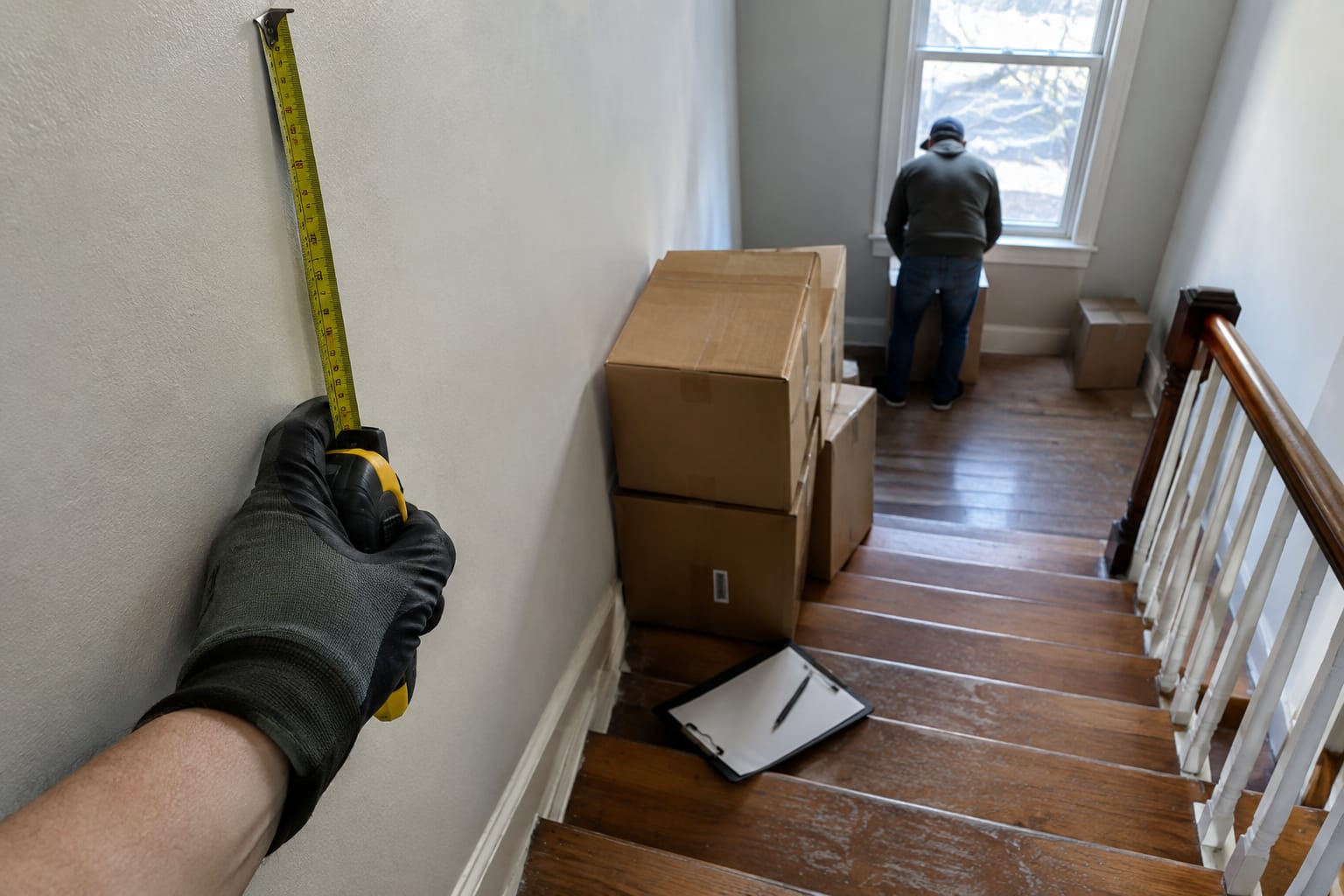
Access drives time as much as furniture does. A fourth-floor walk-up, a long carry from the curb, or a shared elevator adds hours that a box count never shows. A mover who skips the access questions is guessing.
Born to Move, for instance, takes quote requests through an online form, a phone consultation, or a virtual walk-through over FaceTime or video. The team then reviews inventory and access conditions before issuing a flat-rate or hourly estimate. With any company, the estimate is only as accurate as the inventory you provide.
- Ask your mover: Which access details did you assume (stairs, elevator, carry distance, parking), and how does the estimate change if they turn out different?
- DIY note: A rental counter will not inventory your home. You size the truck and estimate the hours yourself, so choose the larger truck when you are between sizes.
Pro Tip: Film every closet, basement corner, and storage cage during a video walk-through. Forgotten storage areas are a frequent reason local moves run past their estimate. For more vetting questions, see how to find honest and reliable local movers.
2. How Hourly Billing Works on a Local Move: Crew Size, Minimum, and Travel Time
Hourly billing means you pay a per-hour rate for a crew and truck between start and stop points defined in your agreement. Included or extra? The crew and truck are in the rate. Everything else varies by company, so confirm the list in writing.
Three variables shape the bill: crew size, the minimum charge, and how travel time is counted. A larger crew costs more per hour but finishes sooner. On a bigger home, the total often lands close to what a smaller crew would charge.
Here is a concrete reference point. Born to Move publishes current hourly rates by crew size starting from $160 per hour for 2 movers and a truck, $240 for 3 movers, and $320 for 4 movers. Those rates carry a 3-hour minimum that includes travel time, travel billed at the same hourly rate, a 3% surcharge on card payments, and seasonal adjustments.
Starting rates from the price page linked above, as of September 2026. Seasonal rates apply, so confirm the current rate when you request a quote.
| Crew | Starting hourly rate | Minimum | Travel time |
|---|---|---|---|
| 2 movers + truck | from $160/hr | 3 hours, including travel | Billed at the same hourly rate |
| 3 movers + truck | from $240/hr | 3 hours, including travel | Billed at the same hourly rate |
| 4 movers + truck | from $320/hr | 3 hours, including travel | Billed at the same hourly rate |
That hourly rate covers labor, the truck, fuel, tolls, and basic released-value protection of $0.60 per pound. Released value is a per-pound liability limit, not insurance, as FMCSA's valuation guide explains.
Q: What does a 3-hour minimum mean for movers?
A: You pay for at least 3 hours of crew time, and travel time counts toward it. A studio move with 90 minutes of work and 30 minutes of travel is still billed as 3 hours.
- Ask your mover: When does the clock start and stop, and how is travel time calculated?
- DIY note: Truck rentals typically charge a base rate plus mileage, fuel, and optional protection, and your own labor is unpaid. The gap between DIY and hiring narrows once you price in your time and the friends you recruit.
3. Boston Moving Truck Permits and Parking: What You Arrange Before Moving Day
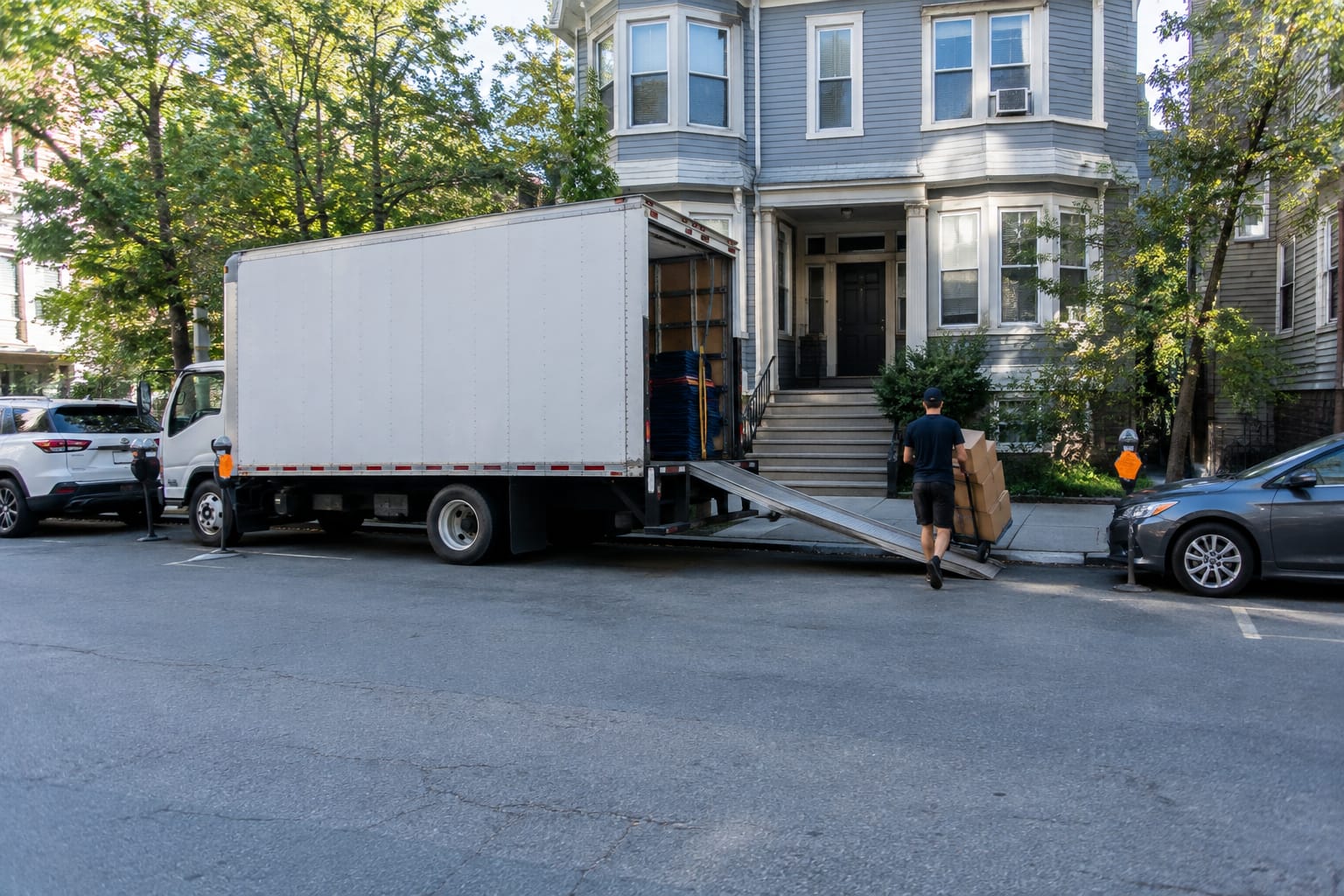
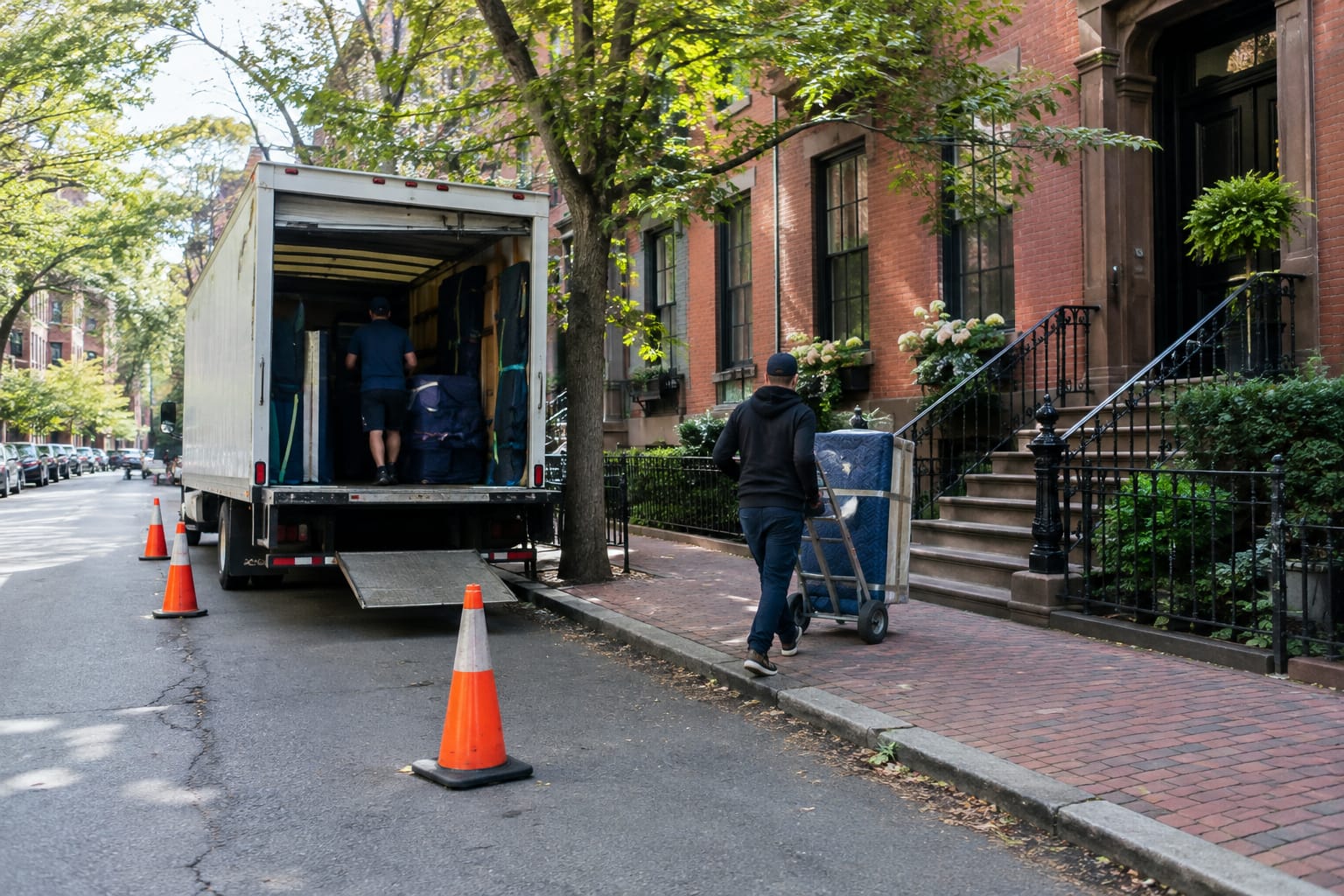
A street occupancy permit reserves a stretch of public curb for a moving truck on a set date and time window. Included or extra? Usually your job. Under the hourly terms described in item 2, the customer arranges truck parking or the city parking permit.
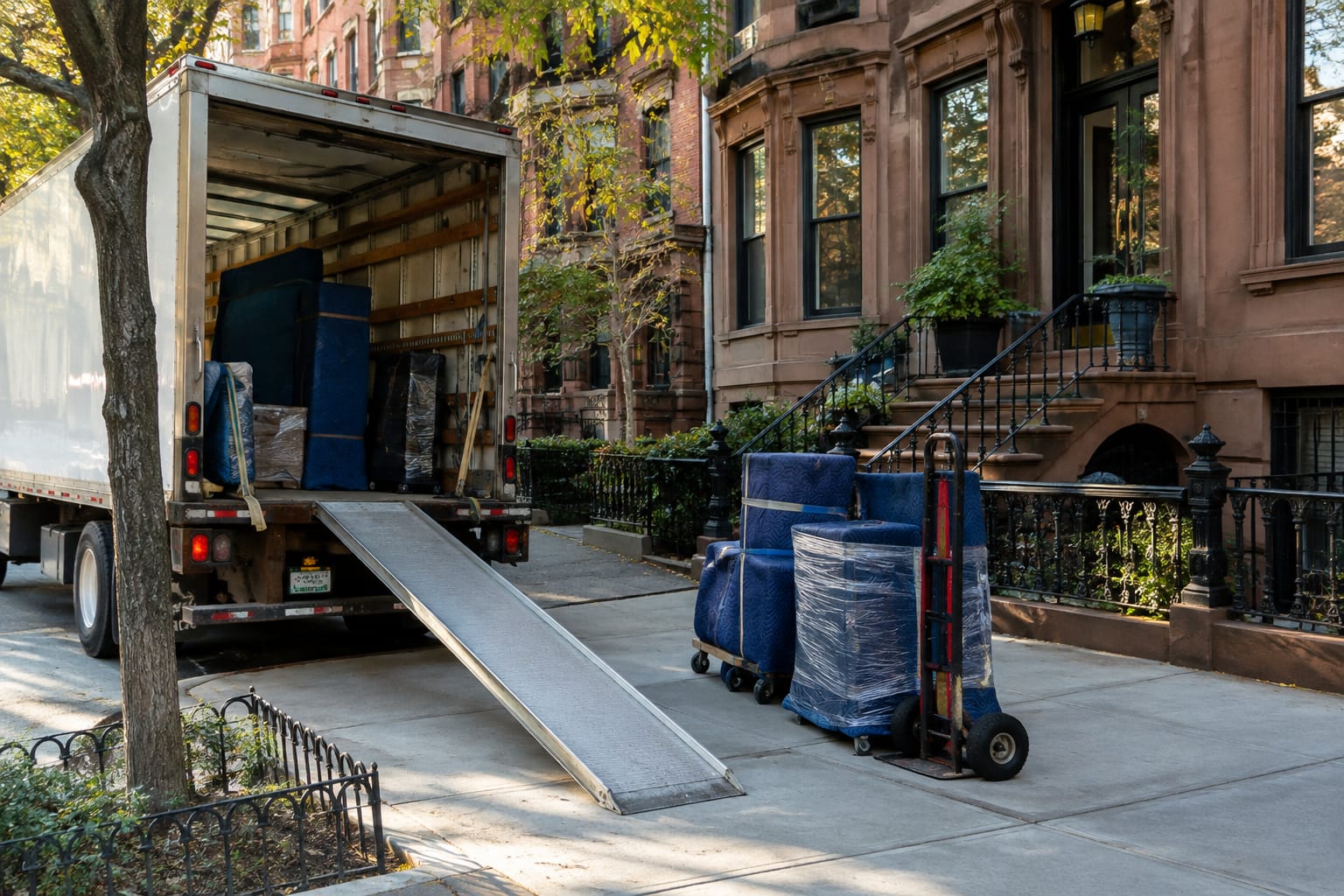
Boston streets leave little legal room for a box truck. Resident-permit zones, narrow one-ways, and tight corners mean a truck without a reserved spot double-parks, risks a ticket, or parks a block away. That last option becomes a long carry billed by the hour.
Check current fees, lead times, and sign-posting rules on the City of Boston's official site or your town's equivalent, and plan for both addresses. The guide on where to park a moving truck in Boston walks through the practical options.
Q: Do I need a permit for a moving truck in Boston?
A: In most cases, yes. Before moving day, confirm the current requirements for parking a moving truck at the curb with the City of Boston.
Route planning matters too. Storrow Drive's low overpasses are a well-known trap for box trucks, so read advice from movers on how not to get “storrowed” before driving a rental through the city.
- Ask your mover: How long a curb space does your truck need, and who picks up and posts the no-parking signs?
- DIY note: Renting a truck does not change the permit rules. You also own the route and the clearance heights.
4. A Local Move Timeline: From Quote to Final Walk-Through
A local move timeline is the sequence of bookings and prep tasks leading up to moving day. Included or extra? The planning is yours; the mover's work starts once you book. Use this sequence as a working schedule:
- 6–8 weeks out: Collect two or three written estimates and verify licensing. For a move across state lines, check the mover's USDOT number.
- 4–6 weeks out: Book the crew, apply for street permits, and reserve elevators at both buildings.
- 2–3 weeks out: Buy supplies, pack the rooms you use least, and decide whether you want packing help.
- 1 week out: Confirm the arrival window, both addresses, parking, and any specialty items in writing.
- 2–3 days out: Empty drawers, finish packing, defrost the freezer, and schedule a licensed technician for any gas, water, or electrical appliance disconnection.
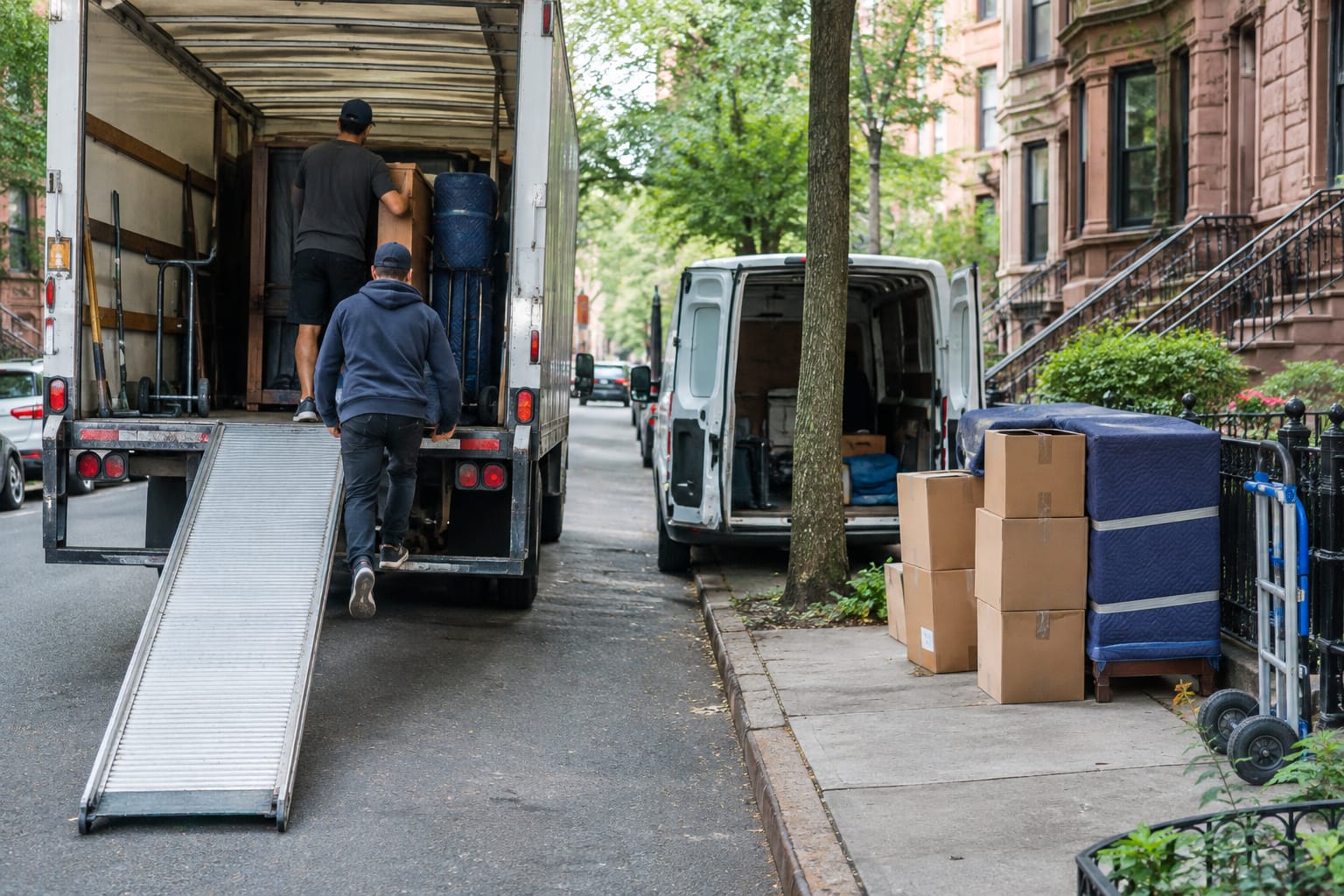
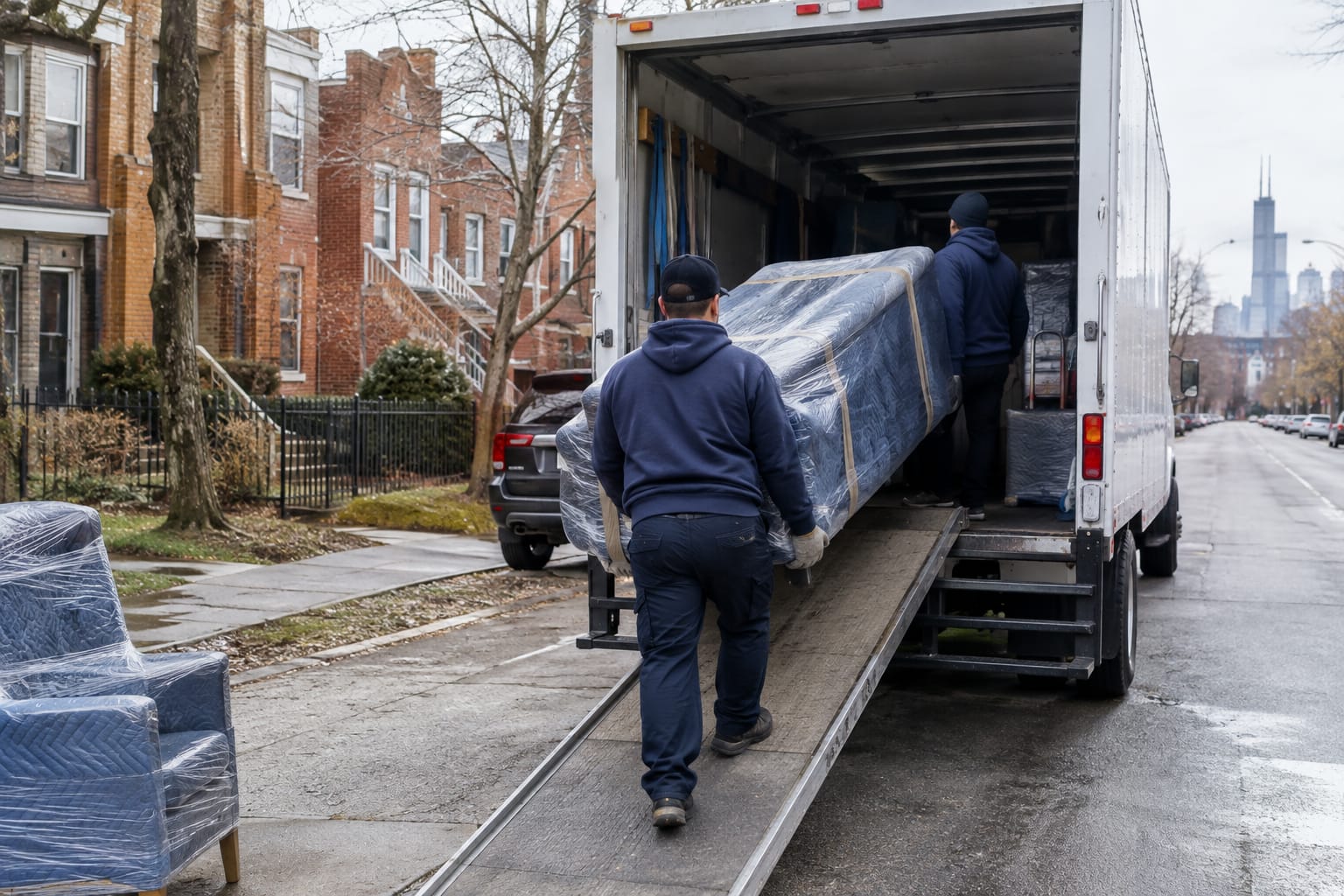
- Moving day: The crew arrives within the agreed window, walks the home with you, disassembles and pads furniture, and loads with dollies, straps, and moving blankets.
- Final walk-through: Check every room, closet, and basement at the old place. Inspect furniture at the new one before the crew leaves, and note any issue on the paperwork that day.
Late summer compresses this schedule. Many Boston leases turn over on the same date, so crews, trucks, and permits get scarce at once. If your date falls near it, read up on moving in Boston on September 1 and start step one earlier.
5. Furniture Disassembly, Wrapping, and Floor Protection
Floor protection means runners, pads, or coverings laid over floors and entryways so dollies and boots do not scratch hardwood or track in grime. Furniture disassembly means removing legs, bed frames, and table leaves so pieces clear doorways and ride securely. Included or extra? Usually included for basic pieces; complex items often cost extra.
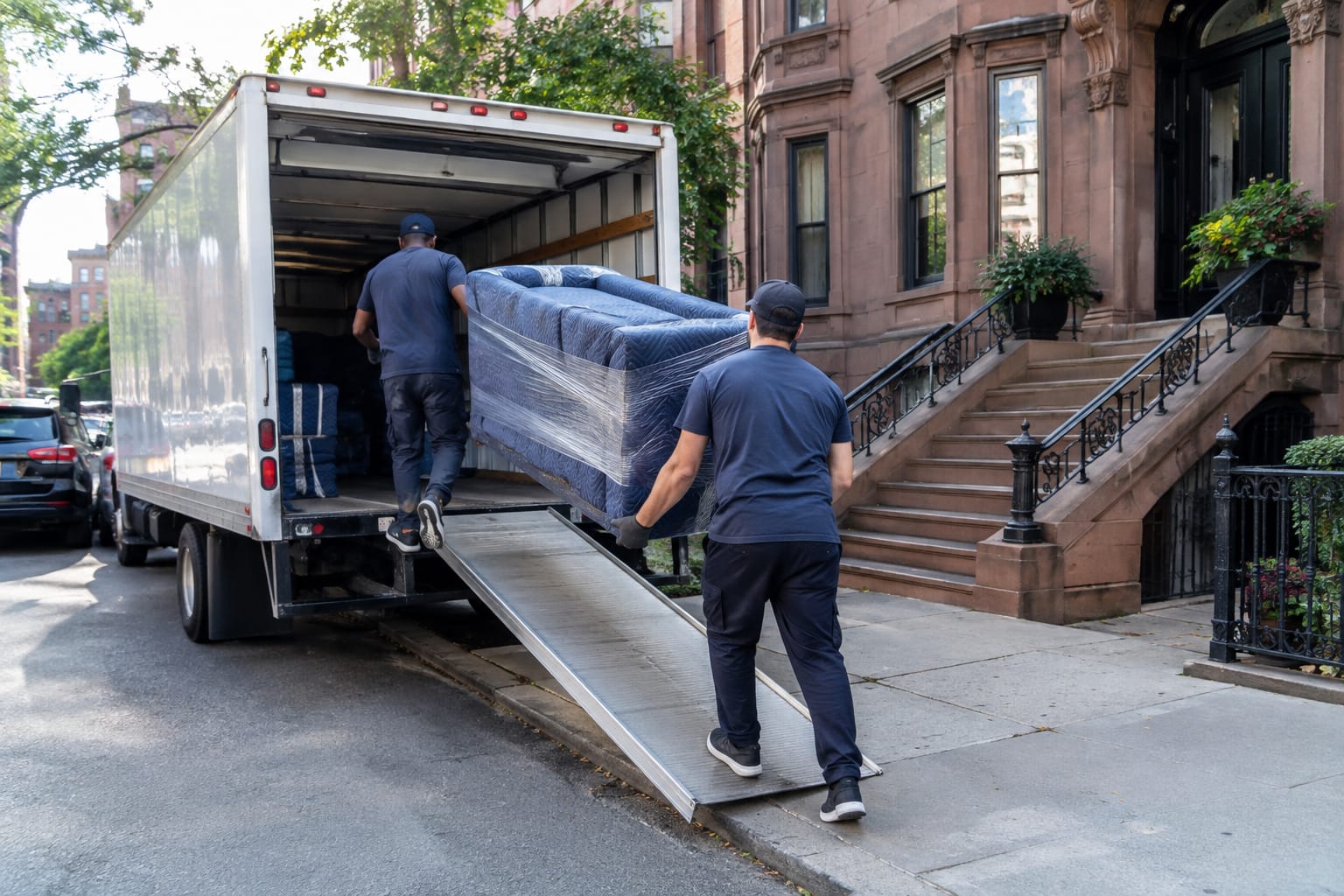
Under the hourly terms described in item 2, moving blankets, floor protection, and basic disassembly and reassembly come with the crew. Wrapping sofas and dressers in blankets and plastic keeps fabric clean and stops corners from catching door frames.
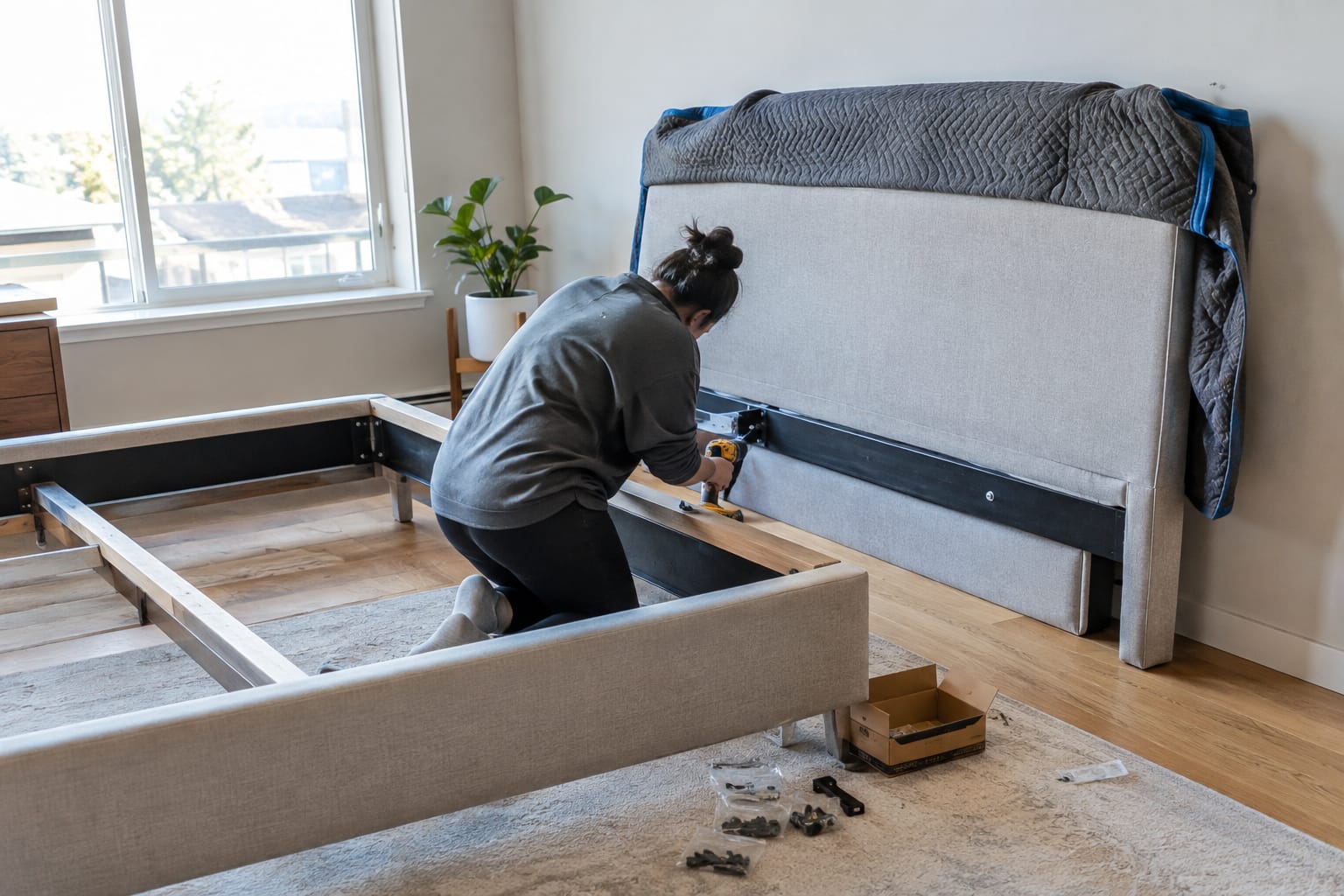
“Basic” is the operative word. Standard bed frames, table legs, and simple shelving fit that definition at most companies. Wall beds, built-ins, wall-mounted TVs, large flat-pack wardrobes, and exercise equipment often fall outside it, so list them up front.
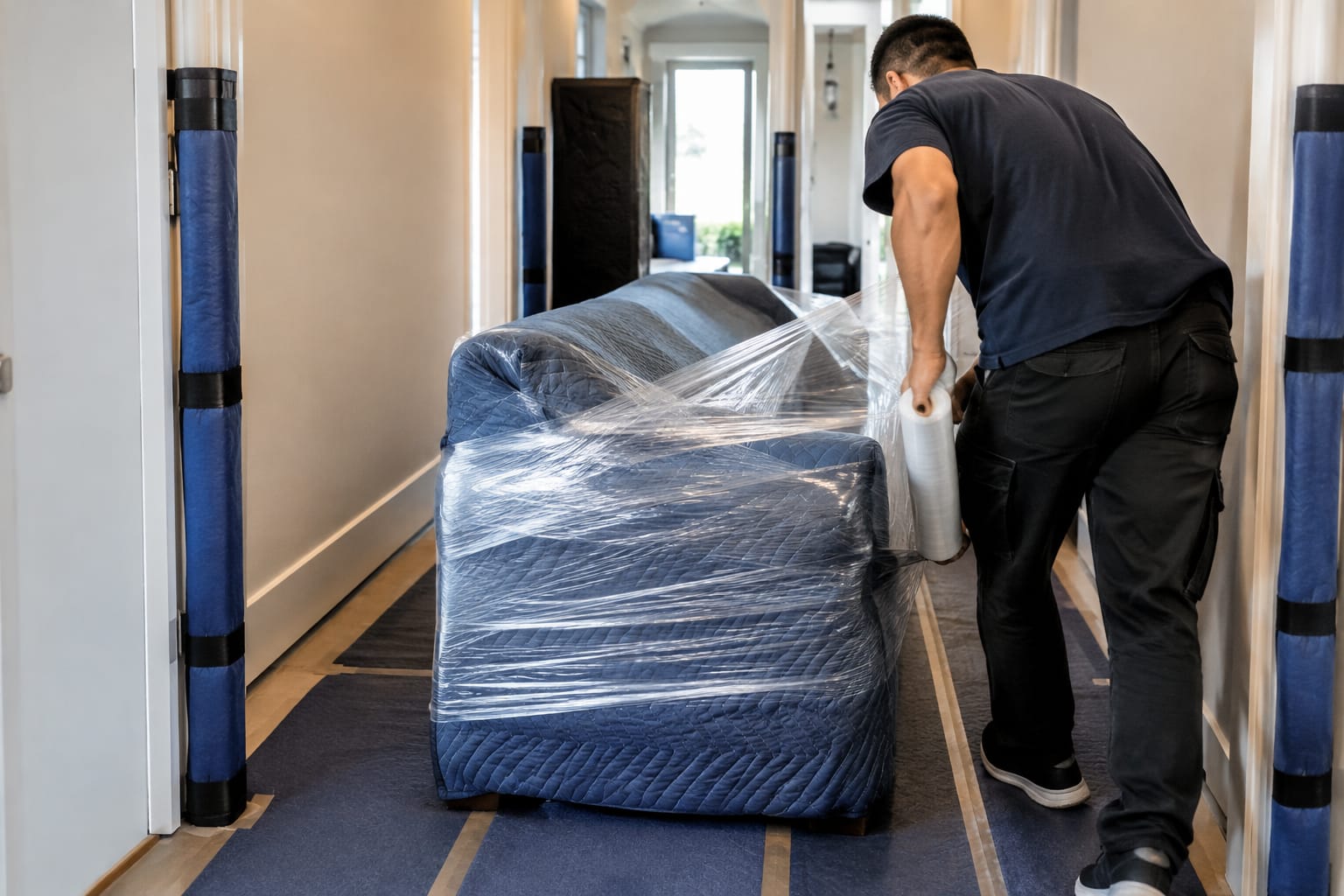
- Ask your mover: Which of my pieces count as basic disassembly, and will the same crew reassemble them at the new home?
- DIY note: Bag and label the hardware for each piece and tape the bag to the furniture. The guide on how to prepare furniture for a move covers the details.
6. Full or Partial Packing Services (and Why Supplies Are Billed Separately)
Full packing means the crew packs the entire home. Partial packing covers selected rooms or items, usually the kitchen, fragile pieces, art, and electronics. Included or extra? Extra. Packing labor and packing supplies both add to the bill.
On hourly moves, packing labor is commonly billed at the crew's hourly rate. Supplies such as boxes, tape, shrink wrap, mattress bags, and specialty cartons are invoiced separately, because the quantity depends entirely on your home. If a quote says nothing about materials, assume they are not included.
Self-packing is the most direct way to shorten crew hours. Have every box packed, taped, and labeled before the truck arrives. For how professional packing and moving services work in practice, see packing and unpacking help, and check whether moving companies provide boxes before you shop for supplies.
There is also a middle path. Many movers offer labor-only help to load a rental truck or portable container you have already booked, which pairs DIY transport with professional loading.
- Ask your mover: How are supplies priced, and which items will the crew pack versus leave for you?
- DIY note: Use the packing supplies checklist so you buy the right quantities once.
Need help with this? Get a quote
7. Loading, Unloading, Stairs, and Elevator Coordination
Loading and unloading means carrying items to and from the truck and securing them inside with straps and pads. Included or extra? Included in hourly time. Stairs, elevators, and long carries add hours and, at some companies, separate fees.
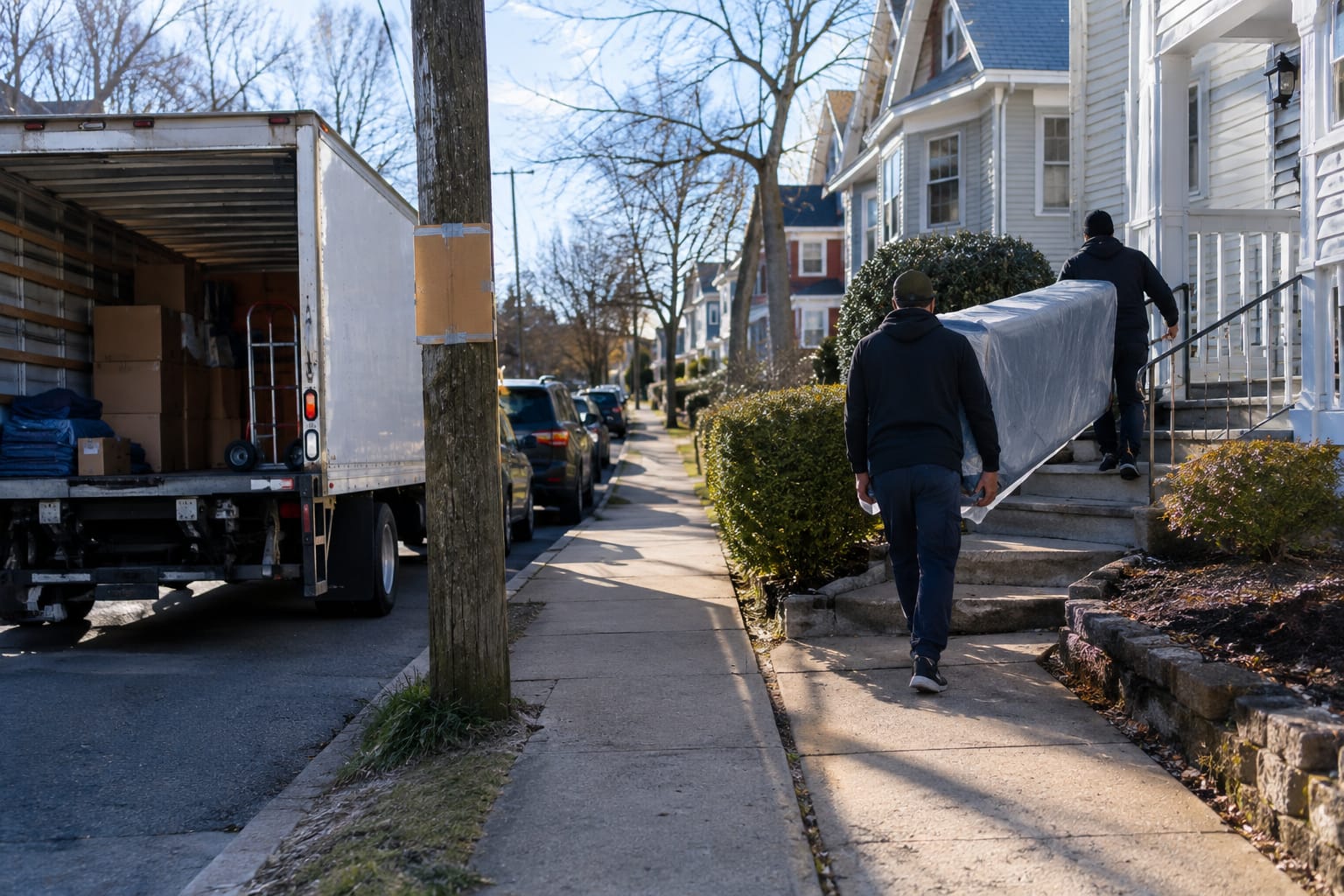
Elevators are a frequent bottleneck in Boston-area apartment buildings. Many buildings require a reserved service elevator, padded walls, a fixed time slot, and sometimes a certificate of insurance from the mover. Learn how to reserve a building elevator for your move a week or two ahead.
At the destination, label boxes by room. The crew can then unload straight to each room instead of staging everything in the living room. Office moves follow the same mechanics with more coordination around IT equipment and building access, so bring the property manager in early.
- Ask your mover: Does the estimate assume an elevator at both addresses, and do you charge for stairs or long carries?
- DIY note: Elevator reservations and building rules apply to DIY moves too, and building managers often book slots weeks ahead.
8. Fragile, Valuable, and Heavy Items: What to Disclose Before You Book
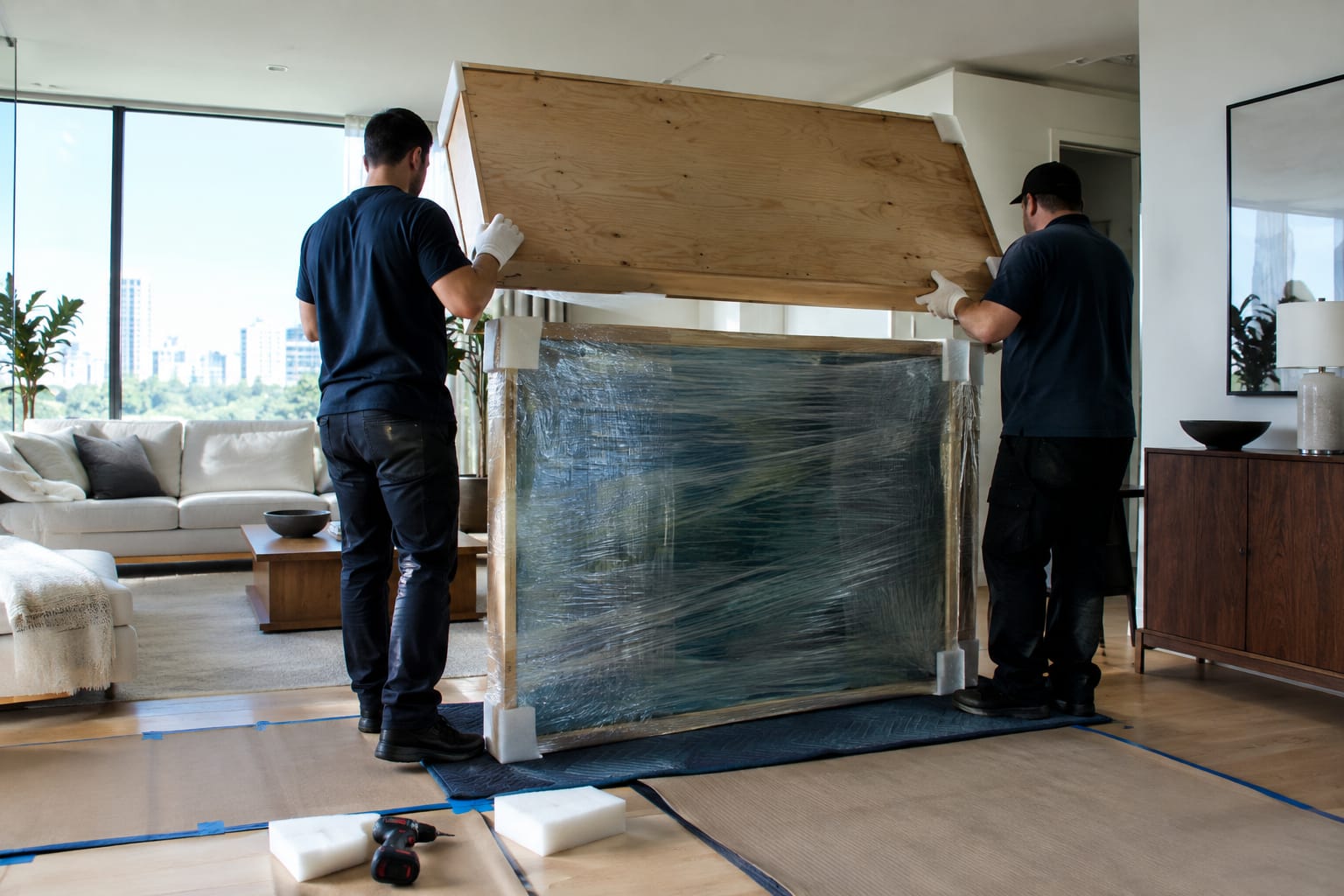
Specialty items are pieces that need extra crew, equipment, or handling: pianos, safes, pool tables, large aquariums, marble tops, and framed art. Included or extra? Often extra, and sometimes outside a standard crew's scope.
Disclose weight, dimensions, and the exact path out, including stairs, turns, and thresholds. The mover can then confirm whether a standard crew can handle the piece, what equipment it needs, or whether a specialist is the right call. For local piano movers in particular, review these tips for moving a piano before requesting a quote.
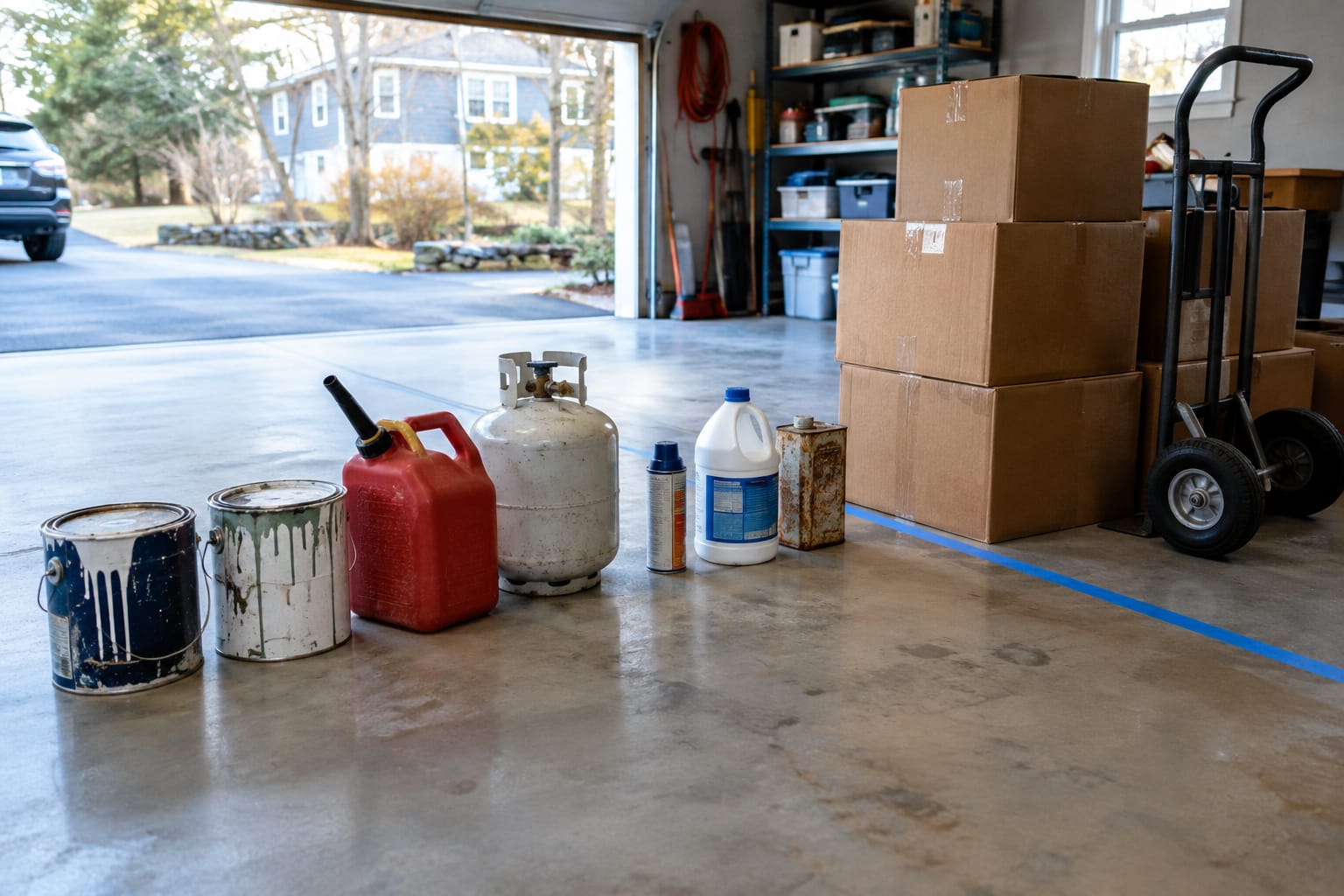
Keep some things with you. Cash, jewelry, important documents, and medications belong in your car, not the truck. Movers also commonly refuse hazardous materials, propane tanks, and perishables.
Valuation matters most for high-value pieces. Under Born to Move's basic released-value protection for local moves, liability is capped at $0.60 per pound per item, so in a simple example a 40-pound television is valued at $24 regardless of its price. For interstate moves, see FMCSA's guide to valuation and insurance options. Higher protection is optional and costs extra; the FAQ below covers the difference.
9. Short- and Long-Term Storage Between Homes
Moving and storage means the crew loads your belongings, holds them for days or months, then delivers them to the new address. Included or extra? Always extra, usually as a monthly charge based on the volume stored.
Storage fills the gap when closing dates do not line up, a renovation runs long, or one lease ends before the next begins. Judge it on handling, not just price. Furniture should stay wrapped, every item and box should be numbered on an inventory sheet, and access and delivery-out should follow a clear schedule.

If storage is part of your plan, compare those points against the details on moving and storage in Newton.
- Ask your mover: How is the monthly rate calculated, how do I access my items, and how much notice does delivery-out need?
Local Move Services at a Glance: Included, Extra, and What to Ask
This table summarizes typical practice for local moving services. Every mover's terms differ, so treat the last column as your checklist.
| Service | Usually included | Often extra | Ask your mover |
|---|---|---|---|
| Written estimate | Yes, before booking | — | What access conditions did you assume? |
| Crew and truck | Yes, in the hourly rate | — | When does the clock start and stop? |
| Travel time | Counted toward the minimum | Billed hourly | How is travel calculated? |
| Street parking or permit | — | Arranged by the customer | Who posts the no-parking signs? |
| Blankets, floor protection, shrink wrap | Yes, with the crew | — | Are floors protected at both homes? |
| Basic disassembly and reassembly | Yes, standard pieces | Wall beds, built-ins, TV mounts | Which of my pieces count as basic? |
| Packing labor | — | Billed hourly | Full or partial, and how long? |
| Packing supplies | — | Billed separately | How are boxes and wrap priced? |
| Stairs, elevators, long carries | Time is billed | Fees at some companies | Does the estimate assume an elevator? |
| Pianos, safes, heavy items | — | Extra crew or a specialist | Can your crew handle this piece? |
| Valuation coverage | Basic per-pound released value | Higher protection | What is covered, and at what cost? |
| Storage | — | Monthly, by volume | How do access and delivery-out work? |
If your move stays within Greater Boston, compare these answers against the crew options for local moving in Boston, including what each hourly crew brings on moving day.
The pattern across all nine items is consistent: costs rise when something goes undisclosed, and moves run smoothly when inventory, access, and parking are settled in writing. Born to Move builds its local estimates from those same inputs, so the checklist above works as your preparation for any quote you request.
How far ahead should I book movers for a Boston local move, especially around September 1?
For a date near September 1, request estimates in late spring or early summer and book once your new address is confirmed, because crews, trucks, and street permits all tighten in late August. For other months, the 4–6 week booking window in the timeline above leaves room for permits and elevator reservations. Allow more lead time for large homes or specialty items.
Is basic released-value protection the same as moving insurance?
No. Released value is a liability limit set by weight, not an insurance policy, which is why the $0.60-per-pound figure covers so little on light, expensive items. Under Born to Move's local-move terms, Full Value Protection is an optional, higher level of mover liability that costs extra, and some households also check whether a homeowner's or renter's policy covers belongings in transit. For interstate moves, FMCSA's Your Rights and Responsibilities When You Move booklet explains both options, and federal rules allow 9 months to file a damage claim.
Written by Born to Move Team
Useful Links
- Request a Local Moving Quote
- Born to Move Hourly Rates and Billing Terms
- Where Can I Park My Moving Truck in Boston?
- How to Prepare Furniture for a Move
- What to Look for in a Moving Company
Need help with this? Boston Local Movers · Get a quote · Call (617) 903-2609
Frequently Asked Questions