'%3E%3Cpath%20fill='%231B2A47'%20d='M1.605%2016.263c.03-1.139.059-2.482.088-3.971.03-1.49.03-2.832.03-4.03%200-.758%200-1.576-.03-2.51%200-.905-.03-1.84-.03-2.803%200-.496-.028-.964-.028-1.43%200-.468%200-.906-.03-1.315h6.858q2.188%200%203.589.35c.963.234%201.663.643%202.13%201.198.496.555.73%201.372.73%202.394%200%20.788-.176%201.46-.497%201.985-.32.526-.846.935-1.575%201.197-.73.292-1.693.468-2.918.526v.263c1.313.087%202.334.263%203.122.525.758.263%201.342.672%201.692%201.197.35.526.525%201.197.525%202.044%200%201.08-.233%201.927-.67%202.57-.468.642-1.139%201.08-2.102%201.343-.933.262-2.159.408-3.705.408H1.605zm6.537-9.197q1.882%200%202.713-.526c.555-.35.817-.934.817-1.752%200-.905-.292-1.547-.846-1.927s-1.459-.554-2.655-.554H4.757v4.759zm.204%206.92c.934%200%201.663-.088%202.217-.263.555-.176.934-.438%201.197-.818s.38-.876.38-1.518c0-.876-.322-1.49-.934-1.84-.643-.35-1.635-.525-3.035-.525H4.757v4.963zM21.038%2016.555c-1.576%200-2.801-.292-3.618-.905-.817-.614-1.284-1.519-1.372-2.745-.087-1.226.205-2.774.847-4.613s1.43-3.358%202.392-4.584c.963-1.226%202.043-2.131%203.298-2.744C23.839.292%2025.24%200%2026.786%200c1.576%200%202.772.321%203.59.934.816.613%201.283%201.548%201.37%202.774s-.203%202.774-.845%204.613c-.642%201.81-1.43%203.358-2.393%204.584s-2.072%202.132-3.297%202.745a9.8%209.8%200%200%201-4.173.905m.788-2.278c.642%200%201.138-.058%201.371-.116.205-.059.496-.117.847-.322.262-.146.437-.292.554-.408.204-.175.32-.292.438-.41.204-.203.35-.408.496-.583.35-.438.642-.876.963-1.402.233-.408.466-.817.67-1.284.205-.438.38-.905.555-1.372.438-1.198.671-2.278.671-3.183s-.204-1.606-.612-2.131c-.409-.497-1.051-.76-1.897-.76-.467%200-.934.059-1.43.205h-.03c-1.02.292-1.925%201.226-2.042%201.372-.116.117-.467.526-.963%201.343a15.5%2015.5%200%200%200-1.342%202.92c-.408%201.197-.642%202.277-.671%203.182-.03.906.175%201.636.584%202.161q.611.788%201.838.788M14.853%2038.54c-1.576%200-2.802-.292-3.619-.905s-1.284-1.518-1.371-2.744c-.088-1.227.204-2.774.846-4.614s1.43-3.357%202.393-4.584%202.042-2.13%203.297-2.744c1.255-.613%202.655-.905%204.173-.905%201.575%200%202.772.321%203.589.934s1.284%201.548%201.371%202.774c.088%201.226-.204%202.774-.846%204.613-.642%201.81-1.43%203.358-2.393%204.584s-2.072%202.131-3.297%202.745c-1.226.613-2.626.846-4.143.846m.787-2.277c.642%200%201.138-.059%201.372-.117.204-.058.496-.117.846-.321.263-.146.438-.292.554-.409.205-.175.321-.292.438-.409.204-.204.35-.408.496-.584a13%2013%200%200%200%201.634-2.686c.204-.438.38-.905.555-1.372.437-1.197.67-2.277.67-3.182%200-.906-.203-1.606-.612-2.132-.409-.496-1.05-.759-1.897-.759-.467%200-.934.058-1.43.204h-.029c-1.021.292-1.925%201.227-2.042%201.373-.117.116-.467.525-.963%201.343a15.5%2015.5%200%200%200-1.342%202.92c-.409%201.196-.642%202.277-.671%203.182s.175%201.635.583%202.16q.613.789%201.838.789'/%3E%3Cpath%20fill='%23FF515E'%20d='M55.966%2038.57c-1.576%200-2.801-.293-3.618-.906s-1.284-1.518-1.372-2.744c-.087-1.227.204-2.774.846-4.613s1.43-3.358%202.393-4.584c.963-1.227%202.043-2.132%203.297-2.745s2.656-.905%204.173-.905c1.576%200%202.772.321%203.589.934s1.284%201.548%201.371%202.774c.088%201.226-.204%202.774-.846%204.613-.642%201.81-1.43%203.358-2.393%204.584s-2.071%202.131-3.297%202.745c-1.225.613-2.626.846-4.143.846m.788-2.249c.642%200%201.138-.058%201.371-.117.204-.058.496-.116.846-.32.263-.147.438-.293.555-.41a7%207%200%200%200%20.437-.408c.205-.205.35-.41.496-.584a13%2013%200%200%200%201.634-2.686c.205-.438.38-.905.555-1.373.438-1.197.671-2.277.671-3.182s-.204-1.606-.613-2.131c-.408-.497-1.05-.76-1.896-.76-.467%200-.934.059-1.43.205h-.03c-1.02.292-1.925%201.226-2.042%201.372-.117.117-.467.526-.963%201.343a15.5%2015.5%200%200%200-1.342%202.92c-.409%201.197-.642%202.277-.671%203.182s.175%201.635.583%202.16q.614.79%201.839.79'/%3E%3Cpath%20fill='%231B2A47'%20d='M33.06%2016.263c0-.35%200-.935.03-1.81.029-1.051.058-2.103.058-3.154s.03-2.073.03-3.007c0-1.606-.03-3.27-.06-4.993%200-.554-.028-1.08-.028-1.606%200-.525-.03-1.021-.03-1.46h6.828c1.46%200%202.685.117%203.59.38q1.4.394%202.1%201.314.7.963.7%202.628c0%20.992-.174%201.81-.554%202.452-.35.643-.904%201.11-1.604%201.431s-1.576.467-2.627.496v.263q2.058.087%203.064.876c.671.525%201.138%201.372%201.43%202.51.087.41.233%201.023.467%201.84.233.818.408%201.431.554%201.84h-3.414a11%2011%200%200%200-.262-1.022c-.321-1.314-.526-2.19-.584-2.628a5%205%200%200%200-.642-1.46%202.13%202.13%200%200%200-.963-.73c-.408-.146-.934-.233-1.605-.233h-3.326v6.0440000000000005H33.06zm6.332-8.292c1.343%200%202.276-.205%202.86-.613.554-.41.846-1.11.846-2.073%200-.73-.146-1.314-.408-1.723-.263-.409-.671-.7-1.197-.876q-.788-.263-2.1-.263h-3.181v5.519h3.18zM49.4%2016.263l.03-2.745c.029-2.452.029-4.905.029-7.416q0-2.101-.088-5.868h4.085l5.924%2010.335c.087.234.204.438.291.643.117.204.205.408.321.613.38.788.613%201.255.672%201.372h.262c0-.058-.03-.146-.03-.204%200-.059-.028-.117-.028-.175a75%2075%200%200%201-.175-1.314%2010%2010%200%200%201-.088-1.285c0-1.547%200-3.737-.029-6.57V1.84c0-.584-.03-1.11-.03-1.576h2.977c-.03%202.482-.058%205.08-.058%207.766%200%201.694%200%204.438.029%208.292h-4.027l-5.573-9.43c-.875-1.81-1.226-2.511-1.05-2.132-.263-.613-.467-1.08-.613-1.46h-.263c.058.35.117.876.175%201.548.059.7.117%201.168.117%201.46%200%202.978%200%206.306.029%209.985H49.4zM4.698%2038.277c.029-2.627.058-5.255.058-7.883%200-1.576%200-3.503-.029-5.752-1.109%200-2.684%200-4.727.03v-2.453h12.664v2.453c-1.955-.03-3.53-.03-4.756-.03%200%20.584-.03%201.227-.03%201.957s0%201.46-.029%202.218v1.84c0%202.57.03%205.11.059%207.62z'/%3E%3Cpath%20fill='%23FF515E'%20d='M29.441%2038.277c.409-1.05.788-2.102%201.168-3.182s.787-2.16%201.167-3.241c.613-1.693%201.05-2.949%201.342-3.766l1.255-3.65c.116-.38.262-.788.379-1.139.117-.38.263-.73.38-1.05h4.61l-.671%2012.904h.262l8.316-12.905h4.669l-.7%201.869c-.876%202.452-1.343%203.766-1.43%204a501%20501%200%200%200-3.385%2010.16h-2.947c.292-.846.788-2.219%201.459-4.087.175-.526.35-1.08.554-1.606.175-.526.38-1.08.555-1.577.642-1.81%201.342-3.825%202.072-6.014h-.234l-8.724%2013.314h-2.86l.554-13.314h-.175c-.175.496-.38.992-.554%201.489-.175.496-.38%201.022-.555%201.547a163%20163%200%200%200-1.08%203.008c-.145.38-.262.759-.408%201.138-.117.38-.262.73-.408%201.11-.7%201.898-1.284%203.59-1.751%205.05h-2.86zM68.047%2038.277c.175-2.19.32-4.525.467-7.007.058-.905.204-3.912.467-9.051h3.151c-.03.438-.058.934-.088%201.46s-.058%201.08-.087%201.693a264%20264%200%200%201-.409%206.657c-.145%201.986-.35%203.591-.583%204.788h.175Q72.147%2034.892%2073.94%2032a562%20562%200%200%201%204.465-7.066c.32-.496.641-.992.933-1.46s.555-.875.817-1.255h3.268q-.568.832-1.138%201.752c-.408.613-.787%201.255-1.196%201.927-3.88%206.014-6.478%2010.131-7.85%2012.35h-5.193zM79.106%2038.277c.32-.788.758-2.014%201.37-3.65a287%20287%200%200%200%201.577-4.32c.437-1.256.904-2.628%201.4-4.088s.934-2.774%201.313-3.97h11.322l-.846%202.364H87.1l-1.664%204.847%207.645-.088-.612%201.694-7.587-.088-1.75%204.934h8.286l-.846%202.365z'/%3E%3C/g%3E%3Cdefs%3E%3CclipPath%20id='a'%3E%3Cpath%20fill='%23fff'%20d='M0%200h96v40H0z'/%3E%3C/clipPath%3E%3C/defs%3E%3C/svg%3E)
Moving from Boston to New York City covers roughly 215 miles and usually takes a professional crew one to two days door to door. Many full-service jobs load in Boston and deliver the same evening or the next morning. Cost depends on home size, building access at both ends, and your destination borough.
Experienced boston to new york movers treat this route as an interstate relocation, not a long local haul. That changes the licensing, paperwork, and delivery model from the start.

Key Takeaways
| Point | Details |
|---|---|
| Distance and time | The route is about 215 miles down I-95, and most moves finish in one to two days. |
| What drives cost | Volume, stairs and elevators, parking, NYC building requirements, and delivery timing set the price. |
| NYC building rules | Many Manhattan and Brooklyn buildings require a Certificate of Insurance and a booked service elevator before move-in. |
| Delivery model | Dedicated (exclusive-use) trucks make same-evening or next-morning delivery practical on this corridor. |
Planning Your Move from Boston to New York City
A smooth Boston-to-NYC relocation starts four to six weeks out and hinges on three priorities: booking a licensed interstate carrier, confirming building access on both ends, and getting a written estimate based on your actual inventory.
Vet carriers before you compare prices. Reading how to find honest and reliable movers first helps you filter lowball bids and avoid hostage-load disputes.
Then prepare the destination financially. If you are weighing the jump, whether it costs more to live in Boston or New York City and how much to save before moving to New York City are worth reading before you sign a lease.
Pro Tip: Book at least three weeks ahead if your date lands near the first of the month. Boston's September 1 lease turnover and NYC move-in cycles drain crew availability fast. Reserve your date as soon as your lease or closing is confirmed, even if your inventory isn't final yet.
How Far Is It and How Long the Boston–NYC Move Really Takes
The drive is about 215 miles down I-95, roughly four hours without traffic. A common question is how long does it take to move from boston to new york, and the honest answer is one to two days door to door.
Q: How long does it take to move from Boston to New York?
A: A professional crew usually completes the move in one to two days—loading and driving the ~215-mile, four-hour route the same day, with delivery either the same evening or the next morning.
Studio and one-bedroom apartments often load, drive, and unload within a single day. Larger homes, walk-ups, and tricky parking push delivery into a next-day window. Planning the travel leg? How to get from Boston to New York covers the route options in detail.
One route-specific risk: low bridges and parkways. Crews study clearances to avoid getting "Storrowed"—the local term for wedging a truck under a low overpass.
| Home size | Load + drive | Delivery window |
|---|---|---|
| Studio / 1-bed | Same day | Same evening or next morning |
| 2-bed apartment | Same day | Next-day |
| 3+ bed house | Full day to load | 1–2 days |

What Drives the Cost of a Boston-to-NYC Move (Binding vs. Non-Binding Estimates)
The boston to nyc moving cost depends mostly on volume, access, and the type of estimate you sign. Two apartments with the same bedroom count can price very differently, so treat any per-size figure you see online as a rough starting point, not a quote.
The variables that move your number are predictable, and a good written estimate should account for each one:
- Volume and inventory — the number and size of items, plus heavy or specialty pieces.
- Building access — a fourth-floor walk-up takes more labor than an elevator building, and long carries from the curb add time.
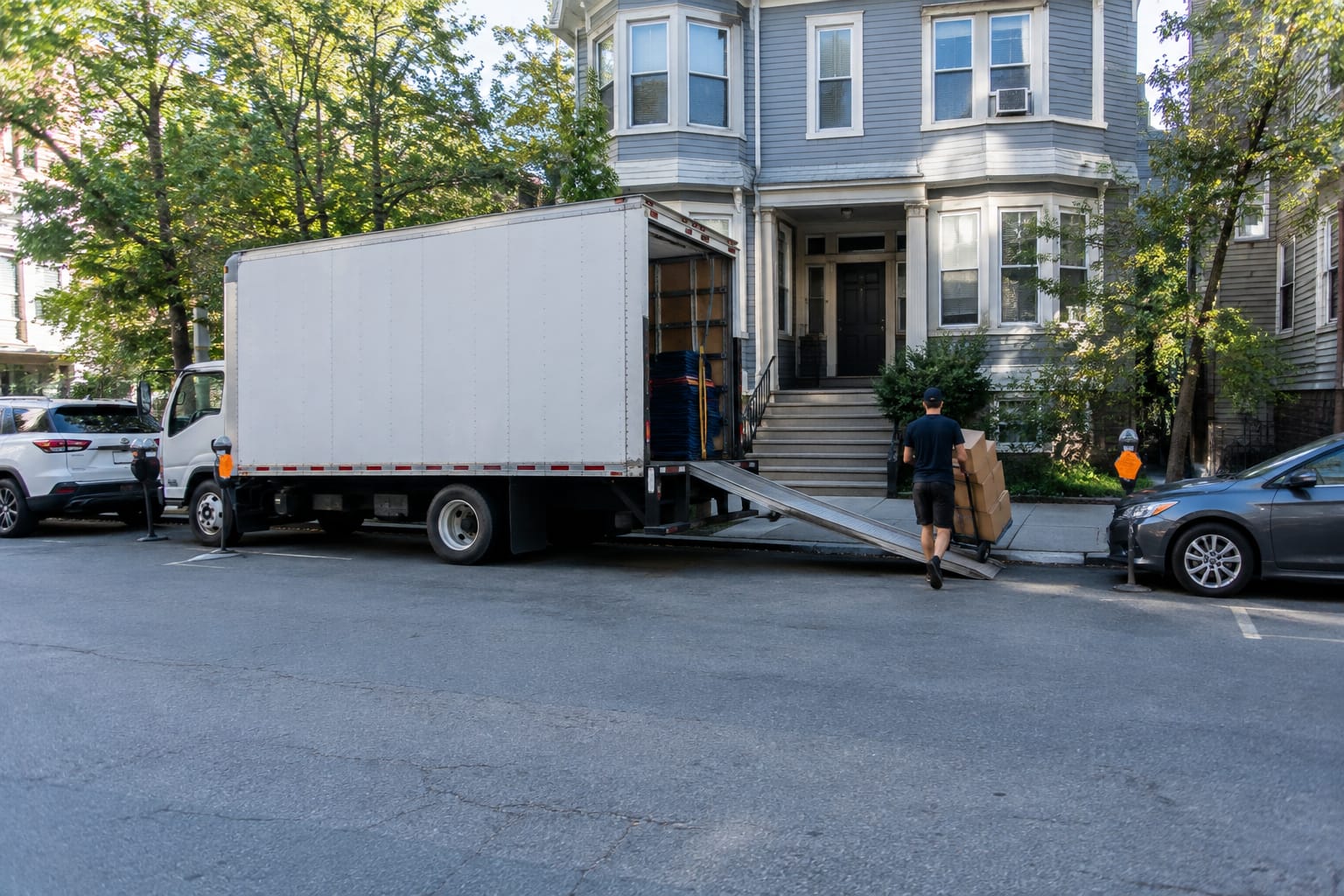
- Parking — dense NYC blocks and Boston streets where the truck can't sit at the door.
- Certificate of Insurance and elevator windows — required by many Manhattan and Brooklyn buildings (covered below).
- Tolls and mileage on the I-95 corridor.
- Delivery timing — same-evening, next-morning, or a later window.
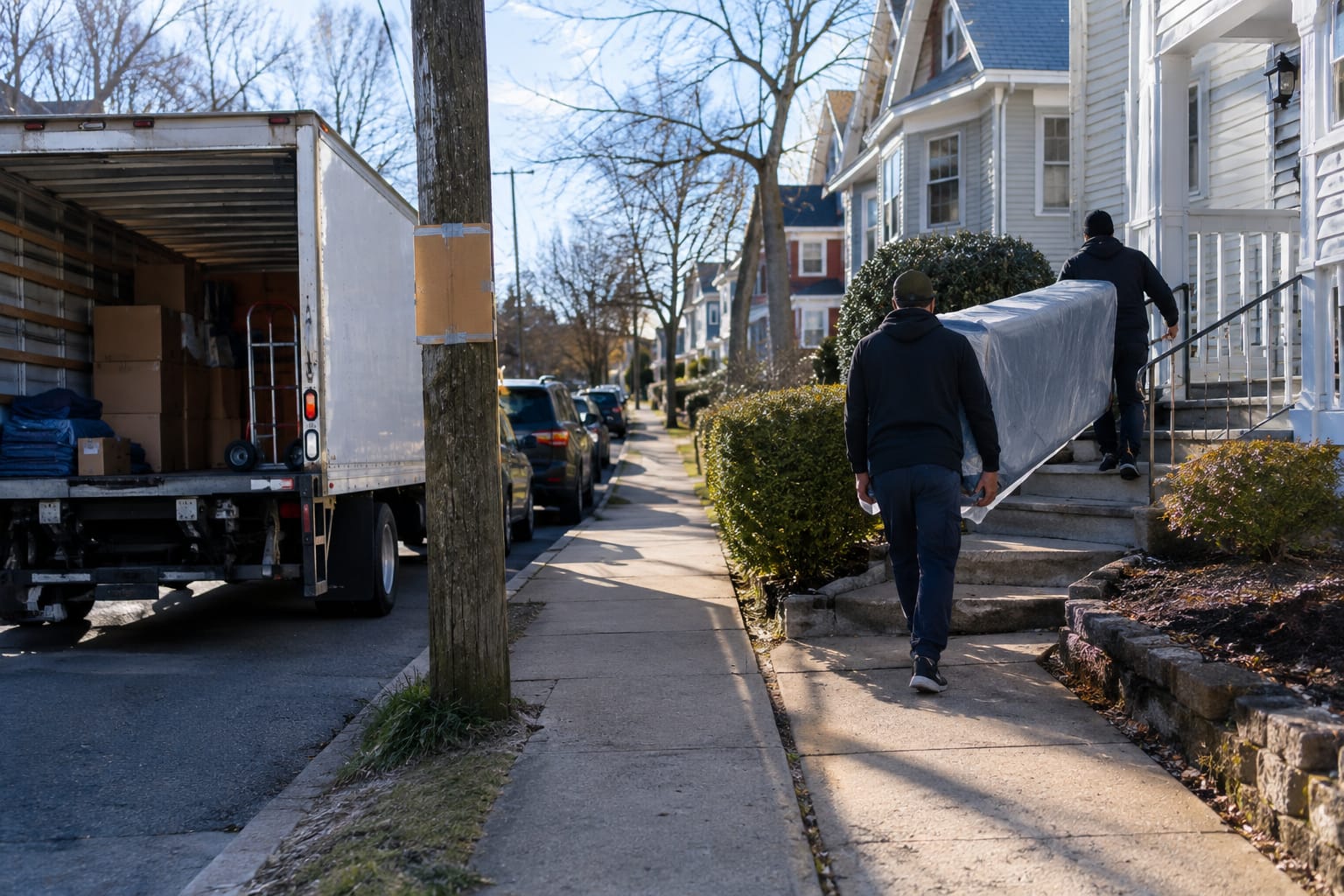
- Packing — professional packing labor and materials (boxes, tape, shrink wrap, mattress bags) are typically billed on top of the move itself.
For interstate moves, confirm the current estimate rules with the relevant federal authority.
| Estimate type | How it works | What to watch |
|---|---|---|
| Binding | Price is fixed for the inventory and services listed | Added items or services can change the total—keep the inventory accurate |
For a deeper look at estimate mechanics, see how much movers cost and how interstate moving companies determine the cost of your move.
Pro Tip: Ask for a binding or binding-not-to-exceed estimate for an interstate move. It caps your exposure if the crew hits traffic or a tough walk-up on the NYC side.
Navigating NYC Building Rules: COIs, Elevator Windows, and Tight Access
New York City buildings enforce stricter move-in rules than almost anywhere in New England. Many require a Certificate of Insurance (COI) from your mover and a reserved service elevator before the truck arrives.
Q: What is a COI and why do NYC buildings require one?
A: A Certificate of Insurance proves your mover carries liability and workers' comp coverage naming the building. Many Manhattan and Brooklyn co-ops and rentals won't allow a move-in without one.
Density drives these rules. For current population figures for New York City's five boroughs, see U. Census Bureau population data, so elevators, loading docks, and curb space are tightly managed.
Expect reserved elevator windows, insured freight elevators, and set move hours. Learning how to reserve the elevator ahead of time prevents day-of delays. Parking is equally constrained on the Boston side—review where to park a moving truck in Boston before loading day.
Specialty items need their own plan. A grand piano or upright needs blankets, a dolly, and sometimes a hoist—tips for moving a piano walk through the safeguards.

Moving into Manhattan, Brooklyn, Queens, or the New Jersey Suburbs
Your destination borough reshapes the logistics. The logistics of moving to manhattan from boston usually mean COIs, narrow elevators, and limited curb access.
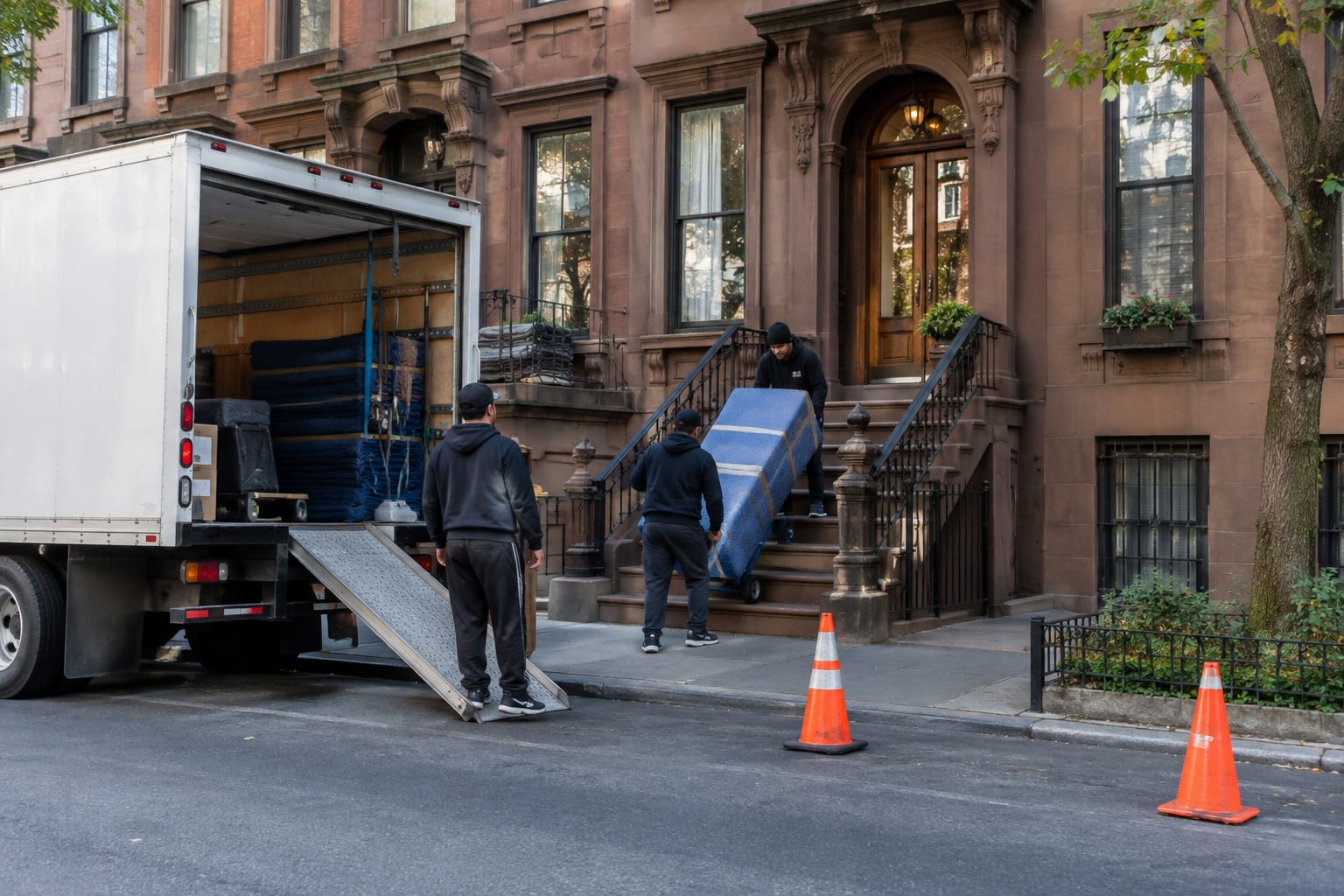
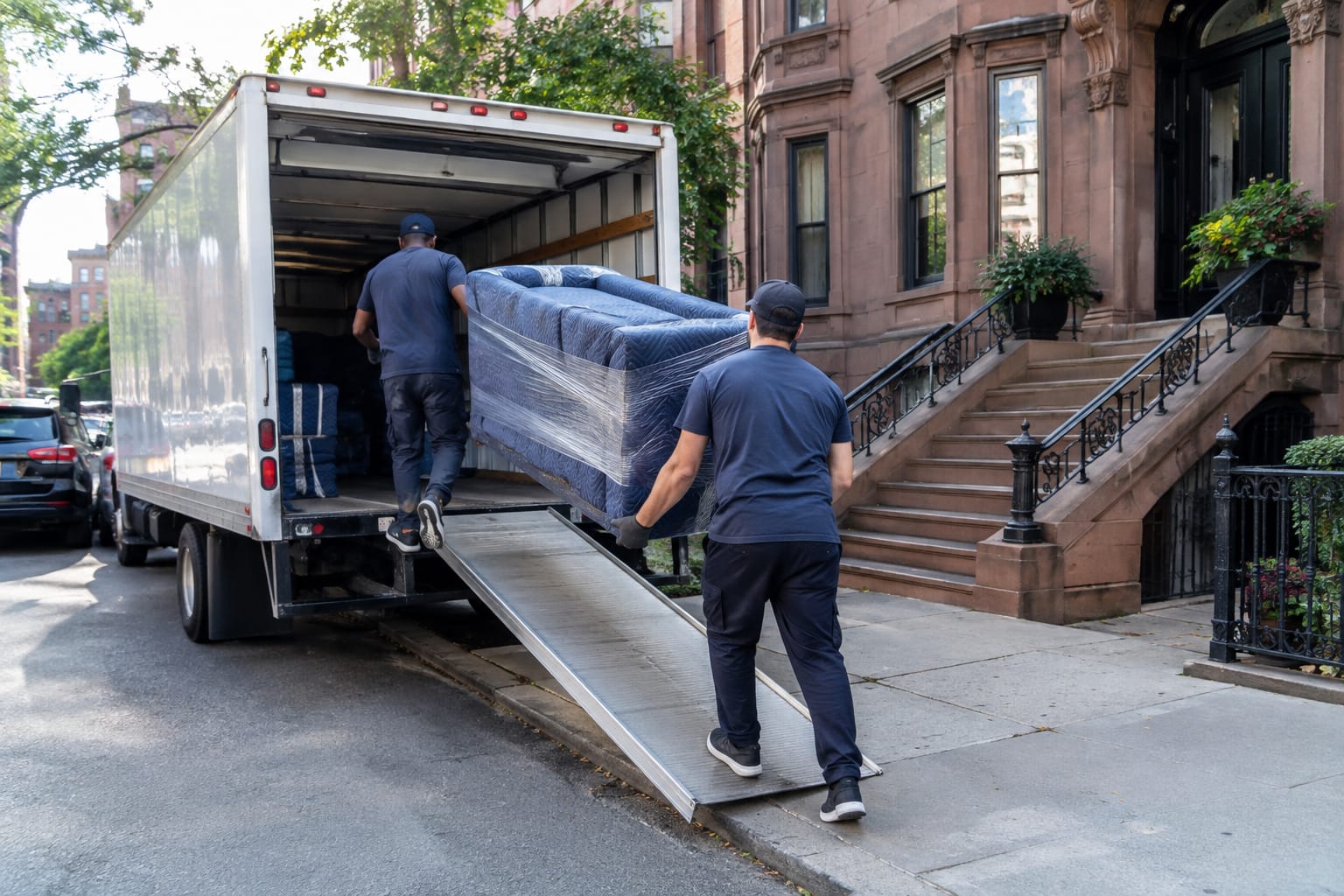
Meanwhile, a boston to brooklyn move often involves brownstone stoops, walk-ups, and tight residential streets with limited truck room. Queens offers more driveway and street parking but longer drive legs within the city.
Heading to the New Jersey suburbs? Access eases considerably—driveways, ground-floor entries, and fewer COI demands. Before you settle in, skim things to know when moving to New York City for neighborhood-level context.
Pro Tip: Photograph your building entrance, hallway width, and elevator interior and send them with your quote request. Movers price access far more accurately when they can see the walk.
Need help with this? Get a quote
Overnight and Next-Day Delivery on the Boston–NYC Route
The short 215-mile distance makes overnight delivery common. Crews often load in Boston during the day, drive south, and unload the same evening or the following morning.
This differs from long-haul interstate moves, where shipments may be consolidated and delivery spans days. For the paperwork and rights that govern interstate jobs, what to know about interstate moving is a useful primer.
Dedicated (exclusive-use) trucks keep your goods on one vehicle end to end, which is what makes next-morning delivery practical on this corridor. If timing is tight, confirm the move is dedicated, not consolidated, and get the delivery window in writing.
Red Flags and Questions to Ask Before You Book
Most problems on this route trace back to a few warning signs you can spot before signing. The FMCSA's Protect Your Move portal covers red flags to watch for.
Watch for these on any Boston-to-NYC quote:
-
No inventory review. A price given over the phone without seeing your belongings—by video, in person, or through a detailed list—is a guess.
-
Large upfront deposits. Ask what you lose if you change or cancel your date, and get the answer in writing.
-
Vague delivery timing. "Sometime next week" is not a delivery window. Ask for specific dates on paper.
-
Pressure to sign blank or incomplete paperwork. Never sign an order for service or bill of lading with empty fields.
Questions worth asking every mover:
- What type of estimate is this—binding, non-binding, or binding-not-to-exceed?
- Will my shipment travel on a dedicated truck?
- Can you provide a COI that meets my building's exact requirements, and how quickly?
- Which charges are not included (packing materials, stair carries, long carries)?
- How do I file a damage claim? Confirm the current requirements for an interstate move with the relevant federal authority before you file.
Getting an Accurate Quote for Your Boston-to-NYC Move
An accurate quote starts with full disclosure: inventory, access details, and any specialty items. Vague inputs produce vague estimates and moving-day surprises.
Verify the carrier's credentials before booking. Every interstate mover needs a USDOT number, and you can learn how to check a moving company's US DOT number in minutes. The FMCSA's Protect Your Move portal is a good place to start when checking a mover.
Q: How do I verify a Boston-to-NYC mover is licensed?
A: Check the company's USDOT number in the FMCSA database at Protect Your Move; a legitimate interstate carrier will show active operating authority and insurance on file.
For instance, Born to Move, which has offices in Newton, MA and Brooklyn, NY, quotes Boston-to-New York moves as a flat rate based on a confirmed inventory and access conditions, gathered by video walk-through, on-site survey, or an online calculator. A written estimate is issued before booking, the delivery window is agreed in writing, and one crew and one truck handle each job. Its federal numbers (USDOT 2887241, MC 985934) can be checked on FMCSA the same way you would check any carrier.
Get everything in writing—estimate type and total, delivery window, COI provisions, and deposit and cancellation terms. Written estimates that spell out every fee are the surest way to avoid disputes.

How much does it cost to move from Boston to NYC?
The cost depends on home size, building access, and the type of estimate you sign. A studio or one-bedroom with elevator access on both ends costs far less than a three-bedroom house with stairs and a COI-required destination. Binding and binding-not-to-exceed estimates give price certainty for the inventory listed, while a non-binding estimate can rise with the actual weight and services. To pin down your number, list every item and disclose stairs, long carries, and specialty pieces upfront. Precise inputs are the only way to receive a precise estimate.
How much does it cost to move a 1-bedroom apartment from Boston to New York?
A one-bedroom usually sits at the lower end of the range for this route, but the price still depends on how much you own, how many stairs or elevator rides are involved, parking at both addresses, and whether your NYC building requires a COI and a booked elevator window. Ask for a written estimate based on a video walk-through or an itemized inventory rather than a flat number quoted by bedroom count alone.
Can movers deliver same day from Boston to New York?
Often, yes. Because the route is only about 215 miles and roughly four hours of driving, many studios and one-bedrooms are loaded, driven, and unloaded within a single day. Larger homes, difficult parking, or reserved NYC elevator windows can push delivery to the next morning. Same-day delivery depends on a dedicated truck that carries only your shipment end to end, rather than a consolidated load shared with other customers. If a same-evening move-in matters, confirm the truck is dedicated and that your destination building allows evening move hours.
Do I need a COI to move into a NYC apartment?
Usually, yes. Many Manhattan and Brooklyn co-ops, condos, and managed rentals require a Certificate of Insurance from your mover before the truck is allowed in. The COI names the building and proves the mover carries liability and workers' compensation coverage. Request it from your mover at least a few days ahead, since management offices often need time to review and approve it. Missing or incorrect COIs are a common cause of move-day lockouts, so confirm the building's exact insurance limits and formatting requirements in writing before your date.
Is it cheaper to move to Manhattan or Brooklyn from Boston?
The transit cost is similar because the distance barely changes, but access costs differ. Manhattan moves frequently add elevator reservations, COIs, and limited curb access, which can extend crew time. A Brooklyn brownstone with a stoop or walk-up adds stair carries instead. Neither is universally cheaper—the deciding factor is your specific building's stairs, elevator availability, and parking. Ground-floor units and buildings with loading docks are the most economical, wherever they sit.
Should I hire movers or move yourself from Boston to NYC?
Hiring professionals is the common choice for this route because NYC parking, COIs, and low-clearance parkways punish inexperience. A DIY rental truck can save money on a small load, but you assume the risk of getting "Storrowed," ticketed, or locked out over a missing COI. Full-service crews handle loading, the 215-mile drive, and building logistics in one to two days. For anything larger than a studio, the time saved and damage risk avoided usually justify professional help.
Recommended Reading
- What to Know About Interstate Moving
- How to Plan Moving to Another City
- 8 Moving Tips for the Smoothest Moving Experience
- What Is a Good Tip for Movers
If you'd like a written estimate for your own move, Born to Move accepts quote requests through its online quote form.
Need help with this? Get a quote · Call (617) 903-2609
Frequently Asked Questions