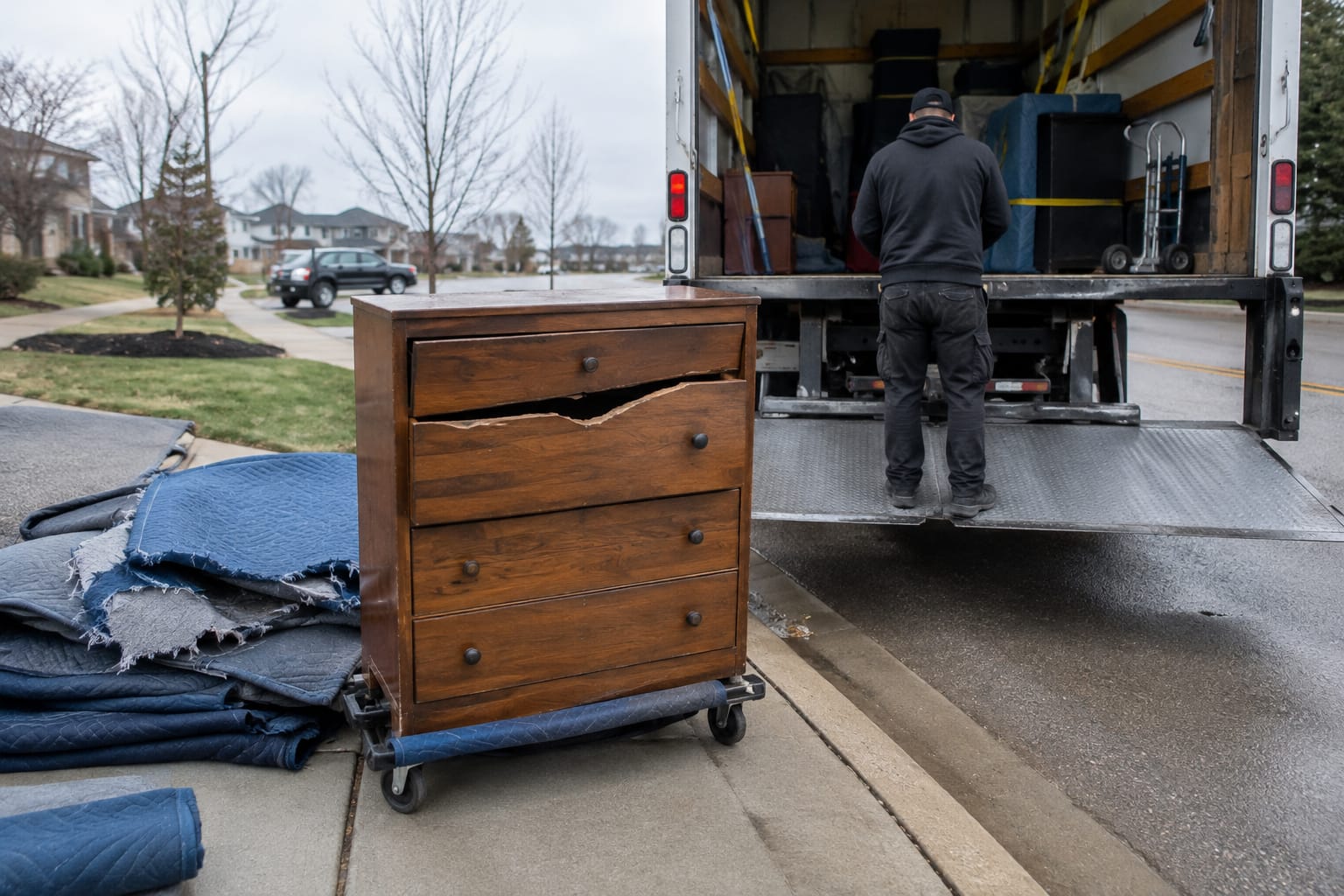
A binding moving estimate fixes the price of your interstate move to the inventory and services written on it. A non-binding estimate is the mover's approximation, and the final bill depends on the actual weight of your shipment. A binding-not-to-exceed estimate caps the price but lets it drop if your goods weigh less than estimated.
All three come from the federal consumer protection rules in 49 CFR Part 375, which govern household goods movers that cross state lines. The label matters, but the paperwork around it is what protects you. This guide compares the three types side by side, lists what can still change the price after you sign, and gives you a checklist of documents to get in writing.

Key Takeaways
-
Binding estimate: one price for the listed inventory and services. If you add items or services, the estimate has to be revised in writing before loading.
-
Binding-not-to-exceed: a ceiling, not a fixed number. You pay the estimate or the actual-weight price, whichever is lower.
-
Three core documents: written estimate, order for service, bill of lading. Read each one and keep a copy.
The Three Estimate Types Under Federal Rules
Here is each one in a sentence:
- Binding: you pay the amount on the estimate for the shipment and services it describes.
- Non-binding: you pay based on the actual weight of your shipment and the services provided, using the mover's published rates (its tariff).
Whichever type you receive, it must be in writing. FMCSA's Protect Your Move site collects the booklet and related checklists in one place.
The short version: an estimate is only as reliable as the inventory behind it. A vague number built on a two-minute phone call protects nobody, whatever its label.
Binding Estimates: How the Price Is Locked to Your Inventory
A binding estimate gives you a fixed price for a specific list of goods and services.

The trade-off is precision. Because the price is fixed, the estimate is tied tightly to what was surveyed. A wardrobe that wasn't on the list, or a garage full of boxes nobody mentioned, falls outside it.
Q: Can a mover charge more than a binding estimate?
A: Not for the same shipment and services.
What does this mean in practice? Walk the mover through every room, closet, attic and storage unit during the survey. A binding price on an incomplete inventory is a binding price on the wrong move.
Non-Binding Estimates and the 110 Percent Rule at Delivery
A non-binding estimate is the mover's calculation of what your move should cost, based on estimated weight and services. The final bill comes from the actual weight and the mover's tariff, so it can land higher or lower.
Q: What is the 110 percent rule for non-binding moving estimates?
A: Under 49 CFR 375.407, a mover working from a non-binding estimate must deliver your goods once you pay no more than 110 percent of the estimate at delivery.
Here's the thing: the 110 percent rule limits what you pay on delivery day, not what you owe. If the scale shows your shipment weighs far more than estimated, the balance still arrives as a bill.
Non-binding estimates also carry the highest lowball risk. An unusually low weight estimate is one of the classic warning signs of a moving scam, because the real price only appears after your belongings are on the truck. To sanity-check any number, it helps to understand how interstate moving costs are calculated from weight, distance and services.
Binding-Not-to-Exceed Estimates: When the Final Weight Comes In Lower
A binding-not-to-exceed estimate sets a ceiling. If your shipment weighs less than estimated, you pay the lower actual-weight price. If it weighs more, you pay no more than the estimate, as described in the FMCSA booklet linked above.
This structure suits households that are still decluttering. Sell or donate furniture after the survey, and the lower weight works in your favor without exposing you to an overrun.
The same caveat applies as with any binding estimate. The ceiling covers only the inventory and services listed, so items added later still need a written revision before loading.
Not every mover offers this option. Ask directly, and get the answer printed on the written estimate rather than in a phone call.
Side-by-Side Comparison: Which Estimate Protects You From What
The table below summarizes how each estimate type behaves under 49 CFR Part 375 and the FMCSA booklet. Use it to match the estimate to your situation.
| Binding | Non-binding | Binding-not-to-exceed | |
|---|---|---|---|
| What's fixed | Price for listed inventory and services | Nothing; it's an approximation | A price ceiling for listed inventory and services |
| What sets the final price | The estimate | Actual weight and the mover's tariff | Lower of estimate or actual-weight price |
| If the shipment weighs more | You pay the estimate | You pay more | You pay the estimate |
| If the shipment weighs less | You pay the estimate | You pay less | You pay less |
| Due at delivery | The estimated amount | Up to 110 percent of the estimate; balance billed later | The estimate or the lower actual price |
| Main risk | Paying for a cushion you didn't use | Lowball estimate, then a large later bill | Items left off the inventory |
| Good fit | Fixed budget, settled inventory | Uncertain inventory, willing to track the weight | Downsizing before the move |
In all three cases, services you request after the estimate is issued are handled separately under the federal rules. Read that section of the booklet before you sign anything.
What Can Still Change the Price After You Sign
A written estimate covers only what is written on it. These are the common triggers for a revised price or separate charges:
- Added items. Anything not on the inventory: a forgotten storage unit, basement shelving, a second sofa.
- Access changes. No legal truck parking, a long carry from the curb, stairs instead of an elevator, or a street the truck can't enter.
- Extra services you request. Packing on moving day, crating, disassembly not listed in the estimate, or a stop at a second address.
- Storage in transit. If your new home isn't ready, holding the shipment adds charges.
- Valuation upgrades. Choosing a higher level of mover liability than the basic default changes the price.
Most of these are preventable. In Boston, curbside space is the usual problem; see where to park a moving truck in Boston for how street permits work. In apartment buildings, reserve the elevator at both ends and tell the mover before the estimate is finalized.
Pro Tip: Send the mover written notice of any change, such as an added item, a new access detail or a lost elevator booking, before moving day. A revision agreed before loading is a negotiation. A surprise discovered at the truck is not.
More about the service: Interstate Moving From Delaware To Nj
Paperwork to Get in Writing: Estimate, Order for Service, Bill of Lading
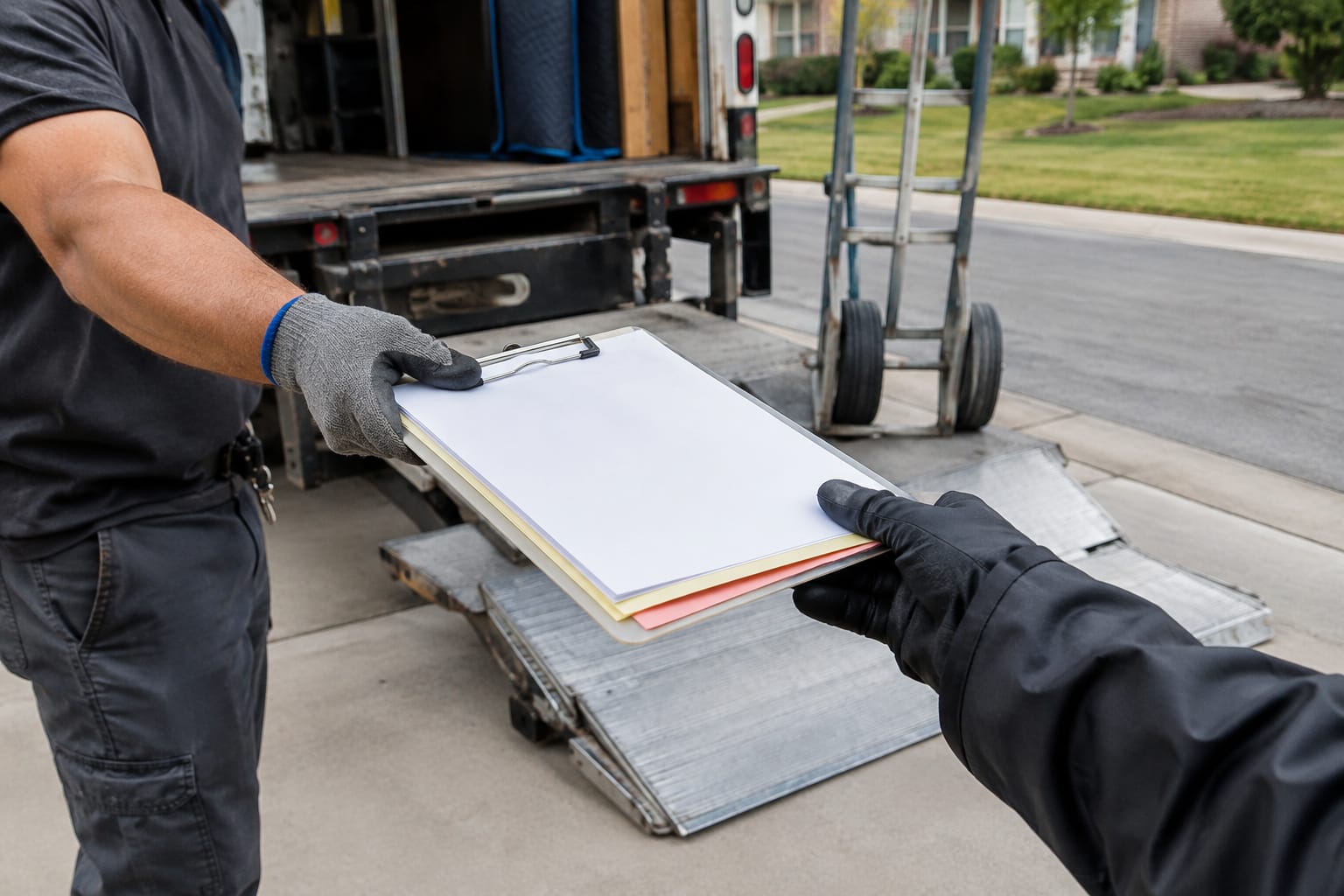
Federal rules name the documents an interstate mover must prepare. Keep all of them in one folder you can reach on delivery day.
- Written estimate. Shows the estimate type, inventory, services and how charges are calculated. Check that the type is named in plain words.
- Order for service. Prepared before loading. It confirms the services ordered, the estimate, and the agreed pickup and delivery dates or windows. Compare it with the estimate line by line.
- Inventory. The itemized list of your goods, usually with condition notes. Record any disagreement on the form before you sign.
- Bill of lading. Your receipt and the contract for transportation, issued at pickup. Read it, never sign one with blank spaces, and keep your copy until any claim is settled.
- The mover's credentials. Before booking, look up a mover's USDOT number and confirm its interstate authority is active.
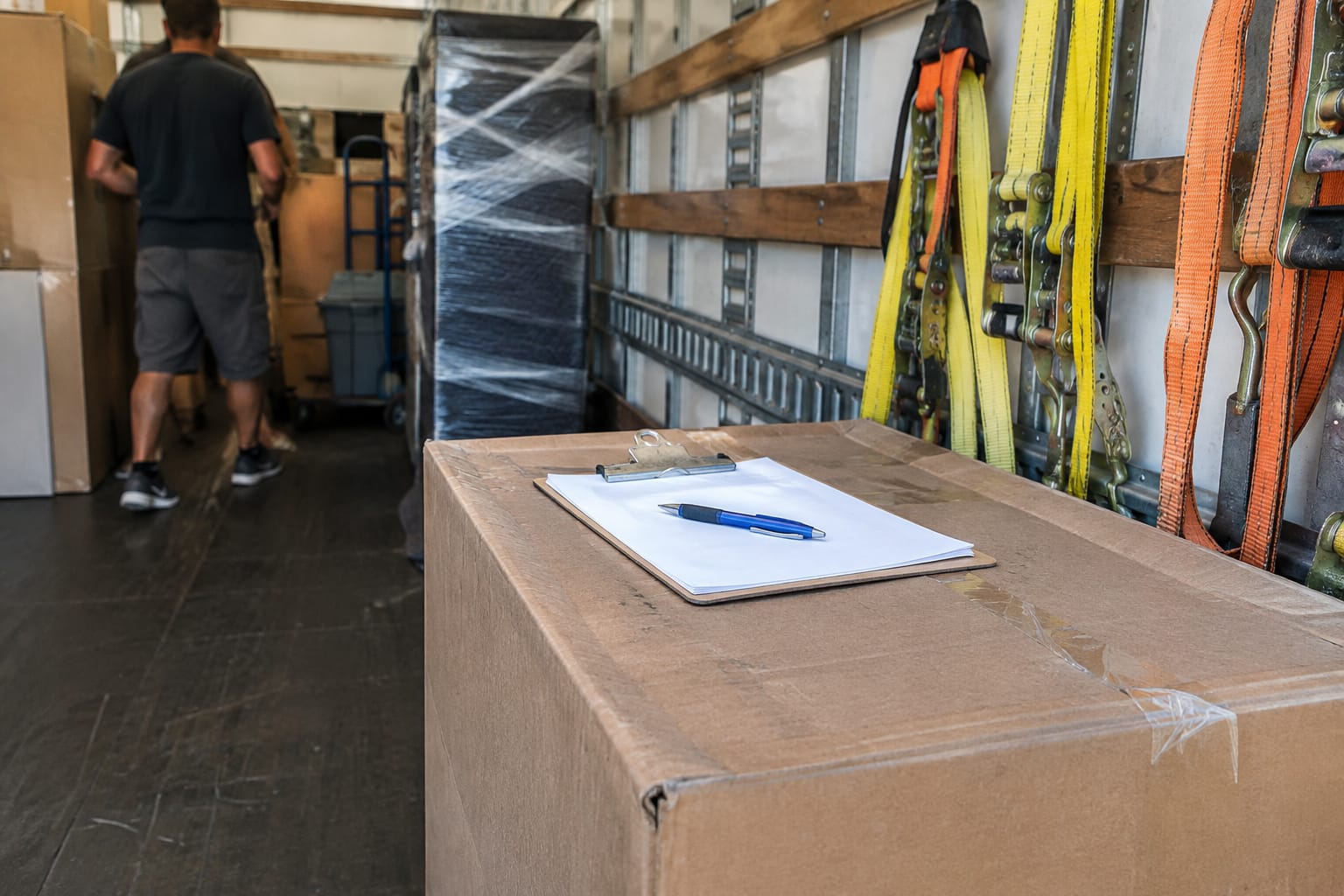
The checklist applies to short interstate trips too.
One exception is worth knowing. If you rent a truck or container and drive it yourself, no interstate mover is transporting your goods. Hiring labor-only loading help means you are paying for labor, so ask for a written agreement listing crew size, minimum time and what is included.
How to Get an Accurate Estimate: Video Walk-Through, Survey or Inventory Form
Accuracy comes from a complete inventory, not from the estimate type.

Q: How do I get an accurate moving quote for an interstate move?
A: Show the mover every item through a video walk-through or an on-site survey, including closets, attics and storage, and describe access at both addresses. Then confirm the estimate type and the inventory list on the written estimate before you book.
Each survey method has a sweet spot:
- Video walk-through: fast and practical for long-distance moves. Open closets, cabinets and the garage on camera.
- On-site survey: the most thorough option for large homes, specialty items and tricky access.
- Online inventory form or calculator: a quick starting point. Its accuracy depends entirely on your list.
For instance, Born to Move collects inventory by video walk-through, on-site survey or its online calculator, then issues a written estimate before booking. Its flat rate for a long-distance move covers labor, truck, fuel, tolls and mileage, with one crew and one truck per job and a delivery window agreed in writing; you can read more about how Born to Move quotes interstate moves. With any mover, ask which federal estimate type a flat-rate quote is issued under, and get that answer on the estimate itself.
Damage Claims After an Interstate Move
What you recover depends on the valuation you chose. It is basic liability, not insurance. Full Value Protection is an optional higher level of liability that costs extra, and its terms should appear in writing on your paperwork.
A few habits make any claim easier to document:
- Note visible damage on the delivery inventory before you sign.
- Photograph damaged items and keep the packaging.
- File in writing, with the bill of lading number, and keep copies.
If a claim stalls, ask the mover about its dispute settlement program. You can also report problems to FMCSA's National Consumer Complaint Database.
Choosing the Right Estimate for Your Move
Match the estimate to your situation. A fixed budget and a settled inventory point toward a binding estimate. Downsizing before the move favors binding-not-to-exceed, and a non-binding estimate only makes sense from a mover with verified authority and a realistic survey.
From there, request written estimates of the same type from more than one mover so the numbers are comparable. For broader planning, see what to know about interstate moving, these cross-country moving tips, and a guide to finding a reputable moving company. If you want a written estimate to compare, Born to Move operates under USDOT 2887241 and MC 985934, which you can verify in the FMCSA database before you ask for a quote.
Written by Born to Move Team
Related Articles
- Help Loading a U-Haul in Boston: How Labor-Only Movers Work — how labor-only crews load a rental truck you drive yourself, and what to agree on in writing.
Useful Links
- Interstate and Long-Distance Moving – Born to Move
- Get a Moving Quote – Born to Move
- How to Hire an Interstate Moving Company
- What Questions Should I Ask When Hiring a Moving Company?
- How to Avoid Moving Scams
Need help with this? Interstate Moving From Delaware To Nj · Get a quote · Call (617) 903-2609
Frequently Asked Questions