Here is how to pack dishes for moving. Wrap every piece on its own in packing paper, stand plates on their edge in a sturdy box with a padded bottom, fill every gap with crumpled paper, and label the box as fragile on two sides. The method takes longer than throwing plates into a box, and that extra time is what keeps them in one piece.
Most kitchen breakage happens for one of three reasons. The box was too weak. The contents could move. Or someone stacked heavy cartons on top of it during loading. This guide covers all three with a station-based workflow you can repeat for every cabinet.
The six steps at a glance:
- Build and reinforce a small or medium box, or use a dish pack box.
- Pad the bottom with crumpled paper and set up a wrapping station.
- Wrap plates one at a time and pack them on their edge, like records.
- Pack bowls, mugs and serving pieces in wrapped bundles, heaviest at the bottom.
- Pack glasses and stemware upright in a cell divider box.
- Fill every gap, do the shake test, then seal and label the box.
Key Takeaways
- Plates go on edge. A plate standing on its rim handles pressure far better than one at the bottom of a flat stack.
- Heavy goes low. Dinner plates and serving platters go on the bottom layer. Glasses and light items go on top.
- No empty space. Crumpled paper goes in every gap, inside every glass and across the top layer.
- No rattle. If a sealed box clinks when you rock it gently, open it and add more padding.
- Label two sides. Write "FRAGILE – KITCHEN – THIS SIDE UP" with arrows on two sides, not just the lid.
- Load dish boxes on the floor. They belong low in the truck, never under heavier cartons.
Supplies You Need Before You Start
Gather everything before you open a cabinet. Stopping halfway through a box to look for tape is how plates end up half-wrapped.
- Dish pack boxes or small and medium boxes. A dish pack box, also called a dish barrel, is a heavy double-wall carton made for kitchen breakables. Small and medium boxes in good condition also work.
- Cell divider kits. These are cardboard inserts that split a box into individual compartments for glasses and stemware.
- Packing paper. Use plain, unprinted newsprint. Newspaper ink can rub off onto dishes, which means rewashing everything at the other end.
- Bubble wrap or foam pouches for stemware, heirlooms and anything with a thin rim.
- Heavy-duty packing tape and a tape gun.
- A thick marker for labels.
If a moving company supplies your materials, expect boxes, tape and wrap to appear as separate line items on the invoice. Ask for the list of materials and how they are billed before moving day.
Q: What is a dish pack box?
A: A dish pack, sometimes sold as a dish barrel, is a double-wall corrugated box built for plates, bowls and glassware. Its thicker sides resist crushing better than a standard single-wall moving box.
For a deeper look at materials, see this guide on how to use packing paper and this breakdown of which bubble wrap to use.
Step 1: Build and Reinforce the Box
A dish box fails from the bottom first. Fold the bottom flaps and tape the center seam. Then add strips across the seam and along both edges. This makes an "H" pattern that keeps the flaps from splitting under weight.
Skip boxes that are soft, water-stained or crushed at the corners. Dishes are dense, so a small box full of plates already weighs a lot. That is why kitchen boxes should be small or medium, never large. Here is a guide to the right packing tape for heavy boxes if you are choosing between tape types.
Step 2: Pad the Bottom and Set Up a Wrapping Station
Put several inches of loosely crumpled packing paper in the bottom of the box. This cushion absorbs the shock when the box is set down hard, which happens on every move.
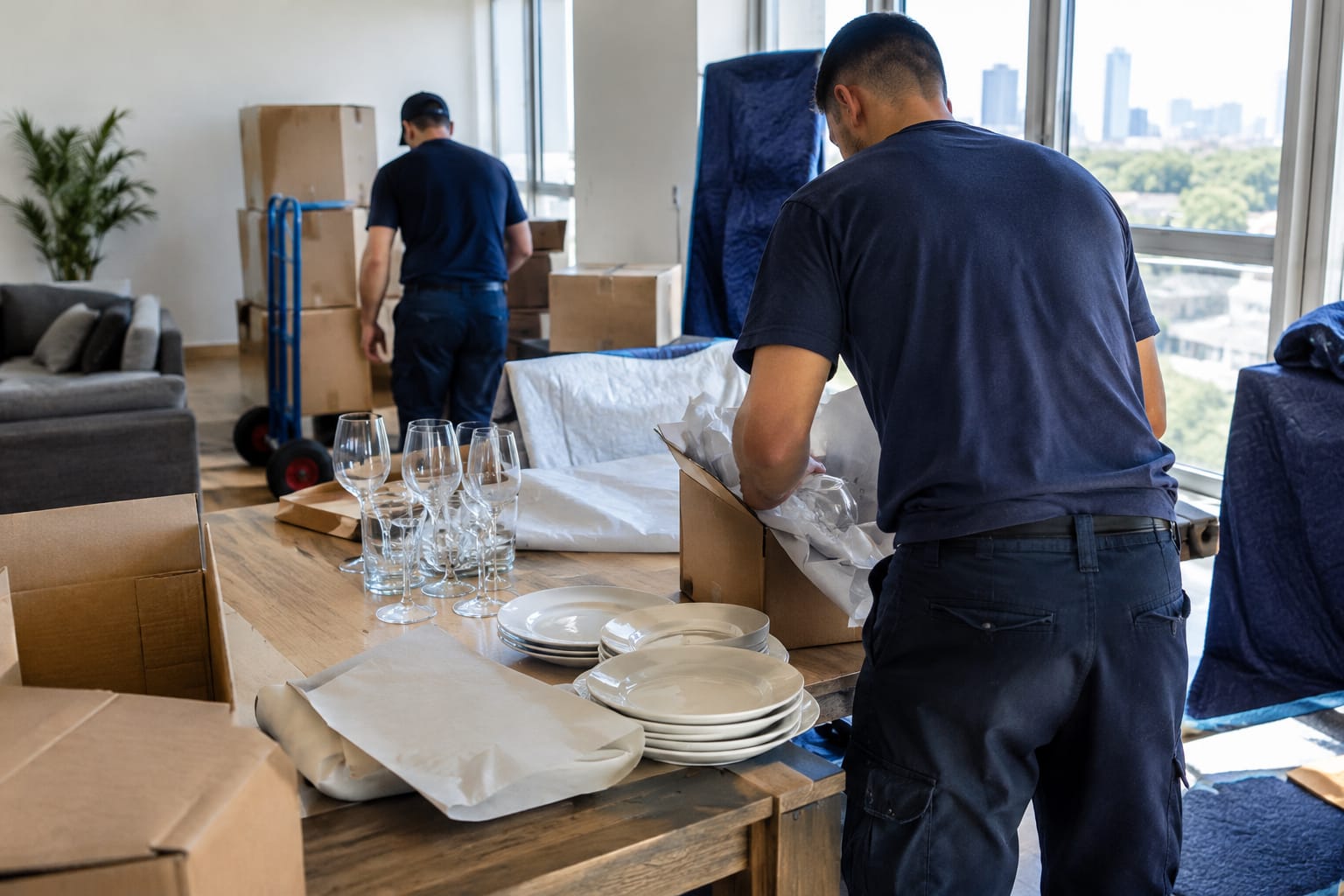
Next, set up a station. Clear a counter or table and put a stack of flat paper in the middle. Put unwrapped dishes on one side and the open box on a chair or the floor right next to you. Working in one spot keeps unwrapped plates from sitting on the edge of a counter.
When you pack a kitchen for moving, start with what you use least: serving platters, holiday dishes and spare glasses. Keep one open box for the plates, mugs and utensils you will use until the last day. Seal it last and unpack it first.
Step 3: Wrap and Pack Plates on Edge
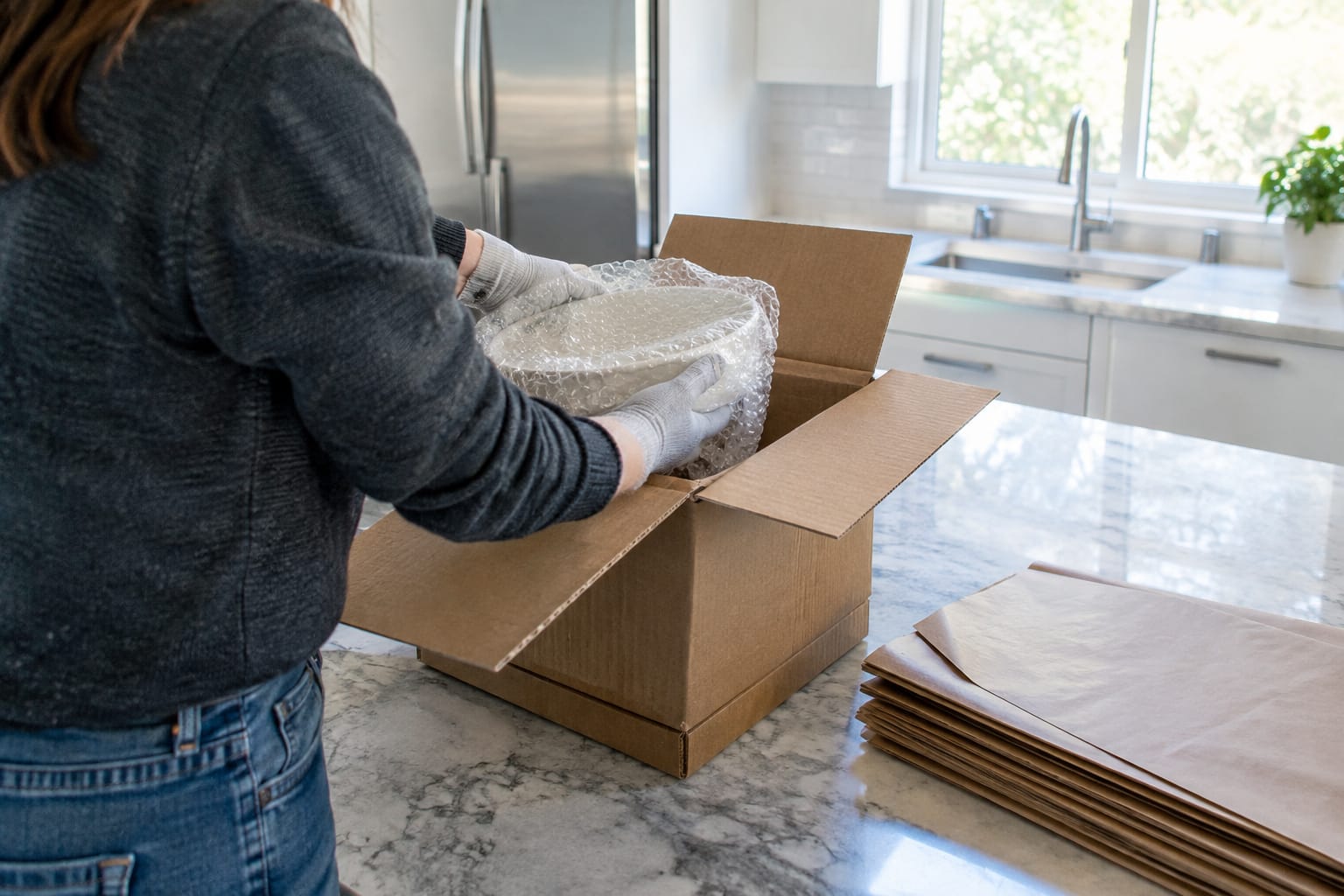
Place one plate in the center of two or three sheets of paper. Fold each corner over the plate, one at a time, until it is fully covered. Stack three or four wrapped plates, then wrap the whole bundle in more paper.
Now stand the bundle on its edge in the box, like a record in a crate. The question of whether to pack plates vertically or flat has a clear answer: vertically. A plate's rim can take much more pressure than its center. In a flat stack, each plate carries the weight of every plate above it.
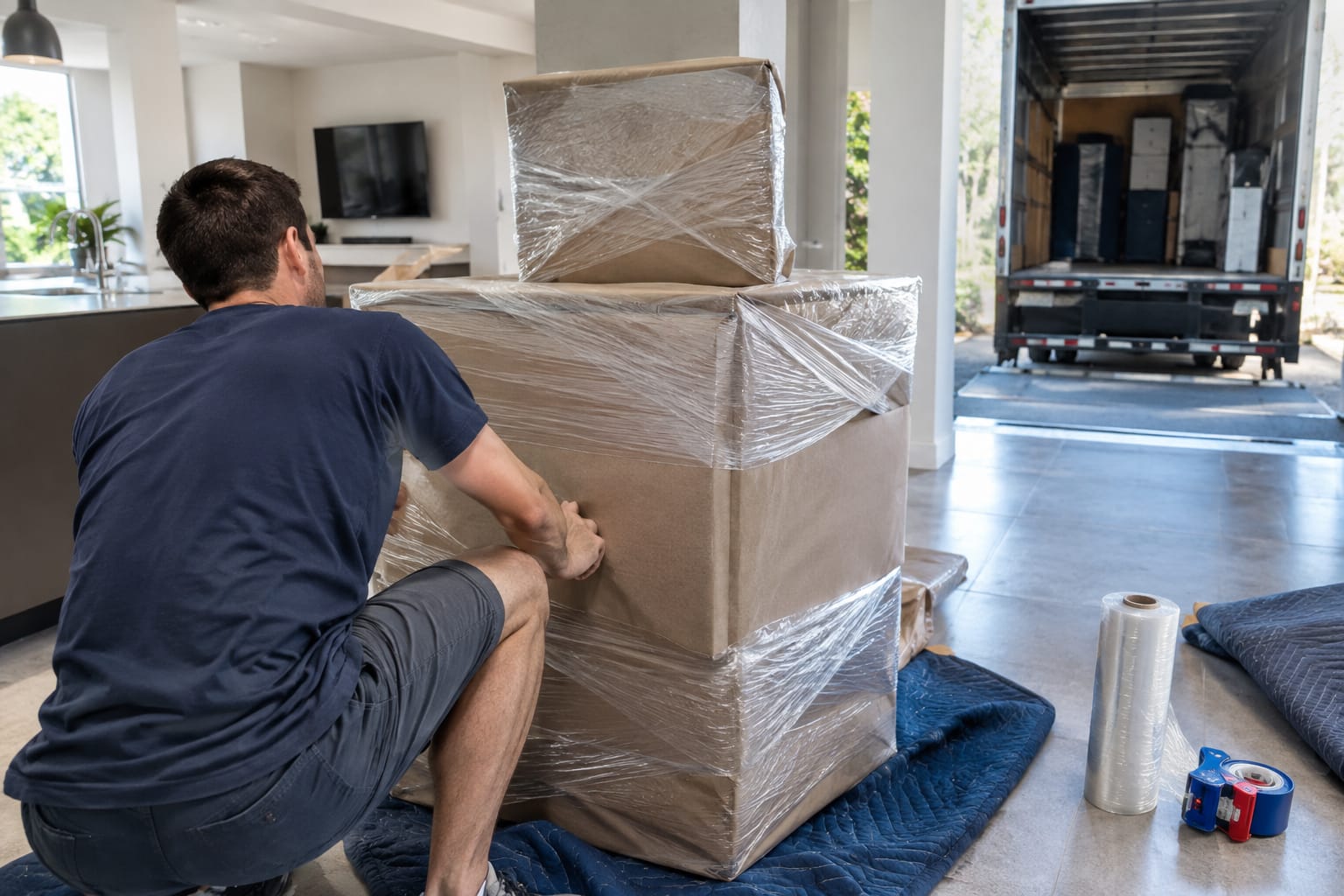
Put the largest, heaviest plates in the bottom layer. Then lay a few sheets of flat paper or a piece of cardboard over them before starting the next layer. Fill the space between the plates and the box walls with crumpled paper.
Step 4: Pack Bowls, Mugs and Serving Pieces
Bowls. Nest two or three bowls with a sheet of paper between each one, then wrap the stack as a single bundle. Place the bundles on their side or rim-down in the middle layer.
Mugs and cups. Stuff a ball of paper inside each mug. Wrap the handle first, since it is the weakest point, then wrap the whole mug. Mugs go near the top of the box, where nothing heavy sits on them.
Serving pieces. Platters and large serving plates go on edge along the sides of the box, just like dinner plates. Wrap lids separately from their pots or dishes, because a loose lid will chip the rim it sits on.
The rule is the same in every box: the heavier the item, the lower it goes.
Step 5: Pack Glasses and Stemware in Cell Dividers
A cell divider box for glasses is the most reliable way to move drinkware. Each glass gets its own compartment, so glasses never touch each other.
For tumblers, stuff the inside loosely with paper. Then roll the glass diagonally across a sheet, tucking in the ends as you go. Set each glass upright in its own cell.
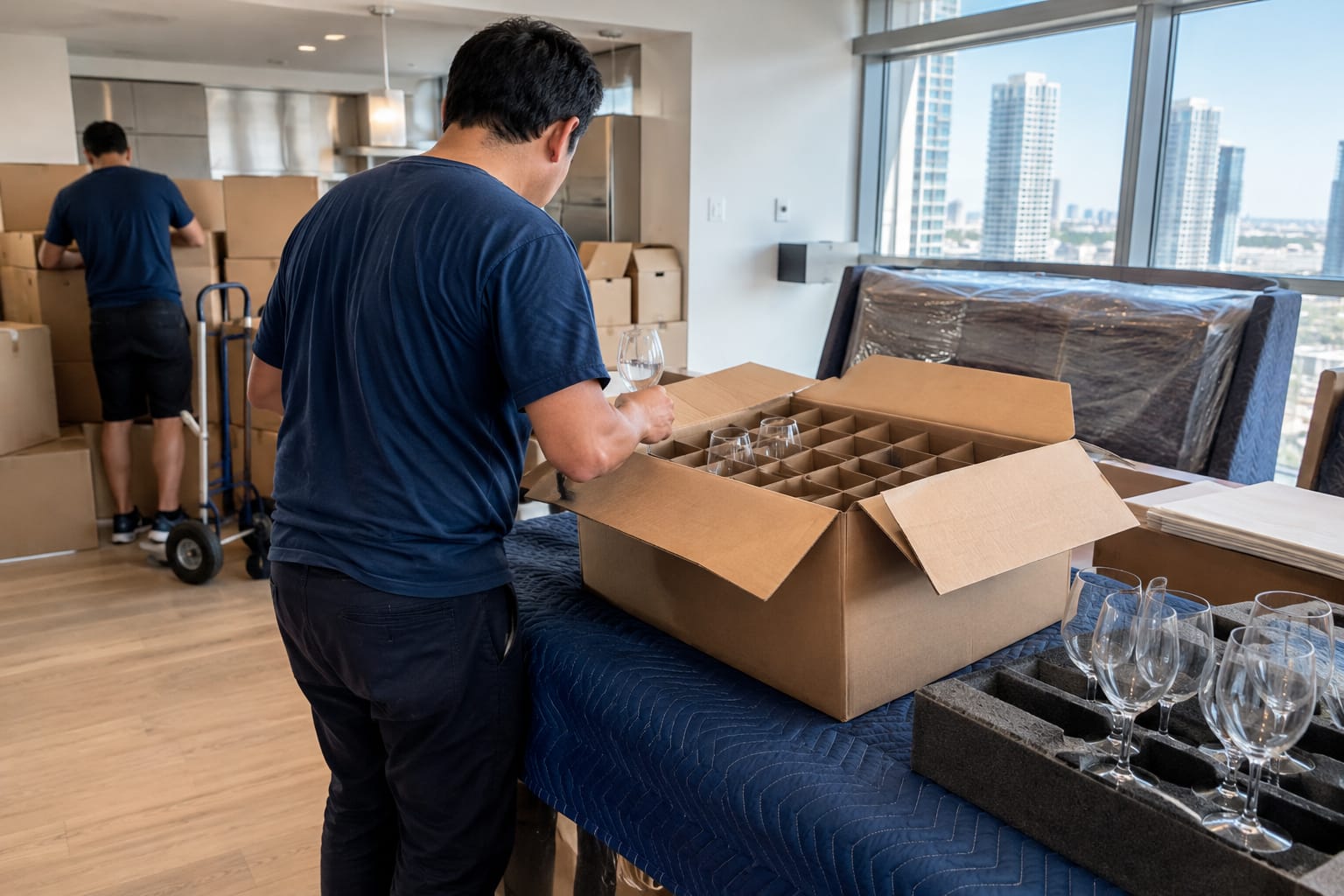
Wine glasses need extra care around the stem. Here is how to pack wine glasses:
- Fill the bowl of the glass loosely with crumpled paper.
- Wrap a strip of paper or bubble wrap around the stem until it is as thick as the base.
- Wrap the whole glass in paper, then add an outer layer of bubble wrap or slide it into a foam pouch.
- Stand it upright in a cell, rim up, and put a layer of crumpled paper over the top of the divider.
Q: Is packing paper or bubble wrap better for glasses?
A: Use both for stemware: two layers, with packing paper on the inside and bubble wrap or a foam pouch on the outside. Everyday tumblers in a cell divider box are usually fine with paper alone.
The packing paper vs bubble wrap choice comes down to the item. Paper fills gaps and conforms to shapes, while bubble wrap adds cushioning around thin rims and stems. The same layered approach works for packing other fragile items such as vases, lamps and picture frames.
Step 6: Fill Gaps, Do the Shake Test and Label the Box
Before you close the box, push crumpled paper into every remaining gap, especially the corners. Leave a cushion of paper over the top layer so the lid presses down on padding, not on glass.
Then do the shake test. Close the flaps without taping and rock the box gently from side to side. If you hear clinking or feel anything shift, open it and add more paper. A well-packed dish box makes no noise at all.
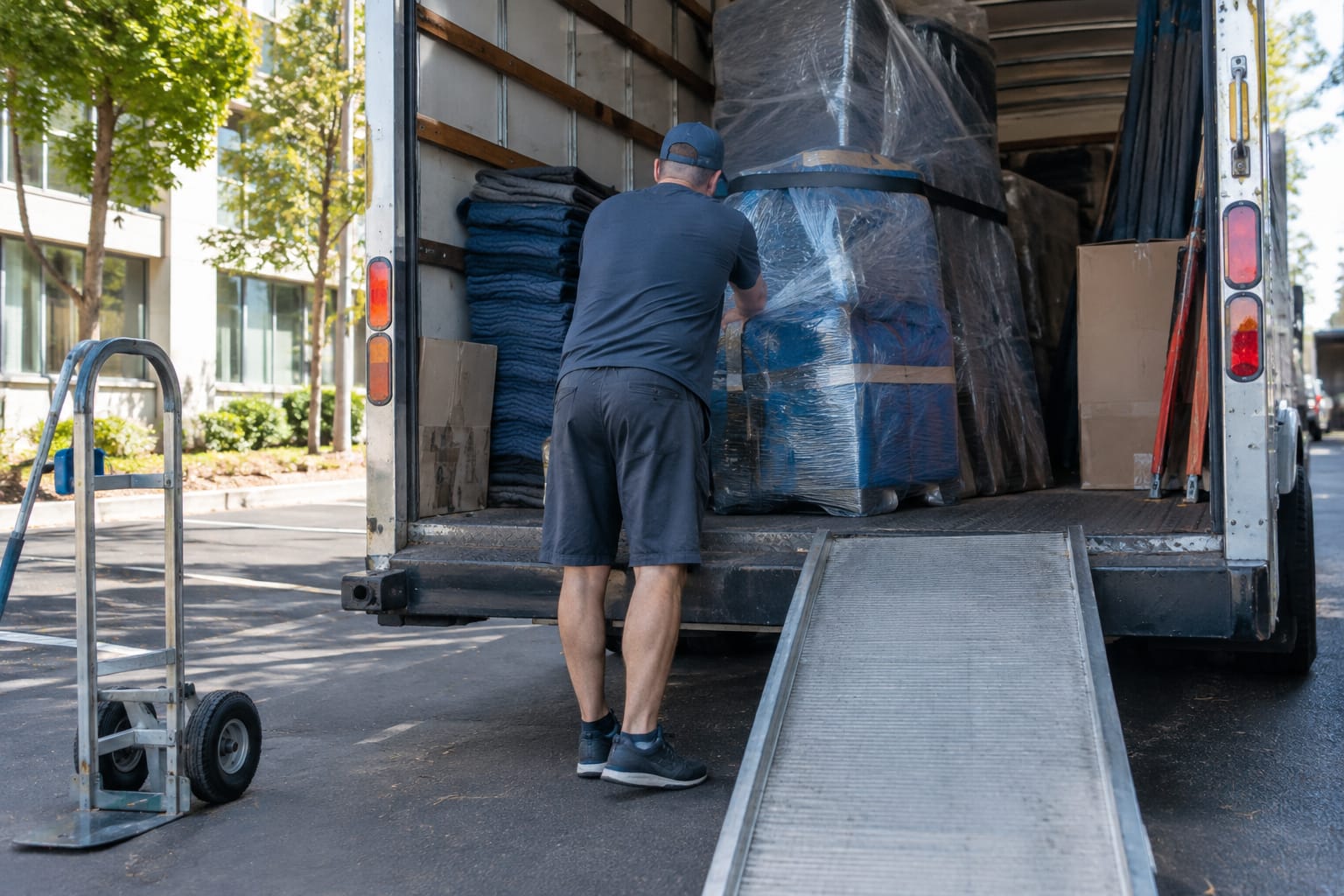
How to label fragile boxes:
- Write "FRAGILE – KITCHEN – THIS SIDE UP" with upward arrows on at least two sides. When boxes are stacked, the lid is the first label to be hidden.
- Add a short contents note, such as "dinner plates" or "wine glasses".
- Number the box and keep a matching list, so you can confirm every kitchen box arrived.
How to Load Dish Boxes in a Truck or Container
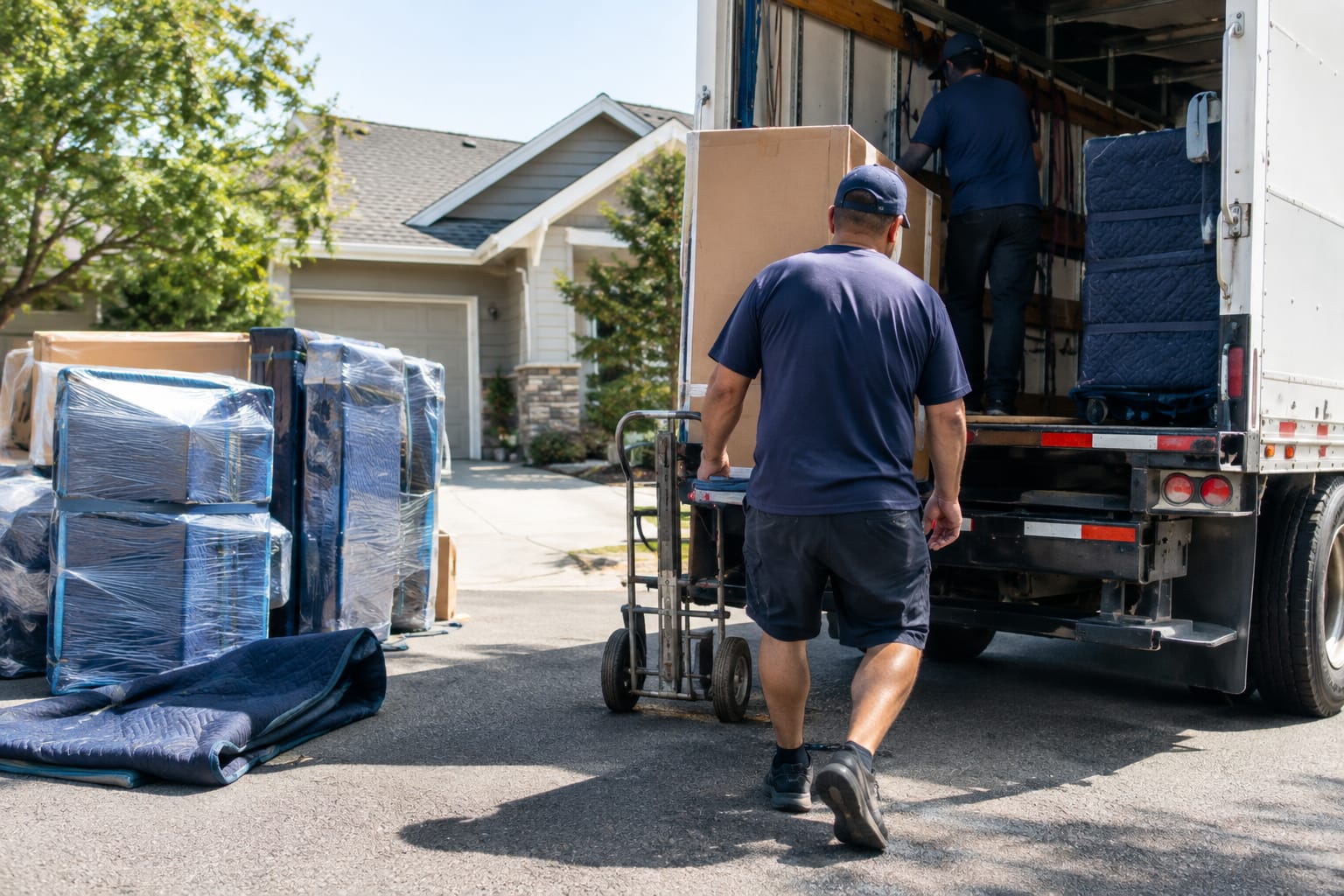
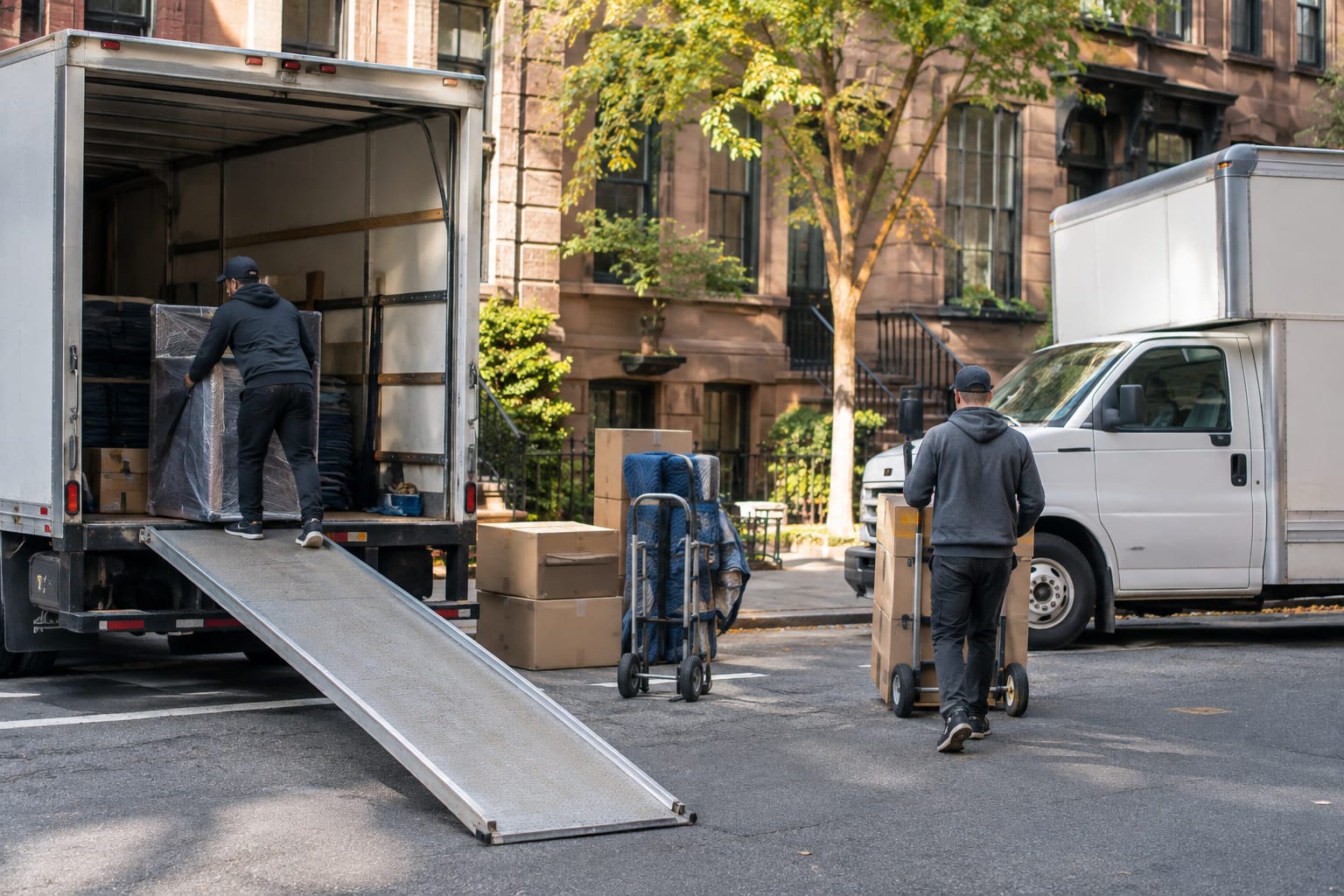
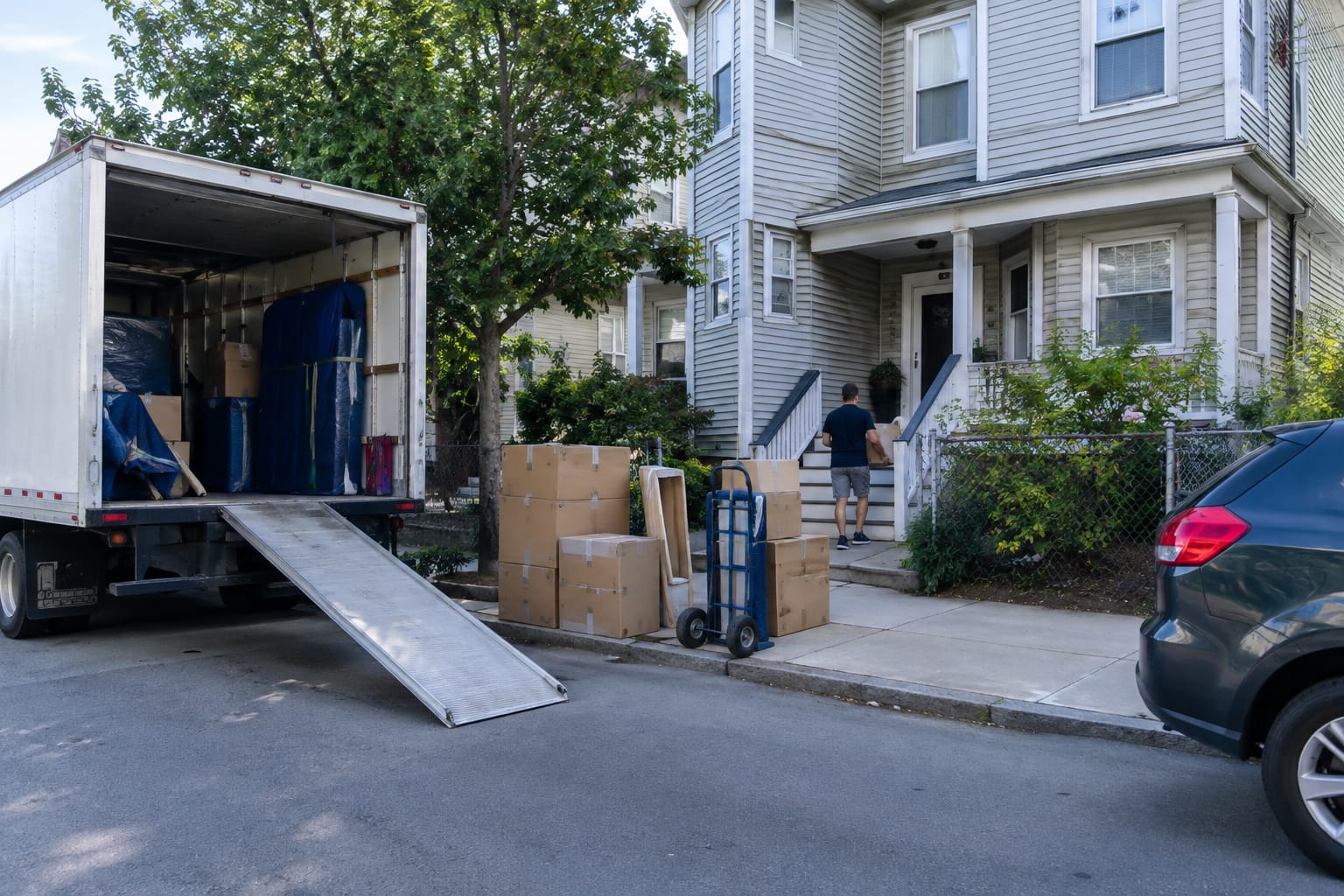
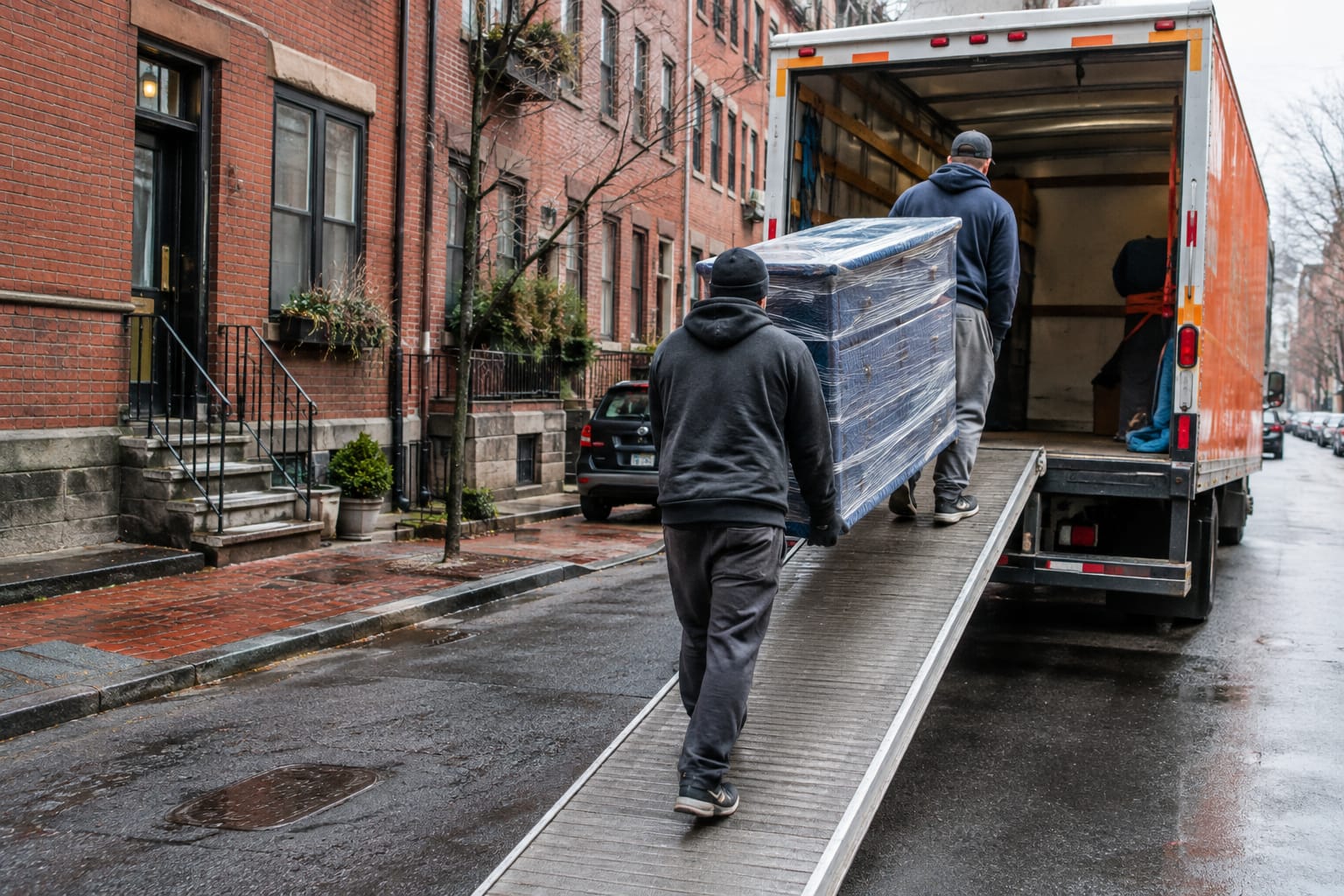
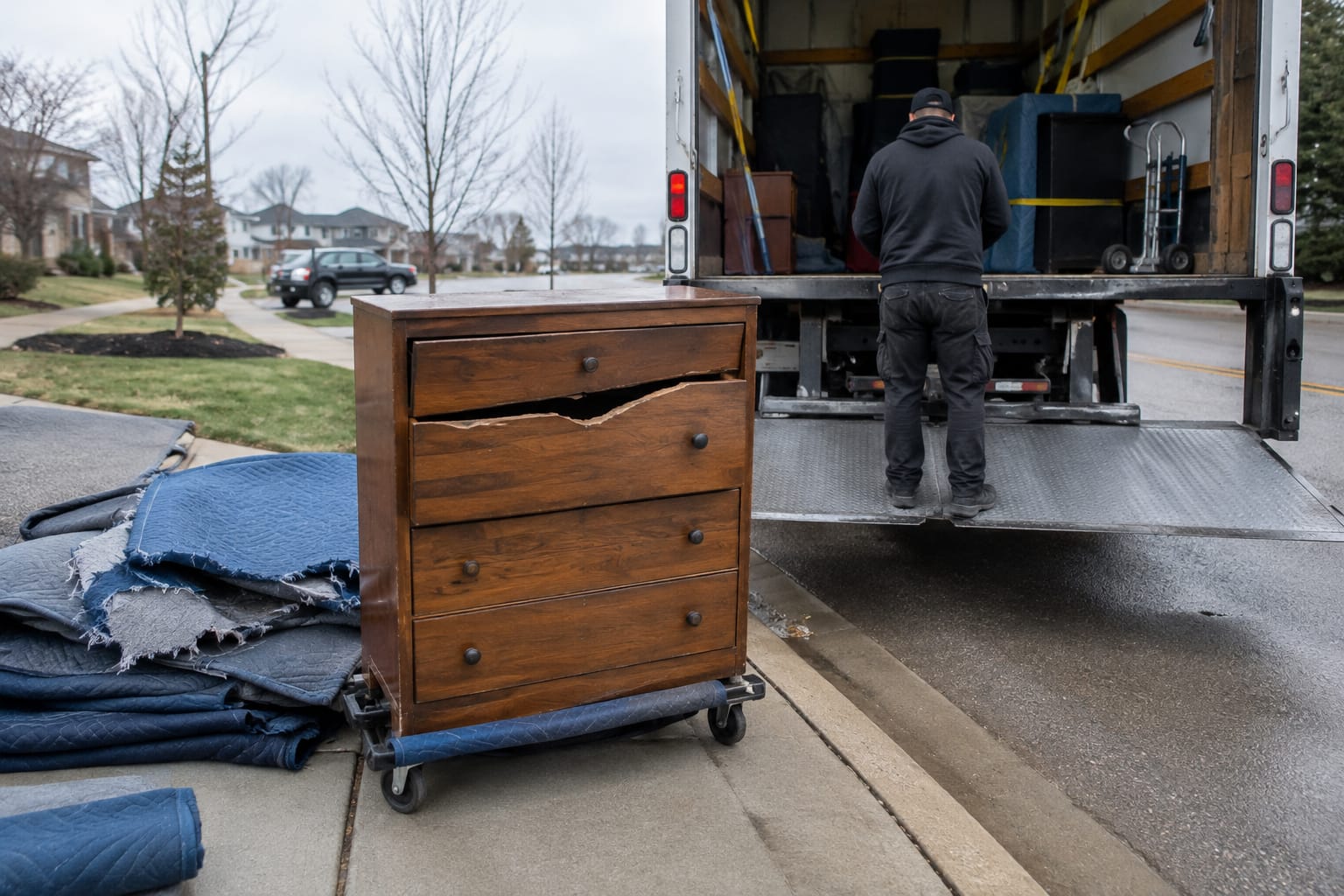
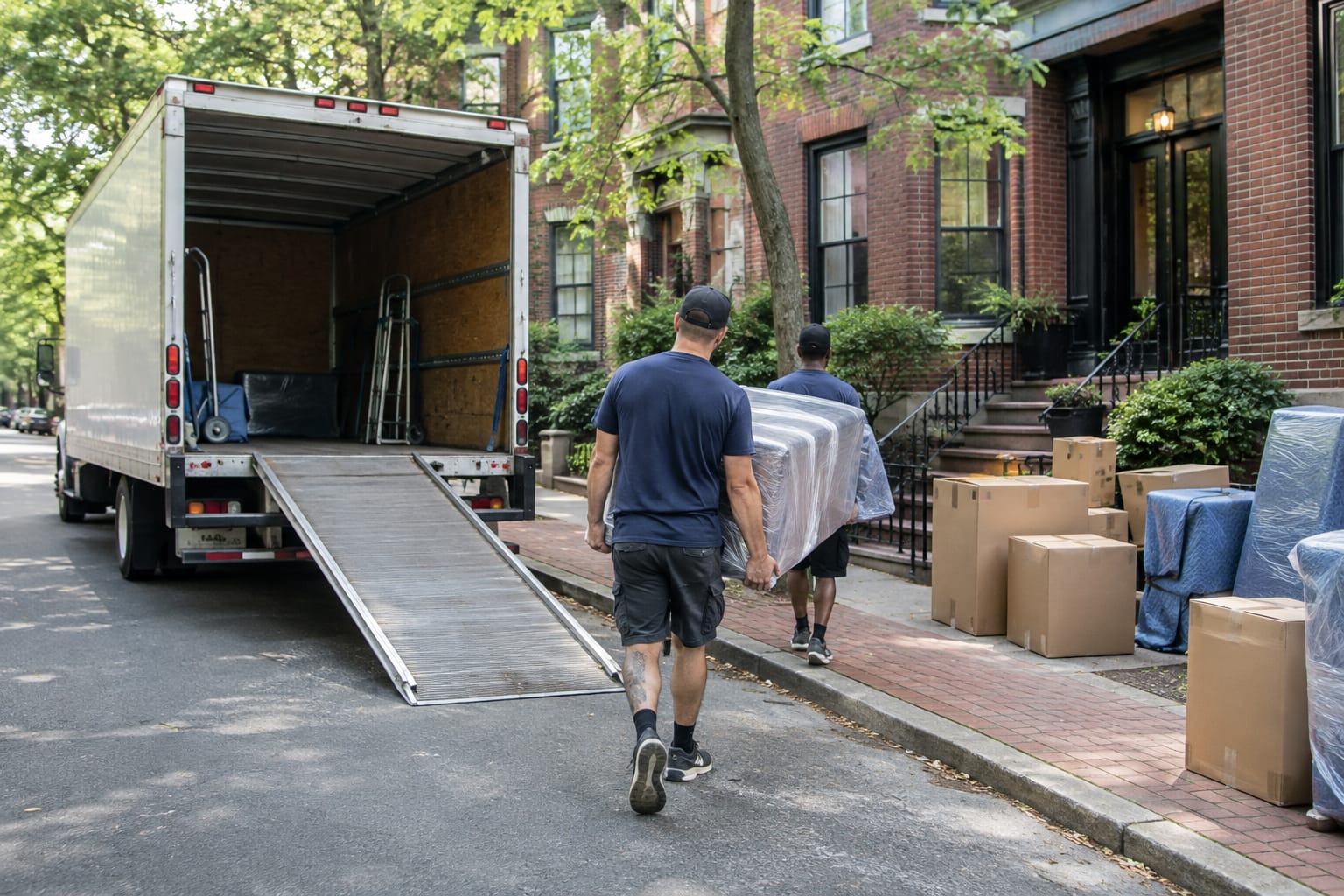
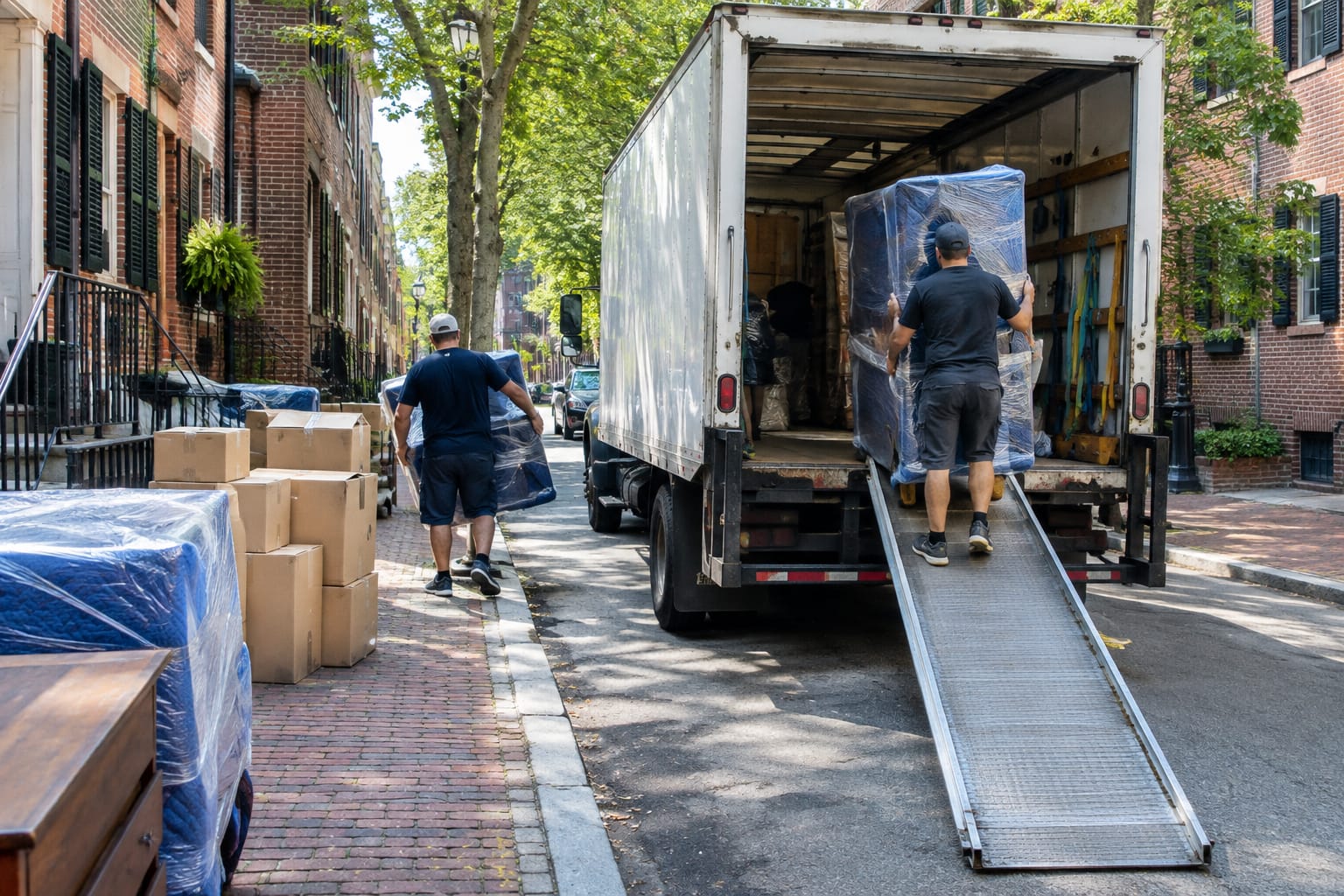
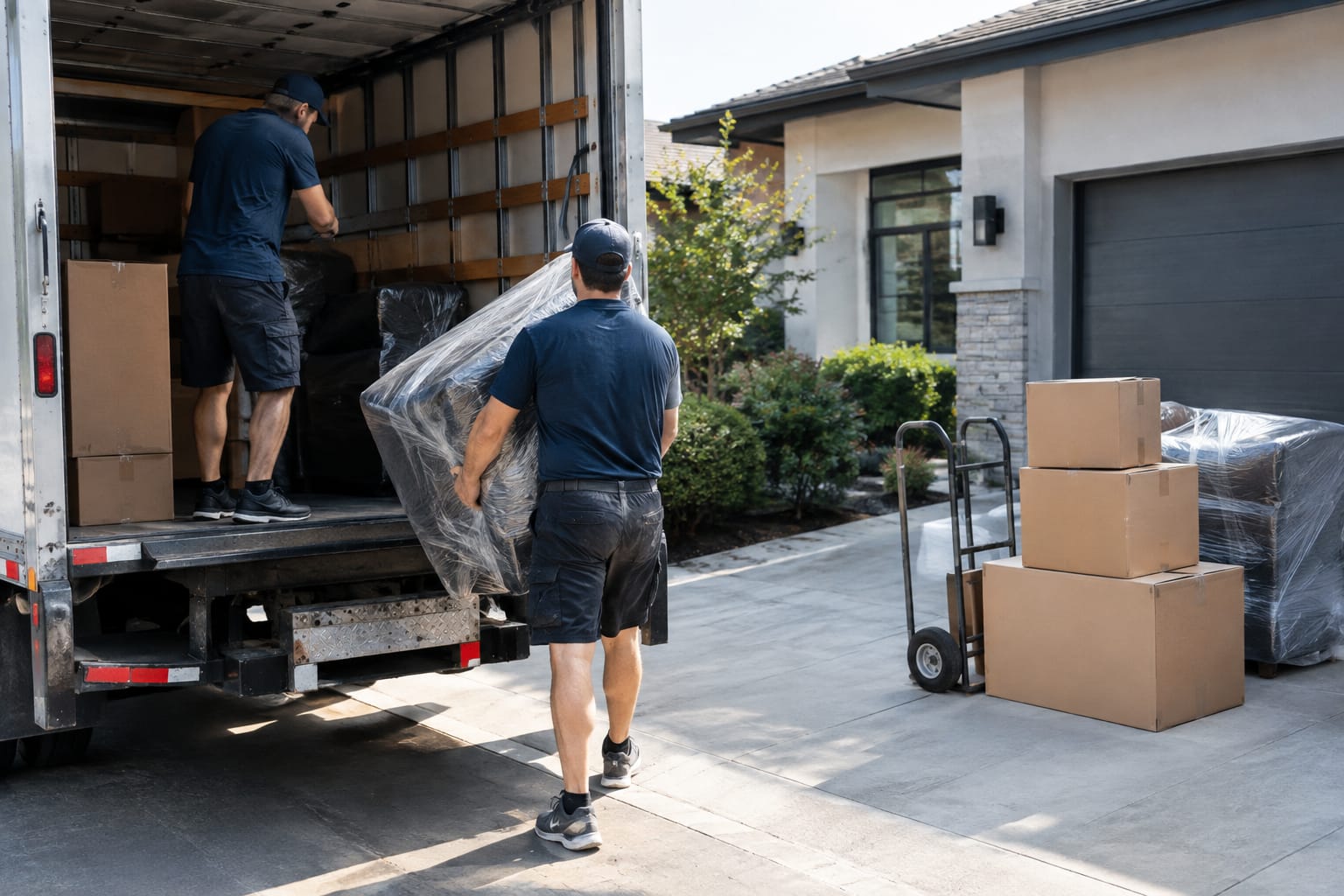
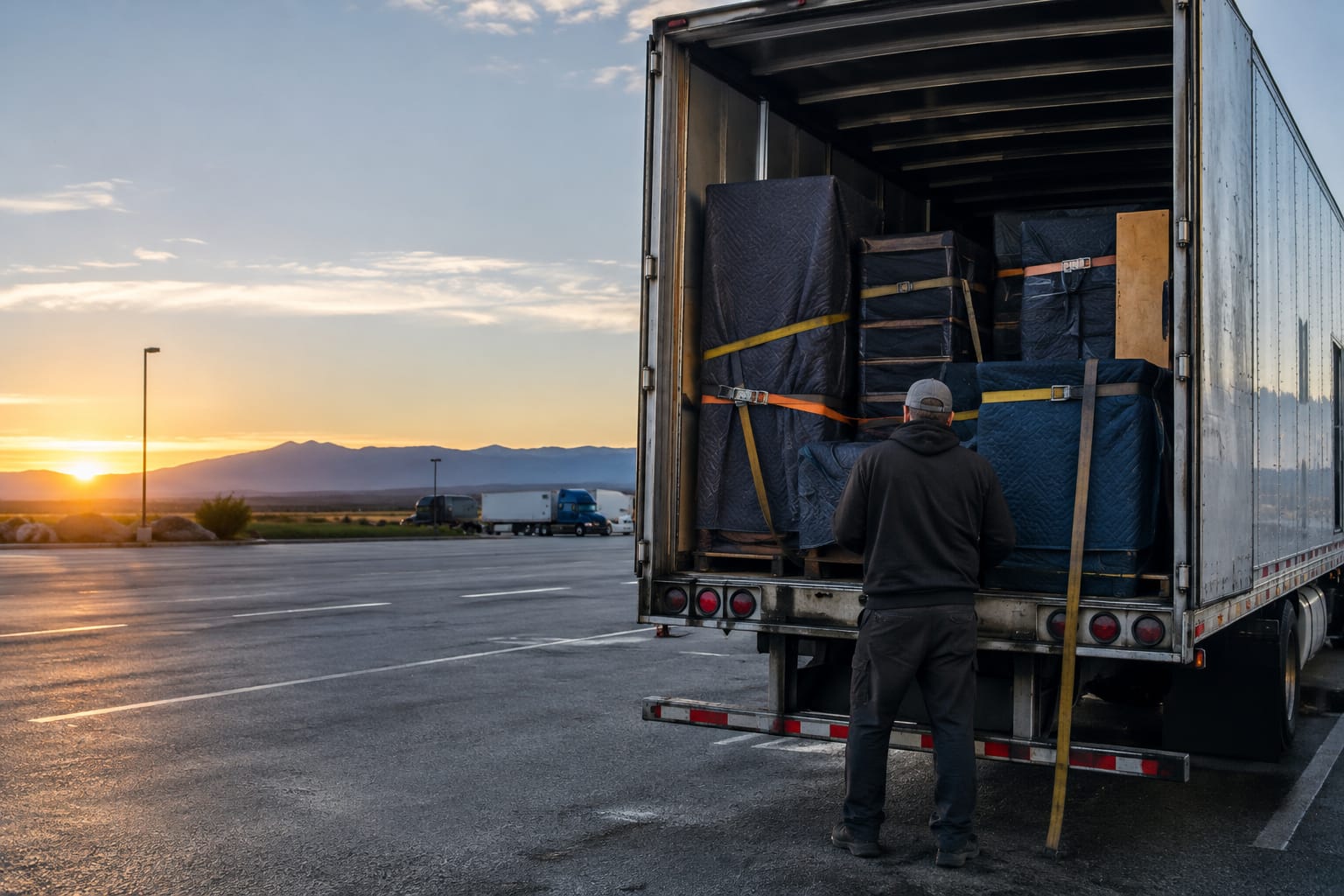
Careful packing can be undone in five minutes of loading. Dish boxes go on the floor of the truck, low and close to the front wall of the cargo area. Heavy furniture and dense boxes go in first and lowest, and the cargo is built up in tight, even tiers toward the door.
Never stack a heavier carton on top of a dish box, and never place dish boxes on top of soft items like mattresses or bags of clothing. Soft items compress as the truck moves, and the box above them shifts. Put a moving blanket between dish boxes and any furniture with hard edges.
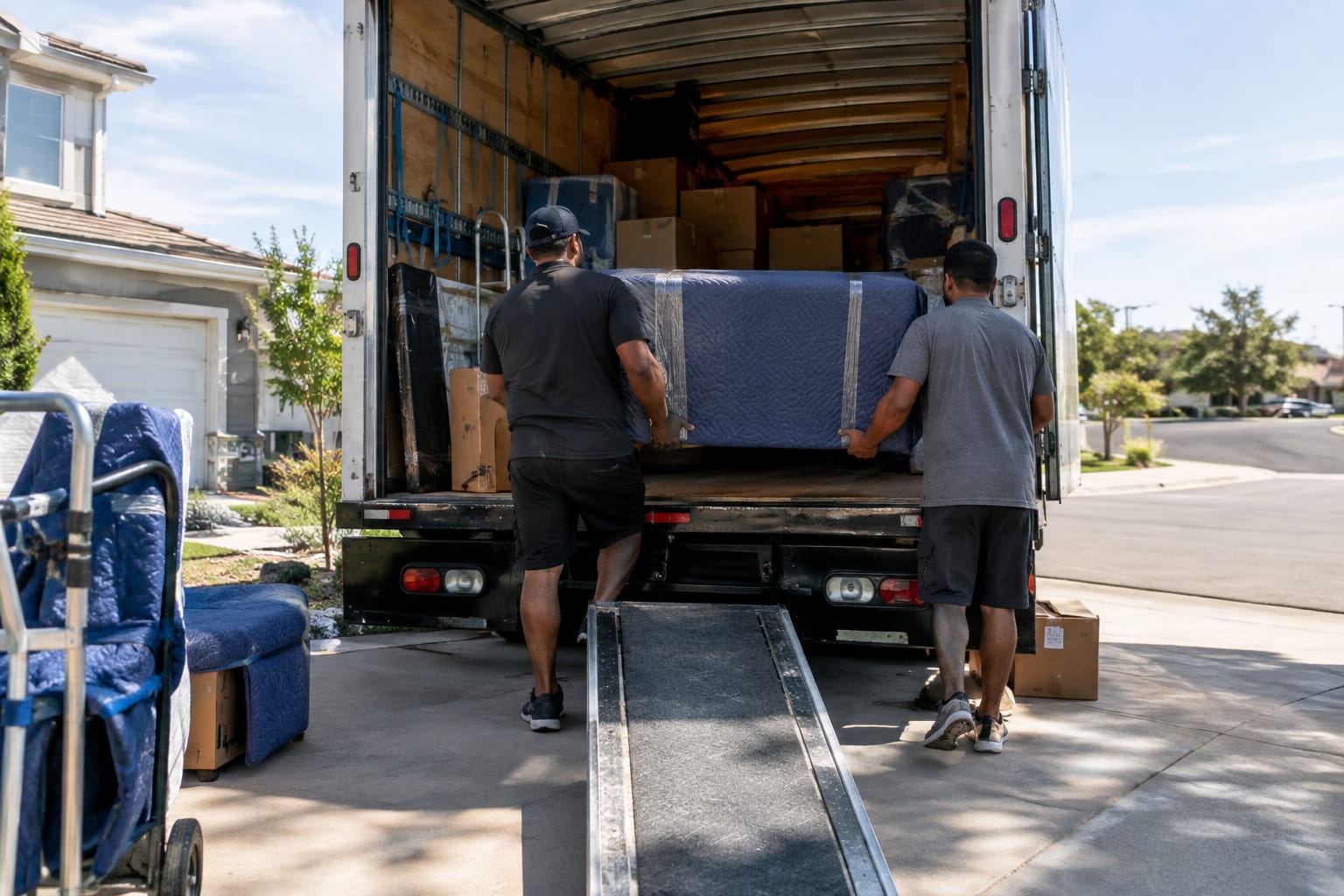
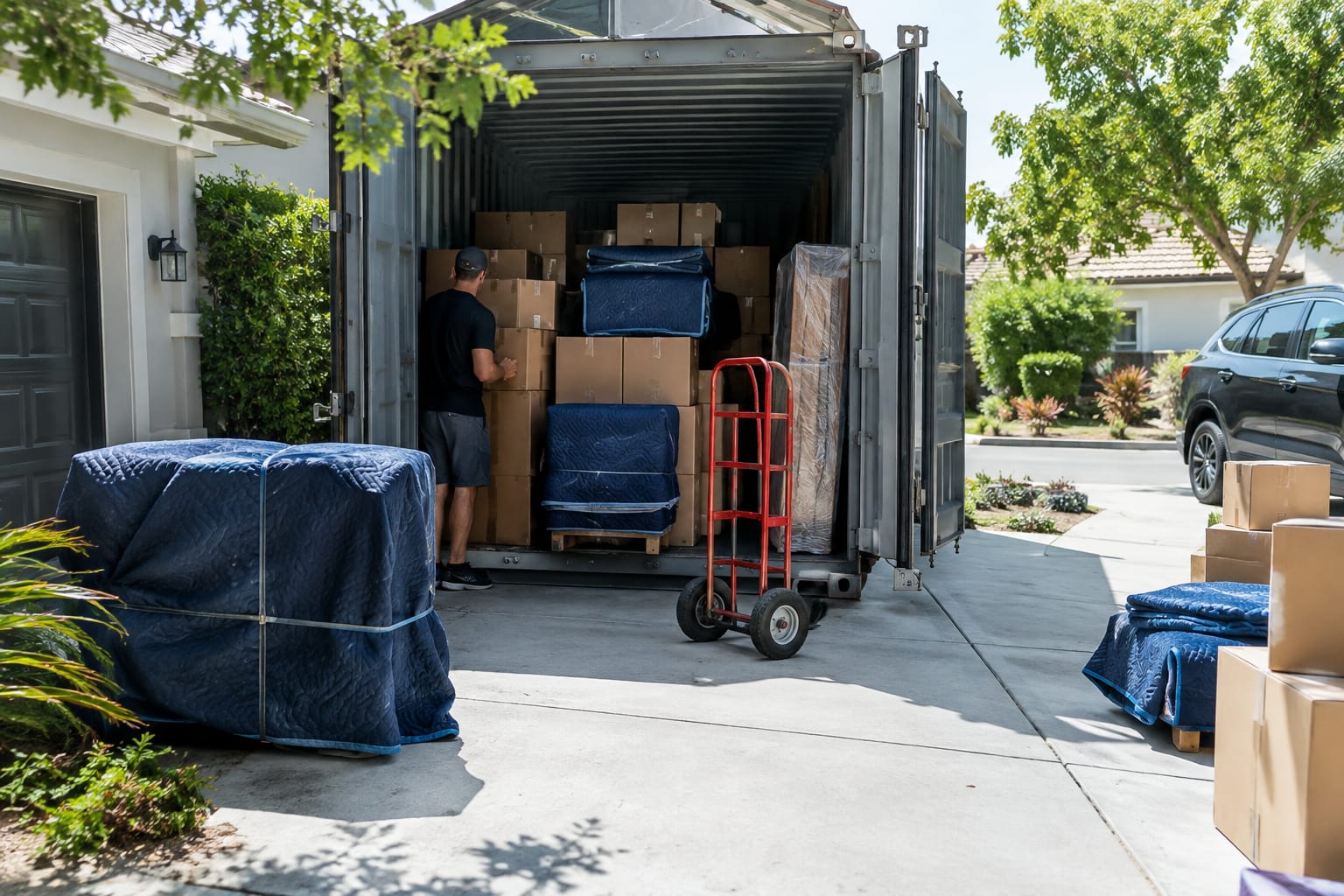
Portable moving containers need the same approach, plus one extra rule: leave no empty space. A container is lifted and carried on a trailer, so every gap is room for the load to slide. Fill gaps with soft items and secure each tier with straps. This guide on how to pack a truck for a long-distance move covers tiers and tie-downs in more detail.
If you have rented a truck but do not want to carry the heaviest pieces yourself, labor-only movers who load your rental truck are a common middle option. In Boston, also plan where the truck will stand. This explainer on where to park a moving truck in Boston covers street-occupancy permits. In apartment buildings, it helps to reserve the service elevator before moving day.
When to Hand the Kitchen to Professional Packers
The kitchen is usually the slowest room to pack. It is reasonable to hand it to professionals when you have a large collection of china or crystal, when heirlooms are involved, or when your timeline is short. In Greater Boston, the September 1 moving rush makes it worth booking packing help well ahead.
A hybrid approach also works. Professionals pack the kitchen and fragile items, and you pack books, clothing and linens. If movers will load boxes you packed yourself, empty all drawers and finish packing before moving day.
Before you book professional packing and unpacking, ask how labor and materials are billed. On that service, for example, packing labor is billed hourly at the crew's rate. Boxes, tape, shrink wrap, mattress bags and specialty cartons are always charged separately. The same crews can also load and unload a rental truck or portable container you have already arranged.
Also ask which liability option applies to your move. Extra protection is optional and costs more. For interstate moves, read the FMCSA booklet "Your Rights and Responsibilities When You Move" before signing the paperwork. For the rest of the house, see this room-by-room guide on how to pack things when moving a house.
Written by Born to Move Team
Related Articles
- Help Loading a U-Haul in Boston: How Labor-Only Movers Work — how hourly loading crews work when you have already rented your own truck.
Useful Links
- Packing and Unpacking Services
- How to Pack Fragile Items
- How to Pack a Truck for a Long-Distance Move
- How to Pack Things When Moving a House
Need help with this? About us · Get a quote · Call (617) 903-2609
Frequently Asked Questions