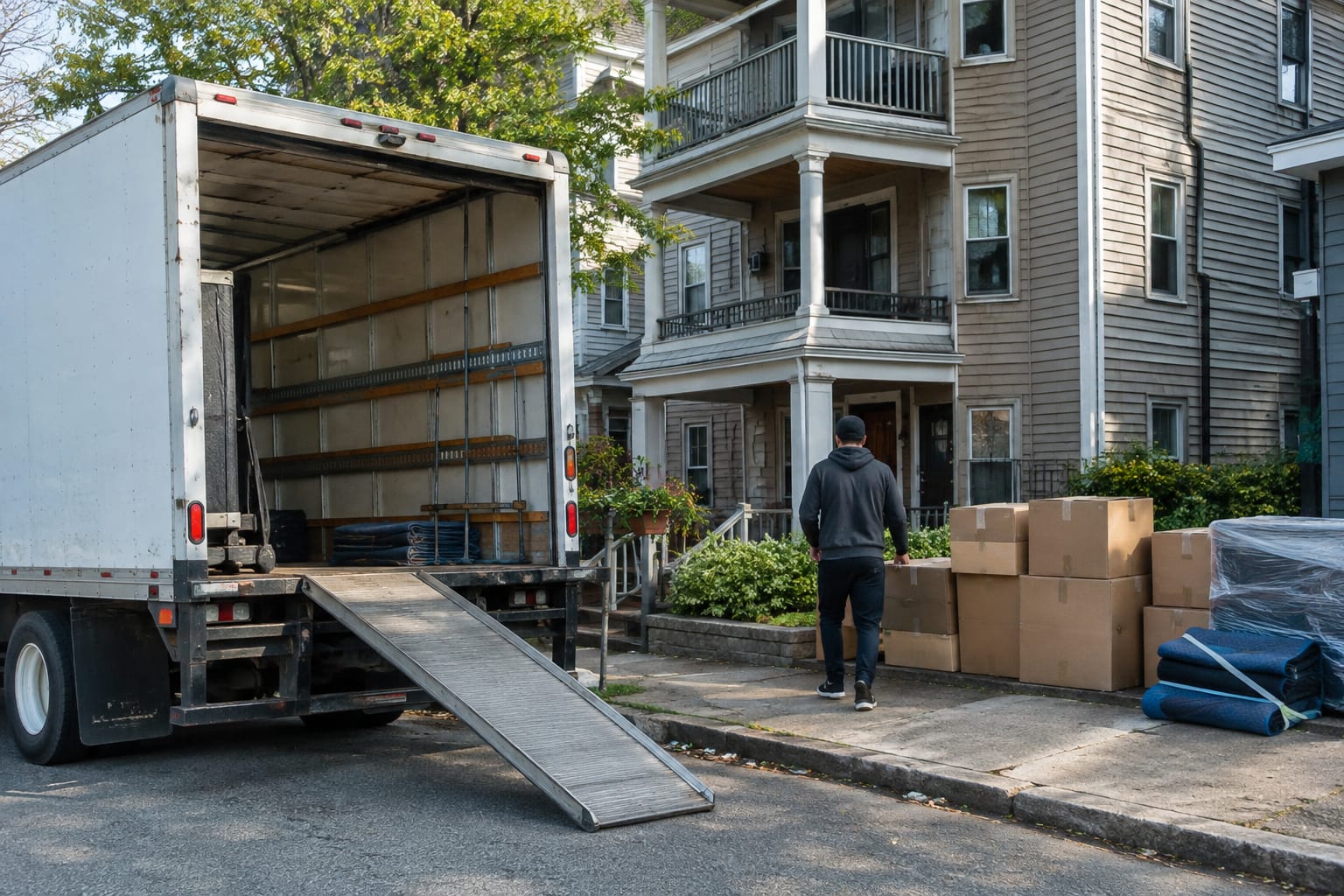
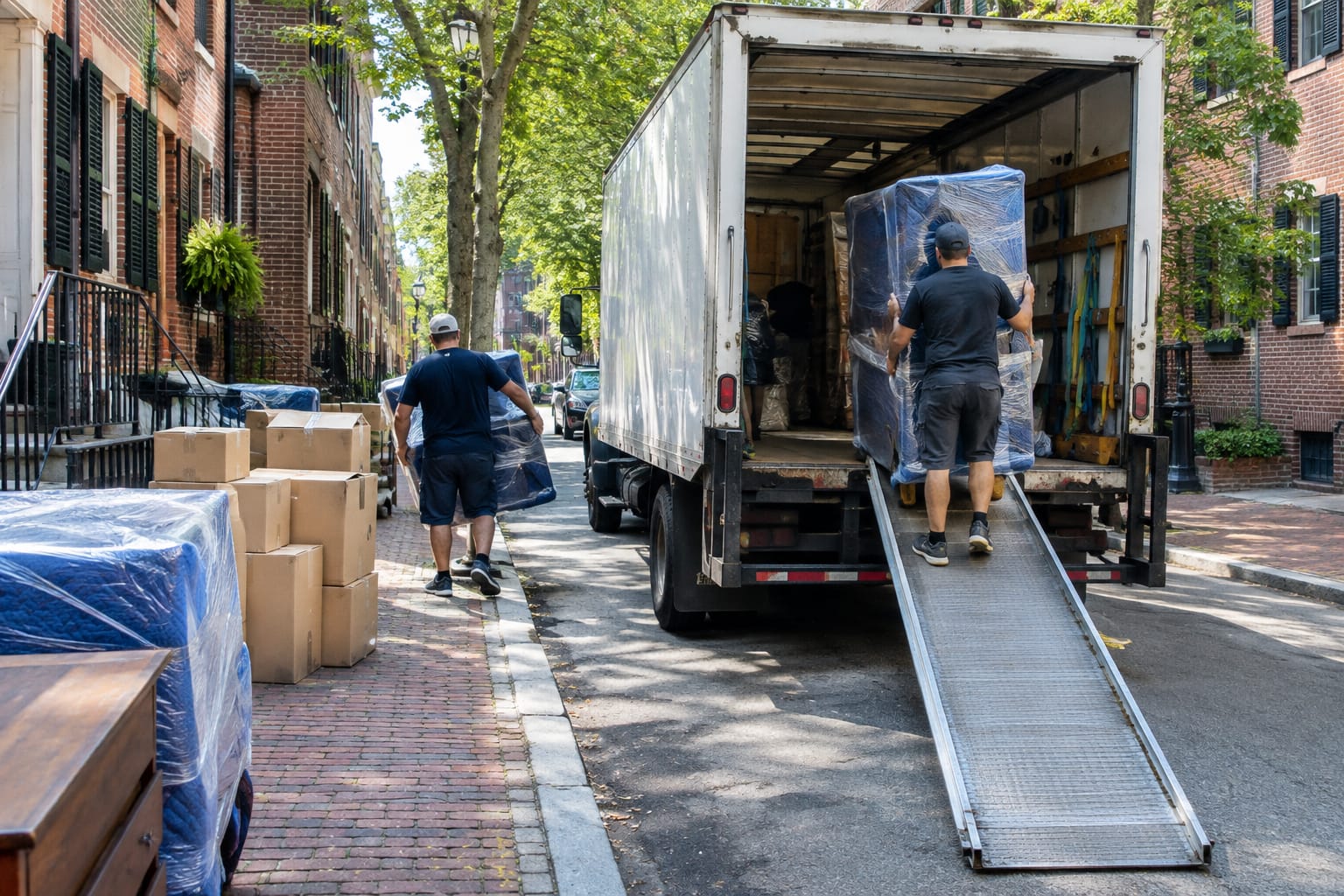
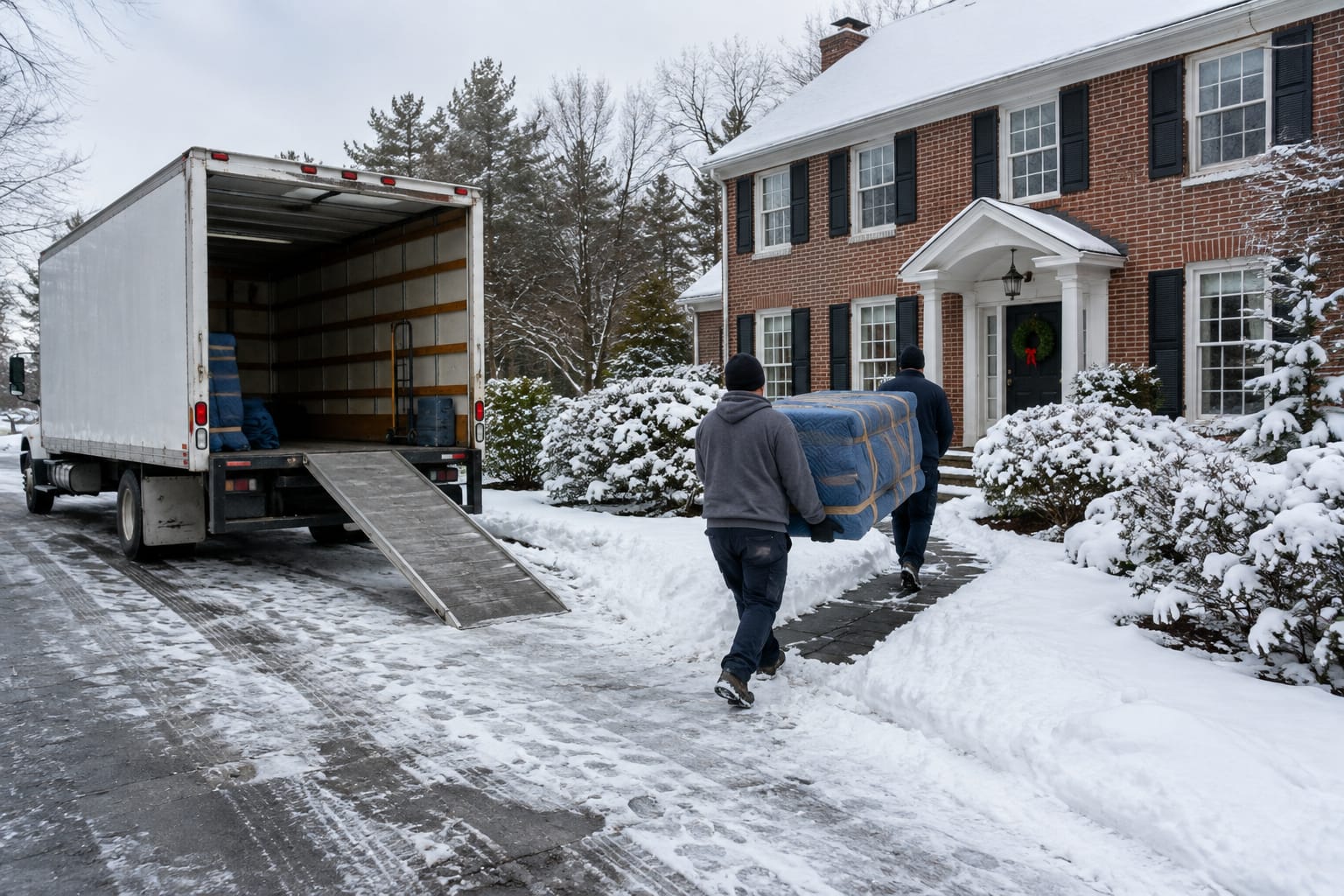
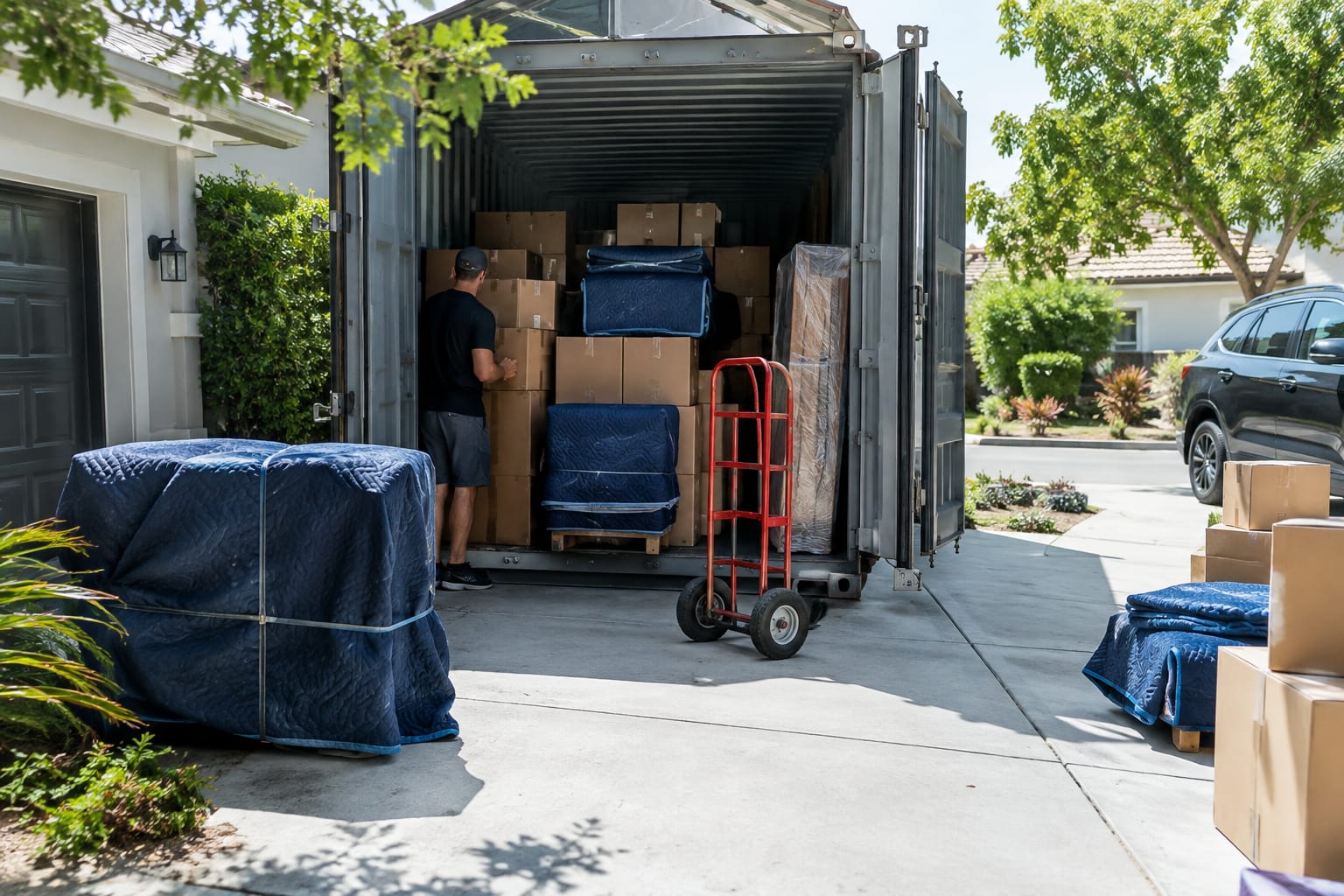
Labor-only moving help means you rent and drive the truck or container, and a hired crew does the loading. The crew supplies the muscle and the technique. For anyone looking for help loading a U-Haul in Boston, it sits between a full DIY move and full-service movers.
The catch is that responsibility splits three ways: between you, the crew and the rental company. Boston's triple-decker stairs, tight curbs and elevator rules also shape how the day goes. This guide explains what a loading crew does inside the box, how the job is billed, how to prepare, and what to ask before you book.
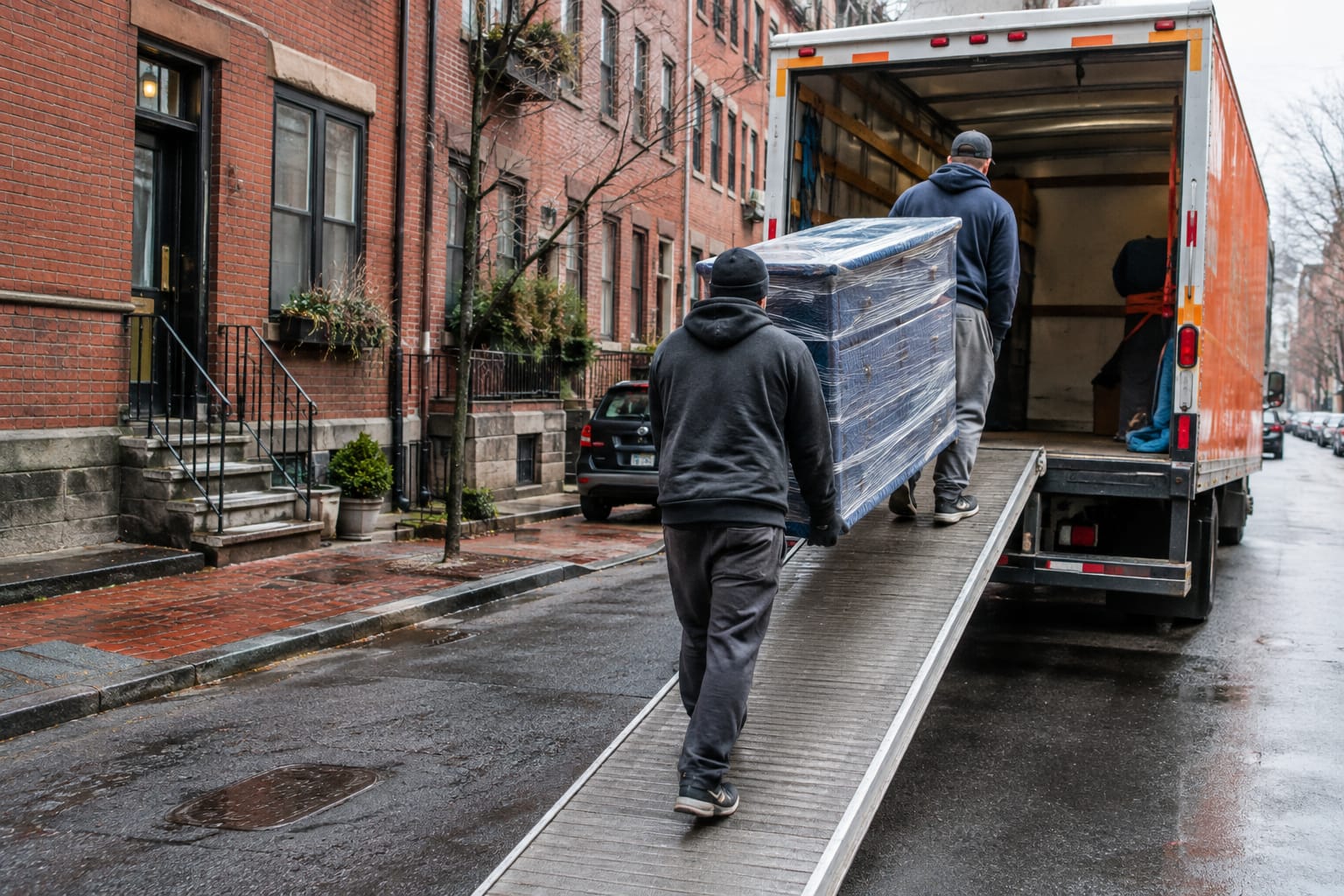
What Labor-Only Moving Help Covers (and What It Doesn't)
Q: What is labor-only moving help?
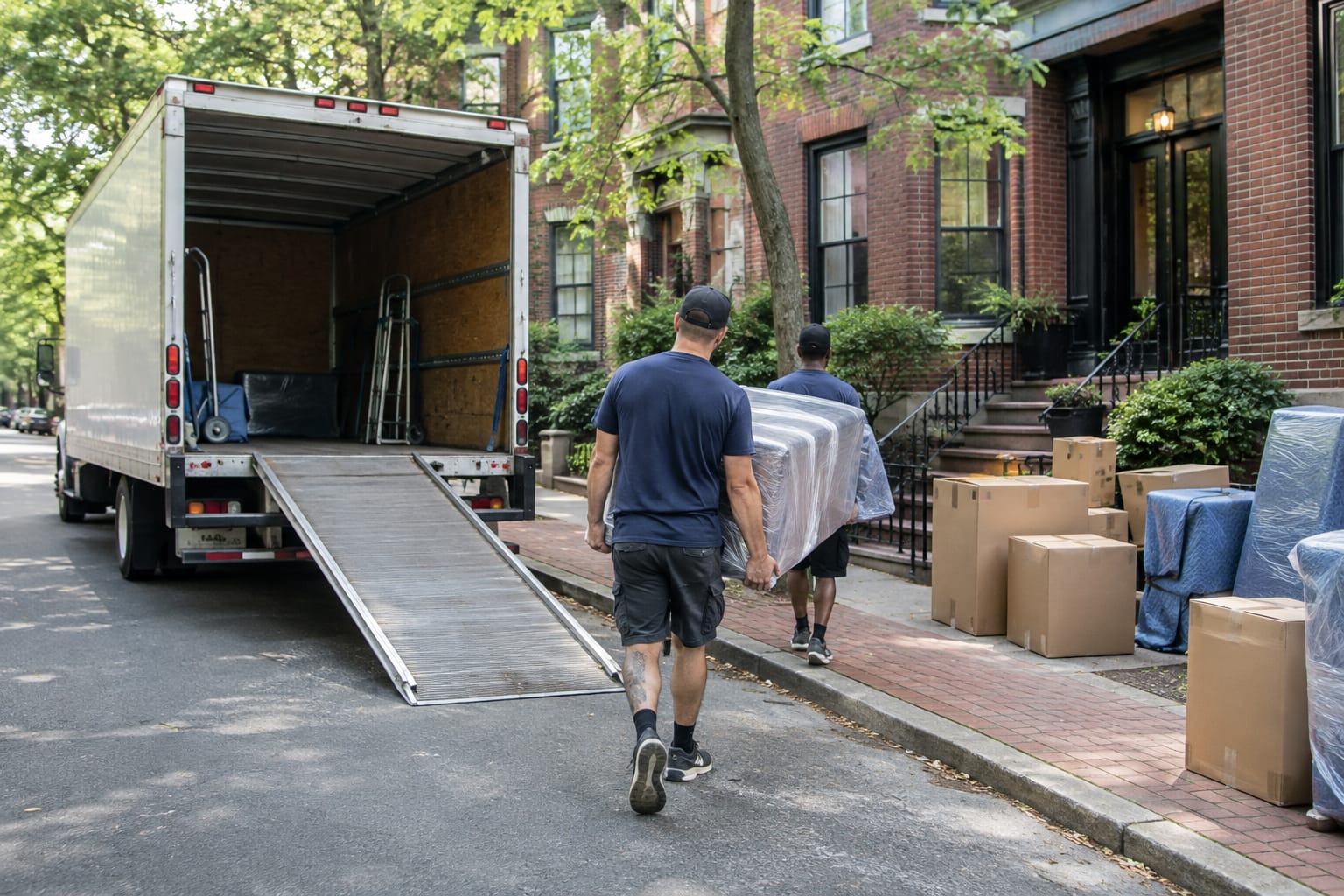
A: It is a crew hired for loading or unloading only, while you supply the vehicle, such as a U-Haul truck or a PODS container. You drive, and the crew packs the cargo space.
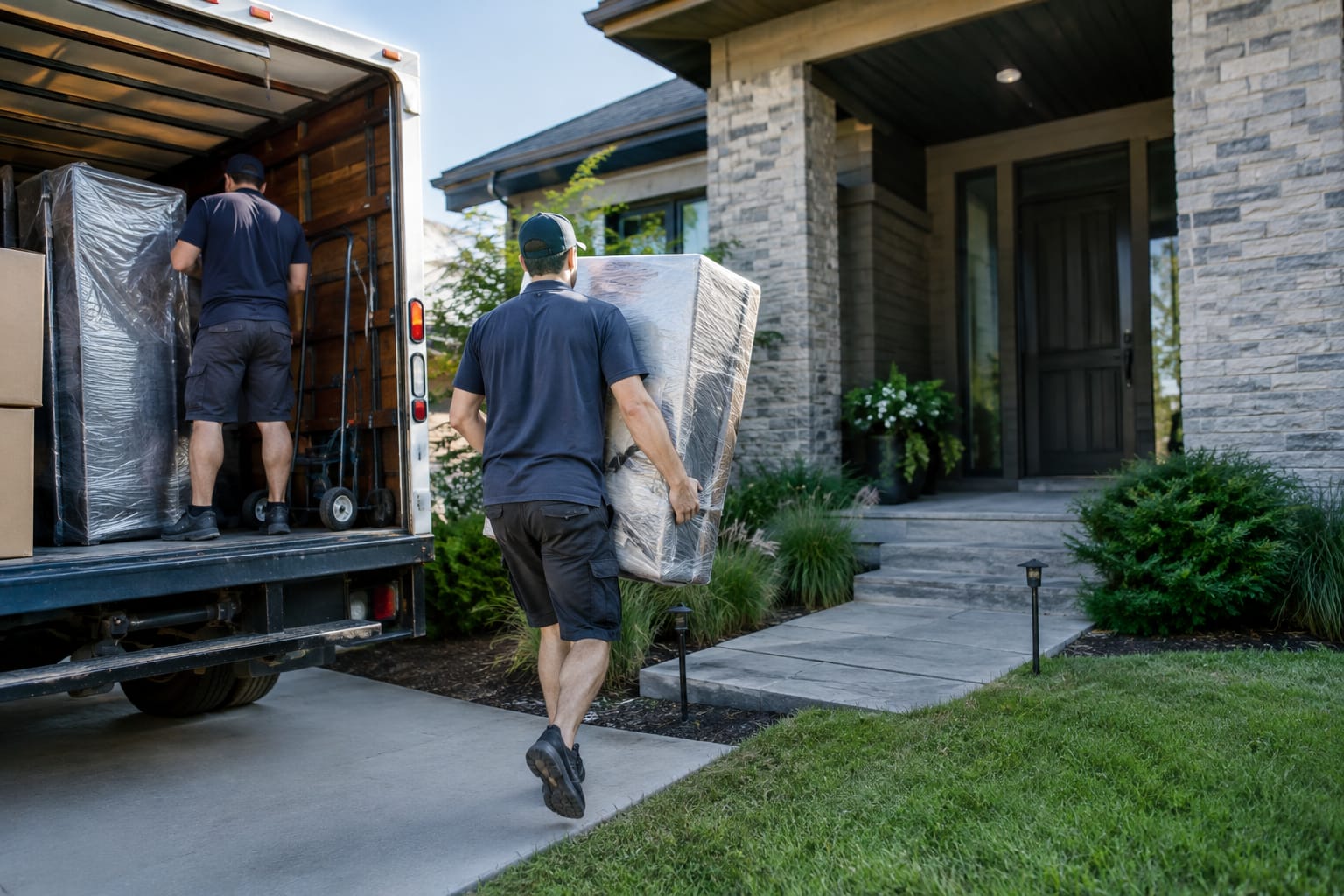
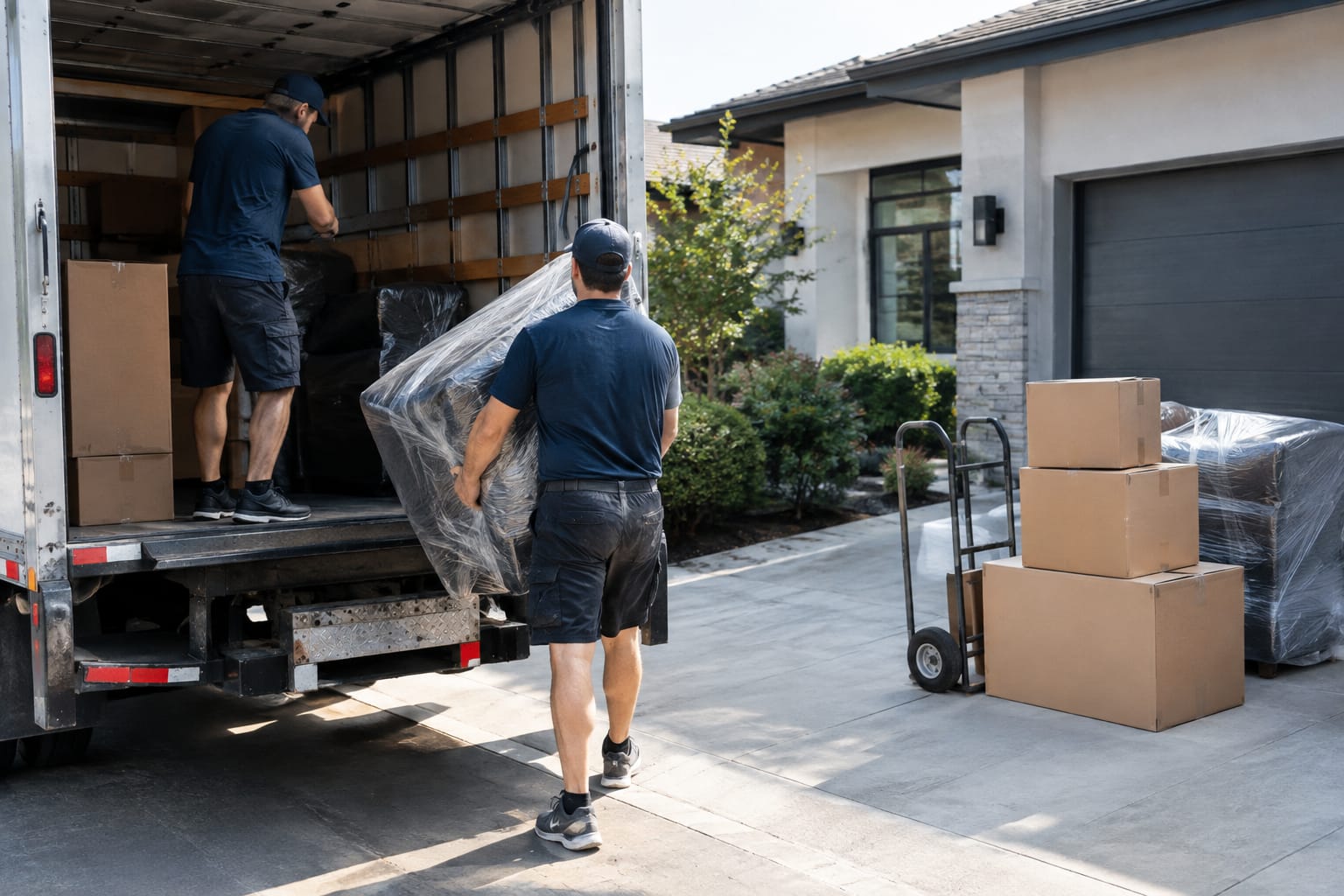
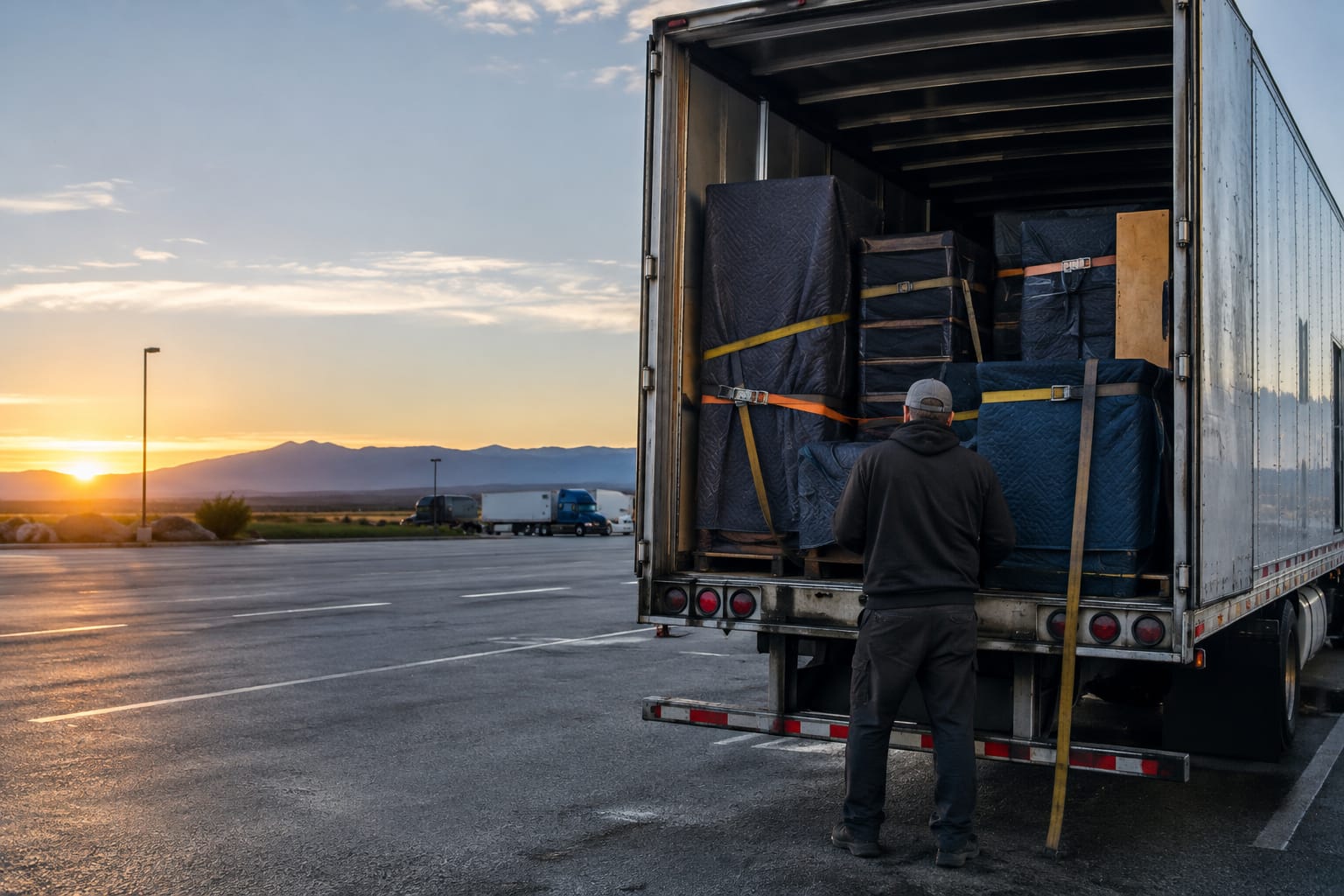
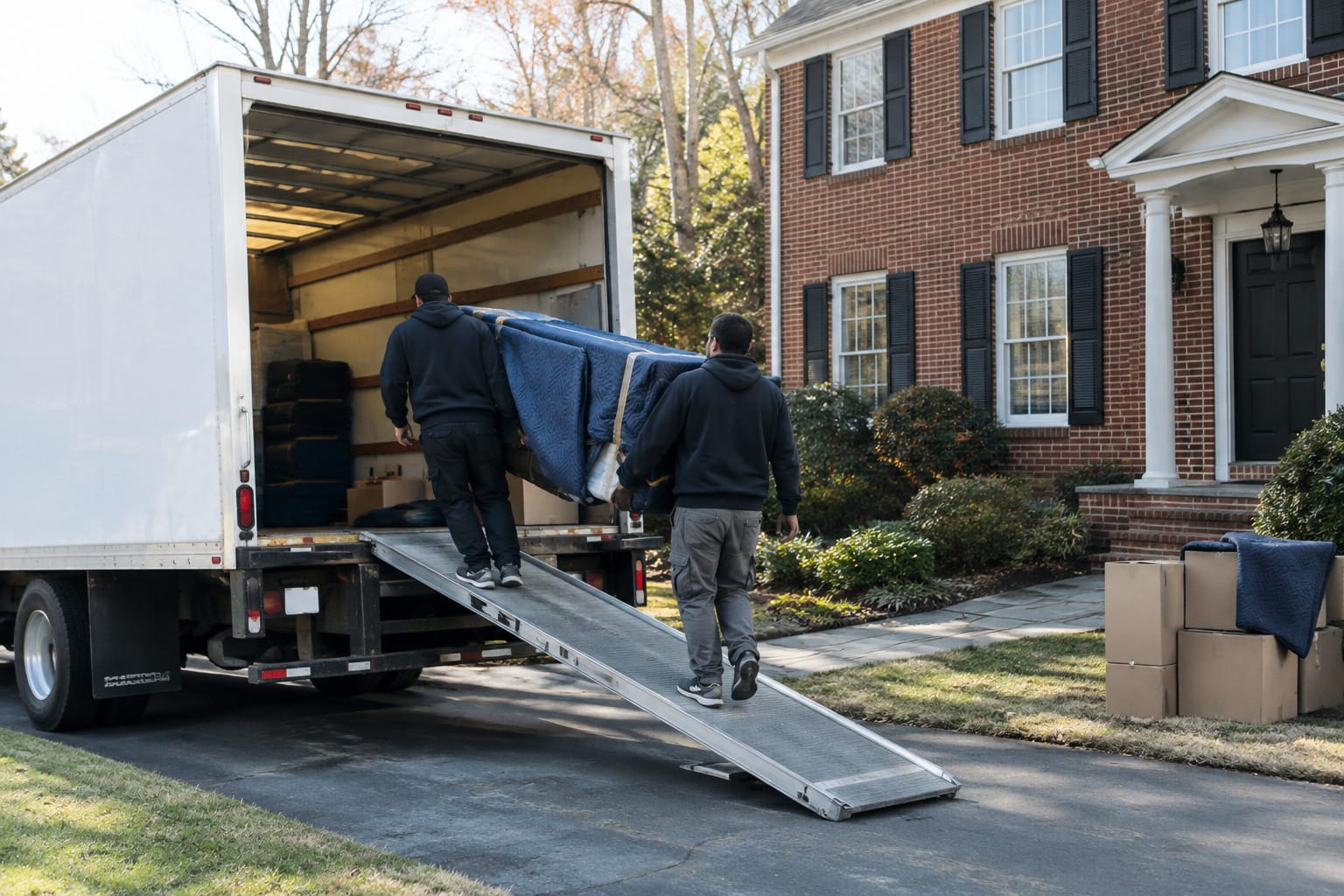
A good loading crew does more than carry boxes. It builds the load in tiered loading sections. Each tier is a floor-to-ceiling wall of furniture and boxes, packed tight and tied off before the next one starts.
Here's what is typically in scope:
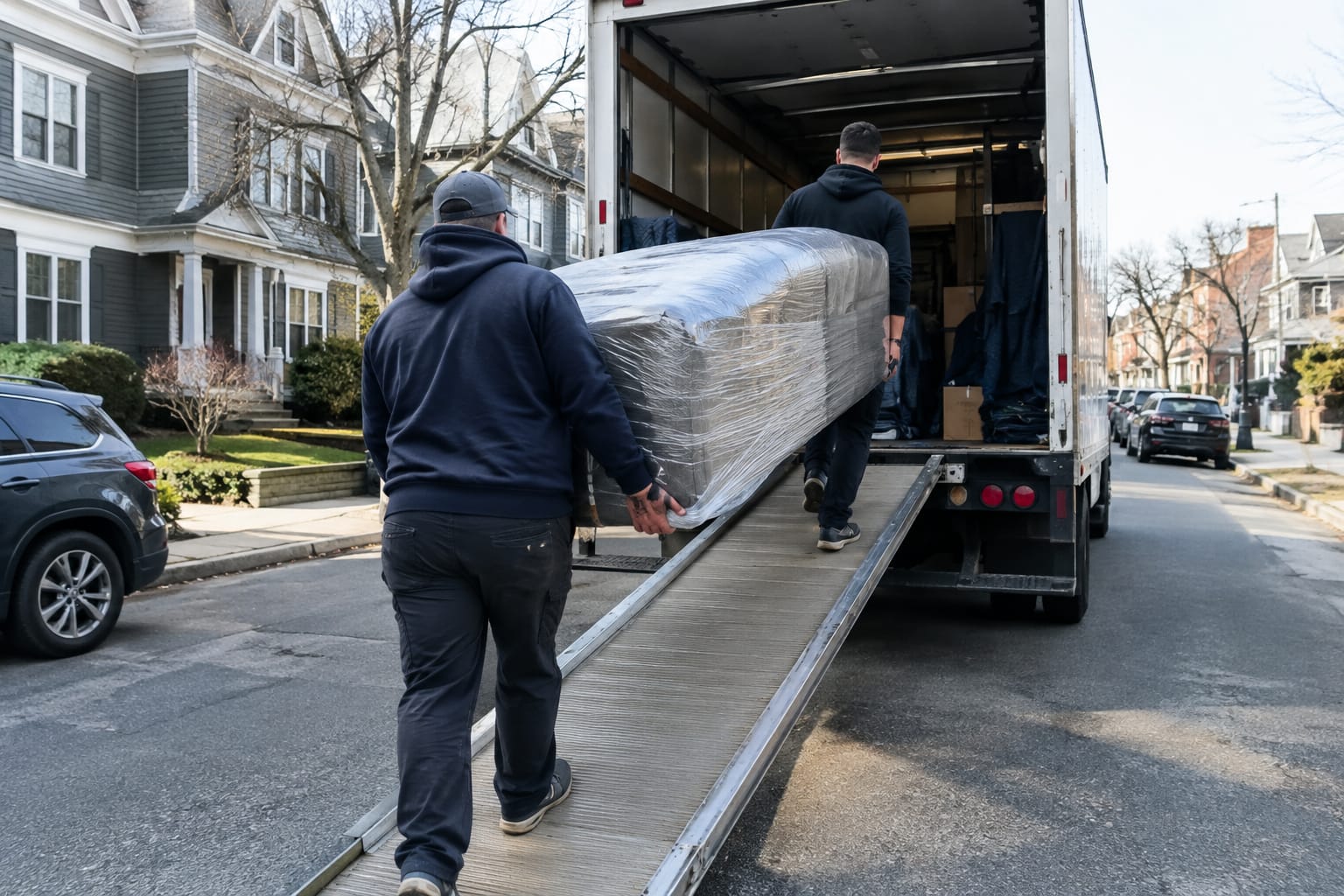
- Carrying furniture and boxes from your home to the truck or container
- Basic disassembly of beds and tables, with reassembly if you also book unloading
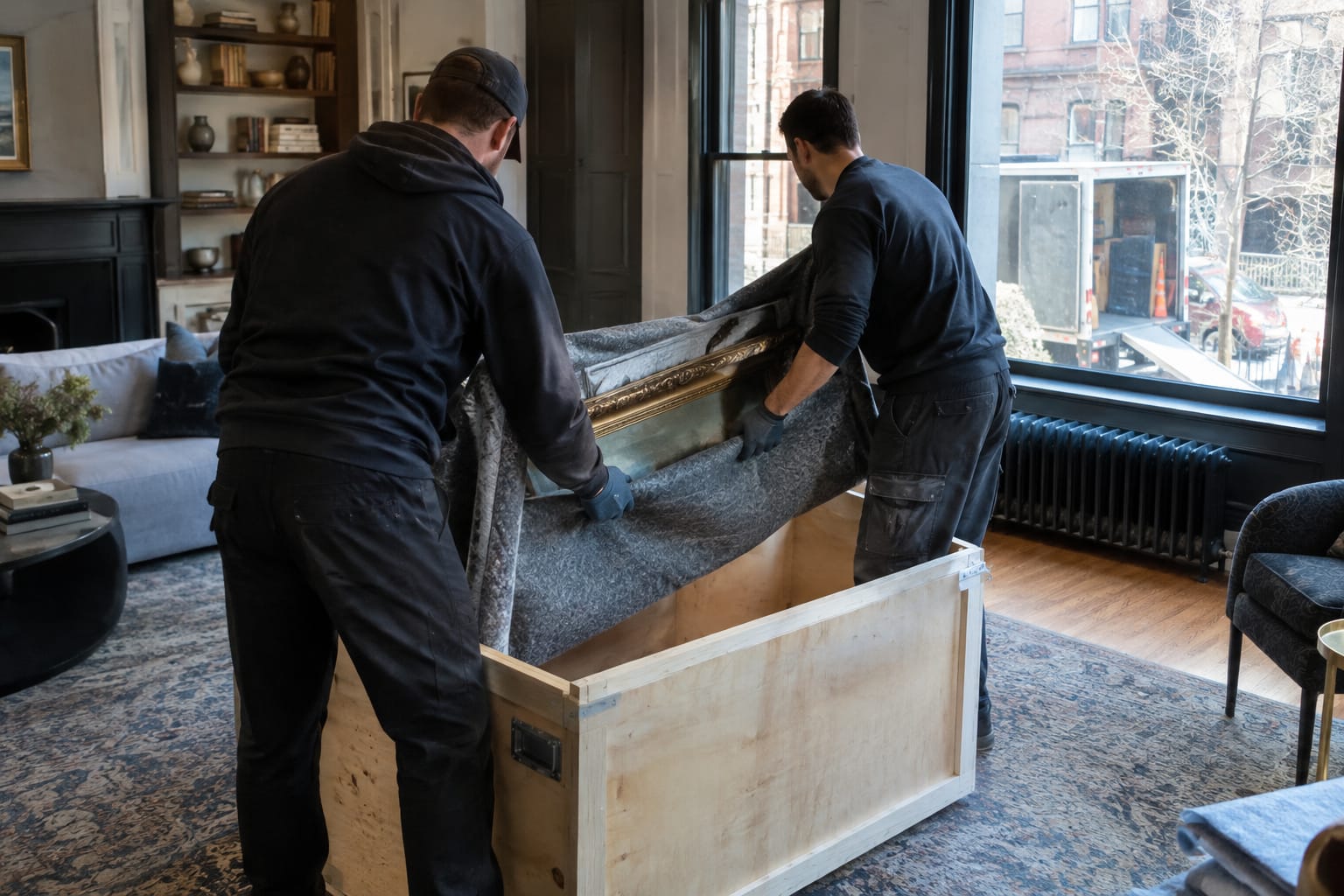
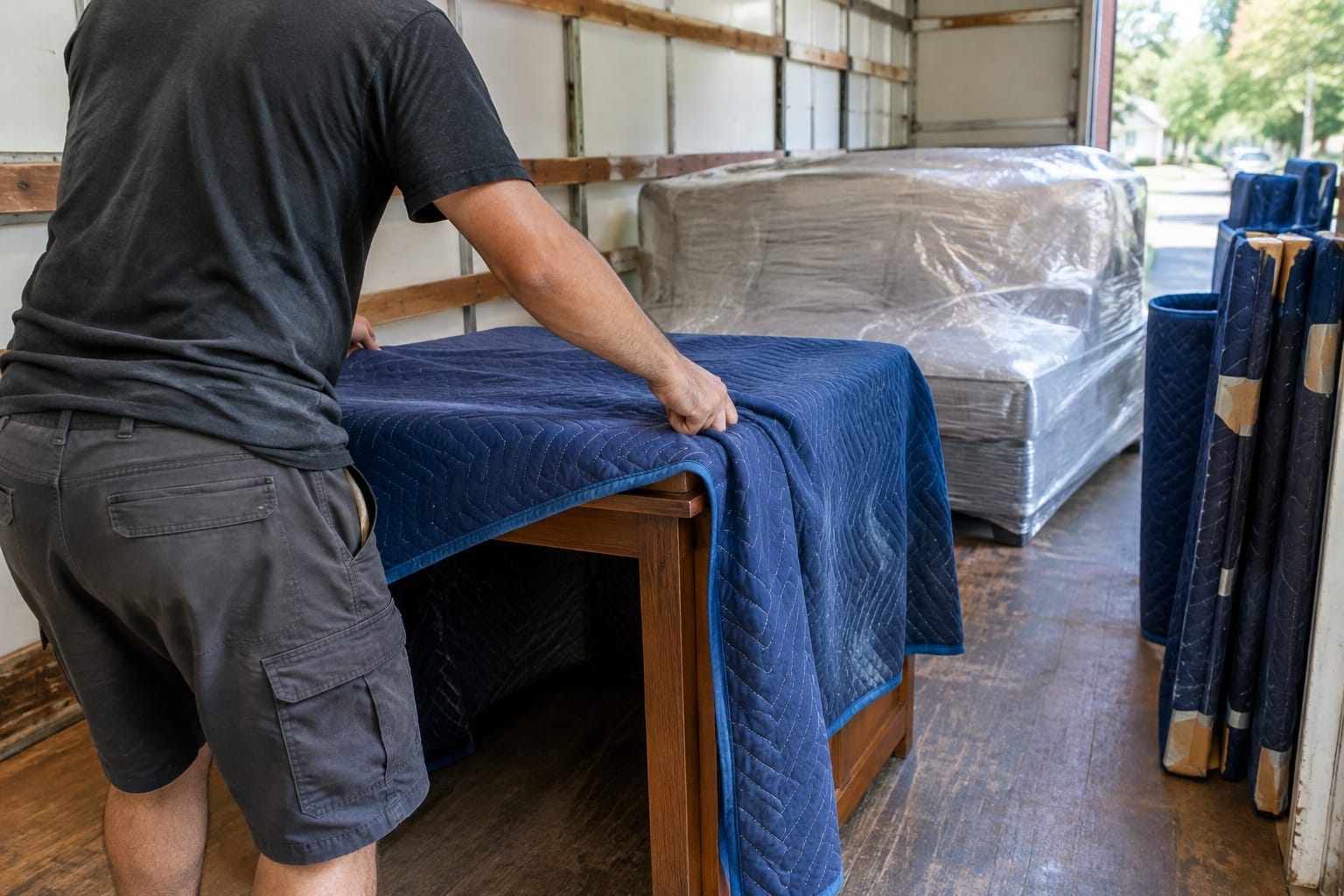
- Wrapping furniture in moving blankets and shrink wrap
- Placing heavy items low and toward the front, then building tiers toward the door
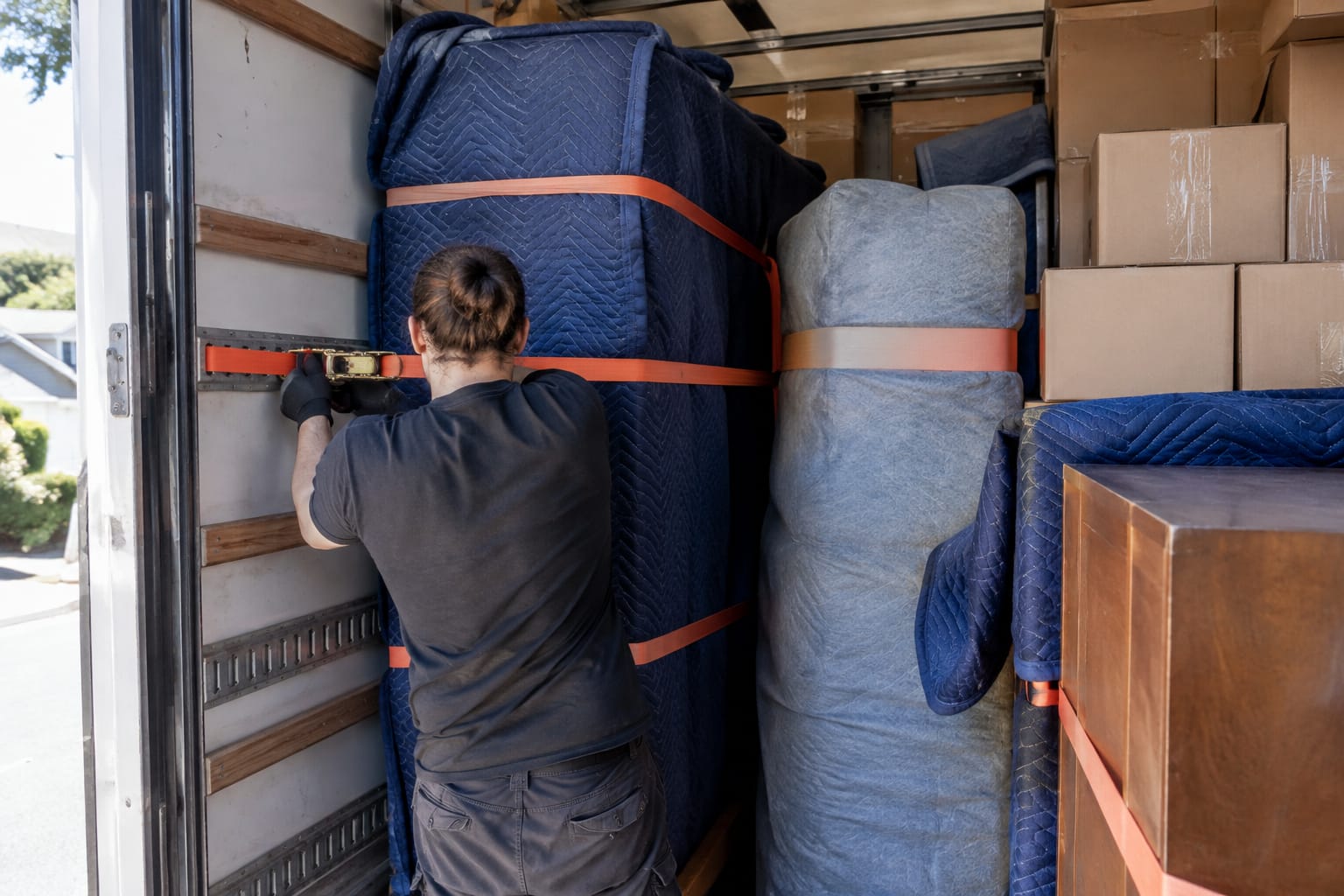
- Securing each tier with straps or rope so the load cannot shift
And here's what usually stays with you:
- Renting the truck or container, and the rental contract
- Driving the truck, including every mile, toll and fuel stop
- Parking permits and curb space at both ends
- Packing boxes, unless you book packing labor separately
It also helps to know what crews generally won't load. Hazardous materials, propane tanks, firearms and ammunition, perishables, cash, jewelry and important documents should ride with you, not in the cargo area. Appliances need gas, water or electrical disconnection by a licensed technician before anyone moves them.
Who Labor-Only Help Is For: Rental Trucks, Containers and Hybrid Moves
Labor-only help suits people who have already picked a DIY vehicle but don't want to do the heavy lifting. Think of it as one rung on a ladder. At the bottom is a fully DIY move. Then come labor-only help, hybrid moves, and finally full-service movers who handle everything.
Common situations where it fits:
- Rental truck moves. You rented a U-Haul, Penske or Budget truck and want trained hands on loading day. The same crew logic applies to help unloading a U-Haul at the other end.
- Portable storage containers. PODS and similar containers get dropped at your curb or driveway. Loading them takes the same tiering as a truck, with less height. For container-specific tips, see our guide on how to properly load a moving pod.
- Hybrid moves. You load boxes yourself and book a crew only for the sofa, dresser and appliances. Or you hire help on both ends of a long drive.
- Single heavy items. If you only need one or two pieces moved, read about hiring someone to move furniture.
Truck size matters before you book a crew. U-Haul's truck pages (as of November 2026) list 10-, 15-, 20- and 26-foot trucks. U-Haul describes the 15-foot truck as fitting a 1 to 2 bedroom home and the 20-foot truck as fitting a 2 to 3 bedroom home. A truck that is too small forces a second trip, which means more billed crew time.
How a Loading Job Works on Moving Day
A well-run loading job follows a predictable sequence. Knowing it in advance helps you spot whether a crew knows its trade.
- Walk-through. The crew lead reviews what goes, what stays and what is fragile. Point out anything that rides with you.
- Protection. The crew lays floor protection and pads door frames and banisters where needed.
- Disassembly. Bed frames, table legs and similar pieces come apart. Hardware goes into labeled bags.
- Wrapping. Furniture gets wrapped in moving blankets. Upholstery and finished wood may get shrink wrap as well.
- Heavy items first. Appliances, dressers and solid wood pieces go against the front wall, closest to the cab.
- Tiered loading. The crew builds tight, floor-to-ceiling tiers, mixing boxes into gaps so nothing can slide.
- Tie-offs. Each finished tier gets strapped to the truck's tie rails before the next one starts.
- Final check. You walk the home to confirm nothing is left. Then you close and lock the door yourself.
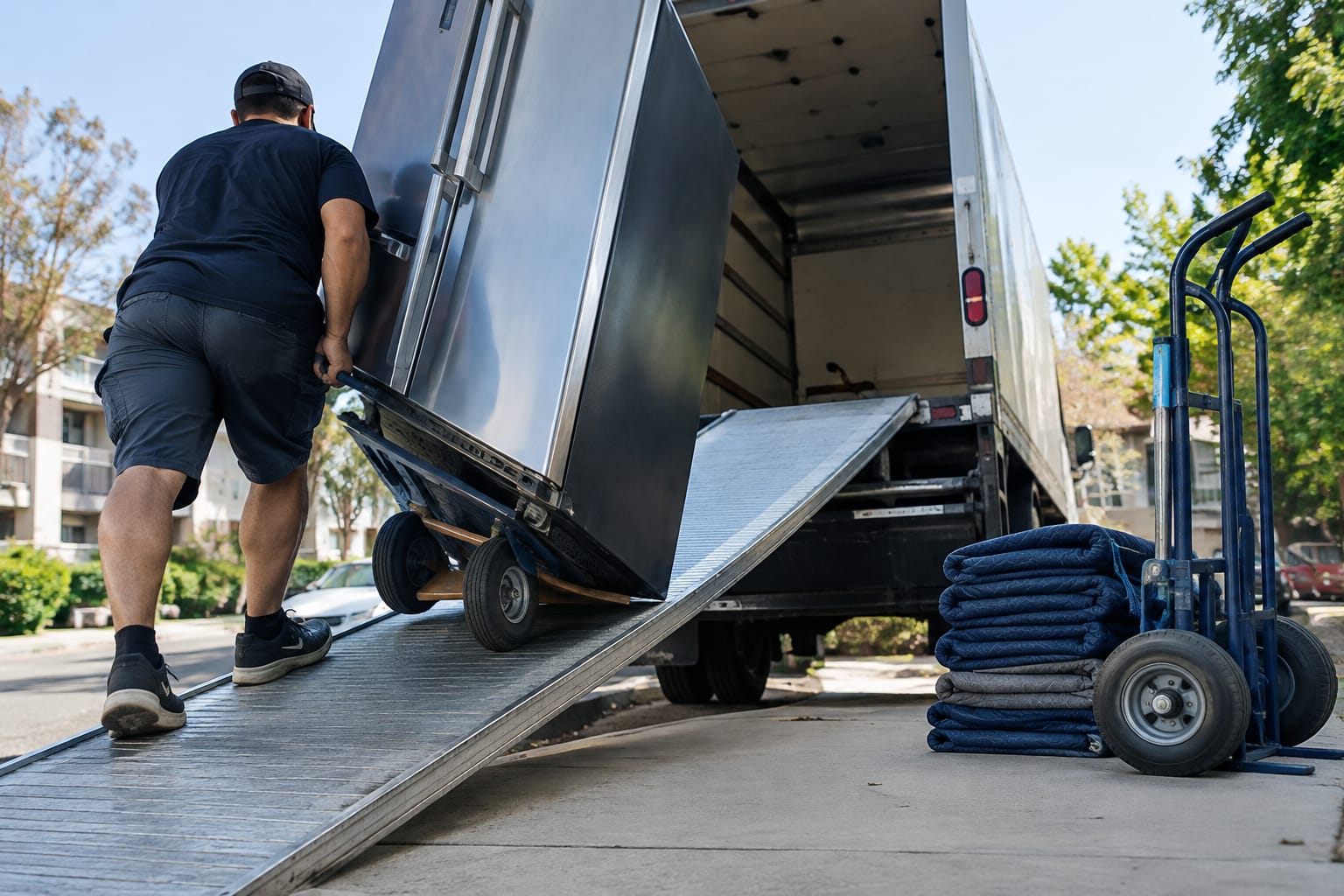
Weight distribution is the part most DIY loads get wrong. A truck loaded heavy at the rear handles poorly, and a load with loose space shifts on every turn. If you plan a longer drive, our guide to packing a truck for a long-distance drive goes deeper on balance and tie-offs.
How Loading Help Is Priced: Hourly Billing, Minimums and Supplies
Loading help is almost always billed by the hour per crew. Your total depends on crew size, how much you own, and how hard the access is. A ground-floor house with a driveway loads much faster than a fourth-floor walk-up.
Watch for these line items when you compare quotes:
- Hourly crew rate. Starting rates vary by season and crew size, so request a written quote.
- Travel time. Many companies bill the crew's travel time to your address at the hourly rate.
- Minimum hours. Local hourly moves often carry a minimum charge. Ask whether that minimum also applies to a loading-only job.
- Supplies. Boxes, tape, shrink wrap and mattress bags are typically billed separately.
- Payment method. Some companies add a card processing fee, so ask before move day.
For a concrete example, Born to Move offers packing and truck-loading services from its Newton, MA headquarters. The service includes loading and unloading of rental trucks and portable containers. Packing labor is billed hourly at crew rates, and supplies such as boxes, tape, shrink wrap and mattress bags are always charged separately.
If you're still weighing DIY against a full crew, our breakdown of how much movers cost shows how hourly billing adds up.
How to Prepare Your Truck or Container Before the Crew Arrives
Preparation is the single biggest factor you control. Every minute the crew waits is a minute you pay for.
Before the crew arrives:
- Pick up the truck early. Have it parked, empty and unlocked with the ramp accessible before the crew's arrival window.
- Check the ramp and tie rails. Confirm yours has a loading ramp and that it slides out freely.
- Finish packing. Empty drawers, close and label boxes, and stack them near the door. See our list of what packing supplies you need for moving.
- Separate what rides with you. Keep documents, medication, valuables and chargers in your car.
- Prep furniture. Remove glass shelves and loose parts. Our guide on how to prepare furniture when relocating covers the details.
- Clear the path. Move rugs, shoes and plants out of hallways and stairwells.
Pro Tip: Ask the crew what they bring. Some crews arrive with blankets, straps and dollies, while others expect the renter to rent pads and a hand truck with the vehicle. Settle this in writing before move day.
Boston-Specific Logistics: Parking, Permits, Stairs and Elevators
In Boston, access often decides how long a loading job takes. Three issues come up again and again: curb space, stairs and elevators.
Q: Do I need a permit to park a U-Haul on a Boston street?
A: To reserve curb space for a moving truck, confirm the current requirements with the City of Boston. Apply well ahead of your date, because demand spikes around September 1.
The renter, not the loading crew, typically arranges parking and permits. A truck parked half a block away adds carry distance to every trip. For neighborhood-level advice, read where to park a moving truck in Boston. If your date falls near the city's busiest weekend, our notes on moving in Boston on September 1 are worth reading.
Drivers of rental trucks face another Boston hazard: low clearances on Storrow Drive and Memorial Drive. Plan your route with advice on how not to get Storrowed.

Triple-deckers bring narrow interior stairs and tight landings. Tell the company about stair counts, turns and banister heights when you request a quote, so it can staff the right crew. In apartment buildings, the elevator matters just as much. Most managed buildings require a booked time slot, and some require a certificate of insurance from the moving company. Start with our guide to reserving a freight elevator for move day.
Need help with this? Get a quote
Protection and Responsibility When Movers Load Your Rental
With labor-only help, the crew never owns or drives the vehicle. That changes who is responsible for what, and you should understand the split before anything goes in the box.
| Task or risk | Renter | Loading crew | Rental company |
|---|---|---|---|
| Renting the truck or container | Yes | No | Provides vehicle |
| Driving and road damage | Yes | No | Per rental contract and its protection plans |
| Carrying, wrapping and loading | Supervises | Yes | No |
| Securing tiers and tie-offs | Approves | Yes | No |
| Parking and street permits | Yes | No | No |
| Damage to the rental vehicle | Per rental contract | Ask the crew's company | Per rental contract |
Here's the key point: damage from loading is a different question than damage on the road. If the load shifts during your drive, the crew's tie-offs come under scrutiny, but you were behind the wheel. Ask every company in writing how it handles claims for loading-only work.
Full-service moves work differently. Released value protection is basic liability, not insurance.
Also verify the company itself. A licensed and insured company should publish its registration numbers. Learn how to check a USDOT number on the FMCSA database. As an example, you can review the licensing behind Born to Move's loading crews: USDOT 2887241, MC 985934 and MA DPU 31826.
Questions to Ask Before You Book Loading Help
A short call answers most of what matters. Use these questions to compare companies on the same terms:
- Is the quote hourly, and does billing include travel time?
- Is there a minimum number of hours for a loading-only job?
- How many movers will you send for my truck size and home?
- Which supplies do you bring, and which are billed separately?
- Will you disassemble beds and tables, and do you bring the tools?
- How do you handle damage that happens during loading?
- Can you provide a certificate of insurance for my building?
- What is your USDOT number, and are you registered with the Massachusetts DPU?
- Can the same company also unload, or handle packing before move day?
For a broader checklist, see what to look for in a moving company and how to find honest and reliable local movers.
Key Takeaways
- Labor-only help splits the move. You rent and drive; the crew loads and unloads.
- Technique matters. Tiered loading, heavy items forward, and tie-offs on every section keep the load from shifting.
- Billing is hourly. Ask about travel time, minimum hours and supplies, which are typically billed separately.
- Boston access drives cost. Permits, stairs and elevator bookings decide how long the job takes.
- Responsibility is shared. Read your rental contract and ask the crew's company how it handles loading damage.
If the stairs, parking and loading start to outweigh the savings, labor-only help is not your only option. Born to Move handles both loading-only jobs and full-service moves across Greater Boston, and you can request a quote for loading help based on your truck size and home.
Do labor-only movers bring their own truck?
No. In a labor-only booking, you supply the vehicle, whether it is a rental truck or a portable storage container. If you'd rather not rent anything, a full-service move includes the mover's own truck.
Can the moving crew drive my rented U-Haul?
In most labor-only arrangements the renter drives. The rental contract names who may operate the vehicle, so check those terms with the rental company before asking anyone else to drive.
How many movers do I need to load a 15-foot or 20-foot truck?
Crew size depends on volume and access more than truck length. Two movers often handle a smaller apartment with easy access, while a larger home or a walk-up with many stairs benefits from three or four. Share stair counts and your inventory so the company can recommend a crew.
Can movers also load a portable storage container like PODS?
Yes, the same loading principles apply. Containers have less interior height than trucks, so tiers are shorter and tie-offs matter even more.
What is the minimum charge for packers and movers?
Many local movers set a minimum number of billed hours. For example, a 3-hour minimum is common on local hourly moves, but loading-only jobs may follow different terms, so confirm with the company before booking.
Written by Born to Move Team
Useful Links
- Packing and Loading Services
- How to Properly Load a Moving Pod
- Can I Hire Someone to Move Furniture?
- Get a Moving Quote
Need help with this? About us · Get a quote · Call (617) 903-2609
Frequently Asked Questions